Not every small business has the budget for a full in-house marketing team, or the patience to manage a dozen disconnected tools. Whether you’re a local service provider tired of throwing money at ads that don’t convert, or a growing business looking for smarter ways to acquire customers, you need marketing solutions that actually deliver ROI.
The landscape of digital marketing alternatives has never been more diverse. From done-for-you agency services to DIY platforms that let you run campaigns on your own terms, there’s a fit for every budget and skill level. We evaluated these options based on ease of use, cost-effectiveness for small businesses, lead generation capability, and real-world performance. Here’s what made the cut.
1. Clicks Geek
Best for: Small and local businesses that want expert-managed PPC and lead generation without the guesswork.
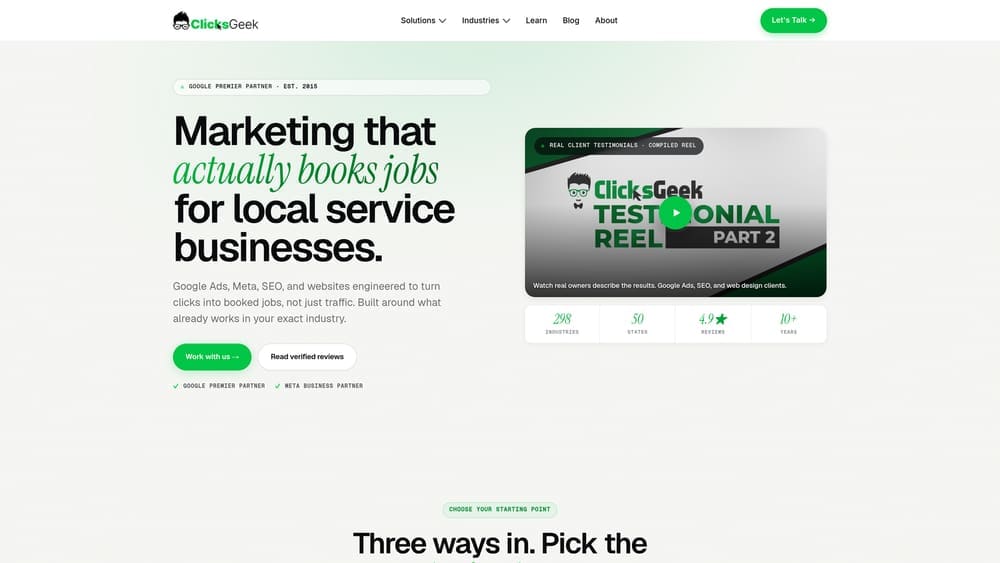
Clicks Geek is a Google Premier Partner agency that specializes in paid advertising, conversion rate optimization, and lead generation for local and small businesses.
Where This Tool Shines
The biggest frustration for most small business owners running paid ads isn’t the platform itself. It’s spending money for weeks and seeing clicks but no calls, no form fills, no revenue. Clicks Geek is built specifically to close that gap. Their approach combines campaign management with CRO, meaning they’re not just driving traffic, they’re optimizing the full path from click to customer.
They work heavily in local business verticals like home services, healthcare, and legal, which means their team understands the specific buyer behavior and competitive dynamics in these markets. That industry depth matters more than most business owners realize when it comes to making paid ads actually profitable.
Key Features
Google Premier Partner Status: A verified credential that reflects managed spend thresholds and performance standards, giving clients access to Google support and beta features.
CRO Built Into Every Campaign: Landing page and conversion optimization is included, not an add-on, so traffic is more likely to turn into actual leads.
Lead Quality Focus: Campaigns are structured around qualified lead volume, not just clicks or impressions that inflate reports without moving revenue.
Local Business Vertical Expertise: Proven experience in home services, healthcare, legal, and other service-based industries with specific targeting strategies for each.
White Label Services: Agencies looking to offer PPC, Facebook Ads, or SEO under their own brand can access Clicks Geek’s white label programs.
Best For
Local service businesses that have tried running ads themselves and found the results disappointing. Also a strong fit for growing businesses that want a performance-focused partner rather than a generalist agency. Agencies looking for a reliable white label partner should take a close look at their programs.
Pricing
Custom pricing based on ad spend and services required. Contact Clicks Geek directly for a quote tailored to your market and goals.
2. Google Ads (Self-Managed)
Best for: Business owners with time to learn the platform and capture high-intent search traffic directly.
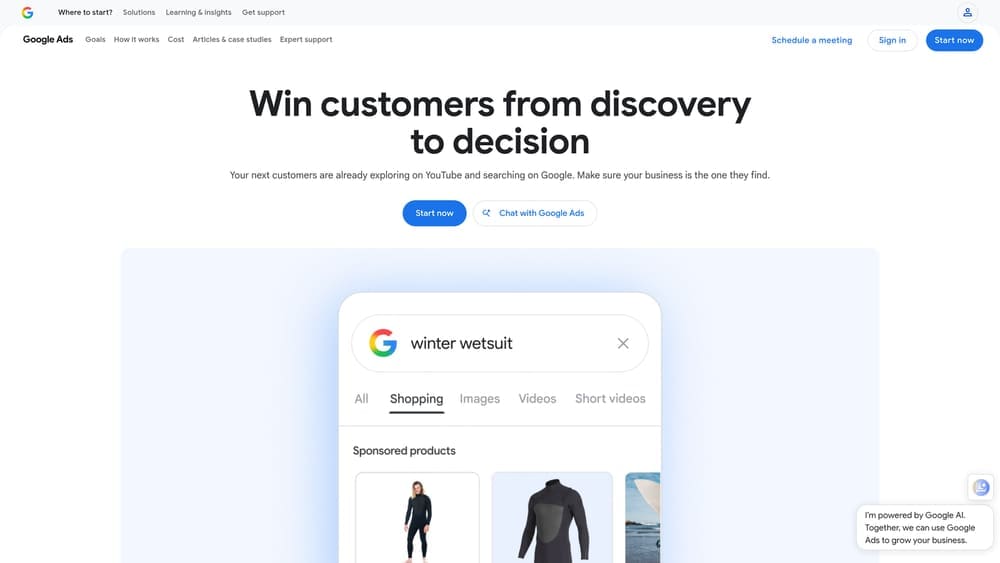
Google Ads is Google’s self-serve advertising platform for search, display, and local campaigns across its entire network.
Where This Tool Shines
No other platform lets you reach someone at the exact moment they’re searching for what you sell. A plumber, a family law attorney, an HVAC company: when someone types “emergency AC repair near me,” Google Ads is where you show up or don’t. That intent-based targeting is genuinely powerful and difficult to replicate on any other channel.
If you run a plumbing business and want a deeper look at the tools and strategies that work specifically for your trade, our guide to digital marketing for plumbing companies covers the top options in detail.
The self-managed route works best for business owners willing to invest time in learning keyword strategy, match types, and conversion tracking. Without that foundation, budgets can disappear quickly on irrelevant clicks. The platform has improved its automation with Performance Max campaigns, but human oversight still matters.
If Google Ads isn’t the right fit for your budget or industry, our breakdown of Google Ads alternatives covers the paid channels that consistently drive leads for local businesses.
If you’re running Google Ads and want to bring back visitors who didn’t convert the first time, pairing your campaigns with Google Ads remarketing services is one of the highest-ROI moves a small business can make.
Key Features
Search Ads for High-Intent Keywords: Appear at the top of results when prospects are actively searching for your services.
Performance Max Campaigns: AI-driven campaign type that distributes ads across Search, Display, YouTube, and Maps from a single campaign.
Local Campaigns: Drive foot traffic, calls, and direction requests from nearby searchers.
Conversion Tracking: Measure phone calls, form submissions, and purchases directly tied to ad spend.
Flexible Budgets: Set daily spending limits that fit your budget, with no minimum commitment.
Best For
Small businesses in competitive service categories where buyers search before buying. Most effective when paired with strong landing pages and proper conversion tracking setup. Not ideal for owners who want a set-it-and-forget-it solution.
Pricing
No platform fee. You pay per click, with most small businesses spending between $500 and $5,000 per month depending on their market and industry.
If you’re comparing agency options, our digital marketing services cost comparison breaks down what local businesses actually pay across different providers and service tiers.
3. Meta Ads Manager
Best for: Businesses focused on local brand awareness, visual storytelling, and social lead generation.
Meta Ads Manager is the unified advertising platform for Facebook and Instagram, offering granular audience targeting and native lead capture tools.
Where This Tool Shines
Where Google captures demand that already exists, Meta creates it. If your product or service benefits from visual demonstration, or if your ideal customer needs to see your brand a few times before they reach out, Meta’s placement options across Facebook and Instagram make it a natural fit. Think home renovation, cosmetic services, fitness, or local retail.
The lead form ad format is particularly useful for local businesses. Prospects can submit their name, phone number, and email without ever leaving the app, which dramatically reduces friction compared to sending someone to a landing page. The tradeoff is that these leads can sometimes be lower intent, so follow-up speed matters.
Key Features
Location and Demographic Targeting: Target by zip code, radius, age, income, interests, and dozens of other filters.
Native Lead Form Ads: Capture contact information directly within Facebook or Instagram without requiring a landing page.
Cross-Platform Placement: Run ads across Facebook Feed, Instagram Feed, Stories, and Reels from one campaign.
Retargeting: Re-engage website visitors or people who interacted with your content but didn’t convert.
Low Entry Budget: Test campaigns with minimal daily spend, making it accessible for businesses new to paid social.
Best For
Local businesses with a visual product or service, or those building brand recognition in a specific geographic area. Works well alongside search advertising as part of a broader acquisition strategy.
Pricing
No platform fee. Budgets can start as low as $5 per day, with most small businesses spending $300 to $2,000 per month for meaningful reach.
4. Mailchimp
Best for: Small businesses looking to nurture leads and drive repeat business through email automation.
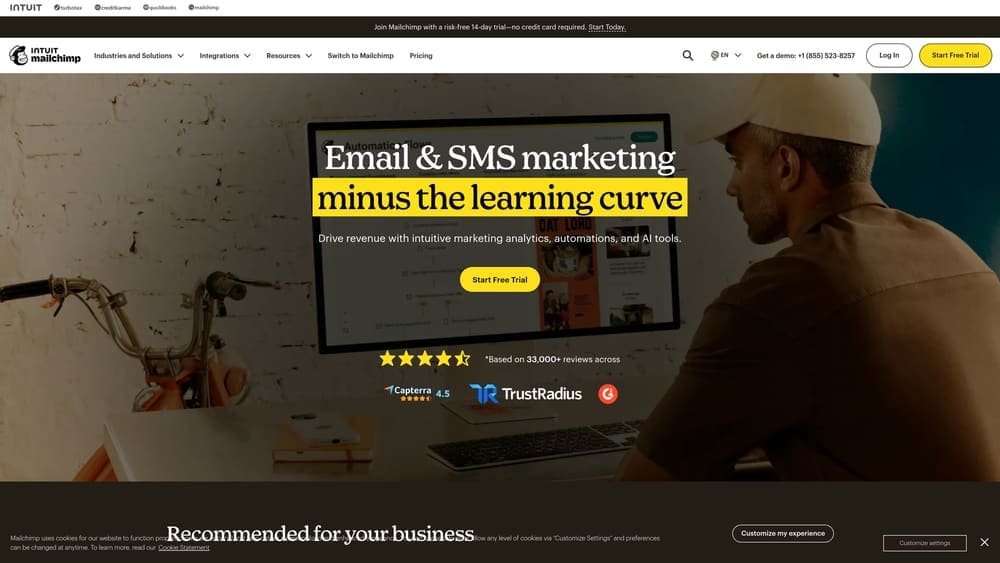
Mailchimp is an email marketing and automation platform designed to help businesses stay connected with their audience and turn one-time buyers into loyal customers.
Where This Tool Shines
Paid ads bring people in. Email marketing keeps them around. For small businesses with an existing customer base or a growing contact list, Mailchimp offers a straightforward way to run automated campaigns without needing a dedicated marketing team. The welcome series, post-purchase follow-ups, and re-engagement sequences can run in the background while you focus on running your business.
The free tier is genuinely useful for businesses just getting started. As your list grows, the segmentation and tagging features let you send more targeted messages, which typically leads to better open rates and more conversions than blasting your entire list with the same email.
Key Features
Free Plan for Up to 500 Contacts: A real free tier that includes email sends, basic automation, and templates.
Pre-Built Automation Workflows: Welcome series, abandoned cart reminders, and birthday emails are ready to activate without custom setup.
Landing Page and Signup Form Builder: Capture new subscribers directly from your website or social media.
Audience Segmentation: Group contacts by behavior, location, purchase history, or custom tags for more relevant messaging.
Performance Analytics: Track open rates, click rates, and revenue attributed to each campaign.
Best For
Service businesses, local retailers, and e-commerce operators who want to build long-term customer relationships and increase repeat purchases without significant ongoing effort.
Pricing
Free plan available for up to 500 contacts. Paid plans start at $13 per month for the Standard plan with expanded automation and sending limits.
5. SEMrush
Best for: Small businesses investing in organic search growth and competitive intelligence.
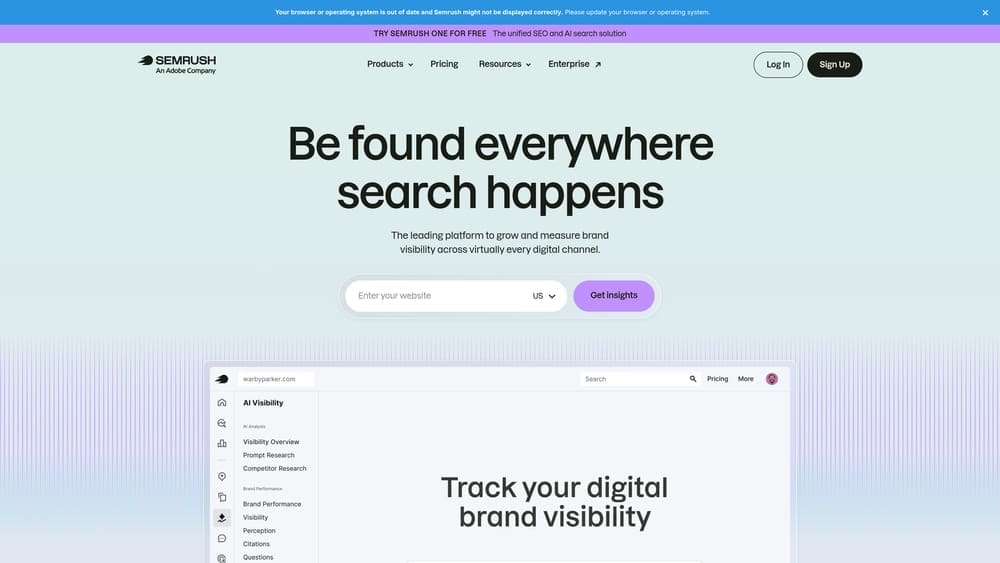
SEMrush is an all-in-one SEO and content marketing platform that helps businesses improve their visibility in search results and understand what competitors are doing to rank.
Where This Tool Shines
If paid ads are your accelerator, organic SEO is your long-term foundation. SEMrush gives small business owners visibility into which keywords their competitors rank for, what technical issues are dragging down their own site, and where content opportunities exist in their niche. That kind of intelligence used to require hiring an SEO consultant just to gather the data.
The local SEO tools are particularly relevant for service-area businesses. You can manage your business listings across directories, track local keyword rankings, and identify gaps in your local search presence, all from one dashboard. It’s a significant time-saver for businesses managing their own SEO efforts.
Key Features
Keyword Research with Local Data: Find keywords with local search volume and difficulty scores relevant to your market.
Site Audit Tool: Crawl your website to identify technical SEO issues affecting your rankings.
Competitor Analysis: See which keywords and backlinks are driving traffic to competing businesses.
Local SEO Listing Management: Manage and sync business information across major directories from one place.
Content Optimization: Get recommendations for improving existing pages and identifying new content topics.
Best For
Small businesses with some SEO knowledge or an in-house marketing person who wants to make smarter decisions with data. Also useful for business owners willing to invest time in learning organic search strategy.
Pricing
Limited free access available. Pro plan starts at $139.95 per month, with annual billing offering a discount. Higher-tier plans add more features and user seats.
6. Canva
Best for: Small business owners who need professional-quality marketing visuals without hiring a designer.
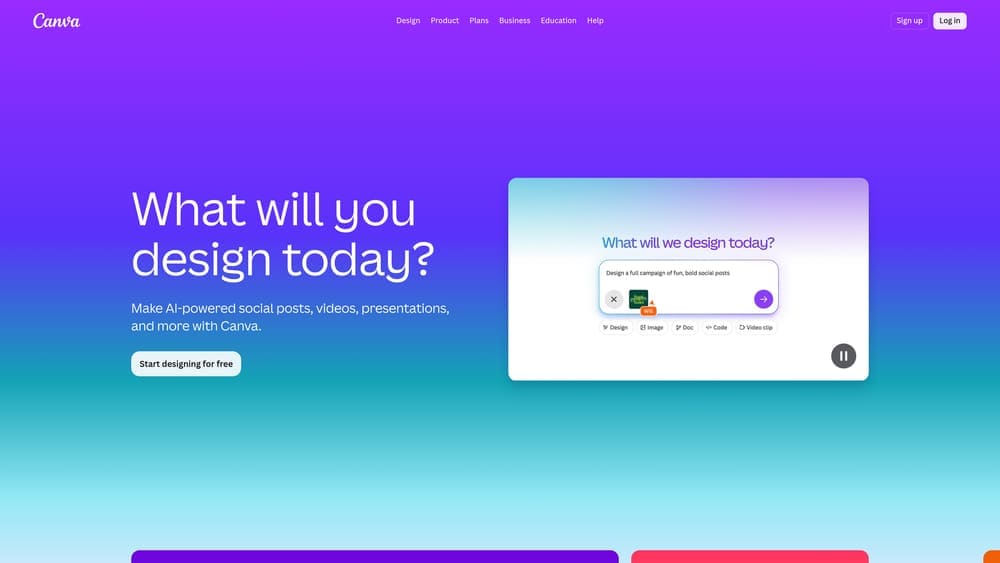
Canva is a drag-and-drop design platform that enables anyone to create polished social media graphics, ad creatives, flyers, and branded materials with no design background required.
Where This Tool Shines
Inconsistent branding is one of the most common ways small businesses undermine their own credibility online. Canva solves this by making it easy to create on-brand visuals quickly, even if design isn’t your strength. The Brand Kit feature lets you lock in your colors, fonts, and logo so every piece of content you produce looks like it came from the same professional source.
For businesses running social media or paid ads, the creative refresh problem is real. Ads fatigue, social feeds need fresh content, and seasonal promotions require new graphics. Canva makes it practical to produce that volume of content without outsourcing every design task or paying for Adobe Creative Suite.
Key Features
Extensive Template Library: Thousands of templates sized for every platform, including Instagram, Facebook ads, Google Display, and print.
Brand Kit: Store brand colors, fonts, and logos for consistent application across all designs.
AI-Powered Design Tools: Background removal, text generation, and image enhancement tools built directly into the editor.
Team Collaboration: Share designs and work simultaneously with team members or contractors.
Free Plan with Strong Functionality: Access to thousands of templates and basic design tools at no cost.
Best For
Any small business owner managing their own social media, email campaigns, or paid ad creatives. Particularly valuable for businesses that need to produce consistent visual content without a dedicated designer on staff.
Pricing
Free plan available with broad functionality. Canva Pro starts at $15 per month per person and unlocks the full template library, Brand Kit, and AI tools.
7. Nextdoor Advertising
Best for: Home service providers, local retailers, and neighborhood-focused businesses targeting nearby customers.
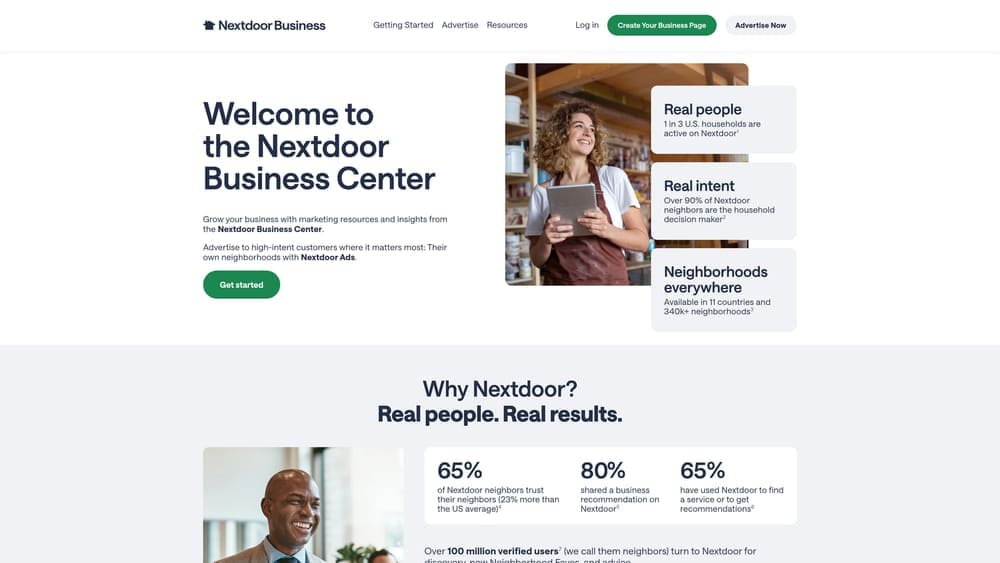
Nextdoor is a hyper-local advertising platform built on a neighborhood social network, connecting local businesses with verified residents in their immediate service area.
Where This Tool Shines
Most advertising platforms let you target by zip code or radius. Nextdoor lets you target by neighborhood, which is a meaningful distinction for businesses like landscapers, house cleaners, plumbers, and local restaurants. The audience is made up of verified local residents, and the platform’s community dynamic means word-of-mouth recommendations carry real weight.
The trust factor is genuinely different here. When a neighbor recommends a business on Nextdoor, it functions more like a personal referral than a traditional ad. For service businesses where trust is a prerequisite to getting hired, that environment can produce stronger results than comparable spend on other platforms.
Key Features
Neighborhood-Level Targeting: Reach verified residents in specific neighborhoods, not just broad geographic zones.
Local Deal Promotions: Publish time-sensitive offers that appear in neighborhood feeds and drive immediate action.
Free Business Page: Claim your listing, collect reviews, and appear in local business searches at no cost.
Sponsored Posts: Paid posts that appear natively in neighborhood feeds alongside organic community content.
High-Trust Community Environment: Recommendations and reviews from verified neighbors carry more credibility than anonymous review platforms.
Best For
Home service businesses, local restaurants, neighborhood retail shops, and any business where proximity and community trust are central to the buying decision. Less effective for businesses with a broad or non-geographic target audience.
If home services is your industry, working with a marketing agency for home services that understands trade-specific buyer behavior will get you further than any generalist platform.
Pricing
The Business Page is completely free. Paid advertising options are available with flexible budgets. Contact Nextdoor directly for current ad rates in your market.
8. HubSpot CRM and Marketing Hub
Best for: Growing small businesses that need a unified system to manage leads, automate follow-up, and track the sales pipeline.
HubSpot is a comprehensive CRM and marketing automation platform that connects contact management, email marketing, landing pages, and deal tracking in a single system.
Where This Tool Shines
One of the most common growth bottlenecks for small businesses isn’t lead generation, it’s lead management. Leads come in from multiple sources, follow-up falls through the cracks, and there’s no visibility into which marketing activities are actually producing revenue. HubSpot addresses this by connecting your marketing activity directly to your sales pipeline.
The free CRM is a legitimate starting point, not a stripped-down teaser. You can manage contacts, log activities, track deals, and set up basic email automation without spending a dollar. As your needs grow, the Marketing Hub layers in lead scoring, more sophisticated workflows, and deeper analytics that help you prioritize where to focus your time and budget.
Key Features
Free CRM with Contact and Deal Tracking: Manage your entire pipeline and contact history without any upfront cost.
Email Marketing and Automation: Build automated sequences that nurture leads based on behavior and lifecycle stage.
Landing Page and Form Builder: Create conversion-focused pages without needing a developer.
Lead Scoring: Automatically rank leads based on engagement and profile data so your team focuses on the hottest prospects first.
Third-Party Integrations: Connect with hundreds of tools including Google Ads, Mailchimp, Shopify, and Zapier.
Best For
Service businesses and B2B-oriented small companies with a longer sales cycle where follow-up and relationship management are critical. Particularly valuable for businesses generating leads from multiple channels who need one place to track everything.
Pricing
Free CRM with no time limit. Marketing Hub Starter begins at $20 per month and adds email marketing, forms, and basic automation capabilities.
9. Google Business Profile
Best for: Any local business that wants to appear in Google Search and Maps, which should be every local business.
Google Business Profile is Google’s free business listing tool that controls how your business appears across Google Search and Maps when nearby customers are looking for what you offer.
Where This Tool Shines
If you could only do one thing to improve your local marketing and it cost you nothing, optimizing your Google Business Profile would be it. When someone searches “dentist near me” or “best pizza in [city],” the local pack results that appear above organic listings are driven entirely by Google Business Profile data. An optimized profile can generate consistent phone calls and direction requests without any ad spend.
The review ecosystem is equally important. Businesses with a strong volume of recent, positive reviews consistently outperform competitors in local search rankings. The profile also lets you post updates, share offers, and answer questions publicly, giving you a content channel that reaches people who are already searching for your category.
Key Features
Google Maps and Local Search Visibility: Appear in the local pack results that dominate the top of Google Search for location-based queries.
Customer Reviews: Collect and publicly respond to reviews, which directly influence both rankings and buying decisions.
Posts for Updates and Offers: Publish time-sensitive promotions, new services, or events directly on your listing.
Messaging and Q&A: Engage with potential customers through direct messages and publicly answered questions.
Search Insights: See how many people found your listing, what they searched for, and what actions they took.
Best For
Every local business with a physical location or defined service area. This is the single highest-impact free marketing tool available to small businesses and should be fully optimized before spending money on any paid channel.
Pricing
Completely free. No paid tiers, no premium features behind a paywall.
Which Option Is Right for Your Business
The right combination depends on where you are in your growth journey and how much hands-on involvement you want in your marketing.
If you’re starting from zero, claim and fully optimize your Google Business Profile first. It’s free, it’s high-impact, and it should be the foundation every local business builds on before spending a dollar anywhere else.
If you’re ready to invest in paid traffic but don’t have the time or expertise to manage campaigns profitably, a managed partner like Clicks Geek removes the guesswork. You get Google Premier Partner-level management with CRO built in, so you’re not just buying clicks, you’re buying a system designed to produce qualified leads. If you want a side-by-side look at which paid channels deliver the strongest ROI across different business types, our comparison of the best paid advertising platforms for businesses covers the tradeoffs in detail.
If you want to run campaigns yourself, Google Ads is the highest-intent channel for service businesses, while Meta Ads Manager is the better fit for visual products and social-first audiences. Pair either with Mailchimp for email follow-up and HubSpot to manage your pipeline, and you have a functional acquisition and nurture system without an agency budget.
For businesses focused on long-term organic growth, SEMrush gives you the data to make smart SEO decisions. Canva keeps your creative output professional and consistent. And Nextdoor is worth testing for any neighborhood-focused service business where community trust is part of the sale.
If budget is the primary constraint and you need professional help without enterprise-level pricing, our roundup of affordable digital marketing services for small businesses compares providers that deliver real results at price points designed for smaller operations.
Tired of spending money on marketing that doesn’t produce real revenue? Clicks Geek builds lead systems that turn traffic into qualified leads and measurable sales growth. If you want to see what this would look like for your business, we’ll walk you through how it works and break down what’s realistic in your market.