A Google Ads agency and a pay-per-lead service are different buying models. With an agency, you pay to run ads in a Google Ads account you own, and the calls and form fills come to you. With a pay-per-lead service, you pay for each lead, and that lead may be exclusive to you or shared with other companies. Which fits depends on whether you want to own the account and the lead source, and on what a booked job costs you, not only what a lead costs.
Clicks Geek has managed $100M+ in Google Ads for local service businesses.
What’s the difference between a Google Ads agency and a pay-per-lead service?
When you hire a Google Ads agency, the campaigns run in a Google Ads account in your name. The rule we follow is the one on our site, word for word: “Your Google Ads account belongs to you. If you ever leave, you keep everything, the account, data, and history.” The leads come from ads you run, not from a list sold to you. You can also see the search terms that produced those leads, and you can change who has access to your Google Ads account.
When you buy a pay-per-lead service, you pay for each lead delivered to you. Ask whether that lead is exclusive to your business or shared with other companies. You usually do not own the ad account or the search terms that produced the lead. If you stop buying, you typically lose the source of those leads.
How should I compare cost, if the prices are not the same kind of number?
Cost per lead is not enough, because the two models do not price the same thing. Compare them on cost per booked job instead: what you spend, divided by the jobs you actually book.
Write down the spend for a period you can measure, count only jobs you booked from that source, and divide. Use the same window for both sources if you are comparing them. Do not mix a cheap shared lead that never answers with a more expensive exclusive lead that turns into a job, and then judge only on the lead price.
Shared leads can look cheaper per lead and cost more per job if several companies are calling the same person. An exclusive lead may cost more per lead, but you are the only business receiving that lead. Neither fact tells you the answer by itself. The booked-job number does.
When do pay-per-lead services make more sense?
A pay-per-lead service can be a better fit when you need a short burst of leads and you do not want to build an ad account yet. It can also fit when your team can call quickly, which matters more if a lead may be shared. If you cannot call soon, a shared lead is often already talking to someone else.
That is not a knock on the model. It is a fit question. If what you need right now is a set of names and numbers, and you are ready to work them, paying per lead can be the simpler path.
When does hiring a Google Ads agency make more sense?
Hiring an agency makes more sense when you want the account, the search-term data, and the lead source to stay yours. You also get control over who is included, where ads show, and what counts as a conversion. Those controls are how you cut wasted clicks and junk inquiries over time. The point here is the model: you are building a source you keep, not renting leads one at a time.
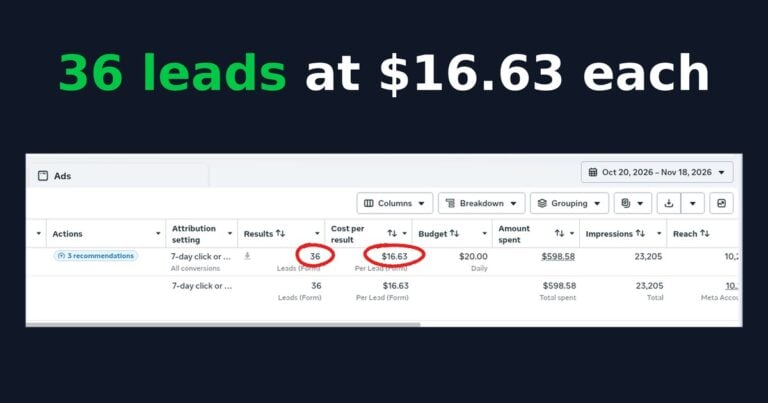
In our auto glass case study video, that Google Ads account got 231 leads in 30 days at $12.54 per lead (Oct 7 to Nov 5, 2026). Those numbers are an example from one account, not a promise for yours. For more published examples, each with its own date range, see our Google Ads case studies.
If you want leads that come from an account you own, rather than leads someone else can sell again, Clicks Geek runs Google Ads and Local Services Ads in accounts you own. The calls and form fills come straight to you and are never resold. Have our team set this up for your business.
What should I ask before I sign either way?
For a pay-per-lead service, ask:
- Is each lead exclusive to me, or is it shared?
- How old is the lead when I receive it?
- What is the credit or refund rule if the lead is bad, and what counts as bad?
- Can I see the source of the lead?
For an agency, ask:
- Who owns the Google Ads account, and whose name is on it?
- What counts as a lead in reporting?
- How will we see cost per booked job, not just cost per lead?
- Who can log in, and what happens to access if we part ways?
We’ll walk you through how our terms work before you sign anything.
What does a real first 30 days look like when you own the Google Ads account?
Expect the first month to go to setup, tracking, and cleanup, not a finished system. You should see the account in your name, conversions defined so junk inquiries are not treated as wins, and a way to review cost per booked job. The case study example above is one published 30-day window, and it was not that account’s first month. It is a reference point, not a target we can promise.
Some owners use both models for a while, for example buying leads while an account is being built. That can be reasonable. There is no split we can recommend from a distance, because it depends on your market, your close rate, and how fast your team calls.
Are exclusive pay-per-lead services the same as hiring an agency?
No. Exclusive means the lead is not sold to another company at the same time. You still usually do not own the ad account or the search terms that produced the lead. Hiring an agency is a different model: the ads run in an account you own, and the lead source stays with you.
For a wider view of lead generation for local service businesses, including ads you own and other ways to buy leads, start with that service page. If you already buy marketplace leads and want a closer look at one source, see our guide to what Thumbtack leads cost and how to judge them.
Get leads in an account you own
A pay-per-lead service and a Google Ads agency are different buying models. Clicks Geek runs Google Ads and Local Services Ads in accounts you own, and we optimize for better calls, not just more of them. The calls and form fills come straight to you and are never resold.