You’re spending thousands on marketing every month. But when your CEO asks which channels are actually driving revenue, you’re stuck piecing together data from five different platforms, making educated guesses, and hoping your attribution spreadsheet is close to reality.
Revenue attribution software solves this by connecting every marketing touchpoint—from that first Google search to the final email that closed the deal—directly to actual revenue. No more guessing. No more spreadsheet gymnastics. Just clear visibility into which marketing efforts are making you money.
The right attribution platform depends on your business model, sales cycle length, and how your customers actually buy. We’ve tested the leading solutions to find tools that deliver accurate multi-touch attribution, integrate seamlessly with your existing stack, and provide insights you can actually act on. Here are the top revenue attribution platforms worth considering in 2026.
1. HubSpot Marketing Hub
Best for: Mid-market B2B companies already using HubSpot CRM or planning to consolidate their stack
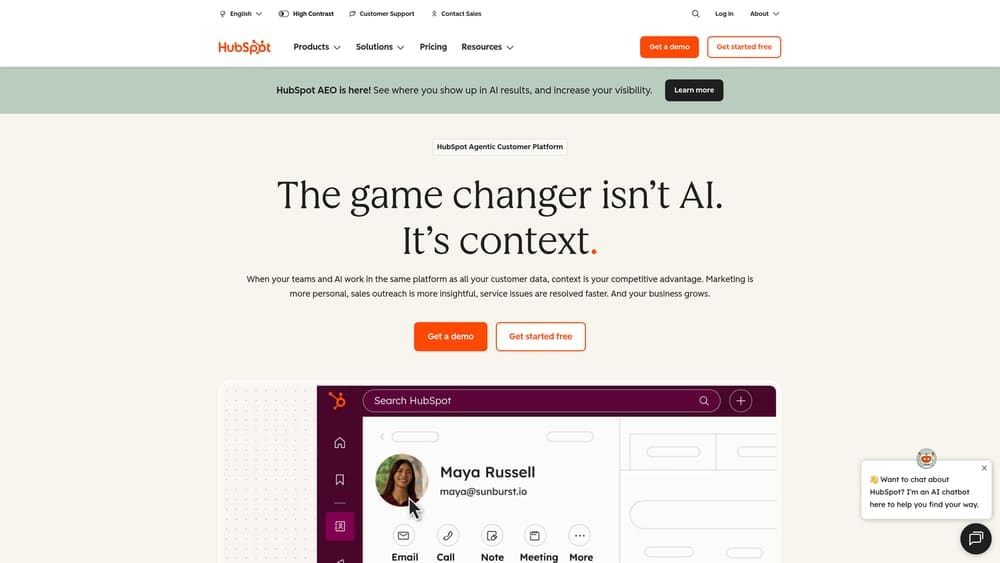
HubSpot Marketing Hub combines marketing automation with built-in revenue attribution that lives inside the same platform as your CRM and sales data.
Where This Tool Shines
The power of HubSpot’s attribution lies in its tight integration between marketing activities and CRM deal data. When a prospect becomes a customer, HubSpot automatically connects every marketing touchpoint in their journey to the closed revenue.
This eliminates the data integration headaches that plague most attribution setups. Your sales team works in the same system where your marketing attribution lives, creating a single source of truth for revenue performance.
Key Features
Seven Attribution Models: Choose from first-touch, last-touch, linear, time decay, U-shaped, W-shaped, or full-path attribution depending on your sales cycle.
Revenue Attribution Reports: See exactly which campaigns, content pieces, and channels influenced closed deals with specific dollar amounts attached.
Campaign Influence Tracking: Track how email campaigns, ads, content downloads, and website visits contribute to pipeline and revenue.
Custom Report Builder: Create attribution reports filtered by deal stage, product line, sales rep, or any custom property in your CRM.
Native CRM Integration: Zero setup required—attribution data flows automatically between marketing and sales modules.
Best For
B2B companies with moderate to long sales cycles who want an all-in-one solution. Particularly valuable if you’re already using HubSpot CRM or considering consolidating your marketing stack to eliminate integration complexity.
Pricing
Professional tier starts at $800/month with basic attribution; Enterprise at $3,600/month unlocks full multi-touch attribution capabilities and custom reporting.
2. Ruler Analytics
Best for: Local service businesses and agencies where phone calls drive most conversions
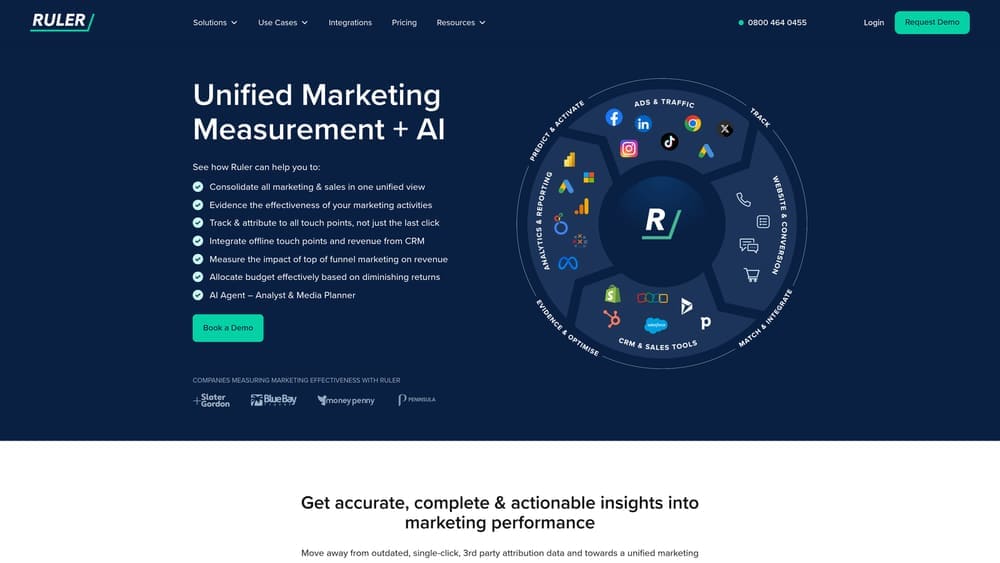
Ruler Analytics specializes in closed-loop attribution with exceptional call tracking capabilities that most platforms overlook.
Where This Tool Shines
If your business generates leads through phone calls, Ruler Analytics captures what other platforms miss. Dynamic number insertion shows unique phone numbers to visitors from different marketing sources, tracking calls back to the exact ad, keyword, or content piece that drove them.
The platform then pushes this attribution data back into Google Ads and Facebook, improving your automated bidding by showing these platforms which campaigns actually drive revenue, not just form fills.
Key Features
Call Tracking with DNI: Dynamic number insertion tracks phone calls back to specific marketing sources and campaigns.
Form and Lead Tracking: Captures lead source data for every form submission and passes it to your CRM.
CRM Integration: Connects with Salesforce, HubSpot, Pipedrive, and other major CRMs to track leads through to closed revenue.
Revenue Data Sync: Pushes conversion value data back to Google Ads and Facebook to optimize automated bidding strategies.
Multi-Touch Attribution: Choose from multiple attribution models to understand the full customer journey.
Best For
Local service businesses, home services companies, legal practices, and B2B service providers where phone calls represent a significant portion of conversions. Also excellent for agencies managing multiple clients who need call tracking.
Pricing
Starts at $199/month for small businesses, scaling based on call volume and number of integrations needed.
3. Dreamdata
Best for: B2B SaaS companies with complex, multi-stakeholder buying processes
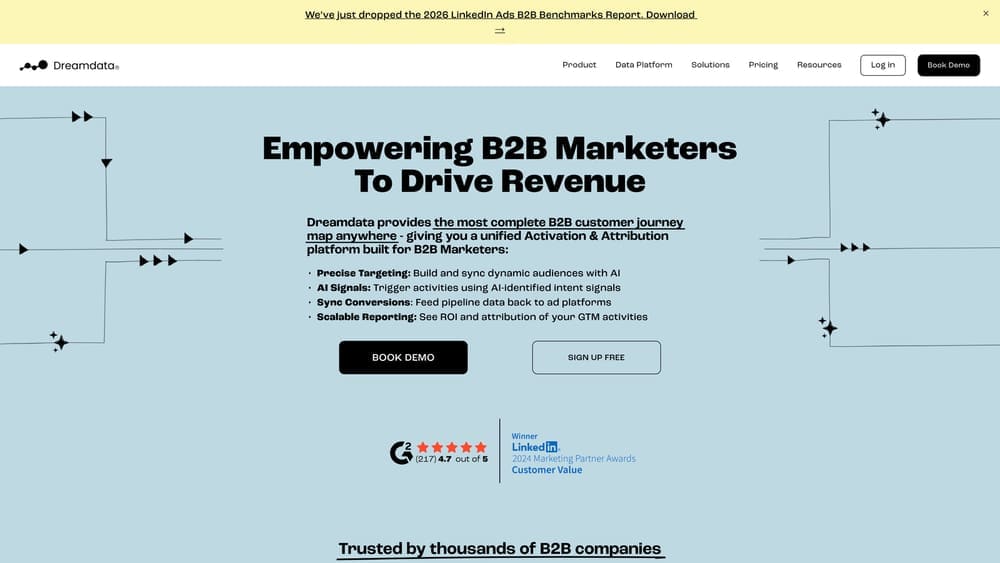
Dreamdata approaches attribution at the account level rather than the individual level, perfect for B2B companies where buying committees make decisions.
Where This Tool Shines
Traditional attribution tracks individual leads, but B2B deals involve multiple people from the same company interacting with your marketing across different channels. Dreamdata maps the entire account’s journey, showing how different stakeholders engaged with your content before the deal closed.
The platform excels at visualizing complex buyer journeys that span months and dozens of touchpoints. You can see exactly how your webinar, case study, and sales outreach worked together to close a $50,000 deal.
Key Features
Account-Based Attribution: Tracks all touchpoints from every person at a target account, not just individual leads.
Buyer Journey Visualization: Visual timeline showing every interaction from first touch to closed deal across all stakeholders.
Content Attribution: Identifies which content pieces influenced deals at different stages of the sales cycle.
Platform Integrations: Connects with Salesforce, HubSpot, LinkedIn Ads, Google Ads, and major marketing automation platforms.
Custom Attribution Models: Build attribution models that reflect your actual sales process and customer journey.
Best For
B2B SaaS companies, enterprise software providers, and businesses with long sales cycles involving multiple decision-makers. Essential if you’re running account-based marketing campaigns.
Pricing
Free tier available for basic tracking; paid plans start at $999/month for full attribution features and integrations.
4. Triple Whale
Best for: Shopify ecommerce brands navigating iOS 14+ tracking limitations
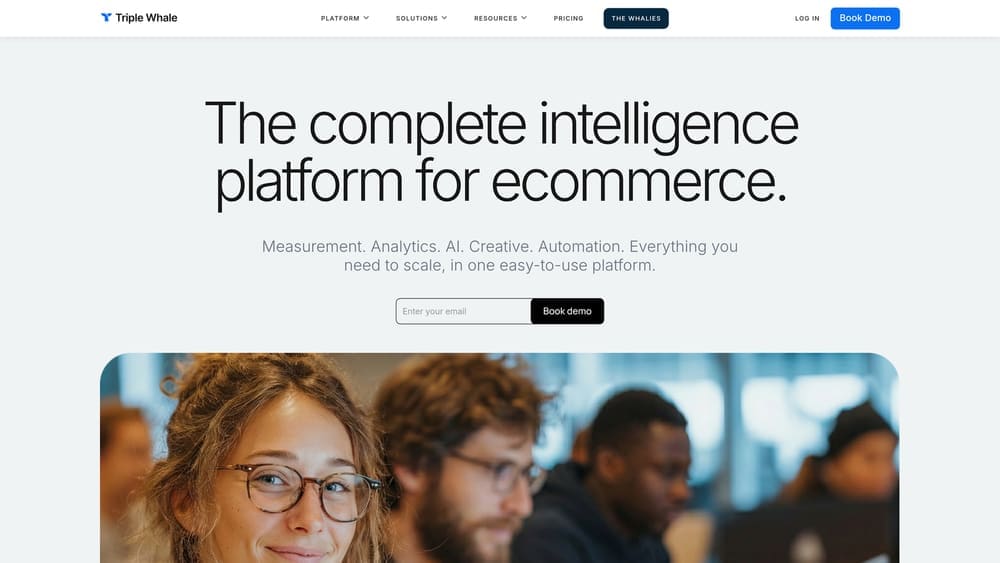
Triple Whale built its platform specifically for ecommerce brands dealing with the attribution chaos created by Apple’s privacy changes.
Where This Tool Shines
The platform’s first-party pixel captures conversion data that Facebook and Google can no longer track reliably post-iOS 14. This gives you attribution visibility that your ad platforms have lost, helping you make smarter budget allocation decisions.
Triple Whale also validates its attribution data against post-purchase surveys, asking customers how they actually found your store. This reality check prevents you from over-crediting retargeting ads and under-crediting top-of-funnel channels.
Key Features
First-Party Pixel: Proprietary tracking that captures conversions missed by Facebook and Google’s pixels.
Shopify Integration: Native connection pulls order data, customer information, and product performance automatically.
Real-Time Dashboard: Live view of revenue, profit margins, ad spend, and ROAS across all channels.
Post-Purchase Surveys: Asks customers how they found you to validate attribution data with actual customer responses.
Creative Analytics: Tracks which ad creatives drive purchases, not just clicks, to inform creative testing.
Best For
Direct-to-consumer Shopify brands spending $10,000+ monthly on paid advertising, particularly those struggling with attribution accuracy after iOS privacy updates.
Pricing
Starts at $129/month for smaller stores; pricing scales with monthly revenue and feature requirements.
5. Northbeam
Best for: Fast-growing ecommerce brands ready to invest in machine learning attribution
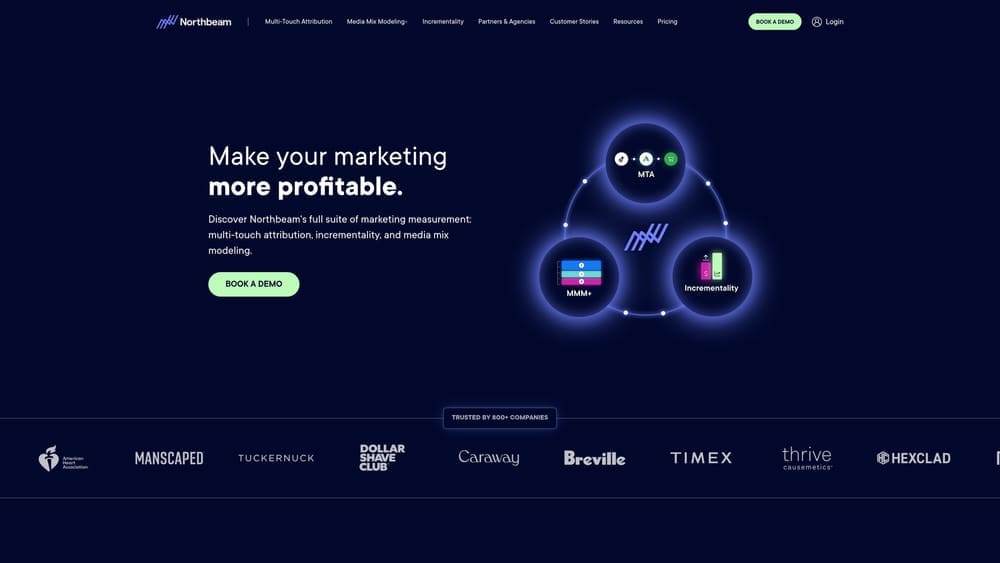
Northbeam uses machine learning to model attribution rather than relying solely on pixel tracking, providing more accurate results as privacy restrictions tighten.
Where This Tool Shines
Traditional pixel-based attribution breaks down when customers use multiple devices or browsers with ad blockers. Northbeam’s ML models analyze patterns across thousands of customer journeys to predict attribution even when tracking isn’t perfect.
The platform also includes incrementality testing capabilities, helping you understand which marketing channels would actually hurt performance if you cut them versus which ones you’re over-crediting.
Key Features
ML Attribution Modeling: Machine learning algorithms that improve attribution accuracy as they process more customer journey data.
Incrementality Testing: Built-in tools to test which channels actually drive incremental revenue versus just capturing existing demand.
Cross-Channel Comparison: Unified view of performance across paid social, paid search, email, organic, and affiliate channels.
Custom Attribution Windows: Set different attribution windows for different channels based on your actual customer behavior.
Cohort LTV Analysis: Track customer lifetime value by acquisition source to optimize for long-term profitability.
Best For
Ecommerce brands spending $50,000+ monthly on advertising who need sophisticated attribution to optimize seven-figure ad budgets across multiple channels.
Pricing
Custom pricing based on ad spend; typically starts around $1,000/month for brands spending $100,000+ monthly on ads.
6. Rockerbox
Best for: Omnichannel brands running TV, podcast, influencer, and digital campaigns simultaneously
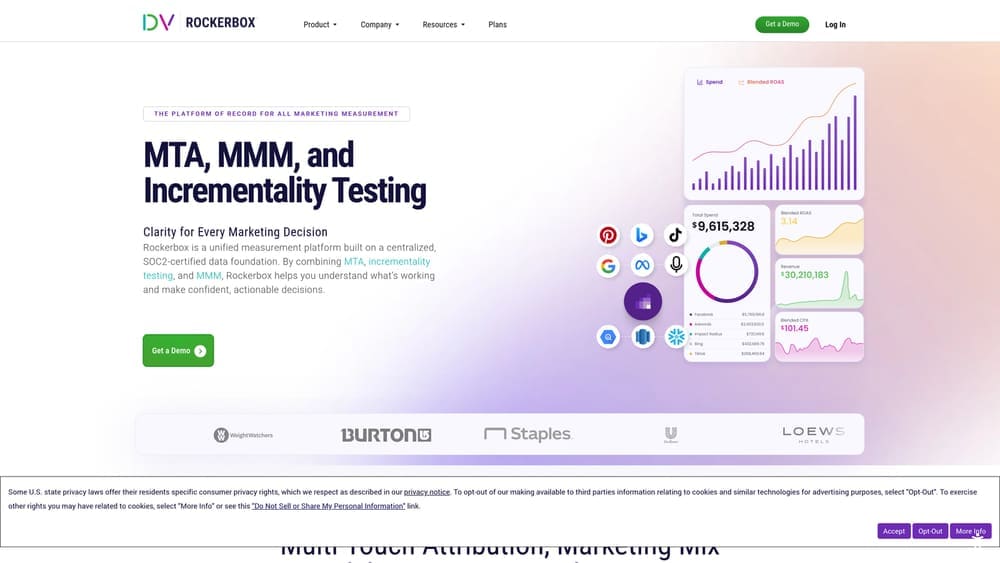
Rockerbox tackles attribution for marketing channels that most platforms ignore, including TV commercials, podcast sponsorships, and influencer partnerships.
Where This Tool Shines
Most attribution platforms only track digital channels. Rockerbox connects offline marketing efforts to online conversions, showing how your podcast sponsorship or TV commercial influenced customers who later bought through your website.
The platform uses marketing mix modeling alongside digital attribution to understand how all your marketing channels work together, including brand-building activities that don’t generate immediate clicks.
Key Features
Omnichannel Attribution: Tracks digital, TV, podcast, direct mail, and influencer marketing in a unified attribution model.
TV and Podcast Measurement: Connects broadcast media exposure to website traffic spikes and conversions using time-based analysis.
Influencer Attribution: Tracks sales generated by influencer partnerships using unique codes and landing pages.
Marketing Mix Modeling: Statistical modeling that shows how different marketing channels interact and influence each other.
Journey Analytics: Visualizes complete customer paths across online and offline touchpoints.
Best For
Established consumer brands running integrated campaigns across digital and traditional media, particularly those investing significantly in brand awareness channels.
Pricing
Custom enterprise pricing; typically requires significant investment appropriate for brands with multi-million dollar marketing budgets.
7. Bizible (Adobe Marketo Measure)
Best for: Enterprise B2B companies deeply invested in the Salesforce ecosystem
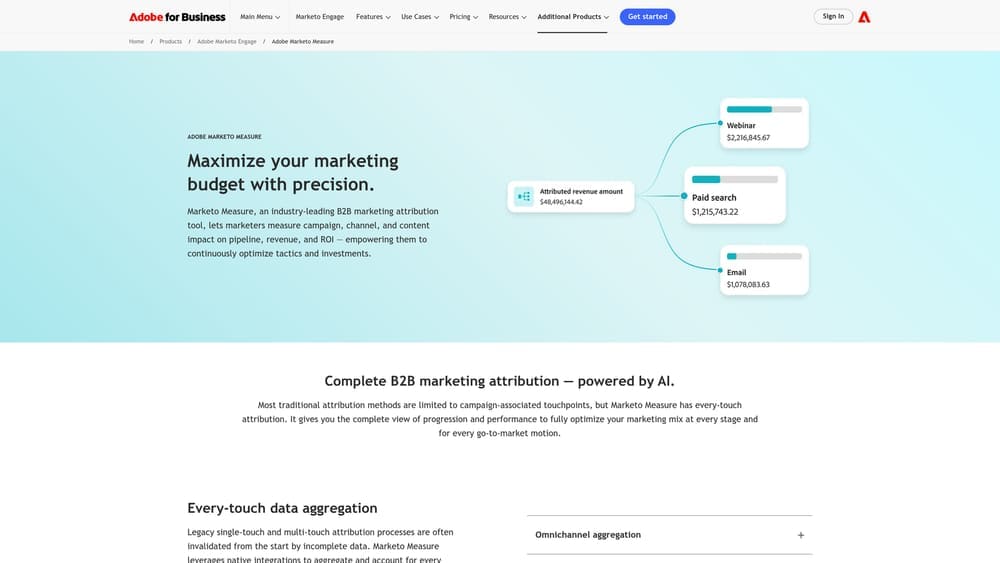
Bizible (now Adobe Marketo Measure) provides enterprise-grade attribution with unmatched Salesforce integration depth.
Where This Tool Shines
Bizible lives natively inside Salesforce, meaning your sales team sees attribution data directly in the CRM without switching platforms. Sales reps can view which marketing touchpoints influenced their deals, and marketing can report on pipeline and revenue using the same data sales trusts.
The platform’s customizable touchpoint rules let you define exactly which interactions count as meaningful touches in your attribution model, critical for complex B2B sales processes.
Key Features
Salesforce-Native Integration: Attribution data lives directly in Salesforce objects, accessible to sales and marketing teams.
Customizable Touchpoint Rules: Define which interactions qualify as attribution touchpoints based on your sales process.
Account-Based Attribution: Tracks marketing influence at the account level for enterprise sales processes.
Multi-Touch Revenue Attribution: Multiple attribution models show marketing influence across the entire buyer journey.
Boomerang Stage Tracking: Monitors deals that move backward in your pipeline to understand friction points.
Best For
Enterprise B2B companies with established Salesforce implementations, complex sales processes, and dedicated marketing operations teams.
Pricing
Enterprise-level pricing typically starting around $30,000 annually, scaling with company size and feature requirements.
8. Wicked Reports
Best for: Subscription businesses and info-product sellers focused on customer lifetime value
Wicked Reports specializes in LTV-based attribution, perfect for businesses where the initial purchase is just the beginning of the customer relationship.
Where This Tool Shines
Traditional attribution platforms credit marketing channels based on first purchase value. But if you’re selling subscriptions, courses, or membership sites, the real value comes from months or years of recurring revenue.
Wicked Reports attributes the full customer lifetime value back to the original marketing source, showing which channels acquire customers who stick around versus those who churn quickly. This prevents you from over-investing in channels that drive cheap acquisitions but poor retention.
Key Features
LTV Attribution: Attributes full customer lifetime value to marketing sources, not just initial purchase value.
Subscription Tracking: Monitors recurring revenue and churn by acquisition source to optimize for retention.
Cohort Analysis: Compares customer value across different acquisition cohorts to identify trends.
Platform Integrations: Connects with major email platforms, ad networks, and payment processors.
Ad-Level ROI: Tracks return on investment down to individual ads and keywords based on LTV.
Best For
Subscription box companies, online course creators, membership sites, and SaaS businesses where customer lifetime value significantly exceeds first purchase value.
Pricing
Plans start at $250/month, scaling based on revenue volume and integration requirements.
9. Google Analytics 4 Attribution
Best for: Budget-conscious businesses starting their attribution journey
Google Analytics 4 provides free attribution capabilities that many businesses overlook, offering a solid foundation before investing in specialized tools.
Where This Tool Shines
GA4’s data-driven attribution model uses Google’s machine learning to assign credit across touchpoints based on actual conversion patterns in your data. This provides more sophisticated attribution than simple last-click models without requiring a paid platform.
The conversion path reports show complete customer journeys, revealing how different channels work together to drive conversions. You can see that customers typically discover you through organic search, return via paid social, and convert after clicking an email.
Key Features
Data-Driven Attribution: Machine learning model that assigns credit based on each touchpoint’s actual contribution to conversions.
Conversion Path Analysis: Visualizes complete customer journeys showing all touchpoints before conversion.
Model Comparison: Compare data-driven attribution against last-click, first-click, and other models to understand differences.
Google Ads Integration: Automatically shares conversion data with Google Ads to improve automated bidding.
Cross-Device Tracking: Tracks users across devices when they’re signed into Google accounts.
Best For
Small to mid-sized businesses starting with attribution, companies with limited budgets, or businesses primarily driving conversions through Google Ads and organic channels.
Pricing
Completely free for standard GA4; enterprise features available through Google Analytics 360 at custom pricing.
Making the Right Choice for Your Business
The right attribution platform depends less on features and more on how your customers actually buy from you.
Ecommerce brands should prioritize tools built for their reality. Triple Whale and Northbeam handle the iOS 14+ tracking challenges that plague Facebook and Google attribution. If you’re running omnichannel campaigns including TV or podcasts, Rockerbox’s ability to connect offline media to online conversions becomes essential.
B2B companies face different challenges. If your sales cycle involves multiple stakeholders over several months, Dreamdata’s account-based attribution shows the complete buying committee’s journey. For Salesforce-heavy organizations, Bizible’s native integration eliminates the data sync headaches that plague other solutions.
Local service businesses need to prioritize call tracking. Ruler Analytics captures the phone conversions that represent the majority of your leads, then pushes that revenue data back to Google Ads to optimize your campaigns properly.
If you’re just starting with attribution, GA4 provides a solid free foundation. But once you’re spending $10,000+ monthly on advertising, the ROI improvement from accurate attribution typically justifies investing in a specialized platform.
Here’s the reality though: attribution software only tells you what happened. The real value comes from using those insights to optimize your campaigns, reallocate budget to what’s working, and stop wasting money on channels that look good in vanity metrics but don’t drive revenue.
Tired of spending money on marketing that doesn’t produce real revenue? We build lead systems that turn traffic into qualified leads and measurable sales growth. If you want to see what this would look like for your business, we’ll walk you through how it works and break down what’s realistic in your market.