You’ve spent good money getting leads into your system. The ads worked. The landing page converted. The contact form got filled out. Then… crickets. Or worse, you follow up once, get no response, and move on to the next shiny lead. Meanwhile, your competitors are staying in touch, building relationships, and closing deals with prospects you gave up on too soon.
Here’s the reality: most leads aren’t ready to buy immediately. They’re researching, comparing options, dealing with internal approval processes, or simply not at the right stage of their buying journey yet. Industry research consistently shows that only a small fraction of leads convert on first contact—the rest need time, education, and strategic follow-up.
That gap between initial interest and purchase decision? That’s where lead nurturing lives. And it’s where most local businesses leave massive amounts of revenue on the table.
The cost of ignoring lead nurturing isn’t just lost sales—it’s wasted ad spend, diminished brand trust, and competitors swooping in to close deals that should have been yours. Every lead that slips through the cracks represents marketing dollars you’ll never see a return on.
The good news? Effective lead nurturing doesn’t require enterprise-level resources or complex marketing automation platforms. The strategies that follow are practical, ROI-focused approaches that local businesses can implement with the tools they already have. These aren’t theoretical concepts—they’re proven tactics that turn cold prospects into paying customers by staying relevant, providing value, and being there when prospects are finally ready to buy.
1. Segment Your Leads Based on Behavior, Not Just Demographics
The Challenge It Solves
Most businesses segment leads by basic demographics—industry, company size, location—and then send everyone the same generic messages. The problem? A CEO who downloaded your pricing guide has completely different needs than a CEO who only visited your homepage once. Demographics tell you who someone is, but behavior tells you what they actually care about and where they are in the buying process.
Without behavioral segmentation, you’re essentially shouting the same message at everyone regardless of their level of interest, specific pain points, or readiness to engage. It’s the marketing equivalent of giving the same sales pitch to someone browsing casually and someone ready to sign a contract.
The Strategy Explained
Behavioral segmentation creates dynamic groups based on what prospects actually do—pages they visit, content they download, emails they open, videos they watch, and actions they take on your site. This approach allows you to tailor your nurturing messages to match their demonstrated interests and engagement level.
Think of it like this: someone who watched your entire product demo video is signaling much higher intent than someone who bounced from your homepage after ten seconds. Someone who downloaded your implementation guide is asking different questions than someone who only read a blog post. By tracking these behaviors, you can send highly relevant follow-up that addresses exactly where each prospect is in their journey.
The key is setting up tracking for meaningful actions—not just page views, but specific behaviors that indicate interest, intent, or objections. Then create segments that trigger different nurturing paths based on these behaviors.
Implementation Steps
1. Identify the high-value actions prospects can take on your website and in your emails—downloading resources, watching videos, visiting pricing pages, attending webinars, or engaging with specific product pages.
2. Set up tracking for these behaviors using your CRM, email platform, or website analytics tools (most modern platforms include basic behavioral tracking without requiring custom code).
3. Create behavioral segments such as “high-engagement prospects” (multiple touchpoints in short timeframe), “content consumers” (downloaded resources but no sales contact), “pricing page visitors” (showing buying intent), and “cold leads” (no engagement in 30+ days).
4. Build targeted nurturing sequences for each segment that address their specific stage and demonstrated interests—don’t send product demos to people who haven’t engaged with educational content yet.
Pro Tips
Start simple with just three behavioral segments: high engagement, moderate engagement, and low engagement. As you refine your approach, add more granular segments based on specific content topics or product interests. Review and adjust your segments monthly—behavioral patterns change as your content and offerings evolve. The goal isn’t perfect segmentation from day one; it’s progressively better targeting over time.
2. Build Multi-Touch Email Sequences That Educate Before They Sell
The Challenge It Solves
Too many businesses treat email nurturing as a single follow-up message or an immediate sales pitch. Prospect downloads a guide, receives one generic “thanks for downloading” email, and that’s it. Or worse, they immediately get hit with aggressive sales messaging when they’re still in research mode. Both approaches fail because they don’t match where the prospect actually is in their decision-making process.
The challenge is that trust and understanding take time to build. Prospects need to understand their problem, explore potential solutions, evaluate different approaches, and build confidence in your expertise before they’re ready to have a sales conversation. A single touchpoint—or premature selling—short-circuits this natural progression.
The Strategy Explained
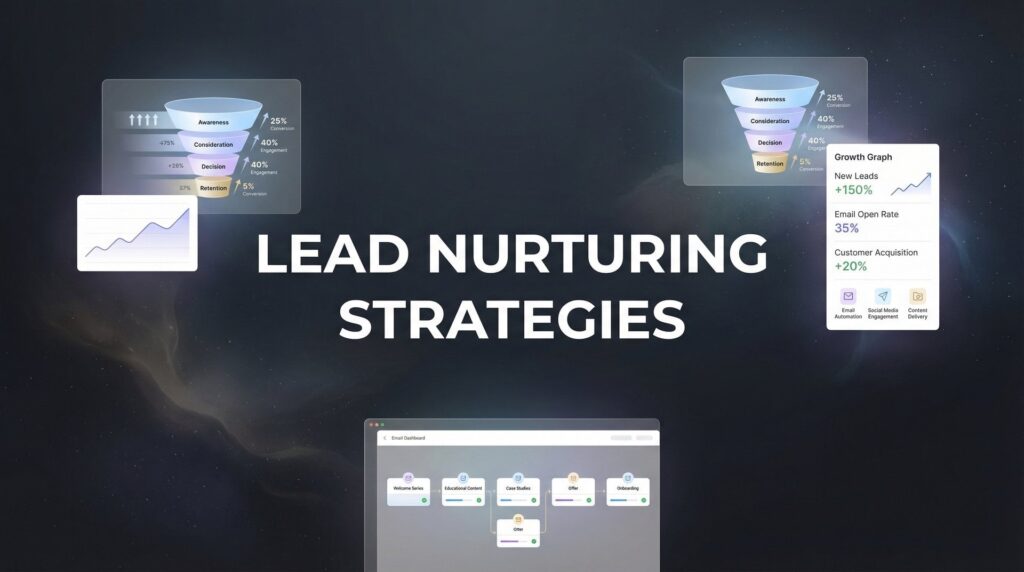
Multi-touch email sequences are strategic series of messages designed to progressively educate prospects, address common objections, and build trust over time. Rather than jumping straight to “book a call,” these sequences move prospects through distinct stages: awareness (helping them understand their problem), consideration (introducing solution approaches), and decision (demonstrating why your solution fits their needs).
The most effective sequences follow a clear progression. Early emails focus on education and value—sharing insights, frameworks, and helpful resources with no strings attached. Middle emails introduce your approach and methodology, often through case studies or examples that show how others solved similar problems. Later emails address specific objections, provide social proof, and create natural opportunities for sales conversations.
Timing matters as much as content. Space emails appropriately—typically 2-4 days apart for active sequences, though this varies by industry and buying cycle length. The goal is consistent presence without overwhelming prospects. Understanding how to use email marketing for lead generation effectively is essential for building sequences that convert.
Implementation Steps
1. Map out a 5-7 email sequence for each major lead magnet or entry point, with each email serving a specific purpose in the buyer journey (don’t just write emails—design a progression).
2. Write Email 1 as pure value delivery that expands on the initial resource they downloaded, Email 2-3 as educational content that introduces concepts and frameworks, Email 4-5 as social proof and methodology explanation, and Email 6-7 as objection handling and clear next steps.
3. Include a single, clear call-to-action in each email that matches the sequence stage—early emails might link to additional resources, middle emails to case studies or testimonials, and later emails to consultation bookings or demos.
4. Set up your email platform to automatically enroll new leads in the appropriate sequence based on their entry point, and configure exits if they take high-intent actions like booking a call (no need to keep nurturing someone who’s already engaged).
Pro Tips
Write your sequences in a conversational, helpful tone—not corporate marketing speak. Reference the specific resource they downloaded in early emails to maintain context. Include a P.S. section in each email with a secondary resource or insight. Test subject lines aggressively; open rates directly impact sequence effectiveness. Most importantly, don’t be afraid to show personality and share real insights—generic “best practices” content won’t build the trust needed for conversion.
3. Deploy Lead Scoring to Prioritize Sales-Ready Prospects
The Challenge It Solves
Not all leads are created equal, but most businesses treat them that way. Sales teams waste time chasing cold prospects while genuinely interested, high-intent leads slip through the cracks because nobody recognized the buying signals. Without a systematic way to identify which leads deserve immediate attention, you’re essentially guessing at priority—or worse, following up in chronological order regardless of actual interest level.
The result? Sales teams get frustrated chasing unqualified leads, marketing gets blamed for “bad lead quality,” and prospects who are actually ready to buy don’t get the timely response they need. Meanwhile, your competitors with better lead prioritization are closing deals faster. If this sounds familiar, you’re likely dealing with the low quality leads problem that plagues many businesses.
The Strategy Explained
Lead scoring assigns point values to specific behaviors and characteristics, creating a numerical score that indicates sales readiness. High-value actions like visiting your pricing page, watching a product demo, or opening multiple emails increase the score. Engagement patterns matter too—a prospect who takes multiple actions in a short timeframe scores higher than someone with sporadic, low-level engagement spread over months.
The key is distinguishing between explicit scoring (demographic and firmographic data that indicate fit) and implicit scoring (behavioral data that indicate interest). A prospect might be a perfect demographic fit but show zero engagement—that’s not a hot lead. Conversely, someone slightly outside your ideal customer profile who’s consuming content voraciously and visiting high-intent pages deserves immediate attention.
Effective lead scoring creates clear thresholds: cold leads (minimal engagement), warm leads (moderate engagement, needs continued nurturing), hot leads (high engagement, ready for sales contact), and sales-qualified leads (explicitly requested contact or demo). These thresholds trigger different actions—automated nurturing for cold and warm leads, sales alerts for hot leads, immediate personal outreach for sales-qualified leads.
Implementation Steps
1. Define your high-value behaviors and assign point values—visiting pricing pages might be worth 20 points, downloading a buyer’s guide 15 points, opening emails 5 points, and attending a webinar 30 points (adjust based on what actually correlates with sales in your business).
2. Set up scoring rules in your CRM or marketing automation platform, including both positive scoring for engagement and negative scoring for disqualifying factors like unsubscribes or extended inactivity.
3. Establish score thresholds that trigger specific actions: 0-25 points stays in automated nurturing, 25-50 points gets added to a “warming up” segment with more frequent touchpoints, 50-75 points triggers a sales notification, and 75+ points gets immediate personal outreach from sales.
4. Review and calibrate your scoring model monthly by comparing lead scores to actual conversion outcomes—if low-scoring leads are converting or high-scoring leads aren’t, adjust your point values and thresholds accordingly.
Pro Tips
Start with simple scoring based on 5-7 key behaviors rather than trying to score everything from day one. Include time decay in your model—engagement from three months ago shouldn’t count as much as engagement from this week. Don’t forget negative scoring for disqualifying factors like wrong industry, company size, or geographic location. Most importantly, actually use the scores—lead scoring only works if it changes how you prioritize follow-up and allocate sales resources.
4. Use Retargeting Ads to Stay Top-of-Mind Without Being Annoying
The Challenge It Solves
Prospects visit your site, consume content, and then disappear into the digital void. They meant to come back, but life happened—other priorities emerged, they got distracted, or they simply forgot about you. Meanwhile, your competitors are running retargeting campaigns that keep their brand visible while you’re relying solely on email (which prospects might not even open). Out of sight means out of mind, and out of mind means lost deals.
The flip side? Aggressive retargeting that shows the same ad 50 times creates negative brand associations. Prospects start to feel stalked rather than nurtured. The challenge is maintaining presence without crossing into annoyance—being there when prospects are ready to re-engage without making them actively avoid your brand.
The Strategy Explained
Strategic retargeting uses paid ads on platforms like Facebook, Instagram, LinkedIn, and Google Display Network to stay visible to prospects who’ve already shown interest. But effective retargeting isn’t about blasting the same message repeatedly—it’s about creating a nurturing journey through your ad creative that mirrors where prospects are in the buying process.
The approach works in stages. Early-stage retargeting (shown to people who visited your site but took minimal action) focuses on educational content and value delivery. Mid-stage retargeting (for those who engaged with specific content or pages) introduces your methodology and social proof. Late-stage retargeting (for high-intent behaviors like pricing page visits) includes direct offers and clear calls-to-action. Understanding the differences between platforms helps you decide whether Google Ads or Facebook Ads for lead generation works better for your retargeting strategy.
Frequency caps are critical—showing the same person your ad 3-5 times per week keeps you visible without overwhelming them. Exclusions matter too: people who converted shouldn’t see conversion-focused ads, and people who explicitly opted out shouldn’t see any retargeting at all. The goal is helpful presence, not relentless pursuit.
Implementation Steps
1. Install tracking pixels on your website for your chosen ad platforms (Facebook Pixel, LinkedIn Insight Tag, Google Ads remarketing tag) to build retargeting audiences based on site visitors and specific page views.
2. Create segmented audiences based on behavior: all site visitors, content consumers (blog readers, resource downloaders), product page visitors, pricing page visitors, and high-intent visitors (multiple sessions or specific page combinations).
3. Develop stage-appropriate ad creative for each audience segment—educational content ads for general visitors, case study and testimonial ads for engaged prospects, direct offer ads for high-intent visitors—and set frequency caps of 3-5 impressions per person per week.
4. Set up exclusion lists to remove people who converted, unsubscribed, or explicitly opted out, and rotate ad creative every 2-3 weeks to prevent ad fatigue even within your frequency caps.
Pro Tips
Don’t just retarget everyone who hit your homepage once—focus your budget on prospects who showed meaningful engagement. Use dynamic retargeting when possible to show prospects content related to what they actually viewed on your site. Test different ad formats (video often outperforms static images for retargeting). Consider using sequential retargeting that shows different messages in a specific order over time. And always, always set frequency caps—there’s no faster way to damage your brand than being the company whose ads prospects see 20 times per day.
5. Create Value-First Content Offers at Each Buying Stage
The Challenge It Solves
Most businesses create one lead magnet—usually a generic guide or checklist—and then wonder why leads don’t progress through the funnel. The problem is that prospects at different stages have completely different questions. Someone just becoming aware of their problem needs different content than someone actively comparing solutions. Offering the same resource to everyone, regardless of where they are in the buying journey, fails to address their actual needs at that moment.
Without stage-appropriate content, you either overwhelm early-stage prospects with solution details they’re not ready for, or you bore late-stage prospects with basic information they’ve already internalized. Either way, you’re not providing the value needed to move them forward, and they disengage or turn to competitors who better address their current questions.
The Strategy Explained
Value-first content mapping means creating specific resources that address the questions, concerns, and objections prospects have at each stage of the buyer journey. Early-stage content (awareness) helps prospects understand and articulate their problem—think diagnostic tools, industry reports, or educational guides that don’t mention your solution at all. Mid-stage content (consideration) explores different approaches and solution categories, introducing frameworks and methodologies. Late-stage content (decision) provides the information needed to choose between specific vendors—comparison guides, ROI calculators, implementation roadmaps, and detailed case studies.
The key is genuine value without gating everything behind forms. Some content should be freely accessible to build trust and demonstrate expertise. Higher-value, more specific resources can require contact information, but the value exchange must be clear—prospects should feel they’re getting something genuinely useful, not just another sales pitch disguised as content.
This creates a natural content progression: prospects discover your freely available educational content, find it valuable, willingly exchange contact information for more detailed resources, and eventually engage with decision-stage content when they’re ready to evaluate vendors. Each piece of content should naturally lead to the next stage. Having the right lead generation tools makes creating and distributing this content much more efficient.
Implementation Steps
1. Map your buyer journey stages and list the specific questions prospects ask at each stage (talk to your sales team—they hear these questions constantly and can tell you exactly what prospects need to know before moving forward).
2. Audit your existing content and identify gaps where you don’t have resources addressing key questions at specific stages, then prioritize creating content for the stages where you’re weakest.
3. Develop a content mix for each stage: awareness stage might include blog posts, diagnostic quizzes, and industry trend reports; consideration stage might include methodology guides, approach comparison content, and framework explanations; decision stage might include detailed case studies, ROI calculators, implementation guides, and vendor comparison checklists.
4. Create clear pathways between content pieces—each resource should reference related content at the next stage and include calls-to-action that guide prospects deeper into the funnel without being pushy.
Pro Tips
Don’t gate everything—your best educational content should be freely accessible to build trust and demonstrate expertise before asking for contact information. Use actual customer questions and objections as content topics rather than guessing what might be interesting. Repurpose content across formats: a detailed guide can become a webinar, a series of emails, social media posts, and a video series. Focus on creating fewer pieces of genuinely valuable content rather than churning out mediocre resources just to have more offers. Quality beats quantity when the goal is building trust and moving prospects through a buying journey.
6. Implement Timely Follow-Up Triggers Based on Prospect Actions
The Challenge It Solves
Prospects take high-intent actions—visiting your pricing page, watching your demo video, downloading your buyer’s guide—and then… nothing happens. Or worse, they get a generic automated email days later that completely misses the moment of peak interest. By the time you follow up, they’ve moved on, contacted a competitor, or simply lost momentum in their buying process.
The concept of “speed to lead” is well-documented in sales research: faster response times generally correlate with significantly higher conversion rates. But speed alone isn’t enough—the follow-up also needs to be relevant to the specific action the prospect just took. A pricing page visitor needs different follow-up than someone who downloaded an awareness-stage guide.
The Strategy Explained
Automated follow-up triggers create immediate, relevant responses to specific prospect behaviors that indicate elevated interest or intent. When a prospect takes a high-value action, they receive targeted follow-up within minutes or hours—not days—that directly addresses what they just did and provides the logical next step.
Think of it as conversational momentum. Someone visits your pricing page—they’re clearly thinking about cost and evaluating whether your solution fits their budget. That’s the perfect moment to send an email that acknowledges their interest, addresses common pricing questions, and offers a quick call to discuss their specific situation. Wait three days to follow up, and that momentum is gone.
The key is identifying which behaviors warrant immediate follow-up versus continued nurturing. Not every action requires instant response—someone reading a blog post might just be in research mode. But certain actions—pricing page visits, demo video completions, multiple pages viewed in one session, return visits within 24 hours—signal active evaluation and deserve immediate, personalized response. Many businesses struggling with getting more qualified leads fast find that implementing proper follow-up triggers dramatically improves their conversion rates.
Implementation Steps
1. Identify your high-intent behaviors that indicate prospects are actively evaluating solutions or approaching a decision point—typically including pricing page visits, demo requests, multiple resource downloads in short timeframes, and repeat visits to specific product pages.
2. Create action-specific email templates that directly reference what the prospect just did and provide relevant next steps: pricing page visitors get emails addressing cost considerations and offering personalized quotes; demo viewers get implementation timeline information and case studies; multiple resource downloaders get offers for direct conversations to answer questions.
3. Set up automation rules that trigger these emails immediately when the behavior occurs (within 5-15 minutes if possible), and configure notifications to sales teams for the highest-intent actions so human follow-up can happen quickly.
4. Build in conditional logic so prospects don’t receive multiple triggered emails if they take several high-intent actions in quick succession—consolidate follow-up into one comprehensive message rather than bombarding them with separate automated responses.
Pro Tips
Personalize triggered emails beyond just inserting the prospect’s name—reference the specific page they visited or resource they downloaded. Include a clear, single call-to-action rather than multiple options that create decision paralysis. For the highest-intent triggers, consider having sales reps send personal video messages or make phone calls rather than relying solely on automated emails. Test your trigger timing—immediate follow-up works well for some behaviors, but waiting a few hours can feel less aggressive for others. And always provide value in the triggered email, not just “I noticed you visited our pricing page”—address likely questions and concerns they have at that exact moment.
7. Re-Engage Cold Leads With Strategic Win-Back Campaigns
The Challenge It Solves
Your database is full of leads that went cold—prospects who showed initial interest, engaged for a while, then disappeared. They stopped opening emails, haven’t visited your site in months, and seem completely disconnected from your nurturing efforts. Most businesses either keep sending the same nurturing emails into the void or give up entirely and let these leads languish in the database forever.
But here’s the thing: these aren’t strangers. They already know your brand, they’ve consumed your content, and at some point they were interested enough to give you their contact information. That’s valuable. The challenge is reigniting interest without being desperate or annoying—finding the right message and timing to bring them back into the conversation.
The Strategy Explained
Win-back campaigns are targeted efforts designed specifically to re-engage leads that have gone dormant. Unlike regular nurturing sequences, these campaigns acknowledge the silence, create urgency or novelty, and give prospects a compelling reason to re-engage. The most effective win-back campaigns don’t just repeat what you’ve already been saying—they offer something genuinely new or different.
Successful win-back approaches typically follow one of several patterns: the “we’ve been improving” message that highlights new offerings, features, or resources since they last engaged; the “we miss you” approach that acknowledges the lapse and asks what would make them interested again; the “last chance” message that creates urgency through limited-time offers or information; or the “fresh start” approach that essentially resets the relationship with new content or a new angle on their problem.
Timing matters significantly. Don’t wait too long—leads that have been dormant for 12+ months are much harder to revive than those inactive for 3-6 months. But also don’t jump too quickly—someone who hasn’t engaged in two weeks isn’t necessarily cold, they might just be busy. Businesses dealing with inconsistent lead generation often find that win-back campaigns help smooth out revenue fluctuations by reactivating dormant prospects.
Implementation Steps
1. Define what “cold” means for your business based on typical buying cycles—for most B2B services, leads with zero engagement (no email opens, no site visits) for 60-90 days qualify as cold and warrant win-back efforts.
2. Segment your cold leads into categories: those who engaged heavily then disappeared (high-potential win-backs), those who never engaged much to begin with (low priority), and those who explicitly disengaged or unsubscribed (remove from campaigns entirely).
3. Create a 3-4 email win-back sequence with distinct approaches: Email 1 acknowledges the silence and offers something new (recent content, new resource, updated offering); Email 2 provides significant value with no strings attached (your best content or tool); Email 3 creates urgency or asks directly what would make them interested; Email 4 is the final “breakup” email that offers one last resource and gives them an easy opt-out.
4. Send win-back campaigns from a real person (CEO, sales rep, or marketing director) rather than a generic company email address, and use more casual, conversational subject lines that stand out from typical marketing emails.
Pro Tips
The “breakup” email (final win-back attempt that acknowledges you’ll stop contacting them) often gets the highest response rates because it feels honest and gives prospects control. Don’t be afraid to be direct about the fact that they haven’t engaged—prospects appreciate authenticity over pretending nothing happened. Offer a clear, easy path back in: a single resource download, a quick survey about their needs, or a no-pressure conversation. Test offering something completely different from your original nurturing content—sometimes prospects went cold because your initial approach didn’t resonate. And respect opt-outs immediately; win-back campaigns should have higher unsubscribe rates than regular nurturing because you’re explicitly giving people an exit.
Putting Your Lead Nurturing Engine Into Action
These seven strategies aren’t isolated tactics—they work together as an interconnected system that moves prospects from initial interest to purchase decision. Behavioral segmentation informs your email sequences. Lead scoring identifies when prospects are ready for sales conversations. Retargeting keeps you visible while email nurturing builds trust. Stage-appropriate content addresses evolving questions. Timely triggers capture high-intent moments. Win-back campaigns recover lost opportunities.
The key is implementation in the right order. Don’t try to deploy everything simultaneously—that’s a recipe for half-finished systems that don’t deliver results.
Start with the foundation: segmentation and email sequences. Get basic behavioral tracking in place and build out your core nurturing sequences for each major entry point. These create the infrastructure everything else builds on. Once you have consistent nurturing running, layer in lead scoring to prioritize which prospects deserve immediate sales attention. This prevents your team from chasing cold leads while hot prospects wait. For businesses that need help building these systems, exploring lead generation for service businesses provides a comprehensive framework to follow.
Next, add retargeting campaigns to extend your reach beyond email and maintain visibility with prospects who aren’t engaging with your messages. As you refine these elements, audit your content against the buyer journey stages and fill gaps where prospects need information you’re not providing. Implement follow-up triggers for your highest-intent behaviors—this is often the highest-ROI addition because it capitalizes on existing interest you’re currently missing. Finally, once your core nurturing is solid, deploy win-back campaigns to recover dormant leads in your database.
The businesses that win aren’t the ones with the most sophisticated technology or the biggest marketing budgets. They’re the ones that consistently stay in front of prospects with relevant, valuable communication until those prospects are ready to buy. They recognize that nurturing isn’t a cost—it’s the bridge between marketing spend and revenue generation. Combining strong nurturing with effective customer retention marketing strategies creates a complete system for maximizing customer lifetime value.
Take an honest look at your current lead nurturing process. How many of these strategies are you actually executing? How many leads are slipping through the cracks because you’re not staying in touch strategically? How much revenue are you leaving on the table?
If you want to see what this would look like for your business, we’ll walk you through how it works and break down what’s realistic in your market. Tired of spending money on marketing that doesn’t produce real revenue? We build lead systems that turn traffic into qualified leads and measurable sales growth.