You’ve spent good money driving traffic to your website. People click your ads, browse your pages, maybe even add items to their cart. Then they vanish. According to industry research, roughly 97% of first-time visitors leave without converting. That’s not a failure of your product or service—it’s simply how buying decisions work in the digital age.
Here’s the reality: remarketing isn’t about annoying people with repetitive ads. It’s about strategic re-engagement that acknowledges where prospects are in their buying journey and moves them forward with the right message at the right time.
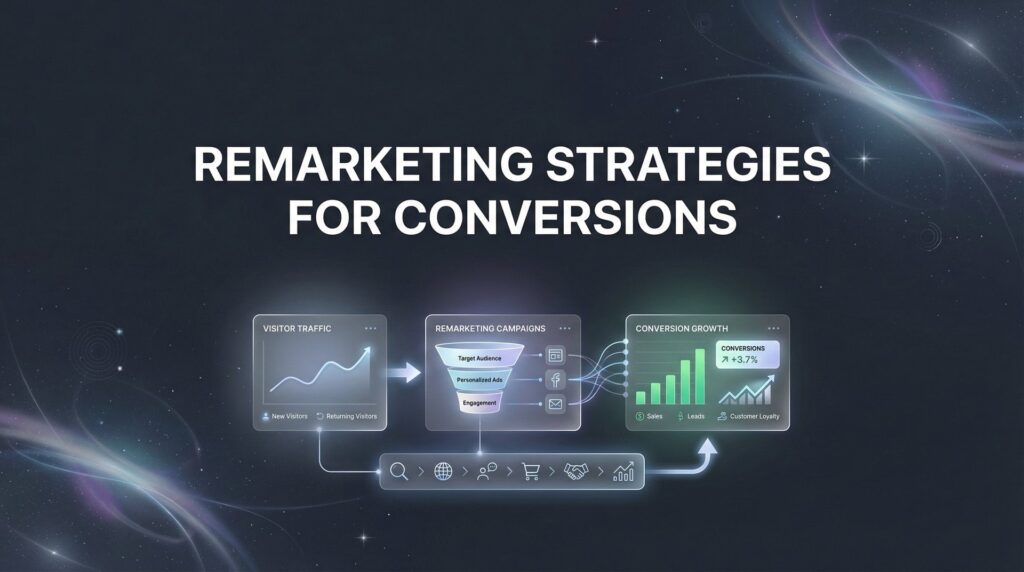
The difference between remarketing that wastes budget and remarketing that drives revenue comes down to strategy. High-performing campaigns don’t just “show ads to people who visited.” They segment audiences intelligently, craft sequential narratives, personalize creative dynamically, and time their approach based on actual purchase cycles.
What follows are seven battle-tested remarketing strategies for conversions that actually generate measurable revenue. These aren’t theoretical concepts—they’re approaches used by successful campaigns to recover lost conversions and maximize ad spend ROI. Each strategy builds on proven marketing principles and can be implemented immediately, regardless of your current campaign sophistication.
Let’s turn those disappearing visitors into paying customers.
1. Segment Audiences by Intent Level
The Challenge It Solves
Most remarketing campaigns treat all visitors the same. Someone who spent thirty seconds on your homepage gets the same ads as someone who spent ten minutes comparing product features and reading testimonials. This one-size-fits-all approach wastes budget on low-intent visitors while under-investing in high-intent prospects who are close to buying.
The real opportunity lies in recognizing that different visitors have different levels of purchase intent. Your remarketing should reflect these differences.
The Strategy Explained
Intent-based segmentation creates tiered remarketing audiences based on how deep visitors went into your conversion funnel. Someone who only viewed your homepage represents low intent. Someone who visited pricing pages shows moderate intent. Someone who started checkout but didn’t complete it demonstrates high intent.
Each tier receives different messaging, different bid strategies, and different frequency caps. High-intent audiences get aggressive bidding and urgent messaging because they’re close to converting. Low-intent audiences get brand-building messages with conservative budgets because they need more nurturing.
This approach aligns your ad spend with actual conversion probability. You invest more where returns are highest and maintain presence where prospects need more time. Understanding what performance marketing entails helps you grasp why this results-focused approach matters.
Implementation Steps
1. Map your conversion funnel and identify key pages that indicate different intent levels (homepage, product pages, pricing, cart, checkout).
2. Create separate remarketing audiences for each intent tier using URL-based rules in Google Ads or Meta’s pixel-based audience builder.
3. Build distinct ad campaigns for each tier with messaging that matches where prospects are in the buying journey—awareness for low intent, consideration for moderate intent, decision for high intent.
4. Set bid adjustments that reflect conversion probability—conservative for low-intent audiences, aggressive for high-intent audiences who abandoned checkout.
Pro Tips
Time spent on site is another valuable segmentation factor. Someone who spent eight minutes on your site is more engaged than someone who bounced after fifteen seconds, even if they visited the same pages. Combine page depth with engagement duration for even more precise targeting. Also, create exclusion rules so high-intent audiences don’t see low-intent messaging—once someone views pricing, remove them from homepage-visitor campaigns.
2. Deploy Sequential Messaging
The Challenge It Solves
Showing the same ad repeatedly doesn’t move prospects closer to conversion—it just creates ad fatigue. When someone sees your identical “20% off” message for the fifteenth time, they’ve already made their decision not to act on it. Repetition without progression wastes impressions and budget while damaging brand perception.
Prospects need a narrative arc that addresses different concerns at different stages, not the same sales pitch on loop.
The Strategy Explained
Sequential messaging builds a story across multiple ad exposures. Your first ad might focus on brand awareness and the problem you solve. Your second ad introduces your solution and differentiators. Your third ad addresses common objections. Your fourth ad creates urgency with a specific offer.
This approach mirrors how actual buying decisions happen. People don’t go from stranger to customer in one interaction. They need to understand the problem, evaluate solutions, overcome objections, and find a reason to act now rather than later.
By structuring your remarketing as a sequence rather than repetition, you guide prospects through this journey systematically. Each impression serves a purpose beyond “see our ad again.” This is where effective lead generation strategies intersect with remarketing to create a cohesive conversion system.
Implementation Steps
1. Map out a logical progression of messages that moves from awareness to decision—typically 3-5 distinct messages work well.
2. Create separate ad sets for each message in the sequence with clear creative that addresses different stages of the buying journey.
3. Use frequency capping to control how many times someone sees each message before progressing to the next (typically 3-5 impressions per message).
4. Set up audience exclusions so prospects who’ve seen Message 1 move to Message 2, those who’ve seen Message 2 move to Message 3, and so on.
Pro Tips
Build your sequence backward from the conversion goal. What’s the final push someone needs right before buying? That’s your last message. What objection do they need to overcome before they’re ready for that push? That’s your second-to-last message. This reverse-engineering ensures each step logically leads to the next. Also, monitor drop-off points—if people stop engaging after Message 2, that message might be missing the mark.
3. Leverage Dynamic Product Remarketing
The Challenge It Solves
Generic remarketing ads show the same creative to everyone, regardless of what they actually looked at on your site. Someone who browsed running shoes sees an ad for your brand. Someone who browsed hiking boots sees the same ad. Neither sees the specific product they were interested in, so the ad feels irrelevant.
This disconnect between what prospects viewed and what you’re advertising significantly reduces conversion rates. People want to see what they were already considering, not a generic brand message.
The Strategy Explained
Dynamic product remarketing automatically generates personalized ads featuring the exact products or services each visitor viewed. When someone browses specific items on your site, your product catalog feeds that information to your ad platform, which then creates custom ads showing those items.
This personalization dramatically increases relevance. Instead of a generic “Shop Our Collection” ad, prospects see “Still Interested in These Trail Running Shoes?” with an image of the exact product they viewed, current pricing, and availability.
The automation is key—you’re not manually creating thousands of ad variations. The platform handles creative generation based on your product feed and the visitor’s browsing behavior. Proper marketing conversion tracking ensures you can measure which dynamic ads actually drive sales.
Implementation Steps
1. Set up a product catalog or feed containing your inventory with product names, images, prices, descriptions, and availability status.
2. Implement dynamic remarketing tags on your website that track which specific products visitors view (both Google and Meta offer these tracking capabilities).
3. Create dynamic ad templates that pull product information from your catalog—the template stays consistent while product details populate automatically.
4. Configure your remarketing campaigns to use dynamic creative, linking your product catalog to your ad account and setting rules for which products to show based on browsing behavior.
Pro Tips
Show related products alongside the items people viewed. If someone looked at a camera, also show compatible lenses or camera bags. This cross-selling approach often captures sales from prospects who weren’t quite ready to buy what they initially viewed but are interested in complementary items. Keep your product feed updated daily—nothing kills conversions faster than advertising out-of-stock items or showing outdated prices.
4. Time Windows Based on Purchase Cycle
The Challenge It Solves
Default remarketing windows often use arbitrary timeframes like “30 days” or “90 days” that have nothing to do with how long your specific customers actually take to make buying decisions. If your average purchase cycle is seven days, remarketing for 90 days wastes budget on people who’ve already moved on. If your purchase cycle is six months, a 30-day window gives up too early.
Misaligned timing means you’re either spending money on dead leads or abandoning warm prospects before they’re ready to buy.
The Strategy Explained
Purchase cycle alignment matches your remarketing duration and intensity to how long your specific customers typically take to convert. Low-consideration purchases like impulse buys might have a 3-7 day window with high frequency. High-consideration purchases like enterprise software might have a 6-12 month window with lower frequency.
The strategy also adjusts messaging intensity based on where prospects are in the cycle. Early in the window, ads focus on education and value-building. Late in the window, ads shift to urgency and specific offers.
This approach recognizes that buying timelines vary by product, price point, and industry. Your remarketing should reflect these realities rather than using platform defaults. Businesses struggling with inconsistent lead generation often find that misaligned timing windows are a major culprit.
Implementation Steps
1. Analyze your conversion data to identify your actual average purchase cycle—look at the time between first visit and conversion for past customers.
2. Set remarketing audience duration to match your purchase cycle, adding 20-30% buffer time to account for prospects who take longer than average.
3. Create early-cycle and late-cycle campaigns with different messaging—educational content for early exposures, conversion-focused offers for later exposures.
4. Adjust frequency caps based on cycle length—shorter cycles can handle more frequent impressions, longer cycles need lower frequency to avoid fatigue.
Pro Tips
Segment by product category if you sell items with different purchase cycles. Impulse accessories might need 7-day remarketing while big-ticket items need 90-day remarketing. Also, analyze seasonality—purchase cycles often compress during holidays or industry-specific busy seasons. Adjust your windows accordingly rather than using static timeframes year-round.
5. Exclude Converters and Create Post-Purchase Tracks
The Challenge It Solves
Many remarketing campaigns continue showing acquisition ads to people who already bought. This wastes budget on impossible conversions while creating a poor customer experience. Someone who purchased yesterday doesn’t need to see “Buy Now” ads—they need retention messaging or complementary product suggestions.
Failing to segment existing customers from prospects means you’re spending acquisition budgets on retention activities and missing opportunities to increase customer lifetime value.
The Strategy Explained
Converter exclusion removes people who completed your primary conversion goal from acquisition remarketing campaigns. Someone who submitted a lead form, made a purchase, or signed up for a trial gets excluded from “first-time buyer” messaging.
Simultaneously, you create separate post-purchase remarketing tracks focused on retention, upselling, and cross-selling. These campaigns target existing customers with different goals: encouraging repeat purchases, introducing premium products, or promoting complementary items.
This segmentation ensures every dollar goes toward the right objective—acquisition budgets chase new customers while retention budgets maximize existing customer value. Both groups see relevant messaging aligned with their relationship to your business. Implementing strong customer retention marketing strategies alongside your acquisition remarketing creates a complete revenue system.
Implementation Steps
1. Create a “converters” audience containing everyone who completed your primary conversion action (purchase, lead form, signup, etc.).
2. Add this converters audience as an exclusion to all acquisition-focused remarketing campaigns so existing customers don’t see first-time buyer messaging.
3. Build separate remarketing campaigns targeting the converters audience with post-purchase messaging—product tutorials, complementary items, loyalty programs, or premium upgrades.
4. Set appropriate timing for post-purchase remarketing based on your repurchase cycle—consumable products might remarket after 30 days when customers need refills, while durable goods might wait 6-12 months.
Pro Tips
Create multiple post-purchase segments based on purchase value or product category. High-value customers warrant different retention efforts than low-value customers. Someone who bought premium products is a better candidate for upselling than someone who only bought entry-level items. Also, use post-purchase remarketing to gather reviews and testimonials—recent buyers are your best source of social proof for acquisition campaigns.
6. Use Cross-Platform Remarketing
The Challenge It Solves
Limiting remarketing to a single platform means you only reach prospects when they’re on that specific network. If you only remarket on Google, you miss people scrolling Instagram. If you only remarket on Meta, you miss people searching on Google or watching YouTube. This fragmented approach lets prospects slip through the gaps.
Modern consumers move fluidly between platforms throughout their day. Your remarketing needs to maintain presence wherever they browse, not just on one network.
The Strategy Explained
Cross-platform remarketing establishes consistent presence across Google Display Network, YouTube, Meta (Facebook and Instagram), and programmatic networks. When someone visits your site, they enter remarketing audiences on multiple platforms simultaneously.
The key is coordinated messaging, not identical repetition. Your Google Display ads might focus on one aspect of your value proposition while your Instagram ads emphasize a different benefit. Together, they create comprehensive coverage that reinforces your brand and message from multiple angles. Understanding the best paid advertising platforms helps you choose where to allocate your cross-platform remarketing budget.
This omnipresence increases the likelihood of capturing attention during micro-moments when prospects are receptive to your message. You’re not relying on them returning to one specific platform—you’re meeting them wherever they are.
Implementation Steps
1. Implement tracking pixels or tags from multiple platforms (Google Ads tag, Meta Pixel, etc.) on your website to build remarketing audiences across networks.
2. Create remarketing campaigns on at least 2-3 major platforms—typically Google Ads (Search, Display, YouTube) and Meta (Facebook, Instagram) provide the broadest reach.
3. Develop platform-appropriate creative that fits each network’s format and user behavior—static images for Display, video for YouTube, carousel ads for Instagram.
4. Coordinate messaging across platforms so each reinforces the others rather than creating conflicting narratives—maintain consistent brand voice and core value propositions.
Pro Tips
Use platform strengths strategically. YouTube excels at storytelling and demonstration, so use it for longer-form content that explains your solution. Instagram works well for visual products and lifestyle positioning. Google Search captures high-intent moments when people are actively researching solutions. Match your message format to what each platform does best rather than forcing identical content everywhere. If you’re unsure which platforms fit your goals, comparing Google Ads vs Facebook Ads for lead generation provides a solid starting framework.
7. Implement Strategic Urgency Triggers
The Challenge It Solves
Without a compelling reason to act now rather than later, prospects procrastinate indefinitely. They’re interested, they might even intend to buy eventually, but “eventually” never comes. Your remarketing becomes background noise they acknowledge but don’t act on because there’s no cost to waiting.
Creating genuine urgency transforms passive interest into active decision-making. When prospects face a real deadline or limited availability, procrastination stops being an option.
The Strategy Explained
Strategic urgency triggers introduce legitimate time-sensitive offers and scarcity elements at specific points in your remarketing sequence. These aren’t fake countdown timers—they’re real deadlines tied to actual promotions, inventory levels, or seasonal factors.
The timing matters. Introducing urgency too early in the remarketing sequence can backfire because prospects aren’t ready to decide yet. Introducing it too late misses the window when they’re most receptive. The sweet spot is typically after prospects have seen educational content and understand your value proposition but before they’ve mentally moved on.
Effective urgency triggers include limited-time discounts, seasonal promotions, inventory scarcity for specific products, enrollment deadlines for programs, or expiring bonuses. The key is authenticity—prospects can smell manufactured urgency, and it damages trust.
Implementation Steps
1. Identify genuine urgency opportunities in your business—actual promotions, seasonal events, limited inventory, or enrollment periods that create natural deadlines.
2. Layer urgency messaging into your remarketing sequence at the decision stage, after prospects have seen awareness and consideration content.
3. Create dedicated urgency campaigns with clear deadlines and specific offers, using ad copy that emphasizes the time-sensitive nature without being pushy.
4. Set frequency caps on urgency ads to maintain impact—if someone sees “Last Chance” messaging twenty times, it loses credibility and effectiveness.
Pro Tips
Combine urgency with value reinforcement. Don’t just say “Sale Ends Friday”—remind prospects why they were interested in the first place, then add the time constraint. Something like “The project management solution you viewed is 30% off through Friday” works better than a generic countdown. Also, segment urgency by intent level. High-intent audiences who abandoned checkout might respond to aggressive urgency, while low-intent audiences need softer approaches. Your landing page optimization should support these urgency campaigns with matching messaging and clear calls to action.
Putting It All Together
Effective remarketing strategies for conversions aren’t about showing more ads—they’re about showing smarter ads to the right people at the right time with the right message. The difference between remarketing that wastes budget and remarketing that drives revenue comes down to systematic implementation.
Start with audience segmentation by intent level. This foundation ensures you’re investing appropriately based on conversion probability. Once you’re targeting the right people, add sequential messaging to move them through the buying journey rather than repeating the same pitch. As your campaigns mature, layer in dynamic product remarketing for personalization, align timing with your actual purchase cycles, and exclude converters while creating post-purchase tracks.
Cross-platform remarketing and strategic urgency triggers amplify these core strategies. Together, they create a remarketing system that recovers lost conversions systematically rather than hoping random ad exposure eventually works. Pairing these tactics with email marketing for lead generation creates multiple touchpoints that reinforce your remarketing efforts.
The ROI compounds over time. As your audiences become more refined and your messaging becomes more sophisticated, conversion rates improve while cost per acquisition decreases. You’re not just running ads—you’re building a conversion recovery machine that turns window shoppers into paying customers.
Implementation doesn’t require perfection from day one. Start with one or two strategies, measure results, refine your approach, then add complexity. The businesses that win with remarketing are those that treat it as a strategic discipline, not an afterthought.
Tired of spending money on marketing that doesn’t produce real revenue? We build lead systems that turn traffic into qualified leads and measurable sales growth. If you want to see what this would look like for your business, we’ll walk you through how it works and break down what’s realistic in your market.