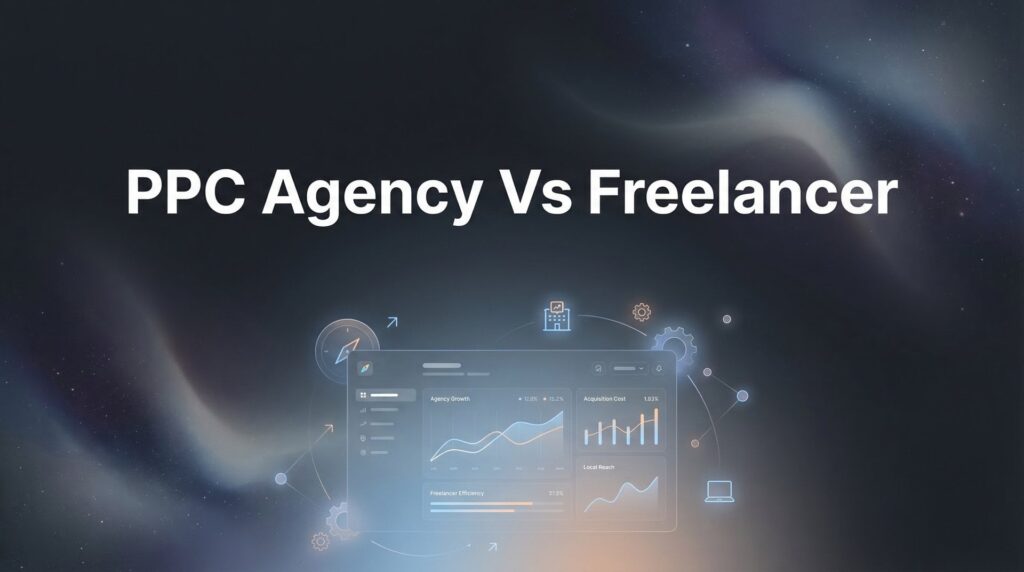
When your paid advertising budget is on the line, the choice between hiring a PPC agency or a freelancer can make or break your ROI. Both options have legitimate merits, but the right choice depends entirely on your business situation, goals, and resources. Local business owners often find themselves torn—freelancers offer attractive rates and personal attention, while agencies bring team depth and specialized tools.
This guide cuts through the marketing fluff to give you a clear framework for making this decision. We’ll examine seven critical factors that should drive your choice, from budget realities to scalability needs. By the end, you’ll have a practical decision-making process that matches your specific circumstances to the right PPC management solution.
1. Budget Reality Assessment
The Challenge It Solves
Most businesses compare hourly rates or monthly retainers and assume they’ve done their budget analysis. That’s like comparing car prices without considering insurance, fuel, and maintenance. The true cost of PPC management extends far beyond the invoice you receive each month.
You need a complete picture that includes your time investment in oversight, the tools required to run campaigns effectively, and the opportunity cost of choosing the wrong partner. Making decisions based on surface-level pricing often leads to budget overruns or underperformance that costs far more than you saved.
The Strategy Explained
A comprehensive budget assessment looks at total cost of ownership, not just management fees. Freelancers typically charge $50-150 per hour or $1,000-3,000 monthly retainers for smaller accounts. Agencies generally start at $2,000-5,000 monthly for basic service levels.
However, these numbers tell only part of the story. When working with a freelancer, you’ll likely need to purchase or provide access to premium tools yourself—think Google Ads Editor, bid management platforms, call tracking software, and analytics tools. These can add $200-800 monthly to your actual costs.
Your time investment matters too. How many hours will you spend each week reviewing reports, answering questions, and providing strategic input? If you’re billing $100 per hour for your core business activities, spending five hours weekly on PPC oversight represents $2,000 monthly in opportunity cost.
Implementation Steps
1. List all potential costs including management fees, required tools, your oversight time, and onboarding/training expenses for new providers.
2. Calculate your opportunity cost by multiplying your hourly business value by estimated weekly hours needed for PPC oversight and strategic discussions.
3. Request detailed proposals from both freelancers and agencies that specify exactly what’s included—tools, reporting frequency, strategic calls, and any additional fees.
4. Project costs over 12 months including potential campaign expansion, seasonal adjustments, and provider transitions if relationships don’t work out.
Pro Tips
Don’t forget to factor in the cost of mistakes. A freelancer learning your industry on your dime can burn through thousands in wasted ad spend. Ask specific questions about their experience with businesses similar to yours, and request references you can actually contact. The cheapest option often becomes the most expensive when you calculate total impact on your bottom line. Understanding marketing agency fees explained can help you compare apples to apples.
2. Campaign Complexity Evaluation
The Challenge It Solves
Running a single Google Ads campaign targeting local customers is vastly different from managing multi-platform strategies across Google, Facebook, LinkedIn, and YouTube. Many businesses underestimate their campaign complexity and choose providers who lack the technical depth to handle their actual needs.
This mismatch leads to underperforming campaigns, missed opportunities, and the costly process of switching providers mid-stream. You need to honestly assess what your campaigns require, then match those requirements to provider capabilities.
The Strategy Explained
Campaign complexity depends on several factors: the number of platforms you’re advertising on, the sophistication of your targeting requirements, whether you need shopping feeds or product catalogs, integration with CRM systems, and the technical implementation of conversion tracking.
A local service business running straightforward Google search ads with phone call tracking represents low complexity. An e-commerce company managing Google Shopping feeds, dynamic remarketing, Facebook catalog ads, and multi-touch attribution across platforms represents high complexity.
Freelancers often excel at focused expertise—they might be exceptional at Google search campaigns but lack experience with shopping feeds or social advertising. Agencies typically offer broader platform coverage because they have team members specializing in different channels. When weighing your options, consider the freelance marketer vs marketing agency tradeoffs for your specific situation.
Implementation Steps
1. Document every platform where you currently advertise or plan to advertise within the next six months, including specific campaign types needed on each platform.
2. List technical requirements like conversion tracking setup, CRM integration, call tracking implementation, and any custom reporting needs you have.
3. Ask potential providers to walk you through their specific experience with each platform and campaign type you need, requesting examples of similar work.
4. Evaluate whether you need a specialist who goes deep on one platform or a generalist team that can coordinate strategy across multiple channels.
Pro Tips
Be wary of providers who claim equal expertise across every platform. True specialists typically focus their skills. If you need multi-platform coordination, agencies with dedicated specialists for each channel often deliver better results than a single freelancer trying to cover everything. Ask how they stay current with platform changes—the PPC landscape evolves constantly.
3. Response Time and Availability
The Challenge It Solves
Paid advertising doesn’t respect business hours or personal schedules. When your campaign suddenly stops delivering, your cost per click doubles overnight, or a competitor launches an aggressive campaign, you need someone who can respond quickly. The difference between a two-hour response and a two-day response can mean thousands in wasted spend or lost opportunities.
Availability becomes especially critical during seasonal peaks, product launches, or when technical issues arise. You need clarity on who’s monitoring your campaigns, how quickly they’ll respond to problems, and what happens when your primary contact is unavailable.
The Strategy Explained
Freelancers typically offer more direct communication—you’re working with one person who knows your account intimately. However, they also have availability limitations. When they’re sick, on vacation, or managing other clients’ emergencies, your campaigns might wait.
Agencies provide team-based coverage, meaning someone is always available to address urgent issues. The tradeoff is that you might work with multiple team members rather than a single dedicated contact. This can feel less personal, but it provides business continuity that sole practitioners can’t match.
Consider your campaign’s tolerance for delays. If you’re running time-sensitive promotions, seasonal campaigns, or high-spend accounts where hours matter, continuous coverage becomes essential. If your campaigns are relatively stable and you’re comfortable with next-business-day responses, freelancer availability might suffice.
Implementation Steps
1. Define your response time requirements for different scenarios—urgent issues, routine optimizations, strategic questions, and reporting.
2. Ask potential providers about their typical response times, coverage during holidays and weekends, and backup plans when they’re unavailable.
3. Request specific details about account monitoring frequency—are they checking campaigns daily, weekly, or only when issues arise?
4. Clarify communication preferences and establish expectations for regular check-ins versus emergency contact protocols.
Pro Tips
Test responsiveness during the evaluation process. How quickly do they respond to your initial inquiries? Do they answer questions thoroughly or provide vague responses? Their pre-contract behavior predicts their post-contract availability. Also ask about their current client load—a freelancer managing twenty accounts can’t provide the same attention as one managing five. This is one key factor when deciding between a digital marketing agency vs in-house marketing team.
4. Tool Access and Technology
The Challenge It Solves
Professional PPC management requires more than just logging into Google Ads and adjusting bids. Premium tools for bid management, competitor analysis, call tracking, landing page testing, and advanced reporting can cost hundreds or thousands monthly. Without these tools, your campaigns operate at a significant disadvantage.
The question isn’t whether you need these tools—you do if you want competitive performance. The question is whether your provider includes them or whether you’re expected to purchase and manage them separately. This distinction dramatically affects both your costs and campaign effectiveness.
The Strategy Explained
Agencies typically invest heavily in technology stacks because they spread costs across multiple clients. A Google Premier Partner agency often has access to beta features, dedicated Google support, and enterprise-level tools that individual advertisers can’t access affordably.
These might include advanced bid management platforms, heat mapping and conversion optimization tools, call tracking with conversation intelligence, competitive analysis software, and comprehensive reporting dashboards. The combined value of these tools can easily exceed $1,000-2,000 monthly. Understanding the Google Partner agency benefits helps clarify what you’re actually getting for your investment.
Freelancers may use some tools but rarely maintain the full technology stack that agencies provide. They might rely on native platform features or expect you to provide access to specific tools. This isn’t necessarily a problem for simpler campaigns, but it creates limitations for sophisticated optimization.
Implementation Steps
1. Request a complete list of tools and platforms the provider uses for campaign management, tracking, optimization, and reporting.
2. Ask which tools are included in their management fee versus which ones you’ll need to purchase or provide access to separately.
3. Evaluate whether the tools they use match your campaign needs—call tracking for service businesses, shopping feed management for e-commerce, LinkedIn integration for B2B.
4. Consider the learning curve and ongoing management of any tools you’ll need to purchase yourself versus the simplicity of having everything included.
Pro Tips
Don’t just ask what tools they have—ask how they use them. A provider with expensive software who doesn’t leverage it effectively provides no more value than one using free tools skillfully. Request examples of insights they’ve gained from their tools and how those insights improved campaign performance. The tool is only as valuable as the expertise using it.
5. Reporting and Strategic Guidance
The Challenge It Solves
Data without context is just numbers on a screen. You need reporting that tells you not just what happened, but why it happened and what to do about it. Many businesses receive monthly reports filled with metrics but lacking the strategic insights needed to make informed decisions about their advertising investment.
The depth of reporting and strategic guidance varies dramatically between providers. Some deliver basic performance summaries, while others provide comprehensive analysis with actionable recommendations. Understanding what you’ll receive helps set appropriate expectations and ensures you get the decision-making support you need.
The Strategy Explained
Quality reporting goes beyond clicks, impressions, and conversion counts. It connects advertising metrics to business outcomes—leads generated, cost per qualified lead, customer acquisition cost, and ultimately revenue impact. Strategic reporting identifies trends, explains performance changes, and recommends specific optimizations.
Freelancers often provide more customized reporting because they’re working directly with you and can tailor reports to your specific questions and concerns. However, their reporting sophistication depends entirely on their individual skills and available tools.
Agencies typically offer standardized reporting frameworks with professional dashboards and regular review meetings. The consistency can be valuable, though it might feel less personalized. Established agencies have refined their reporting through work with hundreds of clients, identifying which metrics actually matter for different business types. A performance based marketing agency takes this further by tying their compensation directly to results.
Implementation Steps
1. Request sample reports from potential providers to evaluate clarity, depth of insights, and whether they focus on metrics that matter to your business goals.
2. Ask about reporting frequency, format preferences, and whether you’ll have access to real-time dashboards versus scheduled reports.
3. Clarify what strategic guidance accompanies the reports—will they recommend specific actions, explain performance changes, and help you make budget allocation decisions?
4. Discuss how they’ll communicate wins and losses, and whether they proactively identify opportunities or only respond to your questions.
Pro Tips
The best reporting focuses on business outcomes, not vanity metrics. If a provider emphasizes impressions and clicks without connecting them to leads and revenue, they’re missing the point. Ask how they’ll help you understand return on ad spend and whether their recommendations consider your broader business context, not just isolated campaign metrics.
6. Scalability Planning
The Challenge It Solves
Choosing your PPC provider based solely on current needs ignores where your business is headed. What works for $3,000 monthly ad spend might completely break down at $15,000 monthly. Switching providers mid-growth creates disruption, learning curves, and often temporary performance drops that cost more than planning ahead.
You need a provider who can grow with you, or at minimum, you need to understand when you’ll outgrow them so you can plan transitions strategically rather than reactively. This forward-thinking approach saves money and maintains campaign momentum during critical growth phases.
The Strategy Explained
Scalability encompasses several dimensions: handling increased ad spend efficiently, expanding to additional platforms as your strategy matures, supporting new product lines or service offerings, and maintaining performance as complexity grows.
Freelancers face natural scalability limits. A single person can effectively manage only so many campaigns before quality suffers. If you plan to double or triple your ad spend over the next year, or expand from one platform to three, consider whether your freelancer has the capacity and expertise to scale with you.
Agencies are built for scalability. They can assign additional team members, leverage specialized expertise for new platforms, and handle dramatic spending increases without service degradation. However, this scalability comes with higher baseline costs that might not make sense for businesses that plan to stay small. A full service digital marketing agency can handle everything from PPC to SEO as your needs expand.
Implementation Steps
1. Project your realistic growth trajectory for the next 12-24 months, including planned spending increases and platform expansion.
2. Ask potential providers about their experience scaling accounts from your current size to your target size, requesting specific examples.
3. Discuss how their service model, pricing, and team structure would adapt as your campaigns grow in complexity and budget.
4. Evaluate whether starting with a scalable solution makes more sense than planning for a future transition, considering the costs and disruption of switching providers.
Pro Tips
Be honest about your growth ambitions. If you’re planning aggressive expansion, communicate that upfront so providers can assess whether they’re the right fit. A freelancer might be perfect for your current needs but transparent about their capacity limits—that honesty is valuable. Similarly, don’t overpay for agency scalability you’ll never need if you’re running a stable business with no expansion plans.
7. Industry Experience Verification
The Challenge It Solves
PPC strategies that work brilliantly for e-commerce often fail miserably for local service businesses. B2B campaigns require completely different approaches than B2C. Industry-specific knowledge dramatically shortens the learning curve and helps avoid expensive mistakes that providers make when they’re figuring out your market on your dime.
Generic PPC expertise isn’t enough. You need someone who understands your industry’s unique challenges, customer behavior patterns, competitive landscape, and compliance requirements. The right industry experience can be worth far more than a lower hourly rate.
The Strategy Explained
Industry experience matters most in highly regulated fields, complex sales cycles, or markets with unique customer behaviors. Healthcare, legal services, financial services, and home services all have distinct PPC requirements that generic providers often mishandle.
Specialized freelancers who focus on specific industries can offer deep expertise that generalist agencies lack. They understand which keywords convert, what messaging resonates, and which campaign structures work best for your business type. However, their specialization might limit flexibility if your needs evolve.
Larger agencies often have diverse client portfolios spanning multiple industries. While they might lack the depth of a specialist, they bring cross-industry insights and have likely solved problems similar to yours in different contexts. Google Premier Partner agencies demonstrate sustained performance across client accounts, suggesting systematic approaches that work. Knowing how to hire a Google Partner agency ensures you’re vetting candidates properly.
Implementation Steps
1. Ask for specific examples of campaigns they’ve managed in your industry, including challenges faced and how they addressed them.
2. Request references from businesses similar to yours in size, market, and business model, then actually contact those references with detailed questions.
3. Evaluate their understanding of your customer journey, typical sales cycle length, and key performance indicators that matter in your industry.
4. Discuss how they’ll leverage their industry knowledge versus how they’ll learn your specific business nuances and competitive positioning.
Pro Tips
Don’t confuse industry experience with guaranteed results. A provider might have extensive experience in your field but still be mediocre at execution. Similarly, a talented provider without direct industry experience might learn quickly and bring fresh perspectives. Balance industry knowledge with demonstrated competence, communication skills, and strategic thinking ability. Ask how they stay current with platform changes and industry trends—continuous learning matters as much as past experience. Watch out for hidden fees from marketing agencies that can erode your budget regardless of their expertise.
Making Your Final Decision: A Practical Framework
The agency versus freelancer decision isn’t about which option is universally better—it’s about which aligns with your specific situation. Let’s bring together everything we’ve covered into a practical decision framework.
Freelancers typically make the most sense when you’re running straightforward campaigns on one or two platforms, your monthly ad spend is under $5,000, you value direct communication with a single point of contact, and your campaign needs are relatively stable without aggressive growth plans. They work well when you have time to provide oversight and strategic direction, and when you’re comfortable with the availability limitations of working with one person.
Agencies become the better choice when you’re managing multi-platform strategies, your monthly spend exceeds $5,000 and you’re planning to scale, you need continuous coverage and can’t afford campaign downtime, or you require sophisticated tools and reporting included in your management fees. They excel when you need strategic partnership rather than just tactical execution, and when your business is growing rapidly enough that provider scalability matters.
Consider your true priorities beyond just cost. If you’re spending $10,000 monthly on ads, a $2,000 agency fee that improves performance by just 20% delivers better ROI than a $1,000 freelancer fee with mediocre results. The management fee is a small percentage of total advertising investment—focus on total return, not just the management cost.
Think about risk tolerance too. Can your business absorb performance gaps when a freelancer is unavailable? Are you comfortable managing tool purchases and integrations yourself? Do you have the expertise to provide strategic direction, or do you need a partner who brings strategy to the table?
For many growing businesses, the transition point comes around $5,000-7,000 in monthly ad spend or when expanding beyond a single platform. At that scale, agency resources and team depth start delivering value that justifies the higher investment.
Whatever you choose, make it a deliberate decision based on your specific circumstances rather than defaulting to the cheapest option or the most impressive pitch. If you want to see what this would look like for your business with a Google Premier Partner agency, we’ll walk you through how our process works and break down what’s realistic in your market. We focus on building lead systems that turn traffic into qualified leads and measurable sales growth—because marketing should produce real revenue, not just reports.
Want More Leads for Your Business?
Most agencies chase clicks, impressions, and “traffic.” Clicks Geek builds lead systems. We uncover where prospects are dropping off, where your budget is being wasted, and which channels will actually produce ROI for your business, then we build and manage the strategy for you.