You’re running a solid local business. You’ve got great reviews, loyal customers, and a service people genuinely need. But when you look at your growth trajectory, something’s off. Some months you’re slammed with new business. Other months feel like you’re shouting into the void. Your marketing budget feels more like a gamble than an investment, and you’re constantly wondering if there’s a better way to do this.
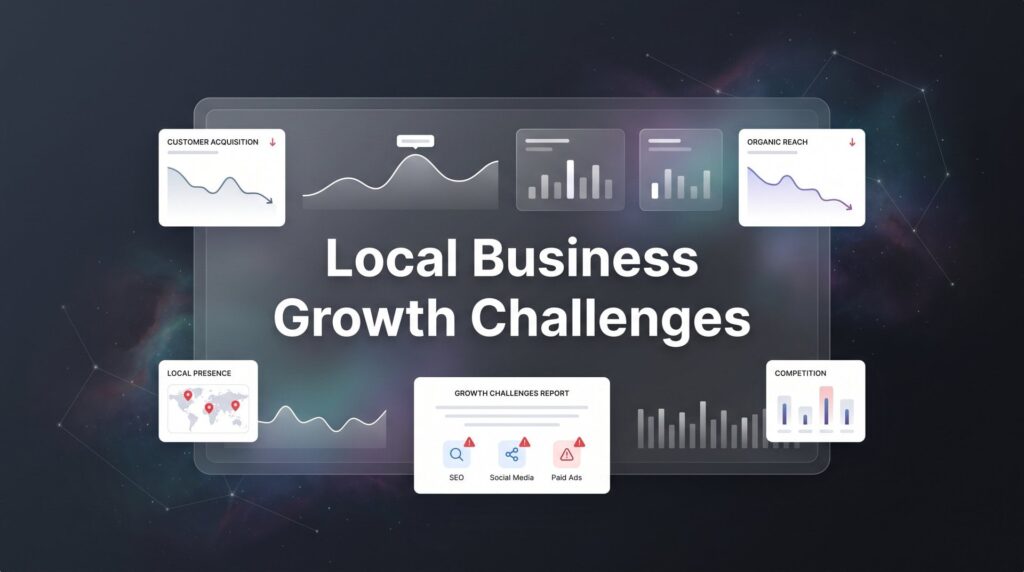
Here’s the reality: local business growth challenges aren’t about lacking ambition or work ethic. They’re about fighting with one hand tied behind your back—competing against franchises with corporate marketing budgets while trying to figure out which marketing channels actually work for your specific market.
The difference between businesses that plateau and those that scale predictably comes down to systems. Not flashy tactics. Not the latest social media trend. Systems that create repeatable, measurable results.
This guide breaks down seven strategies that address the most common local business growth challenges head-on. These aren’t theoretical concepts—they’re practical approaches you can implement to build a growth engine that doesn’t depend on luck or referrals alone.
1. Build a Predictable Lead Generation System
The Challenge It Solves
Most local businesses run on what we call “referral roulette.” Some months, word-of-mouth brings in plenty of business. Other months, the phone barely rings. This feast-or-famine cycle makes it nearly impossible to plan hiring, manage cash flow, or invest confidently in growth.
When your entire pipeline depends on whether your best customers happen to recommend you this month, you’re not running a business—you’re riding a roller coaster with your eyes closed.
The Strategy Explained
A predictable lead generation system means creating multiple channels that consistently deliver qualified prospects, regardless of whether your existing customers are actively referring. Think of it like building a machine with several inputs that all feed into your sales process.
This doesn’t mean abandoning referrals—it means adding reliable, scalable channels alongside them. The goal is reaching the point where you can forecast next month’s lead volume with reasonable accuracy, allowing you to plan capacity and make smart business decisions.
The most effective systems combine paid advertising with organic channels, creating both immediate results and long-term assets. Paid channels like Google Ads or Facebook Ads deliver leads today. Content marketing and SEO build authority that compounds over time.
Implementation Steps
1. Identify where your best customers are actively searching for solutions—Google, Facebook, industry-specific platforms—and establish a presence in those exact spaces with targeted campaigns.
2. Create a lead capture system that makes it frictionless for prospects to engage, whether that’s a simple contact form, phone call tracking, or a booking calendar integrated directly into your website.
3. Set up basic tracking to measure which channels deliver qualified leads versus tire-kickers, allowing you to double down on what works and cut what doesn’t. For a deeper dive into this process, check out our guide on how to generate leads for your local business with a proven action plan.
Pro Tips
Start with one paid channel and one organic channel rather than spreading yourself thin across everything. Master those two before expanding. And remember: consistency beats perfection. A modest budget running continuously outperforms sporadic bursts of activity.
2. Fix Your Conversion Funnel First
The Challenge It Solves
Here’s a scenario that plays out constantly: a business owner complains their marketing isn’t working, so they dump more money into advertising. Traffic increases. Lead volume stays flat or barely budges. The real problem? Their website converts at 2% when it should be converting at 8%.
Driving more traffic to a poorly converting website is like pouring water into a bucket with holes in it. You can keep pouring, but you’re wasting most of what you’re putting in.
The Strategy Explained
Conversion rate optimization means examining every step of your customer journey—from the moment someone clicks your ad to when they become a paying customer—and systematically removing friction points that cause people to bail.
This includes your website’s loading speed, the clarity of your value proposition, how easy it is to contact you, whether your pricing is transparent, and if your calls-to-action actually tell people what to do next.
Small improvements compound dramatically. Improving your conversion rate from 2% to 4% doubles your leads without spending an extra dollar on advertising. That same traffic now produces twice the results.
Implementation Steps
1. Install heat mapping and session recording tools to watch how real visitors interact with your website, identifying exactly where they get confused or frustrated before leaving.
2. Simplify your contact process ruthlessly—remove unnecessary form fields, add click-to-call buttons for mobile users, and make sure your phone number is visible on every page without scrolling.
3. Test one change at a time with a clear baseline, whether that’s rewriting your headline, adding customer testimonials above the fold, or changing your call-to-action button color and copy.
Pro Tips
Your homepage isn’t your most important page—your landing pages are. If you’re running paid ads, create dedicated landing pages that match the ad’s promise exactly. And always include clear social proof near your conversion points. People want to know others have successfully worked with you before they commit. If you’re struggling to find customers, fixing your conversion funnel is often the fastest path to improvement.
3. Differentiate on Value, Not Price
The Challenge It Solves
When you compete primarily on price, you’re playing a game you can’t win. There’s always someone willing to charge less, cut more corners, or operate on razor-thin margins that aren’t sustainable for your business model.
Price-based competition traps you in a race to the bottom where your expertise, quality, and customer service become irrelevant. Customers who choose you solely because you’re cheapest will leave the moment someone undercuts you by five dollars.
The Strategy Explained
Value differentiation means identifying and communicating what makes your service worth paying more for. This isn’t about being expensive for the sake of it—it’s about clearly articulating why your approach delivers better outcomes, saves customers time or headaches, or provides an experience competitors can’t match.
The businesses that command premium pricing aren’t necessarily better at what they do. They’re better at explaining why their approach matters and connecting that to outcomes customers actually care about.
This requires understanding your customer’s real problem. They’re not buying your service—they’re buying the result your service creates. A plumber isn’t selling pipe repair; they’re selling peace of mind that their home won’t flood again.
Implementation Steps
1. Interview your best customers to understand exactly what they value about working with you beyond the core service, whether that’s responsiveness, expertise, thoroughness, or the way you explain complex issues in plain language.
2. Document your process in detail and highlight the steps you take that competitors skip, creating a clear contrast between your approach and the “cheap option” that cuts corners.
3. Build case studies or before-and-after examples that demonstrate tangible outcomes customers achieved by choosing your approach over alternatives, focusing on the specific results that matter in your industry.
Pro Tips
Your pricing page should explain your value before showing the price. Lead with what customers get, why it matters, and how your approach differs. Understanding growth marketing services can help you communicate this value more effectively across all your channels. Then present pricing as the investment required to achieve those outcomes. And never apologize for charging what you’re worth—confidence in your pricing signals confidence in your value.
4. Implement Hyper-Local Targeting
The Challenge It Solves
Local businesses operate in defined service areas, yet many waste significant portions of their advertising budget reaching people they can’t actually serve. You might only work within a 20-mile radius, but your ads are showing to anyone within 50 miles who searches your keywords.
Every click from someone outside your service area is money burned. Every impression wasted on prospects too far away to convert is budget that could have reached qualified local customers multiple times.
The Strategy Explained
Hyper-local targeting means configuring your advertising to reach only the specific geographic areas where you can realistically serve customers. This goes beyond setting a basic radius—it involves understanding search intent, location-based keywords, and how people in your area actually search for your services.
The most sophisticated approach combines geographic targeting with local intent signals. Someone searching “emergency plumber near me” at 10 PM has completely different intent than someone researching “bathroom remodel ideas” during business hours.
This strategy also extends to your content and SEO. Creating content that specifically addresses your local market—mentioning neighborhoods, local landmarks, area-specific challenges—helps you rank for searches that actually convert.
Implementation Steps
1. Map your actual service area precisely, identifying which zip codes, cities, or neighborhoods you serve profitably versus areas where travel time or logistics make jobs unprofitable.
2. Configure your paid advertising platforms to exclude areas outside your service zone entirely, and create separate campaigns for high-value neighborhoods where you want to dominate visibility. Learning digital marketing strategies for small business owners can help you master these targeting techniques.
3. Build location-specific landing pages for your key service areas that address local concerns, reference familiar landmarks, and demonstrate you understand the specific needs of that community.
Pro Tips
Don’t just target broadly by city. Use radius targeting around your business location, exclude areas you don’t serve, and bid more aggressively in neighborhoods with higher customer lifetime value. And make sure your Google Business Profile is completely optimized—it’s free visibility in local search results that many businesses completely neglect.
5. Create a Customer Retention Engine
The Challenge It Solves
Most local businesses focus obsessively on acquiring new customers while their existing customer base quietly slips away. They spend hundreds of dollars to acquire a customer, deliver great service, then never follow up until that customer needs the service again—if they remember to call you instead of trying someone new.
Customer acquisition costs continue rising across nearly every industry. Meanwhile, selling to existing customers costs a fraction of acquiring new ones, and satisfied customers who feel valued become your most effective marketing channel through referrals.
The Strategy Explained
A customer retention engine systematically keeps you top-of-mind with past customers, creates opportunities for repeat business, and transforms satisfied customers into active referral sources. This isn’t about being pushy—it’s about adding value and staying present.
The foundation is a database that tracks customer interactions, purchase history, and timing for when they’ll likely need your service again. From there, you create touchpoints that provide value between transactions—helpful tips, maintenance reminders, exclusive offers, or simply checking in.
The businesses that excel at retention don’t just wait for customers to return. They create reasons to stay engaged and make it easy for satisfied customers to refer friends and family. Building a solid customer acquisition system works hand-in-hand with retention to maximize lifetime value.
Implementation Steps
1. Build a customer database that captures contact information, service history, and optimal timing for follow-ups based on your service cycle, whether that’s seasonal, annual, or triggered by specific events.
2. Create a simple email sequence that delivers value to past customers—maintenance tips, seasonal advice, early access to promotions—keeping you visible without being salesy.
3. Implement a referral system that makes it frictionless for happy customers to recommend you, whether that’s a simple referral card, a digital sharing option, or an incentive program that rewards both parties.
Pro Tips
Timing is everything. Set up automated reminders based on your service cycle—if you’re an HVAC company, reach out before summer and winter. If you do annual services, contact customers a month before they’re due. And always ask for reviews immediately after completing excellent work, while the positive experience is fresh.
6. Track What Actually Matters
The Challenge It Solves
Many local businesses measure the wrong things entirely. They celebrate website traffic increases while revenue stays flat. They track social media engagement while having no idea which marketing channels actually produce paying customers. They know their ad spend but can’t tell you the return on that investment.
Without proper tracking, you’re making marketing decisions based on guesswork. You might be cutting a channel that’s your most profitable lead source while doubling down on something that looks good on paper but doesn’t actually drive revenue.
The Strategy Explained
Revenue-focused measurement means connecting every marketing activity directly to business outcomes—leads generated, customers acquired, and actual revenue produced. This requires tracking the complete customer journey from first click to final sale.
The goal isn’t drowning in data. It’s identifying the specific metrics that predict business growth and ignoring vanity metrics that feel good but don’t correlate with revenue. For most local businesses, this means tracking cost per lead, lead-to-customer conversion rate, customer acquisition cost, and customer lifetime value.
Proper attribution shows you which marketing channels deserve more budget and which are wasting money. It reveals whether your problem is generating enough leads or converting the leads you already have. If you’re struggling with lead generation, tracking helps you identify exactly where your funnel is breaking down.
Implementation Steps
1. Implement call tracking that assigns unique phone numbers to different marketing channels, allowing you to know whether a phone lead came from Google Ads, your website, or a direct mail piece.
2. Set up conversion tracking on your website that captures form submissions, phone clicks, and other lead generation events, then connect those conversions back to their traffic source in your analytics platform.
3. Create a simple spreadsheet that tracks leads by source, conversion to customer, revenue generated, and calculates your actual cost per acquisition for each marketing channel you’re using.
Pro Tips
Start simple. Don’t try to track everything—focus on the path from marketing spend to revenue first. And remember that attribution isn’t perfect. Many customers interact with your business multiple times before buying. The goal is directional accuracy, not perfect precision. If a channel consistently shows up in the customer journey, it’s probably contributing value even if it’s not the “last click.”
7. Scale Strategically
The Challenge It Solves
Growth for growth’s sake often backfires spectacularly. Businesses scale their advertising spend before their operations can handle the volume. They expand into new service areas without the infrastructure to serve them well. They add new services before mastering their core offering.
Premature scaling creates chaos—overwhelmed staff, declining service quality, cash flow crunches, and ultimately, damage to the reputation you spent years building. The businesses that scale successfully do it systematically, testing and validating before committing resources.
The Strategy Explained
Strategic scaling means growing in deliberate stages, ensuring each component of your business can support the next level before you get there. This includes your lead generation capacity, your sales process, your service delivery, your team, and your operational systems.
The approach is test, measure, optimize, then scale. Before dumping your entire budget into a new marketing channel, you run a controlled test with limited spend. Before expanding to a new service area, you validate demand and ensure you can deliver quality service there.
This also means building systems that can handle growth before you need them. Your scheduling process might work fine at your current volume but completely break down at twice the capacity. Your hiring process might be adequate now but won’t scale if you need to double your team. If you’re struggling to scale your business online, a systematic approach prevents the chaos that derails most growth attempts.
Implementation Steps
1. Before increasing your marketing budget significantly, document your current capacity constraints—how many new customers can you realistically serve well each month without compromising quality or burning out your team.
2. Test new marketing channels with small budgets first, running them for at least 30 days to gather meaningful data before deciding whether to scale up or shut down.
3. Create operational playbooks for your core processes—sales, service delivery, customer onboarding—so you can train new team members quickly when growth requires additional capacity.
Pro Tips
Growth should feel sustainable, not frantic. If you’re constantly firefighting, you’re scaling too fast. The right pace of growth allows you to maintain quality while gradually expanding capacity. And always keep cash reserves—scaling requires upfront investment in marketing, hiring, and infrastructure before the revenue from that growth materializes. Exploring local lead generation services can help you scale your pipeline without overwhelming your internal team.
Building Your Growth Engine
Overcoming local business growth challenges isn’t about finding a silver bullet or copying what worked for someone else’s business. It’s about building interconnected systems that create predictable, repeatable results.
Start with your conversion funnel. There’s zero point driving more traffic to a website that doesn’t convert. Fix the leaks first, then focus on creating predictable lead flow through systematic, multi-channel generation.
From there, differentiate on value rather than competing on price. Implement hyper-local targeting to ensure every advertising dollar reaches prospects you can actually serve. Build retention systems that maximize customer lifetime value and turn satisfied customers into referral engines.
Track what actually matters—revenue, not vanity metrics. And when you’re ready to scale, do it strategically by testing before committing and building systems that can handle growth before you need them.
The businesses that win locally aren’t necessarily the ones with the biggest budgets. They’re the ones with the smartest systems and the discipline to execute consistently.
Pick one strategy from this list and implement it this week. Momentum builds momentum, and small improvements compound into significant competitive advantages over time.
Tired of spending money on marketing that doesn’t produce real revenue? We build lead systems that turn traffic into qualified leads and measurable sales growth. If you want to see what this would look like for your business, we’ll walk you through how it works and break down what’s realistic in your market.