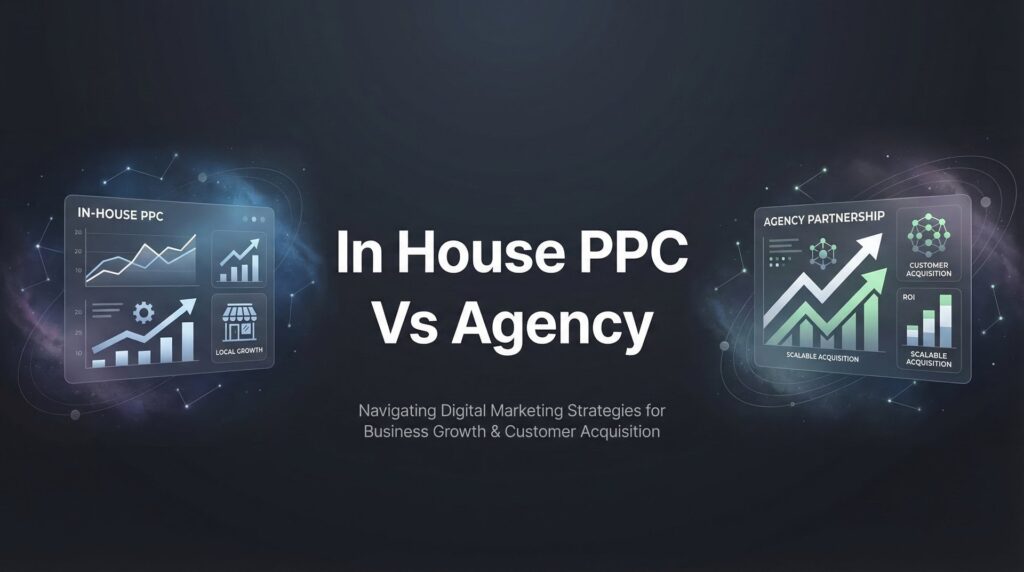
You’re staring at your PPC dashboard, watching ad spend tick upward while wondering if you’re getting the most bang for your buck. Should you hire someone in-house to take control? Or partner with an agency that claims they can deliver better results?
This isn’t a simple either-or decision. The right choice depends on factors most business owners don’t consider until they’ve already made an expensive mistake.
Here’s the truth: both in-house PPC management and agency partnerships can work brilliantly—or fail spectacularly. The difference comes down to understanding your specific situation, not following generic advice.
We’re going to walk through the seven critical factors that determine which approach will actually deliver ROI for your business. No fluff, no bias toward either option—just a practical framework to make this decision with clarity.
1. Calculate the True Cost of Each Option
The Challenge It Solves
Most business owners compare an agency’s monthly retainer to a PPC specialist’s salary and think they’ve done the math. They haven’t. The real cost comparison includes dozens of hidden expenses that can double or triple your initial estimates.
Without understanding the fully-loaded cost of each option, you might choose based on sticker price alone—and end up paying far more than you bargained for while getting worse results.
The Strategy Explained
Building an accurate cost model means accounting for every dollar that flows into your PPC operation, not just the obvious expenses. For in-house management, you’re looking at base salary plus benefits, payroll taxes, recruitment costs, ongoing training, software subscriptions, and management overhead.
Think about it: a PPC specialist needs access to tools like SEMrush or SpyFu, conversion tracking platforms, analytics software, and potentially design tools for ad creative. That’s easily several hundred dollars monthly before they run a single ad. Then there’s the cost of keeping them trained—PPC platforms update constantly, and someone needs to invest time staying current.
Agency costs appear more straightforward but require different scrutiny. Most agencies charge either a percentage of ad spend or a flat monthly retainer. The percentage model typically ranges from 10-20% of your monthly budget, while retainers vary based on scope and complexity. But here’s what matters: you’re also paying for their tool stack, their ongoing training, and their experience across multiple accounts—without carrying those costs directly. Understanding marketing agency fees helps you compare apples to apples.
Implementation Steps
1. Calculate your in-house fully-loaded cost: Take the specialist’s annual salary, add 25-35% for benefits and taxes, divide by 12, then add monthly tool costs (typically $300-800) and estimate 5-10 hours monthly of management time at your rate.
2. Get specific agency quotes: Request proposals from 3-5 agencies that specialize in your industry, asking for detailed breakdowns of what’s included at each service level and what costs extra.
3. Project both scenarios at different budget levels: Run the numbers at your current monthly ad spend, at 50% growth, and at 2x growth to see how costs scale with your business expansion.
Pro Tips
Don’t forget opportunity cost. If hiring in-house means your marketing director spends 15 hours monthly managing that person instead of strategic work, what’s that time worth? Similarly, if an agency frees you to focus on business development that generates new revenue streams, that has real monetary value in your calculation.
2. Assess Required Expertise Level
The Challenge It Solves
PPC platforms have become increasingly sophisticated, with machine learning algorithms, audience segmentation options, and attribution models that require genuine expertise to navigate effectively. The gap between basic competence and expert-level execution translates directly into wasted ad spend.
Many businesses hire someone who “knows Google Ads” only to discover that platform familiarity doesn’t equal strategic mastery—especially when competition intensifies or campaigns need optimization beyond basic adjustments.
The Strategy Explained
The expertise question breaks into two parts: the complexity of your campaigns and the level of specialization required. Running straightforward local service ads differs dramatically from managing e-commerce campaigns with hundreds of SKUs, dynamic remarketing, and multi-touch attribution.
Agencies accumulate pattern recognition that single-account managers simply cannot develop. When you work across dozens of accounts in similar industries, you see what works, what fails, and why—often before running expensive tests yourself. That accumulated knowledge becomes especially valuable in competitive markets where small optimization differences determine profitability. This is one reason many businesses choose to hire a Google Partner agency with certified expertise.
The learning curve for genuine PPC proficiency typically requires consistent hands-on experience over many months. Someone can learn the mechanics relatively quickly, but understanding strategic bid adjustments, audience layering, and when to pivot campaign structure comes from managing substantial budgets through various market conditions.
Implementation Steps
1. Audit your campaign complexity: List every platform you advertise on, count your active campaigns, assess your targeting sophistication, and honestly evaluate whether this requires specialist-level expertise or could be managed with strong fundamentals.
2. Define your required expertise profile: Write out the specific skills needed—do you need someone who understands local service ads, or someone who can build complex e-commerce funnels with sequential remarketing? Be brutally specific.
3. Test the talent pool: Post a job description for an in-house role and see what candidates actually apply at your budget level, or schedule discovery calls with agencies and assess their depth of knowledge in your specific advertising challenges.
Pro Tips
Ask yourself this: if your PPC person quits or your business outgrows their skill level, how quickly can you replace that expertise? Agencies provide built-in redundancy and scalable expertise—when your needs evolve, their team adapts. In-house hires create single points of failure that can devastate your advertising performance during transitions.
3. Evaluate Speed-to-Results Requirements
The Challenge It Solves
Time-to-market can make or break competitive positioning. If you’re entering a new market, launching a product, or responding to a competitor’s move, the difference between executing in two weeks versus three months might determine whether you capture market share or watch someone else take it.
The ramp-up timeline for in-house versus agency management varies dramatically, and choosing the wrong option based on your urgency can cost you opportunities that never return.
The Strategy Explained
Building in-house PPC capability from scratch involves recruiting, hiring, onboarding, and then the actual learning curve specific to your business and industry. Even if you find a strong candidate quickly, expect 60-90 days before they’re operating at full effectiveness. They need to understand your products, your customers, your competitive landscape, and your business goals before making strategic decisions.
Agencies can often launch campaigns within 1-2 weeks of engagement. They bring existing infrastructure, proven campaign templates for your industry, and team members who’ve already climbed the learning curve. When speed matters, this head start becomes invaluable. A full service digital marketing agency can deploy multiple specialists simultaneously to accelerate your launch.
But here’s the nuance: agencies need onboarding time too. They must understand your business, your brand voice, your customer avatars, and your goals. The difference is they’re conducting this discovery while simultaneously building campaigns, not before.
Implementation Steps
1. Define your urgency timeline: Determine whether you need campaigns live in 2 weeks, 6 weeks, or 3 months—be honest about whether this is a genuine business requirement or just impatience.
2. Map realistic ramp-up scenarios: For in-house, add recruitment time (2-6 weeks), onboarding (2-4 weeks), and learning curve (4-8 weeks); for agencies, factor in vetting (1-2 weeks), onboarding (1-2 weeks), and optimization cycles (4-6 weeks).
3. Calculate opportunity cost of delay: Estimate the revenue or market position you lose each month you’re not running optimized campaigns—this number often justifies paying more for faster execution.
Pro Tips
Speed isn’t just about launch—it’s about iteration velocity. Agencies typically run more tests faster because they have dedicated resources and aren’t juggling PPC with other marketing responsibilities. If your market requires rapid experimentation and optimization, that ongoing speed advantage matters more than initial launch timing.
4. Consider Scalability and Flexibility Needs
The Challenge It Solves
Business growth rarely follows a smooth upward trajectory. You might need to double ad spend during peak season, pull back during slow months, expand into new markets, or pivot strategy based on product launches. Your PPC management approach needs to flex with these changes without breaking.
Choosing a rigid solution that can’t scale up or down efficiently locks you into suboptimal spending patterns and missed opportunities.
The Strategy Explained
In-house team scalability hits hard limits quickly. Your PPC specialist can manage increasing budgets to a point, but eventually they max out on bandwidth. When you need to expand to new platforms, test new markets, or significantly increase campaign complexity, you’re looking at hiring additional people—which takes months and increases fixed costs permanently.
Agencies build scalability into their model. Most can increase or decrease service levels relatively quickly because they staff across multiple clients. When you need to ramp up for Q4, they allocate more resources. When you pull back in January, you’re not paying for idle capacity. Many businesses prefer agencies that offer no long-term contracts for maximum flexibility.
The flexibility question extends beyond budget fluctuations. What happens when you want to test YouTube ads, explore Performance Max campaigns, or expand internationally? Does your in-house person have that expertise, or will you need to hire specialists for each platform? Agencies typically offer multi-platform capabilities within their existing team structure.
Implementation Steps
1. Project your growth scenarios: Map out realistic 12-month and 24-month projections for ad spend, platform expansion, and market growth—include best-case, expected-case, and worst-case scenarios.
2. Stress-test each option: Ask yourself if an in-house hire could handle 3x your current budget, or if agencies you’re considering have successfully scaled clients from your current spend to your target spend.
3. Identify seasonal patterns: Calculate the percentage variance between your peak and low months, then determine whether fixed in-house costs or variable agency costs align better with your cash flow patterns.
Pro Tips
Think about the downside scenario too. If revenue drops and you need to cut costs fast, agency contracts are typically easier to pause or reduce than laying off an employee. That flexibility provides a financial safety valve that in-house teams cannot offer without significant emotional and legal complexity.
5. Weigh Control and Communication Priorities
The Challenge It Solves
Many business owners fear losing control when they partner with an agency. They imagine their campaigns running on autopilot with no visibility, no input, and no accountability. This fear often drives them toward in-house management even when it’s not the optimal choice.
The control question matters, but it’s frequently misunderstood. Real control comes from transparency, communication, and strategic alignment—not from having someone sitting in your office.
The Strategy Explained
In-house teams offer immediate access. You can walk to their desk, ask questions in real-time, and request changes that happen within hours. For some businesses, especially those where PPC ties directly to daily operations or inventory management, this responsiveness provides genuine value.
Quality agencies build communication structures that provide transparency without requiring constant meetings. You should expect regular reporting, strategy sessions, and access to campaign dashboards that show exactly what’s happening with your budget. The difference isn’t control—it’s communication cadence. When evaluating options, understanding digital marketing agency vs in-house marketing tradeoffs helps clarify what you’re actually giving up or gaining.
Here’s what actually matters: can you get the information you need, when you need it, in a format you understand? Can you influence strategic decisions? Do you trust the people managing your budget? These questions apply equally to in-house and agency relationships.
Implementation Steps
1. Define your communication requirements: Determine how often you need updates (daily, weekly, monthly), what format works best (dashboards, reports, meetings), and what level of detail you require to feel informed and in control.
2. Test agency communication during vetting: Ask prospective agencies to show you sample reports, explain their communication cadence, demonstrate their dashboards, and describe how they handle urgent requests or strategy pivots.
3. Establish clear decision-making protocols: Document which decisions require your approval, which fall within the agency’s or in-house manager’s authority, and how quickly you expect responses to questions or concerns.
Pro Tips
The control myth often masks a deeper issue: lack of PPC literacy. If you don’t understand the fundamentals of how PPC works, you won’t feel in control regardless of who manages it. Invest time learning the basics—not to become an expert, but to ask intelligent questions and evaluate performance accurately. This knowledge matters more than proximity.
6. Analyze Industry-Specific Requirements
The Challenge It Solves
Not all industries face the same PPC challenges. Healthcare advertising deals with HIPAA compliance and restricted targeting. Legal services compete in some of the most expensive keyword markets. E-commerce requires product feed management and dynamic remarketing. Local service businesses need geo-targeting precision and call tracking integration.
Choosing a PPC management approach without considering your industry’s unique requirements often leads to compliance issues, wasted spend, or missed opportunities that industry-experienced managers would avoid.
The Strategy Explained
Industry expertise compounds over time. Agencies that specialize in your vertical understand competitive dynamics, seasonal patterns, regulatory constraints, and audience behaviors that generalists miss. They’ve already made the expensive mistakes and know which strategies work in your specific market.
Local service businesses often benefit significantly from agency expertise because local markets have become intensely competitive. The difference between ranking in the top three local service ads versus position four or five determines whether your phone rings or your competitor’s does. Agencies working across multiple local service clients see optimization patterns that single-business managers cannot. For small businesses especially, working with a lead generation agency can accelerate results dramatically.
Compliance-heavy industries like healthcare, finance, or legal services face advertising restrictions that require specialized knowledge. Running afoul of platform policies or regulatory requirements can get your account suspended—an expensive lesson that industry-experienced agencies help you avoid.
Implementation Steps
1. List your industry-specific challenges: Identify regulatory requirements, competitive intensity in your market, seasonal factors, customer journey complexity, and any unique targeting or tracking needs specific to your business vertical.
2. Evaluate industry experience: When interviewing agencies, ask for specific examples of clients in your industry, request case studies showing relevant challenges they’ve solved, and probe their understanding of your competitive landscape.
3. Assess the learning curve: Estimate how long it would take an in-house hire to develop industry expertise versus partnering with an agency that already possesses it—factor this timeline into your decision.
Pro Tips
Don’t confuse industry experience with geographic proximity. An agency across the country with deep expertise in your vertical often delivers better results than a local generalist agency. The industry knowledge matters more than whether they’ve driven past your office.
7. Build Your Decision Framework
The Challenge It Solves
After considering costs, expertise, speed, scalability, control, and industry factors, you still need a systematic way to make the final decision. Without a clear framework, you risk choosing based on gut feeling, recent conversations, or whichever option feels less scary—none of which lead to optimal outcomes.
You need a practical scoring system that weighs these factors based on your specific priorities and circumstances.
The Strategy Explained
Building a decision framework means assigning weight to each factor based on what matters most to your business right now. A rapidly growing startup might prioritize speed and scalability over cost. An established business with complex compliance needs might weight industry expertise and control highest. There’s no universal right answer—only the right answer for your situation.
Start by ranking the six factors we’ve covered from most to least important for your business. Then honestly assess how well each option—in-house versus agency—serves each factor. This creates a weighted scorecard that removes emotion from the decision. Be aware of hidden fees from marketing agencies that could skew your cost calculations.
Consider hybrid approaches too. Some businesses maintain strategic oversight and creative direction in-house while outsourcing campaign execution and optimization to agencies. Others start with an agency to build momentum, then transition to in-house once they’ve established profitable campaign structures.
Implementation Steps
1. Create your weighted scorecard: List the six factors, assign each a weight from 1-10 based on importance to your business, then score each option (in-house vs agency) from 1-10 on each factor, multiply by weights, and total the scores.
2. Identify your decision triggers: Define the specific circumstances that would push you toward in-house (example: if you need daily campaign adjustments tied to inventory) or agency (example: if you lack internal marketing leadership to manage a PPC hire).
3. Plan your reassessment timeline: Set calendar reminders to revisit this decision every 6-12 months as your business evolves—what’s optimal today might not be optimal at 2x revenue or with different competitive dynamics.
Pro Tips
Your first choice doesn’t have to be your forever choice. Many successful businesses start with an agency to build profitable campaigns quickly, then transition to in-house management once they’ve validated their PPC model and can afford specialized talent. Others go in-house initially, then switch to agencies when complexity or scale exceeds their team’s capacity. Stay flexible and reassess as circumstances change.
Making the Right Choice for Your Business Growth
The in-house versus agency decision isn’t about which option is objectively better—it’s about which option aligns with your current business reality, growth trajectory, and resource constraints.
If you’re a local service business competing in a saturated market, need results quickly, or lack internal marketing leadership, agency partnership typically delivers faster, more profitable outcomes. The expertise gap and speed-to-results advantages outweigh the perceived control benefits of in-house management.
If you’re running straightforward campaigns, have strong internal marketing leadership, need daily integration with operations, and can invest in building long-term capability, in-house management might serve you better—provided you accurately calculate the fully-loaded costs and commit to ongoing training.
Here’s your action plan: Complete the weighted scorecard exercise we outlined in factor seven. Be brutally honest about your scores. If the decision is close, that suggests either option could work—choose based on your risk tolerance and current cash flow patterns.
If you choose in-house, budget 25-35% above base salary for the real cost, plan for a 90-day ramp-up before expecting full productivity, and build redundancy into your knowledge management so you’re not completely dependent on one person.
If you choose an agency, vet at least three options, ask for detailed proposals that specify exactly what’s included, request client references in your industry, and establish clear communication protocols before signing any contract.
Remember: this decision isn’t permanent. Reassess every 6-12 months as your business evolves. What works at $10,000 monthly ad spend might not work at $50,000. What works in year one might not work in year three. Stay flexible and optimize this decision just like you optimize your campaigns.
Tired of spending money on marketing that doesn’t produce real revenue? We build lead systems that turn traffic into qualified leads and measurable sales growth. If you want to see what this would look like for your business, we’ll walk you through how it works and break down what’s realistic in your market.
Want More Leads for Your Business?
Most agencies chase clicks, impressions, and “traffic.” Clicks Geek builds lead systems. We uncover where prospects are dropping off, where your budget is being wasted, and which channels will actually produce ROI for your business, then we build and manage the strategy for you.