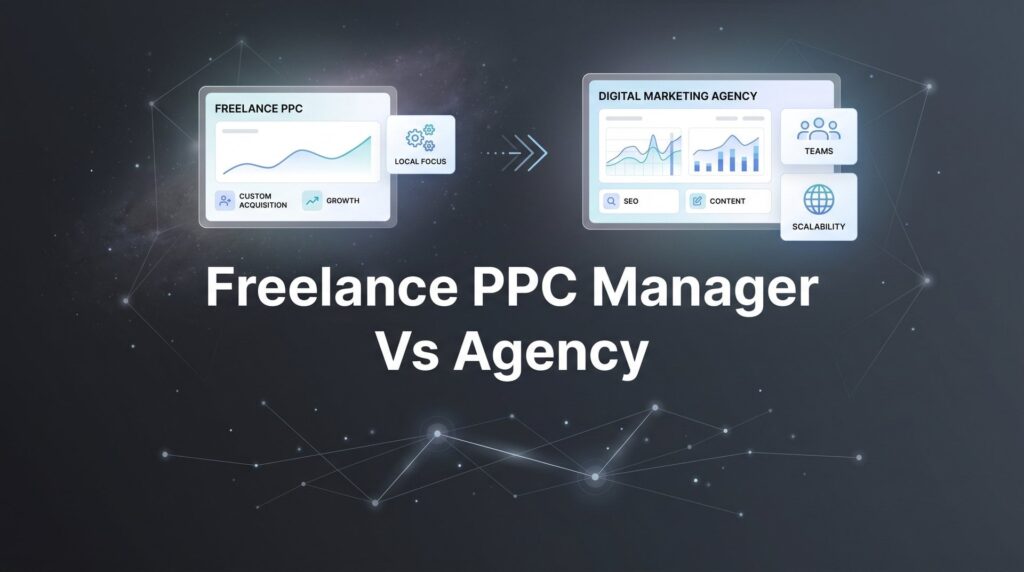
The decision between hiring a freelance PPC manager or partnering with a full-service agency can make or break your advertising ROI. Both options have distinct advantages depending on your business size, budget, and growth goals. Many local business owners find themselves stuck in analysis paralysis, unsure which path will deliver the profitable customer acquisition they need.
This guide cuts through the noise with seven actionable strategies to evaluate your options and make the right choice for your specific situation. Whether you’re launching your first Google Ads campaign or scaling an existing PPC operation, these decision-making frameworks will help you invest your marketing dollars wisely.
1. Audit Your Campaign Complexity Before Choosing
The Challenge It Solves
You might assume any PPC professional can handle your campaigns, but the reality is more nuanced. A simple single-platform campaign requires different resources than a coordinated multi-channel strategy. Mismatching your complexity level with your partner’s capacity leads to either overpaying for unused capabilities or underperforming campaigns that never reach their potential.
The Strategy Explained
Start by mapping out your current and planned advertising channels. Are you running Google Ads exclusively, or do you need Facebook, LinkedIn, YouTube, and display advertising coordinated together? Consider whether your campaigns require basic keyword targeting or advanced features like remarketing sequences, customer match audiences, and dynamic ad creative.
Freelancers typically excel at focused, single-platform campaigns where deep expertise in one channel drives results. They can dedicate attention to optimizing your Google Ads account without the overhead of managing multiple specialists. Agencies shine when you need orchestrated campaigns across platforms, with specialists for each channel working from a unified strategy. Understanding the PPC agency vs freelancer dynamic helps clarify which structure fits your needs.
Implementation Steps
1. List every advertising platform you currently use or plan to launch within the next year, including search, social, display, and video channels.
2. Document your campaign requirements such as audience segmentation needs, creative production volume, landing page testing frequency, and integration with CRM or marketing automation tools.
3. Score your complexity on a scale where 1-3 indicates single-platform focus, 4-6 suggests moderate multi-channel needs, and 7-10 represents sophisticated cross-platform orchestration with advanced tracking requirements.
Pro Tips
If your complexity score is 4 or below, a skilled freelancer can likely handle your needs efficiently. Scores of 5-7 could work with either option depending on other factors. Complexity scores above 7 typically benefit from agency infrastructure and specialized team members who can coordinate sophisticated campaigns without dropping the ball.
2. Calculate True Cost of Ownership Beyond Hourly Rates
The Challenge It Solves
Surface-level pricing comparisons mislead business owners into poor decisions. A freelancer charging $75 per hour looks cheaper than an agency at $150 per hour—until you factor in tool subscriptions, backup coverage during vacations, and the time you spend managing the relationship. The sticker price rarely reflects what you’ll actually spend over a full year.
The Strategy Explained
Build a comprehensive 12-month cost model that includes all hidden expenses. Freelancers typically charge lower hourly or percentage-of-spend rates, but you’ll need to budget for the software tools they require, potential gaps in coverage when they’re unavailable, and your own time coordinating their work. Agencies bundle these costs into their fees, providing tools, backup coverage, and account management as part of the package. Our guide on marketing agency fees explained breaks down exactly what you’re paying for.
Think beyond the monthly retainer. Consider what happens when your freelancer takes a two-week vacation during your busiest season, or when you need emergency campaign adjustments on a weekend. Factor in the learning curve when onboarding a new partner, and the potential revenue impact of campaign downtime or mistakes.
Implementation Steps
1. Request detailed pricing breakdowns from both freelancers and agencies, including base fees, percentage-of-spend charges, setup costs, and any additional service fees.
2. Add the cost of required tools such as bid management software, analytics platforms, call tracking systems, and reporting dashboards that you’ll need to provide or pay for separately with a freelancer.
3. Estimate your internal time investment for each option, including weekly check-ins, monthly strategy sessions, performance reviews, and coordination with other marketing initiatives, then multiply by your hourly value.
4. Calculate the risk cost of coverage gaps by estimating potential revenue loss during periods when your freelancer is unavailable and campaigns need immediate attention.
Pro Tips
When comparing final numbers, look at total annual cost divided by expected results rather than monthly fees. An agency that costs $3,000 per month but delivers 200 qualified leads is cheaper per acquisition than a freelancer at $1,500 per month delivering 75 leads. The math that matters is cost per result, not cost per month.
3. Assess Accountability and Performance Guarantees
The Challenge It Solves
Without clear accountability structures, you risk paying for activity rather than results. Some PPC managers focus on keeping you impressed with reports full of metrics while your actual sales stagnate. The difference between a partner who owns outcomes and one who simply executes tasks determines whether your PPC investment drives profitable growth or becomes an expensive distraction.
The Strategy Explained
Examine the contract structures and performance commitments each option provides. Agencies often operate under formal service level agreements that define response times, reporting cadence, and minimum performance standards. They typically have established processes for escalation when campaigns underperform, and their reputation depends on maintaining client results across a portfolio of accounts.
Freelancers may offer more flexible arrangements, but this flexibility can cut both ways. Some provide clear performance benchmarks and transparent reporting, while others resist being held to specific metrics. The key is establishing mutual accountability before you sign anything, with defined consequences when performance falls short. A performance based marketing agency model can align incentives around actual results.
Implementation Steps
1. Ask potential partners what specific performance metrics they commit to improving, such as cost per lead, conversion rate, or return on ad spend, and request their typical timeframe for achieving measurable results.
2. Review their standard reporting structure to verify they track conversion metrics and revenue impact rather than just surface-level activity like impressions and clicks.
3. Clarify what happens when campaigns underperform, including whether they offer performance guarantees, how quickly they respond to declining metrics, and what recourse you have if results don’t meet expectations.
4. Request references from current clients and ask those references specifically about accountability, responsiveness to problems, and whether the partner takes ownership of results or makes excuses.
Pro Tips
Google Premier Partner agencies must maintain performance standards across their client base to keep their status, providing an external verification of accountability. This doesn’t guarantee results for your specific business, but it demonstrates they’ve met Google’s requirements for client retention, revenue growth, and certification levels across their team. Learn more about Google Partner agency benefits and what they mean for your campaigns.
4. Evaluate Scalability for Your Growth Trajectory
The Challenge It Solves
Your PPC needs today might look completely different in 18 months. Businesses often choose a partner based on current requirements, only to outgrow their capacity as ad spend increases or campaign complexity expands. Switching partners mid-growth disrupts momentum, requires knowledge transfer, and risks losing the optimization insights your previous manager accumulated.
The Strategy Explained
Project your business growth over the next 2-3 years and map how your PPC requirements will evolve. Consider how your monthly ad spend might increase, whether you’ll expand into new markets or product lines, and if you’ll need additional advertising channels. A freelancer managing $5,000 in monthly ad spend might struggle when your budget grows to $50,000 and requires dedicated attention across multiple platforms.
Agencies typically have infrastructure to scale with your growth, adding specialists or increasing account management time as your needs expand. Freelancers can scale to a point, but they hit capacity limits where quality suffers or they simply can’t take on additional work. Understanding these limitations upfront helps you avoid painful transitions later. For growing companies, weighing digital marketing agency vs in-house marketing becomes increasingly important.
Implementation Steps
1. Document your projected ad spend growth over the next three years, including planned expansion into new geographic markets, product launches, or seasonal scaling.
2. Ask potential partners about their capacity to handle increased spend and complexity, including how they would staff your account as it grows and what additional costs would apply.
3. Verify they have experience managing accounts at your target size, not just your current level, by requesting case studies from clients with similar growth trajectories.
Pro Tips
If you’re currently spending under $10,000 monthly but project growth to $30,000-plus within two years, start with a partner who already manages accounts at that level. They’ll bring strategies and experience from larger campaigns to accelerate your growth rather than learning alongside you. The slightly higher cost now prevents expensive transitions later when you need seamless scaling.
5. Prioritize Industry-Specific Expertise Over Generalists
The Challenge It Solves
PPC fundamentals apply across industries, but the nuances of your specific market determine campaign success. A manager who excels at e-commerce might struggle with local service businesses where phone calls matter more than online transactions. Generic strategies waste budget testing approaches that experienced specialists already know won’t work in your vertical.
The Strategy Explained
Verify that your potential partner has demonstrable experience in your industry, not just general PPC knowledge. This means they understand your customer journey, typical conversion timelines, seasonal patterns, and competitive landscape. They should speak your language and reference challenges specific to businesses like yours rather than offering one-size-fits-all solutions.
Industry expertise shows up in the questions they ask during initial consultations. A specialist will inquire about your average customer lifetime value, typical sales cycle length, and specific compliance requirements in your industry. Generalists ask surface-level questions about budget and goals without demonstrating deep understanding of your market dynamics. Our resource on how to choose a PPC agency covers the key questions to ask.
Implementation Steps
1. Request case studies from clients in your industry or closely related verticals, paying attention to whether they achieved results relevant to your business model.
2. During discovery calls, note whether the potential partner asks sophisticated questions about your specific market challenges or offers generic advice that could apply to any business.
3. Ask them to describe the typical customer journey in your industry and the key conversion metrics that matter most, then evaluate whether their answer demonstrates real understanding or sounds like educated guessing.
4. Check if they’re familiar with industry-specific tools, platforms, or compliance requirements that affect advertising in your vertical.
Pro Tips
When reviewing case studies, verify the companies are named and the results are specific rather than vague claims like “increased conversions significantly.” Real expertise comes with real examples that include company names, timeframes, and measurable outcomes. If they can’t share specific results due to confidentiality, they should at least provide verifiable client references you can contact directly.
6. Test Communication and Responsiveness Standards
The Challenge It Solves
Campaign performance can shift rapidly, and delays in addressing problems cost you money every hour they persist. A PPC manager who takes three days to respond to urgent issues or only communicates through monthly reports leaves you blind to what’s happening with your ad spend. Clear communication expectations prevent frustration and ensure you can make informed decisions when opportunities or problems arise.
The Strategy Explained
Establish specific expectations for availability, response times, and reporting frequency before signing any contract. Determine how quickly your partner will respond to urgent requests during business hours, what constitutes an emergency that warrants immediate attention, and who covers your account when your primary contact is unavailable.
Agencies typically provide structured communication with dedicated account managers, scheduled check-ins, and backup coverage through team members. Freelancers may offer more direct access to the person managing your campaigns but with less coverage during vacations or busy periods. Neither approach is inherently better—what matters is matching the communication structure to your comfort level and business needs.
Implementation Steps
1. Define your communication preferences including preferred channels such as email, phone, or video calls, ideal frequency for check-ins, and whether you want proactive updates or prefer to reach out when needed.
2. Ask potential partners about their standard response times for routine questions versus urgent issues, and request specifics rather than accepting vague promises about being “very responsive.”
3. Clarify who provides backup coverage when your primary contact is unavailable, including during vacations, illness, or periods of high workload with other clients.
4. Request a sample monthly report to evaluate whether their reporting style matches your needs for detail, clarity, and actionable insights rather than just data dumps. Understanding marketing agency consultation pricing helps set expectations for what level of access you’ll receive.
Pro Tips
During your initial conversations, pay attention to how quickly potential partners respond to your inquiries and whether they follow through on commitments to send information or schedule calls. Their behavior during the sales process typically represents their best performance—if they’re slow or disorganized while trying to win your business, don’t expect improvement once you’re a paying client.
7. Demand Conversion Focus Over Vanity Metrics
The Challenge It Solves
Too many PPC managers distract clients with impressive-sounding metrics that don’t impact the bottom line. High click-through rates, increased impressions, and improved quality scores mean nothing if your phone isn’t ringing and sales aren’t growing. Focusing on vanity metrics lets underperforming managers look busy while your marketing budget disappears without generating profitable customer acquisition.
The Strategy Explained
Insist that your PPC partner tracks and optimizes for metrics that directly tie to revenue. This means measuring cost per lead, cost per acquisition, customer lifetime value, and return on ad spend rather than stopping at clicks and impressions. The right partner should be able to explain exactly how many leads your campaigns generated, what percentage converted to customers, and whether your ad spend is profitable.
Conversion tracking requires proper implementation of analytics, call tracking, and CRM integration. Your partner should either handle this setup themselves or work closely with your team to ensure accurate tracking. Without reliable conversion data, you’re flying blind and making decisions based on guesswork rather than performance reality. Understanding conversion optimization agency pricing helps you budget appropriately for this critical capability.
Implementation Steps
1. Verify that potential partners have experience implementing comprehensive conversion tracking including form submissions, phone calls, chat interactions, and any other ways customers engage with your business.
2. Ask to see sample reports from their current clients, specifically looking for whether they prominently feature conversion metrics and revenue impact or bury these numbers under surface-level activity metrics.
3. Discuss how they calculate and optimize for metrics like cost per lead and return on ad spend, including what benchmarks they consider successful for businesses like yours.
4. Clarify whether they take responsibility for conversion rate optimization beyond the ad platform, including landing page recommendations and testing to improve the complete customer journey.
Pro Tips
The best PPC partners treat your ad spend like their own money, obsessing over efficiency and profitability rather than just spending your budget. They should proactively identify underperforming campaigns and recommend cutting spend that isn’t generating returns, even when it means reducing their own management fees. This mindset separates partners focused on your success from those just collecting monthly retainers.
Putting It All Together
Choosing between a freelance PPC manager and an agency isn’t about which option is universally better. It’s about which fits your specific business needs right now. Start by auditing your campaign complexity and calculating true costs beyond surface-level hourly rates. Then evaluate accountability structures, scalability potential, and industry expertise.
Test communication standards during your initial conversations, and ensure your partner prioritizes conversions over vanity metrics. The right choice depends on your budget, growth trajectory, and how much infrastructure you need supporting your campaigns.
For local businesses serious about profitable growth, partnering with a Google Premier Partner agency like Clicks Geek provides the infrastructure, expertise, and accountability that drives real revenue. We focus on lead systems that turn traffic into qualified leads and measurable sales growth, not just impressive-looking reports that don’t impact your bottom line.
Ready to discuss which approach fits your goals? If you want to see what this would look like for your business, we’ll walk you through how it works and break down what’s realistic in your market. Let’s talk about building a PPC strategy that actually delivers the customer acquisition and growth your business needs.