Too many tools, not enough time, and a budget that has to actually produce results. Sound familiar? That’s the reality for most small business owners trying to figure out marketing in 2026.
The good news: you don’t need an enterprise tech stack to grow. You need a focused set of solutions that bring in customers without requiring a full-time marketing team to manage them. This list covers everything from done-for-you agency services to DIY platforms, so whether you want to hand the wheel to an expert or get hands-on yourself, there’s a fit here for your situation.
Each tool on this list was selected based on a few non-negotiable criteria: a proven track record with small businesses, reasonable ease of use, a clear path to ROI, and pricing that doesn’t require enterprise-level pockets. Some are free. Some require investment. All of them are worth knowing about.
Here are the top marketing solutions for small businesses worth your attention this year.
1. Clicks Geek
Best for: Small and local businesses that want expert-managed PPC and lead generation without the learning curve.
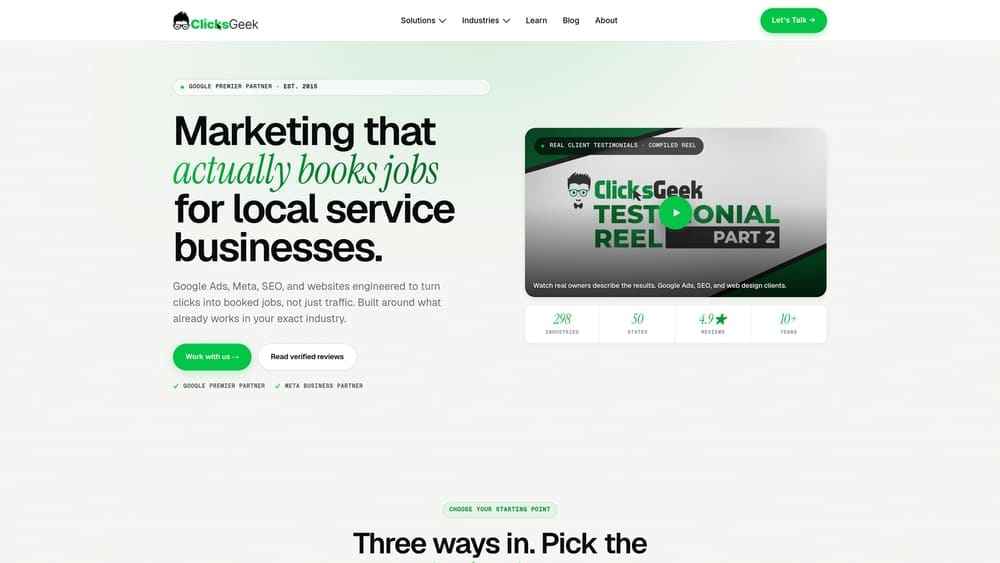
Clicks Geek is a Google Premier Partner agency that manages paid advertising and lead generation end-to-end for small and local businesses.
Where This Tool Shines
Most small business owners who run their own Google Ads campaigns end up paying for clicks that never convert. Clicks Geek’s approach is different: campaigns are built around cost per lead and actual revenue impact, not vanity metrics like impressions or click volume. That focus on what actually matters to a business owner is baked into how they work.
The agency specializes in local service businesses, including plumbers, lawyers, HVAC companies, and home service providers. If your business lives and dies by phone calls and booked appointments, this is the kind of specialized experience that tends to move the needle faster than a generalist agency.
Key Features
Expert-Managed Google Ads: Campaigns are built, optimized, and monitored by specialists focused on conversions, not just traffic.
Conversion Rate Optimization: CRO is integrated into every campaign strategy, so the landing pages and offer structure work alongside the ads.
Local Business Specialization: Deep experience with service-area businesses means strategies are tailored to how local customers actually search and convert.
Transparent Reporting: Reporting focuses on cost per lead and revenue impact, not just ad performance metrics.
Google Premier Partner Status: This designation reflects verified performance benchmarks and gives clients access to additional Google support and insights.
Best For
Small business owners who have a marketing budget and want to put it to work without spending months learning paid advertising. Particularly well-suited for local service businesses where phone calls and booked jobs are the primary conversion goal.
Pricing
Custom pricing based on ad spend and business goals. Contact Clicks Geek directly for a consultation to get a realistic picture of what’s possible in your market.
2. Google Ads
Best for: Businesses that want to capture high-intent customers actively searching for their services.
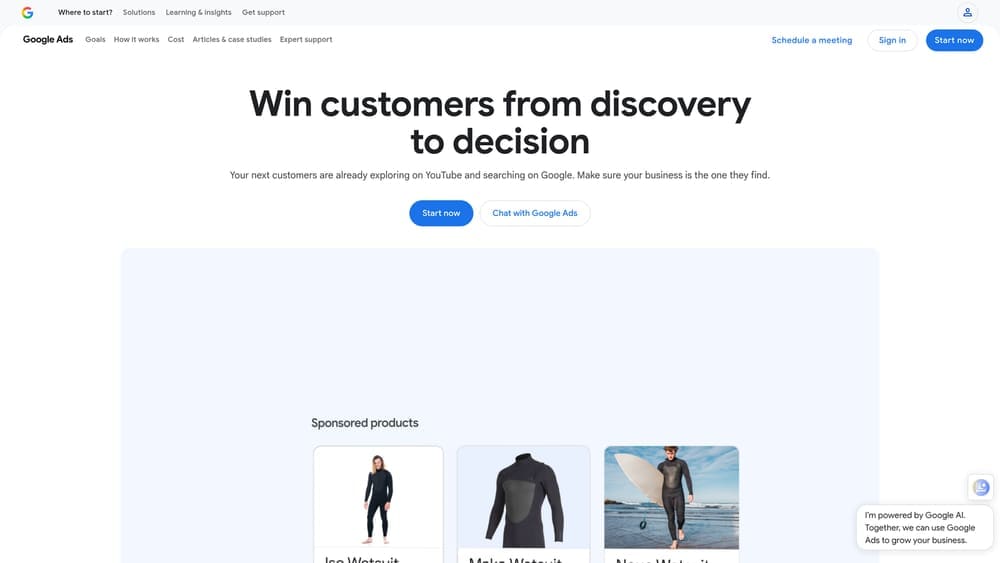
Google Ads is the self-service platform that places your business in front of people searching for exactly what you offer.
Where This Tool Shines
The core advantage of Google Ads is intent. Someone searching “emergency plumber near me” is not browsing, they’re ready to hire. No other platform puts you in front of that moment as directly. For local businesses where timing matters, that’s a meaningful edge over social advertising.
The platform has also become significantly more accessible for small businesses through AI-powered tools like Performance Max campaigns and Smart Bidding. These features automate a lot of the technical optimization, though strategy and setup still require attention to avoid wasted spend.
Key Features
Multiple Campaign Types: Search, Display, Shopping, and Performance Max give businesses flexibility depending on their goals.
Local Services Ads: The Google Guaranteed badge builds trust and places your listing at the very top of local search results.
Smart Bidding: AI-powered bidding strategies optimize for conversions automatically based on real-time signals.
Conversion Tracking: Detailed tracking connects ad spend to actual leads, calls, and purchases.
Best For
Any small business with a service or product that people actively search for. Especially powerful for local service businesses, e-commerce, and professional services where search intent is high and competition for organic rankings is fierce.
Pricing
Pay-per-click with no platform fee. You set your own daily budget, so you can start small and scale as you see results.
3. HubSpot
Best for: Small businesses that want a single platform for CRM, email marketing, and lead management.
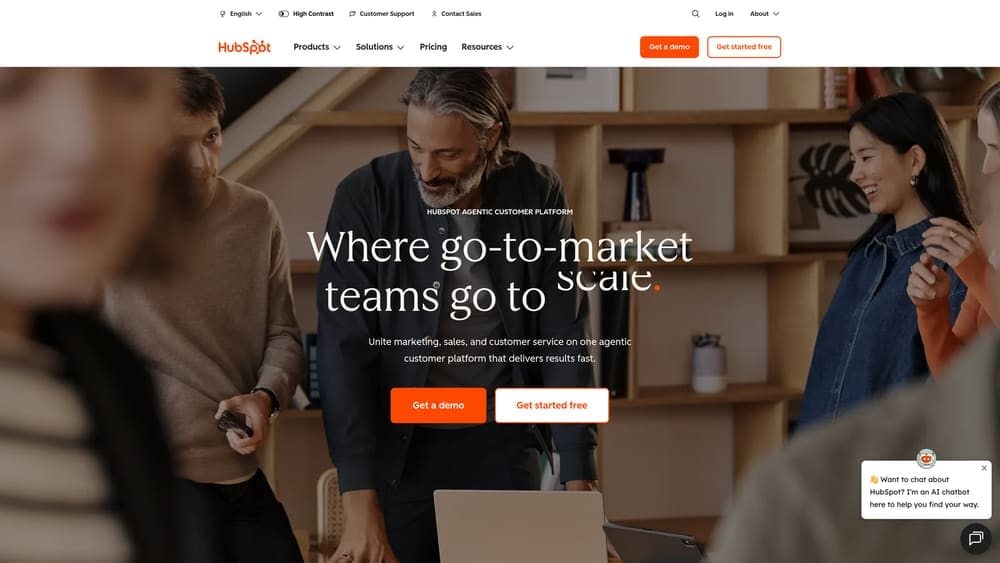
HubSpot is an all-in-one marketing and CRM platform built to help businesses manage contacts, automate follow-up, and track performance across the funnel.
Where This Tool Shines
The free CRM alone makes HubSpot worth considering. Most small businesses are tracking leads in spreadsheets or, worse, memory. Having a proper system that logs every contact, every conversation, and every deal stage changes how you follow up and close business.
Where HubSpot really earns its place is when you connect the CRM to email automation. When a lead fills out a form, they can automatically receive a welcome sequence, get tagged by interest, and be routed to the right follow-up. That kind of automation used to require a developer. Now it’s drag-and-drop.
Key Features
Free CRM: Contact management, deal tracking, and activity logging with no time limit on the free tier.
Email Marketing and Automation: Build automated workflows with A/B testing and behavioral triggers.
Landing Page Builder: Create lead capture pages with built-in forms without needing a developer.
Analytics Dashboard: Track full-funnel performance from first touch to closed deal.
Best For
Service businesses managing a pipeline of leads, consultants, B2B companies, and any small business that needs better follow-up systems. The free tier is a solid starting point for businesses just getting organized.
Pricing
Free tier available. Marketing Hub Starter from $20/month. Professional tier from $890/month for businesses needing advanced automation and reporting.
4. Semrush
Best for: Small businesses investing in SEO who want data-driven keyword and competitive research.
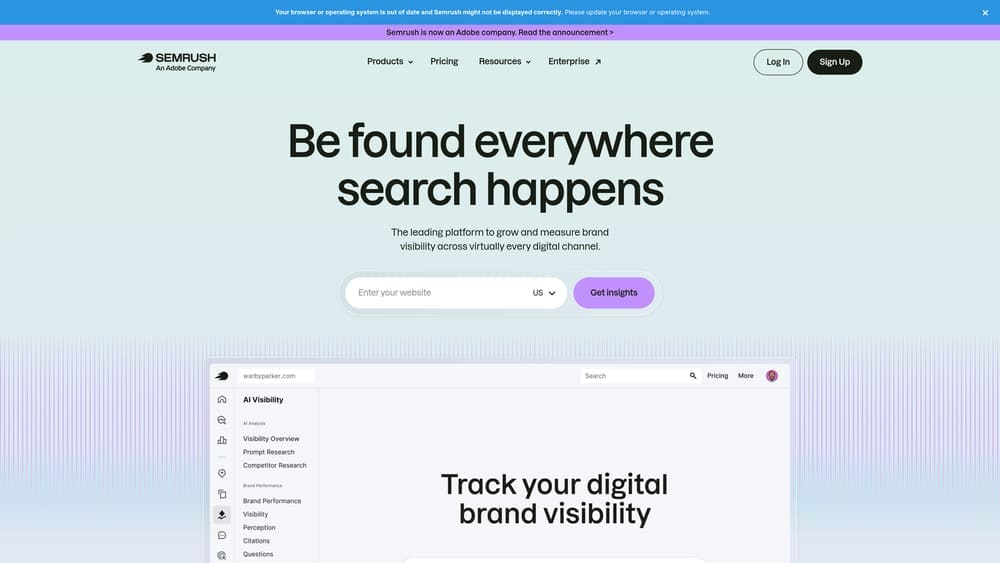
Semrush is a comprehensive SEO and competitive intelligence platform that helps businesses improve search rankings and understand what competitors are doing to win traffic.
Where This Tool Shines
Semrush takes the guesswork out of SEO. Instead of wondering which keywords to target or why a competitor outranks you, you get concrete data: search volume, keyword difficulty, competitor backlink profiles, and a full technical audit of your own site. That’s the difference between SEO as a strategy and SEO as a guess.
The position tracking feature is particularly useful for local businesses. You can monitor exactly where your site ranks for specific keywords in specific cities, which gives you a clear read on whether your SEO efforts are actually moving the needle.
Key Features
Keyword Research: Search volume, difficulty scores, and search intent data to find the right terms to target.
Site Audit: Identifies technical SEO issues that may be holding your rankings back.
Competitor Analysis: See which keywords competitors rank for and where their backlinks come from.
Position Tracking: Monitor your rankings locally and nationally over time.
Best For
Small businesses serious about organic search growth, content marketers, and business owners working with an SEO freelancer or agency who want visibility into what’s happening with their rankings.
Pricing
Pro plan from $139.95/month. A free limited account is available for basic research and site checks.
5. Mailchimp
Best for: Small businesses looking for a simple, reliable email marketing platform to stay in front of customers.
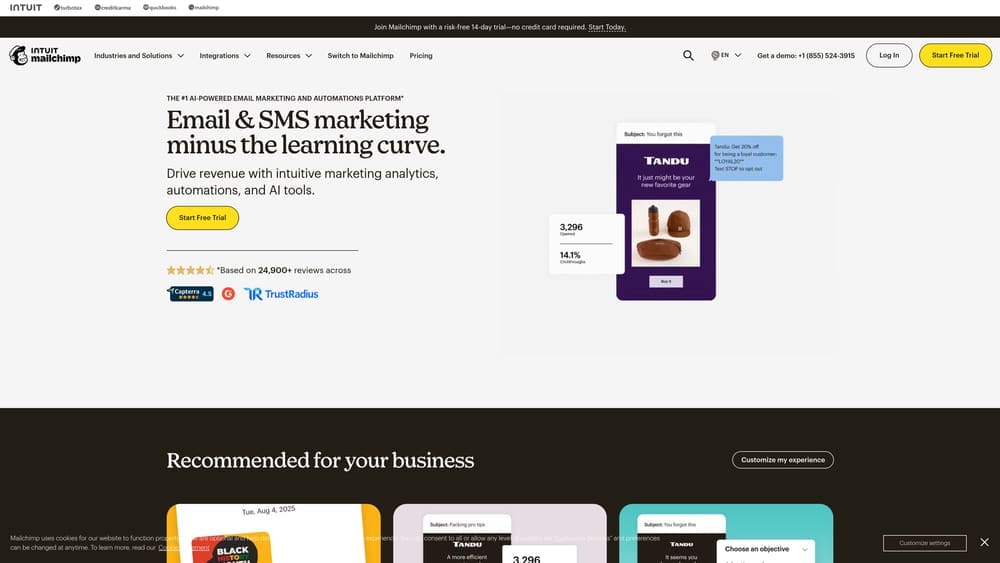
Mailchimp is one of the most widely used email marketing platforms, known for its approachable interface and solid automation capabilities.
Where This Tool Shines
Email marketing remains one of the highest-ROI channels available to small businesses, and Mailchimp lowers the barrier to entry significantly. The drag-and-drop builder means you don’t need design skills to send professional-looking campaigns, and the pre-built automation flows handle a lot of the heavy lifting once you set them up.
For businesses with an existing customer list, Mailchimp’s segmentation tools let you send the right message to the right group. A customer who bought six months ago gets a different email than someone who just signed up. That kind of relevance is what separates email that converts from email that gets ignored.
Key Features
Drag-and-Drop Email Builder: Hundreds of templates that look professional without any design experience required.
Audience Segmentation: Segment by behavior, purchase history, engagement level, and more.
Automation Flows: Welcome sequences, abandoned cart emails, and re-engagement campaigns run automatically.
Landing Pages and Forms: Basic lead capture tools included without needing a separate platform.
Best For
Retail businesses, e-commerce stores, service businesses with repeat customers, and any small business that wants to stay connected with their audience between purchases or appointments.
Pricing
Free plan for up to 500 contacts. Standard plan from $13/month. Pricing scales with list size.
6. Meta Ads (Facebook and Instagram)
Best for: Small businesses wanting to build brand awareness and generate leads through social advertising.
Meta Ads gives small businesses access to Facebook and Instagram audiences with targeting capabilities that go well beyond basic demographics.
Where This Tool Shines
Where Google Ads captures demand that already exists, Meta Ads creates it. You’re reaching people who aren’t necessarily searching for your service right now but match the profile of someone who would want it. That makes Meta particularly effective for businesses introducing a new offer, building local brand recognition, or targeting a specific lifestyle or interest group.
The lookalike audience feature is one of the most powerful tools available to small businesses at this price point. Upload your existing customer list, and Meta builds an audience of users who share similar characteristics. That’s a level of targeting sophistication that used to require significant data science resources.
Key Features
Granular Targeting: Location, demographics, interests, and behaviors let you zero in on your ideal customer.
Lookalike Audiences: Find new customers who resemble your best existing ones.
Lead Generation Ads: In-app forms reduce friction and capture leads without sending users to an external page.
Retargeting: Re-engage website visitors and people who have interacted with your content.
Best For
Businesses with visually appealing products or services, local businesses building community awareness, and any business that wants to retarget website visitors who didn’t convert the first time.
Pricing
Pay-per-click or pay-per-impression with no platform fee and no minimum budget. You control daily and lifetime spend.
7. Canva
Best for: Small business owners who need professional marketing visuals without hiring a designer.
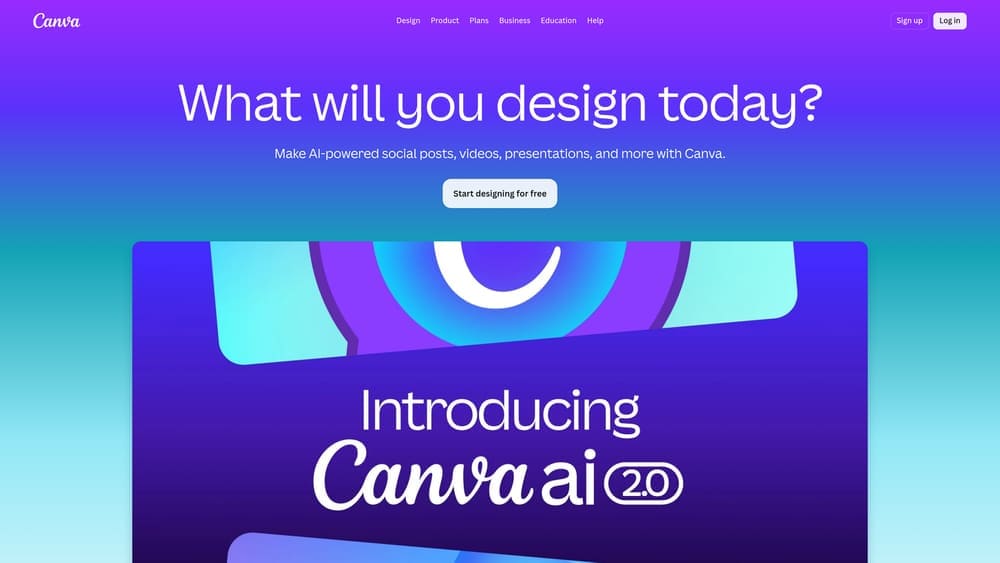
Canva is a design platform that makes it genuinely easy to create polished graphics, ads, and marketing materials from scratch.
Where This Tool Shines
Consistent, professional-looking visuals matter more than most small business owners realize. They affect how people perceive your brand before they ever read a word of your copy. Canva solves the problem of needing design work without the cost or turnaround time of a freelancer for every single post or ad.
The Brand Kit feature is worth highlighting specifically. Once you load your logo, brand colors, and fonts, every template you use automatically reflects your brand. That consistency across social posts, ads, and print materials builds recognition over time without requiring extra effort.
Key Features
Template Library: Thousands of customizable templates for social media, ads, flyers, presentations, and more.
Brand Kit: Store your brand assets so every design stays on-brand automatically.
AI-Powered Tools: Background removal, text generation, and smart resizing save significant time.
Team Collaboration: Share designs and work together with small teams in real time.
Best For
Small business owners handling their own social media, anyone running paid ads who needs fresh creative regularly, and teams that want brand consistency without a dedicated designer on staff.
Pricing
Free plan available with solid functionality. Canva Pro from $15/month per person for access to the full template library and premium features.
8. Google Business Profile
Best for: Local businesses that want to control how they appear in Google Search and Google Maps.
Google Business Profile is the free listing tool that determines what customers see when they search for your business or services in your area.
Where This Tool Shines
If you serve a local market and you haven’t fully built out your Google Business Profile, you’re leaving visibility on the table. When someone searches “dentist near me” or “best Italian restaurant in [city],” the businesses that appear in the map pack have optimized profiles. That placement drives foot traffic and phone calls without any ad spend.
The review management aspect is equally important. Responding to reviews, both positive and negative, signals to Google that the business is active and engaged. It also signals to potential customers that you care about service. That combination of SEO benefit and social proof makes this one of the highest-leverage free tools available to any local business.
Key Features
Business Information Management: Control hours, photos, services, and contact details across Google Search and Maps.
Review Management: Collect, respond to, and showcase customer reviews directly from the platform.
Posts and Updates: Share offers, events, and announcements directly on your listing.
Performance Insights: See how customers find your profile and what actions they take.
Best For
Every local business, full stop. Restaurants, service businesses, retail stores, medical practices, and professional services all benefit from a well-maintained Google Business Profile. This should be one of the first things any local business sets up.
Pricing
Completely free. No paid tiers, no hidden costs.
9. CallRail
Best for: Small businesses that need to know exactly which marketing channels are driving phone calls and leads.
CallRail is a call tracking and lead attribution platform that connects your marketing spend to actual inbound leads.
Where This Tool Shines
Here’s a problem many small businesses run into: they’re running Google Ads, doing some SEO work, maybe posting on social, and the phone is ringing. But they have no idea which channel is actually driving those calls. Without that data, you’re optimizing blind, and money tends to get wasted on channels that feel productive but aren’t.
CallRail solves this with dynamic number insertion, which assigns different phone numbers to different traffic sources. The caller from your Google Ad gets one number, the caller from organic search gets another, and the system ties every call back to the specific campaign, keyword, or page that drove it. That’s the kind of attribution data that makes every other marketing decision sharper.
Key Features
Dynamic Number Insertion: Tracks calls back to specific ads, keywords, and landing pages automatically.
Call Recording and Intelligence: AI-powered analysis of call content to identify lead quality and conversation trends.
Multi-Channel Attribution: Connects calls to Google Ads, organic search, social, and direct traffic in one view.
Form Tracking: Captures both phone and web form leads in a single dashboard for complete lead visibility.
Best For
Service businesses where the phone is the primary conversion point, businesses running multiple marketing channels who need attribution clarity, and any company working with a marketing agency that should be accountable for lead volume.
Pricing
Starts at $50/month for call tracking. Bundles are available for businesses that need form tracking and conversation intelligence alongside call attribution.
Which Solution Is Right for Your Business?
The best marketing solution for your small business comes down to three things: your budget, how much time you can dedicate to managing it, and where you are in your growth journey. There’s no single right answer, but there are clear fits.
If you want to hand off paid advertising to specialists and focus on running your business, Clicks Geek is the most direct path to managed, accountable lead generation. If you’d rather run campaigns yourself, Google Ads and Meta Ads give you the reach and targeting to compete effectively without enterprise-level budgets.
For organic growth, pairing Semrush with a fully optimized Google Business Profile covers both technical SEO and local visibility. Once leads start coming in, HubSpot and Mailchimp handle the follow-up and nurturing side so no one falls through the cracks. Canva keeps your creative looking sharp across every channel. And CallRail ties it all together by showing you exactly what’s working.
The smartest approach for most small businesses is to start with one or two solutions, get them working, and scale from there. Trying to implement everything at once leads to the exact tool overload this list was designed to help you avoid.
If paid search is on your radar and you want it done right from day one, the team at Clicks Geek specializes in building lead systems that turn traffic into qualified leads and measurable sales growth. If you want to see what this would look like for your specific business, they’ll walk you through the strategy and break down what’s realistic in your market.