Agencies live and die by their pipeline. Not just for clients, but for their own growth too. The problem isn’t a shortage of lead generation tools; it’s knowing which ones actually move the needle versus which ones just add complexity and monthly fees to your stack.
Whether you’re running PPC campaigns for local service businesses, managing outbound prospecting for B2B clients, or building multi-channel inbound funnels, the right software changes everything. The wrong choice burns budget and produces vanity metrics that don’t translate to revenue.
We evaluated these tools specifically through an agency lens: multi-client scalability, CRM integrations, lead quality signals, reporting depth, and real ROI potential. Here are the top lead generation software options worth your attention in 2026.
1. Clicks Geek
Best for: Agencies and local businesses that want managed lead generation without building an in-house tech stack.
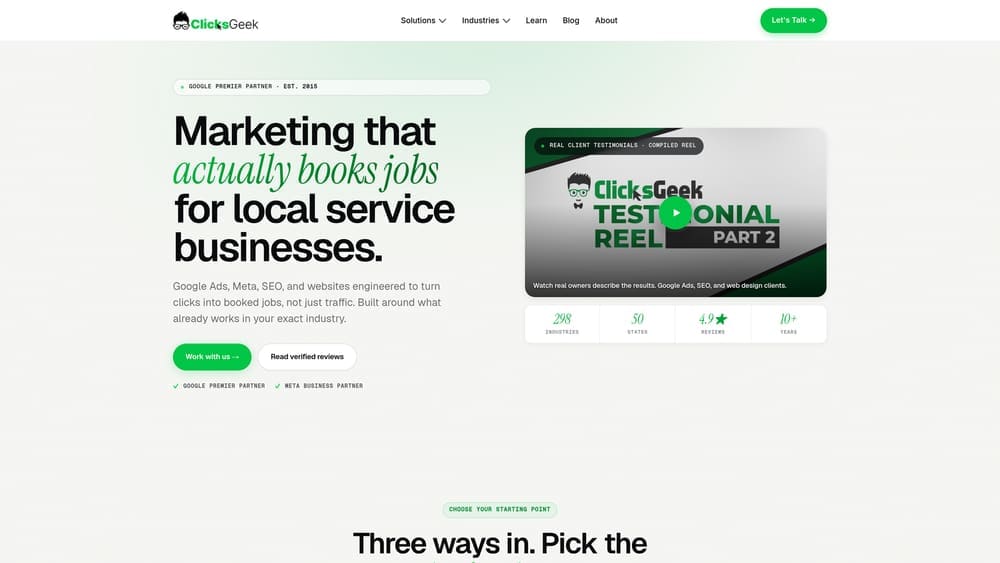
Clicks Geek is a Google Premier Partner agency delivering managed PPC, white label advertising, CRO, and local business lead generation built around real revenue outcomes.
Where This Tool Shines
Most lead generation software requires someone to actually run it. Clicks Geek takes a different approach: rather than handing you another platform to manage, they build and operate the campaigns for you. For agencies that want to resell lead generation services without hiring specialists, the white label model is particularly compelling.
The CRO integration is what separates this from typical PPC management. Campaigns are optimized for conversions and cost per lead, not just clicks and impressions. For local service businesses like HVAC, plumbing, roofing, and electricians, where every phone call has real dollar value, that distinction matters significantly.
Key Features
Google Premier Partner Status: Access to advanced Google Ads tools, beta features, and direct support not available to standard advertisers.
White Label PPC, Facebook Ads, and SEO: Agencies can resell these services under their own brand without managing fulfillment internally.
CRO-Integrated Campaigns: Landing pages and ad creative are built and tested around conversion outcomes, not just traffic volume.
Local Service Business Specialization: Deep experience with high-intent local verticals where lead quality and call volume are the primary KPIs.
Transparent Revenue-Focused Reporting: Reporting centers on cost per lead and revenue impact rather than impressions or click-through rates.
Best For
Agencies looking to add or resell lead generation services without the overhead of building an internal team. Also ideal for local service businesses that want a specialist partner handling their paid acquisition rather than a generalist agency.
Pricing
Custom pricing based on service scope and client volume. Contact Clicks Geek directly for a strategy consultation tailored to your market.
2. HubSpot Marketing Hub
Best for: Agencies running inbound marketing funnels across multiple client accounts with CRM-connected reporting.
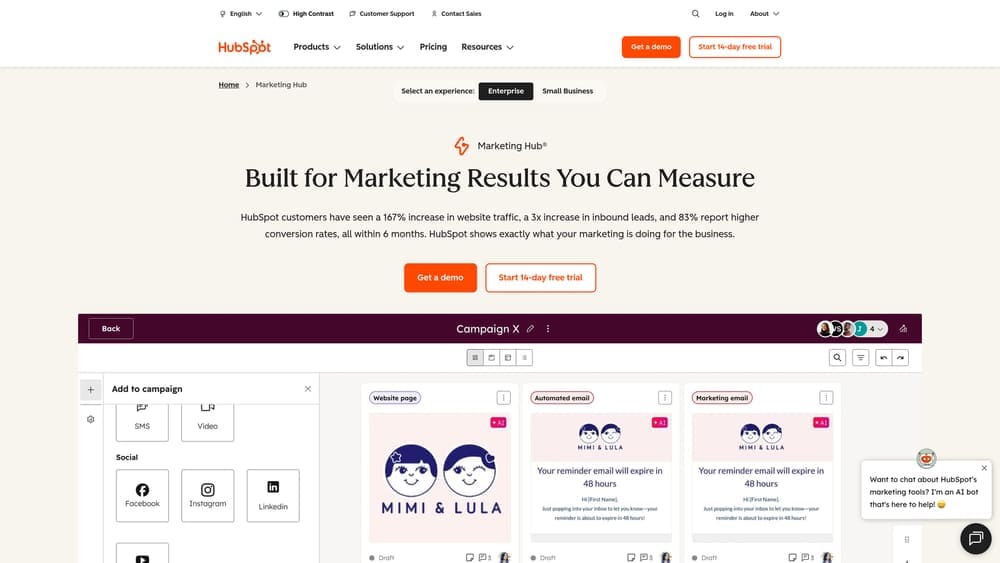
HubSpot Marketing Hub is a comprehensive inbound platform combining CRM, email marketing, landing pages, lead scoring, and attribution analytics in one connected ecosystem.
Where This Tool Shines
The real advantage of HubSpot isn’t any single feature; it’s the integration. When your landing pages, email sequences, CRM records, and attribution data all live in the same system, you stop losing leads in the gaps between platforms. For agencies managing multiple clients, that coherence reduces operational friction considerably.
HubSpot’s Agency Partner program adds another layer of value, giving partner agencies access to client management tools, co-marketing opportunities, and tiered support. If you’re already recommending HubSpot to clients, the partner program makes the relationship more commercially viable.
Key Features
Native CRM Integration: Leads flow directly from capture to the CRM without manual exports or third-party sync tools.
Landing Page and Form Builder: Drag-and-drop builder with A/B testing built in, so optimization is part of the workflow.
Lead Scoring and Segmentation: Automatically prioritize contacts based on behavior, firmographics, and engagement history.
Multi-Client Management: Agency Partner program provides tools for managing and reporting across multiple client accounts.
Attribution Reporting: Multi-touch attribution across channels shows which activities are actually driving pipeline.
Best For
Mid-to-large agencies running content-driven inbound strategies for clients who need a full-funnel view from first touch to closed deal. Less suited to agencies on tight budgets or those focused purely on outbound prospecting.
Pricing
Free tier available. Marketing Hub Professional starts at approximately $800/month, scaling with contact volume and features.
3. Apollo.io
Best for: B2B-focused agencies doing outbound prospecting and sales development work for clients.
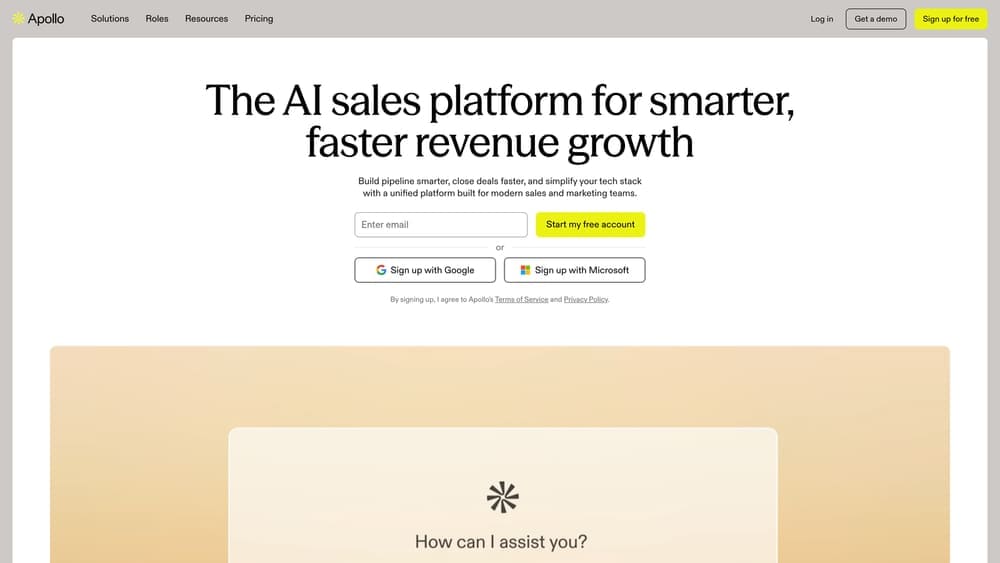
Apollo.io is a B2B sales intelligence and engagement platform combining a large contact database with outbound sequencing, buyer intent data, and CRM synchronization.
Where This Tool Shines
Apollo solves a specific problem well: finding the right contacts and reaching them systematically. The combination of a searchable contact database with built-in email and LinkedIn sequencing means agencies can run outbound campaigns without stitching together three separate tools. The buyer intent layer helps prioritize outreach toward prospects who are actively researching relevant solutions.
The Chrome extension is a practical addition for teams doing LinkedIn prospecting. Pulling verified contact data directly from a LinkedIn profile, then pushing it into a sequence, removes a lot of manual work from the SDR workflow.
Key Features
B2B Contact Database: Filter by industry, job title, company size, location, and technology stack to build targeted prospect lists.
Email and LinkedIn Sequencing: Automated multi-step outreach with follow-up logic built around prospect behavior.
Buyer Intent Data: Identifies prospects showing active purchase signals so outreach is timed more effectively.
CRM Integrations: Native sync with Salesforce, HubSpot, and Pipedrive keeps contact data consistent across platforms.
Chrome Extension: Prospect and enrich contacts directly from LinkedIn profiles without leaving the browser.
Best For
Agencies running B2B lead generation or sales development programs for clients. Also useful for agencies prospecting for their own new business development.
Pricing
Free plan available with limited credits. Paid plans start at approximately $49/user/month, scaling with usage and team size.
4. Unbounce
Best for: Performance-focused agencies optimizing PPC landing pages for higher conversion rates across multiple campaigns.
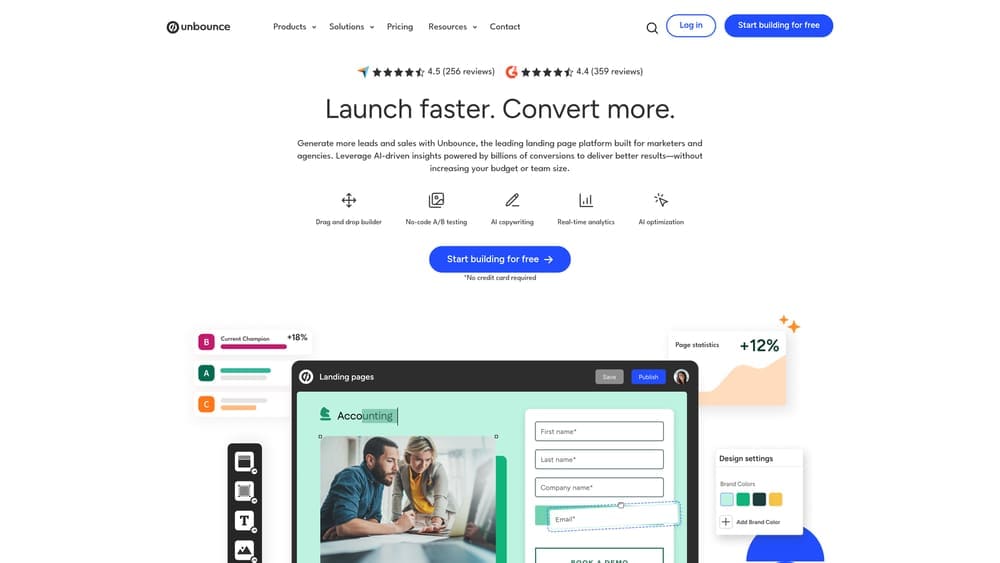
Unbounce is a landing page platform built for conversion optimization, featuring AI-powered traffic routing and a flexible drag-and-drop builder designed specifically for paid campaigns.
Where This Tool Shines
The Smart Traffic feature is Unbounce’s most distinctive capability. Rather than running a traditional A/B test where you wait for statistical significance, Smart Traffic uses machine learning to automatically route each visitor to the page variant most likely to convert them, based on their attributes. For agencies managing high-volume PPC campaigns, this can accelerate optimization cycles considerably.
Dynamic text replacement is another standout for PPC work. It allows landing page headlines and copy to automatically match the keyword a visitor searched, improving message match between ad and landing page without building dozens of separate pages.
Key Features
Smart Traffic AI: Automatically routes visitors to the highest-converting page variant based on visitor data, not just random assignment.
Drag-and-Drop Builder: Over 100 conversion-focused templates with full customization, no developer required.
Dynamic Text Replacement: Personalizes landing page copy to match PPC keywords for improved ad relevance and Quality Score.
Pop-ups and Sticky Bars: Additional lead capture touchpoints that can be triggered by scroll depth, time on page, or exit intent.
Ad Platform Integrations: Connects with Google Ads, Facebook Ads, HubSpot, and Mailchimp for a connected campaign workflow.
Best For
Agencies running PPC campaigns that need fast, high-quality landing pages with built-in optimization. Particularly strong for agencies managing multiple clients with distinct campaign requirements.
Pricing
Plans start at approximately $99/month. Agency plans with higher conversion limits and client management features are available at higher tiers.
5. ActiveCampaign
Best for: Agencies building complex, multi-touch email and SMS nurture sequences for clients at a competitive price point.
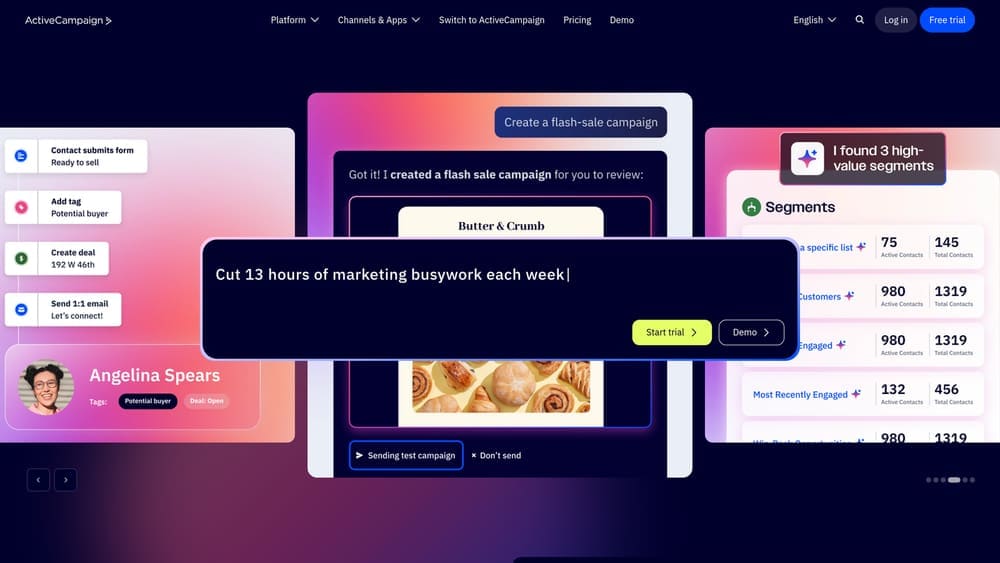
ActiveCampaign is an email marketing and automation platform with CRM capabilities, built for sophisticated lead nurture workflows that go well beyond basic drip campaigns.
Where This Tool Shines
ActiveCampaign’s automation builder is genuinely powerful for the price. You can build branching workflows that respond to email opens, link clicks, page visits, form submissions, and CRM deal stage changes, all within a visual canvas that’s relatively intuitive to navigate. For agencies managing nurture sequences across multiple client accounts, this flexibility is a significant advantage.
The lead scoring system adds a layer of intelligence to these workflows. Contacts accumulate or lose points based on their behavior, and automations can trigger different sequences depending on score thresholds. This means warmer leads get escalated to sales faster, while cooler contacts continue receiving educational content.
Key Features
Visual Automation Builder: Multi-step workflows combining email, SMS, site tracking, and CRM actions in a single canvas.
Behavioral Lead Scoring: Automatically scores contacts based on engagement signals to identify sales-ready leads.
Built-in CRM: Deal pipeline management integrated directly with automation triggers and contact records.
Deep Segmentation: Segment contacts by behavior, demographics, purchase history, and custom fields for highly personalized sequences.
Agency Partner Program: Client management tools and partner support for agencies managing multiple accounts.
Best For
Agencies running email marketing and lead nurture programs for clients who need sophisticated automation without an enterprise-level budget. Works well alongside paid acquisition tools to handle post-click follow-up.
Pricing
Plans start at approximately $15/month for basic features. Agency and higher-tier plans scale with contact volume and the number of accounts managed.
6. Leadpages
Best for: Smaller agencies and local businesses that need fast, affordable landing pages without development resources.
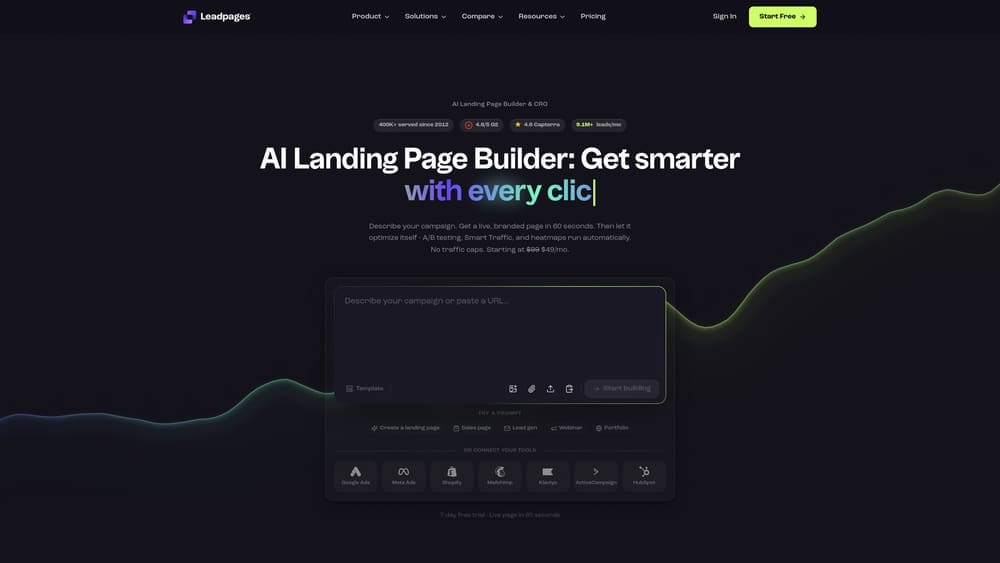
Leadpages is a landing page and lead capture platform designed for speed and simplicity, letting agencies launch campaigns quickly without a large budget or technical team.
Where This Tool Shines
Leadpages occupies a practical middle ground: more capable than a basic website builder, more accessible than a full conversion optimization platform. For agencies working with smaller local business clients who need a functional landing page up quickly, Leadpages delivers without overcomplicating the process.
The unlimited landing pages feature on all paid plans is worth noting. Agencies managing multiple clients or campaigns don’t face per-page pricing constraints, which makes the economics more predictable as client count grows.
Key Features
Drag-and-Drop Builder: Conversion-rated templates that can be customized and published quickly without coding.
Alert Bars, Pop-ups, and Opt-in Forms: Multiple lead capture formats beyond the standard landing page for additional touchpoints.
Lead Magnet Delivery: Automatically delivers downloadable content to new subscribers upon opt-in.
Platform Integrations: Connects with major email marketing platforms and CRMs for seamless lead handoff.
Unlimited Landing Pages: No per-page limits on paid plans, supporting agencies managing multiple campaigns simultaneously.
Best For
Agencies working with small to mid-sized local businesses that need cost-effective landing pages for lead capture campaigns. A strong entry point before graduating to more sophisticated conversion optimization tools.
Pricing
Plans start at approximately $37/month. The Pro plan is approximately $74/month and includes additional features suited to growing agencies.
7. Semrush
Best for: Agencies using organic search and content strategy as a primary lead generation channel for clients.
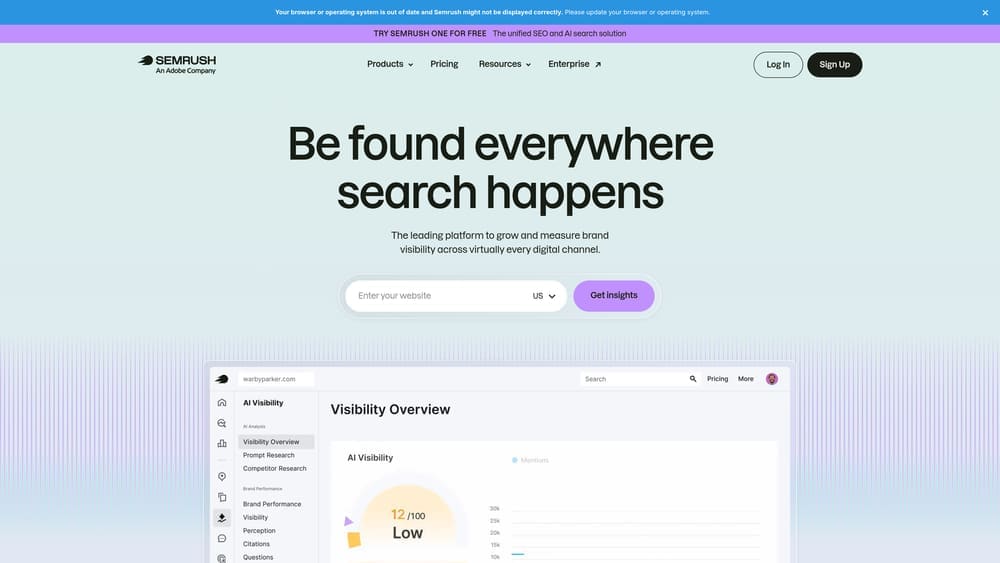
Semrush is an all-in-one SEO and digital marketing intelligence platform that helps agencies identify and capture lead generation opportunities through search visibility.
Where This Tool Shines
For agencies that include SEO as part of their lead generation offering, Semrush provides the research infrastructure to make content and keyword strategies defensible. The competitor gap analysis is particularly useful: it surfaces keyword opportunities your clients’ competitors are ranking for but your clients aren’t, giving you a clear roadmap for closing the visibility gap.
The white label reporting capability is a practical agency feature. Client-facing reports can be exported with custom branding, which reduces the time spent reformatting data and keeps the agency’s deliverables looking professional.
Key Features
Keyword Research and Intent Analysis: Identifies high-intent keywords that attract visitors who are actively looking to buy or inquire.
Competitor Gap Analysis: Reveals organic lead channels your clients are missing that competitors are already capturing.
Site Audit Tools: Diagnoses technical SEO issues that reduce organic visibility and lead flow.
Position Tracking: Monitors keyword rankings across multiple client domains from a single dashboard.
White Label Reporting: Exports client-facing reports with agency branding for professional deliverables.
Best For
Agencies offering SEO, content marketing, or organic lead generation services. Also valuable for agencies that want to identify content gaps and search opportunities to complement their paid acquisition work.
Pricing
Plans start at approximately $139.95/month. Agency plans with additional seats and advanced features are available at higher tiers.
8. Pipedrive
Best for: Agencies with active sales teams that need a clean, visual system for tracking and closing leads efficiently.
Pipedrive is a sales-focused CRM with visual pipeline management, designed to help agencies and their clients move leads through a defined process without losing deals in the cracks.
Where This Tool Shines
Pipedrive’s strength is its clarity. The visual pipeline makes it immediately obvious where every deal stands, what action is needed next, and where leads are stalling. For agencies managing their own new business pipeline or setting up CRM workflows for clients, that visual simplicity reduces the friction that causes salespeople to avoid updating the CRM in the first place.
The Lead Inbox is a useful addition for qualifying prospects before they enter the main pipeline. It acts as a holding area where raw leads can be assessed and prioritized, keeping the active pipeline focused on genuinely qualified opportunities rather than cluttered with unverified contacts.
Key Features
Visual Deal Pipeline: Drag-and-drop interface showing lead status across all stages at a glance.
Lead Inbox: Separate qualification stage for new leads before they enter the main sales pipeline.
Web Forms and Chatbot: Passive lead capture tools that feed directly into the CRM from client websites.
Automation: Triggers follow-up reminders and stage transitions automatically based on deal activity.
Reporting Dashboards: Tracks conversion rates, pipeline velocity, and revenue forecasts across active deals.
Best For
Agencies with a defined sales process that need a CRM their team will actually use. Also a strong recommendation for clients in service industries who need a simple, visual system to manage inbound inquiries.
Pricing
Plans start at approximately $14/user/month. Advanced and Professional tiers add automation, reporting, and integration features at higher price points.
9. CallRail
Best for: Agencies serving local service businesses where phone calls are the primary conversion event and campaign attribution is critical.
CallRail is a call tracking and lead intelligence platform that connects inbound phone calls back to the specific campaigns, keywords, and channels that generated them.
Where This Tool Shines
If you’re running paid campaigns for HVAC companies, plumbers, roofers, or any local service business, you already know the problem: most conversions happen over the phone, not through a form submission. Without call tracking, you’re essentially flying blind on which campaigns are generating real leads versus just generating clicks.
CallRail’s dynamic number insertion solves this by assigning unique phone numbers to specific ads, keywords, and channels. When a call comes in, the platform records exactly what triggered it. Combined with call recording and transcription, agencies can also assess lead quality, not just volume, which is a meaningful upgrade from raw call count metrics.
Key Features
Dynamic Number Insertion: Ties each inbound call to the specific ad, keyword, or channel that drove it for accurate campaign attribution.
Call Recording and Transcription: Records and transcribes calls for lead quality assessment and training purposes.
Form Tracking: Tracks form submissions alongside calls for a complete picture of lead sources across all touchpoints.
Ad Platform Integrations: Pushes call conversion data back into Google Ads and Facebook Ads for smarter bidding optimization.
Multi-Client Account Management: Agency-friendly structure for managing call tracking across multiple client accounts from one login.
Best For
Agencies managing local service business clients where phone calls represent the majority of conversions. Essential for any agency running Google Ads or Local Services Ads for clients who rely on inbound calls to close business.
Pricing
Plans start at approximately $45/month. Pricing scales with call volume and additional features like transcription and analytics.
Which Tool Is Right for Your Agency?
The honest answer is that most agencies need more than one of these tools working together. Your landing page platform, CRM, tracking solution, and outbound prospecting tool each handle a different part of the lead generation equation. The question is which combination fits your agency model and client base.
Here’s a quick way to think about it by agency type:
Running PPC for local service businesses: CallRail for attribution, Unbounce or Leadpages for landing pages, and a managed partner like Clicks Geek if you want expert campaign execution without building an in-house team.
Running inbound and content marketing for B2B clients: HubSpot Marketing Hub for the full funnel, Semrush for organic research and competitor intelligence, and ActiveCampaign if you need more affordable automation at scale.
Running outbound sales development programs: Apollo.io for prospecting and sequencing, Pipedrive for pipeline management, and ActiveCampaign for nurture sequences once leads enter the funnel.
Agencies that want results without managing the tech stack: This is where Clicks Geek makes the most sense. Rather than assembling and operating a multi-tool stack, you get a Google Premier Partner team handling PPC, CRO, and lead generation directly, with white label options if you’re reselling the service to clients.
Tired of spending money on marketing that doesn’t produce real revenue? Clicks Geek builds lead systems that turn traffic into qualified leads and measurable sales growth. If you want to see what this would look like for your business, they’ll walk you through how it works and break down what’s realistic in your market.