What if every marketing dollar you spent came back with friends? Not just a polite return of your initial investment, but a profitable parade of revenue that makes your accountant smile and your competitors wonder what you’re doing differently.
Most local business owners are trapped in what we call the “spray and pray” cycle. You launch campaigns, watch the numbers tick up on your analytics dashboard, celebrate a spike in website traffic, and then… crickets when it comes to actual sales. The disconnect is maddening.
Revenue driven marketing is the antidote to this expensive guessing game. It’s a strategic framework where every campaign, channel, and tactic ties directly to measurable revenue outcomes. No more celebrating vanity metrics while your bank account stays flat. No more justifying marketing spend with vague promises about “brand awareness” or “engagement.” Just clear, trackable paths from marketing investment to revenue generation.
If you’re tired of marketing that feels like throwing money into a black hole, you’re in the right place. This guide will show you how to transform your marketing from a cost center into a profit engine—with specific frameworks, channel strategies, and optimization techniques that actually move the revenue needle.
Why Traditional Marketing Metrics Are Lying to You
Let’s talk about the dangerous gap between looking successful and actually being successful.
Your website traffic is up 40% this quarter. Your social media engagement is through the roof. Your email open rates are beating industry benchmarks. And yet, when you look at your revenue, it’s barely budged. Sound familiar?
This is the dirty secret of traditional marketing metrics: they measure activity, not outcomes. Impressions don’t pay your rent. Click-through rates don’t cover payroll. Engagement doesn’t fund your growth.
The problem runs deeper than just tracking the wrong numbers. These vanity metrics create false confidence. You see green arrows pointing up on your dashboard and assume your marketing is working. Meanwhile, your actual revenue might be stagnant or even declining because those clicks and impressions aren’t converting into paying customers.
Here’s what’s really happening: traditional metrics measure the top of your funnel while ignoring what matters most—the bottom. They tell you how many people saw your ad or visited your website, but they’re silent about whether those people actually bought anything or became profitable customers.
Think of it like judging a restaurant by how many people walk past it versus how many actually sit down, order, and pay their bill. One metric is interesting. The other one keeps the lights on.
The shift from activity-based marketing to outcome-based marketing requires a fundamental mindset change. Instead of asking “How many people saw our ad?” you need to ask “How much revenue did this campaign generate?” Understanding how to track marketing ROI becomes essential for making this transition successfully.
This isn’t about ignoring awareness or engagement entirely. Those metrics have their place in the customer journey. But they can’t be your north star. Your north star needs to be revenue—because that’s the only metric that actually determines whether your business survives and thrives.
The Four Pillars of Revenue Driven Marketing
Revenue driven marketing isn’t built on hope or hunches. It’s built on four foundational pillars that work together to create a system where every marketing dollar is accountable for its contribution to your bottom line.
Pillar 1: Attribution Modeling—Following the Money Trail
Attribution modeling is how you track the customer journey from first touch to purchase. Most businesses use last-click attribution by default, which credits the final touchpoint before a sale. But that’s like giving the last player who touches the ball before a goal all the credit, ignoring the entire team that made it possible.
Multi-touch attribution reveals the full story. A customer might discover you through organic search, return via a Facebook ad, sign up for your email list, and finally convert after clicking a retargeting ad. Each touchpoint played a role in that revenue. Understanding marketing attribution models helps you allocate budget to the channels that actually contribute to sales, not just the ones that happen to be last in line.
Pillar 2: Customer Lifetime Value as Your North Star
Not all customers are created equal. Some make a single small purchase and disappear. Others become loyal advocates who buy repeatedly and refer their friends.
Customer lifetime value (CLV) is the total revenue you can expect from a customer over their entire relationship with your business. This metric should drive every campaign decision you make. A channel that generates fewer leads but attracts high-CLV customers is worth far more than one that floods you with tire-kickers who never buy or buy once and vanish.
When you optimize for CLV instead of just lead volume, your entire marketing strategy shifts. You start asking better questions: Which channels attract customers who stick around? What messaging resonates with high-value buyers? Implementing customer retention marketing strategies becomes just as important as acquisition when you focus on lifetime value.
Pillar 3: Closed-Loop Reporting—Connecting Marketing to Sales
This is where most businesses fall apart. Your marketing platform knows about clicks and conversions. Your CRM knows about leads and opportunities. Your accounting system knows about actual revenue. But these systems don’t talk to each other, creating a massive blind spot in your understanding of what’s working.
Closed-loop reporting connects these dots. It requires integration between your marketing platforms, CRM, and sales data so you can track a lead from initial contact all the way through to closed revenue. This visibility is non-negotiable for revenue driven marketing. Without it, you’re flying blind, unable to definitively say which campaigns are profitable and which are bleeding money.
Pillar 4: Continuous Optimization Based on Revenue Signals
Traffic patterns are interesting. Revenue signals are actionable. The fourth pillar is about building a culture of continuous improvement where you optimize based on what drives revenue, not what drives clicks.
This means constantly testing and refining your campaigns, landing pages, and conversion pathways. But unlike traditional A/B testing that celebrates a higher click-through rate, you’re testing for revenue impact. Sometimes a variation that generates fewer clicks but attracts more qualified buyers will dramatically outperform the “winner” by traditional metrics.
Revenue signals tell you when to double down, when to cut losses, and when to pivot strategy. They’re the difference between marketing that feels productive and marketing that is profitable.
Building Your Revenue-First Campaign Framework
Most businesses build their marketing campaigns backward. They start with tactics—”Let’s run some Facebook ads” or “We need to post more on social media”—and hope those activities eventually lead to revenue. This is like building a house by starting with the paint color instead of the foundation.
A revenue-first framework flips this approach entirely. You start with your revenue goal and work backward to the marketing tactics that will get you there.
Here’s how this works in practice. Let’s say you need to generate an additional $50,000 in revenue this quarter. If your average customer value is $2,500, you need 20 new customers. If your close rate on qualified leads is 25%, you need 80 qualified leads. If 10% of your website visitors become qualified leads, you need 800 targeted visitors.
Now you have a clear roadmap. You’re not just “doing marketing.” You’re executing a specific plan to generate 800 high-intent visitors who match your ideal customer profile, knowing that this will flow through your conversion funnel to produce the revenue you need.
This backward planning forces you to get honest about your conversion rates and customer economics. Many businesses discover they’ve been celebrating traffic growth while ignoring the fact that their conversion rates are terrible or their average customer value is too low to support profitable growth. If this sounds familiar, you may want to explore why your digital marketing is not generating revenue despite all the activity.
The next step is identifying high-intent channels that attract buyers, not just browsers. There’s a massive difference between someone searching “emergency plumber near me” and someone casually scrolling through social media. One has immediate purchase intent. The other might be mildly interested at best.
High-intent channels vary by business, but they share a common characteristic: the people you reach are actively looking for solutions to problems they have right now. Search advertising, review sites, and industry-specific directories often fall into this category. They’re more expensive per click than awareness channels, but they convert at dramatically higher rates because you’re reaching people who are ready to buy.
Finally, you need conversion pathways that capture and qualify leads before they go cold. Speed matters enormously here. A lead that’s hot today might be ice cold tomorrow after they’ve talked to three of your competitors. Your conversion pathway should make it absurdly easy for qualified prospects to take the next step—whether that’s booking a consultation, requesting a quote, or making a purchase.
Remove friction ruthlessly. Every extra form field, every additional click, every moment of confusion is costing you revenue. The goal is to create a smooth, obvious path from “I’m interested” to “I’m ready to buy” that respects the prospect’s time and urgency.
Channel Selection: Where Revenue Actually Comes From
Not all marketing channels are created equal when it comes to driving revenue. Some are excellent for awareness but terrible for conversion. Others might have limited reach but exceptional return on ad spend. The key is understanding which channels actually contribute to your bottom line.
PPC advertising stands out as a direct-response revenue driver with measurable ROAS (return on ad spend). When properly configured, you can track every dollar spent on paid search or display advertising directly to the revenue it generates. This transparency is powerful.
The beauty of PPC is immediacy and control. You can launch a campaign in the morning and have leads by afternoon. You can test different messages, targeting parameters, and offers quickly. You can scale up what works and shut down what doesn’t, all while maintaining clear visibility into your cost per acquisition and revenue per campaign.
For local businesses specifically, PPC advertising offers the ability to dominate high-intent search queries in your market. When someone searches for your service with local intent, you can be the first result they see. That visibility, combined with a strong offer and smooth conversion pathway, translates directly into revenue.
SEO operates on a different timeline but offers something PPC can’t match: compounding returns over time. While PPC stops generating leads the moment you stop paying, organic search traffic continues flowing as long as you maintain your rankings.
Think of SEO as a long-term revenue asset. The investment you make today in content, technical optimization, and link building pays dividends for months or years. Many businesses find that their organic search traffic becomes their most profitable channel over time because the ongoing cost is minimal compared to the revenue it generates.
The challenge with SEO is patience and proper attribution. Results take time to materialize, and the path from ranking improvement to revenue can be less direct than PPC. But businesses that commit to SEO alongside their paid efforts often discover it becomes their most reliable source of qualified traffic and revenue.
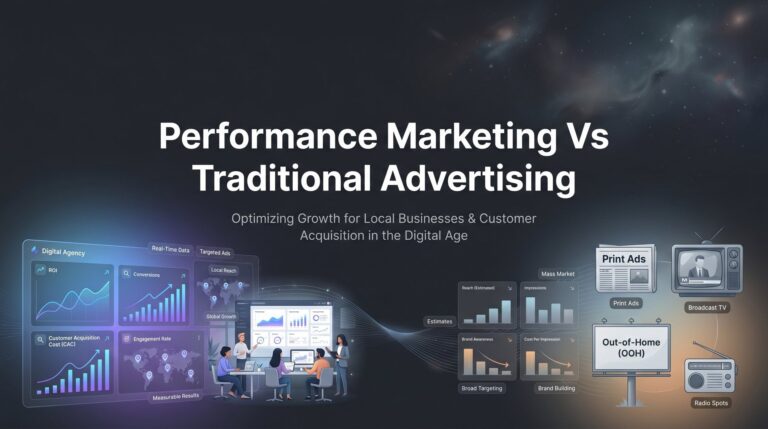
Evaluating channel performance requires looking beyond surface-level metrics. Cost per acquisition (CPA) tells you how much you’re spending to acquire each customer. Revenue contribution shows you which channels are actually driving your business forward. Understanding the difference between performance marketing and traditional marketing helps you allocate budget to channels that prioritize measurable outcomes.
The goal isn’t to find the single “best” channel. It’s to build a portfolio of channels that work together to drive sustainable revenue growth. PPC provides immediate results and testing grounds for messaging. SEO builds long-term assets. Email nurtures relationships and drives repeat revenue. Each channel plays a role in your overall revenue engine.
Conversion Rate Optimization: The Revenue Multiplier
Here’s a truth that most businesses overlook: doubling your conversion rate is often easier and more profitable than doubling your traffic.
Let’s say you’re currently getting 1,000 visitors per month with a 2% conversion rate, generating 20 leads. You could spend more on advertising to get 2,000 visitors and 40 leads. Or you could optimize your conversion rate to 4% and get 40 leads from the same 1,000 visitors, without spending an extra dollar on traffic.
This is why conversion rate optimization (CRO) is the revenue multiplier. Small improvements in how effectively you convert visitors into leads and leads into customers can dramatically impact your bottom line without requiring proportional increases in marketing spend.
The problem is that most businesses have silent conversion killers they don’t even know about. Slow page load times that cause impatient visitors to bounce before your page even renders. Unclear calls-to-action that leave people wondering what they’re supposed to do next. Friction in the contact process that makes it easier to leave than to engage.
These bottlenecks are invisible until you start looking for them. A page that takes five seconds to load instead of two might seem like a minor inconvenience, but it can cut your conversion rate in half. A contact form that asks for ten pieces of information instead of three creates friction that sends prospects running to your competitors.
The key is identifying which bottlenecks are actually costing you revenue. Not every improvement will move the needle equally. Some changes might improve user experience without impacting conversions. Others might seem minor but unlock massive revenue gains. Working with conversion focused marketing services can help you identify and fix these hidden revenue leaks systematically.
Testing strategies for CRO should prioritize revenue impact over click improvements. This is where many businesses go wrong. They celebrate winning a test that increased click-through rate by 15%, not realizing that those extra clicks came from less qualified visitors who never convert.
Revenue-focused testing asks different questions. Does this variation attract more qualified leads? Does it improve the quality of leads we’re generating? Does it increase the likelihood that leads will become customers? Does it impact average order value or customer lifetime value?
Sometimes the “losing” variation by traditional metrics is actually the winner when you measure revenue impact. A landing page with a lower conversion rate but higher lead quality might generate more revenue than one that converts more visitors into low-value leads.
The goal of CRO isn’t just to convert more visitors. It’s to convert more of the right visitors into profitable customers. That distinction changes everything about how you approach optimization.
Putting Revenue Driven Marketing Into Action
Theory is worthless without execution. Here’s your 30-day roadmap for shifting to revenue-focused marketing.
Week 1: Audit Your Current State
Start by documenting what you’re actually tracking right now. What metrics do you review regularly? How are you measuring marketing success? Most importantly, can you trace a clear line from marketing spend to actual revenue?
Identify the gaps in your attribution and reporting. Where do leads disappear from view? What happens between “website visitor” and “paying customer” that you can’t currently measure? A comprehensive digital marketing audit can reveal these blind spots that are costing you money.
Week 2: Implement Closed-Loop Tracking
Connect your marketing platforms to your CRM and sales data. This might require technical help, but it’s non-negotiable. You need to be able to track a lead from first touch through to closed revenue.
Set up proper conversion tracking on all your campaigns. Many businesses discover they’re not tracking marketing conversions properly, which makes it impossible to know what’s actually working. Make sure you’re capturing not just form submissions but actual qualified leads and sales.
Week 3: Define Your Revenue Metrics
Establish the key metrics you’ll track weekly and monthly for accountability. At minimum, you need cost per acquisition, revenue per campaign, return on ad spend, and customer lifetime value by channel.
Set revenue targets that tie directly to your business goals. These become your north star metrics—the numbers you check first thing every morning to know whether you’re on track.
Week 4: Optimize Based on Revenue Signals
Now that you can see what’s actually driving revenue, start making decisions based on those insights. Double down on campaigns and channels that are profitable. Cut or fix the ones that aren’t. Test variations focused on improving revenue outcomes, not just traffic or engagement.
This is where the rubber meets the road. Revenue driven marketing isn’t about one-time setup. It’s about building a continuous cycle of measurement, optimization, and improvement based on what actually contributes to your bottom line.
The metrics you should track weekly include campaign-level ROAS, cost per acquisition by channel, and lead quality indicators. Monthly, review customer lifetime value trends, overall marketing ROI, and revenue contribution by channel. These numbers tell you whether your marketing is actually working or just creating the illusion of progress.
Here’s the reality: many businesses reach a point where bringing in specialists accelerates revenue growth faster than trying to figure everything out themselves. If you’re spending serious money on marketing, the expertise to properly implement attribution, optimize conversion pathways, and maximize ROAS often pays for itself many times over.
Your Revenue-First Marketing Future
Revenue driven marketing isn’t just a strategy—it’s a fundamental shift in how successful businesses approach growth. It’s the difference between hoping your marketing works and knowing it does.
The framework is straightforward: track what matters, optimize for outcomes, and hold every marketing dollar accountable for its contribution to revenue. Build on the four pillars of attribution modeling, customer lifetime value focus, closed-loop reporting, and continuous optimization. Choose channels based on revenue contribution, not vanity metrics. Multiply your results through conversion rate optimization that prioritizes lead quality and revenue impact.
Most importantly, make the mental shift from activity-based marketing to outcome-based marketing. Stop celebrating traffic spikes and engagement rates. Start celebrating profitable customer acquisition and sustainable revenue growth.
The businesses that win in today’s market aren’t the ones with the biggest marketing budgets. They’re the ones that deploy their budgets most effectively, extracting maximum revenue from every dollar spent. They’re the ones who can definitively answer the question: “What’s our marketing actually worth?”
Take a hard look at your current marketing through a revenue lens. Can you trace your spending to actual sales? Do you know which channels and campaigns are profitable versus which are just burning cash? Are you optimizing for revenue outcomes or just chasing clicks and impressions?
If the honest answers to those questions reveal gaps, you’re not alone. Most businesses are flying blind when it comes to marketing accountability. But you don’t have to stay there. Tired of spending money on marketing that doesn’t produce real revenue? We build lead systems that turn traffic into qualified leads and measurable sales growth. If you want to see what this would look like for your business, we’ll walk you through how it works and break down what’s realistic in your market.
Revenue driven marketing transforms your approach from hoping campaigns work to knowing they do. It’s time to make every marketing dollar count.