Most small businesses waste money on marketing that looks impressive but delivers nothing. They chase vanity metrics—likes, impressions, follower counts—while their competitors quietly steal customers using growth marketing, a data-driven approach focused entirely on revenue, not vanity numbers.
The difference between traditional marketing and growth marketing is simple: one hopes for results, the other engineers them.
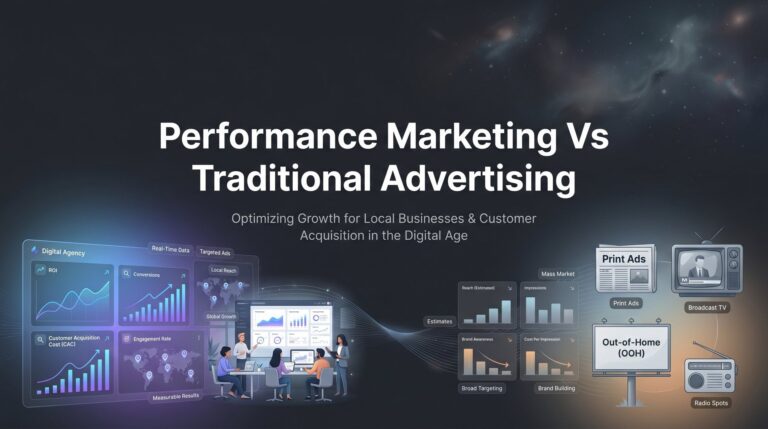
Traditional marketing casts a wide net and waits to see what happens. Growth marketing builds systems that attract the right customers, convert them efficiently, and measure every dollar spent against actual revenue generated. For small businesses with limited budgets, this distinction matters more than ever.
Every dollar needs to work harder. Every campaign needs measurable outcomes. Every strategy needs to connect directly to your bottom line—not just your brand awareness or social media engagement.
This guide breaks down seven battle-tested growth marketing strategies that small businesses are using right now to acquire customers profitably and scale sustainably, without burning through cash on tactics that don’t convert.
1. Build a Conversion-First Website
The Challenge It Solves
Your website might look beautiful, but if visitors leave without taking action, it’s just an expensive digital brochure. Many small businesses invest thousands in website design while ignoring the elements that actually drive conversions—clear value propositions, strategic calls-to-action, and friction-free lead capture.
The result? Traffic that costs money to generate but produces nothing in return. Your website becomes a leak in your marketing funnel rather than the conversion engine it should be.
The Strategy Explained
A conversion-first website is engineered around one goal: turning visitors into leads and customers. This means every page has a clear purpose, every element guides visitors toward action, and every design decision is tested against actual conversion data.
Think of your website like a sales conversation. When a potential customer walks into your physical location, you don’t just hand them a brochure and walk away. You identify their needs, explain how you solve their problem, and guide them toward the next step. Your website should do exactly the same thing, automatically.
This approach prioritizes clarity over cleverness. Your homepage should answer three questions within five seconds: what you do, who you help, and what action visitors should take next. Your service pages should address objections before they arise. Your contact forms should ask for the minimum information needed to qualify a lead.
Implementation Steps
1. Audit your current website with fresh eyes—can a first-time visitor understand your offer and take action within 10 seconds? If not, simplify your messaging and make your primary call-to-action impossible to miss.
2. Create dedicated landing pages for each traffic source and offer, ensuring message match between your ads and the page visitors land on. Generic homepages convert poorly because they try to speak to everyone and end up speaking to no one.
3. Reduce form friction by asking only for essential information initially—typically name, email, and phone number. You can gather additional details during follow-up conversations after you’ve established value.
4. Add trust elements strategically throughout your site: customer testimonials with specific results, recognizable client logos, industry certifications, and guarantees that reduce perceived risk.
5. Implement exit-intent popups that capture abandoning visitors with a compelling offer—a free consultation, downloadable guide, or limited-time discount that gives them a reason to engage before leaving.
Pro Tips
Test one element at a time so you know what actually moves the needle. A different headline might increase conversions by 30%, but you’ll never know if you change five things simultaneously. Also, speed matters more than most businesses realize—every second of load time can significantly impact conversion rates, especially on mobile devices where most traffic originates.
2. Deploy Strategic PPC Campaigns
The Challenge It Solves
Organic marketing takes time to build momentum, but your business needs customers now. Many small businesses avoid paid advertising because they’ve burned money on campaigns that generated clicks but zero actual customers. The problem wasn’t paid advertising itself—it was poor campaign structure and targeting.
Without strategic PPC, you’re either invisible to high-intent buyers actively searching for your services, or you’re paying for worthless clicks from people who will never buy.
The Strategy Explained
Strategic PPC targets people already looking for what you sell, with ads that speak directly to their search intent and landing pages designed to convert them immediately. This isn’t about broad awareness campaigns—it’s about intercepting buyers at the exact moment they’re ready to make a decision.
The key is understanding search intent. Someone searching “emergency plumber near me” has completely different intent than someone searching “how to fix a leaky faucet.” The first person needs immediate help and is ready to hire. The second person is researching and probably won’t convert for weeks, if ever.
Your PPC budget should focus almost entirely on high-intent keywords where people are ready to buy, not informational searches where they’re just browsing. This means your cost per click might be higher, but your conversion rate will be dramatically better—and that’s what actually matters for ROI.
Implementation Steps
1. Start with a tightly focused campaign targeting your most profitable service or product, using exact match and phrase match keywords that indicate buying intent. Avoid broad match keywords that waste budget on irrelevant searches.
2. Structure your campaigns with single keyword ad groups (SKAGs) that allow you to write highly specific ad copy matching each search query. This improves your quality score, which directly reduces your cost per click while improving ad position.
3. Create dedicated landing pages for each campaign that match the ad messaging exactly—if your ad promises a free consultation, your landing page should prominently offer that free consultation with no confusion or extra steps.
4. Implement conversion tracking from day one so you know exactly which keywords, ads, and campaigns produce actual customers, not just clicks. Track phone calls, form submissions, and any other conversion action that matters to your business.
5. Set up negative keyword lists to exclude searches that consistently waste budget—informational queries, job seekers, competitor research, and anything else that generates clicks without conversions.
Pro Tips
Your quality score impacts everything in PPC. Higher quality scores mean lower costs and better ad positions, and they’re earned through tight keyword-ad-landing page alignment. Also, don’t pause campaigns that aren’t immediately profitable—give them enough data to optimize. Many successful campaigns look terrible in week one but become profitable after proper optimization in weeks three or four.
3. Create Automated Lead Nurturing
The Challenge It Solves
Most leads aren’t ready to buy the moment they first contact you. They need time to evaluate options, build trust, and convince themselves (or their partners) that your solution is worth the investment. Without systematic follow-up, these leads go cold or choose a competitor who stayed in touch.
Manual follow-up doesn’t scale. You get busy, leads slip through the cracks, and opportunities evaporate. Even worse, inconsistent follow-up makes your business look unprofessional and disorganized.
The Strategy Explained
Automated lead nurturing builds systems that maintain contact with prospects automatically, delivering value and building trust until they’re ready to buy. This doesn’t mean impersonal spam—it means strategic sequences that provide helpful information, address common objections, and guide leads toward a decision.
Think of nurturing like planting seeds. You don’t plant a seed and expect a harvest the next day. You water it consistently, provide the right conditions, and trust the process. Some seeds sprout quickly, others take longer, but consistent nurturing ensures you’re there when they’re ready to grow.
The most effective nurturing sequences combine education with social proof. Early emails answer common questions and demonstrate expertise. Middle emails showcase customer success stories and address objections. Later emails create urgency with limited-time offers or consultations. If you’re unsure where to start, our guide on setting up marketing automation for small business walks through the entire implementation process.
Implementation Steps
1. Map out your customer journey to identify the typical questions, concerns, and objections prospects have at each stage. Your nurturing content should address these systematically rather than randomly.
2. Build a welcome sequence for new leads that delivers immediate value—a helpful guide, video training, or resource that solves a small problem while positioning you as the expert who can solve their bigger problems.
3. Create segmented sequences based on lead source and behavior—someone who downloaded a pricing guide needs different follow-up than someone who requested an emergency consultation. Segment by interest level, service type, and engagement.
4. Implement behavioral triggers that send specific emails based on actions taken—if someone clicks a link about a particular service, send them more detailed information about that service automatically.
5. Design re-engagement campaigns for leads who’ve gone cold, offering new value or a compelling reason to reconsider—market updates, new services, seasonal promotions, or case studies relevant to their industry.
Pro Tips
Write your emails like you’re talking to one person, not broadcasting to a list. Use “you” language and address specific pain points conversationally. Also, don’t be afraid to ask for the sale multiple times in different ways throughout your sequence—many businesses stop asking after one or two emails when persistence (not pestering) is what actually converts leads into customers.
4. Leverage Local SEO Dominance
The Challenge It Solves
Local customers are searching for your services right now, but if your business doesn’t appear in local search results, you’re invisible to them. Your competitors who invested in local SEO are capturing those high-intent customers while you’re left wondering why the phone isn’t ringing.
Many small businesses assume SEO is too technical, too expensive, or takes too long to matter. The reality is that local SEO delivers some of the highest ROI of any marketing channel because you’re capturing people actively searching for exactly what you sell in exactly your service area.
The Strategy Explained
Local SEO dominance means owning the search results when potential customers look for your services in your area. This includes the Google Map Pack (the three businesses that appear with maps in local searches), organic search results, and your Google Business Profile that appears in the knowledge panel.
Google evaluates local businesses based on three main factors: relevance (how well you match the search), proximity (how close you are to the searcher), and prominence (how well-known and trusted your business is based on reviews, citations, and links).
The businesses that dominate local search aren’t necessarily the biggest or oldest—they’re the ones that systematically optimize all three factors while their competitors ignore them.
Implementation Steps
1. Claim and fully optimize your Google Business Profile with complete business information, accurate categories, high-quality photos, regular posts, and detailed service descriptions. This is the foundation of local visibility.
2. Build a systematic review generation process that encourages satisfied customers to leave Google reviews—send follow-up emails after completed jobs, include review requests in invoices, and make it easy with direct links to your review page.
3. Create location-specific content on your website that targets local search terms—service area pages for each city you serve, local case studies, and blog posts addressing local market conditions or regulations.
4. Ensure your NAP (Name, Address, Phone) is consistent across all online directories, citations, and listings. Inconsistent information confuses Google and weakens your local ranking signals.
5. Build local backlinks from community organizations, local business associations, chamber of commerce, and partnerships with complementary local businesses. Local links carry more weight for local rankings than generic directory links.
Pro Tips
Respond to every review, positive and negative, professionally and personally. Google sees this engagement as a positive signal, and potential customers read your responses to gauge how you handle problems. Also, add new photos to your Google Business Profile regularly—businesses with fresh, updated photos typically rank better than those with static profiles from years ago.
5. Implement Referral Programs
The Challenge It Solves
You’ve built a base of satisfied customers, but you’re not systematically leveraging them to grow your business. Word-of-mouth happens occasionally, but it’s random and unpredictable. Meanwhile, you’re spending money to acquire new customers when your existing customers could be sending you qualified leads for free.
Most businesses rely on hope-based referral marketing—hoping customers will recommend them without any structure or incentive. This passive approach leaves money on the table and growth to chance.
The Strategy Explained
A structured referral program turns your satisfied customers into an active sales channel by giving them clear incentives and making it easy to refer others. This isn’t about begging for referrals—it’s about creating a mutually beneficial system where customers are rewarded for sharing businesses they already trust.
Referred customers typically have higher lifetime value and better retention than customers acquired through other channels. They come pre-sold because they’re trusting a friend’s recommendation, not evaluating you cold. This means faster sales cycles, higher conversion rates, and better customer relationships from day one.
The key is making referrals effortless. Your customers want to help you, but they’re busy. If referring someone requires multiple steps or complicated explanations, it won’t happen. Simplicity drives action.
Implementation Steps
1. Design a compelling incentive structure that rewards both the referrer and the new customer—this could be discounts, service credits, cash bonuses, or exclusive perks depending on your business model and margins.
2. Create simple referral tools that make sharing easy—unique referral links, pre-written email templates, social media graphics, or physical referral cards that customers can hand to friends.
3. Identify your happiest customers and personally invite them to your referral program first. These brand advocates are most likely to participate actively and send quality referrals that convert.
4. Automate referral requests at strategic moments—after a successful project completion, following a positive review, or when customers express satisfaction. Timing matters more than most businesses realize.
5. Track and acknowledge every referral publicly (with permission) to create social proof and encourage more participation. When customers see others being recognized and rewarded, they’re more likely to participate themselves.
Pro Tips
Make your referral rewards immediate and tangible rather than abstract or delayed. A $50 credit applied instantly feels more valuable than a 10% discount on a future purchase six months from now. Also, don’t wait until you have a perfect system—launch with a simple program and refine based on what actually drives referrals for your specific business and customer base.
6. Use Retargeting Strategically
The Challenge It Solves
The vast majority of website visitors leave without converting on their first visit. They’re interested enough to visit your site, but not ready to commit yet. Without retargeting, these warm prospects disappear forever, and you’re left constantly chasing cold traffic that costs more and converts worse.
You’ve already paid to get these people to your website through SEO, PPC, or content marketing. Letting them vanish without any follow-up is like paying for a sales meeting and then never following up afterward.
The Strategy Explained
Strategic retargeting brings visitors back to your website with targeted ads that remind them of your offer and address the specific reasons they didn’t convert initially. This isn’t about annoying people with repetitive ads—it’s about staying top-of-mind and providing additional value that moves them closer to a decision.
Effective retargeting segments audiences based on behavior. Someone who visited your pricing page has different intent than someone who only viewed your homepage. Someone who abandoned a contact form needs different messaging than someone who browsed your blog.
The goal is to create a personalized ad experience that acknowledges where prospects are in their decision process and provides exactly what they need to take the next step.
Implementation Steps
1. Install retargeting pixels on your website from major platforms (Google Ads, Facebook Ads) to build audiences of visitors you can reach with ads later. Start building these audiences immediately, even before launching campaigns.
2. Create audience segments based on specific behaviors—people who visited high-intent pages like pricing or services, people who spent significant time on site, people who visited multiple times, and people who started but didn’t complete forms.
3. Design ad creative that addresses specific objections or provides additional value rather than simply repeating your original message. If someone visited but didn’t convert, the same message probably won’t work the second time.
4. Implement frequency caps to avoid ad fatigue—showing the same ad 20 times in one week annoys people rather than persuading them. Test different frequencies, but generally 3-5 impressions per week is a reasonable starting point.
5. Set up sequential retargeting that changes messaging over time—early ads might focus on education and value, middle ads on social proof and testimonials, and later ads on urgency or special offers for those who still haven’t converted.
Pro Tips
Exclude people who already converted from your retargeting audiences—there’s no point spending money to advertise to existing customers unless you’re promoting additional services. Also, test different retargeting windows for different audience segments. High-intent visitors might convert within 7 days, while casual browsers might need 30-60 days of nurturing before they’re ready.
7. Establish Data-Driven Decision Making
The Challenge It Solves
Most small businesses make marketing decisions based on gut feeling, industry trends, or what worked for someone else’s business. They launch campaigns without clear success metrics, continue tactics that don’t work because they “feel right,” and abandon strategies that could succeed with minor adjustments.
Without data, you’re flying blind. You don’t know which marketing channels actually produce customers, which campaigns are profitable, or where to invest your next dollar for maximum return. Understanding why marketing isn’t working for your business often comes down to this fundamental gap in measurement.
The Strategy Explained
Data-driven decision making means tracking the metrics that actually matter to your business—not vanity metrics like impressions or likes, but real numbers like customer acquisition cost, lifetime value, conversion rates, and revenue per channel. This approach eliminates guesswork and reveals exactly what’s working and what’s wasting money.
The foundation is understanding the relationship between customer acquisition cost and lifetime value. If you spend $200 to acquire a customer who generates $2,000 in lifetime revenue, that’s a phenomenal investment. If you spend $200 to acquire a customer who generates $150, you’re losing money with every sale.
Data-driven businesses test systematically rather than randomly. They change one variable at a time, measure the impact, and scale what works while eliminating what doesn’t. This compound improvement approach turns average campaigns into exceptional ones over time.
Implementation Steps
1. Identify your North Star metrics—the 3-5 numbers that truly indicate business health and growth. For most small businesses, this includes customer acquisition cost, customer lifetime value, monthly recurring revenue, conversion rate, and revenue per customer.
2. Implement proper tracking across all marketing channels so you can attribute revenue to specific campaigns, keywords, and tactics. Use UTM parameters for all links, call tracking for marketing campaigns, and CRM integration to close the loop between leads and actual sales.
3. Create a simple dashboard that displays your key metrics in one place, updated regularly. You can’t optimize what you don’t monitor, and complex analytics systems that require hours to interpret won’t get used consistently.
4. Establish a testing framework for continuous improvement—run A/B tests on landing pages, email subject lines, ad copy, and offers. Test one element at a time with enough traffic to reach statistical significance before declaring a winner.
5. Review performance data weekly to identify trends and opportunities early. Monthly reviews are too infrequent—problems compound and opportunities disappear before you notice them. Weekly check-ins allow quick adjustments while campaigns are still active.
Pro Tips
Focus on trends over time rather than day-to-day fluctuations. One bad day doesn’t mean a campaign is failing, and one great day doesn’t mean it’s optimized. Look at week-over-week and month-over-month patterns to make informed decisions. Also, track leading indicators (website traffic, leads generated) alongside lagging indicators (revenue, customer acquisition) so you can predict problems before they impact your bottom line.
Putting These Growth Strategies Into Action
Growth marketing isn’t about implementing all seven strategies simultaneously—it’s about building systems methodically, measuring results, and compounding improvements over time. Trying to do everything at once leads to scattered execution and mediocre results across the board.
Start with conversion optimization. Your website is the foundation that every other strategy builds upon. If your website doesn’t convert traffic effectively, paid advertising just sends more people to a broken funnel. Fix the conversion engine first, then pour fuel on it with paid acquisition.
Next, deploy strategic PPC campaigns to generate immediate leads while your longer-term strategies (SEO, content, referrals) build momentum. Paid advertising provides cash flow and customer acquisition data that inform all your other marketing decisions.
Once you’re generating consistent leads, implement automated nurturing to maximize the value of every prospect. Then layer in local SEO, referral programs, and retargeting to create multiple acquisition channels that feed your optimized conversion system. If you’re struggling with inconsistent lead generation, this systematic approach addresses the root causes.
Throughout this process, establish data-driven decision making as your operating system. Track everything, test systematically, and let results—not opinions—guide your strategy. The businesses that win in growth marketing are the ones that learn faster than their competitors.
Remember that growth marketing is iterative. Your first campaigns won’t be perfect. Your initial conversion rates will improve with testing. Your early nurturing sequences will evolve based on what actually resonates with your audience. This is normal and expected.
The key is starting with solid fundamentals, measuring what matters, and improving consistently. Small optimizations compound into significant advantages over months and years. A 10% improvement in conversion rate combined with a 10% reduction in acquisition cost and a 10% increase in customer value creates exponential growth, not linear improvement. Understanding what growth marketing services actually deliver helps you set realistic expectations for this compounding effect.
Tired of spending money on marketing that doesn’t produce real revenue? We build lead systems that turn traffic into qualified leads and measurable sales growth. If you want to see what this would look like for your business, we’ll walk you through how it works and break down what’s realistic in your market.
Your competitors are already using these strategies to capture customers and grow profitably. The question isn’t whether growth marketing works—it’s whether you’ll implement it before your market share disappears.