You’ve tried Facebook ads. You’ve dabbled in Google. Maybe you even hired someone to “do your SEO.” Yet your phone isn’t ringing more, your calendar isn’t filling up, and you’re left wondering which marketing channel actually works—or if any of them do.
Here’s the truth most marketing agencies won’t tell you: there’s no universal “best” customer acquisition channel. What works brilliantly for a dental practice might waste money for a home services company. The key isn’t finding the magic channel—it’s identifying which channels align with how your specific customers actually buy.
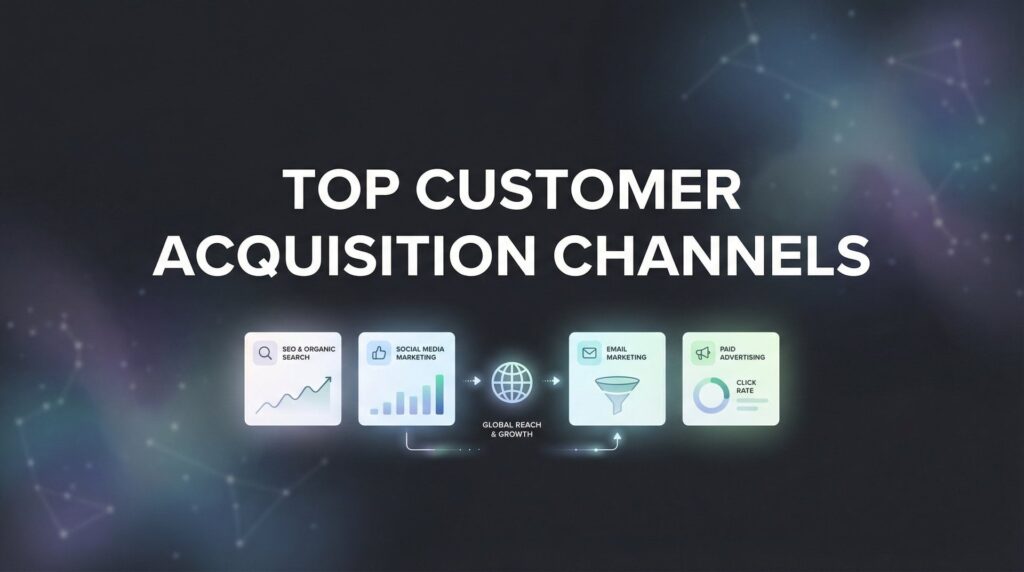
This guide breaks down seven proven customer acquisition channels that consistently drive revenue for local businesses. But here’s what makes this different: we’re not just listing options. We’re showing you exactly when each channel works, how to implement it without wasting budget, and what kind of results you should actually expect.
Because the businesses that win aren’t the ones using every channel. They’re the ones that master the right channels for their market, measure relentlessly, and scale what converts.
1. Paid Search Advertising (PPC)
The Challenge It Solves
Most marketing channels force you to interrupt people who aren’t thinking about your services. Paid search is different—it captures people actively searching for what you sell right now. When someone types “emergency plumber near me” or “family dentist accepting new patients,” they’re not browsing. They’re buying.
The problem? Most businesses waste their PPC budget on broad keywords that attract tire-kickers, or they send traffic to generic homepages that don’t convert. Without proper campaign structure and conversion tracking, PPC becomes an expensive traffic generator that doesn’t produce customers.
The Strategy Explained
Paid search advertising puts your business at the top of Google when potential customers search for your services. Unlike organic results that take months to develop, PPC delivers immediate visibility to high-intent searchers.
The power of PPC lies in intent matching. Someone searching “emergency AC repair Phoenix” isn’t researching—they’re sweating in a 95-degree house and ready to hire immediately. This high-intent traffic converts at rates that make other channels jealous, but only when campaigns target the right keywords and send traffic to conversion-optimized landing pages.
Think of PPC as paying for position at the exact moment your customer needs you. You’re not interrupting their day—you’re answering their question.
Implementation Steps
1. Start with high-intent keywords that include location and urgency modifiers like “near me,” “emergency,” or “same day.” These convert better than generic terms and cost less because fewer competitors target them properly.
2. Create dedicated landing pages for each service category instead of sending all traffic to your homepage. A searcher looking for “root canal dentist” should land on a page about root canals, not your practice overview.
3. Implement conversion tracking from day one using Google Analytics 4 and Google Ads conversion tracking. Track phone calls, form submissions, and appointment bookings separately so you know exactly which keywords produce customers.
4. Set up location targeting to focus budget on your actual service area. A plumber in North Dallas shouldn’t pay for clicks from Fort Worth customers they can’t serve.
Pro Tips
Use negative keywords aggressively to eliminate wasteful clicks. If you’re a premium service provider, add “cheap,” “free,” and “DIY” as negatives. Run search ads during your business hours when you can answer the phone—many local businesses waste budget on after-hours clicks that go to voicemail.
Start with a focused campaign targeting your most profitable service, prove it works, then expand. Businesses that try to advertise everything at once spread their budget too thin to generate meaningful data. Understanding how to reduce customer acquisition cost becomes critical as you scale your PPC campaigns.
2. Local SEO and Google Business Profile
The Challenge It Solves
When potential customers search for local services, they’re not scrolling past the map pack to page two of organic results. They’re clicking one of the three businesses displayed prominently with reviews, photos, and contact information. If you’re not in that map pack, you’re invisible to a massive segment of local searchers.
The challenge is that local SEO isn’t just about having a website. It’s about dominating the specific local signals Google uses to determine which businesses deserve map pack placement—and most businesses ignore half of them.
The Strategy Explained
Local SEO positions your business to capture customers searching for services in your area without paying for each click. While PPC delivers immediate results, local SEO builds a compounding asset that generates leads month after month.
Your Google Business Profile acts as your local storefront in search results. When optimized properly, it displays your business prominently in the map pack, showcases customer reviews, displays photos of your work, and provides direct contact options—all before a searcher even visits your website.
The businesses winning local search don’t just claim their profile and forget it. They systematically optimize every ranking factor Google considers: proximity, relevance, and prominence.
Implementation Steps
1. Claim and fully optimize your Google Business Profile with accurate business information, primary and secondary categories that match your services, a keyword-rich business description, and high-quality photos of your location, team, and completed work.
2. Build a systematic review generation process that asks every satisfied customer for a Google review within 48 hours of service completion. Reviews aren’t just social proof—they’re a direct ranking factor for map pack placement. Implementing the right solutions for managing online customer reviews can dramatically improve your local rankings.
3. Create location-specific pages on your website for each service area you cover, with unique content about serving that specific community. A roofing company serving five suburbs needs five distinct location pages, not one generic service area page.
4. Ensure your business name, address, and phone number (NAP) are identical across your website, Google Business Profile, and every online directory. Inconsistent information confuses Google and weakens your local rankings.
Pro Tips
Post weekly Google Business Profile updates about completed projects, seasonal services, or helpful tips. These posts signal to Google that your business is active and engaged. Respond to every review—positive and negative—within 24 hours to demonstrate customer engagement.
Monitor your Google Business Profile insights to see which search terms trigger your profile appearance. This data reveals what customers actually search for, which often differs from what you think they search for.
3. Social Media Advertising
The Challenge It Solves
While search advertising captures active buyers, social media advertising reaches potential customers before they start searching. This matters because most people aren’t actively searching for your services until they need them—but they’re scrolling Facebook and Instagram every single day.
The challenge is that social media users aren’t in buying mode. They’re browsing, not searching with intent. Your ads need to interrupt their scroll with something relevant enough to make them stop, click, and consider a service they weren’t actively seeking.
The Strategy Explained
Social media advertising works by targeting specific demographics, interests, and behaviors to reach your ideal customer profile while they’re engaging with content. Instead of waiting for customers to search for you, you proactively put your business in front of people who match your best customer characteristics.
The power of platforms like Facebook and Instagram lies in their targeting precision. You can show your ads exclusively to homeowners aged 35-55 within 10 miles of your location who have shown interest in home improvement—or whatever profile matches your ideal customer.
This approach excels at building awareness and capturing customers early in their buying journey. Someone who sees your ad today might not need your services until next month, but when they do, your business is top-of-mind.
Implementation Steps
1. Define your ideal customer avatar with specific demographics, interests, and pain points before creating any ads. Targeting “everyone in your city” wastes budget—targeting “homeowners aged 40-60 who follow home renovation pages” converts.
2. Create video content that demonstrates your expertise and showcases real results. Before-and-after transformations, customer testimonials, and process videos consistently outperform static image ads on social platforms.
3. Use lead generation campaigns with instant forms that capture contact information without requiring users to leave the platform. The easier you make it to express interest, the more leads you’ll generate. Understanding your customer acquisition funnel helps you design forms that capture leads at the right stage.
4. Implement retargeting campaigns that show ads to people who’ve visited your website but didn’t convert. These warm audiences convert at significantly higher rates than cold traffic because they’re already familiar with your business.
Pro Tips
Start with a small daily budget to test different audiences, ad creative, and messaging before scaling. Many businesses burn through thousands of dollars before finding what works—test cheaply first. Run separate campaigns for awareness and conversion with different objectives and creative approaches.
Monitor cost per lead closely and pause underperforming ad sets quickly. Social media algorithms reward ads that generate engagement, so your best-performing ads become increasingly efficient over time while poor performers waste budget.
4. Referral Programs
The Challenge It Solves
Your satisfied customers already recommend you to friends and family—but it happens sporadically and without any system. Most businesses leave referrals to chance, hoping customers remember to mention them when relevant situations arise. This passive approach leaves massive revenue on the table.
The challenge isn’t getting customers to refer you—it’s creating a systematic process that makes referrals easy, memorable, and rewarding enough that customers actively look for opportunities to send business your way.
The Strategy Explained
A structured referral program transforms occasional word-of-mouth into a predictable customer acquisition channel by giving existing customers a clear incentive and simple process for sending referrals. When implemented properly, referral programs generate some of the highest-quality leads your business will ever receive.
Referred customers convert at higher rates, spend more, and stay longer than customers acquired through other channels because they arrive with built-in trust. Someone recommended by a friend doesn’t need to be convinced you’re legitimate—they’re already pre-sold.
The businesses that win with referrals don’t just ask customers to “spread the word.” They create compelling incentives, make the referral process frictionless, and systematically remind customers about the program.
Implementation Steps
1. Design a dual-incentive structure that rewards both the referring customer and the new customer. Offering existing customers $100 off their next service for each referral while giving referred customers $50 off their first service creates motivation on both sides.
2. Create physical referral cards that existing customers can hand to friends, along with a unique referral code or link for digital sharing. Make it effortless for customers to refer—if they have to remember your business name and look up your number, most won’t follow through.
3. Implement automated referral reminders in your post-service follow-up sequence. Send an email three days after service completion thanking the customer and reminding them about your referral program with their unique referral link.
4. Track referral sources meticulously so you can thank referring customers promptly and fulfill rewards immediately. Quick reward fulfillment encourages repeat referrals from your best advocates. Effective customer retention marketing strategies naturally increase referral rates by keeping customers engaged and satisfied.
Pro Tips
Focus your referral program on customers who’ve already used your services multiple times. Your most loyal customers make your best referral sources because they have stronger conviction about recommending you. Consider tiered rewards that increase with each successful referral to incentivize serial referrers.
Ask for referrals at peak satisfaction moments—right after completing exceptional work or resolving a challenging problem. Timing matters enormously in referral conversion rates.
5. Email Marketing
The Challenge It Solves
Most potential customers aren’t ready to buy the first time they discover your business. They’re researching, comparing options, or simply not ready to commit. Without a system to stay in front of these prospects, they forget about you and choose whichever competitor they happen to encounter when they’re finally ready to buy.
Additionally, past customers represent enormous untapped revenue potential. They’ve already trusted you once, but without ongoing communication, they don’t think of you when they need your services again or when their situation changes.
The Strategy Explained
Email marketing nurtures leads who aren’t ready to buy immediately while keeping your business top-of-mind until they are. It’s the bridge between initial interest and purchase decision, and between one-time customer and repeat buyer.
Think of email as your persistent salesperson who never forgets to follow up. While you’re serving current customers, your email system is educating prospects, answering common objections, and demonstrating expertise to people who will become customers next month or next quarter.
The businesses that excel with email don’t blast promotional messages to everyone. They segment their audience and deliver relevant content based on where each person is in their customer journey.
Implementation Steps
1. Create a lead magnet that captures email addresses from website visitors—a helpful guide, checklist, or assessment tool related to your services. Someone who downloads “The Complete Guide to Choosing a Contractor” is clearly interested in hiring one soon.
2. Build a welcome sequence that automatically sends to new subscribers over their first two weeks, establishing your expertise and addressing common questions or concerns that prevent people from buying.
3. Segment your email list into distinct groups: active leads who haven’t purchased yet, recent customers, and past customers who haven’t used your services in six months. Each segment needs different messaging. Leveraging customer journey mapping services helps you understand exactly what messaging each segment needs.
4. Send consistent value-driven content to your list—helpful tips, seasonal reminders, case studies, or answers to frequently asked questions. The businesses that only email when they want to sell something train their list to ignore them.
Pro Tips
Use behavior-based triggers to send timely emails automatically. If someone visits your pricing page three times but doesn’t contact you, trigger an email addressing common pricing concerns. Set up reactivation campaigns that automatically reach out to past customers at logical intervals based on your service cycle.
Monitor open rates and click rates by segment to identify which topics resonate with your audience. Double down on content types that generate engagement and cut content that consistently underperforms.
6. Strategic Partnerships
The Challenge It Solves
Building a customer base from scratch requires enormous time and marketing budget. Meanwhile, complementary businesses already have relationships with your exact target customers—people who trust them and follow their recommendations. The challenge is that most businesses never think strategically about who serves the same customers at different points in their journey.
Strategic partnerships let you tap into established trust and existing customer relationships instead of building everything from zero. It’s the difference between shouting into the void and having a trusted advisor recommend you personally.
The Strategy Explained
Strategic partnerships create mutual referral relationships with businesses that serve your same target customer but offer complementary services. A real estate agent and a mortgage broker serve the same customer at the same time. A wedding photographer and a wedding planner do too. A landscaper and a pool builder often encounter the same homeowners.
The key is identifying businesses where your services naturally complement each other without competing. Your partner gets to provide additional value to their customers by connecting them with a trusted service provider, while you gain access to qualified leads who already trust your partner’s recommendation.
This approach works because the referral comes with transferred trust. When a respected business recommends you, their credibility becomes your credibility.
Implementation Steps
1. Map out your customer journey and identify which other service providers your customers typically need before, during, or after using your services. A home inspector encounters homeowners who need contractors. A divorce attorney encounters clients who need financial advisors.
2. Approach potential partners with a specific value proposition focused on how the partnership benefits their customers, not just your business. Show them how referring your services makes them more valuable to their clients.
3. Create a simple referral tracking system so both businesses can monitor which partnerships generate actual revenue. Use unique phone numbers, referral codes, or dedicated landing pages to attribute leads to specific partners.
4. Establish regular communication with partners—monthly check-ins, shared leads reports, or quarterly strategy sessions. Partnerships die when they’re forgotten, so systematic communication keeps them active. If you’re a small business struggling to find customers, strategic partnerships can provide immediate access to qualified leads.
Pro Tips
Start with one or two high-quality partnerships and make them work before expanding. A few partners who consistently send qualified referrals beat dozens of partnerships that exist only on paper. Consider creating co-marketed content or joint promotions that provide value to both customer bases while strengthening the partnership.
Focus on partners who serve customers slightly before you in the buying journey. They encounter people who don’t yet know they need your services, giving you first-mover advantage.
7. Content Marketing
The Challenge It Solves
Most potential customers research extensively before making buying decisions, especially for high-value or complex services. They’re reading articles, watching videos, and educating themselves about their options. If your business isn’t part of that research process, you’re invisible during the critical decision-making phase.
The challenge is that creating content takes time and effort without immediate payoff. Many businesses start blogging, publish three articles, see no instant results, and quit—missing the compounding benefits that come from consistent content creation over time.
The Strategy Explained
Content marketing attracts potential customers by answering their questions and addressing their concerns through valuable articles, videos, and guides. Instead of interrupting people with ads, you create resources they actively seek out during their research process.
This approach builds authority and trust before the sales conversation even begins. Someone who’s read five of your detailed guides explaining different aspects of your service arrives as a warm lead who views you as the expert—not just another option on their list.
Content marketing also creates compounding returns. An article you publish today can generate leads for years. As your content library grows, you dominate more search queries and capture more potential customers at various stages of their research.
Implementation Steps
1. Identify the questions your potential customers ask before hiring someone in your industry. Mine your sales conversations, customer service inquiries, and online forums where your target audience discusses their challenges.
2. Create comprehensive content that thoroughly answers these questions without holding back valuable information. The businesses that win with content don’t tease—they teach. Your goal is to be so helpful that readers want to work with you.
3. Optimize each piece of content for search engines by including relevant keywords naturally, using clear headings, and providing genuinely useful information that satisfies search intent. Google rewards content that comprehensively answers the searcher’s question.
4. Promote your content through email, social media, and by sharing it in relevant online communities where your target customers gather. Great content that nobody sees generates zero leads—distribution matters as much as creation. Exploring the best customer acquisition platforms can help you distribute content more effectively.
Pro Tips
Focus on bottom-of-funnel content first—articles that address questions people ask when they’re close to making a buying decision. “How to choose a contractor” converts better than “history of home construction” because the reader is actively shopping. Repurpose successful content into multiple formats: turn a comprehensive article into a video, an infographic, and a downloadable PDF guide.
Update and expand your top-performing content regularly to maintain search rankings and keep information current. A well-maintained content library outperforms constantly creating new content on random topics.
Your Implementation Roadmap
Here’s what separates businesses that succeed with customer acquisition from those that waste money chasing every marketing trend: focus and measurement.
You don’t need all seven of these channels. You need to master the two or three that align best with how your specific customers buy and where they are in their journey. A B2B service business might win with content marketing and strategic partnerships. A local emergency service might dominate with PPC and local SEO. A premium consumer service could thrive on referrals and social media advertising.
Start by honestly assessing where your best current customers came from. That data reveals which channels already work for your business—you just need to systematize and scale them. Then add one complementary channel that captures customers at a different stage of their journey.
Measure everything obsessively. Track cost per lead, conversion rate, and customer lifetime value for each channel. The channel that generates the most leads isn’t necessarily the best—the channel that generates the most profitable customers is. Cut what doesn’t work. Double down on what does.
Most importantly, give each channel enough time and budget to generate meaningful data. Testing a channel with $500 and two weeks won’t tell you anything useful. Commit to at least 90 days and a budget sufficient to generate at least 50 leads before making decisions.
The businesses winning customer acquisition in 2026 aren’t the ones using the most channels. They’re the ones that picked the right channels for their market, implemented them properly, and optimized relentlessly based on actual performance data.
Tired of spending money on marketing that doesn’t produce real revenue? We build lead systems that turn traffic into qualified leads and measurable sales growth. If you want to see what this would look like for your business, we’ll walk you through how it works and break down what’s realistic in your market.
Want More Leads for Your Business?
Most agencies chase clicks, impressions, and “traffic.” Clicks Geek builds lead systems. We uncover where prospects are dropping off, where your budget is being wasted, and which channels will actually produce ROI for your business, then we build and manage the strategy for you.