When you need leads now — not six months from now — the PPC vs SEO debate takes on real urgency. Every week without phone calls is a week of lost revenue, and local business owners can’t afford to guess wrong.
The truth is, both PPC and SEO can drive results. But the timeline, cost structure, and strategic approach differ dramatically. The right choice depends on your business stage, budget, competitive landscape, and how fast you need the phone to ring.
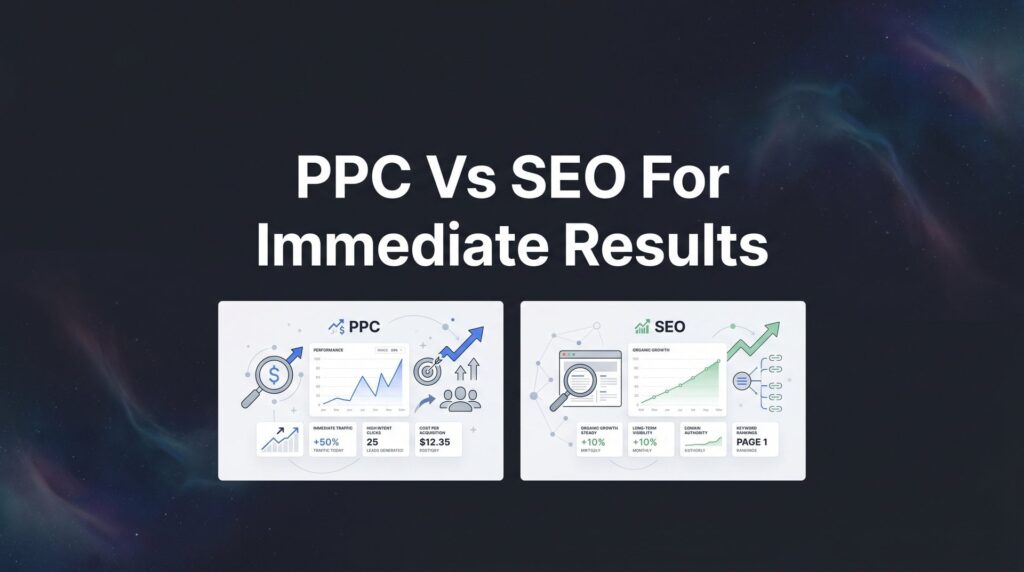
Think of it like this: PPC is a faucet. Turn it on, water flows. Turn it off, it stops. SEO is more like planting a fruit tree. You won’t eat from it this week, but in two years it feeds you every season without much additional cost. Neither is wrong. Choosing the wrong one at the wrong time, however, can drain your budget and your patience simultaneously.
This guide breaks down seven actionable strategies to help you decide when to deploy PPC for immediate results, when to invest in SEO for compounding long-term growth, and how to blend both channels for maximum ROI. Whether you’re a plumber trying to fill next week’s schedule or a personal injury lawyer competing in a saturated market, these strategies will give you a clear framework for allocating your marketing dollars where they’ll actually convert.
1. Run a Revenue Timeline Audit Before Spending a Dollar
The Challenge It Solves
Most business owners jump straight to “we need more leads” without asking the more important question: when do we need them? Launching an SEO campaign when your business needs revenue in the next 30 days is like planting seeds when the landlord wants rent tomorrow. A revenue timeline audit forces you to match your marketing channel to your actual financial situation before you commit a single dollar.
The Strategy Explained
Pull out a calendar and map your revenue needs against a 30, 60, and 90-day window. Ask yourself three questions. First, do I have enough current work to cover operating costs for the next 60 days? Second, is this a short-term pipeline problem or a structural growth issue? Third, what’s my available marketing budget, and how long can I sustain it?
If your answer to the first question is no, PPC is almost certainly your starting point. If you have runway and you’re thinking about where you want to be a year from now, SEO deserves serious budget allocation. Understanding the tradeoffs between local SEO vs PPC for lead generation is essential before committing your budget to either channel.
Implementation Steps
1. Calculate your minimum monthly revenue needed to cover all operating costs, including payroll, overhead, and your own salary.
2. Identify how many leads per month you need to hit that number based on your current close rate and average job value.
3. Map the gap: how many leads are you currently generating versus how many you need? This gap size and urgency determines your channel priority.
4. Document your available marketing budget and how many months you can sustain it — this directly impacts whether PPC or SEO is financially viable right now.
Pro Tips
Revisit this audit quarterly, not just when you’re in a panic. Businesses that do regular revenue timeline reviews tend to make proactive channel decisions rather than reactive ones. Also, factor in seasonal demand patterns for your industry — a landscaping company heading into spring has a very different timeline than one entering winter.
2. Deploy PPC as Your Immediate Lead Engine
The Challenge It Solves
When the pipeline is empty and the calendar needs filling, you don’t have the luxury of waiting for organic rankings to build. The core problem with relying on SEO in a pinch is that meaningful ranking improvements typically take three to six months at minimum, and that’s assuming a well-executed campaign from day one. PPC eliminates that waiting period entirely.
The Strategy Explained
Google’s own documentation confirms that properly structured ads can start showing within 24 hours of campaign approval. That speed is the entire value proposition of paid search when you need immediate results. The key is launching with surgical precision rather than broad, expensive targeting that burns budget on the wrong clicks.
Focus your initial PPC campaigns on high-intent, bottom-of-funnel keywords. These are the searches where someone has already decided they need a service and is actively looking for a provider. For a plumber, that’s “emergency drain unclogging near me” rather than “how to fix a clogged drain.” For a personal injury attorney, that’s “car accident lawyer [city name]” rather than “what to do after a car accident.” The intent signal in the search query is everything.
Tight geographic targeting, strong negative keyword lists, and conversion-optimized landing pages are non-negotiable from launch. A well-structured PPC campaign built around buyer intent can start generating qualified calls within days of going live.
Implementation Steps
1. Build a tightly themed campaign structure with ad groups organized around specific services rather than broad categories.
2. Write ad copy that directly addresses the searcher’s intent, includes your location, and leads with your strongest differentiator or offer.
3. Send paid traffic to dedicated landing pages, not your homepage. Each ad group should have a corresponding page built around that specific service and call to action.
4. Set up call tracking from day one so you know exactly which keywords and ads are generating phone calls, not just clicks.
Pro Tips
Resist the temptation to go broad to “get more impressions.” Broad targeting in competitive local markets often means paying for clicks from people who are researching, not buying. Start tight, prove ROI on high-intent terms, then expand strategically as data accumulates.
3. Use SEO to Build a Compounding Asset That Reduces PPC Dependency
The Challenge It Solves
The fundamental weakness of PPC is that it stops the moment your budget does. You’re essentially renting visibility rather than owning it. For businesses with healthy pipelines but a desire for more predictable, lower-cost lead generation over time, continuing to rely entirely on paid traffic creates a permanent cost ceiling that compresses margins indefinitely.
The Strategy Explained
SEO works differently from PPC in one critical way: the effort you put in today continues paying dividends months and years later. A well-optimized service page or a piece of authoritative content that earns top rankings can generate leads consistently without ongoing per-click costs. Over time, this dramatically lowers your overall customer acquisition cost.
The compounding nature of SEO is what makes it so powerful as a long-term asset. Each piece of quality content, each earned backlink, and each technical improvement to your site builds on the last. A business that starts investing in SEO today and stays consistent will often find itself in a dominant organic position in 12 to 18 months that competitors can’t easily displace.
For local businesses, this means prioritizing Google Business Profile optimization, local citation consistency, service-area landing pages, and localized content that answers the questions your best customers are actually searching for. Industries like window cleaning have seen tremendous success with this approach, as demonstrated by businesses that use SEO to attract new clients through consistent local optimization.
Implementation Steps
1. Conduct keyword research focused on service-specific, high-intent local terms where you want to rank organically over the next 12 months.
2. Audit your existing website for technical issues that might be suppressing rankings, including page speed, mobile usability, and crawlability.
3. Build out dedicated service pages for each core offering, optimized around specific keyword targets with clear conversion paths.
4. Develop a content plan that targets informational queries your ideal customers search before they’re ready to buy, establishing your authority and capturing early-stage demand.
Pro Tips
Don’t start SEO without a realistic timeline expectation. Communicate clearly with anyone involved in your business that organic results typically take three to six months to materialize. Setting that expectation upfront prevents premature abandonment of a strategy that simply needs time to compound.
4. Stack Both Channels Using the ‘PPC Bridge’ Method
The Challenge It Solves
The false choice most business owners make is treating PPC and SEO as mutually exclusive. They either go all-in on paid ads or commit to organic and wait. The reality is that the most efficient path to sustainable, low-cost lead generation is running both channels simultaneously with a deliberate handoff strategy built in from the start.
The Strategy Explained
The PPC Bridge method works like this: you use paid search to generate immediate revenue and cash flow while your SEO campaign builds momentum in the background. As organic rankings improve and begin generating consistent leads, you systematically reduce PPC spend on those specific keywords, reallocating budget to either higher-competition terms or new service areas.
Here’s where it gets genuinely powerful: your PPC data actively accelerates your SEO results. The keyword performance data from your paid campaigns tells you exactly which search terms convert into paying customers, not just which ones generate clicks. You’re not guessing which organic keywords to prioritize — you’re using real conversion data to make that decision. This is a well-established best practice among experienced digital marketing professionals, and it’s one of the clearest advantages of running both channels simultaneously.
Think of PPC as both a revenue engine and a research tool. It funds your operations while giving you the data your SEO strategy needs to target the right terms from day one.
Implementation Steps
1. Launch PPC on your highest-priority service keywords immediately, with conversion tracking in place to identify which terms actually generate leads.
2. After 60 to 90 days of PPC data, identify your top-converting keywords and prioritize those exact terms in your SEO content and optimization plan.
3. Set organic ranking milestones as triggers for PPC budget reallocation. For example, when a keyword reaches page one organically, reduce or pause paid spend on that term.
4. Track your blended customer acquisition cost across both channels monthly, watching for the point where organic leads begin reducing your overall cost per lead.
Pro Tips
Document your PPC to SEO handoff criteria before you start. Having a written rule like “when a keyword hits position three or higher for 30 consecutive days, reduce PPC bid by 50%” removes emotion from budget decisions and keeps your overall marketing spend efficient as organic momentum builds.
5. Match Your Strategy to Your Competitive Landscape
The Challenge It Solves
A strategy that works brilliantly for a plumber in a mid-sized market might be completely wrong for a personal injury attorney in a major metro. Competitive density, average cost per click, and organic difficulty vary enormously by industry and geography. Ignoring your competitive landscape when choosing between PPC and SEO means you might be fighting an expensive battle on the wrong front.
The Strategy Explained
Before committing significant budget to either channel, spend time understanding what you’re actually competing against. In highly competitive paid search markets, such as legal, insurance, and financial services, cost per click can be substantial enough that PPC alone becomes difficult to sustain profitably for smaller businesses. For example, family law attorneys often face some of the highest click costs in any local market, making organic visibility even more critical.
Conversely, some local markets have surprisingly low organic competition, meaning a well-executed SEO campaign could get you to page one within a few months rather than the typical timeline. In those cases, SEO can deliver results faster than you’d expect, while also being more cost-effective than paid ads.
Use tools like Google’s Keyword Planner to gauge estimated cost per click ranges in your market. Look at the search results page for your target keywords and count how many ads are running and how aggressive the organic competition appears. This intelligence directly informs your channel allocation decision.
Implementation Steps
1. Search your top 10 target keywords and note how many paid ads appear, how strong the organic results look, and whether local pack results dominate the page.
2. Use Google Keyword Planner to get a sense of estimated cost-per-click ranges for your most important service keywords in your geographic market.
3. Identify two or three direct competitors and analyze their digital presence. Are they running paid ads consistently? Do they have strong organic rankings? Both signals tell you where the competitive pressure is highest.
4. Use this intelligence to decide where you can compete most effectively given your budget. High organic competition with lower PPC competition may favor paid. Low organic competition with high PPC costs may favor SEO.
Pro Tips
Don’t assume your biggest local competitor is doing things right. Many businesses run inefficient campaigns or have weak SEO despite appearing dominant. Look for gaps and inefficiencies in their approach rather than simply trying to outspend them in the channel where they’re already strongest.
6. Optimize Conversion Rates to Maximize Whichever Channel You Choose
The Challenge It Solves
Here’s a scenario that plays out constantly: a business owner launches PPC, generates clicks, and then wonders why the phone isn’t ringing. Or they invest in SEO, achieve solid rankings, and still see disappointing lead volume. The culprit in both cases is usually the same: traffic is arriving but the website isn’t converting it. Driving more traffic to a leaking bucket doesn’t solve the problem — it just makes the leak more expensive.
The Strategy Explained
Conversion rate optimization (CRO) is the multiplier that makes every other marketing investment more efficient. A website that converts a meaningful percentage of visitors into leads effectively lowers your cost per lead across both PPC and organic channels simultaneously. This is why CRO should be treated as a foundational investment, not an afterthought.
For local service businesses, conversion optimization typically focuses on a few high-impact areas: the clarity and speed of your homepage, the strength of your calls to action, the accessibility of your phone number on mobile, the presence of trust signals like reviews and credentials, and the friction level of your contact or booking process. Removing friction and building trust are the two levers that move conversion rates most reliably.
The practical implication is straightforward: before scaling ad spend or doubling down on content production, make sure your website is actually built to convert the traffic it already receives.
Implementation Steps
1. Review your website on a mobile device as a first-time visitor. Is your phone number visible immediately? Is the primary call to action obvious within three seconds of landing on the page?
2. Audit your trust signals: do you have visible reviews, industry certifications, years in business, and any guarantees prominently displayed?
3. Simplify your contact forms. Every additional field you require reduces form completion rates. Start with name, phone, and a brief description of the service needed.
4. Test your page load speed using Google’s PageSpeed Insights tool. Slow-loading pages lose visitors before they ever see your offer, particularly on mobile.
Pro Tips
For PPC specifically, send paid traffic to dedicated landing pages rather than your general website. A landing page built around a single service with a single call to action consistently outperforms a homepage that tries to serve multiple audiences at once. This is one of the highest-leverage improvements you can make to your paid search performance.
7. Set Up Tracking That Actually Tells You What’s Working
The Challenge It Solves
Without proper tracking, you’re flying blind. You might be spending money on PPC keywords that generate clicks but zero phone calls, or investing in SEO content that ranks but attracts the wrong audience. Many local businesses discover, only after setting up real attribution, that their marketing budget has been heavily misallocated for months. Tracking doesn’t just measure results — it protects your investment and directs future spending toward what actually works.
The Strategy Explained
Effective tracking for local service businesses needs to capture the full picture: not just website visits, but actual conversions. For most service businesses, that means phone calls and form submissions. Clicks alone are a vanity metric. What you need to know is which keywords, ads, and pages are generating qualified leads that turn into booked jobs.
Call tracking assigns unique phone numbers to different traffic sources, allowing you to see whether a call came from a Google Ad, an organic search, your Google Business Profile, or a social media post. Combined with form submission tracking in Google Analytics and proper Google Ads conversion setup, you get a clear picture of where your leads are actually coming from. This data is what separates businesses that scale their paid campaigns efficiently from those that keep pouring money into channels without knowing whether it’s working.
Proper attribution also becomes critical when you’re running both PPC and SEO simultaneously. Without it, you can’t make intelligent decisions about the PPC Bridge handoff discussed earlier, and you can’t accurately calculate your cost per lead by channel.
Implementation Steps
1. Implement a call tracking solution that assigns dynamic numbers to different traffic sources, giving you source-level attribution on every inbound call.
2. Set up Google Analytics 4 with goal tracking for all form submissions, ensuring every lead is captured and attributed to its originating traffic source.
3. Link your Google Ads account to Google Analytics and enable conversion import so your campaigns optimize toward actual leads, not just clicks.
4. Create a simple monthly reporting dashboard that shows leads by channel, cost per lead by channel, and close rate by lead source. Review it consistently and let the data drive your budget decisions.
Pro Tips
Don’t wait until your campaigns are “mature” to set up tracking. Install it before you launch anything. Retroactive data is impossible to recover, and the first 30 to 60 days of a new campaign often contain the most valuable optimization signals. Starting with clean tracking from day one is one of the highest-value decisions you can make before spending your first dollar on paid or organic marketing.
Putting Your PPC vs SEO Game Plan Into Action
The seven strategies above aren’t meant to be implemented all at once. They’re a framework for making smarter, sequenced decisions about where your marketing dollars go and why.
Here’s the prioritized roadmap based on your situation. If you need leads this week, start with PPC. Launch tight, high-intent campaigns, send traffic to conversion-optimized landing pages, and get tracking in place from the first day. If you’re planning for the next 12 months, layer in SEO immediately so the compounding timeline works in your favor. And regardless of which channel you start with, make sure your website converts and your attribution is airtight before you scale anything.
The businesses that win this game aren’t the ones that pick PPC or SEO as a matter of loyalty. They’re the ones that deploy both strategically, with clear timelines, proper measurement, and a relentless focus on what the data actually says. The PPC Bridge method, the revenue timeline audit, and the competitive landscape analysis give you the tools to make those decisions based on your specific market and business stage — not generic advice that ignores your actual situation.
One final thought: the channel is never the whole answer. Traffic without conversion is just an expense. Data without action is just noise. The businesses generating consistent, profitable leads from digital marketing have done the foundational work — the tracking, the landing pages, the competitive intelligence — that makes every dollar of ad spend or SEO investment work harder.
Tired of spending money on marketing that doesn’t produce real revenue? We build lead systems that turn traffic into qualified leads and measurable sales growth. If you want to see what this would look like for your business, we’ll walk you through how it works and break down what’s realistic in your market.