You’re staring at two proposals on your desk. One agency promises to build your brand across billboards, radio spots, and magazine ads. The other guarantees you’ll only pay when they deliver actual leads or sales. Both sound convincing. Both have impressive case studies. And you’re wondering which one will actually move the needle for your business.
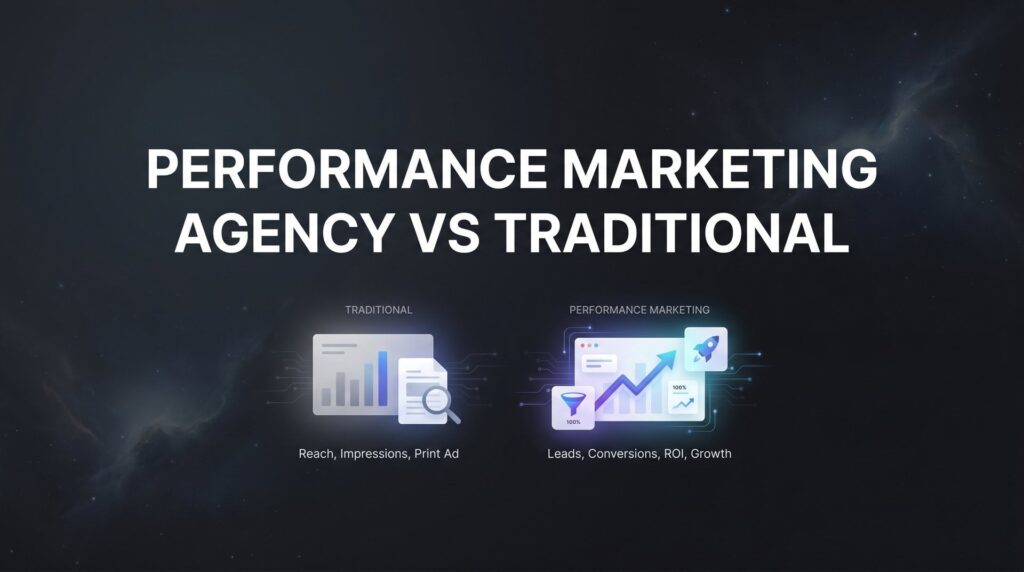
This isn’t just a theoretical debate for local business owners. It’s a decision that determines whether your marketing budget becomes an investment that compounds or an expense that evaporates. Performance marketing agencies operate on accountability—you pay for measurable results. Traditional agencies focus on reach and brand presence—you pay for exposure and creative execution.
The reality? Most businesses don’t need to choose one or the other exclusively. They need a strategic framework for understanding when each approach makes sense, how to evaluate what you’re actually getting, and how to structure your marketing investment for maximum return.
Here are seven strategic frameworks that will help you cut through the marketing agency noise and make a decision that aligns with your actual business goals, not just what sounds impressive in a pitch meeting.
1. Evaluate Your ROI Tracking Capabilities First
The Challenge It Solves
Before you can benefit from a performance marketing agency’s accountability model, you need the infrastructure to actually track what’s working. Many local businesses commit to performance-based agreements without the systems to attribute leads or sales back to specific marketing activities. This creates blind spots that make it impossible to validate whether you’re getting what you’re paying for.
The Strategy Explained
Start by auditing your current tracking capabilities. Can you identify which marketing channel generated each phone call? Do you know which ad campaign produced your last ten customers? Can you calculate the actual revenue generated from different traffic sources?
Performance marketing thrives on data. If you can’t track conversions accurately, you’re essentially flying blind regardless of which agency type you choose. Traditional agencies may not demand this level of measurement, but that doesn’t mean you shouldn’t have it. The difference is that performance agencies build their entire fee structure around these metrics.
Think of it this way: hiring a performance marketing agency without tracking infrastructure is like hiring a personal trainer but never stepping on a scale. You might be making progress, but you’ll never know for certain. Understanding what performance marketing actually entails helps clarify why measurement matters so much.
Implementation Steps
1. Install conversion tracking on your website using tools like Google Analytics 4, and ensure you’re capturing form submissions, phone calls, and chat interactions as distinct conversion events.
2. Implement call tracking software that assigns unique phone numbers to different marketing channels so you can attribute inbound calls to specific campaigns or ad groups.
3. Create a simple CRM system (even a spreadsheet works initially) that records how each new lead discovered your business, allowing you to calculate cost-per-lead and cost-per-customer by channel.
Pro Tips
Don’t wait until tracking is perfect to start. Get basic attribution in place, then refine it as you go. Many businesses delay making marketing decisions because they’re chasing perfect data that never arrives. Start with 80% accuracy and improve from there. The act of measuring will reveal what needs fixing.
2. Match Your Marketing Model to Your Sales Cycle
The Challenge It Solves
Your sales cycle length fundamentally changes which agency model makes sense. If you sell high-ticket services with six-month sales cycles, paying a performance agency for immediate conversions creates a mismatch between how they’re compensated and how your business actually generates revenue. Conversely, if you sell products with instant purchase decisions, traditional brand-building campaigns may take too long to validate.
The Strategy Explained
Performance marketing agencies excel when the path from click to conversion is relatively short and measurable. They optimize for actions that happen within days or weeks—form fills, phone calls, online purchases, appointment bookings. Their algorithms and optimization strategies work best when they can test, measure, and adjust quickly based on conversion data.
Traditional marketing approaches often make more sense for longer sales cycles where multiple touchpoints build trust over time. If your customers need to see your brand five times before they’re ready to engage, and then take three months to make a buying decision, performance metrics become harder to attribute cleanly.
The key question: How long does it take someone to go from “never heard of you” to “ready to buy”? If that timeline is measured in days or weeks, performance marketing’s rapid optimization creates clear advantages. If it’s measured in months or quarters, traditional brand-building may provide better long-term value even if the immediate ROI is harder to calculate. This is why understanding how performance-based agencies work helps you determine fit.
Implementation Steps
1. Calculate your average sales cycle by reviewing your last 20-30 customers and documenting how many days passed between their first contact and their final purchase decision.
2. Map your customer journey to identify how many touchpoints typically occur before conversion, including website visits, phone calls, email interactions, and in-person meetings.
3. Determine whether your business model supports paying for early-stage actions (like lead generation) or whether you need to pay only for final conversions (like completed sales), then match this to agency payment structures.
Pro Tips
For businesses with longer sales cycles, consider hybrid models where performance agencies handle lead generation (measurable and fast) while traditional approaches build brand awareness (slower but cumulative). This gives you short-term accountability for lead flow while investing in long-term brand equity that makes those leads easier to convert.
3. Align Budget Structure with Payment Models
The Challenge It Solves
The difference between performance-based and retainer-based agency fees goes deeper than just payment timing. Each model creates different cash flow implications, risk distributions, and total cost structures. Many business owners focus only on the headline rate without understanding how these payment models affect their actual monthly expenses and financial planning.
The Strategy Explained
Performance marketing agencies typically charge in one of several ways: cost-per-lead, cost-per-acquisition, percentage of ad spend, or hybrid models combining base fees with performance bonuses. Traditional agencies usually operate on monthly retainers that cover strategy, creative development, and campaign management regardless of outcomes.
The retainer model provides predictable monthly expenses but transfers performance risk entirely to you. If the campaigns underperform, you still pay the full fee. The performance model creates variable monthly costs but shifts risk to the agency—if they don’t deliver results, they don’t get paid (or get paid less).
Here’s what many business owners miss: performance-based pricing often costs more per result when campaigns perform well, but protects you when they don’t. Retainer pricing costs the same regardless, which can be more economical during high-performing periods but more expensive during slow periods. A detailed breakdown of digital marketing agency pricing helps you understand what’s typical in your market.
Implementation Steps
1. Calculate your maximum acceptable cost-per-lead or cost-per-customer based on your profit margins, then compare this to typical performance agency rates in your industry to ensure the economics work.
2. Model your monthly marketing budget under both scenarios—fixed retainer vs. variable performance fees—across best-case, average-case, and worst-case campaign performance to understand cash flow implications.
3. Request detailed pricing breakdowns from agencies showing exactly what you pay under different performance scenarios, including minimums, maximums, and any additional fees for ad spend, tools, or creative production.
Pro Tips
Negotiate hybrid arrangements that combine a reduced retainer with performance bonuses. This gives agencies some revenue stability (which often translates to better service) while maintaining accountability through performance incentives. Many agencies are open to creative fee structures if you demonstrate you understand the economics on both sides.
4. Assess Your Need for Speed vs. Brand Equity
The Challenge It Solves
Different business stages require different marketing priorities. A startup burning through runway needs leads this month. An established business preparing for expansion needs brand recognition that opens doors. Choosing the wrong agency type for your current business stage wastes money on outcomes that don’t match your immediate needs, even if they’d be valuable at a different time.
The Strategy Explained
Performance marketing delivers speed. Campaigns can launch within days, generate leads within weeks, and provide clear data within months. This velocity makes performance marketing ideal when you need to prove marketing ROI quickly, when you’re testing new markets, or when immediate revenue generation is critical for business survival.
Traditional marketing builds equity. Brand awareness campaigns create recognition that compounds over time. When prospects already know your name before they need your service, conversion rates improve and sales cycles shorten. This long-term value is harder to measure month-to-month but creates competitive advantages that performance marketing alone can’t replicate.
The strategic question isn’t which approach is better—it’s which timeline matches your business reality. If you need profitable revenue within 90 days, performance marketing’s accountability and speed make it the obvious choice. If you’re investing in market position for a three-year horizon, traditional brand-building may deliver better total returns even if monthly ROI is less clear. When you’re ready to move fast, knowing how to hire a digital marketing agency that delivers becomes critical.
Implementation Steps
1. Define your primary business objective for the next 12 months in specific terms—is it generating X new customers, establishing presence in a new market, or building recognition before a product launch.
2. Identify your timeline constraints by determining whether you need marketing results to materialize within weeks, months, or quarters based on your business financial situation and growth targets.
3. Evaluate whether your market is crowded enough that brand differentiation matters—in commodity markets with low brand loyalty, performance marketing often outperforms brand-building; in markets where trust and reputation drive decisions, brand investment pays off.
Pro Tips
Don’t assume you must choose exclusively. Many successful local businesses allocate 70-80% of their budget to performance channels that generate immediate leads, while investing 20-30% in brand-building activities that improve long-term conversion rates and reduce customer acquisition costs over time. This balanced approach captures both immediate results and compounding brand value.
5. Consider Your Target Audience’s Media Consumption
The Challenge It Solves
Agency type often determines channel focus. Performance agencies typically specialize in digital channels with clear attribution—search ads, social media, display advertising. Traditional agencies often emphasize channels with broader reach but less precise measurement—TV, radio, print, outdoor advertising. If your target customers aren’t active on the channels your chosen agency specializes in, even the best execution won’t deliver results.
The Strategy Explained
Before you evaluate agency models, you need to understand where your actual customers spend their time and attention. This isn’t about demographic assumptions—it’s about researching actual behavior patterns in your specific market.
Some audiences remain heavily influenced by traditional media. Local service businesses targeting homeowners over 55 may find that local newspaper advertising and direct mail still outperform Facebook ads. Other audiences live almost entirely in digital spaces where traditional advertising barely registers.
The mistake many business owners make is choosing an agency based on what sounds modern or sophisticated rather than what actually reaches their customers. Performance marketing isn’t inherently better than traditional marketing—it’s better when your customers are active on digital channels where performance can be measured. Traditional marketing isn’t outdated—it’s effective when your audience still engages with traditional media and when brand presence in those channels influences buying decisions. If you’re wondering why marketing isn’t working for your business, channel mismatch is often the culprit.
Implementation Steps
1. Survey your existing customers about where they spend time consuming media, which platforms they use daily, and where they typically discover new businesses in your industry.
2. Research your competitors’ marketing presence across both digital and traditional channels to identify where they’re investing, which often indicates where your shared target audience is most reachable.
3. Request channel-specific performance data from agencies during the evaluation process, asking for case studies and results specifically from businesses targeting your demographic in your geographic market.
Pro Tips
Don’t let agency capabilities dictate your channel strategy. Find agencies that excel in the channels where your customers actually are, even if that means working with multiple specialists rather than one full-service agency. A performance agency that’s brilliant at Instagram ads won’t help you if your customers are finding contractors through local radio and word-of-mouth referrals.
6. Evaluate Agency Transparency and Reporting Standards
The Challenge It Solves
The most common complaint about both performance and traditional agencies isn’t poor results—it’s poor communication about what’s actually happening with your marketing budget. Agencies that obscure their methods, bury important metrics in complex reports, or make it difficult to understand what you’re getting create relationships built on faith rather than data. This lack of transparency makes it impossible to make informed decisions about continuing, adjusting, or ending the relationship.
The Strategy Explained
Transparency should be non-negotiable regardless of which agency model you choose. Performance agencies should provide clear reporting on cost-per-lead, conversion rates, and attribution data. Traditional agencies should document reach, frequency, brand lift metrics, and how creative decisions connect to business objectives.
The key difference is what “results” means in each model. Performance agencies report on actions—clicks, leads, sales. Traditional agencies report on exposure—impressions, reach, engagement. Both are legitimate metrics, but you need to understand which metrics actually correlate with business growth for your specific situation. Watch out for hidden fees from marketing agencies that can obscure the true cost of your campaigns.
Here’s the test: Can you explain to someone else exactly what you’re paying for and what you’re getting? If agency reports leave you confused about whether things are working, that’s a transparency problem regardless of whether the underlying results are good or bad. Great agencies make their value obvious and their methods understandable.
Implementation Steps
1. Request sample reports during the agency evaluation process and assess whether you can quickly identify the key performance indicators, understand what’s working and what isn’t, and see how results connect to your business goals.
2. Establish reporting frequency expectations upfront—weekly dashboards for performance campaigns, monthly strategy reviews for traditional campaigns—and ensure the agency commits to consistent communication schedules.
3. Demand access to underlying data and platforms so you’re not dependent on the agency’s interpretation of results, including admin access to ad accounts, analytics platforms, and any tools they use to manage your campaigns.
Pro Tips
The best agencies welcome questions and explain their reasoning in plain language. If an agency gets defensive when you ask how something works or why they made a particular decision, that’s a red flag about the relationship, not just the reporting. Transparency isn’t just about data—it’s about whether the agency treats you as a partner who deserves to understand the strategy behind your investment.
7. Test Both Approaches with a Controlled Budget
The Challenge It Solves
All the strategic analysis in the world can’t replace real-world testing with your specific business, in your specific market, targeting your specific customers. The performance vs. traditional debate often becomes theoretical when what you really need is empirical data about what actually works for your situation. Testing both approaches with controlled budgets removes guesswork and provides concrete evidence for making a larger commitment.
The Strategy Explained
Rather than betting your entire marketing budget on one agency model based on projections and promises, allocate a testing budget to run parallel campaigns through both approaches. This isn’t about running full-scale programs—it’s about gathering enough real data to make an informed decision about where to invest more heavily.
Set up a three-month pilot where you invest equal amounts in performance marketing channels (search ads, social ads, lead generation campaigns) and traditional marketing channels (local media, direct mail, sponsorships). Track everything obsessively. Measure not just leads and sales, but also cost-per-acquisition, lead quality, conversion rates, and customer lifetime value.
The goal isn’t to prove one approach right and the other wrong. It’s to understand which approach delivers better economics for your specific business model, which generates higher-quality leads that actually convert to customers, and which creates marketing momentum that compounds over time. If you’re struggling with lead quality during testing, learn how to address poor quality leads from marketing before scaling up.
Implementation Steps
1. Allocate a testing budget that’s large enough to generate statistically meaningful results but small enough that you’re not risking business stability—typically 10-15% of your total quarterly marketing budget split between both approaches.
2. Define clear success metrics before launching tests, including cost-per-lead targets, minimum lead quality standards, and acceptable customer acquisition costs based on your profit margins and business model.
3. Run both approaches simultaneously for at least 90 days to account for seasonal variations and allow enough time for campaigns to optimize, then analyze results based on actual customer acquisition and revenue generation, not just lead volume.
Pro Tips
Document everything during your test period—not just the numbers, but also the experience of working with each agency type. Which communication style fits your business better? Which reporting makes decision-making easier? Which agency feels like a partner vs. a vendor? The relationship quality often matters as much as the performance metrics when you’re making a long-term commitment. Sometimes the agency that delivers slightly fewer leads but communicates better and provides strategic guidance creates more total value than the one that generates marginally more volume but requires constant oversight.
Putting It All Together
The performance marketing agency vs. traditional marketing debate isn’t really about which approach is superior. It’s about which approach aligns with your current business stage, your measurement capabilities, your sales cycle, and where your customers actually spend their attention.
Start with your tracking infrastructure. If you can’t measure results accurately, performance marketing’s accountability advantage disappears. Then match the agency model to your timeline—performance for speed, traditional for brand equity, or hybrid for both. Ensure your budget structure and payment model align with your cash flow reality and risk tolerance.
Most importantly, test before you commit. A three-month pilot program with controlled budgets will teach you more about what works in your specific market than any amount of theoretical analysis. The data you gather from real campaigns with real customers will make the decision obvious.
The businesses that win aren’t the ones that choose the “right” agency type based on industry trends. They’re the ones that choose based on evidence from their own testing, clear understanding of their customer behavior, and honest assessment of their business priorities.
Tired of spending money on marketing that doesn’t produce real revenue? We build lead systems that turn traffic into qualified leads and measurable sales growth. If you want to see what this would look like for your business, we’ll walk you through how it works and break down what’s realistic in your market.