If you’ve ever searched something like “paintbrushservices.com active ads count,” you already know what you’re really after: how many ads is this competitor running right now, and what are they actually saying? That instinct is worth following. Knowing what a competitor is spending on, and which messages they’re testing, gives you something concrete to work with when planning your own campaigns.
The catch is that no single tool hands you a clean number and calls it done. Different platforms show different slices of the picture, and some are far more useful for local service businesses than the enterprise-focused tools that dominate most “competitor research” roundups. This list is built specifically for owners checking on a painting company, a plumber, a roofer, or any local trade business. We’ve ordered these by how useful they are for that specific use case.
One framing note before you dig in: ad count is a signal, not a verdict. A competitor running 15 active ads is almost certainly in active testing mode, which usually means they’ve found a channel that’s working and they’re pushing on it. Two ads might mean they’re just getting started, or it might mean they’re not investing much. Context matters, and these tools help you build that context.
1. Google Ads Transparency Center
Best for: Seeing exactly which Search, Display, and YouTube ads any advertiser is running right now
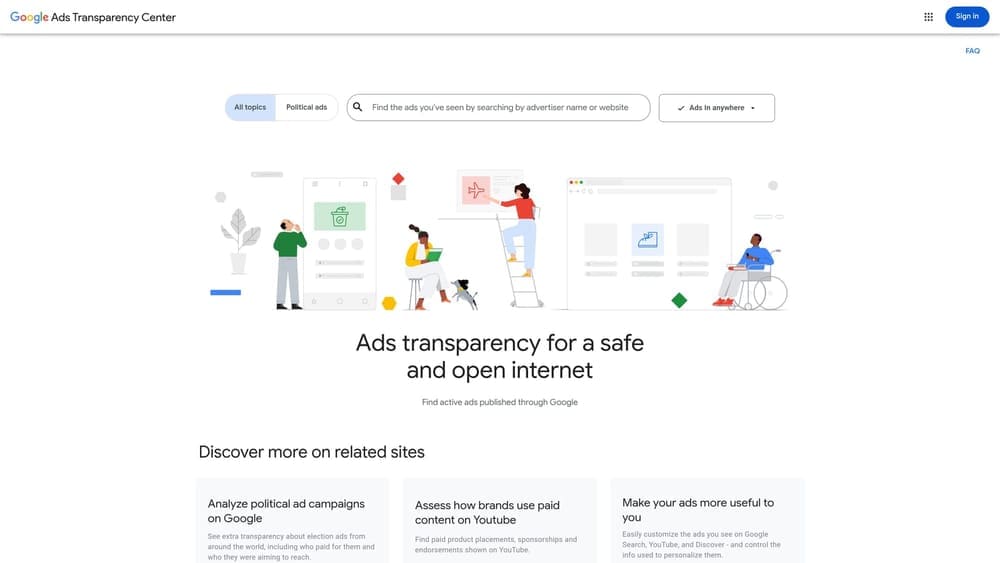
Google Ads Transparency Center is Google’s official, free tool that shows every active ad any advertiser is currently running across Search, Display, and YouTube.
Where This Tool Shines
This is the most direct answer to the “how many ads is this domain running” question. Search by advertiser name or domain, and you get an exact count of active ads at that moment, plus the full creative for each one. No estimates, no modeling. This is straight from Google’s own data.
For a local service business checking a competitor, this is usually your first stop. If paintbrushservices.com is running Google Ads right now, you’ll see every one of them, including the headlines, descriptions, and which formats they’re using. The limitation is real but manageable: you only see what’s live today. There’s no historical view and no spend data, so you can’t tell how long they’ve been running or what they’ve tested and abandoned.
Key Features
Domain or Name Search: Search any advertiser by domain or business name to pull up their full active ad inventory.
Exact Active Ad Count: Shows the precise number of ads running at the time of your search, not an estimate.
Full Creative Display: See complete ad copy including headlines and descriptions for every active ad.
No Login Required: Completely free with no account needed, accessible to anyone.
Multi-Format Coverage: Covers Search, Display, and YouTube ads in a single lookup.
Best For
Any local service business owner who wants a quick, accurate snapshot of what a specific competitor is currently running on Google. Best used as the starting point before pulling historical data from a paid tool.
Pricing
Free. No account, no subscription, no limits on searches.
2. Meta Ad Library
Best for: Checking Facebook and Instagram ad activity for any business page
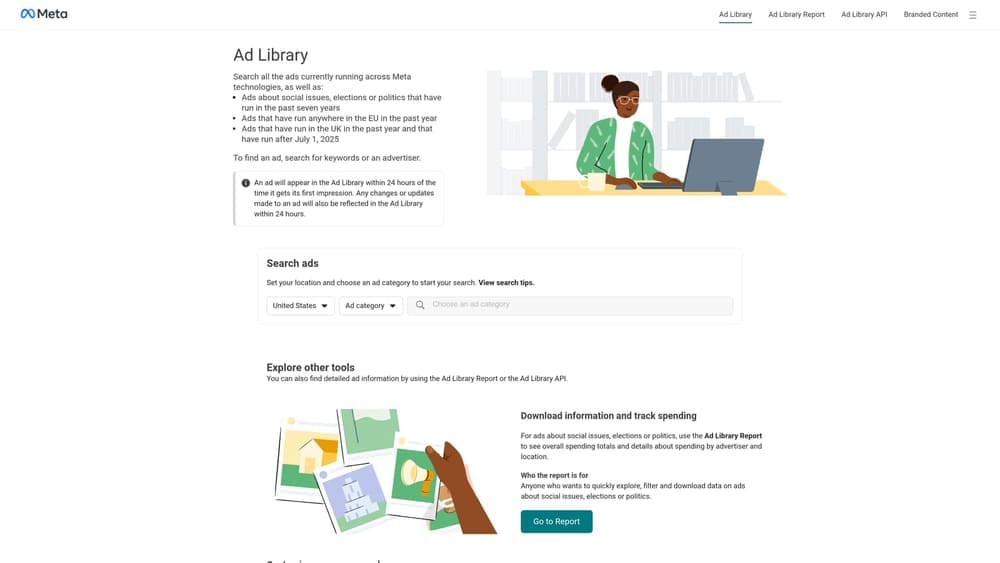
Meta Ad Library is Meta’s official transparency tool showing all active and recently inactive ads for any Facebook or Instagram page, including launch dates and full creative.
Where This Tool Shines
If your competitor is running Facebook or Instagram ads, this is where you find them. Search any Facebook Page by name and you’ll see every active ad, when each one started running, and the full creative. That start date detail is genuinely useful because it tells you whether they just launched a campaign or whether a particular ad has been running for months (which usually means it’s converting).
The trade-off is that Meta doesn’t show spend data for standard commercial ads. You can see what they’re saying and how long they’ve been saying it, but you won’t know what they’re paying for it. For a local painting company or trade service, that’s usually enough to understand their messaging strategy and frequency.
Key Features
Page-Level Search: Search any Facebook Page by name or URL to surface all associated ads.
Active Ad Visibility: Shows all currently running ads with exact start dates.
Cross-Platform Creative: Displays ads running across Facebook, Instagram, and Audience Network.
Country and Category Filtering: Filter results by geography and ad category to narrow your focus.
No Account Required: Fully accessible without logging in or creating a Meta account.
Best For
Owners who want to understand a competitor’s social advertising presence, especially if that competitor is heavily invested in Facebook or Instagram lead generation for local services.
Pricing
Free. No registration required.
3. SpyFu
Best for: Digging into a competitor’s Google Ads history over months or years
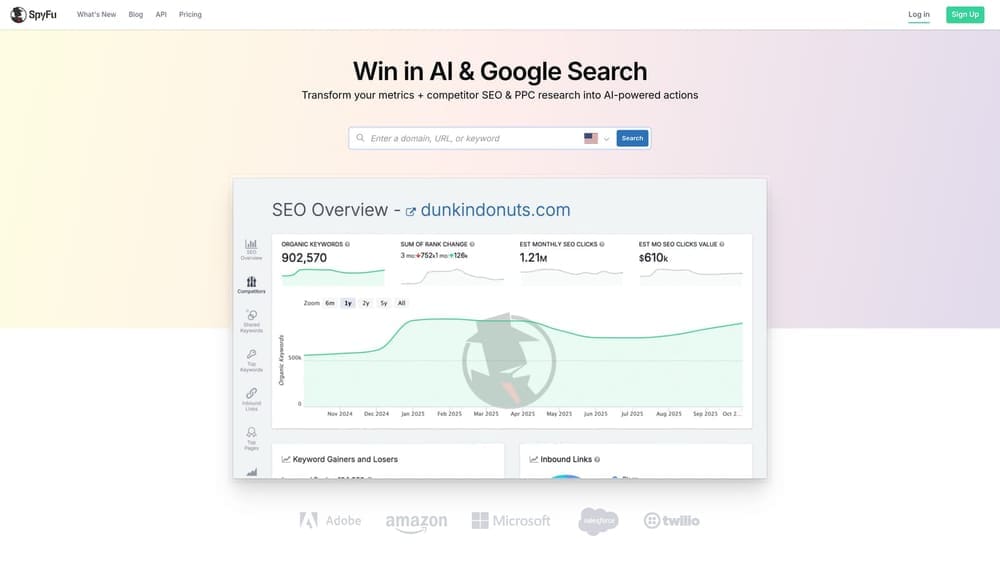
SpyFu is a PPC intelligence platform that estimates Google Ads spend, keyword count, and ad history for any domain, with historical data going back years.
Where This Tool Shines
Where the Transparency Center shows you today, SpyFu shows you the story. You can see what ad copy a competitor has tested over time, which keywords they’ve consistently bid on, and roughly how much they’re spending each month. That historical view is where SpyFu earns its keep. If a competitor has been running the same headline for eight months, that’s a strong signal it’s working for them.
For local service businesses, the main caveat is accuracy at lower spend levels. SpyFu’s estimates are built from crawl data and modeling, not Google’s actual auction records. A competitor spending $500 a month on Google Ads in a mid-size market may show up with sparse or imprecise data. It’s still useful directional intelligence, but treat the numbers as estimates rather than exact figures.
Key Features
Historical Ad Copy Database: See ad headlines and descriptions a competitor has tested over time, not just what’s running today.
Estimated Monthly Spend: Get a rough spend estimate and keyword count per domain.
Keyword Overlap Reports: Identify which keywords you and a competitor are both bidding on.
SERP Position History: Track how a competitor’s paid positions have shifted over time.
Limited Free Lookups: Run a few searches without an account before committing to a plan.
Best For
Business owners and marketers who want to understand what a competitor has tested over time, not just what’s running right now. Useful for identifying proven messaging before writing your own ads.
Pricing
Starts around $39/month. Limited free lookups available without an account.
4. SEMrush Advertising Research
Best for: Comprehensive paid keyword and ad copy analysis with geographic filtering
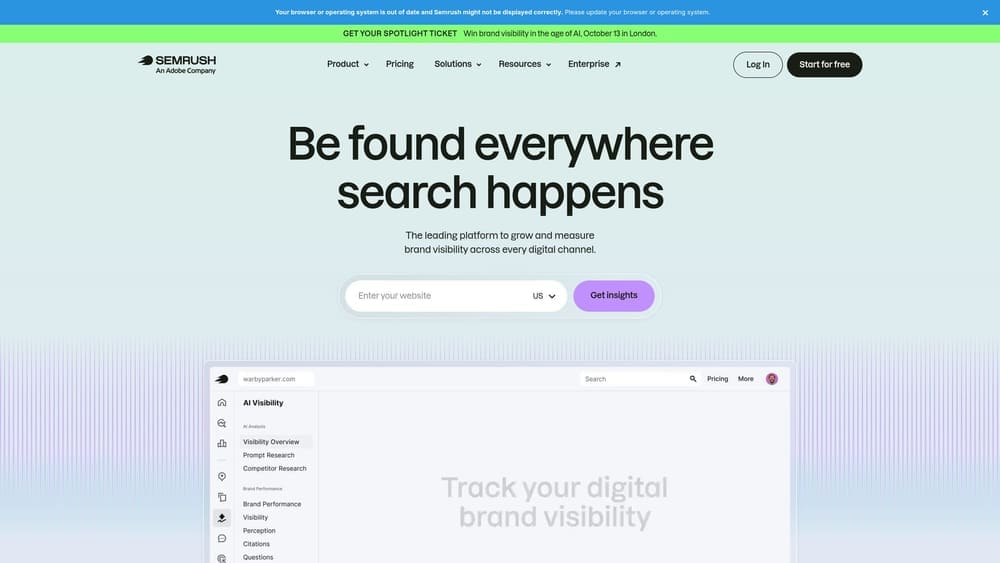
SEMrush is a full-featured SEO and PPC platform with a dedicated Advertising Research module that maps paid keywords, ad copy, and estimated spend for any competitor domain.
Where This Tool Shines
SEMrush gives you the most complete picture of a competitor’s paid search footprint. The Advertising Research module shows which keywords they’re bidding on, estimated CPCs, position history, and a filterable archive of their ad copy. The geographic filtering is particularly useful for local service businesses because you can narrow the data to a specific country or region rather than looking at national-level noise.
The platform also surfaces competitors you may not have thought to check, by showing other domains bidding on the same keywords. That’s a practical shortcut when you’re trying to map the competitive landscape in a specific service area. The main friction is cost: SEMrush is priced for marketing teams and agencies, and the entry-level plan runs nearly $140 a month. For a business owner running a quick check, that’s a significant commitment.
Key Features
Paid Keyword Database: See which keywords a competitor is bidding on, with CPC estimates and position history.
Ad Copy Archive: Filter competitor ad copy by date range to see what they’ve tested.
Competitor Discovery: Find additional competitors based on shared paid keyword overlap.
Combined Organic and Paid View: See both SEO and PPC data in a single platform.
Geographic Filtering: Narrow results to specific countries or regions for local market relevance.
Best For
Marketing teams or agencies managing campaigns for local service businesses who need detailed, filterable competitive intelligence and are already using SEMrush for SEO work.
Pricing
Starts around $139.95/month for the Pro plan. No meaningful free tier for competitive research.
5. SimilarWeb
Best for: Understanding how much of a competitor’s traffic comes from paid channels
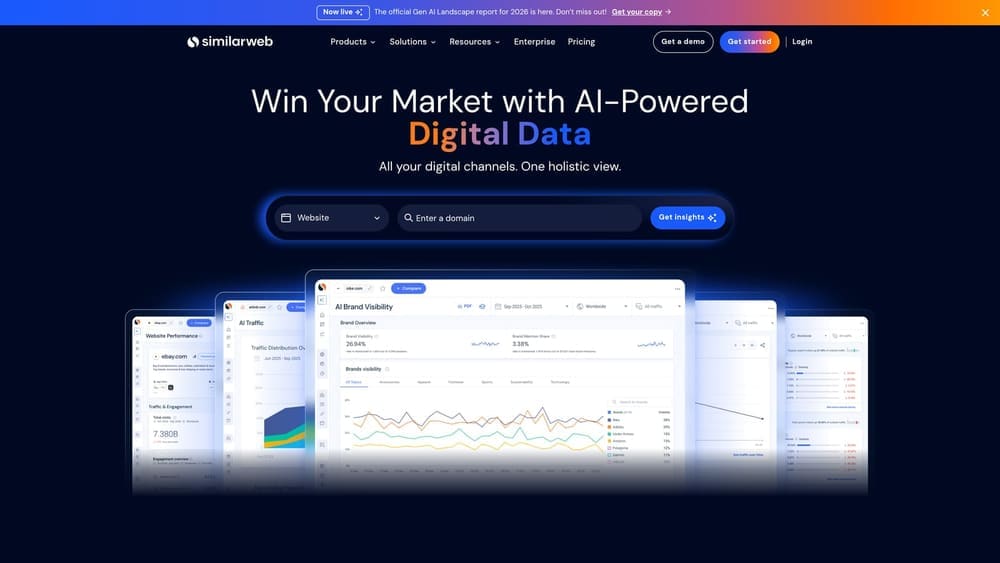
SimilarWeb is a traffic intelligence platform that breaks down where a competitor’s website traffic comes from, including the proportion driven by paid search and paid social.
Where This Tool Shines
SimilarWeb answers a slightly different question than the other tools here. Rather than showing you specific ads or keywords, it tells you how dependent a competitor is on paid traffic overall. If a competitor’s site gets a large share of its visits from paid search, that tells you they’re actively investing in Google Ads. If paid social is a significant source, they’re likely running Facebook or Instagram campaigns consistently.
For local service businesses with smaller web footprints, SimilarWeb’s data can be thin or unavailable. The platform works best for businesses with enough traffic volume to generate statistically meaningful estimates. For a solo painting contractor with a modest site, you may get limited or no data. It’s more useful when checking a regional or multi-location competitor with real traffic volume.
Key Features
Traffic Source Breakdown: See the percentage of traffic coming from paid search, organic, direct, social, and referral.
Estimated Monthly Visits: Get a traffic volume estimate with channel attribution.
Top Paid Keywords: View which keywords are driving the most estimated paid traffic.
Channel Benchmarking: Compare a competitor’s channel mix against industry averages.
Limited Free Data: Some data accessible without a paid plan, though full detail requires a subscription.
Best For
Owners who want to understand a competitor’s overall paid traffic reliance rather than enumerate specific ads. Most useful for checking regional or multi-location competitors with meaningful web traffic.
Pricing
Limited free tier available. Paid plans start at approximately $149/month for full data access.
6. iSpionage
Best for: Ongoing competitor ad monitoring with alerts when things change
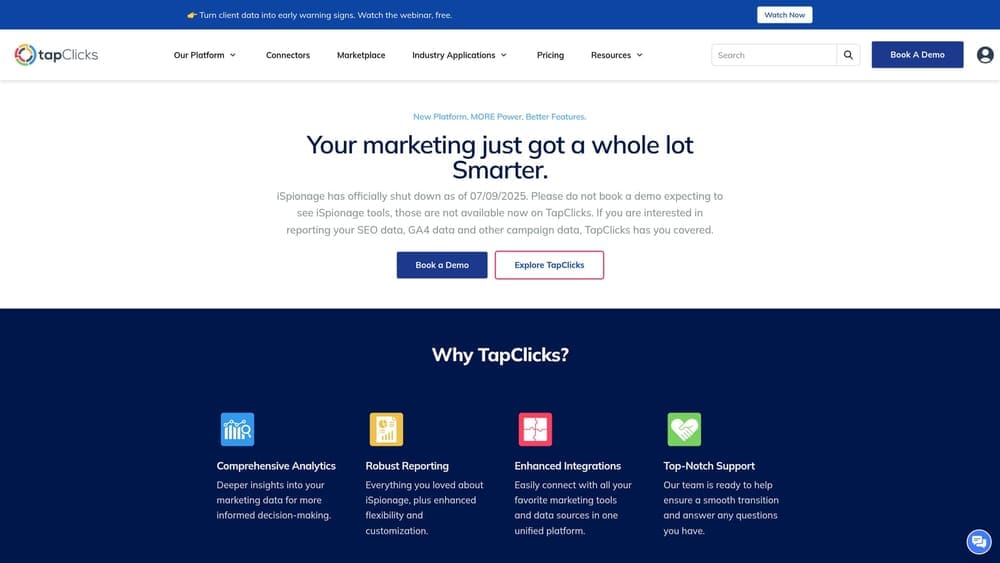
iSpionage is a PPC monitoring tool built around ongoing competitor tracking, with email alerts when competitors launch new ads or shift their keyword targeting.
Where This Tool Shines
Most competitor research is a one-time snapshot. iSpionage is built for the owner who wants to stay current: set up a competitor to monitor and get notified when they launch new ads, change their copy, or adjust their keyword mix. That ongoing intelligence is useful if you’re in an active market where competitors are regularly testing new offers or promotions.
The database is smaller than SEMrush, which means local market coverage can be inconsistent. For a painting company in a mid-size metro, you may find solid data. For a smaller market, coverage gets thinner. The alert system is the real differentiator here, and it works best as a complement to a deeper initial audit using one of the larger platforms.
Key Features
Competitor Change Alerts: Get notified when a competitor launches new ads or changes keyword targeting.
Ad Effectiveness Scoring: See which competitor ads have run longest, a proxy for what’s working.
Landing Page Tracking: Monitor where competitor ads send traffic, not just the ad itself.
Keyword Overlap Reports: Identify shared auction competitors and share-of-voice estimates.
Alert System: Ongoing notifications for new competitor activity without manual checking.
Best For
Business owners in competitive markets who want to stay current on competitor ad activity over time rather than running periodic one-off audits.
Pricing
Starts around $59/month. No meaningful free tier for ongoing monitoring.
7. Clicks Geek Competitive Analysis
Best for: Local service business owners who want competitor ad data interpreted and turned into an actual campaign strategy
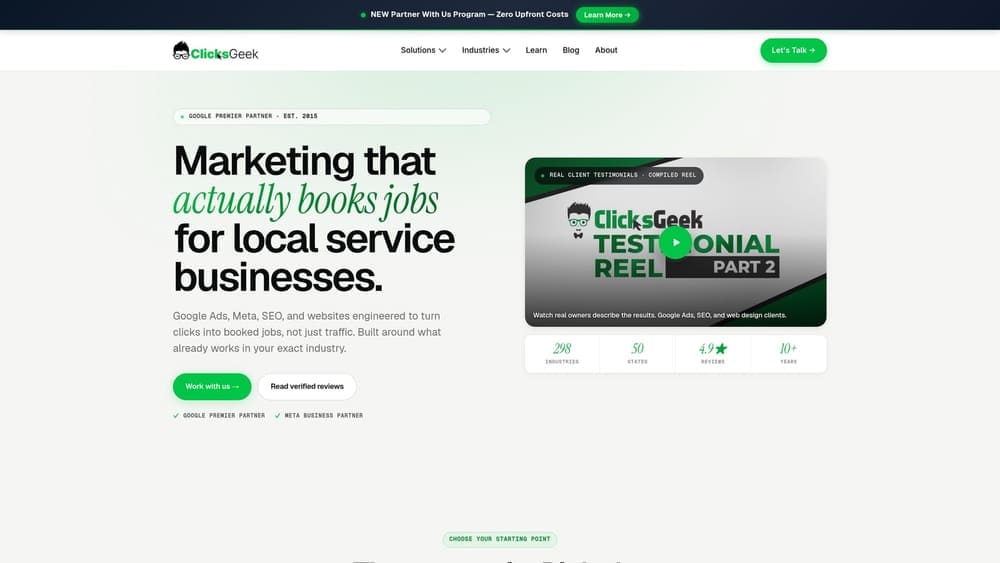
Clicks Geek is a Google Premier Partner agency, established in 2015, that builds competitor ad research directly into managed PPC campaign work rather than delivering a data report and walking away.
Where This Tool Shines
Every tool on this list gives you data. What they don’t give you is someone who knows your specific service area, your trade, and your margins sitting down to tell you what that data actually means for your next campaign decision. That’s what Clicks Geek’s competitive analysis delivers. It’s not a self-serve dashboard. It’s a strategist who has worked across 298 industry playbooks and managed over $100 million in ad spend pulling the competitive picture for your specific market and building your campaign around what it shows.
The practical difference matters most when the data is ambiguous, which it often is for local markets. A competitor running 12 active Google Ads might be testing aggressively, or they might be running duplicates because their account isn’t well managed. Knowing which interpretation is correct requires context that a tool can’t provide. That judgment is what you get with a managed approach.
Key Features
Human-Led Competitive Audit: A strategist reviews competitor ad activity specific to your service area and trade, not a generic report.
Strategy Integration: Analysis feeds directly into campaign structure and messaging, not a standalone deliverable.
Premier Partner Benchmark Access: Google Premier Partner status with benchmark data across 298 industries and 10,000+ campaigns run.
Ongoing Monitoring: Competitor tracking continues as part of active campaign management, not a one-time snapshot.
No Lock-In Contracts: Flexible engagement without long-term contract requirements.
Best For
Local service business owners who are tired of pulling data themselves and want someone to interpret what competitor ad activity means for their specific market, then act on it. Particularly useful for businesses that have tried self-serve tools and found the data hard to apply.
Pricing
Custom pricing based on market and scope. Contact Clicks Geek directly for details specific to your service area.
Which Tool Fits Your Situation
If you’re doing a quick one-time check on a specific competitor, start with the Google Ads Transparency Center and Meta Ad Library. Both are free, both are official sources, and together they cover the two platforms where most local service businesses advertise. You’ll have a solid picture of what a competitor is running right now within about ten minutes.
If you want historical context, meaning what a competitor has tested over months or years, SpyFu is the most accessible paid option. SEMrush is more powerful but harder to justify unless you’re already using it for SEO. iSpionage makes the most sense if you want ongoing alerts rather than periodic manual checks. SimilarWeb is best for understanding a competitor’s overall paid traffic reliance when you’re less concerned with specific ad copy.
The honest limitation of every self-serve tool is that they give you data without interpretation. For a local service business owner who wants to know not just what competitors are running but what it means for your market and how to respond, that gap matters. Pulling a list of competitor ads is the easy part. Deciding which message to test first, which keywords to prioritize, and what offer to lead with based on what you see requires someone who understands how local service advertising actually works.
That’s the work Clicks Geek does as part of managed campaigns. If you want to see what this would look like for your business, we’ll walk you through how it works and break down what’s realistic in your market. No pressure, just a direct conversation about what the competitive picture looks like where you operate and what it would take to win more of it.