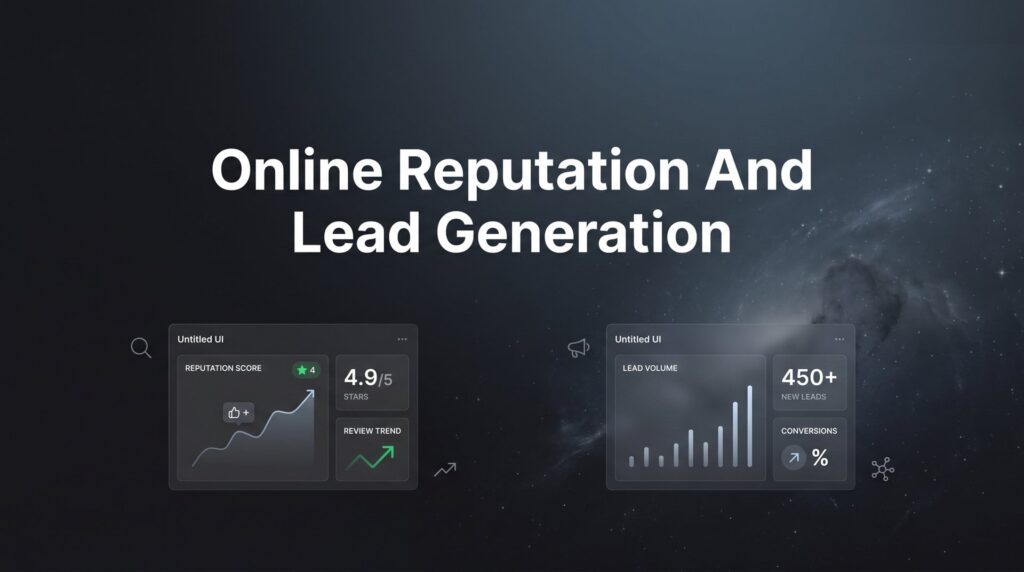
Your online reputation isn’t just about looking good—it’s your most powerful lead generation asset hiding in plain sight. Every review, testimonial, and brand mention either attracts potential customers or sends them running to competitors. The businesses winning right now understand that reputation management and lead generation aren’t separate strategies; they’re two sides of the same coin.
When local businesses struggle with customer acquisition, they often pour money into ads while ignoring the trust signals that actually convert browsers into buyers. A prospect might click your ad, but if they see three-star reviews or unanswered complaints when they Google your business name, that lead evaporates instantly.
This guide reveals how to weaponize your reputation to generate qualified leads on autopilot—no fluff, just battle-tested strategies that deliver measurable ROI. We’re talking about turning every piece of social proof into a conversion asset that works 24/7.
1. Transform Review Volume Into Search Visibility
The Challenge It Solves
Local businesses often appear invisible in Google’s local pack despite having quality services. The algorithm favors businesses with consistent, recent review activity, which means companies with stagnant review profiles get buried beneath competitors—even inferior ones. Prospects searching for your services never see your business because Google interprets low review volume as a signal of irrelevance or inactivity.
The Strategy Explained
Building a systematic review generation engine transforms your online presence from invisible to dominant in local search results. This isn’t about begging for reviews—it’s about creating an automated process that captures feedback at the moment of peak customer satisfaction.
The key is timing and friction reduction. Many businesses ask for reviews too late or make the process unnecessarily complicated. Your best customers want to help you; they just need a frictionless path to do it.
Think of it like compound interest for your search rankings. Each new review strengthens your position incrementally, but over months, the cumulative effect creates an insurmountable competitive advantage. Businesses that generate reviews consistently dominate the local pack, capturing the majority of organic leads in their market.
Implementation Steps
1. Create a review request workflow that triggers automatically after service completion—email or SMS with a direct link to your Google Business Profile review page, removing every possible barrier between the customer’s satisfaction and their public endorsement.
2. Train your team to identify “review-worthy moments” during service delivery—the instant a customer expresses delight or gratitude is your window to request feedback, with a simple phrase like “Would you mind sharing that experience in a quick Google review?”
3. Segment your customer base and prioritize review requests from your happiest clients first—start with customers who’ve already referred others, given positive feedback, or returned for repeat business, as they’re statistically most likely to leave glowing reviews.
4. Monitor your review velocity and set monthly targets that keep you ahead of local competitors—check rival businesses in your area and aim to generate 20-30% more reviews per month than the market leader.
Pro Tips
Never incentivize reviews with discounts or rewards—Google’s guidelines prohibit this, and violations can result in review removal or profile penalties. Instead, make leaving a review so easy that goodwill alone motivates action. Respond to every review within 24 hours to signal activity to both Google’s algorithm and potential customers reading your profile.
2. Convert Negative Feedback Into Trust-Building Opportunities
The Challenge It Solves
Negative reviews terrify business owners, but prospects expect to see them—a perfect five-star average actually triggers skepticism. The real problem isn’t the complaint itself; it’s how businesses respond. Ignoring negative feedback or posting defensive replies destroys trust with every prospect who reads those exchanges. Potential customers scrutinize your responses to criticism more carefully than the complaints themselves, using them to gauge your professionalism and customer care philosophy.
The Strategy Explained
Strategic negative review responses transform potential reputation disasters into powerful trust signals. When prospects see you handling criticism with grace, accountability, and genuine problem-solving, they gain confidence that you’ll treat them fairly if issues arise.
Your response to a one-star review is actually a marketing message to hundreds of future prospects. Every person reading that exchange is evaluating whether they want to do business with you based on how you handle conflict and disappointment.
The businesses that master this approach often generate more leads from their three-star reviews than competitors generate from their five-star profiles, because they’ve demonstrated something more valuable than perfection: integrity under pressure. This is one of the most effective lead generation methods that costs nothing but attention and professionalism.
Implementation Steps
1. Develop a response framework that acknowledges the customer’s experience without admitting fault prematurely—start with “Thank you for bringing this to our attention” rather than “We’re sorry we failed you,” which preserves your ability to investigate while showing respect for their feedback.
2. Take the conversation offline quickly by providing a direct contact method—include a phone number or email where the customer can reach a decision-maker, signaling to prospects that you prioritize resolution over public defense.
3. Follow up publicly after resolving the issue privately—post a brief update like “We’ve connected with [Name] directly and worked together to address their concerns” to close the loop for future readers.
4. Analyze negative review patterns quarterly to identify systemic issues—if multiple customers mention the same problem, fix the underlying process rather than just managing individual complaints.
Pro Tips
Never argue with a reviewer or question their honesty publicly, even when you know they’re wrong—prospects can’t verify the facts, but they can judge your tone and professionalism. Use negative reviews as content inspiration for FAQ pages and blog posts that proactively address common concerns before they become objections in the sales process.
3. Leverage Social Proof in Your Paid Advertising
The Challenge It Solves
Most businesses treat advertising and reputation as separate initiatives, running generic ad creative that fails to differentiate them from competitors. When every plumber or dentist in your market is running similar ads, prospects have no reason to choose you over the next option. This creates a race to the bottom on price, where the lowest bidder wins despite offering inferior service.
The Strategy Explained
Integrating reputation elements directly into your ad creative creates instant credibility that dramatically improves click-through rates and conversion quality. When prospects see real customer testimonials, star ratings, or review counts in your ads, you’re pre-qualifying leads who already trust you before they even visit your website.
Think about how you make purchasing decisions. When you see an ad for a product you’ve never heard of, you immediately Google reviews before buying. By surfacing that social proof directly in the ad, you’re answering the trust question before it’s even asked.
This approach works especially well for local service businesses where trust is the primary conversion barrier. A prospect might need a plumber urgently, but they’re still not calling the first ad they see—they’re calling the one that makes them feel safest. Understanding how to generate qualified leads online means recognizing that trust signals often matter more than aggressive offers.
Implementation Steps
1. Add review extensions to your Google Ads campaigns that automatically display your star rating and review count beneath your ad copy—this feature pulls directly from your Google Business Profile and requires no additional work once enabled.
2. Create ad headlines that incorporate specific reputation achievements—phrases like “500+ Five-Star Reviews” or “Rated #1 Plumber in Austin” immediately differentiate you from generic competitors.
3. Design Facebook and Instagram ad creative featuring customer testimonial screenshots with real names and photos—authentic social proof in image format stops the scroll better than stock photography or product shots alone.
4. Test video ads featuring actual customers describing their experience—even smartphone-quality testimonial videos outperform polished studio content because authenticity trumps production value in building trust.
Pro Tips
Rotate testimonials regularly to prevent ad fatigue and test which types of social proof resonate most with your audience. Some markets respond better to quantity signals like “1,000+ happy customers,” while others prefer quality indicators like “A+ BBB Rating.” Use Google Business Profile insights to identify your highest-performing review keywords, then echo that language in your ad copy to create message consistency across the customer journey.
4. Build a Testimonial Engine That Fuels Every Funnel Stage
The Challenge It Solves
Most businesses collect testimonials haphazardly and use them poorly, dumping a wall of quotes on a single “testimonials” page that no one visits. This wastes your most powerful conversion asset by hiding it where prospects never see it during their decision-making process. Meanwhile, potential customers encounter doubt at multiple points throughout their journey—awareness, consideration, and decision stages—and generic testimonials don’t address the specific hesitations they’re experiencing at each phase.
The Strategy Explained
Creating a strategic testimonial collection and deployment system means having the right social proof available for every stage of your funnel. A prospect discovering your business for the first time needs different validation than someone comparing you to competitors or someone about to submit a contact form.
This approach treats testimonials as targeted ammunition rather than generic decoration. You’re matching specific customer stories to specific objections and concerns that arise at predictable moments in the buyer journey.
The businesses that excel here maintain a library of categorized testimonials—organized by customer type, problem solved, objection addressed, and outcome achieved. This allows them to deploy precisely the right social proof at the moment of maximum impact. If you’re struggling with lead generation, often the issue isn’t traffic—it’s missing trust signals at critical conversion points.
Implementation Steps
1. Develop a testimonial collection questionnaire that captures specific details beyond generic praise—ask customers to describe their initial hesitation, the moment they decided to move forward, and the specific results they achieved, creating narratives that address common objections.
2. Create a testimonial matrix organized by funnel stage and customer segment—categorize each testimonial by whether it addresses awareness concerns, consideration objections, or decision-stage friction, then tag by industry, company size, or problem type for precise deployment.
3. Place stage-specific testimonials strategically throughout your website—use “why we’re different” testimonials on service pages, “results achieved” testimonials near pricing information, and “working together” testimonials on contact forms.
4. Request permission to capture video testimonials from your most enthusiastic customers—offer to handle all filming and editing, making it effortless for them while creating your highest-converting social proof format.
Pro Tips
The most effective testimonials include specific numbers and timeframes rather than vague praise—”We generated 47 qualified leads in the first month” beats “They helped us get more customers” every time. Create a simple incentive for detailed testimonials by offering to feature customers in case studies or on your homepage, giving them valuable exposure while you gain powerful social proof.
5. Optimize Your Google Business Profile for Lead Capture
The Challenge It Solves
Many local businesses treat their Google Business Profile as a static directory listing rather than the lead generation platform it has become. They fill out basic information during setup and never touch it again, missing opportunities to capture leads directly from Google Search and Maps. Meanwhile, prospects are using GBP features like direct messaging, appointment booking, and Q&A to evaluate and contact businesses—if your profile isn’t optimized for these interactions, you’re losing leads to competitors who are paying attention.
The Strategy Explained
Your Google Business Profile functions as a mini-website that appears before your actual website in most local searches. Prospects can message you, book appointments, view photos, read reviews, and get answers to questions without ever visiting your site. Optimizing every element of your GBP transforms it from a digital business card into an active lead generation channel.
The most sophisticated local businesses update their GBP weekly with fresh content, respond to messages within minutes, and use every available feature to reduce friction between discovery and contact. They understand that Google rewards active profiles with better visibility, creating a virtuous cycle where optimization drives rankings, which drives more leads, which provides more engagement signals. This is a cornerstone of effective local business lead generation strategies.
Implementation Steps
1. Enable and monitor Google Business Messages to capture leads who prefer texting over phone calls—set up instant auto-replies acknowledging receipt and promising response times, then ensure someone checks messages at least three times daily.
2. Complete every available GBP section including services, products, attributes, and frequently asked questions—Google’s algorithm favors comprehensive profiles, and each completed section provides another opportunity to include keywords and conversion triggers.
3. Post weekly Google Business updates featuring offers, project photos, or helpful tips—these posts appear in your profile and local search results, signaling activity to both Google and prospects while giving you another channel to showcase expertise.
4. Add a booking link or lead form directly to your profile using the built-in appointment or quote request features—reducing steps between interest and action dramatically improves conversion rates for service businesses.
Pro Tips
Upload fresh photos every week showing recent work, your team, or behind-the-scenes content—profiles with recent photos receive more engagement and appear more trustworthy than those with outdated or stock imagery. Monitor and answer questions in your GBP Q&A section proactively, seeding it with common questions and detailed answers that address objections before prospects even ask.
6. Create Reputation-Driven Landing Pages That Convert
The Challenge It Solves
Standard landing pages focus on features and benefits while treating social proof as an afterthought—maybe a few testimonials buried at the bottom. This approach ignores the fundamental psychology of online decision-making: prospects are looking for reasons to trust you, not reasons to buy from you. When trust signals are weak or absent at critical conversion points, even interested prospects abandon forms and seek alternatives.
The Strategy Explained
Reputation-driven landing pages flip the traditional model by leading with trust and validation rather than product features. Every element of the page—from headlines to form placement—is designed to overcome skepticism and demonstrate that choosing you is the safe, smart decision.
This means strategically placing social proof elements at every point where a prospect might experience doubt or friction. Above the fold, you’re establishing credibility. Mid-page, you’re reinforcing it with specific customer stories. At the form, you’re removing final objections with guarantees and recent success indicators.
The most effective reputation-driven pages feel less like sales pitches and more like evidence compilations. You’re building a case for why working with you is the obvious choice, using real customer experiences as your primary argument. This is essential for any lead generation system for service businesses that wants to convert traffic into actual appointments.
Implementation Steps
1. Design your above-the-fold section to immediately establish authority—include your star rating, total review count, and a standout testimonial headline before prospects even scroll, answering the “why should I trust you” question within three seconds.
2. Place micro-testimonials next to every major claim or benefit statement—when you say “We deliver results in 30 days,” immediately follow with a customer quote confirming that exact outcome, transforming promises into proof.
3. Add trust indicators directly adjacent to your contact form—position recent positive reviews, security badges, and guarantee statements within the visual field of the form itself, addressing last-minute hesitation at the moment of conversion.
4. Create a dedicated social proof section featuring your strongest case studies with specific numbers and outcomes—use real customer names, photos, and detailed stories rather than anonymous quotes that could be fabricated.
Pro Tips
Test different types of social proof to identify what resonates most with your audience—some markets respond better to credential-based trust like certifications and partnerships, while others prefer customer-generated content like reviews and testimonials. Use heat mapping and session recording tools to identify where prospects hesitate or abandon, then add targeted trust signals at those exact friction points.
7. Implement Automated Reputation Monitoring for Lead Intelligence
The Challenge It Solves
Most businesses only discover new reviews, mentions, or competitor activity when customers tell them or when damage is already done. This reactive approach means missed opportunities to engage prospects, respond to criticism before it spreads, and capitalize on competitive weaknesses. Without systematic monitoring, you’re flying blind—unable to identify patterns, track sentiment shifts, or spot emerging threats to your market position.
The Strategy Explained
Automated reputation monitoring transforms scattered feedback across dozens of platforms into actionable lead intelligence. By tracking mentions of your business, competitors, and industry keywords in real-time, you can identify prospects actively searching for solutions, respond to concerns before they escalate, and spot opportunities to engage potential customers at the moment of highest intent.
Think of monitoring as your early warning system and opportunity radar combined. When someone mentions your business category in a local Facebook group, you can engage before competitors even know the conversation exists. When a competitor receives a negative review, you can understand their vulnerabilities and position against them.
The businesses dominating local markets treat reputation monitoring as competitive intelligence, using it to stay ahead of market shifts, identify service gaps, and capture leads their competitors miss entirely. Pairing monitoring with the right lead generation tools creates a system that identifies opportunities automatically.
Implementation Steps
1. Set up Google Alerts for your business name, key competitors, and industry terms plus your city—configure alerts to deliver instantly rather than daily, ensuring you can respond to time-sensitive mentions while they’re still relevant.
2. Implement a review monitoring platform that aggregates feedback from Google, Facebook, Yelp, and industry-specific sites into a single dashboard—tools like these allow you to respond from one interface rather than logging into multiple platforms daily.
3. Create social listening streams for location-based keywords related to your services—monitor phrases like “need a plumber in Austin” or “looking for a marketing agency” in your area, allowing you to engage prospects actively seeking your services.
4. Establish weekly reputation reporting that tracks review volume, sentiment trends, and competitive positioning—use this data to identify patterns, measure the impact of reputation initiatives, and adjust strategy based on what’s actually moving your rankings and lead volume.
Pro Tips
Set up monitoring for common misspellings of your business name and related terms—prospects often butcher company names when searching or posting questions, and you’ll miss these opportunities without variant tracking. Create response templates for common scenarios to ensure consistency and speed, but always personalize them before sending to maintain authenticity and avoid sounding robotic.
Putting It All Together
Your implementation roadmap should prioritize quick wins that deliver immediate results while building toward long-term competitive advantages. Start with Google Business Profile optimization and review request automation—these deliver the fastest reputation-to-lead impact with minimal investment.
Within the first week, enable GBP messaging, complete every profile section, and launch your review request workflow. These changes alone can increase your lead volume by capturing prospects who would have otherwise moved to competitors with more complete profiles.
Next, audit your landing pages and ad creative for social proof gaps. You likely already have testimonials and reviews sitting unused—deploying them strategically across your funnel takes hours, not weeks, and immediately improves conversion rates at every stage.
Finally, build your testimonial engine and monitoring systems for long-term compounding results. These initiatives require more upfront work but create sustainable competitive advantages that competitors can’t easily replicate.
The businesses dominating local markets treat reputation as a lead generation channel, not an afterthought. They understand that trust drives more conversions than clever copy or aggressive discounting ever will. Every positive review, strategic testimonial placement, and professional response to criticism compounds over time, creating an insurmountable moat around your market position.
Ready to turn your online reputation into a predictable source of qualified leads? Tired of spending money on marketing that doesn’t produce real revenue? We build lead systems that turn traffic into qualified leads and measurable sales growth. If you want to see what this would look like for your business, we’ll walk you through how it works and break down what’s realistic in your market.