You signed the contract six months ago with high hopes. The marketing agency’s pitch was polished—they promised more leads, better visibility, and measurable growth for your business. You wrote the check, handed over your login credentials, and waited for the transformation to begin.
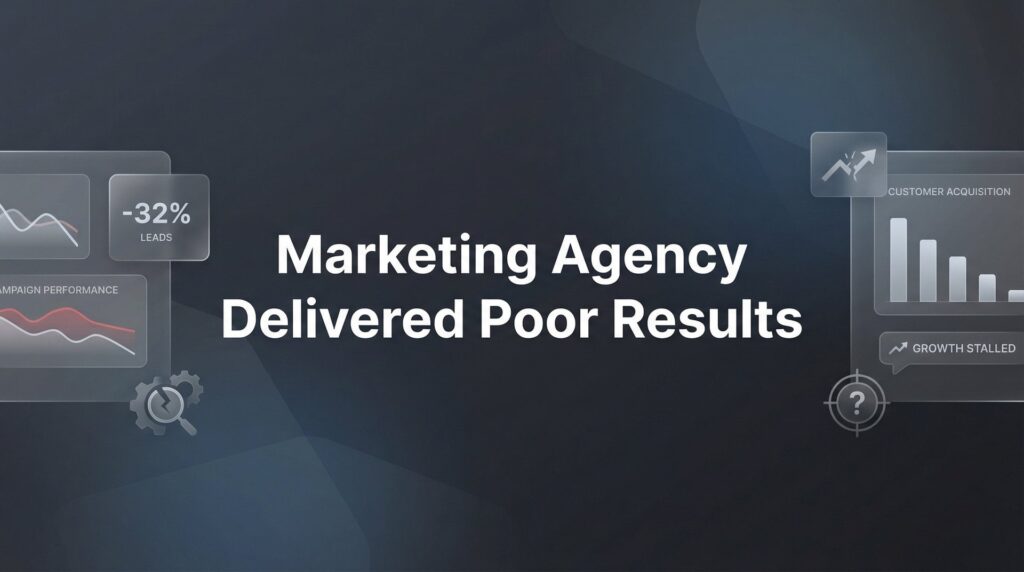
Instead, you got monthly reports filled with colorful graphs about impressions and reach, vague updates about “optimization in progress,” and a sinking feeling in your gut every time you checked your bank account. The leads never materialized. Your phone didn’t start ringing. Revenue stayed flat or worse, declined while your marketing budget evaporated.
If this sounds familiar, you’re not alone. Poor agency performance is one of the most common frustrations local business owners face, and it’s created an entire generation of entrepreneurs who’ve become cynical about marketing altogether. But here’s what you need to know: disappointing results aren’t random bad luck, and they’re not proof that marketing doesn’t work for your business. They’re symptoms of specific, diagnosable problems—and once you understand what went wrong, you can fix it.
This article will help you make sense of your situation. We’ll walk through the warning signs you might have missed before signing, the most common reasons agencies fail to deliver, how to objectively assess whether your results are truly poor or just slow to develop, and most importantly, what to do next. Whether you decide to salvage the relationship, switch to a new partner, or take a completely different approach, you’ll have the clarity to make that decision with confidence.
Warning Signs That Should Have Raised Red Flags
Think back to your initial conversations with the agency. Were there moments that felt off, but you brushed them aside because you wanted to believe the promises? Most poor agency relationships show warning signs long before the contract is signed—we just miss them because we’re focused on the potential upside.
Vague Promises Without Specifics: If the agency guaranteed you first-page rankings, promised to “double your traffic,” or threw out impressive-sounding percentages without asking detailed questions about your business, that was red flag number one. Legitimate marketing partners know that results depend on dozens of variables—your industry, your competition, your current market position, your offer, your pricing. Anyone making sweeping guarantees either doesn’t understand how marketing works or is willing to lie to close the deal.
No Discussion of Your Actual Business Goals: Did they ask about your customer acquisition cost? Your average transaction value? Your capacity to handle new leads? Your sales process and conversion rates? If the conversation stayed focused on rankings, traffic, and visibility without ever drilling down into what success actually means for your revenue, you were talking to people who don’t understand business—they only understand marketing tactics in isolation.
Missing Details About Strategy and Execution: Transparency problems usually start early. If they couldn’t clearly explain who would work on your account, how often you’d receive reports, what platforms they’d focus on, or what their strategic approach would be for your specific situation, that ambiguity was intentional. Agencies that deliver results are eager to walk you through their process because they’re confident in it. Understanding what marketing agency fees actually cover helps you spot these transparency issues before signing.
Zero Interest in Your Marketing History: A quality agency wants to know what you’ve already tried, what worked, what failed, and why. They’ll ask to see your previous campaigns, your analytics, your past agency reports. If they acted like your business started the day you signed with them, they weren’t planning to learn from your history—they were planning to repeat the same mistakes you’ve already paid for.
The sales process reveals everything. Agencies that focus on understanding your business before pitching solutions are fundamentally different from agencies that lead with promises and close with pressure. If you’re evaluating a new agency right now, pay attention to whether they’re asking questions or just answering them.
Why Most Agencies Fail to Deliver Real Results
Poor results rarely come from lack of effort. Most agencies are genuinely working on your account—they’re running ads, posting content, building links, optimizing pages. The problem is they’re working on the wrong things, measuring the wrong metrics, and operating from strategies that were never designed to generate revenue for businesses like yours.
Misaligned Success Metrics: This is the most common failure pattern. The agency celebrates increased website traffic while your phone stays silent. They’re excited about improved search rankings while your lead volume drops. They send reports showing thousands of impressions while your cost per acquisition skyrockets. They’re optimizing for metrics that make their reports look good rather than metrics that make your business money. Traffic and visibility matter, but only if they convert into customers. Many agencies have never been forced to think about the conversion side of the equation because they’ve structured their contracts around deliverables they can control—rankings, clicks, impressions—rather than outcomes that actually matter.
Poor Targeting and Audience Research: Your agency might be driving traffic, but are they driving the right traffic? Generic audience targeting is one of the fastest ways to burn through a marketing budget with nothing to show for it. If they’re targeting “homeowners” when you need “homeowners planning a kitchen remodel in the next 90 days,” or “small business owners” when you specifically serve “dental practices looking to add locations,” every dollar you spend reaches nine people who will never buy from you for every one person who might. This poor quality leads problem is often the root cause of disappointing campaign performance.
Cookie-Cutter Strategies That Ignore Your Market: Many agencies operate like assembly lines. They have a standard process they apply to every client regardless of industry, location, or competitive dynamics. The same Facebook ad strategy they used for an e-commerce brand gets applied to your local service business. The SEO approach that worked for a SaaS company gets copied for your retail store. This isn’t marketing—it’s painting by numbers and hoping it works. Your market has unique characteristics. Your competitors are using specific tactics. Your customers have particular buying behaviors. A strategy that ignores these realities isn’t a strategy at all, it’s just activity that generates billable hours.
The difference between agencies that deliver and agencies that disappoint often comes down to this: are they trying to make their standard process work for you, or are they building a custom approach based on your specific situation? One requires minimal thinking and scales efficiently across hundreds of clients. The other requires expertise, attention, and genuine strategic work. Guess which one most agencies choose?
Assessing Your Results: Slow Start or Fundamental Failure?
Before you fire your agency or demand a refund, you need to objectively determine whether you’re experiencing normal growing pains or genuine strategic failure. Not every slow month means the agency is incompetent, and not every spike in traffic means they’re doing great work. You need to look at the right numbers and ask the right questions.
The Metrics That Actually Matter: Forget about impressions, reach, and engagement rates for a moment. Those numbers might correlate with success, but they’re not success itself. What you need to evaluate is cost per lead, lead quality, conversion rate from lead to customer, and revenue generated compared to spend. If your cost per lead is $200 and your average customer value is $150, you have a fundamental problem no amount of optimization will fix. Implementing call tracking for your marketing campaigns gives you the visibility to measure these metrics accurately.
Questions Your Agency Should Be Able to Answer: Schedule a candid conversation and come prepared with specific questions. What have you tested in the last 60 days? What results did those tests produce? What data informed your decision to focus on these platforms or audiences? What’s your hypothesis for why certain campaigns are underperforming? What would you do differently if you could start over? An agency that’s genuinely engaged with your account will have detailed answers. An agency that’s phoning it in will give you vague responses about algorithms, seasonality, and needing more time.
Distinguishing Between Normal and Not Normal: Marketing campaigns typically need 60-90 days to gather enough data for meaningful optimization. If you’re two months in and results are mediocre, that might be normal—algorithms need time to learn, audiences need time to respond, and testing takes time to yield insights. But if you’re six months in and the agency hasn’t adjusted strategy based on performance data, that’s not normal. If they’re still running the same ads to the same audiences with the same messaging despite poor results, they’re not optimizing—they’re hoping. If they can’t explain what they’ve learned about your market or your customers after months of campaigns, they’re not paying attention.
The goal here isn’t to excuse poor performance or to hold unrealistic expectations. It’s to develop clarity about whether you’re working with a partner who’s actively problem-solving or a vendor who’s going through the motions. One deserves more time and collaboration. The other deserves a termination notice.
Should You Try to Fix This or Walk Away?
You’ve identified problems. Now comes the hard decision: do you invest energy trying to salvage this relationship, or do you cut your losses and find a new partner? There’s no universal right answer, but there are clear signals that point you in one direction or the other.
Signs the Relationship Can Be Saved: If your agency responds to feedback with genuine accountability rather than defensiveness, you’re working with professionals who care about results. If they’re willing to pivot strategy based on performance data, acknowledge what’s not working, and propose specific changes with clear reasoning, that’s a partner worth keeping. If they proactively bring you problems before you discover them and come with solutions rather than excuses, you have the foundation for a productive relationship. Sometimes agencies start with the wrong approach simply because they didn’t have enough information about your business—if they’re willing to course-correct once they understand the real situation, give them the chance.
Signs It’s Time to Move On: If every conversation about performance turns into an explanation for why results aren’t their fault—the economy, your industry, your website, your sales process, seasonal factors—you’re dealing with someone who will never take ownership of outcomes. If they’re consistently missing deadlines, not responding to messages, or delivering reports that don’t actually report on anything meaningful, they’ve already checked out. If they resist giving you access to your own ad accounts, analytics, or campaign data, they’re protecting themselves rather than serving you. And if performance has been consistently poor for months with no meaningful changes to strategy, they either don’t know how to fix it or don’t care enough to try. Understanding why marketing isn’t working for your business helps you determine whether the problem is fixable or fundamental.
How to Exit Without Losing Your Assets: If you decide to leave, do it strategically. Make sure you have admin access to all platforms—Google Ads, Facebook Business Manager, Google Analytics, Google Search Console, any other tools they set up. Export all historical data, campaign settings, and creative assets. Get copies of every report they’ve ever sent you. Document the work they’ve done and the results they’ve produced—you’ll need this context for your next agency. Review your contract for termination clauses and notice requirements. Most importantly, don’t let emotion drive you to burn bridges publicly. A professional exit protects your reputation and keeps options open if circumstances change.
The decision to stay or go should be based on evidence, not hope. Hope that they’ll eventually figure it out, hope that next month will be different, hope that they’re working on something behind the scenes that will change everything. Evidence tells you what’s actually happening. Trust the evidence.
Finding a Marketing Partner Who Actually Delivers
If you’ve decided to move on, you’re probably feeling skeptical about the entire industry. That’s understandable, but don’t let one bad experience make you cynical about marketing itself. The right partner exists—you just need to know what to look for and what questions to ask.
Questions That Reveal Real Expertise: Start with this: “How do you measure success for clients in my industry?” Listen carefully to their answer. If they talk about rankings and traffic without mentioning leads, customers, or revenue, walk away. Ask them to describe their experience with businesses like yours—not just industry experience, but experience with your business model, your customer acquisition challenges, your competitive landscape. Ask who would actually work on your account and what their background is. Ask how they handle underperforming campaigns and what their testing process looks like. Our guide on how to hire a digital marketing agency covers the complete vetting process in detail.
Green Flags That Indicate Quality: Pay attention to agencies that spend more time asking questions than making promises. Agencies that want to audit your current situation before proposing solutions. Agencies that discuss challenges and potential obstacles rather than painting everything as easy. Agencies that focus on revenue metrics and customer acquisition costs in their proposals. Agencies that are transparent about what they don’t know and how they’d figure it out. Agencies that own the ad accounts and platforms in your name rather than theirs. Agencies that provide regular, detailed reporting with clear explanations of what the data means and what actions they’re taking based on it.
The Value of Specialized Expertise: Local business marketing is fundamentally different from e-commerce marketing, B2B SaaS marketing, or enterprise marketing. The customer journey is different. The conversion timeline is different. The platforms that work are different. The messaging that resonates is different. Working with a performance-based marketing agency means working with people who understand your specific challenges—how to generate leads that actually convert, how to optimize for call tracking and form submissions, how to measure offline conversions, how to compete in local search, how to make paid advertising profitable when your average transaction values are measured in hundreds or thousands rather than millions.
The agency you choose next should feel different from the first conversation. Less flash, more substance. Less promises, more questions. Less focus on what they’ve done for other clients, more focus on understanding what you need. The right partner won’t try to dazzle you with jargon or impress you with case studies. They’ll try to understand your business well enough to determine if they can actually help—and they’ll be honest if they can’t.
Using This Experience to Build a Stronger Business
Getting burned by a marketing agency stings, but it doesn’t have to be a pure loss. Some of the most successful business owners we work with came to us after a bad agency experience—and they’re better clients because of it. They know what questions to ask. They know what metrics matter. They know the difference between activity and results. That knowledge is valuable.
Clarify What Success Actually Means: Use this experience to get crystal clear on your marketing goals. Not vague aspirations like “more customers” or “better visibility,” but specific, measurable outcomes tied to revenue. What’s your target cost per lead? What’s an acceptable customer acquisition cost given your lifetime value? How many leads do you need each month to hit your revenue goals? What conversion rate from lead to customer would you consider successful? When you can answer these questions precisely, you can evaluate marketing performance objectively rather than emotionally. Understanding what performance marketing actually means helps you set these expectations properly.
Build Your Internal Marketing Knowledge: You don’t need to become a marketing expert, but you should understand the fundamentals of how your marketing works. Learn enough about Google Ads to understand what you’re paying for. Learn enough about conversion tracking to know whether your data is accurate. Learn enough about landing page optimization to recognize when your pages are hurting performance. Learn enough about audience targeting to evaluate whether your campaigns are reaching the right people. This knowledge makes you a better partner for your agency and protects you from being misled by vendors who count on client ignorance.
Why Course Correction Creates Competitive Advantage: Businesses that have never experienced marketing failure often don’t appreciate what’s working for them or why. They don’t ask hard questions. They don’t demand accountability. They don’t optimize aggressively. You’ve been forced to think critically about every aspect of your marketing—what’s working, what’s not, what metrics matter, what strategies make sense for your business. That critical thinking becomes a competitive advantage. You’ll make better decisions, spot problems faster, and recognize opportunities others miss because you’ve learned these lessons the hard way. Watch out for hidden fees from marketing agencies that can erode your budget without delivering additional value.
The goal isn’t to become cynical or paranoid about marketing. The goal is to become informed and demanding. To expect transparency, accountability, and results. To refuse to settle for vanity metrics and vague promises. To insist on partnerships built around your revenue rather than their reporting convenience.
Moving Forward With Confidence
Poor agency results are frustrating, expensive, and emotionally draining. But they’re not the end of your marketing story—they’re just a chapter you’d rather skip. Now you know what went wrong. You know how to assess your current situation objectively. You know the warning signs to watch for and the green flags to seek out. Most importantly, you know that marketing can work for your business when it’s done right, by the right people, focused on the right metrics.
The key takeaways are simple: recognize warning signs early, demand transparency and accountability, focus on business metrics rather than vanity metrics, and don’t confuse activity with results. Whether you decide to salvage your current agency relationship or move on to a new partner, make that decision based on evidence rather than hope or frustration.
Local business owners who demand real results and refuse to accept excuses are the ones who ultimately build sustainable, profitable marketing systems. You’ve paid for an expensive education in what doesn’t work. Now use that knowledge to find what does.
Tired of spending money on marketing that doesn’t produce real revenue? We build lead systems that turn traffic into qualified leads and measurable sales growth. If you want to see what this would look like for your business, we’ll walk you through how it works and break down what’s realistic in your market.
Want More Leads for Your Business?
Most agencies chase clicks, impressions, and “traffic.” Clicks Geek builds lead systems. We uncover where prospects are dropping off, where your budget is being wasted, and which channels will actually produce ROI for your business, then we build and manage the strategy for you.