You’re not alone if you feel like you’re throwing money at marketing and watching it disappear into thin air. Most local business owners struggle with lead generation—not because they lack effort, but because they lack a proven system.
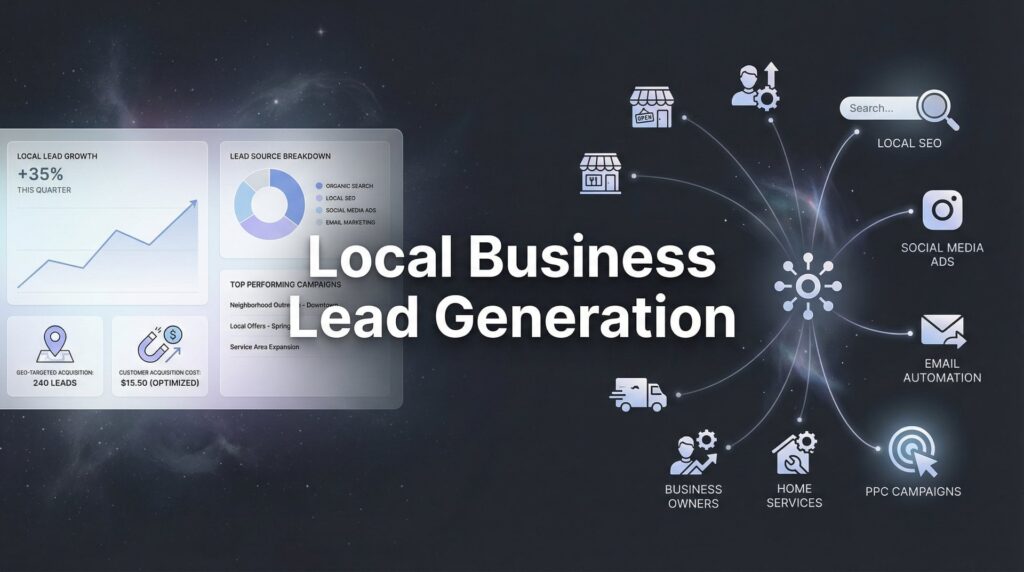
The truth is, generating consistent, high-quality leads for a local business requires a strategic approach that combines multiple channels working together. This guide cuts through the noise and gives you the exact steps to build a lead generation machine for your local business.
Whether you run a plumbing company, law firm, HVAC service, or any other local operation, these steps will help you attract more customers who are ready to buy. By the end, you’ll have a clear roadmap to stop chasing leads and start attracting them.
Step 1: Define Your Ideal Customer and Local Market
Before you spend a single dollar on marketing, you need to know exactly who you’re trying to reach. This isn’t about demographics—it’s about identifying the customers who actually make you money.
Start by reviewing your past jobs from the last 12 months. Which customers were the most profitable? Which projects had the highest margins? Which clients were easiest to work with and paid on time?
Look for patterns in these high-value customers. Maybe your best plumbing jobs come from homeowners in specific neighborhoods who need emergency repairs. Or perhaps your law firm’s most profitable cases come from small business owners dealing with contract disputes.
Map Your Service Area Strategically: Not all zip codes are created equal for your business. Identify which neighborhoods generate the most revenue and which ones drain your resources with low-value jobs or excessive travel time.
Create zones within your service area. Mark your highest-priority areas where you want to dominate, your secondary markets where you’ll compete selectively, and the outer edges where you’ll only take premium jobs.
Build Your Customer Avatar: Now create a simple one-paragraph description of your ideal customer. Include their biggest pain points, what triggers them to search for your services, and what factors influence their buying decision.
For example: “Homeowners in the Riverside and Downtown districts, ages 35-55, who need immediate HVAC repairs during extreme weather and choose based on response time and online reviews rather than lowest price.”
This clarity transforms everything that follows. Your ads will speak directly to these people. Your website will address their specific concerns. Your follow-up will emphasize what they actually care about.
Verify Success: You should be able to describe your ideal customer in one sentence and identify your top three service areas by revenue potential. If you can’t, you’re not ready to move forward yet.
Step 2: Optimize Your Google Business Profile for Local Visibility
Your Google Business Profile is the single most important asset for local business lead generation. When someone searches for your service in your area, this profile determines whether you show up in the map pack or get buried on page three.
First, claim and verify your profile if you haven’t already. Go to google.com/business and follow the verification process. Google will typically send a postcard with a verification code to your business address.
Complete Every Single Field: This isn’t optional. Google rewards complete profiles with better visibility. Add your business hours, phone number, website, service areas, and a detailed business description that includes your target keywords naturally.
Select the most specific categories for your business. Don’t just choose “Plumber”—add “Emergency Plumber,” “Water Heater Installation Service,” and “Drain Cleaning Service” if those apply. Each category helps you appear in more relevant searches.
Upload high-quality photos regularly. Include exterior shots of your building, your team at work, completed projects, and your service vehicles. Businesses with photos receive significantly more clicks and direction requests than those without.
Build Your Review Foundation: Reviews directly impact both your ranking in local search results and your conversion rate. Create a systematic process for collecting reviews from every satisfied customer.
The best time to ask is immediately after completing a job while the positive experience is fresh. Send a text message with a direct link to your Google review page. Make it effortless for customers to leave feedback.
Respond to every review, positive or negative. Thank customers for positive reviews and address concerns in negative ones professionally. This shows potential customers that you care about service quality.
Keep Your Profile Active: Post updates weekly. Share photos of recent projects, announce special offers, or provide helpful tips related to your industry. Active profiles signal to Google that your business is operational and engaged.
Common Pitfall: Many local businesses claim their profile and then abandon it. Incomplete or outdated profiles rank poorly and convert worse. Treat your Google Business Profile like your digital storefront—because that’s exactly what it is.
Step 3: Build a Lead-Capturing Website That Converts
Your website has one job: turn visitors into leads. Everything else is secondary. Too many local business websites look pretty but fail to generate actual phone calls or form submissions.
Start with your homepage and service pages. The most important information—your phone number, service area, and primary call-to-action—must appear above the fold. Visitors shouldn’t have to scroll to figure out how to contact you.
Design for Immediate Action: Place a prominent click-to-call button at the top of every page. Mobile users should be able to call you with one tap. Add a simple contact form that asks for only essential information—name, phone, and brief description of their need.
Include multiple contact methods because different people prefer different channels. Some will call, others will fill out forms, and many appreciate live chat options. The more ways you give people to reach you, the more leads you’ll capture.
Build Trust Immediately: Local customers need proof that you’re legitimate and capable. Display your best reviews prominently on your homepage. Show certifications, licenses, and industry affiliations.
Before-and-after photos work exceptionally well for service businesses. If you’re a contractor, show the transformation. If you’re a landscaper, display the results. Visual proof builds confidence faster than any written claim.
Create Service-Specific Landing Pages: Don’t send all your traffic to your homepage. Build dedicated pages for each major service you offer. A “Water Heater Replacement” page will convert better than sending everyone to a generic plumbing homepage.
Each landing page should address the specific problem, explain your solution, showcase relevant reviews, and include a clear call-to-action. Keep the content focused and eliminate distractions that pull visitors away from converting.
Optimize for Mobile Users: The majority of local searches happen on mobile devices. Your website must load quickly and function perfectly on phones. Test every form, button, and phone number on multiple devices.
Verify Success: Your website should have at least three ways to capture leads on every page—typically a phone number, contact form, and chat option. If a visitor wants to contact you, they should never have to hunt for how to do it.
Step 4: Launch Targeted PPC Campaigns for Immediate Leads
While SEO builds long-term visibility, PPC advertising generates leads immediately. Google Ads puts you at the top of search results for the exact keywords your customers are searching right now.
Start by identifying high-intent keywords specific to your local market. These are search terms that indicate someone is ready to hire, not just researching. “Emergency plumber near me” shows higher intent than “how to fix a leaky faucet.”
Structure Your Campaigns by Service: Create separate campaigns for each major service you offer. This allows you to control budgets independently and write more relevant ad copy for each service type.
For example, a home services company might run separate campaigns for HVAC repair, installation, and maintenance. Each campaign targets different keywords and leads to service-specific landing pages.
Use Location Targeting Strategically: Set your campaigns to show ads only within your actual service area. Going too broad wastes money on clicks from people you can’t serve. Going too narrow misses potential customers.
Use radius targeting around your business location or target specific zip codes based on the market mapping you did in Step 1. Adjust your bids to spend more in your highest-value areas.
Write Compelling Ad Copy: Your ads need to stand out from competitors. Emphasize what makes you different—24/7 availability, same-day service, licensed and insured, or years in business.
Include your location in the ad copy. “Serving Downtown Seattle Since 2010” builds local credibility. Add a clear call-to-action: “Call Now for Free Estimate” or “Book Your Appointment Today.”
Implement Conversion Tracking Properly: This is where most local businesses fail with PPC. You must track every lead that comes from your ads—phone calls, form submissions, and chat conversations.
Set up call tracking numbers for your campaigns so you know exactly which keywords and ads generate phone calls. Install conversion tracking pixels on your thank-you pages to measure form submissions. Without this data, you’re flying blind.
Monitor and Optimize Continuously: Check your campaigns at least weekly. Identify which keywords generate leads at profitable costs and which ones waste money. Pause underperforming keywords and increase bids on winners.
Test different ad variations to improve your click-through rates. Small improvements in ad performance compound over time into significantly lower costs per lead. If you’re unsure whether Google Ads or social platforms work better for your business, understanding the differences between Google Ads and Facebook Ads for lead generation can help you allocate your budget more effectively.
Common Pitfall: Many businesses launch PPC campaigns and then ignore them. Markets change, competitors adjust their strategies, and seasonal factors affect performance. Active management is the difference between profitable campaigns and expensive failures.
Step 5: Implement a Local SEO Strategy for Long-Term Growth
PPC delivers immediate results, but local SEO builds sustainable lead generation that doesn’t disappear when you stop paying for ads. The businesses that dominate local search results combine both strategies.
Start with citation building. Citations are online mentions of your business name, address, and phone number across the web. Consistency matters more than quantity—your NAP information must be identical everywhere.
Build Your Citation Foundation: Submit your business to major directories like Yelp, Yellow Pages, Better Business Bureau, and industry-specific directories. Ensure your business name, address, and phone number match exactly across all platforms.
Even small inconsistencies confuse search engines. “Main Street” versus “Main St.” or using different phone numbers creates doubt about which information is correct. Clean, consistent citations build trust with Google.
Create Location-Specific Content: Develop content that targets neighborhood and city keywords. Write blog posts about “HVAC Maintenance Tips for Phoenix Homeowners” or “Common Plumbing Issues in Scottsdale Homes.”
Create dedicated service area pages for each city or neighborhood you serve. These pages should explain your services in that specific area and include local landmarks, neighborhoods, and relevant local information.
Earn Quality Local Backlinks: Links from other local websites signal to Google that you’re an established part of the community. Join your local chamber of commerce, sponsor community events, or partner with complementary local businesses.
Get listed on local resource pages, contribute to local news sites, or offer to provide expert quotes for local journalists. Each quality local link strengthens your authority in your geographic area.
Optimize Your On-Page SEO: Every page on your website should target specific keywords naturally. Include your city or service area in title tags, headers, and content. But write for humans first—keyword stuffing hurts more than it helps.
Add schema markup to your website to help search engines understand your business information. Local business schema tells Google your hours, services, and location in a format they can easily process.
Common Pitfall: SEO takes time to show results. You won’t rank number one overnight. This is why combining SEO with PPC is so effective—PPC generates leads immediately while you build your organic presence for long-term sustainability.
Track your local search rankings monthly for your target keywords. Monitor your organic traffic and leads from search. SEO is a marathon, not a sprint, but the businesses that stick with it build valuable assets that generate leads for years. For a deeper dive into online advertising for local businesses, you can explore how paid and organic strategies work together.
Step 6: Create a Lead Follow-Up System That Closes Deals
Generating leads means nothing if you can’t convert them into paying customers. Your follow-up system determines whether your marketing investment turns into actual revenue.
Speed matters more than almost anything else in lead conversion. Studies show that contacting leads within five minutes increases conversion rates dramatically compared to waiting even 30 minutes. When someone requests a quote, they’re often contacting multiple businesses—the first to respond usually wins.
Set Up Instant Response Systems: Configure your website forms to send immediate notifications to your phone. Use text messages, not just email, because you’ll see texts faster. Better yet, have forms trigger automated responses while you prepare to call.
Send an automated text or email immediately when someone submits a form: “Thanks for contacting us! We’ll call you within 5 minutes. In the meantime, here’s what to expect…” This acknowledgment keeps them engaged while you prepare to follow up.
Implement Multi-Touch Follow-Up: Not everyone will answer on the first attempt. Create a sequence that reaches out multiple times through different channels. Call first, then send a text, then an email if you don’t connect.
For leads that don’t convert immediately, set up a nurture sequence. Send helpful information, customer success stories, and gentle reminders over the next few weeks. Many leads aren’t ready to buy today but will be ready next month. Integrating email marketing for lead generation into your follow-up process keeps your business top-of-mind without being pushy.
Track Every Lead Source: You need to know which marketing channels generate your most profitable leads. Assign unique phone numbers to different campaigns using call tracking. Tag form submissions with source information.
Create a simple spreadsheet or use a CRM to record every lead: where they came from, when you contacted them, whether they converted, and the job value. This data reveals which marketing channels deserve more investment and which ones waste money.
Calculate Your Numbers: Know your cost per lead for each marketing channel. Know your close rate by source. A channel that generates cheap leads but converts poorly might be less valuable than one with higher costs but better conversion rates.
For example, if Google Ads costs you fifty dollars per lead but closes at 30%, while Facebook ads cost twenty dollars per lead but closes at 5%, Google Ads delivers better ROI despite higher upfront costs. Understanding lead generation services cost benchmarks helps you evaluate whether your numbers are competitive.
Verify Success: You should be able to answer these questions at any time: Where did each lead come from? What’s your average response time? What’s your close rate by source? If you can’t answer these, you’re guessing instead of managing.
Putting It All Together
You now have a complete system for generating leads for your local business. Let’s recap the six steps: Define your ideal customer and service area, optimize your Google Business Profile, build a website that converts visitors into leads, launch targeted PPC campaigns for immediate results, implement local SEO for long-term growth, and create a follow-up system that actually closes deals.
The businesses that win in local markets aren’t necessarily the biggest or the oldest. They’re the ones with the most consistent, systematic approach to lead generation. They don’t rely on referrals alone or hope that customers will somehow find them.
Start with Step 1 today. You don’t need to implement everything at once. Build your system one piece at a time. Get your Google Business Profile optimized this week. Launch a small PPC campaign next week. Add local SEO content the week after that.
Each step compounds on the others. Your PPC ads work better when they lead to an optimized website. Your SEO efforts get amplified by your Google Business Profile. Your follow-up system converts more leads when you’re attracting the right customers in the first place. If you’re dealing with inconsistent lead generation for small business, this systematic approach eliminates the feast-or-famine cycle.
The key is consistency. Marketing isn’t a one-time project—it’s an ongoing system that requires attention and optimization. Monitor your numbers, adjust what’s not working, and double down on what generates results. For businesses that want to focus on operations rather than marketing, exploring local lead generation services can provide the expertise and bandwidth you need.
Tired of spending money on marketing that doesn’t produce real revenue? We build lead systems that turn traffic into qualified leads and measurable sales growth. If you want to see what this would look like for your business, we’ll walk you through how it works and break down what’s realistic in your market.