You’re spending money to get customers through the door. But how many of them actually come back?
For most local businesses, the honest answer is disappointing. You pour budget into Google Ads, SEO, and lead generation. You optimize your landing pages, refine your targeting, and celebrate when the phone rings. Then those hard-won customers quietly disappear after one transaction, and you’re back to spending money to replace them.
The real cost isn’t just the revenue from that single lost sale. It’s the compounding loss of repeat purchases, referrals, and lifetime value that never materializes. A customer who visits once and never returns represents a fraction of what they could have been worth to your business.
Local business customer retention issues are often silent killers. There’s no dramatic moment where someone cancels or complains. They simply don’t return. And because most local business owners are understandably focused on acquisition, retention problems go undiagnosed for months or even years while the budget keeps flowing toward new leads.
Here’s what makes this particularly frustrating: retention is almost always fixable. And fixing it is often far more profitable than chasing cold traffic. When you keep more of the customers you already have, every dollar you spend on acquisition stretches further. Your Google Ads ROI improves. Your SEO investment compounds. Your referral volume increases organically.
This guide walks you through a six-step process to identify exactly where your retention is breaking down, plug the leaks, and build systems that turn one-time buyers into loyal, repeat customers. Whether you run a home services company, a local retail shop, or a professional services firm, these steps apply directly to your situation.
Let’s stop the churn and start compounding your growth.
Step 1: Audit Your Current Retention Rate and Identify the Leak Points
Before you can fix a retention problem, you need to know exactly how bad it is and where it’s happening. Most local business owners have a gut feeling that retention could be better, but gut feelings don’t tell you whether you’re losing customers after their first visit, their third, or somewhere in between. Numbers do.
Start with a simple retention rate calculation. Take a defined time period, say the last 12 months. Count how many customers made a purchase or booked a service during that period. Then count how many of those customers had also purchased in the prior period. Divide the returning customers by the total customers from the earlier period and multiply by 100. That’s your basic retention rate.
The exact benchmark varies by industry, but the exercise itself is more valuable than any industry average. What you’re looking for is a baseline, and more importantly, a trend.
Where to pull this data: Check your point-of-sale system, CRM, or booking software first. Most modern platforms can filter customers by last purchase date. If you use email marketing, look at your list engagement and identify contacts who haven’t opened or clicked in an extended period. Google Analytics can show you returning visitor rates, though this reflects web traffic rather than actual customers. Learning how to track marketing conversions properly will help you distinguish between web visitors and actual paying customers.
Identify the specific drop-off stage. This is where most audits get useful. Don’t just calculate an overall retention number. Break it down by phase. How many customers return after their first purchase? How many book a second appointment? How many make it to a third transaction? When you map this out, a pattern usually emerges quickly. Many local businesses discover that the biggest drop-off happens between the first and second purchase, which points directly to a follow-up failure rather than a service quality issue.
Common leak points to watch for:
No follow-up after service: The transaction ends and communication goes completely silent. The customer has no reason to think about you again until they need the service, at which point a competitor’s ad might catch their eye first.
Poor post-purchase communication: No confirmation, no thank you, no check-in. Customers feel like a transaction rather than a relationship.
Lack of rebooking prompts: Service businesses with natural rebooking cycles, think HVAC maintenance, pest control, or dental cleanings, often fail to remind customers when they’re due. The customer doesn’t forget because they’re disloyal. They forget because nobody reminded them.
Once you complete this audit, you should have two things: a specific retention percentage and a clear picture of the stage where most customers disappear. That combination tells you whether you’re dealing with a minor leak or a structural problem, and it gives you the urgency to act.
Step 2: Survey Lost and Inactive Customers to Uncover the Real Reasons
Here’s where most businesses make a costly mistake. They see the retention numbers, assume they know why customers aren’t coming back, and jump straight to solutions. They add a discount program, redesign their website, or run a win-back ad campaign. Sometimes they get lucky. More often, they’re solving the wrong problem.
You need to hear directly from the people who left.
Start by defining “lapsed” for your business. A good rule of thumb: anyone who hasn’t purchased or booked within 1.5 times your normal buying cycle is a lapsed customer. If your average customer books every three months, someone who hasn’t booked in four to five months qualifies. If you run a retail shop where customers typically visit monthly, a two-month gap signals inactivity.
Export that list from your CRM or POS system and prioritize it by customer value. Your high-value lapsed customers deserve a personal touch, such as a phone call or a personalized email. Mid-tier lapsed customers can receive a short email survey. The goal is to get real answers, not just send a blast hoping for opens.
Keep your survey to three to five questions maximum. Longer surveys get ignored. The questions that tend to generate the most useful responses are:
1. How satisfied were you with your most recent experience with us?
2. What’s the main reason you haven’t returned since then?
3. Is there anything we could have done differently to keep your business?
4. Are you currently using a competitor for this service? (Yes/No)
5. What would bring you back?
These five questions cover satisfaction, specific drop-off reasons, competitive context, and the path back. That’s everything you need to start diagnosing the real problem.
A practical tip: Offer a small incentive for completing the survey, such as a discount on their next service or a small account credit. This serves two purposes. First, it increases your response rate significantly. Second, it functions as a soft win-back offer. Some customers who receive this outreach will rebook simply because you reached out and showed you cared.
For your highest-value lapsed clients, skip the survey form and pick up the phone. A two-minute conversation will give you more nuance than any multiple-choice question can capture. You’ll hear tone, hesitation, and context that a form can’t convey. If your marketing isn’t bringing customers back, this qualitative feedback is often the missing diagnostic piece.
Aim to collect responses from at least 20 to 30 lapsed customers before drawing conclusions. With that sample, patterns will emerge clearly. You might find that three out of five responses mention slow response times. Or that customers didn’t feel their questions were answered during the service. Or simply that they didn’t realize you offered the additional service they ended up buying from a competitor.
By the end of this step, you should have qualitative data revealing the top two or three reasons customers aren’t returning. That data is worth more than any marketing tactic you could test without it.
Step 3: Fix the Operational Gaps Driving Customers Away
This is the step most businesses skip. They gather survey data, see that customers are unhappy with communication or consistency, and then immediately jump to launching a loyalty program or running a retargeting campaign. Marketing tactics cannot compensate for operational failures. If the experience is broken, no amount of follow-up emails will fix it.
Take your survey findings and translate them into specific operational fixes. Be ruthless about prioritization. Don’t try to fix five things at once. Identify the single most commonly cited issue and solve that first before moving to the next.
Service consistency is the most common culprit for local businesses with teams. Customers who had a great experience with one technician, stylist, or rep expect the same quality every time. When it varies, trust erodes. The fix isn’t motivational speeches. It’s documented standard operating procedures, quality checklists, and clear expectations communicated during onboarding and reinforced in regular training. If you’re a solo operator, consistency still matters: consistent communication style, consistent pricing, consistent timelines.
Response time and communication during the job are frequently underestimated retention drivers. Customers who feel uninformed or ignored during a service engagement are unlikely to return, even if the final result was acceptable. Simple fixes include setting communication expectations upfront, sending progress updates on longer jobs, and ensuring every customer knows what to expect and when. Many businesses that are struggling to grow discover that these operational gaps are the root cause, not their marketing.
Pricing and value perception issues are trickier but very fixable. If customers feel they didn’t understand what they were paying for, or that the value wasn’t clear, they’ll hesitate to come back. Transparent, itemized pricing helps. So does before-and-after documentation for service businesses, where customers can visually see the value delivered. Explaining what’s included in a service package, rather than assuming customers understand, removes friction and builds confidence.
Professionalism signals matter more than many local business owners realize. Branded vehicles, uniforms, professional email addresses, prompt invoicing, and clean workspaces all contribute to a customer’s perception of reliability. These aren’t vanity details. They’re trust signals that influence whether someone books again.
Once you’ve identified your top operational issue from the survey data, implement a specific fix with a measurable outcome. If the issue is slow response times, set a target, such as all inquiries responded to within two hours during business hours, and track compliance. If it’s service inconsistency, create a checklist and require sign-off before job completion. The fix doesn’t need to be elaborate. It needs to be consistent.
You’ll know this step is working when your next round of customer feedback shows that the specific issue is no longer in the top complaints. That’s the success signal to move forward.
Step 4: Build an Automated Follow-Up System That Keeps You Top of Mind
One of the most common reasons local businesses lose customers has nothing to do with a bad experience. The customer was perfectly happy. They just forgot about you.
Think about your own behavior as a consumer. How many businesses have you used once, had a fine experience, and simply never returned to because nothing reminded you to go back? That’s not disloyalty. That’s human nature. And it’s entirely preventable with a basic automated follow-up system.
The goal is to design a post-purchase communication sequence that runs automatically after every transaction, with zero manual effort on your part once it’s set up. Effective lead nurturing strategies don’t just apply to prospects — they’re equally powerful for turning one-time buyers into repeat customers.
A practical sequence looks like this:
Same day: Thank you message. A brief, genuine thank you sent immediately after the transaction. This can be an email or SMS. Keep it short and personal in tone. Don’t pitch anything. Just acknowledge the customer and express appreciation.
Days 3 to 5: Satisfaction check-in. A short follow-up asking if everything met their expectations. This catches problems early before they become negative reviews, and it signals that you care about the outcome, not just the payment.
Days 7 to 10: Review request. Once you’ve confirmed satisfaction, ask for a Google review. This is the right moment: the experience is fresh, the customer is happy, and you’ve already opened a dialogue. A direct link to your Google Business Profile review form removes all friction.
Service cycle reminder: Based on when the customer is typically due for their next service, send a timely reminder. HVAC businesses can automate seasonal tune-up reminders. Pest control companies can prompt quarterly treatments. Salons can remind clients when they’re due for their next appointment based on their last visit date. This single automation recovers a significant amount of revenue that would otherwise be lost to forgetfulness.
Tools that make this straightforward: Mailchimp handles basic email sequences well for retail and service businesses. Jobber and ServiceTitan are built specifically for field service companies and include follow-up automation natively. HubSpot works well for professional services firms with a CRM-centric workflow. The right tool depends on your business type, but the principle is the same across all of them.
There’s also a direct connection between this system and your paid advertising performance. Retargeting ads shown to existing customers cost a fraction of what cold acquisition campaigns cost, and they convert at much higher rates. When you combine email and SMS follow-up with retargeting to your customer list on Google and Meta, you create multiple touchpoints that keep your business front of mind without requiring a large budget. Our guide on retargeting strategies for businesses covers exactly how to set this up effectively.
The success indicator here is straightforward: every customer who completes a transaction enters the follow-up sequence automatically. No manual effort, no exceptions, no customers falling through the cracks.
Step 5: Launch a Simple Loyalty or Referral Program That Actually Gets Used
Loyalty programs have a reputation problem. Most people picture complicated points systems, confusing tiers, and apps that require too much effort to bother with. For large retail chains with dedicated technology teams, that complexity might make sense. For local businesses, it’s a retention killer in disguise.
If customers have to think too hard about how your loyalty program works, they won’t participate. Keep it dead simple.
Models that work well for local businesses:
Punch-card style frequency rewards: Every fifth service gets a discount or a free add-on. Every tenth purchase earns a meaningful reward. This is easy to understand, easy to track, and easy to communicate. Digital punch cards through tools like Stamp Me or Square Loyalty eliminate the “I forgot my card” problem.
Referral credits: Give a credit, get a credit. When an existing customer refers a new customer who completes a purchase, both parties receive a credit toward their next service. This rewards loyalty and drives acquisition simultaneously. The key is making the referral frictionless: a unique link or a simple code, not a form to fill out or a process to navigate. Understanding the most effective customer acquisition channels helps you see why referrals consistently outperform cold outreach for local businesses.
VIP maintenance plans: For service businesses, a recurring maintenance plan with priority scheduling and a modest discount is a powerful retention tool. Customers pay a predictable amount, receive scheduled services automatically, and feel like they’re getting preferential treatment. You gain predictable revenue and a customer who has no reason to shop around.
How to promote it without a big budget: Mention it at the point of sale during every transaction. Include it in your post-purchase follow-up emails. Add it to your website and post about it on your Google Business Profile. If your team interacts with customers directly, make sure they can explain the program in one sentence. If they can’t, simplify it further.
Track participation carefully. Know which customers are enrolled, how often they’re redeeming, and what their purchase frequency looks like compared to non-participants. Over time, this data will show you clearly whether the program is driving the behavior you want.
One pitfall to avoid: don’t discount so heavily that you erode your margins. The goal of a loyalty program is to increase purchase frequency and deepen the relationship, not to train customers to expect constant discounts. A well-designed program rewards loyalty without conditioning customers to wait for a deal before they book. If you’re concerned about wasted marketing spend, poorly structured discounts are one of the most common culprits.
When your program is running and you can point to a measurable increase in repeat purchase rate among participants, you’ve succeeded at this step.
Step 6: Measure, Optimize, and Connect Retention to Your Full Marketing Strategy
Most businesses treat retention as a separate concern from their marketing strategy. It’s not. Retention data should directly inform how you allocate your advertising budget, how you structure your PPC campaigns, and how you approach content and SEO. When you connect these pieces, your entire marketing operation becomes more efficient.
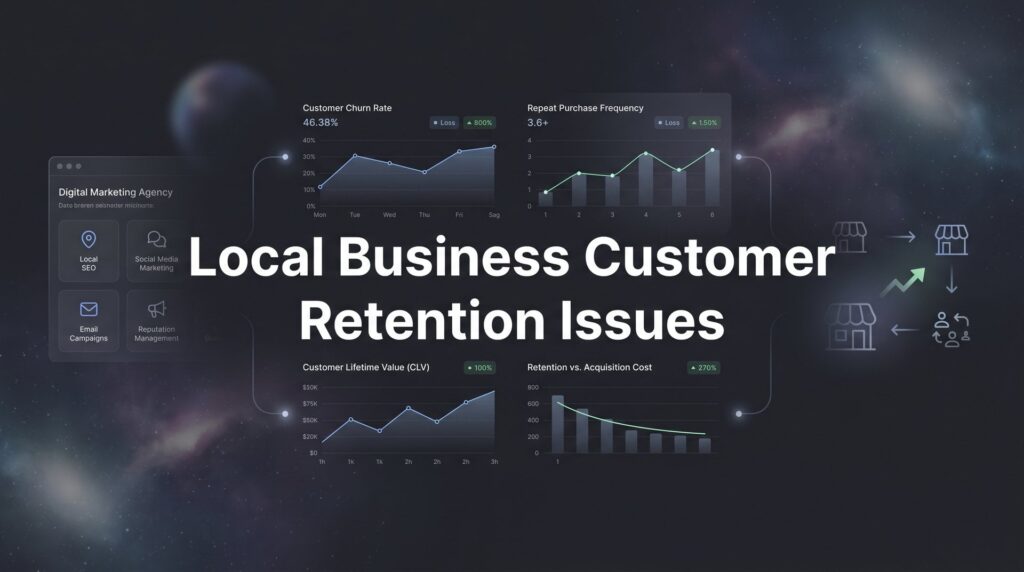
Start by building a simple monthly retention dashboard. You don’t need a complex analytics setup. A spreadsheet with four core metrics, tracked monthly, is enough to start:
1. Retention rate trend: Is the percentage of returning customers going up or down month over month?
2. Customer lifetime value (CLV): What is the average total revenue generated by a customer over their relationship with your business?
3. Repeat purchase frequency: How often does the average customer transact within a 12-month period?
4. Referral volume: How many new customers came from existing customer referrals this month?
These four numbers tell you whether your retention efforts are working and where to focus next. Knowing how to calculate marketing ROI becomes significantly more accurate when you factor in customer lifetime value rather than just first-purchase revenue.
Now connect this to your paid advertising strategy. When your customer lifetime value increases, your allowable cost per acquisition increases as well. That means you can bid more aggressively on Google Ads, compete for higher-value keywords, and expand your campaign reach without necessarily increasing your budget. The math simply works better when each customer is worth more over time.
Use your customer list actively in your digital campaigns. Upload it to Google Ads and Meta to create custom audiences for retargeting. Use it to build lookalike audiences to find new prospects who share characteristics with your best customers. Create specific ad campaigns that speak to existing customers differently than cold audiences, focusing on upsells, seasonal services, or loyalty program enrollment rather than introductory offers.
On the SEO and content side, think about what your existing customers are searching for, not just what new prospects search. Service guides, maintenance tips, and how-to content that helps current customers get more value from your services build trust and keep your brand in their awareness between transactions. A well-rounded approach that balances both channels is key, and understanding the tradeoffs of local SEO vs PPC for lead generation helps you allocate resources wisely across acquisition and retention.
Set a quarterly review cadence. Every three months, revisit your survey process with a fresh batch of customers. Check whether the operational fixes from Step 3 are holding. Test a new follow-up sequence variation. Adjust your loyalty incentives based on what’s actually driving participation. Retention isn’t a set-it-and-forget-it system. It’s a living process that improves with consistent attention.
The success indicator for this step is a retention rate that trends upward quarter over quarter, combined with the ability to quantify the revenue impact of retained customers. When you can show that improving retention by even a modest amount added a measurable amount to annual revenue, you’ll never look at your marketing budget the same way again.
Your Action Plan Starts Now
Solving local business customer retention issues isn’t about finding one magic tactic. It’s about building a system, and now you have the framework to do it.
Audit your numbers. Listen to the customers who left. Fix the operational problems before reaching for marketing solutions. Automate your follow-up so no customer falls through the cracks. Reward loyalty in a way that’s simple enough to actually get used. Then measure everything and let the data guide your next move.
The businesses that win long-term aren’t always the ones generating the most leads. They’re the ones keeping the customers they already have and compounding that advantage over time.
Start with Step 1 this week. Calculate your retention rate. That single number will tell you whether you have a minor leak or a major problem, and it will give you the clarity and urgency to move through the rest of this plan.
Quick-Start Checklist:
☑ Calculate your current retention rate
☑ Identify your biggest customer drop-off point
☑ Survey 20 or more lapsed customers
☑ Fix your number one operational gap
☑ Set up automated post-purchase follow-up
☑ Launch a simple referral or loyalty program
☑ Build a monthly retention dashboard
Retention improvements make every marketing dollar you spend work harder. But if you’re also looking to sharpen your acquisition strategy, smarter PPC, better conversion optimization, and lead generation that actually delivers qualified prospects rather than empty clicks, that’s where the two sides of growth come together. If you want to see what this would look like for your specific business, we’ll walk you through how it works and break down what’s realistic in your market.