You’re spending money on marketing. The leads are trickling in. But here’s the question keeping you up at night: are you reaching the right people at the right time, or just throwing money at tactics that sound good in theory?
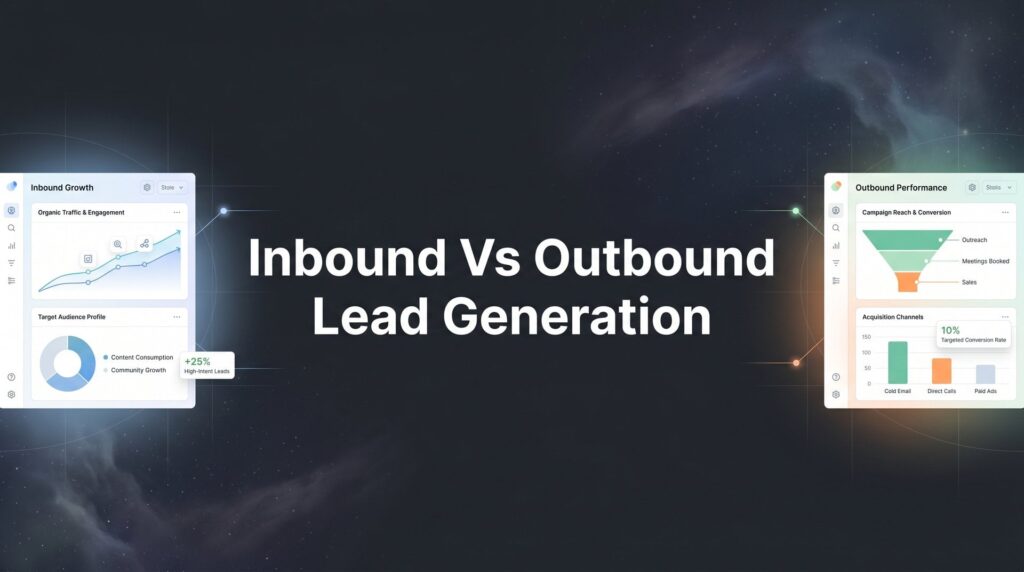
The inbound versus outbound debate has consumed more business strategy meetings than almost any other marketing topic. One camp swears by content marketing and SEO—building assets that attract prospects who are actively searching for solutions. The other insists that waiting for customers to find you is a losing strategy, advocating instead for proactive outreach that puts your business directly in front of potential buyers.
Here’s what both sides get wrong: treating this as an either-or decision.
The fundamental difference is simple. Inbound lead generation attracts prospects who are already looking for what you offer—they raise their hand by searching, clicking, or engaging with your content. Outbound lead generation reaches out to potential customers proactively, often before they’ve identified their problem or started searching for solutions.
Most successful businesses don’t choose one approach over the other. They strategically blend both methods, using each for what it does best. Inbound builds long-term assets that generate qualified leads while you sleep. Outbound accelerates results and reaches prospects who will never stumble across your content organically.
The strategies that follow will show you exactly how to implement both approaches effectively—not as competing tactics, but as complementary systems that maximize lead quality while minimizing your cost per acquisition. You’ll learn when to deploy each method, how to make them work together, and most importantly, how to stop wasting money on the wrong approach for your specific business situation.
1. Map Your Customer Journey to Choose the Right Approach
The Challenge It Solves
Most businesses waste marketing budget by using the same tactics for every prospect, regardless of where they are in their buying journey. They run paid ads to people who aren’t ready to buy, or they wait for SEO results when they need customers this month. Without understanding how your prospects move from unaware to ready-to-buy, you’re essentially guessing which lead generation approach will work.
The customer journey determines whether inbound or outbound tactics will be more effective at each stage. A prospect who doesn’t know they have a problem won’t search for your solution—making inbound marketing invisible to them. Conversely, someone actively researching solutions will find aggressive outbound outreach intrusive and off-putting.
The Strategy Explained
Start by mapping out the five awareness stages your prospects move through: unaware, problem-aware, solution-aware, product-aware, and most-aware. At each stage, identify which lead generation approach naturally aligns with how prospects think and behave.
For unaware and problem-aware prospects, outbound tactics work better because these people aren’t searching for solutions yet. They need to be interrupted with relevant messaging that helps them recognize their problem. Think targeted advertising, direct outreach, or educational content promoted through paid channels.
For solution-aware and product-aware prospects, inbound tactics dominate. These people are actively researching, comparing options, and searching for specific information. They’re typing questions into Google, reading reviews, and consuming content. Your SEO, content marketing, and organic social presence capture these high-intent prospects.
The most-aware stage—prospects who know your business and are deciding whether to buy—benefits from both approaches. Retargeting ads (outbound) combined with detailed case studies and comparison content (inbound) work together to close the deal.
Implementation Steps
1. Create a simple spreadsheet with five columns representing each awareness stage, then list the questions and concerns your prospects have at each stage based on actual customer conversations and sales call recordings.
2. For each awareness stage, identify whether prospects at that stage are actively searching for information (favoring inbound) or need to be reached proactively (favoring outbound), then assign primary and secondary tactics accordingly.
3. Audit your current marketing spend and lead sources to identify gaps—if you’re spending heavily on inbound SEO but most of your market is still problem-aware, you’re missing the majority of potential customers who aren’t searching yet. Many small businesses struggling with lead generation make this exact mistake.
Pro Tips
Local service businesses often find that 60-70% of their market sits in the unaware and problem-aware stages, making outbound tactics more immediately effective than waiting for organic search traffic. However, the prospects who do reach solution-aware stage and find you through search tend to convert at much higher rates, making the inbound investment worthwhile for long-term efficiency.
2. Build an Inbound Content Engine That Generates Leads on Autopilot
The Challenge It Solves
Relying solely on outbound marketing means your lead flow stops the moment you stop spending. Every month starts at zero. You’re essentially renting attention rather than building equity in assets that work for you continuously.
The problem with most inbound content strategies is they create content randomly without targeting the specific searches and questions that indicate buying intent. Businesses publish blog posts that get traffic but never convert, or they target keywords that attract curious browsers instead of serious prospects.
The Strategy Explained
An effective inbound content engine systematically targets high-intent keywords—the specific phrases prospects type when they’re close to making a purchase decision. These aren’t general educational queries; they’re searches that indicate someone is evaluating solutions and comparing options.
The key is building content clusters around your core services, with each cluster containing a pillar page that comprehensively covers the topic and supporting pages that target specific long-tail variations. This structure helps search engines understand your expertise while capturing prospects at different points in their research process.
Every piece of content needs a clear conversion path. The goal isn’t traffic for traffic’s sake—it’s capturing contact information from qualified prospects. That means strategic placement of relevant lead magnets, consultation offers, or tool access that provides immediate value in exchange for an email address.
Implementation Steps
1. Research the exact phrases your prospects use when they’re ready to buy by analyzing your CRM data, reviewing sales call transcripts, and using keyword research tools to find commercial-intent variations of your core services.
2. Create a content calendar that prioritizes high-intent keywords first—the phrases that include “cost,” “near me,” “best,” “vs,” or specific problem descriptions that indicate someone is evaluating solutions right now.
3. Build conversion-optimized landing pages for each major service or solution, then surround each with supporting blog content that targets related questions and comparison searches, all linking back to the main conversion page.
4. Implement conversion tracking that connects content consumption to actual leads and sales, so you can identify which topics and formats generate revenue rather than just traffic. Understanding proven lead generation strategies helps you prioritize the right content investments.
Pro Tips
The biggest mistake in inbound marketing is expecting immediate results. Quality content typically takes three to six months to gain search visibility and start generating consistent leads. That’s why successful businesses start building their inbound engine while simultaneously running outbound campaigns—the outbound tactics produce leads today while the inbound assets mature into reliable long-term lead sources.
3. Deploy Strategic Outbound Campaigns That Don’t Feel Like Spam
The Challenge It Solves
Traditional outbound marketing has earned its bad reputation honestly. Generic cold emails, interruptive ads, and spray-and-pray direct mail campaigns annoy prospects and damage brand reputation. But the alternative—waiting passively for inbound leads—means missing entire segments of your market who will never find you through organic search.
The challenge is reaching new prospects proactively without triggering the immediate negative reaction that comes with obvious mass marketing. You need outbound tactics that feel relevant and timely rather than intrusive and generic.
The Strategy Explained
Modern outbound marketing works when it’s built on hyper-personalization and trigger-based timing. Instead of reaching out to everyone in your target market simultaneously, you identify specific events or signals that indicate a prospect might be receptive to your message right now.
These triggers might include business changes (new location, expansion, leadership changes), seasonal factors (busy season approaching, end of fiscal year), competitive intelligence (competitor’s service issues, contract renewals coming up), or behavioral signals (website visits, content downloads, social media engagement).
The outreach itself needs to demonstrate that you’ve done your homework. Reference the specific trigger that prompted your contact. Acknowledge their current situation. Lead with insight or value rather than a sales pitch. The goal is to start a conversation with someone who might actually benefit from talking to you, not to blast your message to anyone with a pulse. Mastering B2B lead generation tactics can dramatically improve your outbound response rates.
Implementation Steps
1. Build a list of trigger events that indicate good timing for your outreach—for local businesses this might include permit filings, new business registrations, competitor location closures, or seasonal business cycles that create predictable needs.
2. Create outreach sequences that reference the specific trigger and lead with relevant insight, using a format like: acknowledge the trigger event, share relevant insight or data point, make a specific value offer (not a sales pitch), include a low-friction next step.
3. Test small batches first to refine your messaging and targeting before scaling—send 50-100 outreach attempts, track response rates and meeting bookings, adjust messaging based on responses, then scale what works.
Pro Tips
The response rate difference between generic outbound and trigger-based personalized outbound is typically 10-15X. A generic cold email might get 1-2% response rates; a well-researched, trigger-based message can achieve 15-20% response rates. The tradeoff is volume versus quality—you can’t send 10,000 highly personalized messages per month, but you don’t need to when your response rates are that much higher.
4. Leverage Paid Advertising as the Bridge Between Inbound and Outbound
The Challenge It Solves
Organic inbound marketing takes months to produce results. Pure outbound tactics require constant spending to maintain lead flow. Businesses need a way to generate qualified leads quickly while their long-term inbound assets mature.
The gap between “we need leads now” and “our SEO will pay off in six months” kills momentum and forces businesses into short-term thinking. Without a bridge strategy, companies either waste money on ineffective quick fixes or struggle through months of minimal lead flow while building organic presence.
The Strategy Explained
Paid advertising—particularly search advertising—functions as the perfect hybrid between inbound and outbound approaches. You’re reaching people who are actively searching for solutions (classic inbound behavior), but you’re paying to appear immediately rather than waiting for organic rankings (outbound investment).
This approach gives you the best of both worlds: the high intent and relevance of inbound leads combined with the immediate results and scalability of outbound tactics. You can start generating qualified leads this week while your content marketing and SEO efforts build momentum in the background.
The key is structuring your paid campaigns to complement rather than compete with your organic efforts. Target keywords where you don’t rank organically yet. Use paid ads to test messaging and offers before investing in content creation. Capture high-intent searches immediately while working toward organic visibility for those same terms.
Implementation Steps
1. Identify the highest-intent keywords in your market—the searches that indicate someone is ready to buy or seriously evaluating options—and launch search campaigns targeting these terms immediately, even if you’re also working on organic rankings.
2. Create dedicated landing pages for your paid traffic that match the specific search intent and offer, rather than sending paid clicks to your homepage or generic service pages that were designed for organic visitors.
3. Use your paid advertising data to inform your inbound content strategy—the keywords that convert well in paid campaigns are exactly the topics you should prioritize for organic content creation. Explore local lead generation services if you need help implementing this approach.
4. Implement retargeting campaigns that follow up with website visitors who engaged with your inbound content but didn’t convert, using paid ads to bring them back and complete the conversion process.
Pro Tips
Local service businesses often find that paid search advertising delivers the fastest positive ROI of any marketing channel. The combination of high intent (people actively searching for your service) and geographic targeting (reaching only prospects in your service area) produces conversion rates that justify the click costs. Start with a focused campaign on your highest-margin service in your core geographic area, prove the ROI, then expand from there.
5. Create a Lead Qualification System That Works for Both Channels
The Challenge It Solves
Inbound leads and outbound leads behave completely differently, yet most businesses use the same qualification criteria and follow-up process for both. This mismatch causes problems: you waste time chasing inbound leads who are just researching, while you give up too quickly on outbound leads who need more nurturing.
An inbound lead who downloads your guide and fills out a form is showing interest but may be months away from buying. An outbound lead who responds to your targeted outreach might be ready to buy but needs education about your specific solution. Treating these leads identically means misallocating your sales resources and missing opportunities.
The Strategy Explained
Build separate lead scoring models that account for the different behaviors and signals that indicate buying readiness in each channel. Inbound leads should be scored based on engagement depth, content consumption, and search intent. Outbound leads need scoring based on fit criteria, trigger events, and response quality.
For inbound leads, look at patterns: Did they view pricing? Did they visit multiple service pages? Did they return to your site multiple times? Did they engage with bottom-of-funnel content like case studies or comparison guides? These behaviors indicate movement toward a purchase decision.
For outbound leads, focus on different signals: How well do they match your ideal customer profile? Was there a specific trigger event? How did they respond to initial outreach—with genuine interest or polite deflection? Did they ask substantive questions or request more information? Addressing poor quality leads from marketing starts with proper qualification systems.
Implementation Steps
1. Create two lead scoring frameworks—one for inbound leads based on engagement and intent signals, another for outbound leads based on fit and timing factors—and assign point values to different actions and characteristics.
2. Develop channel-specific follow-up sequences that match lead source behavior: inbound leads get educational nurture sequences that address common research questions, while outbound leads get insight-driven follow-up that builds on the initial outreach context.
3. Set different qualification thresholds and sales handoff criteria for each channel, recognizing that a qualified inbound lead might need two weeks of nurturing while a qualified outbound lead might be ready for a sales conversation immediately.
Pro Tips
Track conversion rates and sales cycle length separately for each lead source. You’ll likely discover that inbound leads convert at higher rates but take longer to close, while outbound leads convert at lower rates but close faster when they do convert. This data helps you set realistic expectations and allocate sales resources appropriately—don’t judge your outbound program by inbound conversion standards or vice versa.
6. Optimize Your Conversion Infrastructure for Maximum Lead Capture
The Challenge It Solves
Sending inbound and outbound traffic to the same generic landing pages is like using the same sales pitch for someone who walked into your store versus someone you cold-called. The mindset, context, and information needs are completely different, yet most businesses use one-size-fits-all conversion pages.
This mismatch kills conversion rates. An inbound visitor who searched for “best CPA for small business” and clicked your organic listing has different expectations than someone who clicked your targeted ad after you identified them as a good fit. They need different information, different proof points, and different calls to action.
The Strategy Explained
Build source-specific landing pages and conversion paths that acknowledge where the prospect came from and what they’re looking for. Inbound landing pages should assume the visitor is comparing multiple options and needs detailed information to make a decision. Outbound landing pages should assume the visitor needs context about why you reached out and why this is relevant to them specifically.
For inbound traffic from organic search, create comprehensive landing pages that answer the question they searched for, provide comparison information, address common objections, and offer multiple conversion options at different commitment levels (schedule consultation, download guide, get pricing, etc.).
For outbound traffic from paid ads or direct outreach, create focused landing pages that continue the specific message from the ad or outreach, minimize distractions, provide immediate value, and feature a single clear call to action that matches the campaign promise.
Implementation Steps
1. Audit your current conversion paths by tracking where leads come from and which pages they convert on, identifying gaps where you’re sending traffic from specific sources to pages that don’t match their context or needs.
2. Create dedicated landing pages for your top five lead sources—your most important organic keywords, your primary paid campaigns, and your key outbound channels—with messaging and structure tailored to each source’s unique context. Using the right lead generation tools can streamline this process significantly.
3. Implement progressive profiling in your forms so returning visitors don’t have to enter the same information twice, and you can gather more detailed qualification information from engaged prospects without creating friction for first-time visitors.
4. Test different conversion offers for each channel—inbound visitors might prefer educational content downloads while outbound prospects might respond better to consultation offers or free assessments.
Pro Tips
Response time matters enormously for both channels but in different ways. Inbound leads expect fast response because they’re actively researching and likely contacting multiple providers—respond within five minutes and you’ll dramatically increase conversion rates. Outbound leads need strategic follow-up timing based on the initial interaction—too fast feels pushy, too slow loses momentum. Build automated but personalized follow-up sequences that match each channel’s expectations.
7. Measure What Matters: Track ROI Across Both Lead Generation Methods
The Challenge It Solves
Most businesses compare inbound and outbound marketing using the wrong metrics and timeframes, leading to false conclusions about which approach works better. They judge inbound marketing after three months when it needs six to twelve months to mature. They evaluate outbound campaigns by immediate response rates without tracking long-term value.
This measurement problem causes businesses to abandon effective strategies prematurely or continue investing in tactics that look good on paper but don’t generate profitable growth. You need attribution modeling that fairly compares channels with different characteristics and time horizons.
The Strategy Explained
Implement multi-touch attribution that tracks the entire customer journey from first interaction to closed sale, accounting for the reality that most customers interact with both inbound and outbound touchpoints before buying. A prospect might first encounter your business through a targeted ad (outbound), then visit your website and read blog posts (inbound), then respond to a follow-up email (outbound), then convert through organic search (inbound).
Track different metrics for each channel based on what matters for that approach. For inbound, measure organic traffic growth, keyword rankings, content engagement, and long-term cost per lead as your content library compounds. For outbound, measure response rates, cost per conversation, immediate conversion rates, and campaign ROI over appropriate timeframes.
Most importantly, measure blended ROI—the combined performance of your integrated inbound and outbound efforts—because that’s what actually matters to your business. A dollar spent on inbound content might not show direct ROI for months, but it supports your outbound campaigns by providing credibility and nurture content. A dollar spent on outbound advertising might generate immediate leads while also building brand awareness that improves inbound conversion rates. Understanding lead generation services cost benchmarks helps you evaluate your performance accurately.
Implementation Steps
1. Implement proper tracking infrastructure including UTM parameters on all campaigns, call tracking for phone leads, form tracking that captures lead source, and CRM integration that connects leads to revenue.
2. Create separate dashboards for inbound and outbound performance that track channel-appropriate metrics: inbound dashboard shows organic traffic, keyword rankings, content engagement, and lead generation trends over 6-12 months; outbound dashboard shows campaign response rates, cost per lead, conversion rates, and ROI over 30-90 days.
3. Calculate customer lifetime value by lead source to understand which channels generate the most valuable long-term customers, not just the most leads or the cheapest leads.
4. Review attribution reports monthly to identify how inbound and outbound touchpoints work together in your typical customer journey, then optimize your budget allocation based on which combinations drive the most revenue.
Pro Tips
The businesses that win with integrated lead generation track a simple metric: blended cost per acquisition across all channels over a rolling 12-month period. This metric accounts for the different maturation curves of inbound and outbound tactics while focusing on what actually matters—how much it costs to acquire a customer using your complete marketing system. If your blended CPA is decreasing quarter over quarter, your integrated approach is working regardless of which individual channel shows the best immediate ROI.
Putting It All Together
The inbound versus outbound debate is a false choice that costs businesses money and momentum. The question isn’t which approach is better—it’s how to deploy both strategically to maximize lead quality while minimizing acquisition costs.
Start by mapping your customer journey to understand where prospects are in their awareness and buying process. This determines which tactics will be most effective at each stage. Build your inbound content engine immediately, even though it takes months to produce results, because the compounding returns make it one of the highest-ROI investments you can make. Meanwhile, deploy strategic outbound campaigns that reach prospects proactively without damaging your brand through generic mass marketing.
Use paid advertising as your bridge strategy—generating qualified leads immediately while your organic presence builds. Create separate qualification systems for each channel because inbound and outbound leads behave differently and need different follow-up approaches. Optimize your conversion infrastructure with source-specific landing pages that match each visitor’s context and expectations.
Most importantly, measure performance fairly across appropriate timeframes. Don’t judge your six-month-old inbound program against your mature outbound campaigns, and don’t abandon outbound tactics because your cost per lead is higher than inbound without accounting for speed to revenue.
If you have a longer sales cycle and can invest in building long-term assets, lean into inbound content marketing and SEO while maintaining targeted outbound for immediate pipeline. If you need results this quarter and can’t wait for organic momentum, start with focused outbound and paid advertising while simultaneously building your inbound foundation.
The winning approach isn’t inbound or outbound—it’s both, deployed strategically based on your market position, sales cycle, and growth timeline.
Tired of spending money on marketing that doesn’t produce real revenue? We build lead systems that turn traffic into qualified leads and measurable sales growth. If you want to see what this would look like for your business, we’ll walk you through how it works and break down what’s realistic in your market.