You run ads. You post content. You network. Some weeks, your phone rings off the hook. Other weeks? Crickets. This feast-or-famine cycle isn’t just frustrating—it makes revenue forecasting impossible, hiring decisions terrifying, and growth planning a joke.
Here’s the uncomfortable truth most local business owners eventually discover: you don’t have a lead generation problem. You have a lead qualification problem.
Think about your last ten inquiries. How many were actually ready to buy? How many had realistic budgets? How many were just “gathering information” with no intention of purchasing for six months? If you’re like most businesses, you’re spending 80% of your time chasing leads that will never convert, while the genuinely interested prospects get lost in the noise.
The solution isn’t generating more leads. It’s generating the RIGHT leads, consistently.
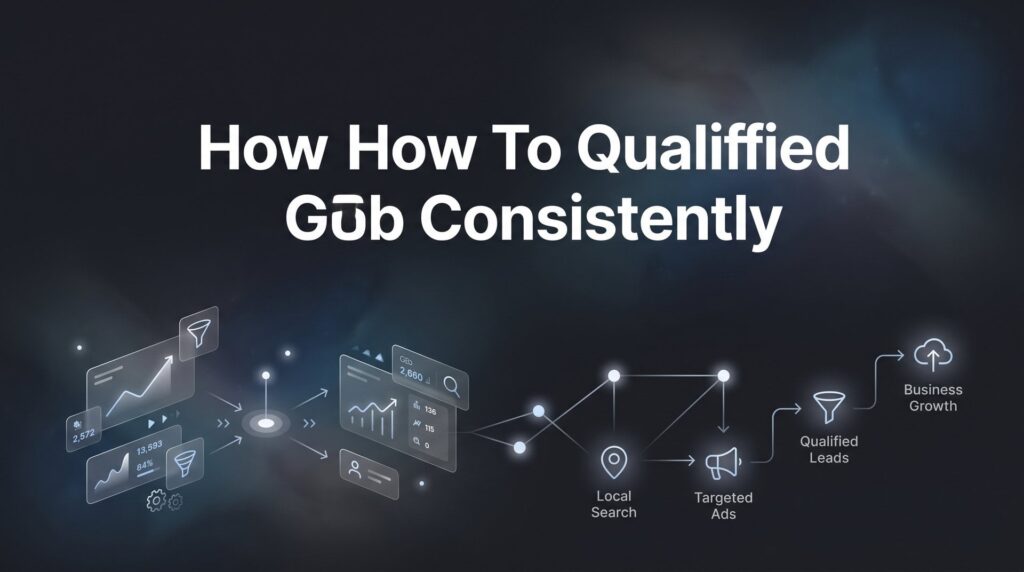
What follows is a six-step system that transforms sporadic inquiries into a predictable pipeline of ready-to-buy prospects. This isn’t theory—it’s the exact framework that separates businesses with consistent growth from those stuck in the feast-or-famine trap. Each step builds on the previous one, creating a filtering system that attracts qualified buyers while repelling tire-kickers.
Fair warning: implementing this system will likely decrease your total lead volume. Your phone might ring less often. Your form submissions might drop. And that’s exactly the point. Because when you focus on qualified leads instead of lead quantity, something remarkable happens—your conversion rates skyrocket, your sales cycle shortens, and your revenue becomes predictable.
Let’s build your qualification system.
Step 1: Define Your Ideal Customer Profile with Ruthless Specificity
The fastest way to waste marketing budget? Target “anyone who can pay.” This seems logical—cast a wide net, catch more fish. In reality, you’re burning cash attracting people who will never buy, while your sales team drowns in unqualified conversations.
Your ideal customer profile isn’t a demographic sketch. It’s a filtering mechanism.
Start with the BANTF framework: Budget, Authority, Need, Timeline, and Fit. A qualified lead must check all five boxes. Budget means they can afford your solution without requiring payment plans that strain your cash flow. Authority means they’re the decision-maker, not someone who needs to “run it by the boss.” Need means they have the specific problem you solve. Timeline means they’re ready to move forward within your preferred sales cycle. Fit means their expectations align with what you actually deliver.
Here’s how to reverse-engineer this profile from your existing customers. Pull up your last twenty sales. Not quotes—actual sales where money changed hands. Look for patterns. What industries appear repeatedly? What revenue ranges? What specific problems were they trying to solve? What was their urgency level when they first contacted you?
Now do the opposite exercise. Review your last twenty lost opportunities or nightmare clients. What do they have in common? Were they price-shopping? Did they have unrealistic timelines? Were they looking for services you don’t actually provide? These patterns become your disqualification checklist. Understanding the difference between qualified leads vs unqualified leads is essential to building this filter effectively.
Creating this checklist is liberating. It gives you permission to say no. When a lead doesn’t meet your criteria, you’re not being picky—you’re protecting your resources for prospects who will actually convert and become profitable clients.
The specificity test: can you describe your ideal customer in one sentence? Not “small business owners” or “homeowners in our area.” Try: “Commercial property managers overseeing 50+ units who need emergency HVAC service within 24 hours and have established vendor payment terms.” That’s specific. That’s filterable. That’s actionable.
Success indicator: You can describe your ideal customer in one specific sentence, and your team can instantly identify whether an inquiry matches that profile within the first two minutes of conversation.
Step 2: Build a Lead Magnet That Attracts Only Qualified Prospects
Generic lead magnets attract generic leads. Offer a “free guide to choosing a contractor” and you’ll get everyone from DIY homeowners to people with $500 budgets who expect $5,000 results. Your download numbers look impressive. Your conversion rate? Abysmal.
The self-selecting offer strategy flips this equation. Instead of casting a wide net, you create content that repels casual browsers while magnetizing serious buyers. This requires understanding a counterintuitive principle: the more specific and advanced your lead magnet, the fewer downloads you’ll get—and the higher your conversion rate becomes.
Compare these two lead magnets for a commercial landscaping company. Option A: “10 Ways to Improve Your Property’s Curb Appeal.” Option B: “Commercial Property Maintenance Budget Planning Template: How to Allocate $50K+ Annual Landscaping Spend for Maximum ROI.” Which one attracts tire-kickers? Which one attracts property managers with real budgets?
High-intent lead magnets share common characteristics. They assume the prospect is past the awareness stage and into the evaluation stage. They reference specific budget ranges or project scopes. They use industry terminology that only qualified prospects understand. They promise outcomes that matter only to people ready to buy.
For local service businesses, positioning your lead magnet correctly matters as much as the content itself. Instead of “Free Consultation,” try “Project Scope Assessment for [Specific Service] Projects $10K+.” The budget qualifier does the filtering work before someone even clicks. You’re not hiding your pricing—you’re being transparent about who you serve. If you’re struggling with the low quality leads problem, your lead magnet positioning is often the root cause.
A roofing company might offer “Commercial Roof Replacement Timeline Calculator” instead of “Roofing Tips.” A dental practice targeting cosmetic procedures could create “Full Smile Makeover Investment Guide” rather than “Dental Care Basics.” The difference isn’t subtle—it’s the gap between 500 unqualified downloads and 50 downloads that convert at 40%.
This approach feels risky. What if you’re leaving opportunities on the table? You’re not. You’re acknowledging that your time and marketing budget are finite resources. Every hour spent educating someone who will never buy is an hour stolen from serving someone who will.
Success indicator: Your lead magnet downloads decrease by 40-60%, but your lead-to-customer conversion rate doubles or triples. You’re trading volume for quality, and your revenue reflects it.
Step 3: Create Landing Pages That Pre-Qualify Before the Click
Most landing pages are designed to maximize form submissions. Every optimization focuses on reducing friction, simplifying the form, removing barriers. This makes sense if you’re measuring success by lead volume. It’s disastrous if you’re measuring success by qualified lead volume.
Strategic friction is your friend. Making your forms slightly harder to complete filters out people who aren’t serious. This doesn’t mean creating a terrible user experience—it means adding qualifying questions that give you the information needed to prioritize follow-up.
Start with the qualifying questions framework. Beyond name and email, ask: “What’s your timeline for this project?” with options like “Within 30 days,” “1-3 months,” “3-6 months,” “Just exploring.” Ask: “What’s your budget range?” with realistic brackets that match your minimum project size. Ask: “What specific outcome are you trying to achieve?” with an open text field that reveals whether they understand what you actually do. Learning how to qualify leads better starts with asking the right questions upfront.
Pricing transparency is the ultimate qualifier. Many businesses hide pricing, fearing it will scare people away. That’s exactly the point. If your minimum project is $15,000, saying so on your landing page eliminates every prospect with a $3,000 budget. They won’t waste your time. You won’t waste theirs. Everyone wins.
The copy on your landing page should speak directly to qualified buyers while boring everyone else. Instead of “We help businesses grow,” try “We work with established local businesses doing $500K+ annual revenue who need systematic lead generation to break through growth plateaus.” The unqualified prospects self-select out. The qualified ones think, “This is exactly for me.”
This approach requires courage. Your form submission rate will drop. Your boss or your marketing team might panic. But watch what happens to your sales conversations. Suddenly, you’re talking to people who have real budgets, real timelines, and real authority to make decisions. Your close rate climbs. Your sales cycle shortens. Your revenue per lead skyrockets.
One HVAC company added a single question to their service request form: “Is this for a residential property or commercial property with 10+ units?” Commercial inquiries dropped by 70%. Their conversion rate on remaining commercial leads jumped from 12% to 38%. They were spending less time quoting jobs they’d never win and more time serving the clients they were built to serve.
Success indicator: Form submissions drop by 30-50%, but the percentage of submissions that turn into qualified sales conversations increases by 200-300%. Your sales team stops complaining about lead quality.
Step 4: Deploy Targeted Paid Advertising with Qualification Built In
Broad targeting in paid advertising is expensive education for people who will never become customers. You’re essentially paying to teach your market about services they can’t afford or don’t need. Every unqualified click is money that could have gone toward reaching someone ready to buy.
Audience layering transforms paid advertising from a lead volume game to a lead quality game. Start with demographic targeting that matches your ideal customer profile. If you serve commercial clients, exclude residential audiences. If your minimum project size requires a certain income level, set income targeting accordingly. If you serve specific industries, use job title and company size filters.
Then add intent signals. Are they currently searching for your specific solution? Have they visited competitor websites? Are they engaging with content related to your services? Platform algorithms can identify these behaviors—use them. Someone who searched “emergency commercial HVAC repair” three times this week is a different prospect than someone who saw your ad while browsing social media.
Negative keywords and exclusions are where most local businesses leave money on the table. If you don’t serve residential clients, add every residential-related keyword as a negative. If you have geographic limitations, exclude areas you can’t serve. If certain search terms indicate DIY intent or bargain-hunting, block them. You’re not trying to reach everyone—you’re trying to reach qualified buyers. If you’re receiving poor quality leads from marketing, your targeting and exclusions likely need refinement.
Your ad copy should qualify as aggressively as your landing page. Include pricing indicators: “Commercial projects starting at $25K” or “Premium service for established businesses.” Use language that attracts serious buyers: “Fast implementation for businesses ready to move forward” signals urgency and readiness. “Perfect for companies tired of cheap solutions that don’t work” repels price shoppers.
The counterintuitive result: your cost per click might increase because you’re targeting more competitive audiences. Your click-through rate might decrease because you’re repelling casual browsers. But your cost per qualified lead plummets because you’re only paying for clicks from people who match your ideal customer profile.
A local marketing agency shifted from broad “small business marketing” targeting to “established service businesses with 10+ employees seeking systematic client acquisition.” Their click volume dropped 60%. Their cost per qualified lead dropped 73%. Their client acquisition cost dropped by half. They were paying less to reach fewer people who were far more likely to buy. Understanding how to improve ads with qualification-focused copy is essential to this transformation.
Success indicator: Cost per qualified lead decreases by 40-60% while lead volume remains stable or grows slightly. Your advertising spend generates predictable qualified opportunities instead of unpredictable inquiry volume.
Step 5: Implement a Lead Scoring System That Prioritizes Hot Prospects
Not all qualified leads are created equal. Some are ready to buy this week. Some need three months of nurturing. Some will eventually buy from a competitor. Treating them all the same means your hottest prospects get the same attention as your coldest ones—and your conversion rate suffers.
Lead scoring for local businesses doesn’t require expensive software or complex algorithms. A simple spreadsheet-based system works perfectly. Create three tiers: hot leads (ready to buy within 30 days), warm leads (qualified but not ready immediately), and nurture leads (qualified but timeline uncertain). Understanding the distinction between marketing qualified leads vs sales qualified leads helps you build more effective scoring criteria.
Behavioral signals reveal buying readiness more accurately than demographic data. A hot lead visits your pricing page three times, downloads your case studies, and fills out a contact form asking about availability for next month. A warm lead downloads your lead magnet and opens your follow-up emails but hasn’t engaged further. A nurture lead subscribed to your newsletter six months ago and occasionally clicks through.
Build your scoring system around engagement intensity and timeline indicators. Assign points for high-intent actions: requesting a quote (10 points), visiting pricing pages (5 points), downloading advanced content (5 points), indicating a near-term timeline (10 points). Subtract points for low-intent signals: unsubscribing from emails, long periods of inactivity, indicating distant timelines.
The three-tier system creates clear follow-up protocols. Hot leads get immediate personal outreach from your best salespeople. They receive phone calls within one hour, personalized proposals within 24 hours, and persistent follow-up until they buy or disqualify. Warm leads enter a structured nurture sequence with educational content and periodic check-ins. Nurture leads receive automated emails designed to move them into the warm category when their situation changes.
Automating follow-up sequences based on lead score ensures nothing falls through the cracks. When a nurture lead suddenly downloads three pieces of content in one week, they automatically move to warm status and trigger a personal outreach. When a warm lead requests pricing information, they jump to hot and get immediate attention.
The transformation happens when your sales team stops wasting time on leads that won’t convert this quarter. Instead of spreading effort equally across all inquiries, they focus 80% of their time on the 20% of leads most likely to close soon. Conversion rates climb. Sales cycles shorten. Revenue becomes predictable.
Success indicator: Your sales team focuses 80% of their time on highest-scoring leads, your close rate on hot leads exceeds 40%, and you can accurately forecast monthly revenue based on leads in your pipeline.
Step 6: Build a Nurture System That Converts Warm Leads Over Time
“Not ready now” doesn’t mean “not ready ever.” Many businesses treat leads like milk—if they don’t convert immediately, they’re worthless. This ignores a fundamental reality: buying decisions have timelines. The prospect who isn’t ready today might be your best customer six months from now. The question is whether you’ll still be top-of-mind when they’re ready to buy.
Email sequences that educate and qualify simultaneously serve dual purposes. They keep you visible during the consideration period while continuously filtering for buying readiness. Each email should provide genuine value while including subtle qualification mechanisms. If you’re wondering why you’re not getting customers online, a missing or weak nurture system is often the culprit.
A nurture sequence for a commercial cleaning service might include: Week 1: “How to Evaluate Commercial Cleaning Proposals” (educational, builds trust). Week 3: “The Hidden Costs of Cheap Cleaning Services” (addresses price objections). Week 6: “Seasonal Deep Cleaning Checklist for Commercial Properties” (provides value, hints at service offerings). Week 10: “Is Your Current Cleaning Service Meeting These 7 Standards?” (triggers evaluation of current provider).
Re-engagement triggers identify when nurture leads are ready to move back to hot status. Track email opens, link clicks, and website visits. When a lead who’s been dormant for months suddenly opens three consecutive emails and visits your pricing page, that’s a buying signal. Trigger immediate personal outreach.
The consistency metrics that matter: qualified lead volume per month, conversion rate from qualified lead to customer, and average time-to-close. Track these monthly. Qualified lead volume should become predictable within 10-15% variance. Conversion rates should improve as your qualification system refines. Time-to-close should decrease as you focus on hotter leads.
A professional services firm implemented this nurture system and discovered something remarkable. Their immediate conversion rate (leads closing within 30 days) was 18%. But when they tracked leads over 12 months, their total conversion rate was 34%. The nurture system was converting an additional 16% of leads that would have been lost without systematic follow-up. For more strategies on building consistent pipeline flow, explore how to generate qualified leads online systematically.
The long game requires patience and discipline. You’re building an asset—a database of qualified prospects at various stages of readiness. Some will buy this month. Some will buy next quarter. Some will buy next year. But because you’ve qualified them on the front end, you know they’re worth nurturing. You’re not wasting resources on people who will never convert.
Success indicator: You generate predictable monthly qualified lead flow with measurable conversion rates, and you can forecast revenue 60-90 days out based on leads in your nurture pipeline.
Your Qualified Lead System Checklist
Let’s bring this together. Consistent qualified leads aren’t the result of marketing tactics—they’re the result of systematic filtering. You now have the complete framework:
Step 1: Define your ideal customer profile using BANTF criteria and create a disqualification checklist that protects your resources.
Step 2: Build lead magnets that self-select for qualified prospects by being specific, advanced, and transparent about who you serve.
Step 3: Design landing pages with strategic friction that pre-qualifies before the click through qualifying questions and pricing transparency.
Step 4: Deploy paid advertising with audience layering, negative keywords, and qualifying copy that attracts serious buyers while repelling browsers.
Step 5: Implement a simple three-tier lead scoring system that ensures your hottest prospects get immediate attention from your best salespeople.
Step 6: Build nurture sequences that keep you top-of-mind with qualified prospects who aren’t ready immediately, converting them when their timeline aligns.
The businesses that implement these systems stop experiencing feast-or-famine cycles. Their revenue becomes predictable. Their sales teams focus on conversations that convert. Their marketing spend generates measurable returns instead of vanity metrics.
Start with Step 1 this week. Block two hours to define your ideal customer profile with ruthless specificity. Analyze your best customers. Identify the patterns. Create your disqualification checklist. Everything else builds from this foundation.
Qualified leads aren’t found—they’re filtered. And now you have the filter.
Tired of spending money on marketing that doesn’t produce real revenue? We build lead systems that turn traffic into qualified leads and measurable sales growth. If you want to see what this would look like for your business, we’ll walk you through how it works and break down what’s realistic in your market.