For eligible contractors, start by evaluating Local Services Ads, Google’s exclusive pay-per-lead product. Then compare exclusive call networks and exclusive form-lead programs. The best fit is a source that delivers the inquiry only to your business, defines the billable event in writing, and gives you clear controls for pausing delivery.
Exclusive delivery does not mean the homeowner cannot contact another contractor. It means the source is not selling or distributing that same inquiry to competing businesses. Ask for that distinction in writing before treating a service as exclusive.
This guide compares buying models, not a tested ranking of sellers. Clicks Geek manages Google Ads and Local Services Ads for local service businesses. We are not a lead marketplace, and managed Google Ads is not pay-per-lead billing.
Start with Local Services Ads for eligible trades
Local Services Ads connects customers with a specific business through Google’s local service advertising product (Local Services Ads overview (Google)). It is a useful first option to investigate when you want exclusive inquiries rather than a shared contact distributed by a lead seller. Confirm availability for your trade and service area, then review verification requirements and the current billing rules (How Local Services Ads leads work (Google)).
Clients own their Local Services Ads accounts. Clicks Geek can manage those accounts, but we do not publish Local Services Ads results or cost-per-lead claims here. The recommendation is about the model, not a promise of performance.
Keep the profile aligned with the work you can take, and make sure someone handles incoming inquiries. Exclusive delivery cannot make an unanswered call into a booked appointment. Read about Local Services Ads management if you want help with the account rather than a separate seller’s inventory.
Exclusive leads vs shared leads
An exclusive lead goes from the source to one business. A shared lead is delivered to multiple businesses. The homeowner may still independently request other estimates in either case. Neither arrangement makes the prospect a customer until your team qualifies the work and wins the job.
Ask whether exclusivity applies to the specific inquiry, a service category, or a protected territory. These are different arrangements. Also ask whether an inquiry can be resold later and whether another seller in the supply chain receives the same contact.
Compare the buying models before comparing brands
| Model | Ownership and exclusivity | Billable event | Control to check | Best fit |
|---|---|---|---|---|
| Local Services Ads | Business-owned account; inquiry directed to the business selected by the customer, not a seller’s shared contact list. | Lead under Google’s current billing rules. | Eligible services, service area, availability, budget settings, and pause controls. | Eligible contractors evaluating Google’s exclusive pay-per-lead model. |
| Exclusive pay-per-call network | Seller generates demand and routes a call. Require written inquiry-level exclusivity. | The qualified call defined in the agreement, not necessarily a booking. | Call qualification, routing, service filters, pause process, and invalid-call policy. | Teams able to answer and qualify live calls. |
| Exclusive form or opt-in program | Seller supplies an inquiry. Confirm delivery rights, consent, and whether it is resold. | A form submission or other agreed qualifying event. | Lead age, fields, service area, delivery method, pause process, and invalid-lead policy. | Businesses with a consistent contact and follow-up process. |
| Shared marketplace | The same project request may reach competing businesses. | The contact or matching event defined by the provider. | Sharing terms, service filters, delivery settings, and dispute process. | Contractors deliberately testing a shared model, not seeking exclusive delivery. |
Do not assume a provider’s entire catalog is exclusive because one plan uses that word. Ask about the exact product offered to you. Without a current agreement, a brand name alone cannot establish ownership, sharing, or credit terms.
Want to see what an owned lead-generation approach would look like for your trade? Tell us about your business and service area. We’ll walk you through how it works and what’s realistic in your market.
Questions to ask an exclusive lead seller
- Does this exact inquiry go only to my business, and can it be sold again later?
- What makes a call or form submission billable?
- How are duplicates, wrong services, and out-of-area requests handled?
- How recent is the inquiry, and what did the prospect agree to?
- Can I review delivery and call records where lawful and available?
- How do I pause delivery, change my service area, or stop the program?
- What access to records and campaign assets remains if I leave?
Get the answers in the agreement. Do not treat an advertising claim about exclusivity as a substitute for the terms that govern actual delivery.
When owned Google Ads is the better model
Buying someone else’s leads may be the wrong approach if you need control over your brand, search targeting, landing pages, and campaign history. With Google Ads directed to your own business, inquiries come to you rather than being sold as shared marketplace contacts. A prospect can still shop around independently.
Google Ads charges for clicks, not leads. Its cost per lead is a measured campaign outcome, not a seller’s published unit price. That difference matters when you compare an owned campaign with a pay-per-lead offer.
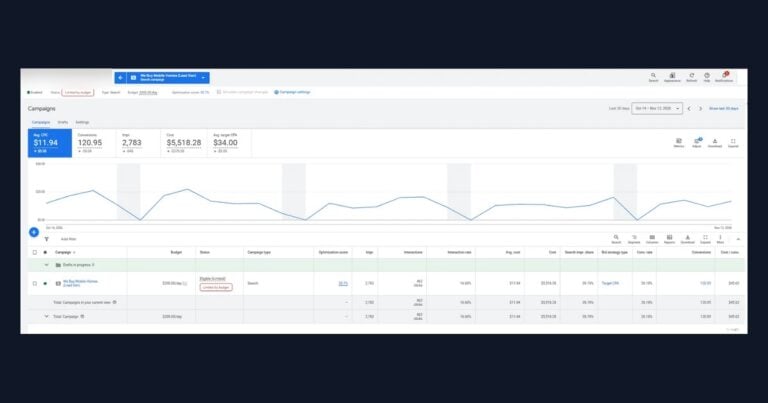
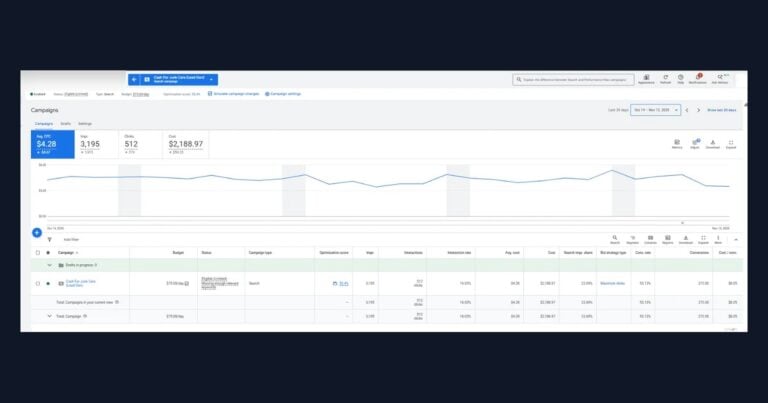
Our published home-services examples show that distinction. An HVAC company’s Google Ads campaign recorded 10 leads in 14 days (Sep 11 to 24, 2026) at $183.96 per lead. A water damage restoration company’s Google Ads campaign recorded 27 leads in 30 days (Sep 3 to Oct 2, 2026) at $164.14 per lead. These are Google Ads results, not Local Services Ads results, lead-sale prices, or plumbing benchmarks. Results vary by market, season, and budget. See the screenshots on our case studies page.
Clicks Geek is a Google Premier Partner. Our Google Ads agency services cover managed campaigns for local service businesses. If you need a broader channel plan, see our lead generation services.
How to test a lead source in 30 days
Start with a defined service area and a job category your team can fulfill. Set up source tracking before delivery begins. For each inquiry, record whether it was valid, contacted, booked, and sold. Keep the reason when a lead fails qualification.
Review call handling as well as lead quality. Missed calls and slow follow-up can make a useful source look unproductive. Separate those operational issues from inquiries that were never suitable for your business.
Compare cost per booked job and cost per sold job, not just cost per lead. Review the value and margin of the resulting work. A 30-day test is a review checkpoint, not a promise that every job will close within that window. Longer sales cycles need follow-up before a final decision.
Choose the source that matches how you want to grow
Start with Local Services Ads if your trade is eligible and the exclusive pay-per-lead model fits your needs. Consider an exclusive seller only after confirming delivery, billing, and pause terms. Treat shared marketplaces as a separate buying choice. Use owned Google Ads when campaign control matters more than paying for a defined lead event.
Here, the decision stays focused on exclusive delivery and the difference between buying leads and owning campaigns.
Tell us about your contracting business. We’ll walk you through how the work is set up and what’s realistic for your trade and service area.
Ready to talk through an owned lead model for your trade?