In 292 real phone conversations to auto detailing and auto tinting businesses, price shoppers were not worse leads. Callers who asked “how much?” booked about as often as everyone else: 46% of the calls with a clear outcome, against 44% for all other callers. The calls that turned into jobs had a few things in common. The caller heard a real number, heard what was included, and was asked to pick an actual time.
Below is what we found, how we counted it, and a phone script you can hand to whoever answers your phone, whether that is a front desk at an auto detail shop or a mobile detailer taking calls from the truck.
Why we looked at price shopper calls
In the calls we studied, about half of the real conversations with auto detailing businesses (144 of 292) included a price question. It is easy to write those callers off as tire kickers who will just go with the cheapest option.
We wanted to know if that is true. So we looked at real phone calls to auto detailing and auto tinting businesses that track their calls with CallRail. We sorted the price shoppers from everyone else. Then we compared the calls that ended in a booking with the calls that did not.
Where the data came from
The calls are CallRail call tracking data from auto detailing and window tint businesses that Clicks Geek works with. No customer names, phone numbers, places or business details were kept from the calls. Every example line below is paraphrased and scrubbed. The time frame is November 15, 2025 to November 14, 2026.
- 4,551 inbound calls to detailing and tint businesses.
- 382 of those calls had a written transcript. Only some businesses had CallRail’s call transcripts turned on, and most of the transcripts came from about five of them.
- 292 of the transcripts were real conversations. We counted a call as a real conversation if it lasted at least 30 seconds and had at least 6 back-and-forth turns.
- About 4 out of 5 of those conversations (236 of 292) happened between July and November 2026.
How we sorted the calls
Price shoppers. A call counted as a price-shopper call if the conversation used price-question phrases like “how much,” “what’s the price,” “what do you charge,” “can I get a quote,” or “ballpark.” Using that rule, 144 of the 292 conversations (49%) were price-shopper calls.
Booked or not. If the business tagged the call “Schedule booked” in CallRail, we counted it as booked. If there was no tag, we read CallRail’s AI summary of the call with keyword rules. Phrases like “appointment was scheduled” counted as booked. Phrases like “said they would call back” counted as not booked.
About half the calls (144 of 292) did not clearly say either way. So we show two numbers:
- Booked out of all calls. This counts unclear calls as not booked, so it runs low.
- Booked out of calls with a clear outcome. This leaves the unclear calls out. It is the fairer comparison, but it uses fewer calls.
Do price shoppers book less often?
| Group | Calls | Booked | Calls with a clear outcome | Booked, out of all calls | Booked, out of clear outcomes |
|---|---|---|---|---|---|
| All real conversations | 292 | 67 | 148 | 23% | 45% |
| Price shoppers | 144 | 32 | 69 | 22% | 46% |
| Everyone else | 148 | 35 | 79 | 24% | 44% |
| Price shopper who heard a number | 100 | 26 | 50 | 26% | 52% |
| Price shopper who did not hear a number | 44 | 6 | 19 | 14% | 32% |
Price shoppers booked about as often as everyone else. Out of calls with a clear outcome, it was 46% for price shoppers and 44% for everyone else. That gap is small enough that it could be chance. In this data, asking “how much?” did not mark someone as a bad lead.
Price shoppers who heard an actual number on the call booked more often than the ones who did not (52% versus 32% of clear outcomes). That group is small, with only 19 clear outcomes on the “no number” side. Treat it as a sign worth paying attention to, not proof.
What the calls that booked had in common
These are patterns, not proof of cause. Some callers were ready to book before they ever dialed. Still, the gaps below are large. The biggest ones showed up both in the full year and in the July to November calls on their own.
1. They asked for the booking after giving the price
This was the biggest gap in the data.
| What happened on the call | Calls | Booked | Clear outcomes | Booked, out of clear outcomes |
|---|---|---|---|---|
| Gave a price and asked to book | 40 | 21 | 26 | 81% |
| Gave a price and did not ask | 96 | 13 | 41 | 32% |
Most calls that included a price never got to the booking ask. In 96 of the 136 calls where a price was given (71%), we could not find any booking ask at all. These numbers cover every detailing call that included a price. Most of them (at least 100 of 136) were also price-shopper calls.
Here is the same idea across all 292 conversations. When the person on the phone asked for the booking in any way, 30 of 36 clear outcomes booked (83%). When they never asked, 37 of 112 clear outcomes booked (33%).
2. They named a real time
Calls where the person on the phone named an actual time, like “1 o’clock” or “tomorrow morning,” did best of all. 28 of 30 clear outcomes booked (93%), out of 42 calls. Calls without a named time booked 39 of 118 clear outcomes (33%).
A named time gives the caller something easy to say yes to. “What day works for you?” makes them do the planning.
Paraphrased lines from calls that booked:
- “Today? I could probably get you in around one. Does that work for you?”
- “I can do Thursday or Friday. Today I’m full.”
- “We have an opening tomorrow. What time would you like us to come out?”
3. They offered today when they could
When the person on the phone offered same-day service and asked to book, 23 of 27 clear outcomes booked (85%), out of 44 calls. This is a small group, but it points the same way as the named-time result.
4. They told the caller what was included
We did not have a clean count for this one, so treat it as our read of the calls. The booked calls we read often listed what came with the service right next to the price. Two paraphrased lines from separate booked calls:
- “Our full detail on an SUV includes the full exterior, the wheels and tires, a hand wash and a wax on the paint, and then the interior.”
- “Since we’re mobile, we come to you. I’m going to put you down for Tuesday.”
Together they name what is included, remove a hassle, and book a day.
What lost the call
1. Giving a price and then going quiet
A price followed by “okay, thanks for calling” booked 13 of 96 calls (14% of all calls, 32% of clear outcomes). One scrubbed example went like this. The caller asked about a coating job. The detailer gave one price, then a second price with an add-on. The call ended with no time offered, and it did not book.
2. Folding on “let me call you back”
When the caller said something like “let me think about it” or “I’ll call you back,” only 6 of 43 calls booked (14% of all calls, 6 of 15 clear outcomes). In the examples we read, the reply was often a quick “okay, sounds good” and the call was over. This group is small, so read it as a warning sign.
3. Price pushback with no plan
Callers said something like “that’s too much” or “can you do better” on 17 calls. Only 2 of those booked, and only 8 had a clear outcome. That is too few calls to measure a fix. In the few losing calls we read, the detailer repeated the package, said they would see what they could work out, or said nothing. We did not see them ask what the caller actually needed or offer a smaller package.
4. Missing the call
In the last 30 days of the data, 38 of 557 inbound detailing calls (7%) were not answered. Of those 38 missed callers, 32 (84%) did not reach the business again within 7 days. Over the full 12 months, 539 of 4,551 calls (12%) went unanswered. The 30-day group is small, but the message is simple. A missed call is often a lost call.
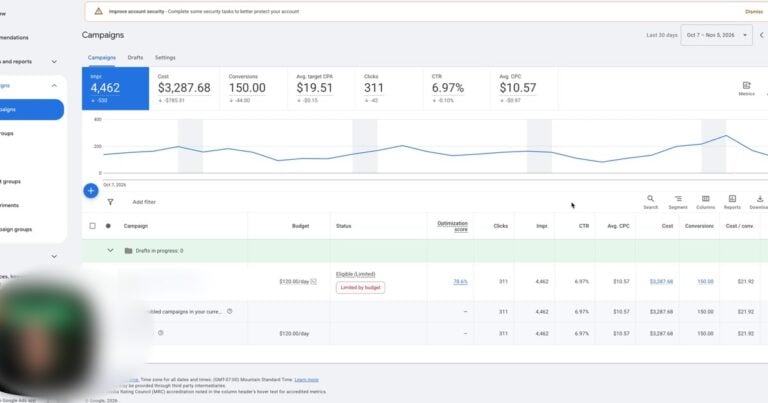
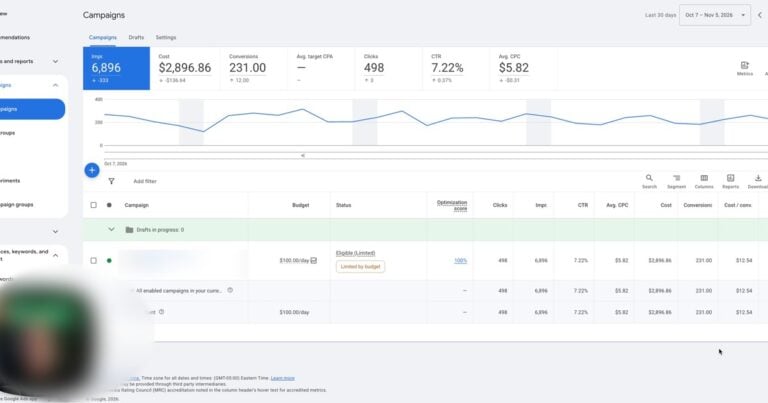
Every habit in this piece starts with a ringing phone. If you want more calls from people looking for auto detailing or tint work in your area, have our team run Google Ads for your detailing business.
What we could not measure
A few things we wanted to test were not in the data. The script below still uses them, based on our judgment, so here is which parts are measured and which are not.
- We did not measure whether asking about the vehicle before giving a price helps. The data shows what was said on a call, not the order.
- We did not measure a price range against a single number. We only measured “gave a number” against “did not.”
- We did not measure how fast the price came up, or how call length relates to booking.
- “I’m calling around for quotes” only came up in 2 detailing calls, which is too few to say anything.
- “I’d have to see it” or “send me pictures” came up in 27 calls, but 21 of them had an unclear outcome. So we can’t say if it helps or hurts.
A phone script for the “How much?” caller
This script is built on the patterns above. The parts about asking for the booking, naming real times and giving a number come straight from the data. The order of the questions, the range, and the objection lines are our recommendations. Fill in the brackets with your own services, prices and open times. Tint calls were counted with detailing, so an auto tint shop can use the same script with its own film packages in the brackets.
1. Opening
“Thanks for calling [shop name], this is [your name]. What can we help you with today?”
If they lead with price:
“Happy to help with that. Prices depend on the vehicle and what it needs, so let me ask you two quick questions and I’ll get you a real number.”
2. Discovery questions
Keep this short. Two or three questions is plenty.
“What are you driving?”
“How’s the inside looking? Pretty normal, or are we talking pet hair, stains, or smells?”
“Are you after a good clean, or more of a shine and protection job for the paint?”
If you are mobile:
“And where would we be coming to? I just want to make sure you’re in our area.”
3. Answering “How much?”
Give a range for their vehicle. Say what is included. Then go straight to two real times.
“For a [vehicle size] with [condition], our [package name] usually runs [low] to [high]. That includes [2 or 3 things that matter most to them]. Where you land in that range depends on [what moves the price]. I’ve got [day and time 1] or [day and time 2]. Want me to put you down for one of those?”
Don’t stop after the price. The ask is the part that most often goes missing.
4. “That’s too expensive”
Ask a question before you change anything.
“I hear you. Is it the total, or is there part of the package you don’t really need?”
If they only need part of it:
“We can do just the [smaller package]. That one’s [price]. It covers [what it covers]. I can still do [time 1] or [time 2].”
If they are comparing to a lower price:
“That makes sense to check. When you compare, look at whether it includes [your included items]. Ours includes all of that. Want me to hold [time] while you think it over?”
Only offer a discount if you have a set one you’re okay with, and only after a real objection. Tie it to a time.
5. “I’m just calling around”
“Smart move. Can I ask what matters most to you, the price, the timing, or how it turns out?”
Then answer what they care about and offer a hold:
“I can pencil you in for [time] so you don’t lose the spot. If you find something that works better, just text me and I’ll open it back up.”
6. “Let me think about it” or “I’ll call you back”
Don’t just say “sounds good.” Find out what’s holding them up and set the next step.
“Of course. Is it the price or the timing you’re thinking over? Happy to help with either.”
“How about this. I’ll hold [time] for you until [a set time today]. I’ll send you a quick text with the details so you have it.”
7. The booking ask
Use real times every time you ask. Two choices are easier to answer than an open question.
“I’ve got [time 1] or [time 2]. Which one works better?”
If today is open, say so:
“I actually have an opening this afternoon around [time]. Want it?”
Once they pick, confirm the details out loud: the vehicle, the package, the price range, the address if mobile, and the time.
8. Follow-up text if they don’t book
Only text people who called you and agreed to hear back. Keep each message short and send no more than two. The FCC’s consumer guide to calls and texts explains the consent rules for automated texts to cell phones.
Same day:
“Hi [first name], it’s [your name] from [shop name]. Here’s what we talked about: [package] for your [vehicle], usually [range]. I’ve still got [time 1] or [time 2] open. Want one?”
Next day:
“Hi [first name], just checking back on the detail for your [vehicle]. Any questions about what’s included? Happy to help.”
If you miss a call, text back as soon as you can:
“Hi, it’s [your name] from [shop name]. Sorry we missed your call. What can we help you with?”
Methodology and limitations
- Source. CallRail call records pulled with read-only access from detailing and tint businesses Clicks Geek works with. Calls were grouped by industry mostly from the business name. A small number of calls from businesses with a general name were grouped by the words used on the call. That means a few non-detailing calls, like window washing, may be mixed in. Window tint calls are included with detailing.
- Real conversations only. Behavior numbers use the 292 transcribed calls that lasted 30 seconds or more with 6 or more turns. Only some businesses had transcripts on, and most transcripts came from about five businesses. One or two businesses’ habits can move the numbers.
- Outcome. “Booked” came from CallRail’s “Schedule booked” tag when a business used it, or from keyword rules on CallRail’s AI call summary. About half the calls (144 of 292) had no clear outcome. We show results both ways.
- Labels. Price shopper, booking ask, named time and the other labels came from keyword rules on the transcripts. These rules miss some phrasings and catch a few wrong ones. Booking asks are probably undercounted.
- Price-shopper detail. The price-shopper rule looked at the whole conversation, not just the caller’s first line. A few calls may count because price came up later.
- Correlation, not cause. These are calls that already happened. Callers who were ready to book may have drawn out more booking asks. We can’t rule that out.
- Small groups. Anything with fewer than 30 clear outcomes is a small group. We flagged those in the text.
- Not tested. Asking about the vehicle before the price, using a range instead of one number, time to first price, and call length were not measured. Those parts of the script are our judgment.
- Your results will vary. They depend on your market, your prices, your service and who answers your phone.
What this means for your phone
Price shoppers in this data were not worse leads. They booked about as often as anyone else. The calls that turned into jobs had a few things in common. The caller heard a real number, heard what was included, and was asked to pick an actual time. Those habits are easy to train, and you can start with the script above on your next call.
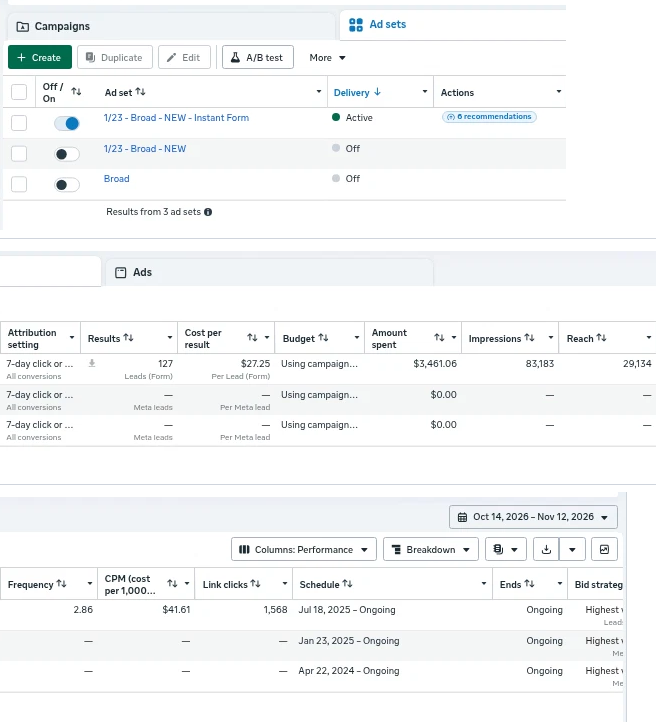
The script only helps once the phone rings. Our auto detailing Facebook ads case study shows what one local detailer’s first 30 days of quote requests looked like, and our guide to setting up call tracking for a local business covers how to see which ads bring in your callers. For the search side, see how to get more phone calls from Google Ads, or read how our lead generation service for local businesses works.
Google Ads for auto detailing and tint businesses
The script works best when the phone keeps ringing. Clicks Geek runs Google Ads for auto detailing and tint businesses in ad accounts you own, with call and form tracking so you can see which ads bring in callers. Tell us about your business and the area you serve.