You’re spending money on Google Ads. Your social media posts are going out like clockwork. Maybe you’ve even hired someone to write blog posts. But when you look at your bank account, the math doesn’t add up. Traffic is up, clicks are happening, but actual customers? Not so much.
Here’s what’s probably going on: your marketing efforts are disconnected. Your ads bring people in cold, your website doesn’t nurture them, and by the time they’re ready to buy, they’ve forgotten you exist. You’re not alone in this. Most local businesses run marketing like a collection of separate projects rather than a coordinated system designed to turn strangers into customers.
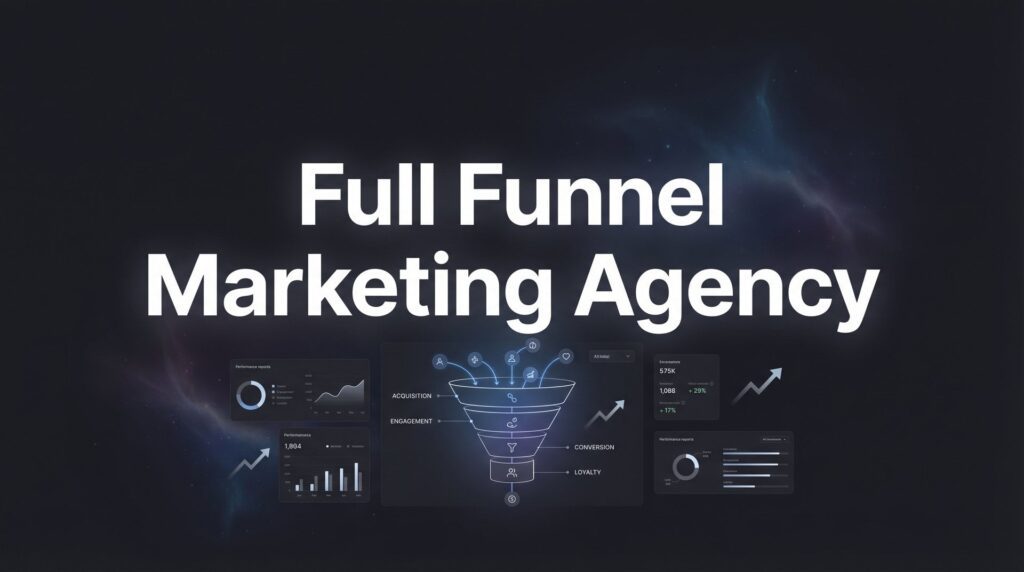
This is where full funnel marketing changes everything. Instead of throwing tactics at the wall and hoping something sticks, a full funnel approach maps your marketing to how people actually make buying decisions. It guides prospects from “I’ve never heard of you” all the way through to “I’m ready to buy” and beyond to “I’m telling my friends about you.” The difference between this and what most businesses do? Integration. Strategy. A plan that connects the dots instead of leaving gaps everywhere.
By the end of this article, you’ll understand exactly what a full funnel marketing agency does differently, how the stages of the customer journey work together, and whether this approach makes sense for where your business is right now. No fluff, just the practical breakdown you need to make a smarter decision about your marketing investment.
Breaking Down the Marketing Funnel: From Stranger to Loyal Customer
Think about the last significant purchase you made. Maybe it was a new HVAC system, a contractor for home renovations, or switching to a new accountant. You didn’t see one ad and immediately hand over your credit card, did you? You probably went through stages: first hearing about options, then researching and comparing, then finally making a decision based on trust and value.
That’s the marketing funnel in action. It’s not some abstract concept, it’s literally how human beings make decisions when money is on the line.
The funnel breaks down into three core stages, and each one requires completely different marketing.
Top of Funnel (Awareness): This is where people don’t know you exist yet. They might not even know they have a problem you can solve. At this stage, your job is simply to get on their radar. For a local plumber, this might be a blog post titled “5 Signs Your Water Heater Is About to Fail” that ranks in Google. For a landscaping company, it could be a Facebook video showing a stunning backyard transformation. The goal isn’t to sell anything, it’s to be discovered by people who fit your customer profile.
Middle of Funnel (Consideration): Now they know you exist, and they’re evaluating whether you’re the right fit. They’re comparing you to competitors, reading reviews, maybe visiting your website multiple times. This is where most local businesses completely drop the ball. Someone visits your site once, leaves, and you never reconnect with them. Middle of funnel marketing fills this gap with retargeting ads, email sequences that provide value, case studies, and content that answers “why choose us?” questions. You’re building trust and staying top of mind while they make up their mind.
Bottom of Funnel (Conversion): They’re ready to buy, they just need the final nudge. At this stage, they’re searching for your services directly, they’re on your contact page, they’re comparing your pricing to one or two other options. Bottom of funnel marketing includes high-intent search ads (someone Googling “emergency plumber near me”), conversion-optimized landing pages, clear calls to action, and easy ways to take the next step. This is where you close the deal.
Here’s why this matters: if you only do bottom of funnel marketing (most local businesses), you’re fishing in a tiny pond of people ready to buy right now. Competition is fierce and expensive. If you only do top of funnel marketing (content, social media), you’re generating awareness but never converting it into revenue. Full funnel marketing connects all three stages into a system where awareness feeds consideration, consideration feeds conversions, and conversions feed growth.
Let’s make this concrete. Imagine you run a local HVAC company. Someone sees your educational video about energy efficiency on Facebook (top of funnel). Two weeks later, they see a Facebook remarketing ad featuring a customer testimonial about your fast service (middle of funnel). A month after that, their AC breaks on a hot Saturday, they Google “AC repair near me,” and your ad appears with a strong offer and five-star reviews (bottom of funnel). They call you instead of the three other companies in the search results because you’ve been building trust for weeks. That’s the funnel working as a system, not a collection of random tactics.
What Makes an Agency ‘Full Funnel’ (And Why Most Aren’t)
Most marketing agencies specialize in one thing and call it a day. You’ve got SEO agencies that only care about rankings. PPC shops that optimize ad spend but ignore everything after the click. Social media experts who measure success in likes and shares. They’re good at their lane, but they’re not thinking about your entire customer journey.
A full funnel marketing agency operates completely differently. They start with the end goal, usually revenue or qualified leads, and then work backward to figure out what needs to happen at each stage to achieve it. They don’t push one channel because it’s what they’re comfortable with. They build an integrated strategy where channels support each other.
Here’s what that looks like in practice. A PPC-only agency runs Google Ads to your homepage and measures success by cost per click. A full service digital marketing agency runs Google Ads to a conversion-optimized landing page, sets up retargeting for people who didn’t convert, captures emails for follow-up nurturing, and tracks which combination of touchpoints actually leads to a sale. They’re not just driving traffic, they’re building a system that turns traffic into customers.
The difference shows up in how they talk about results. Single-channel specialists report metrics like impressions, clicks, rankings, and engagement. Full funnel agencies report metrics like cost per acquisition, customer lifetime value, and revenue attributed to marketing. They care about business outcomes, not vanity numbers.
Data and attribution are where full funnel agencies really separate themselves. They use tracking and analytics to understand the customer journey across multiple touchpoints. Someone might discover you through a blog post, come back later via a Facebook ad, and finally convert after clicking a Google search ad. A single-channel agency would give all the credit to whichever touchpoint they manage. A full funnel agency sees the whole picture and understands that all three touchpoints contributed to the conversion.
This matters because it changes how budget gets allocated. If you only measure last-click conversions, you’ll pour all your money into bottom-funnel tactics and wonder why your pipeline is drying up. Full funnel agencies invest across all stages because they understand that top-of-funnel awareness today becomes bottom-funnel conversions next month.
Most agencies aren’t full funnel because it’s harder. It requires expertise across multiple channels, sophisticated tracking, and the ability to think strategically instead of just executing tactics. It’s easier to sell “we’ll get you ranked on Google” than “we’ll build an integrated system that aligns your marketing to how your customers actually buy.” But the results speak for themselves. Businesses that work with true full funnel agencies see better lead quality, more predictable growth, and marketing that actually scales instead of hitting a ceiling.
The Real Benefits: Why Integrated Marketing Outperforms Fragmented Efforts
Let’s talk about what actually changes when you stop running disconnected campaigns and start thinking full funnel. The benefits aren’t theoretical, they show up in your bottom line.
Better Lead Quality: When someone converts after only one touchpoint, they’re often tire-kickers. They clicked an ad, filled out a form on impulse, and aren’t actually serious about buying. When someone converts after multiple touchpoints, they’ve been educated, they understand what you offer, and they’re genuinely interested. Full funnel marketing naturally filters out low-quality leads because people who aren’t serious drop off before reaching the bottom of the funnel. The leads you do get have been warmed up through content, retargeting, and trust-building. They’re easier to close and more likely to become long-term customers.
Cost Efficiency Through Smart Budget Allocation: Most businesses overspend at the bottom of the funnel because that’s where competition is most intense. Everyone is bidding on the same high-intent keywords, driving up costs. Full funnel marketing spreads budget across all stages, investing in cheaper top-of-funnel awareness that feeds the pipeline over time. Understanding digital marketing agency pricing helps you see how this budget allocation works in practice. A dollar spent on educational content that ranks in Google might generate traffic for years. A dollar spent on a bottom-funnel search ad generates one click that expires in seconds. Both have their place, but the mix matters. Full funnel agencies optimize budget allocation based on what stage needs more fuel, not just where the immediate conversions are.
The Compounding Effect: This is where full funnel marketing gets really powerful. When you only do bottom-funnel tactics, your results are linear. Spend more, get more conversions. Stop spending, conversions stop. When you invest across the entire funnel, you create compounding effects. Top-of-funnel content you create this month builds your audience. That audience gets nurtured through the middle of the funnel. Some convert now, others convert later, and both groups might refer others. Six months from now, you’re getting conversions from content you created today, while also running new campaigns. Your marketing starts working for you even when you’re not actively spending on ads.
Here’s a practical example. Two HVAC companies each spend five thousand dollars a month on marketing. Company A spends it all on Google Ads for emergency repair keywords. They get calls, they book jobs, but the moment they pause ads, everything stops. Company B splits their budget: two thousand on educational content and local SEO, one thousand on retargeting and email nurturing, two thousand on high-intent search ads. Month one, Company A probably gets more immediate calls. But by month six, Company B is getting calls from organic search, from retargeted prospects who saw them weeks ago, and from search ads. Their cost per acquisition is lower because they’re not competing solely at the most expensive stage of the funnel. That’s the compounding effect in action.
Full funnel marketing doesn’t just get you more customers, it gets you better customers at a lower cost with more predictable, sustainable growth. That’s why businesses that make the shift rarely go back to fragmented, single-channel tactics.
Full Funnel Tactics in Action: Channel Strategies by Funnel Stage
Let’s get specific about what full funnel marketing actually looks like in practice. Each stage of the funnel requires different channels, different messaging, and different success metrics. Here’s how it breaks down.
Top of Funnel: Building Awareness
At this stage, you’re reaching people who don’t know you exist. The goal is visibility and education, not immediate sales.
Content Marketing: Blog posts, videos, and guides that answer questions your ideal customers are asking. A roofing company might create content around “how to spot roof damage after a storm” or “how long should a roof last.” This content ranks in search engines, gets shared on social media, and positions you as an expert. It’s not selling, it’s helping, which builds trust from the very first interaction.
Display Advertising: Banner ads on websites your target audience visits. These aren’t designed to get clicks, they’re designed to build brand recognition. Someone sees your ad three or four times over a couple weeks, and when they finally need your service, your name sounds familiar. Familiarity breeds trust, and trust drives conversions later in the funnel.
Social Media Awareness Campaigns: Facebook and Instagram ads targeted at your ideal customer demographics with engaging content. Before-and-after photos, educational videos, customer stories. The goal is to get your brand in front of people, generate engagement, and build an audience you can retarget later. You’re not asking for the sale here, you’re just getting noticed.
Middle of Funnel: Nurturing Consideration
Now they know who you are, but they’re not ready to buy yet. Your job is to stay top of mind and build trust while they evaluate options.
Retargeting Campaigns: Ads shown specifically to people who visited your website but didn’t convert. They looked at your services page, they read a blog post, but they left. Retargeting brings them back with messaging focused on trust signals: customer testimonials, case studies, your unique value proposition. You’re reminding them you exist and giving them reasons to choose you over competitors.
Email Nurturing: If someone downloads a guide, requests a quote, or signs up for your newsletter, they enter an email sequence that provides ongoing value. Educational content, answers to common objections, customer success stories. You’re building a relationship over time, not hitting them with a hard sell. When they’re ready to buy, you’re the obvious choice because you’ve been helpful and present throughout their research process.
Comparison Content and Social Proof: Blog posts or landing pages that directly address “why choose us” questions. Detailed service pages, case studies showing real results, video testimonials from happy customers. This content helps prospects differentiate you from competitors and builds confidence that you’re the right choice.
Bottom of Funnel: Driving Conversions
They’re ready to buy, they’re actively searching for solutions, and your job is to make it as easy as possible for them to choose you.
High-Intent Search Ads: Google Ads targeting keywords that signal buying intent. “Emergency plumber near me,” “AC repair same day,” “best roofing contractor in [city].” These people need help now, and your ad needs to appear with a compelling offer, clear value proposition, and easy way to contact you. This is expensive traffic, but it converts at a high rate when done right.
Conversion Rate Optimization: Your landing pages, contact forms, and website experience need to be optimized for conversions. Clear headlines, trust signals like reviews and certifications, simple forms, prominent phone numbers. Every element should guide the visitor toward taking action. Small improvements here multiply the effectiveness of all your other marketing.
Direct Response Campaigns: Offers designed to generate immediate action. Limited-time discounts, free consultations, seasonal promotions. These work best with people already at the bottom of the funnel who just need a final reason to choose you today instead of tomorrow. This is where performance marketing really shines, tying every dollar spent directly to measurable results.
The magic happens when all three stages work together. Top-of-funnel content builds your audience. Middle-of-funnel nurturing keeps you top of mind. Bottom-of-funnel tactics close the deal. Remove any stage, and the whole system becomes less effective. That’s why full funnel marketing outperforms fragmented tactics every time.
Signs Your Business Is Ready for a Full Funnel Approach
Not every business needs full funnel marketing right away. If you’re brand new and just trying to get your first customers, simple bottom-funnel tactics might be enough. But there are clear signs that you’ve outgrown single-channel marketing and need a more sophisticated approach.
You’re Getting Traffic But Not Conversions: Your website analytics show decent visitor numbers, maybe your social media has followers, but the phone isn’t ringing and the contact form isn’t filling up. This is the classic leaky funnel problem. You’re doing okay at the top, generating some awareness, but you’re not nurturing prospects or optimizing for conversions. People are slipping through the cracks at every stage. A full funnel approach plugs those leaks by ensuring prospects are guided from awareness all the way through to becoming customers. If this sounds familiar, you might want to explore why marketing isn’t working for your business to identify the specific gaps.
Your Customer Acquisition Costs Keep Climbing: You’re spending more on ads each month but getting the same or fewer customers. This happens when you’re only competing at the bottom of the funnel where everyone else is bidding up prices. You’re in a race to the bottom, and it’s not sustainable. Full funnel marketing solves this by diversifying your approach. You build awareness and nurture prospects at lower costs, which means you’re not solely dependent on expensive bottom-funnel tactics. Your overall cost per acquisition drops because you’re playing a smarter game.
You’ve Outgrown Single-Channel Tactics: Maybe you started with just Google Ads, or just SEO, or just social media, and it worked for a while. But now you’ve hit a ceiling. You’re maxed out on what that one channel can deliver, and growth has stalled. This is a sign you need to expand your strategy across multiple channels and stages. Full funnel marketing gives you new avenues for growth by tapping into different parts of the customer journey you weren’t addressing before.
If any of these sound familiar, you’re ready for a full funnel approach. The good news is that making the shift doesn’t require blowing up your existing marketing. It’s about adding the missing pieces, connecting the dots, and building a system where every stage supports the others. The businesses that make this transition see more predictable growth, better lead quality, and marketing that actually scales instead of hitting walls.
How to Evaluate a Full Funnel Marketing Agency
Not every agency that claims to do full funnel marketing actually delivers on it. Here’s how to separate the real deal from the pretenders.
Ask How They Measure Success: A true full funnel agency talks about revenue, customer acquisition cost, and lifetime value. They care about business outcomes, not just marketing metrics. If an agency leads with impressions, clicks, or rankings without connecting those to actual sales, they’re not thinking full funnel. The right answer sounds like: “We track conversions across all touchpoints, attribute revenue to specific campaigns, and optimize for your cost per acquisition and overall profitability.” A performance based marketing agency takes this even further by tying their compensation directly to results.
Ask About Their Attribution Model: How do they determine which marketing efforts are actually working? Single-channel agencies give all credit to the last click before conversion. Full funnel agencies use multi-touch attribution to understand the entire customer journey. They can tell you that someone discovered you through content, came back via a Facebook ad, and converted after a search ad, and they value all three touchpoints appropriately. Implementing proper call tracking for marketing campaigns is essential for this kind of attribution. If they can’t explain their attribution approach, they’re not equipped to manage a full funnel strategy.
Red Flags to Watch For: Be wary of agencies that push one channel regardless of your business model or goals. If every solution involves more SEO, or more ads, or more social media without considering how it fits into a broader strategy, they’re a specialist pretending to be a strategist. Another red flag is agencies that can’t explain how top-of-funnel and middle-of-funnel efforts contribute to bottom-line results. If they dismiss awareness and nurturing as “brand building” without tying it to revenue, they don’t understand full funnel marketing.
Green Flags That Signal the Real Deal: Look for agencies that emphasize conversion tracking and make sure it’s set up correctly before launching campaigns. They should talk about testing, optimization, and continuous improvement across all stages of the funnel. They should ask detailed questions about your customer journey, your sales process, and what happens after a lead comes in. Full funnel agencies care about the whole picture, not just their piece of it. They should also provide reporting that shows how different channels and touchpoints work together, not just isolated metrics for each campaign.
The best way to evaluate an agency is to ask them to walk you through how they’d approach your specific business. A full funnel agency will map out a strategy that addresses awareness, consideration, and conversion. They’ll explain how channels support each other, how they’ll track performance, and what realistic outcomes look like based on your market and budget. A single-channel specialist will pitch their one solution and hope it fits. The difference becomes obvious pretty quickly. Before you commit, make sure you understand marketing agency fees explained so you know exactly what you’re paying for.
Putting It All Together
Full funnel marketing isn’t about doing more marketing. It’s about doing marketing that actually connects to how people make buying decisions. Most local businesses are stuck running disconnected campaigns: a little SEO here, some Google Ads there, maybe a social media post when they remember. Each tactic exists in a silo, and the result is wasted budget, inconsistent results, and growth that stalls the moment you stop spending.
The businesses that break through this ceiling are the ones that align their marketing to the customer journey. They build awareness with content and advertising. They nurture consideration with retargeting and email. They close conversions with high-intent search ads and optimized landing pages. Every stage feeds the next, creating a system that compounds over time instead of resetting every month.
The payoff shows up in three ways: better lead quality because prospects are educated and warmed up before they reach out, lower customer acquisition costs because you’re not overpaying to compete solely at the bottom of the funnel, and more predictable, sustainable growth because your marketing works as a system instead of a collection of random tactics.
If you’re getting traffic but not customers, if your ad costs keep climbing, or if you’ve outgrown single-channel tactics and need a smarter approach, full funnel marketing is the answer. It’s not magic, it’s just strategy. It’s marketing that respects how people actually buy and builds a system around that reality.
Tired of spending money on marketing that doesn’t produce real revenue? We build lead systems that turn traffic into qualified leads and measurable sales growth. If you want to see what this would look like for your business, we’ll walk you through how it works and break down what’s realistic in your market.
Want More Leads for Your Business?
Most agencies chase clicks, impressions, and “traffic.” Clicks Geek builds lead systems. We uncover where prospects are dropping off, where your budget is being wasted, and which channels will actually produce ROI for your business, then we build and manage the strategy for you.