You’re about to invest 30-60 minutes of your time in a digital marketing free consultation. What you do before, during, and after that call will determine whether you walk away with a clear path to profitable growth—or just another sales pitch that leaves you more confused than when you started.
Here’s what happens to most business owners: They schedule the consultation, show up unprepared, answer vague questions with vague answers, and leave with a proposal they can’t properly evaluate. Three months later, they’re either locked into a contract with mediocre results or still sitting on the fence, paralyzed by indecision while their competitors capture the market.
The difference between a consultation that changes your business and one that wastes your time isn’t the agency—it’s your preparation. When you walk into that meeting with your data organized, your goals crystallized, and your questions ready, everything shifts. Suddenly, you’re not being sold to. You’re conducting a strategic interview that reveals exactly who can deliver results and who’s just good at talking.
This guide gives you the exact framework to extract maximum value from your digital marketing free consultation. You’ll learn what data to gather beforehand, which questions separate real expertise from sales fluff, and how to evaluate proposals objectively rather than emotionally. Whether you’re exploring PPC campaigns, SEO strategies, or complete lead generation overhauls, this process ensures you make decisions based on potential ROI, not personality or persuasive presentations.
Let’s make sure your next consultation actually moves your business forward.
Step 1: Gather Your Current Marketing Data Before the Call
Walking into a consultation without your marketing data is like visiting a doctor without describing your symptoms. Sure, they can give you general advice, but they can’t diagnose your specific problems or prescribe targeted solutions.
Start by pulling your last 90 days of Google Analytics data. You need three critical numbers: where your traffic comes from (organic search, paid ads, social media, direct), what percentage of visitors actually convert into leads or sales, and your bounce rate by traffic source. This tells the story of what’s working and what’s hemorrhaging money.
Next, document every dollar you’re currently spending on marketing and what results you’re getting. If you’re running Google Ads, note your monthly spend and how many leads or sales it generates. Same for Facebook ads, SEO services, or any other marketing investment. Don’t hide the ugly numbers—agencies can’t help if they don’t know what’s broken. Understanding digital marketing agency pricing benchmarks can help you evaluate whether your current spend is reasonable.
Here’s where most business owners get stuck: they don’t know their numbers. If that’s you, get rough estimates. Check your bank statements for marketing expenses. Look at your CRM or lead tracking system for conversion data. Even ballpark figures give an agency something to work with.
Now identify your top three services or products by profit margin. This matters more than most business owners realize. Marketing dollars should flow toward your most profitable offerings first. If you’re spending 80% of your budget promoting a low-margin service while your high-margin service gets ignored, you’re leaving serious money on the table.
Calculate your customer acquisition cost and lifetime customer value. Customer acquisition cost is simple: total marketing spend divided by number of new customers. Lifetime customer value requires estimating how much an average customer spends with you over their entire relationship with your business. These two numbers determine whether your marketing can scale profitably.
Don’t have these numbers? Make educated guesses. An agency would rather work with rough estimates than complete silence. The goal isn’t perfection—it’s having enough information to have an intelligent conversation about strategy.
Success indicator: You can open a document or spreadsheet and show exactly what you’re spending, what results you’re getting, and where the biggest gaps exist. When an agency asks “What’s your current cost per lead?” you have an answer, not a blank stare.
Step 2: Define Your Specific Business Goals and Budget Reality
Vague goals produce vague results. “I want more customers” tells an agency nothing useful. “I need 20 qualified leads per month at under $100 per lead” gives them a concrete target to build a strategy around.
Define what success actually looks like for your business. Do you need more phone calls? More form submissions? More people walking through your door? More online purchases? Get specific about the action you want people to take and how many of those actions would meaningfully impact your revenue. If you’re struggling to connect marketing activities to actual sales, learning how to increase sales with digital marketing provides a clear framework.
Now comes the uncomfortable part: determining your realistic monthly marketing budget. Many business owners dodge this question during consultations, hoping the agency will tell them what they should spend. That’s backwards. You need to know what you can afford before evaluating whether an agency’s strategy fits your reality.
Here’s a framework that works: allocate 7-12% of your gross revenue to marketing if you’re established and maintaining growth. If you’re aggressively expanding or launching new services, budget 15-20%. If those percentages make you uncomfortable, you’re either underinvesting in growth or your margins need work before marketing can help.
Be honest about your budget during the consultation. Agencies can’t build effective strategies if you’re hiding financial constraints. A good agency will tell you what’s possible at your budget level—and what isn’t. If they promise the moon on a shoestring budget, you’ve found your first red flag. Understanding consultation pricing expectations helps you budget appropriately for the discovery process itself.
Clarify your timeline expectations. Do you need leads starting next week to make payroll? That requires a completely different strategy than building long-term organic visibility. PPC campaigns can generate leads within days but require ongoing spend. SEO builds compounding returns but takes months to gain traction. Your timeline determines your strategy mix.
Consider seasonal factors affecting your business. If you’re an HVAC company, your summer and winter needs differ dramatically from your shoulder seasons. If you’re a tax accountant, your Q1 strategy looks nothing like your Q4 approach. Share these patterns—they matter for budget allocation and campaign timing.
Success indicator: You can complete this sentence without hesitation: “I need [specific number] of [specific action] per month, I have [specific budget] to invest monthly, and I need to see results within [specific timeframe] because [specific business reason].”
Step 3: Prepare Your Must-Ask Questions That Reveal Agency Quality
The questions you ask during a consultation separate serious agencies from smooth talkers. Prepare these questions in advance—don’t try to think of them on the spot while someone’s pitching you.
Start with industry experience: “How many clients in [your industry] have you worked with, and what results did you achieve for them?” Generic marketing knowledge doesn’t translate well across industries. An agency crushing it for e-commerce brands might struggle with local service businesses. You want someone who understands your market’s unique challenges and opportunities.
Demand specific case studies with actual numbers. “Can you share a case study from a similar business showing the leads generated, cost per acquisition, and ROI achieved?” Pay attention to how they respond. Quality agencies pull up real data. Weak agencies speak in generalities or change the subject.
Ask about reporting and measurement: “What metrics will you track, how often will I receive reports, and what does a typical report include?” You need to know exactly how you’ll measure success and how frequently you’ll see performance data. Implementing call tracking for marketing campaigns is one way quality agencies prove their results with concrete data.
Clarify contract terms directly: “What’s your minimum commitment, what are your cancellation terms, and what happens if results don’t meet expectations?” This question makes some agencies uncomfortable—which tells you something important. Transparent agencies explain their terms clearly. Sketchy ones deflect or pressure you to “trust the process.” Many businesses now prefer contract free marketing services that offer flexibility without long-term lock-ins.
Here’s the question that reveals everything: “Who will actually manage my account day-to-day?” The person conducting your consultation might be a senior strategist or smooth-talking salesperson who disappears after you sign. You need to know if you’re getting their A-team or a junior account manager learning on your dime.
Add this bonus question: “What’s the biggest risk you see for my business, and what’s my biggest opportunity?” Quality agencies identify both. They’ll tell you what could go wrong and how they’ll mitigate it. They’ll also spot opportunities you’re missing. If they only talk about opportunities and ignore risks, they’re selling you a fantasy.
Success indicator: You have 5-7 specific questions written down that will expose red flags, reveal expertise, and give you concrete information for comparison. These aren’t softballs—they’re designed to make agencies prove their value.
Step 4: Conduct the Consultation Like a Strategic Interview
The consultation starts the moment you connect. How an agency approaches that first conversation tells you everything about how they’ll manage your account.
Let them present first, but watch what they do before pitching. Quality agencies ask detailed questions about your business: your target customers, your competitive landscape, your current marketing efforts, your goals and challenges. They’re diagnosing before prescribing. Weak agencies launch straight into their services without understanding your situation.
Take detailed notes on the specific strategies they recommend and why those strategies fit your situation. Don’t just write down “SEO and PPC”—capture the reasoning. Why those channels? Why that budget allocation? Why that timeline? The logic behind their recommendations reveals their strategic thinking.
Watch for these red flags: guaranteed rankings (“We’ll get you to #1 on Google”), vague pricing (“It depends on what you need”), or pressure tactics (“This price is only good if you sign today”). No legitimate agency guarantees rankings—Google’s algorithm doesn’t work that way. Transparent agencies provide clear pricing ranges. Professional agencies give you time to make informed decisions.
Ask them to walk through their process for the first 90 days in concrete terms. What happens in week one? What deliverables will you see in month one versus month three? What results should you expect at each stage? Vague answers like “We’ll optimize everything” mean they don’t have a real process. Specific answers with timelines show they’ve done this before.
Request they identify your biggest opportunity and biggest risk. This question forces them to demonstrate market knowledge and strategic thinking. The opportunity should be specific and actionable. The risk should be honest and realistic. If they can’t articulate both clearly, they haven’t thought deeply enough about your situation.
Pay attention to communication style. Do they listen more than they talk? Do they explain concepts clearly without drowning you in jargon? Do they admit when something won’t work for your situation? You’ll work closely with this team for months or years—make sure their communication style matches yours.
Success indicator: You leave the consultation with pages of notes about their specific recommendations, clear understanding of their process, and genuine insight into your marketing opportunities. You’re not just impressed—you’re informed.
Step 5: Evaluate the Consultation and Compare Your Options
After the consultation, the real work begins: objective evaluation. This is where most business owners fail. They make decisions based on who they liked most or who had the slickest presentation, not who can actually deliver results.
Create a scoring system. Rate each agency on four criteria: industry expertise (do they understand your market?), transparency (are they honest about pricing, timelines, and risks?), communication style (will you enjoy working with them?), and strategic thinking (did they offer insights you hadn’t considered?). A thorough digital marketing comparison framework helps you evaluate options objectively.
Compare their proposed strategies side by side. Do the recommendations align with your stated goals, or are they pushing their preferred services regardless of fit? An agency that heard “I need immediate leads” but proposes a six-month SEO-only strategy wasn’t listening. An agency that acknowledges your timeline and suggests a PPC-first approach with SEO building in the background understands strategy.
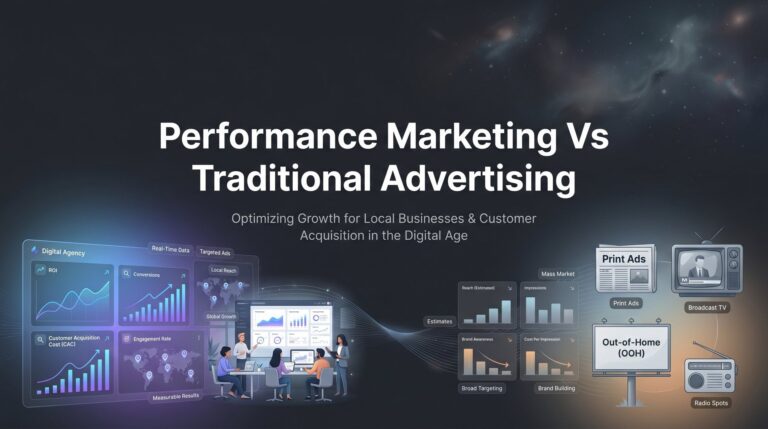
Check their credentials and reputation. Look up their Google reviews—not just the star rating, but what actual clients say about results and communication. Review their case studies for relevance to your industry. Verify certifications like Google Premier Partner status, which requires meeting spending thresholds and performance standards. Understanding what performance marketing actually means helps you evaluate whether agencies focus on results or just activities.
Consider culture fit seriously. You’ll have regular calls with this team. You’ll need to trust them with your marketing budget. If their communication style drives you crazy during the consultation, it won’t improve after you sign. If they’re pushy now, they’ll be pushy later. If they’re responsive and professional now, that’s likely how they’ll operate throughout your relationship.
Beware of the cheapest option. Effective digital marketing requires real expertise, ongoing optimization, and quality tools. Agencies pricing significantly below market rates either lack experience, outsource to low-quality providers, or will deliver minimal effort. You’re not looking for the cheapest agency—you’re looking for the best ROI.
Success indicator: You can objectively rank your options based on which agency demonstrated the strongest combination of expertise, transparency, strategic thinking, and culture fit. Price matters, but it’s one factor among many, not the deciding factor.
Step 6: Make Your Decision and Set Up for Success
You’ve evaluated your options. Now it’s time to move forward—but not until you’ve set clear expectations that protect your interests and set the relationship up for success.
Request a detailed proposal in writing. It should include specific deliverables (what they’ll actually do), timelines (when you’ll see each deliverable), and expected outcomes (what results you should anticipate at 30, 60, and 90 days). Vague proposals like “comprehensive SEO services” mean nothing. Specific proposals like “keyword research and implementation, technical SEO audit and fixes, content optimization for 10 pages” give you accountability.
Clarify communication expectations before signing anything. Who’s your primary contact? How often will you communicate? Through what channels (email, phone, project management platform)? What’s their response time for questions? These details prevent frustration later when you’re wondering why no one’s returning your calls.
Establish baseline metrics immediately. Document your current performance numbers: traffic, leads, conversions, cost per lead, revenue. You need these baselines to measure improvement accurately. Without them, you can’t tell if the agency’s efforts are working or if you’re just experiencing normal business fluctuations. A digital marketing audit can establish these baselines professionally if you’re unsure where to start.
Set a 90-day review checkpoint in writing. This isn’t about canceling if you don’t see immediate miracles—it’s about evaluating early results, discussing what’s working, and adjusting strategy if needed. Quality agencies welcome these checkpoints because they’re confident in their process. Weak agencies avoid them because they know their results won’t hold up to scrutiny.
Get everything in writing before signing. Verbal promises don’t count. If they say “We’ll include social media management,” it needs to appear in the contract. If they mention a specific reporting frequency, it needs to be documented. If they commit to a particular team member managing your account, get it in writing.
Review the cancellation terms carefully. What’s the notice period? Are there penalties for early termination? What happens to your assets (website, ad accounts, content) if you leave? Understanding exit terms before you enter prevents ugly surprises later.
Success indicator: You have a signed agreement that specifies deliverables, timelines, expected outcomes, communication protocols, and cancellation terms. Both parties understand exactly what success looks like and how it will be measured. You’re not hoping for good results—you’re set up to achieve them.
Putting It All Together
A digital marketing free consultation is only as valuable as the preparation you bring to it. Armed with your current data, clear goals, and strategic questions, you’ll quickly separate the agencies that can actually deliver results from those that just talk a good game.
Remember: the best agencies will appreciate your preparation. It signals you’re a serious client worth their best effort. The agencies that get uncomfortable with your questions or push back on your documentation requests? They’ve told you everything you need to know.
Your Pre-Consultation Checklist:
✓ 90 days of marketing data gathered and organized
✓ Budget and goals clearly defined in specific, measurable terms
✓ 5-7 must-ask questions prepared that will reveal agency quality
✓ Evaluation criteria established for objective comparison
✓ Timeline and next steps outlined for decision-making
The consultation itself is just one step in a larger process. What you do before determines the quality of insights you receive. What you do after determines whether those insights translate into profitable growth or just another folder of forgotten proposals.
Treat this process seriously. Your marketing budget represents real money that could fuel growth or disappear into ineffective campaigns. The difference between those outcomes often comes down to asking the right questions and demanding clear answers.
Tired of spending money on marketing that doesn’t produce real revenue? We build lead systems that turn traffic into qualified leads and measurable sales growth. If you want to see what this would look like for your business, we’ll walk you through how it works and break down what’s realistic in your market.
As a Google Premier Partner agency, we focus on one thing: marketing that actually converts into revenue. No vague promises. No guaranteed rankings. Just transparent strategies, clear metrics, and a commitment to ROI that matters to your bottom line.