You’re running ads. Your phone rings. But when you pick up, it’s someone asking if you can “do it cheaper,” someone three towns over who can’t use your services, or someone who just wants a free estimate with zero intention of booking. Sound familiar?
This is the quiet frustration that grinds down local business owners every single week. You’re investing real money in marketing, your team is fielding calls and responding to form fills, but the revenue isn’t reflecting any of it. The pipeline looks busy, but the bank account tells a different story.
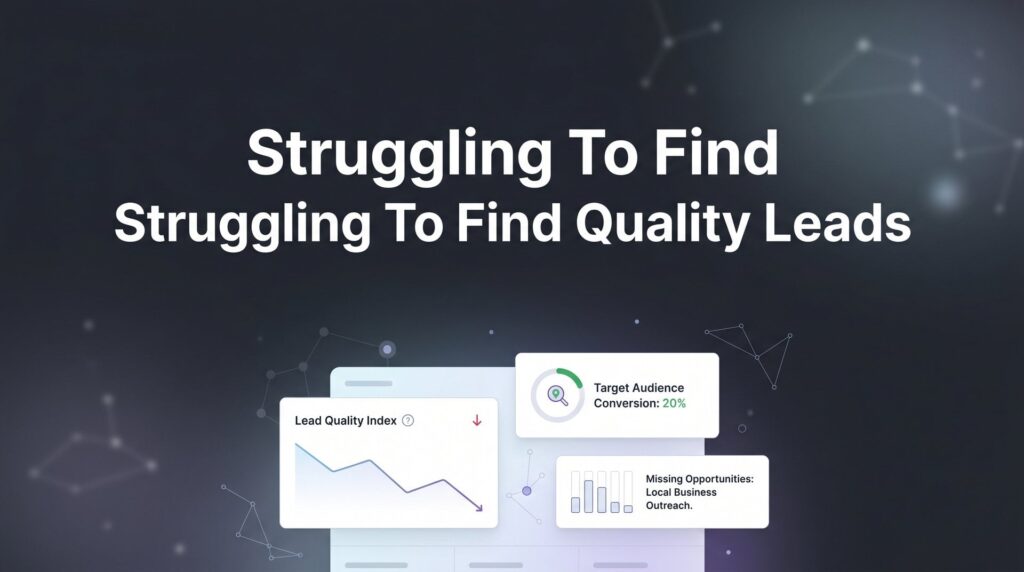
Here’s what most marketing conversations miss: struggling to find quality leads isn’t a volume problem. It’s a systems problem. The fix isn’t turning up the ad spend dial until more calls come in. It’s fixing what’s attracting the wrong people in the first place, and building the infrastructure that filters for buyers instead of browsers.
This isn’t going to be a fluffy list of vague marketing advice. What follows is a direct breakdown of why your lead quality is suffering, what it’s actually costing you, and the specific moves that turn things around. Let’s get into it.
Why Your Marketing Keeps Attracting the Wrong People
There’s a fundamental difference between lead volume and lead quality, and conflating the two is one of the most expensive mistakes a local business can make. A hundred leads a month sounds impressive until you realize that eighty of them are people who won’t buy, can’t afford you, or were never in your service area to begin with.
The root cause, more often than not, is messaging that’s too broad. When your ads and landing pages try to appeal to everyone, they end up compelling no one in particular. Vague headlines like “Affordable Services for Your Home” or “We Handle All Your Needs” don’t attract serious buyers. They attract anyone who happens to be browsing, including people with no real urgency and no real budget.
Targeting is the other half of this equation. Many local businesses set up campaigns with wide geographic targeting, broad match keywords, and demographic settings so open that the ads reach people who have no realistic reason to become customers. It feels like casting a wide net, but in practice you’re filling your pipeline with noise. If your leads are not qualified enough, this is almost always where the breakdown starts.
Poor ad targeting and weak landing pages function as open doors rather than filters. A serious buyer who lands on a vague, generic page has no reason to feel like they’ve found the right business. They bounce. Meanwhile, a low-intent browser who’s just curious clicks through, fills out a form, and becomes a lead your team has to chase down and ultimately lose time on.
Pre-qualification is the missing piece most local businesses never think to add. Before someone contacts you, your marketing should be doing the work of screening them. Specific service descriptions, clear pricing signals, defined service areas, and direct language about who you work with all act as natural filters. They tell the right people “this is exactly what I need” and tell the wrong people “this isn’t for me” before they ever pick up the phone.
The goal isn’t to repel people aggressively. It’s to attract the right ones with enough precision that your time is spent on prospects who actually convert.
The Hidden Cost of Chasing Every Lead That Comes In
Most business owners think about lead quality in terms of conversion rate. But the real cost of bad leads goes much deeper than that, and it compounds over time in ways that quietly drain your business.
Think about what happens when a low-quality lead comes in. Someone on your team has to respond, whether that’s you, a receptionist, or a sales rep. They spend time qualifying the person, explaining your services, and often going back and forth before realizing the prospect was never a real fit. That time has a dollar value, and it’s being spent on someone who was never going to buy.
No-show leads and chronic price-shoppers do something even more damaging than wasting time: they erode morale. When your team is fielding call after call from people who ghost, negotiate aggressively, or compare you to the cheapest option they found online, it creates a culture of low expectations. Your salespeople start assuming leads are bad before they even pick up the phone. That assumption bleeds into how they handle the good ones.
There’s also a false sense of pipeline health that bad leads create. When your CRM is full of contacts and your inbox has plenty of inquiries, it’s easy to feel like business is moving. But a pipeline full of unqualified prospects isn’t a healthy pipeline. It’s a distraction wearing the costume of activity. This is exactly why so many marketing campaigns are not driving sales despite looking busy on the surface.
The compounding effect is where things get particularly painful. Every dollar you spend driving low-quality traffic to your website is a dollar not going toward channels and strategies that actually produce revenue. If your ad campaigns are generating clicks from people who were never going to convert, you’re essentially paying to train your algorithm on the wrong audience. Over time, this makes your campaigns less efficient, not more.
The businesses that break out of this cycle are the ones that stop measuring success by how many leads came in and start measuring it by how many leads were worth pursuing in the first place. That shift in mindset is where real lead generation improvement begins.
Five Reasons Your Lead Generation Strategy Isn’t Working
When local business owners struggle with lead quality, there’s almost always a specific, identifiable reason. Usually it’s not one thing but a combination of gaps that stack on top of each other. Here are the five most common culprits.
Bad tracking and attribution: You can’t improve what you can’t measure. Many local businesses are running multiple marketing channels simultaneously but have no clear picture of which ones are producing their best customers. They know leads are coming in, but they don’t know whether those leads are coming from Google Ads, organic search, Facebook, or a referral source. Without that data, budget decisions are guesswork. You might be cutting the channel that’s driving your highest-value customers and doubling down on the one that’s sending you tire-kickers. Implementing proper call tracking for ad campaigns is one of the fastest ways to close this visibility gap.
Low conversion rate on landing pages: Traffic is only half the equation. If people are clicking your ads but the landing page doesn’t compel action from a qualified buyer, you’re paying for attention you can’t convert. Weak landing pages typically share a few common traits: they’re generic, they don’t speak directly to the visitor’s specific problem, they have too many distractions, and their call to action is buried or unconvincing. A visitor who’s ready to buy needs to feel immediately confident that they’ve found the right solution. If the page doesn’t deliver that in the first few seconds, they’re gone.
Targeting the wrong keywords or audiences: Broad match keywords in Google Ads can generate a lot of clicks, but many of those clicks come from searches that have nothing to do with your actual service. A plumber running broad match on “pipe repair” might end up showing ads to people searching for DIY tutorials, wholesale pipe suppliers, or pipe repair in a completely different city. Geographic over-reach has a similar effect: targeting a 50-mile radius when you realistically only serve a 15-mile area means you’re paying for traffic from people you can’t even help.
No lead qualification mechanism: Many local business websites make it equally easy for a serious buyer and a casual browser to submit an inquiry. There’s no intake form with qualifying questions, no booking system that requires real commitment, and no friction that separates motivated prospects from people who are just exploring. Adding a few targeted questions to your contact form, such as timeline, budget range, or specific service need, can dramatically improve the average quality of leads that reach your team.
Inconsistent follow-up: Leads go cold fast. Industry research consistently shows that response time is one of the biggest factors in whether a prospect converts or moves on to a competitor. Many local businesses take hours or even days to follow up on new inquiries, by which point the prospect has already booked with someone else. The businesses that win are often not the best in their market: they’re simply the ones that responded first, with a clear and confident message. Setting up marketing automation for lead gen can close this gap significantly.
What a Quality Lead Actually Looks Like
Before you can attract more quality leads, you need a clear definition of what that actually means for your business. “Quality lead” isn’t just a feeling. It’s a specific profile.
For most local service businesses, a quality lead checks four boxes: they need the service you actually offer, they’re located in your real service area, they have a realistic budget for what you charge, and they’re ready to move forward in a reasonable timeframe. Someone who ticks all four of those boxes is a qualified buyer. Someone who ticks two or three is a maybe. Someone who ticks one is a distraction.
One of the most effective ways to attract more quality leads is to reverse-engineer your best existing customers. Look at the top clients in your business, the ones who paid on time, didn’t haggle, came back for repeat work, and referred others. What do they have in common? Where did they find you? What language did they use when they first reached out? What problem were they trying to solve? The answers to those questions are a blueprint for your targeting strategy. We break this process down in detail in our guide on how to attract high quality leads.
From there, the tactical shifts become clear. Tighter geo-targeting means your ads only reach people in the areas where you actually work. Specific long-tail keywords, like “emergency HVAC repair in [your city]” instead of just “HVAC,” attract people with a defined need and real urgency. Service-specific landing pages that speak directly to one problem perform better than generic pages that try to cover everything you offer.
Price anchoring in your ad copy is an underused but powerful tool. When your ad mentions a starting price, a premium service tier, or a phrase like “for homeowners who want it done right,” you’re naturally filtering out bargain hunters before they even click. The people who do click are more likely to be serious buyers who’ve already accepted your positioning.
This is the core of what conversion optimization means in the context of lead generation. It’s not just about getting more clicks. It’s about making sure that every element of your marketing, from the ad copy to the landing page to the intake form, is doing the work of attracting and filtering for the right buyer.
Building a System That Filters, Not Just Funnels
The businesses that consistently generate quality leads aren’t doing something magical. They’ve made a fundamental shift in how they think about lead generation: from “get as many leads as possible” to “get the right leads consistently.” That shift changes everything about how you build and manage your marketing.
Systems beat tactics every time. A one-off campaign might generate a burst of leads, but a properly built system produces quality leads week after week, regardless of whether you’re paying close attention. The key components of that system aren’t complicated, but they do require deliberate setup.
Conversion-optimized landing pages: Each major service you offer should have its own dedicated landing page, written for the specific person who needs that service. The page should answer their primary question, build credibility quickly, and make the next step obvious and easy.
Call tracking and CRM integration: Every lead source should be tracked. Every call, form fill, and chat inquiry should be attributed to a specific campaign or channel and logged in your CRM. Without this, you’re flying blind on where to invest and where to cut.
Automated follow-up sequences: When a new lead comes in, an immediate automated response should acknowledge the inquiry, set expectations about next steps, and keep your business top of mind while your team prepares to follow up personally. This alone closes a significant gap that most local businesses leave wide open.
Performance reviews based on cost-per-acquisition: Stop optimizing for cost-per-click. Start optimizing for cost-per-acquisition, meaning how much it costs you to generate a lead that actually becomes a paying customer. That’s the number that connects your marketing spend to real business outcomes. If your ads are spending too much with no results, this metric is the first place to look for answers.
This is the kind of infrastructure that a performance-focused agency builds from the ground up. At Clicks Geek, we’re a Google Premier Partner, which means we operate at a level of Google Ads expertise and account management that the vast majority of agencies don’t reach. That status isn’t self-declared: it’s awarded based on performance, spend management, and client results. When you work with a team operating at that level, you’re not paying for experimentation. You’re getting proven CRO and PPC strategies built on profitable marketing campaigns implemented correctly from day one, shortcutting months of costly trial and error.
Your Action Plan for Better Leads Starting This Week
You don’t need to overhaul everything at once. The businesses that make the fastest progress on lead quality are the ones that take focused, sequential action rather than trying to fix everything simultaneously. Here’s a practical starting point.
1. Audit your current tracking. Can you tell, right now, which channel produced your last ten paying customers? If not, that’s your first priority. Set up proper call tracking and make sure your form submissions are attributed to specific campaigns.
2. Review your top-performing customers. Pull a list of your best clients from the past year. Look for patterns in where they came from, what they needed, and how they found you. This is your targeting blueprint.
3. Tighten your targeting. Narrow your geographic radius to your actual service area. Review your keyword list and cut anything that’s generating irrelevant clicks. Add negative keywords aggressively.
4. Optimize your landing pages. Pick your highest-traffic service page and rewrite it with a specific buyer in mind. Address their problem directly, add social proof, and make the call to action clear and compelling.
5. Speed up your follow-up. Set up an automated response that goes out within minutes of a new inquiry. Even a simple confirmation message that sets expectations keeps your business in the conversation while a competitor’s inquiry sits unanswered.
Struggling to find quality leads is not just part of doing business. It’s a symptom of fixable gaps in your marketing system, and every one of those gaps has a solution. The businesses that figure this out stop tolerating bad leads as an inevitable tax on growth and start treating lead quality as a standard they actively manage and improve.
Tired of spending money on marketing that doesn’t produce real revenue? We build lead systems that turn traffic into qualified leads and measurable sales growth. If you want to see what this would look like for your business, we’ll walk you through how it works and break down what’s realistic in your market.