B2B pay-per-click is a different animal than B2C. Longer sales cycles, smaller audiences, higher CPCs, and buying committees that can stretch decisions across months — all of these demand a sharper, more strategic approach to paid advertising. The wrong tool or platform can drain your budget fast with nothing but vanity metrics to show for it.
The right combination, however, can fill your pipeline with qualified leads that actually close. This listicle breaks down the top tools and platforms that B2B companies are using right now to run smarter PPC campaigns — from full-service management to audience targeting, bid optimization, and conversion tracking. Whether you’re running Google Ads, LinkedIn campaigns, or multi-channel strategies, these picks will help you spend less and close more.
1. Clicks Geek
Best for: B2B companies that want managed PPC with a focus on lead quality and real revenue
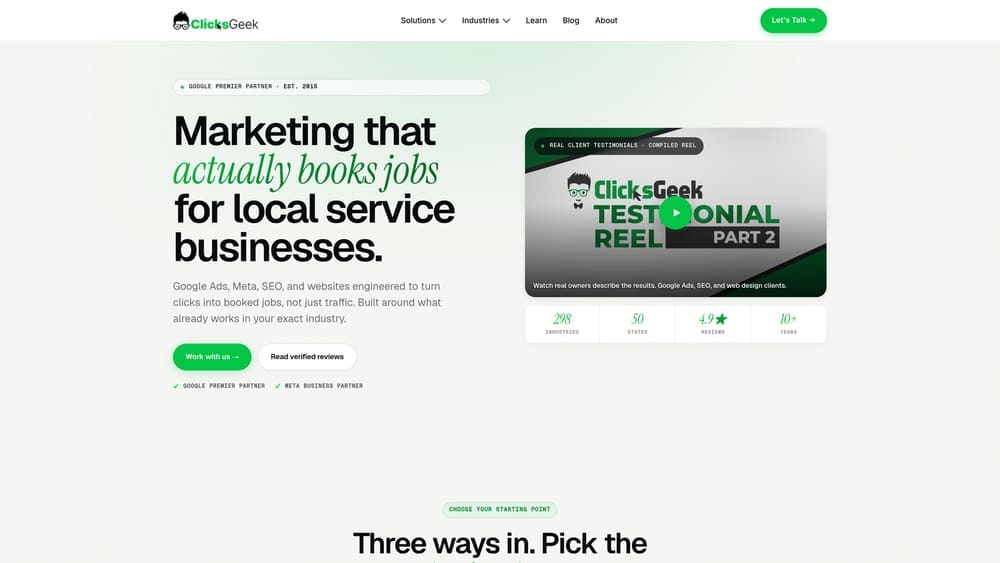
Clicks Geek is a Google Premier Partner agency specializing in PPC management, conversion rate optimization, and lead generation built around delivering measurable business outcomes, not inflated click reports.
Where This Tool Shines
Most PPC agencies optimize for clicks and impressions. Clicks Geek optimizes for cost-per-acquisition and lead quality. That distinction matters enormously in B2B, where a single closed deal can be worth thousands of dollars but a pipeline full of unqualified leads is worthless.
What sets this agency apart is that CRO is baked into every campaign from the start. Rather than sending paid traffic to a generic homepage and hoping for the best, the team works on the full conversion path: keyword strategy, ad copy, landing page performance, and reporting tied to actual business outcomes. For B2B companies where the sales cycle stretches weeks or months, that full-funnel approach is exactly what the situation demands.
Key Features
Google Premier Partner Status: Recognized by Google for demonstrated performance and expertise across client campaigns.
Conversion Rate Optimization: CRO is integrated into every campaign, not treated as an optional add-on.
Lead Quality Focus: Campaigns are structured around cost-per-acquisition and lead quality rather than raw click volume.
Full Campaign Management: Covers everything from keyword strategy and ad copy to landing page optimization and ongoing testing.
Transparent Reporting: Performance reporting is tied to actual business outcomes, not vanity metrics.
Best For
B2B companies that are tired of managing PPC in-house without consistent results, or businesses that have worked with agencies before but never seen their ad spend translate into real pipeline growth. Particularly strong for service businesses and companies with higher average deal values where lead quality matters more than lead volume.
Pricing
Custom pricing based on ad spend and scope. Contact Clicks Geek directly for a consultation to get a quote aligned with your budget and goals.
2. Google Ads
Best for: Capturing high-intent B2B buyers actively searching for solutions
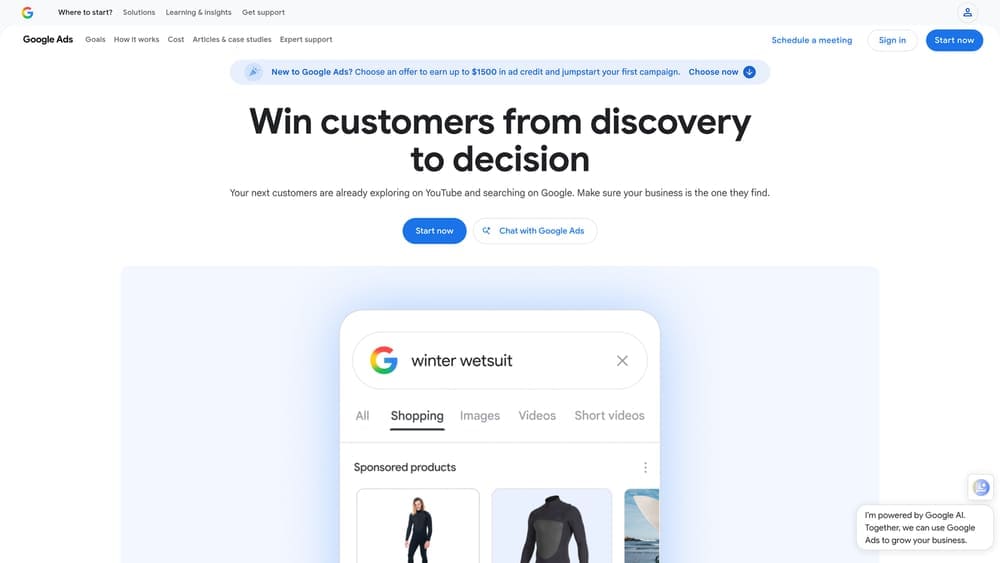
Google Ads remains the dominant search advertising platform for B2B companies targeting prospects who are already in research or buying mode.
Where This Tool Shines
Intent is everything in B2B PPC, and Google Search is where intent is most explicit. When a procurement manager types “enterprise document management software” into Google, they are signaling exactly what they need. No other platform gives you that kind of direct access to an active buyer.
Beyond search, Google’s Performance Max campaigns allow B2B advertisers to run across Search, Display, YouTube, and Gmail simultaneously with automated optimization. Combined with Smart Bidding and offline conversion imports, you can train Google’s algorithm to prioritize leads that actually close, not just form fills.
Key Features
High-Intent Search Campaigns: Target B2B keywords at the exact moment a prospect is actively searching for a solution.
Performance Max: Automated multi-channel campaigns that reach buyers across Google’s entire network.
Advanced Audience Segments: In-market audiences, custom intent segments, and customer match for precise targeting.
Offline Conversion Imports: Feed closed deal data back into Google to optimize for revenue, not just leads.
Smart Bidding: Automated bid strategies that optimize for target CPA or return on ad spend using machine learning.
Best For
Any B2B company with a defined target keyword set and enough conversion volume to train Smart Bidding effectively. Especially powerful for companies selling solutions people actively search for, such as software, professional services, and equipment.
Pricing
Self-serve, pay-per-click model with no platform fee. You set your own daily and campaign budgets and pay only when someone clicks your ad.
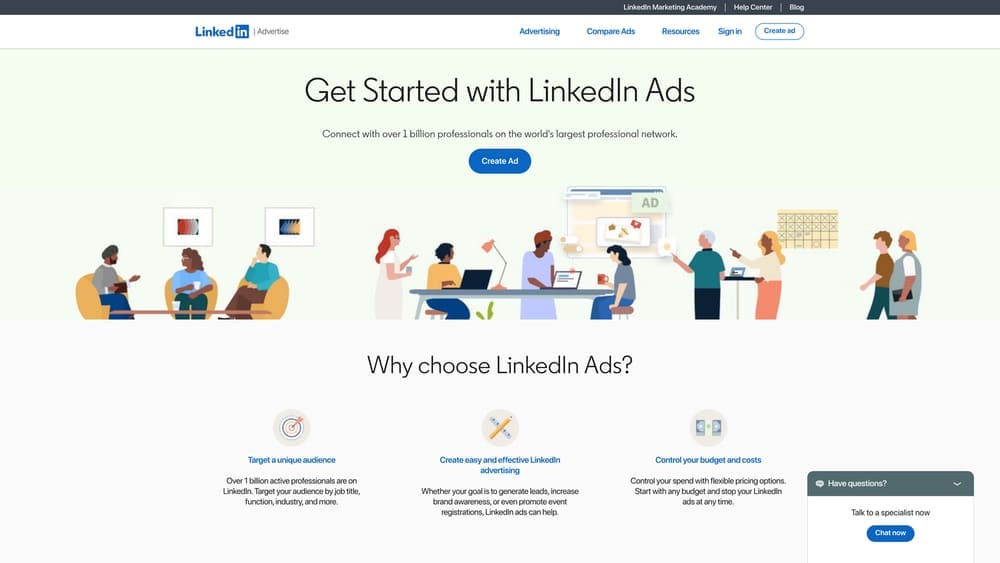
3. LinkedIn Ads
Best for: Reaching B2B decision-makers by job title, company size, and industry
LinkedIn Ads is the go-to platform when you need to put your message directly in front of the people who actually sign contracts.
Where This Tool Shines
Google captures demand. LinkedIn creates it. When your ideal buyer isn’t actively searching for your solution yet, LinkedIn’s firmographic targeting lets you reach them by job title, seniority, company size, industry, and even specific companies. For account-based marketing strategies, that precision is unmatched.
LinkedIn’s Lead Gen Forms are particularly effective for B2B. Because they pre-populate with a user’s LinkedIn profile data, friction is minimal and completion rates tend to be strong. The tradeoff is cost: LinkedIn CPCs are typically higher than Google, but the audience quality often justifies the premium when you’re trying to reach C-suite or VP-level buyers.
Key Features
Firmographic Targeting: Target by job title, company size, seniority, industry, and specific companies simultaneously.
Matched Audiences: Upload contact lists or account lists for precise ABM campaign targeting.
Lead Gen Forms: Native forms that capture leads without requiring prospects to leave LinkedIn.
Multiple Ad Formats: Sponsored Content, Message Ads, Conversation Ads, and Dynamic Ads for varied engagement approaches.
Website Demographics: Understand the professional profile of everyone visiting your site, even those who don’t convert.
Best For
B2B companies targeting mid-market and enterprise buyers, particularly those running ABM programs or selling solutions with a longer consideration period where brand presence among decision-makers matters as much as direct response.
Pricing
Self-serve with a minimum daily budget of approximately $10/day. CPCs are typically higher than Google due to audience precision, so budget accordingly for meaningful reach.
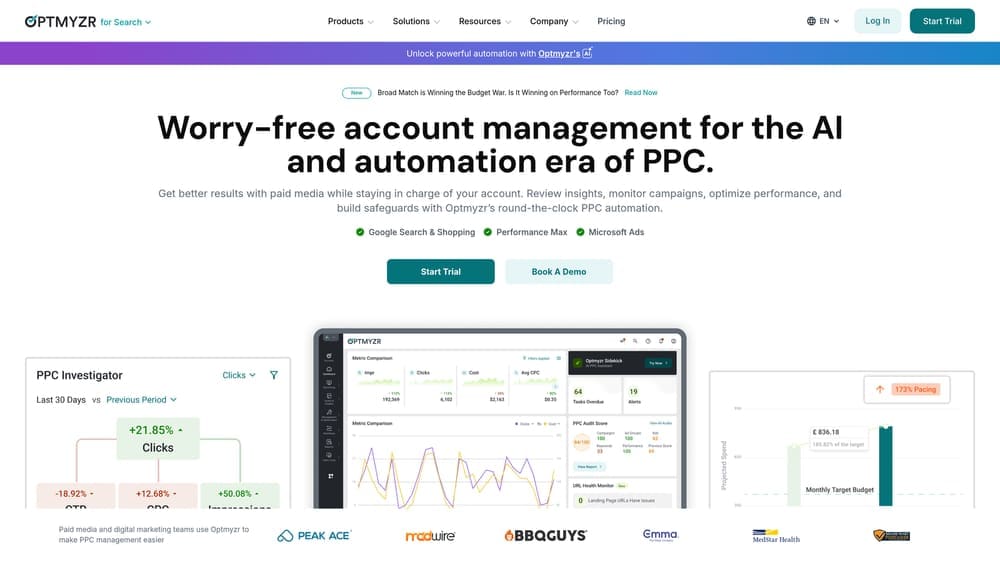
4. Optmyzr
Best for: PPC managers and agencies that need to automate optimization tasks at scale
Optmyzr is an AI-powered PPC management platform that takes the repetitive, time-consuming work of campaign optimization and automates it without removing human control from the equation.
Where This Tool Shines
Managing B2B PPC accounts manually is exhausting. Bid adjustments, budget pacing, negative keyword additions, search term reviews — these tasks eat hours every week. Optmyzr’s Rule Engine lets you create custom automation logic that handles these tasks automatically based on your own performance thresholds.
The one-click optimization features are genuinely useful for account managers who want to move fast without making reckless changes. Optmyzr surfaces recommendations with clear explanations, lets you review them before applying, and keeps a log of every change made. That auditability is something you don’t always get with fully autonomous AI tools.
Key Features
Rule Engine: Build custom automation rules based on any combination of performance metrics and conditions.
One-Click Optimizations: Reviewed, actionable recommendations for bids, budgets, and ad copy you can apply instantly.
PPC Audit Tools: Automated account audits that surface wasted spend, structural issues, and missed opportunities.
Campaign Builder: Rapidly build out ad groups and keyword structures without manual spreadsheet work.
Multi-Account Dashboards: Manage and report across multiple Google Ads and Microsoft Ads accounts from one interface.
Best For
In-house PPC managers handling multiple campaigns and agencies managing multiple client accounts who need to scale their optimization work without scaling their headcount proportionally.
Pricing
Starts at approximately $249/month for smaller accounts. Pricing scales with ad spend and account volume.
5. Metadata.io
Best for: B2B demand generation teams running multi-channel paid campaigns at scale
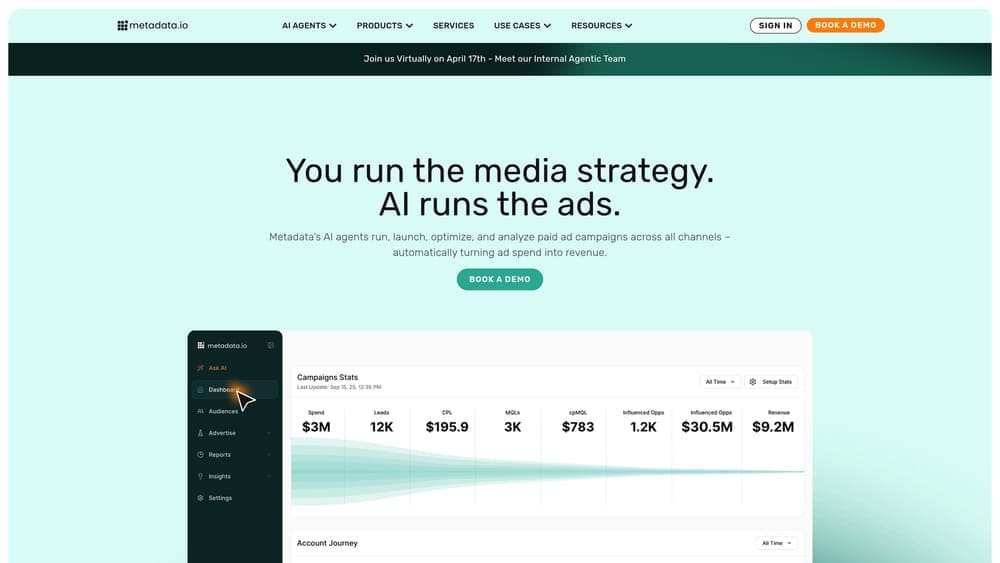
Metadata.io is an autonomous demand generation platform that uses AI to run, test, and optimize paid campaigns across LinkedIn, Facebook, and display channels simultaneously.
Where This Tool Shines
The core value proposition of Metadata is experimentation speed. Instead of manually building out audience and creative combinations one at a time, Metadata automates the testing process across hundreds of combinations and automatically shifts budget toward whatever is performing best. For B2B teams trying to find their optimal audience-message fit, that acceleration is significant.
What makes Metadata particularly interesting for B2B is its revenue orientation. Rather than optimizing purely for lead volume, the platform connects campaign performance to pipeline and revenue data, which means your optimization signal is much closer to what actually matters for the business.
Key Features
AI-Driven Experimentation: Automatically tests hundreds of audience and creative combinations to find winning combinations faster.
Multi-Channel Execution: Runs campaigns across LinkedIn, Facebook, and display from a single platform.
Automatic Budget Allocation: Shifts spend toward best-performing experiments without manual intervention.
Revenue Optimization: Ties campaign performance to pipeline and revenue, not just lead counts.
B2B Audience Enrichment: Enriches and refines targeting audiences using B2B-specific data signals.
Best For
Mid-market and enterprise B2B marketing teams with meaningful paid media budgets who want to accelerate audience and creative testing across multiple channels without building out a large paid media team.
Pricing
Enterprise pricing model. Contact Metadata directly for a custom quote based on your ad spend and team requirements.
6. SpyFu
Best for: Competitive PPC intelligence and keyword research for B2B campaigns
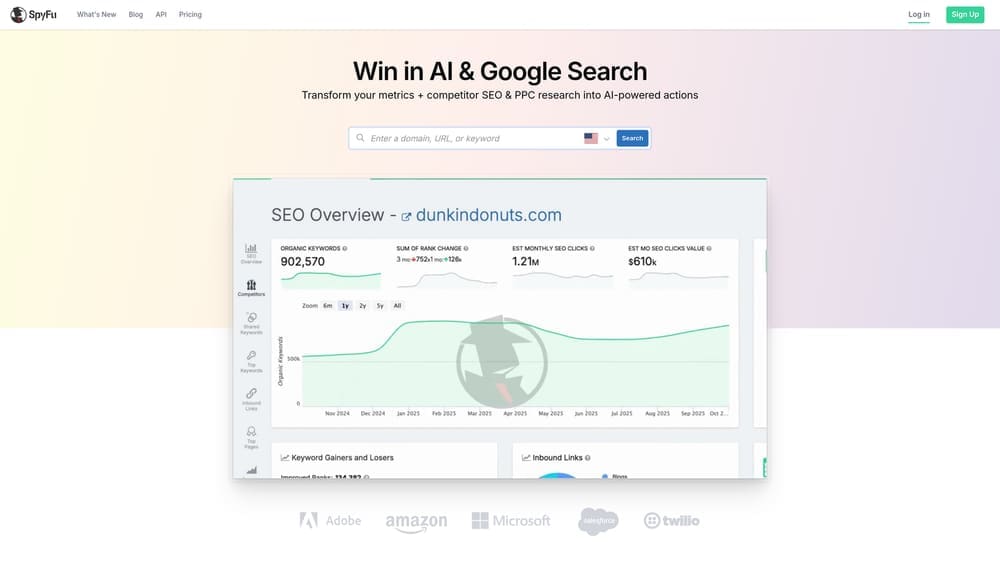
SpyFu is a competitive intelligence platform that reveals what your competitors are bidding on, what ad copy they’re running, and how much they’re estimated to be spending on paid search.
Where This Tool Shines
Starting a B2B PPC campaign without knowing what your competitors are doing is like showing up to a negotiation without knowing the other party’s position. SpyFu closes that gap by surfacing the keyword strategies, ad messaging, and estimated budgets of any domain you want to analyze.
The historical data depth is one of SpyFu’s strongest differentiators. You can see how a competitor’s PPC strategy has evolved over time, which tells you a lot about what’s working for them and what they’ve abandoned. That historical context helps you avoid bidding wars on keywords that aren’t converting for anyone in your space.
Key Features
Competitor Keyword Analysis: See every keyword a competitor is bidding on and the ad copy they’re running against it.
Historical PPC Data: Access over a decade of competitor PPC history to identify trends and strategy shifts.
Estimated Ad Spend: Get estimated monthly spend and click volume data for any competitor domain.
Keyword Grouping: Organize keyword research into campaign-ready groups for faster build-outs.
Google Ads Advisor: Identifies profitable keyword opportunities you may be missing in your current campaigns.
Best For
B2B marketers in competitive industries who want to build smarter keyword strategies, find gaps in competitor coverage, and stress-test their ad messaging against what’s already running in the market.
Pricing
Starts at $39/month for the Basic plan. Higher-tier plans unlock more data exports and advanced features.
7. Unbounce
Best for: Building and optimizing dedicated landing pages for B2B PPC traffic
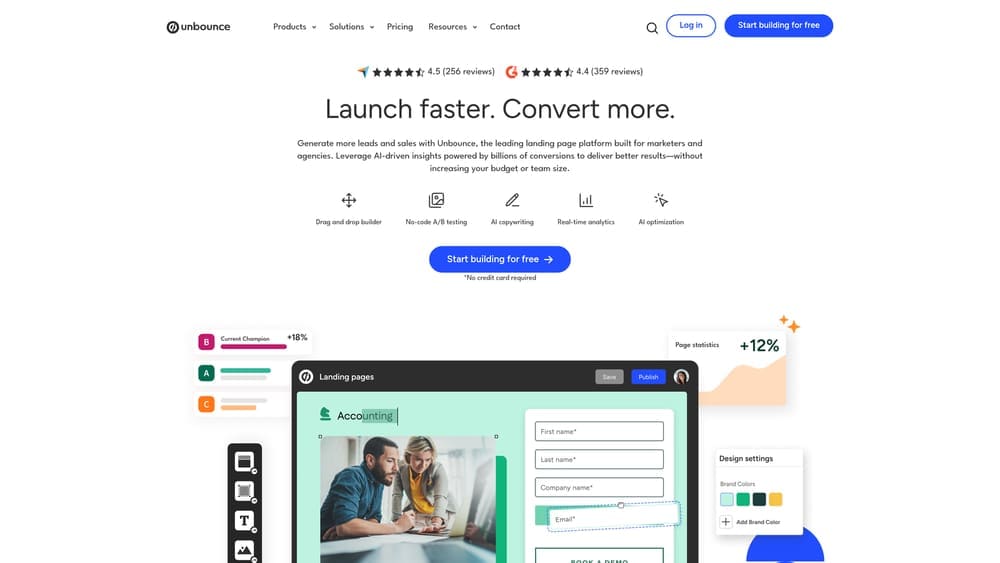
Unbounce is a landing page platform with an AI-powered Smart Traffic feature that automatically routes visitors to the page variant most likely to convert them.
Where This Tool Shines
Here is a problem that costs B2B companies enormous amounts of money: they spend heavily on PPC campaigns and then send all that traffic to their homepage. Homepages are built for everyone. Landing pages are built for one specific visitor with one specific message. The conversion rate difference between the two is often dramatic.
Unbounce makes it fast to build dedicated, campaign-specific landing pages without needing a developer. The Smart Traffic feature goes a step further by using AI to analyze visitor attributes and route each person to the page variant they’re most likely to convert on, which means your optimization compounds over time automatically.
Key Features
Drag-and-Drop Builder: Build professional landing pages without writing code or waiting on a development team.
Smart Traffic AI: Automatically routes visitors to the highest-converting page variant based on their attributes.
A/B Testing: Run traditional split tests alongside Smart Traffic for full optimization flexibility.
Popups and Sticky Bars: Add secondary lead capture elements to boost conversions without redesigning the page.
Native Integrations: Connects directly with Google Ads, HubSpot, Salesforce, and other tools in your stack.
Best For
B2B companies running paid campaigns who don’t have dedicated landing pages yet, or those who have landing pages but aren’t systematically testing and optimizing them. Also strong for teams that want to move fast without relying on engineering resources.
Pricing
Starts at approximately $99/month for the Build plan. Higher tiers unlock more traffic volume and advanced features including Smart Traffic.
8. CallRail
Best for: B2B service companies that generate leads through phone calls
CallRail is a call tracking and conversation analytics platform that connects phone calls and form submissions back to the specific PPC campaigns, keywords, and ads that drove them.
Where This Tool Shines
For many B2B service companies, the phone call is the lead. A prospect searches for a service, clicks an ad, and calls directly rather than filling out a form. Without call tracking, that conversion is invisible to your PPC platform, which means you’re optimizing your campaigns with incomplete data.
CallRail’s dynamic number insertion solves this by swapping in unique phone numbers based on the traffic source, allowing you to attribute each call back to the exact keyword and ad that drove it. The Conversation Intelligence layer adds AI-powered call scoring and tagging, so you can automatically identify which calls were qualified leads versus wrong numbers or existing customers.
Key Features
Dynamic Number Insertion: Automatically assigns unique tracking numbers to attribute calls to specific keywords and campaigns.
Conversation Intelligence: AI-powered call scoring, transcription, and tagging to qualify leads automatically.
Form Tracking: Tracks form submissions alongside calls for a unified view of all lead sources.
Google Ads and GA4 Integration: Passes call conversion data directly into your ad platforms for closed-loop optimization.
Multi-Touch Attribution: Models the full conversion path, not just the last touchpoint before a call.
Best For
B2B service companies, professional services firms, and any business where phone calls represent a significant portion of inbound leads. Essential if you’re running Google Ads and want accurate conversion data flowing back into Smart Bidding.
Pricing
Starts at $50/month for the Call Tracking plan. Additional features like Conversation Intelligence are available on higher-tier plans.
9. HubSpot Ads Management
Best for: B2B companies that want to connect ad spend directly to CRM pipeline and revenue
HubSpot Ads Management is the ad management layer built natively into HubSpot’s CRM, allowing B2B teams to see exactly which ads generate closed deals, not just form fills.
Where This Tool Shines
The biggest blind spot in B2B PPC is the gap between a lead converting and a deal actually closing. Most ad platforms show you clicks and conversions. HubSpot shows you which campaign, ad group, and keyword generated a contact that became a deal that turned into revenue. That closed-loop visibility changes how you allocate budget entirely.
The audience syncing capability is equally valuable. Because HubSpot knows your CRM contacts and their deal stages, you can build highly specific audiences: current customers for upsell campaigns, open opportunities for nurturing, churned customers for win-back efforts. These audiences push directly to Google, LinkedIn, and Facebook without any manual export work.
Key Features
Native CRM Integration: Connect ad clicks to CRM contacts, deals, and closed revenue for true ROI visibility.
CRM Audience Syncing: Push contact lists and lifecycle stage segments directly to Google, LinkedIn, and Facebook.
Ad Attribution Reporting: Report on pipeline and revenue generated by campaign, ad group, and keyword.
Automated Nurture Workflows: Trigger lead nurturing sequences automatically based on ad interactions.
Full-Funnel ROI Reporting: See the complete picture from first ad click through closed deal in a single dashboard.
Best For
B2B companies already using HubSpot as their CRM who want to close the loop between ad spend and revenue without building complex third-party integrations. Also strong for teams that want to use CRM data to power more precise ad targeting across all major platforms.
Pricing
Included in HubSpot Marketing Hub. Free tools are available, and paid plans start at $20/month for the Starter tier, with more advanced attribution features available on higher plans.
Which Tool Is Right for Your B2B PPC Stack?
The tools above cover every major layer of a high-performing B2B PPC program. Here is a quick-reference breakdown to help you match each tool to your situation.
Need fully managed PPC: Clicks Geek is the right starting point, particularly if you want a team that focuses on lead quality and revenue rather than raw traffic metrics.
Running your own campaigns: Google Ads and LinkedIn Ads are your core platforms. Google captures active demand through search intent; LinkedIn builds it through precise firmographic targeting. Most B2B companies benefit from running both.
Need to optimize and automate faster: Optmyzr gives you rule-based automation and one-click optimizations without handing full control to a black-box algorithm. Metadata.io is the choice for teams running multi-channel experiments at scale with revenue-based optimization.
Want to understand your competitive landscape: SpyFu is the fastest way to see what competitors are bidding on, what messaging they’re using, and where gaps exist in the market.
Sending paid traffic to your homepage: Stop. Build dedicated landing pages with Unbounce and let Smart Traffic handle the optimization. This single change often has more impact than any bid adjustment.
Losing track of phone call leads: CallRail closes the attribution gap for service-oriented B2B businesses where calls are the primary conversion action.
Already using HubSpot: Activate HubSpot Ads Management to connect your ad spend directly to pipeline and revenue data sitting in your CRM.
The reality of B2B PPC in 2026 is that the tools exist to run highly precise, fully accountable campaigns. The gap between companies that get results and those that burn budget usually comes down to strategy and execution, not platform access.
Tired of spending money on marketing that doesn’t produce real revenue? We build lead systems that turn traffic into qualified leads and measurable sales growth. If you want to see what this would look like for your business, we’ll walk you through how it works and break down what’s realistic in your market.