Western Montana is a different animal than most markets. You’re running a local service business across a spread-out geography, competing for a smaller pool of customers, and watching every ad dollar closely because there’s no room to waste budget on clicks that go nowhere.
Meta ads can work well here, but the national playbook often doesn’t apply. A 25-mile radius in a metro reaches millions of potential customers. That same radius in Kalispell or Hamilton reaches a fraction of that. Audience pool size affects everything: your frequency caps, how fast creative gets stale, and whether Advantage+ targeting can find enough signal to optimize. The Facebook CPL benchmark for local service businesses sits around $10-25, and where you land on that range depends heavily on how well your tools and setup are matched to your actual market.
This list covers the tools that actually move the needle for western Montana service businesses, from campaign management to creative to tracking. Clicks Geek is at the top because we specialize in exactly this type of market, but every other tool earns its place on merit.
1. Clicks Geek
Best for: Local service businesses that want managed Meta campaigns without the guesswork
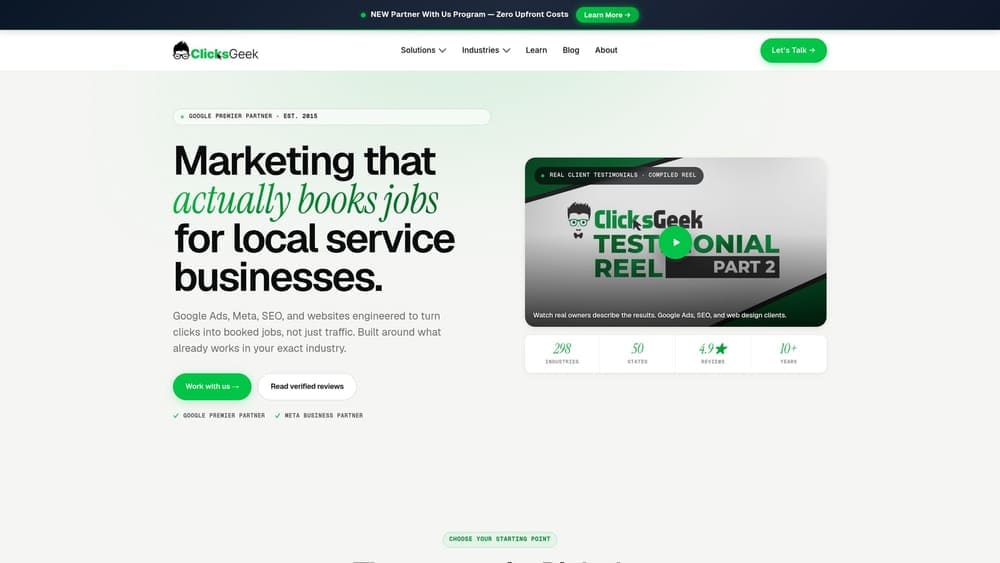
Clicks Geek is a Meta Business Partner and Google Premier Partner agency that builds and manages paid social campaigns specifically for local service businesses. Established in 2015 with over $100M in managed ad spend, 10,000+ campaigns, and a 4.9-star rating, the agency brings a level of platform access and operational depth that most solo consultants or generalist shops can’t match.
Where This Tool Shines
The 298 industry-specific playbooks are the practical differentiator here. Trades that are common across western Montana, including HVAC, plumbing, roofing, and electrical, have pre-built frameworks that inform audience strategy, creative approach, and bidding structure from day one. That’s different from an agency building your campaign from scratch using generic best practices.
For skeptical business owners in smaller markets, the no lock-in contract structure matters. You’re not signing a 12-month retainer to find out whether the approach works. Campaigns are built around booked jobs and cost-per-lead, not impressions or reach numbers that don’t translate to revenue. If you want to understand what a managed approach looks like compared to handling it yourself, this breakdown of Facebook ads agencies gives useful context on what to expect from a managed partner.
Key Features
Meta Business Partner status: Verified platform access and direct training from Meta, which matters for staying current on Advantage+ changes and new campaign types.
298 industry playbooks: Pre-built frameworks for trades common in western Montana, so campaigns aren’t being built from zero.
No lock-in contracts: Performance-focused engagement without the risk of a long-term commitment before you’ve seen results.
Lead-focused campaign structure: Campaigns are measured on cost-per-lead and booked jobs, not vanity metrics like reach or engagement.
Scale and experience: 10,000+ campaigns managed across 298 industries provides real pattern recognition for what works in low-density markets.
Best For
Service business owners in the Missoula, Kalispell, Whitefish, or Hamilton corridor who want Meta ads handled by people who understand small-pool audience markets and can show clear attribution between ad spend and actual leads. Also a strong fit for owners who’ve tried Meta ads on their own and aren’t seeing consistent results.
Pricing
Custom pricing based on scope and market. No contracts required. Contact the team directly for a breakdown of what’s realistic in your specific market.
2. Meta Ads Manager
Best for: Business owners who want direct, full-control access to their Meta campaigns
Meta Ads Manager is the native platform for building, running, and analyzing Facebook and Instagram ad campaigns. It’s free to use, and every other tool on this list either feeds into it or pulls data from it.
Where This Tool Shines
For western Montana service businesses, two features stand out. Lead Generation campaigns with native Meta forms are particularly useful in low-density markets because they reduce friction: a potential customer can submit their name, number, and service request without ever leaving Facebook or Instagram. No landing page required, which removes one more variable that can break the conversion path on mobile.
Advantage+ automated campaigns have expanded significantly through 2025 and 2026. For advertisers with small custom audience pools, which is almost every service business in a rural western market, Advantage+ can find signal that manual audience targeting misses. The Conversions API integration also matters here: post-iOS tracking through the Meta Pixel alone is unreliable, and the Conversions API gives you server-side event matching that holds up better for attribution.
Key Features
Full campaign creation and audience targeting: Complete control over geographic radius, interests, demographics, and custom audiences.
Advantage+ automated campaigns: Useful for small audience pools where manual targeting can exhaust options quickly.
Lead Generation campaign type: Native forms that capture leads inside Meta without requiring a landing page.
Placement controls: Granular control across Facebook feed, Instagram feed, Stories, Reels, and Audience Network.
Conversions API: Server-side tracking that maintains attribution reliability after iOS privacy changes.
Best For
Any service business running Meta ads, full stop. This is the foundation everything else is built on. Business owners with some paid media experience can manage campaigns here directly. Those without that background should use it alongside a managed partner or a simplification tool like AdEspresso.
Pricing
Free to use. Your only cost is ad spend.
3. AdEspresso by Hootsuite
Best for: Business owners who want structured A/B testing without building complex campaign trees manually
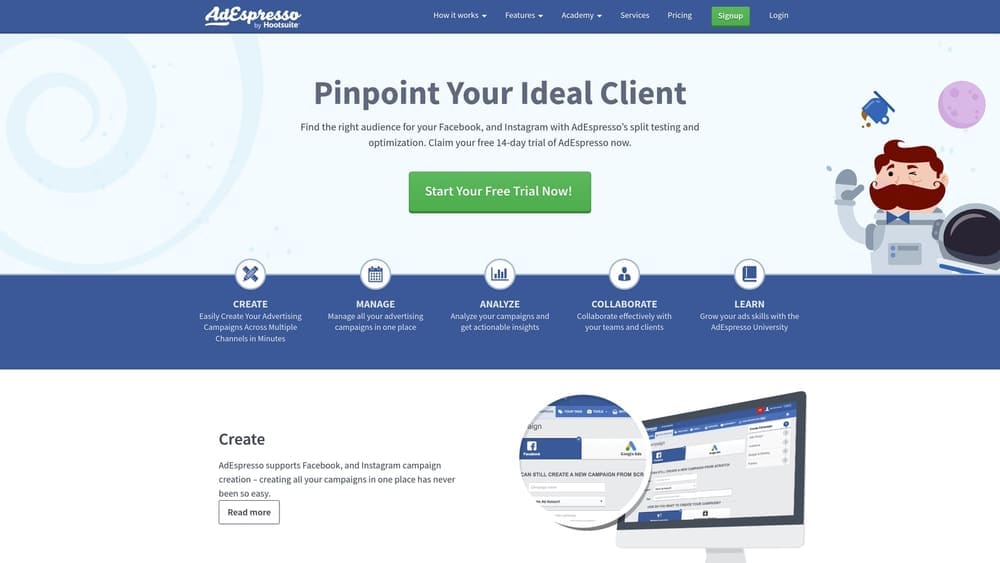
AdEspresso is a Meta-focused campaign management tool that layers a cleaner interface and multi-variant testing workflow on top of Meta Ads Manager. It’s built for people who understand that testing matters but don’t want to spend hours inside the native platform setting up campaign variants.
Where This Tool Shines
In a market like western Montana, where your addressable audience is smaller, creative fatigue happens faster. You need to know which headline, image, or offer is actually resonating before you burn through your budget on the wrong version. AdEspresso’s visual A/B test builder lets you create multiple variants across headlines, images, and audiences in one workflow instead of duplicating ad sets manually.
The automated optimization rules are also useful for owners who can’t monitor campaigns daily. You can set rules to pause underperforming variants automatically based on cost-per-result thresholds, which keeps spend from drifting toward ads that aren’t converting.
Key Features
Visual A/B test builder: Create and compare multiple ad variants across creative and copy in a single workflow.
Automated optimization rules: Pause underperforming variants based on cost-per-result thresholds without manual intervention.
Simplified reporting dashboard: Cleaner view of performance data compared to the native Ads Manager interface.
Campaign approval workflows: Useful for owner review before campaigns go live, particularly when working with a contractor or small team.
Direct Meta Ads Manager sync: Everything runs through your actual Meta account; AdEspresso is the management layer on top.
Best For
Service business owners who are managing their own campaigns and want to run disciplined creative tests without the complexity of building them manually inside Ads Manager. Also useful for small teams where an owner wants to review and approve ads before they launch.
Pricing
Starts around $49/month.
4. Canva
Best for: Service businesses that need professional ad creative without a design budget
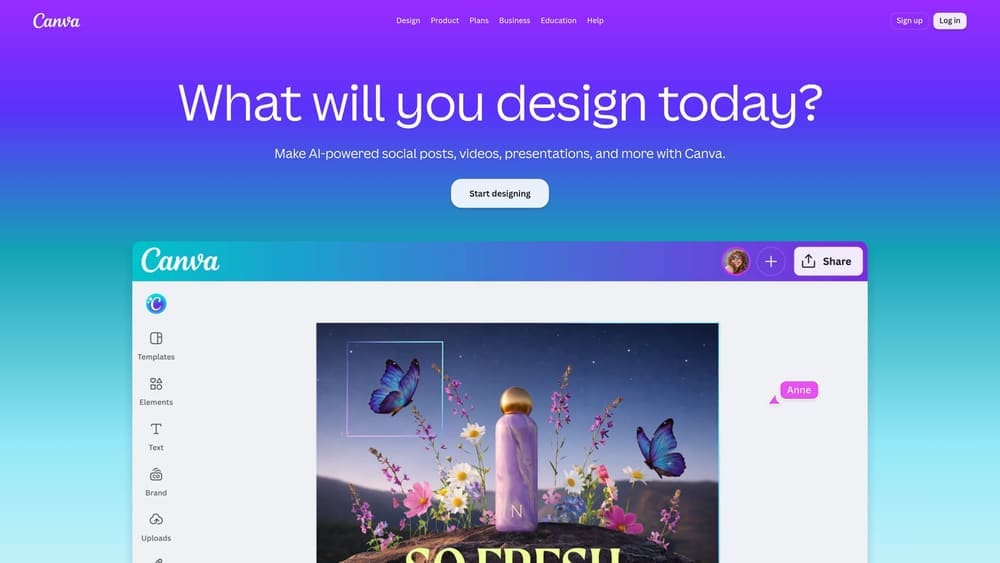
Canva is a graphic design platform with Meta ad templates built in. For most local service businesses in western Montana, hiring a designer for every ad creative isn’t practical. Canva closes that gap without requiring any design experience.
Where This Tool Shines
The pre-sized templates for Facebook feed, Instagram feed, Stories, and Reels remove the guesswork on dimensions and layout. More importantly, the Brand Kit feature keeps your colors, fonts, and logo consistent across every ad you produce. Inconsistent branding is a common problem for service businesses running ads in-house, and it erodes trust with an audience that’s already seeing your ad multiple times due to small market frequency.
The free stock photo and video library is genuinely useful when you don’t have professional photography of your work. One-click resize lets you adapt a single creative across multiple placements without rebuilding it from scratch, which saves real time when you’re managing campaigns alongside running a business.
Key Features
Pre-sized Meta ad templates: Ready-to-use layouts for Facebook feed, Instagram feed, Stories, and Reels.
Brand Kit: Store your logo, colors, and fonts so every ad looks consistent without extra effort.
Free stock library: Photos and videos available when you don’t have professional imagery of your own work.
One-click resize: Adapt one creative across multiple placements in seconds.
Collaboration features: Share drafts with a team member, contractor, or agency for review before uploading to Ads Manager.
Best For
Any service business producing its own ad creative. Particularly useful for owner-operated businesses in western Montana where there’s no design budget and no in-house creative team.
Pricing
Free plan available. Pro starts around $15/month and unlocks the full Brand Kit, premium assets, and additional collaboration features.
5. CallRail
Best for: Service businesses that need to connect phone call leads back to specific Meta ads
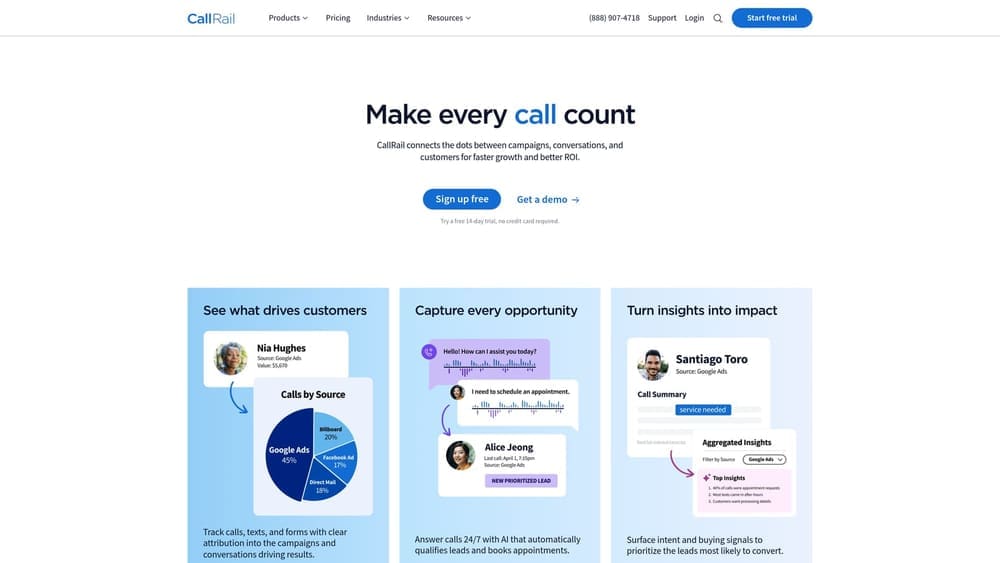
CallRail is a call tracking and analytics platform that ties phone calls to the exact ad source that generated them. For local service businesses, where phone calls represent a large share of inbound leads, running Meta ads without call tracking means you’re flying blind on attribution.
Where This Tool Shines
Phone calls make up a substantial portion of leads for local service businesses. Without call tracking, you have no reliable way to know whether your Meta ad spend is actually generating calls or just clicks that go nowhere. CallRail’s dynamic number insertion assigns unique tracking numbers to specific ad sources, so when a call comes in, you know exactly which campaign and ad drove it.
The integration with Meta Ads for offline conversion reporting is particularly valuable. You can pass call data back into Meta so the algorithm knows which ads are generating actual phone leads, not just website visits. That feedback loop improves Advantage+ optimization over time, which matters a lot when your audience pool is small and every conversion signal counts.
Key Features
Dynamic number insertion: Unique tracking numbers per ad source connect calls to specific Meta campaigns.
Call recording and transcription: Review lead quality and identify common questions or objections to improve ad messaging.
Meta Ads offline conversion integration: Feed call data back into Meta so the algorithm can optimize on real lead signals.
Form tracking: Captures web form submissions alongside phone calls for a complete lead picture.
Lead Center: Manages all inbound contacts in one place rather than across separate tools.
Best For
Any service business where phone calls are a primary lead channel. If you’re spending money on Meta ads and not tracking calls, you’re missing the most important attribution data point in your stack.
Pricing
Starts around $45/month.
6. Leadpages
Best for: Service businesses that want fast, conversion-focused landing pages for paid Meta traffic
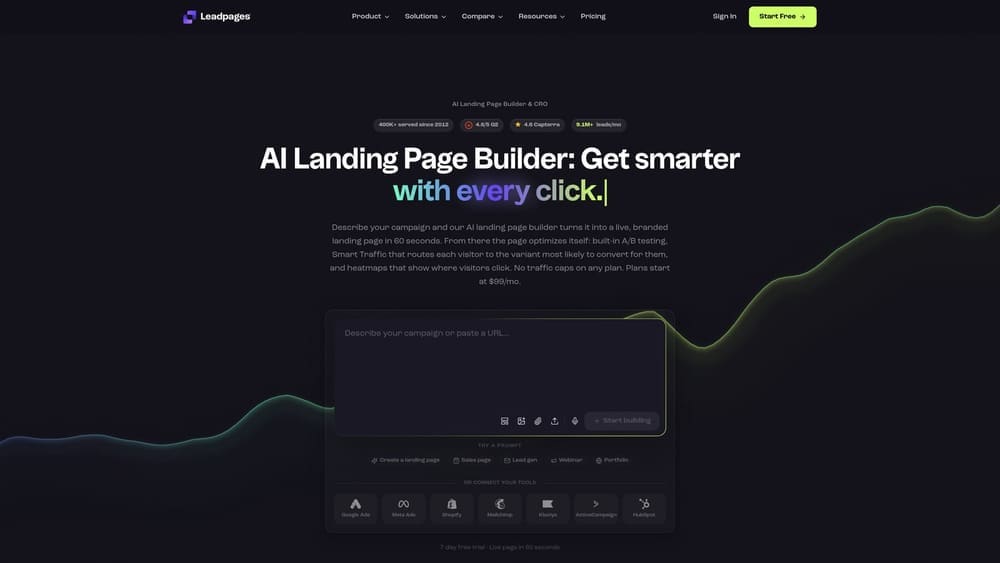
Leadpages is a landing page builder designed specifically to convert paid traffic into leads. Standard website pages are built for navigation and browsing. Landing pages built in Leadpages are built for one thing: getting someone to submit their information or call your business.
Where This Tool Shines
Mobile load speed matters more than most business owners realize. Meta traffic is predominantly mobile, and a slow-loading page loses visitors before they’ve read a single word. Leadpages pages are optimized for fast load times, which reduces drop-off from the mobile traffic Meta sends your way.
The templates are built around service business conversion patterns: quote request forms, call scheduling, and service area confirmation. You don’t need a developer to launch or update pages, which means you can test a new offer or update seasonal messaging without waiting on a web team. For western Montana service businesses running time-sensitive promotions around seasonal demand, that speed matters.
Key Features
Service business templates: Pre-built layouts for quote requests, call scheduling, and lead capture.
Fast mobile load speeds: Reduces drop-off from the mobile-heavy traffic Meta delivers.
A/B testing: Test different page variants to find what converts best for your specific offer.
Lead notifications and CRM integrations: Route new leads immediately to your inbox or CRM without manual steps.
No developer required: Launch and update pages without technical help.
Best For
Service businesses running Meta ads to a specific offer or promotion where a dedicated landing page will outperform a generic website homepage. Particularly useful when you’re testing multiple offers and want to isolate performance by page.
Pricing
Starts around $49/month.
7. Madgicx
Best for: Service businesses spending $1,500 or more per month on Meta who want AI-driven optimization
Madgicx is an AI-powered Meta advertising optimization platform that helps businesses get more from their ad spend through smarter audience targeting and creative performance analysis. It’s more sophisticated than the other tools on this list, and it earns that complexity at the right spend level.
Where This Tool Shines
The audience intelligence features go beyond basic interest targeting. For western Montana advertisers, where interest-based audiences can be thin, Madgicx helps identify high-converting audience segments that aren’t obvious from standard Meta targeting options. The creative analytics layer identifies which specific ad elements, including headlines, images, and calls to action, are driving results versus dragging performance down.
The ad account auditing feature surfaces wasted spend that’s easy to miss inside native Ads Manager. For a business running multiple campaigns across different services or seasonal offers, that audit capability can recover budget that’s drifting toward underperforming placements or audiences without anyone noticing.
Key Features
Audience intelligence: Identifies high-converting segments beyond standard interest targeting.
Creative analytics: Breaks down which ad elements are driving performance and which are hurting it.
Automated budget allocation: Shifts budget toward better-performing campaigns based on real-time performance rules.
One-click audience cloning and lookalike expansion: Scales winning audiences without manual rebuilding.
Ad account auditing: Surfaces wasted spend and underperforming placements across your account.
Best For
Service businesses with a meaningful Meta budget who want to squeeze more performance out of their spend without adding hours of manual analysis. Less relevant for businesses spending under $1,000 to $1,500 per month, where the tool cost becomes a significant percentage of total spend.
Pricing
Entry plans start around $49/month; pricing scales with ad spend.
8. ClickUp
Best for: Service businesses coordinating ad creative and approvals across more than one person
ClickUp is a project management platform that keeps Meta ad campaigns organized when you’re working with a contractor, freelancer, or small internal team. It’s not an ad tool, but campaign disorganization is a real problem that costs money when creative gets delayed or approvals fall through the cracks.
Where This Tool Shines
The campaign calendar view is practical for service businesses in western Montana where seasonal demand is real. Heating and cooling businesses, roofing contractors, and landscaping companies all have predictable seasonal windows. Planning ad creative and approvals in advance inside ClickUp means you’re not scrambling to launch a campaign when the busy season hits.
Ad creative request templates and approval workflows give a clear handoff process between whoever is creating the assets and whoever is approving them before they go into Ads Manager. File storage keeps your creative assets, copy drafts, and campaign notes in one place instead of scattered across email threads and shared drives.
Key Features
Ad creative request templates: Standardized intake for new creative requests so nothing gets missed.
Campaign calendar views: Plan seasonal promotions and creative schedules in advance.
Task assignments: Clear ownership for each step of the creative and approval process.
File storage: Keep creative assets and copy drafts organized and accessible to everyone involved.
Free tier available: Useful for small teams that don’t need paid project management features.
Best For
Service businesses working with a freelancer, outside agency, or small internal team to produce and manage Meta ad creative. Less necessary for a solo owner managing everything themselves, but immediately useful as soon as a second person is involved in the process.
Pricing
Free plan available. Paid plans start around $7/user/month.
9. Google Analytics 4
Best for: Understanding what Meta ad visitors actually do after they land on your website
Google Analytics 4 is the free web analytics platform that tracks on-site behavior after someone clicks your Meta ad. Meta tells you what happened inside the platform. GA4 tells you what happened after the click, which is where most conversions are won or lost.
Where This Tool Shines
UTM parameter tracking connects your Meta campaign data to specific on-site behavior. You can see whether visitors from a particular campaign are bouncing immediately, spending time on your service pages, or completing a quote request form. That post-click data is essential for diagnosing whether a campaign’s problem is the ad itself or the page it’s sending traffic to.
The audience export feature lets you push site visitor segments back into Meta for retargeting. Someone who visited your HVAC service page but didn’t request a quote is a warm prospect. GA4 lets you identify that group and serve them a follow-up ad in Meta without needing a large existing customer list, which is valuable in markets where your custom audience pool is limited to begin with.
Key Features
UTM parameter tracking: Connects Meta campaign data to specific on-site behavior so you can see what happens after the click.
Conversion event tracking: Measures form submissions, calls, and quote requests as actual conversions, not just page views.
Audience export to Meta: Build retargeting audiences based on site behavior and push them directly into Meta Ads Manager.
Cross-channel attribution: Understand how Meta fits into the broader mix alongside other traffic sources.
No spend minimum: Free regardless of how much or how little you’re spending on ads.
Best For
Every service business running Meta ads to a website. GA4 is free and fills a critical gap that Meta’s native reporting can’t cover: what your paid visitors actually do once they arrive.
Pricing
Free.
Building the Right Stack for Your Market
The tools on this list serve different parts of the same problem. Not every business needs all nine. How you combine them depends on whether you’re managing campaigns yourself or working with a partner, and how much time you have to spend on the operational side.
If you’re running Meta ads yourself, the core stack that makes sense for most western Montana service businesses looks like this: Meta Ads Manager as the foundation, Canva for creative, CallRail for call attribution, and GA4 for post-click behavior. That combination covers campaign execution, creative production, and the two most important attribution gaps without a heavy monthly tool cost.
If you’re testing ad copy and creative variants regularly, AdEspresso simplifies that process considerably. If you’re spending meaningfully on Meta and want AI-driven optimization, Madgicx earns its place at higher spend levels. Leadpages becomes relevant when you’re driving paid traffic to specific offers and want pages built to convert rather than browse. ClickUp is worth adding as soon as more than one person is involved in your campaign process.
The managed approach is worth considering honestly. Running Meta ads well in a small-pool market like Kalispell or Missoula requires ongoing attention to creative refresh cycles, audience fatigue, and attribution. If you’d rather focus on running your business than managing ad platforms, a partner who specializes in local service businesses is often the more efficient path to consistent leads. For more context on what that looks like across different marketing channels, this breakdown of customer acquisition channels is worth reading before you commit budget anywhere.
Clicks Geek works specifically with local service businesses and brings 298 industry playbooks, $100M+ in managed spend, and no lock-in contracts to the table. If you want to see what this would look like for your business, we’ll walk you through how it works and break down what’s realistic in your market. If you want to see what this would look like, the conversation starts there.