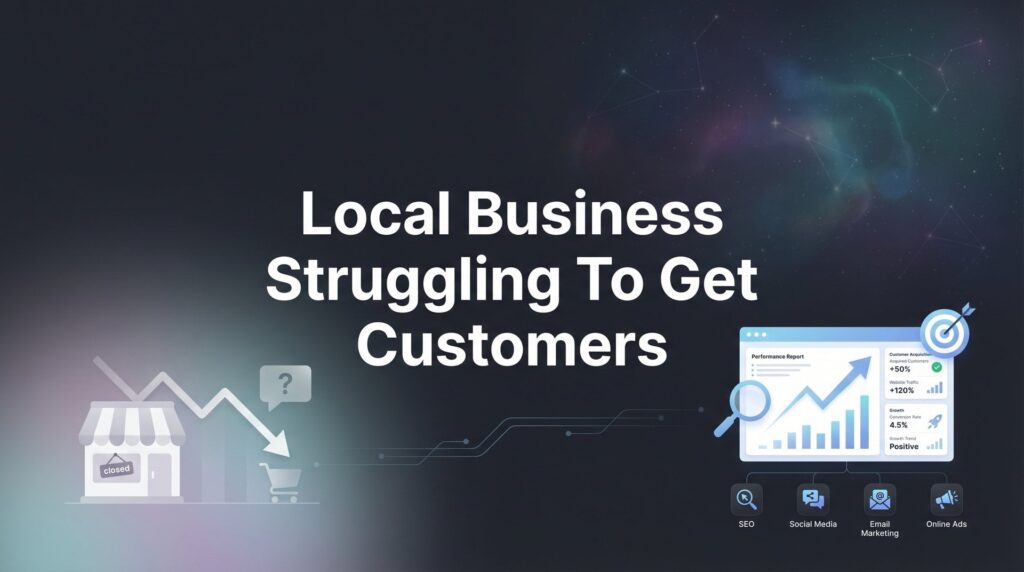
You’ve poured everything into your business. The craftsmanship is solid. The service is excellent. Your prices are fair. Yet somehow, customers aren’t coming through the door the way you expected. You watch competitors—sometimes ones you know aren’t as good—stay busy while your phone stays quiet.
This isn’t about your quality. It’s about visibility and systems.
The reality is that most local customers don’t randomly discover businesses anymore. They search with intent, ask specific questions, and make decisions based on what they find in those critical first few seconds. If you’re not showing up in those moments—or if you’re showing up but not converting—you’re invisible to the customers actively looking for exactly what you offer.
The strategies below aren’t theoretical. They’re the same approaches that transform struggling local businesses into customer magnets. Each one addresses a specific gap in how customers find, evaluate, and choose local businesses. Whether you run a plumbing company, law practice, contracting business, or retail shop, these approaches work because they meet customers exactly where they’re already looking.
Let’s fix what’s broken.
1. Google Business Profile Optimization
The Challenge It Solves
When someone searches for your type of business in your area, Google shows a map with three local businesses before anything else. If you’re not in that “local pack,” you’re functionally invisible to the majority of local searchers. Most people never scroll past those top three results.
Your Google Business Profile is the single most important piece of digital real estate you own as a local business. It’s free, it’s powerful, and most of your competitors are managing it poorly or ignoring it entirely.
The Strategy Explained
Google Business Profile optimization means claiming your listing, filling out every single field completely, and then actively maintaining it like you would your physical storefront. Google rewards businesses that demonstrate they’re active, legitimate, and relevant to local searchers.
This isn’t a one-time setup. It’s an ongoing system. Businesses that post updates weekly, respond to every review within 24 hours, and keep their information current consistently outrank competitors who treat their profile like a static listing. Understanding how to get your business higher on Google Maps is essential for local visibility.
The algorithm prioritizes three factors: relevance (how well you match the search), distance (how close you are to the searcher), and prominence (how well-known and active your business appears). You can directly influence two of those three.
Implementation Steps
1. Claim your Google Business Profile if you haven’t already, then verify every detail is accurate—business name, address, phone number, hours, categories, and service areas must be precise and consistent with your website.
2. Add high-quality photos every week (exterior, interior, team, work in progress, completed projects) because listings with regular photo updates get significantly more engagement than static profiles.
3. Create weekly Google Posts highlighting services, offers, or updates to signal to Google that your business is active and engaged with customers.
4. Respond to every review within 24 hours with personalized responses (not templates) because response rate and speed directly impact your local ranking.
5. Use the Q&A section proactively by posting common questions yourself with detailed answers, preventing competitors or trolls from controlling that narrative.
Pro Tips
Choose your primary category carefully—it’s the most important ranking signal. Add secondary categories only if they’re truly relevant. Don’t stuff categories hoping to rank for everything. Google penalizes that. Also, encourage customers to mention specific services in their reviews. When reviews contain keywords like “emergency plumber” or “family law attorney,” it strengthens your relevance signals for those searches.
2. Automated Referral Engine
The Challenge It Solves
Word-of-mouth is powerful, but most businesses leave it completely to chance. Satisfied customers might refer you… if they remember, if the opportunity comes up, if they think of it. That’s not a system—that’s hope.
You’re losing dozens of potential referrals every month simply because you don’t have a structured way to ask for them and make it easy for customers to spread the word.
The Strategy Explained
An automated referral engine systematically turns satisfied customers into active promoters. It removes the awkwardness of asking for referrals by building the request into your normal customer journey, offering clear incentives, and making the actual referral process frictionless.
The best referral programs trigger automatically after a positive customer interaction—a completed project, a solved problem, a five-star review. The timing matters enormously. You want to ask when satisfaction is highest, not months later when the experience has faded. This is a core component of any effective customer acquisition system for local businesses.
Implementation Steps
1. Create a simple referral offer that benefits both the referrer and the new customer (example: existing customer gets $50 credit, referred customer gets 10% off first service).
2. Set up automated email or text sequences that trigger 3-5 days after project completion, thanking the customer and introducing the referral program with a unique referral link or code.
3. Make sharing effortless by providing pre-written text customers can copy or social media graphics they can post with one click.
4. Track referrals religiously and fulfill rewards immediately—nothing kills a referral program faster than customers who refer people but never receive their promised benefit.
5. Follow up with referrers to let them know when their referral becomes a customer, reinforcing the behavior and encouraging additional referrals.
Pro Tips
The best referral incentive isn’t always money. Sometimes it’s priority scheduling, exclusive access to new services, or VIP treatment. Test different incentives with small customer segments to see what drives the most actual referrals. Also, make your referral program visible on invoices, email signatures, and your website—not just in the automated sequence.
3. Hyper-Local PPC Campaigns
The Challenge It Solves
Organic visibility takes time to build. If you need customers now—not six months from now—you need a way to appear instantly when high-intent searchers are looking for your services. That’s where pay-per-click advertising comes in.
But most local businesses waste money on PPC by targeting too broadly, bidding on wrong keywords, or sending traffic to poor landing pages. You end up paying for clicks that never convert.
The Strategy Explained
Hyper-local PPC means running tightly targeted Google Ads campaigns focused exclusively on your service area with keywords that indicate immediate buying intent. You’re not trying to build brand awareness. You’re trying to capture people actively searching for what you offer right now.
The key is extreme specificity. Instead of targeting “plumber,” you target “emergency plumber [your city]” or “water heater repair near me.” Instead of showing ads to everyone in a 50-mile radius, you focus on the zip codes where your ideal customers live. Understanding the differences between PPC vs SEO for local business helps you decide where to invest your budget.
This approach costs more per click but converts at much higher rates because you’re only paying for the most qualified traffic.
Implementation Steps
1. Build campaigns around high-intent keywords that include your service, location, and urgency modifiers like “emergency,” “near me,” “same day,” or “24 hour.”
2. Set tight geographic targeting using radius targeting around your location or specific zip codes where your best customers live, excluding areas you don’t serve.
3. Create dedicated landing pages for each major service that match the ad copy exactly—if the ad promises emergency plumbing, the landing page should be about emergency plumbing, not your general homepage.
4. Use ad extensions aggressively (call extensions, location extensions, callout extensions) to dominate more screen space and provide multiple ways for customers to contact you.
5. Implement conversion tracking on phone calls, form submissions, and chat interactions so you know exactly which keywords and ads are producing actual customers, not just clicks.
Pro Tips
Run ads only during hours when you can actually answer the phone or respond to leads. Sending traffic to voicemail or contact forms that don’t get checked until the next day wastes money and frustrates ready-to-buy customers. Also, exclude negative keywords ruthlessly—if you’re a commercial electrician, add “residential” as a negative keyword to avoid paying for irrelevant clicks.
4. Neighborhood-Specific Content
The Challenge It Solves
Generic website content doesn’t rank for local searches. When someone searches “family lawyer in [neighborhood]” or “roofer near [landmark],” Google prioritizes pages that specifically mention those locations.
Most local business websites have one generic service page that tries to cover an entire metro area. That approach loses to competitors who create dedicated content for specific neighborhoods, even if those competitors are smaller or newer.
The Strategy Explained
Neighborhood-specific content means creating individual pages or blog posts for each area you serve, addressing the unique characteristics, concerns, and search patterns of people in those locations. You’re not just stuffing location names into generic text—you’re providing genuinely useful local information.
This strategy works because it matches how people actually search. They don’t search for “plumber in the greater metropolitan area.” They search for “plumber in Riverside” or “plumber near downtown.” Each of those searches deserves its own optimized page. This is one of the most effective lead generation strategies for local businesses.
Implementation Steps
1. Identify the 5-10 neighborhoods or zip codes that represent your best customers or highest opportunity areas based on demographics, competition level, and service profitability.
2. Create dedicated service pages for each location following this structure: [Service] in [Neighborhood] as the title, then content addressing local considerations, landmarks, common issues in that area, and customer testimonials from that neighborhood.
3. Include genuine local details like nearby landmarks, neighborhood characteristics, local regulations that affect your service, or area-specific challenges you solve.
4. Add location-specific schema markup to help search engines understand exactly which geographic areas each page targets.
5. Build internal links between your location pages and relevant service pages to strengthen the topical authority of your entire site.
Pro Tips
Don’t create dozens of thin location pages with nearly identical content. Google penalizes that. Instead, focus on fewer pages with genuinely unique, helpful content for each area. If you can’t write 400+ words of unique content about serving that neighborhood, combine it with a nearby area. Quality beats quantity in local SEO.
5. Strategic Local Partnerships
The Challenge It Solves
Building a customer base from scratch is slow and expensive. Meanwhile, other local businesses have already done that work—they have established customer relationships, trust, and regular contact with people who might need your services.
The challenge is that most business owners never think strategically about partnerships. They network randomly, hoping something sticks, rather than identifying specific businesses whose customers naturally need what you offer.
The Strategy Explained
Strategic local partnerships mean forming deliberate cross-promotion relationships with complementary (not competing) businesses that serve the same customer base. A real estate agent partners with a mortgage broker, moving company, and home inspector. A wedding photographer partners with venues, caterers, and florists.
The key is reciprocity and structure. This isn’t just “refer customers when you think of it.” It’s a formal agreement where both businesses actively promote each other through specific channels—email lists, social media, in-person recommendations, or co-hosted events. Many businesses struggling to find customers overlook this powerful strategy entirely.
Implementation Steps
1. Map out your ideal customer journey and identify what other services they need before, during, or after working with you—those businesses are your ideal partners.
2. Approach potential partners with a specific proposal: “I’ll feature your business in my monthly newsletter to 500 local homeowners if you’ll recommend me to clients who need [your service].”
3. Create co-marketing materials like joint promotions, bundled service packages, or shared educational workshops that benefit both businesses and provide extra value to customers.
4. Set up a simple tracking system (unique promo codes, dedicated phone numbers, or referral links) so both businesses can measure how many customers each partnership generates.
5. Meet quarterly with key partners to review results, refine the partnership, and brainstorm new collaboration opportunities.
Pro Tips
The best partnerships aren’t with businesses at your same level—they’re with businesses slightly ahead of you who can elevate your brand. A newer contractor partnering with an established interior designer gains credibility by association. Also, focus on partnerships where you can provide immediate value first. Lead with giving, not asking.
6. Past Customer Reactivation
The Challenge It Solves
Most local businesses obsess over getting new customers while completely ignoring their most valuable asset: people who’ve already bought from them. Past customers already know you, trust you, and have proven they’ll spend money on your services.
Yet these warm leads sit in your database—or worse, in filing cabinets or old email threads—receiving zero outreach. You’re spending money to acquire new customers at full cost while free repeat business goes unclaimed.
The Strategy Explained
Past customer reactivation means systematically reaching out to previous customers with relevant offers, service reminders, or valuable information that brings them back for repeat business or referrals. This isn’t spam—it’s strategic relationship maintenance.
Different businesses have different reactivation cycles. An HVAC company might reach out every six months for maintenance. A tax attorney might reach out annually. A home remodeler might reach out every 2-3 years. The key is matching your outreach frequency to natural buying cycles. If you’re wondering why you’re not getting customers online, neglecting past customers is often a major factor.
Implementation Steps
1. Build a clean database of past customers with contact information, services purchased, project dates, and any notes about future needs they mentioned.
2. Segment your database by service type, time since last purchase, and project value so you can send targeted messages rather than generic blasts.
3. Create a reactivation email sequence that provides value first (maintenance tips, industry updates, seasonal advice) before making any sales pitch.
4. Schedule seasonal or service-specific campaigns (spring HVAC checkups, end-of-year tax planning, pre-winter roof inspections) that align with natural demand cycles.
5. Include a “we miss you” campaign for customers who haven’t engaged in longer than your typical buying cycle, offering a special incentive to return.
Pro Tips
Personalization dramatically increases response rates. Reference the specific service they used last time: “It’s been two years since we installed your water heater—here’s what to watch for.” Also, ask for feedback from customers who haven’t returned. Sometimes they had a negative experience they never mentioned. Addressing it can salvage the relationship and improve your service.
7. Conversion Point Optimization
The Challenge It Solves
You can drive all the traffic in the world to your website, but if visitors can’t easily figure out what you do, whether you serve their area, or how to contact you, that traffic is worthless. Most local business websites leak customers at multiple points.
Common conversion killers: unclear service descriptions, no visible phone number, contact forms that don’t work on mobile, slow page load times, or phone systems that send everyone to voicemail during business hours.
The Strategy Explained
Conversion point optimization means identifying every place a potential customer might interact with your business—website, phone system, contact forms, chat—and systematically removing friction from those interactions. You’re making it absurdly easy for ready-to-buy customers to become actual customers.
This isn’t about redesigning your entire website. It’s about tactical fixes to the specific points where customers drop off. Sometimes the highest-ROI change is just making your phone number bigger and more visible. Implementing proven small business lead generation strategies starts with ensuring your conversion points actually work.
Implementation Steps
1. Audit your website on mobile (where most local searches happen) and identify any friction points: Can visitors tap to call immediately? Is your service area clear? Do forms work properly? Does the page load in under 3 seconds?
2. Test your phone system by calling during business hours—does someone answer? Is the greeting professional? How many rings before pickup? Install call tracking to see how many calls you’re missing.
3. Simplify contact forms to the absolute minimum fields needed (name, phone, brief description of need) because every additional field decreases completion rates.
4. Add clear calls-to-action above the fold on every service page with multiple contact options (click-to-call button, text option, form, chat) because different people prefer different methods.
5. Implement live chat or chatbot for after-hours inquiries so you capture leads even when your office is closed.
Pro Tips
Record and listen to actual customer calls. You’ll discover objections, questions, and friction points you never knew existed. Also, run a simple A/B test on your contact form: test versions with different button colors, different copy, or different field requirements. Small changes often produce surprising results. If your conversion rate improves by just 10%, that’s 10% more customers from the same traffic—without spending another dollar on marketing.
Putting It All Together
Here’s the truth about customer acquisition: the businesses that win locally aren’t necessarily the best at their craft. They’re the ones who show up consistently where customers are looking and make it easy to say yes.
Don’t try to implement all seven strategies at once. That’s a recipe for doing everything poorly.
Start with strategies 1 and 7—Google Business Profile optimization and conversion point optimization. These are foundational. Everything else you do builds on visibility and the ability to convert visitors into customers. If you’re showing up in searches but your website doesn’t convert, you’re wasting the traffic. If your website converts beautifully but no one can find it, you’re invisible.
Week two, launch your referral program. This costs almost nothing and taps into your existing customer base.
Week three, begin creating neighborhood-specific content. One page per week, focused on areas with the highest opportunity.
Month two, consider PPC if your organic efforts need acceleration or if you serve a competitive market where organic visibility takes time to build.
Customer acquisition compounds over time. Each Google post strengthens your local ranking. Each piece of local content attracts more organic traffic. Each referral brings in customers who are pre-sold on your quality. The businesses struggling to get customers are usually the ones who tried one thing for two weeks, didn’t see immediate results, and gave up.
Pick one strategy. Implement it fully. Measure results. Then add the next.
Tired of spending money on marketing that doesn’t produce real revenue? We build lead systems that turn traffic into qualified leads and measurable sales growth. If you want to see what this would look like for your business, we’ll walk you through how it works and break down what’s realistic in your market.
Want More Leads for Your Business?
Most agencies chase clicks, impressions, and “traffic.” Clicks Geek builds lead systems. We uncover where prospects are dropping off, where your budget is being wasted, and which channels will actually produce ROI for your business, then we build and manage the strategy for you.