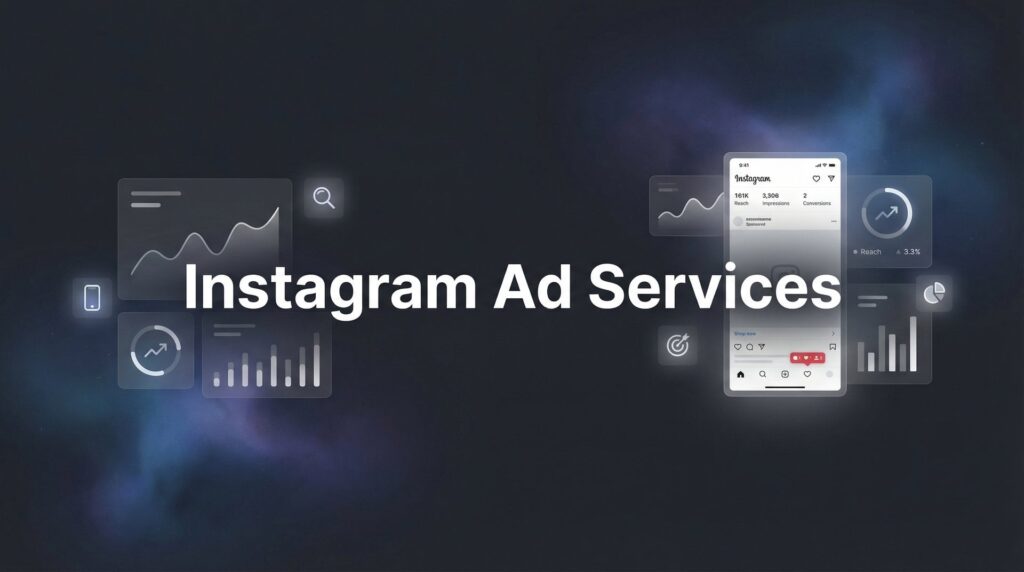
You know Instagram should be driving customers to your business. You’ve seen competitors running ads. You’ve watched other local businesses grow their customer base through the platform. But when you sit down to actually create an Instagram ad campaign, the complexity hits you like a wall.
The Meta Ads Manager interface looks like a cockpit. Audience targeting has seventeen different options. Creative best practices change every quarter. And you’re not sure if you should be optimizing for reach, engagement, conversions, or something else entirely.
This is where Instagram ad services come in—professional management that handles the technical complexity while you focus on running your business. But here’s the problem: “Instagram ad services” can mean anything from a freelancer scheduling posts to a full-service agency managing six-figure monthly budgets. The range is massive, and most business owners have no idea what they’re actually paying for.
This guide cuts through the confusion. We’ll break down exactly what professional Instagram ad services include, how the different ad formats work, what happens behind the scenes during campaign management, and how to determine if hiring an expert makes financial sense for your business. By the end, you’ll know whether you should be running ads yourself or partnering with professionals who do this full-time.
What Instagram Ad Services Actually Include (And What They Don’t)
Let’s start with what you’re actually buying when you hire Instagram ad services. At the core, you’re paying for someone to build, launch, monitor, and optimize paid advertising campaigns on Instagram through Meta’s advertising platform. But that simple description hides a lot of complexity.
Campaign Strategy Development: Before a single ad runs, professional services start with strategy. This means identifying your business objectives, defining your target customer, mapping out the customer journey, and determining which ad formats and placements will drive the results you need. A good strategist doesn’t just ask “What do you want to advertise?” They ask “What specific business problem are we solving?”
Audience Research and Targeting: This is where professional management earns its keep. Instagram offers targeting based on demographics, interests, behaviors, and custom audiences built from your existing customer data. Professionals know how to layer these targeting options to reach people who are actually likely to buy, not just people who might click. They build lookalike audiences from your best customers. They exclude people who already converted. They segment audiences for different messaging approaches.
Ad Creative Development: Most Instagram ad services include creating the actual ad content—writing compelling copy, designing static images or graphics, and editing short video clips. However, there’s a crucial distinction here. They’ll work with existing photos and footage you provide, or create designs using stock imagery and templates. What they typically don’t include is professional photography, custom videography, or brand design work. If you need a photographer to shoot your products or a videographer to capture your services in action, that’s usually a separate service.
Campaign Setup and Technical Implementation: Someone needs to build the campaigns inside Meta Ads Manager. This includes installing and configuring the Meta Pixel on your website, setting up conversion tracking, structuring ad sets properly, writing ad copy variations, uploading creative assets, and configuring all the technical settings that determine how your ads run. Get any of this wrong and you’ll waste money fast.
A/B Testing and Optimization: Professional services continuously test different elements of your campaigns. They’ll run multiple ad variations to see which images perform best. They’ll test different headlines, calls-to-action, and audience segments. Based on performance data, they’ll shift budget toward winners and kill underperformers. This ongoing optimization is what separates professional management from someone who just “sets up ads.”
Performance Monitoring and Reporting: You need to know what’s working. Good Instagram ad services provide regular reporting on key metrics: impressions, clicks, cost per click, conversions, cost per conversion, and return on ad spend. More importantly, they interpret that data and explain what it means for your business.
Now let’s clarify what Instagram ad services are NOT. They’re not organic social media management—that’s posting regular content to your feed, responding to comments, and building community through non-paid activity. They’re not influencer marketing, where you pay creators to promote your business. They’re not content creation services that produce professional photography and videography. These are all separate offerings that some agencies bundle together, but they’re distinct from paid media buying services.
The 4 Types of Instagram Ad Formats That Drive Real Results
Instagram offers multiple ad formats, and choosing the right one matters more than most businesses realize. Each format serves different purposes and performs differently depending on your goals.
Photo Ads: The simplest format is a single image with accompanying text. These ads appear in users’ feeds looking almost identical to regular posts, except for the small “Sponsored” label. Photo ads work exceptionally well for product showcases, service demonstrations, and direct offers. A home remodeling company might show a stunning kitchen transformation. A dental practice might display a before-and-after smile correction. The key is using high-quality imagery that stops the scroll. Photo ads typically have lower production costs than video, making them ideal for testing new audiences or offers quickly.
Carousel Ads: These let you display up to ten images or videos in a single ad, with each card having its own link. Users swipe through the carousel to see more. Carousel ads excel at showing product variety, explaining multi-step processes, or telling sequential stories. A landscaping company could show the progression of a backyard project across five images. An e-commerce store could feature different product variations. The format naturally encourages engagement—people who swipe through multiple cards are demonstrating higher interest, which often translates to better conversion rates.
Video Ads and Reels Ads: Video content dominates Instagram’s algorithm, and video ads often deliver lower costs per result than static images. Standard video ads can run up to 60 minutes, though shorter is almost always better—most successful video ads run 15-30 seconds. Reels ads appear in the Reels feed and must be vertical, full-screen video designed for mobile viewing. These ads work brilliantly for capturing attention, demonstrating products in action, and telling brand stories. A fitness studio could show a quick workout clip. A restaurant could display food preparation. The motion naturally draws the eye in a way static images can’t match.
Story Ads and Collection Ads: Story ads appear between users’ Stories and take over the full screen for immersive experiences. They’re excellent for time-sensitive offers because Stories create urgency—they feel temporary even though the ads can run continuously. Collection ads combine a cover image or video with a product catalog below, letting users browse multiple items without leaving Instagram. This format works particularly well for e-commerce businesses with visual products. A boutique clothing store could show a lifestyle image with shoppable products underneath. Users can tap products to see details and prices, creating a seamless shopping experience.
The format you choose should match your objective. Building brand awareness? Video and Reels capture attention. Driving website traffic? Photo and carousel ads with strong calls-to-action work well. Generating leads directly on Instagram? Story ads with lead forms keep users on platform. Selling products? Collection ads create a shopping experience. Professional Instagram ad services understand these nuances and select formats strategically rather than randomly. Understanding display advertising services can help you see how visual ad formats work across different platforms.
How Professional Instagram Ad Management Works Behind the Scenes
Most business owners have no idea what actually happens after they hire Instagram ad services. Let’s pull back the curtain on what professional campaign management looks like day-to-day.
The Setup Phase: Everything starts with proper foundation work. First, the Meta Pixel gets installed on your website. This small piece of code tracks what happens after someone clicks your ad—did they browse products, add items to cart, complete a purchase, submit a lead form? Without this tracking, you’re flying blind. Next comes audience research. Professionals analyze your existing customers to identify common characteristics, then build targeting parameters to find similar people on Instagram. They create custom audiences from your customer email lists, website visitors, and social media engagers. They build lookalike audiences that mirror your best customers. All of this happens before the first ad runs.
Campaign Structure Matters: How you organize campaigns inside Meta Ads Manager significantly impacts performance. Professionals structure campaigns with clear hierarchy: campaign level (objective), ad set level (audience, budget, schedule), and ad level (creative). They separate campaigns by objective—one for lead generation, another for website traffic, another for brand awareness. They create multiple ad sets testing different audiences against each other. They build several ad variations within each ad set to test creative elements. This structure allows for precise optimization and clear performance data.
The Testing Process: Once campaigns launch, the real work begins. Professional management runs controlled tests to identify what works. They might test three different images against each other while keeping copy constant. Then test three headline variations while keeping the winning image. They test broad audiences versus narrow targeting. They test different bid strategies and budget allocations. This systematic testing approach reveals insights that gut instinct never could. The data shows what actually drives results, not what you think should work.
Daily Monitoring and Adjustments: Active campaigns require daily attention. Professionals check performance metrics every day, looking for problems and opportunities. Is one ad set spending budget without generating results? Pause it. Is another ad set delivering leads at half the target cost? Increase its budget. Did an ad’s performance suddenly drop? Refresh the creative to combat ad fatigue. These micro-adjustments compound over time, gradually improving efficiency and lowering costs.
Budget Allocation Strategy: Where you spend money matters as much as how much you spend. Professional services don’t just divide budget evenly across all campaigns. They allocate more budget to what’s working and less to what’s not. They scale winning campaigns carefully to avoid disrupting performance. They maintain small budgets on testing campaigns to continuously find new opportunities. This dynamic budget management ensures your money flows toward the highest-return activities.
Creative Rotation and Refresh: Instagram users see thousands of posts daily. Your ad creative becomes invisible through repetition—a phenomenon called ad fatigue. Professionals monitor frequency metrics and refresh creative before performance degrades. They rotate in new images, update copy, test different calls-to-action. This keeps campaigns fresh and maintains performance over time.
Reporting and Communication: You should expect regular reports showing campaign performance. Good reporting goes beyond vanity metrics like impressions and reach. It focuses on business outcomes: How many leads did we generate? What did each lead cost? How many sales came from Instagram ads? What’s our return on ad spend? The best Instagram ad services provide context with their numbers, explaining why performance changed and what they’re doing about it. If you want to understand what professional PPC management services cost, that context helps you evaluate whether the investment makes sense.
DIY vs. Hiring Instagram Ad Services: An Honest Comparison
Should you run Instagram ads yourself or hire professional services? The answer depends on your specific situation, and anyone who gives you a universal answer is lying.
When DIY Makes Sense: Running ads yourself can work if you have three things: time, willingness to learn, and a testing budget you can afford to waste during your education. If you’re spending less than a few hundred dollars monthly on ads, professional management fees might consume too much of your budget to make financial sense. If you’re running very simple campaigns—promoting a single service to a local geographic area with straightforward messaging—the complexity is manageable. If you genuinely enjoy learning new platforms and have hours to invest in understanding Meta Ads Manager, you can develop competency over time.
The DIY approach also makes sense for businesses in the early testing phase. Maybe you’re not sure if Instagram advertising will work for your business at all. Spending a few hundred dollars yourself to test the waters is smarter than committing to an agency contract before you have any data.
When Professional Services Deliver Better ROI: Once you’re spending more than a few thousand dollars monthly on Instagram ads, professional management typically pays for itself through improved performance. Experts who manage Instagram ads full-time develop pattern recognition you simply can’t match running ads part-time. They’ve seen what works across dozens or hundreds of accounts. They know which audience combinations perform best in your industry. They recognize performance problems faster and fix them before wasting significant budget.
Professional services become essential when you’re scaling campaigns. The difference between spending three thousand dollars monthly and thirty thousand dollars monthly isn’t just adding a zero—it requires fundamentally different strategy, structure, and optimization approaches. Professionals understand how to scale without destroying performance metrics. Many businesses also benefit from conversion rate optimization services to ensure the traffic they’re paying for actually converts on their website.
Competitive industries demand professional management. If you’re a personal injury attorney, plastic surgeon, or luxury service provider competing against businesses with substantial marketing budgets, you need expert-level campaign optimization to compete effectively. Your competitors are hiring professionals. DIY puts you at a significant disadvantage.
The Hidden Costs of DIY: The biggest cost of running ads yourself isn’t the management fee you save—it’s the money you waste during your learning curve. You’ll target the wrong audiences. You’ll use ad formats that don’t match your objectives. You’ll make bid strategy mistakes that inflate costs. You’ll miss optimization opportunities that professionals spot immediately. These mistakes cost real money, often far more than professional management fees.
Then there’s opportunity cost. The hours you spend learning Meta Ads Manager, researching best practices, analyzing campaign data, and making adjustments are hours you’re not spending on revenue-generating activities in your core business. If your time is worth a hundred dollars an hour and you spend ten hours monthly managing ads, that’s a thousand dollars in opportunity cost—before counting any performance improvements professionals would deliver.
The honest answer? Start DIY if your budget is small and you want to test viability. Transition to professional services once you’re spending enough that improved performance justifies the investment, or once you realize your time is better spent elsewhere.
What to Look for When Choosing an Instagram Ad Partner
Not all Instagram ad services are created equal. The difference between a mediocre provider and an excellent one can mean the difference between profitable campaigns and wasted budget. Here’s how to separate the professionals from the pretenders.
Experience in Your Industry Matters: Someone who has successfully run Instagram ads for businesses similar to yours brings invaluable pattern recognition. They understand your customer’s buying journey. They know which ad formats perform best in your space. They’ve seen the common objections and know how to address them in ad copy. Ask potential partners for case studies or examples from businesses in your industry. If they can’t provide any, they’re learning on your budget.
Transparency in Reporting: You should have complete visibility into campaign performance. Ask potential partners what reporting they provide and how often. Red flag: agencies that only share high-level metrics like impressions and clicks without showing you actual business outcomes. You need to see lead volume, cost per lead, conversion rates, and return on ad spend. The best partners provide access to the actual Meta Ads Manager account so you can see raw data anytime, not just what they choose to show you in monthly reports.
Meta Certification and Platform Knowledge: Meta offers certification programs for advertisers who demonstrate platform expertise. While certification alone doesn’t guarantee results, the lack of any Meta credentials suggests limited platform knowledge. Ask if the person managing your ads is Meta certified. Ask how they stay current with platform changes—Instagram’s advertising features evolve constantly, and effective management requires ongoing education.
Minimum Spend Requirements: Many Instagram ad services require minimum monthly ad spend, typically ranging from a few hundred to several thousand dollars. This isn’t arbitrary—effective campaign management requires sufficient budget to gather meaningful data and test properly. Be suspicious of services with no minimum spend requirements. Either they’re accepting clients they can’t effectively serve, or they’re not actually providing active management. Understanding lead generation services cost benchmarks helps you evaluate whether minimum spend requirements are reasonable.
Contract Terms and Flexibility: Read the contract carefully. How long are you locked in? What happens if performance doesn’t meet expectations? The best partners offer reasonable contract terms—perhaps three to six months initially to allow time for optimization, with month-to-month terms afterward. Avoid agencies demanding year-long contracts with no performance clauses. You shouldn’t be trapped with a partner who’s not delivering results. Some businesses prefer contract free marketing services that allow flexibility without long-term commitments.
Pricing Models Explained: Instagram ad services typically charge in one of three ways. Percentage of ad spend is common—you pay a percentage of whatever you spend on ads, often between 10-20%. This aligns incentives somewhat, as the agency earns more when you spend more. Flat monthly retainer means you pay a fixed fee regardless of ad spend, which can be more cost-effective at higher budgets. Performance-based fees tie payment to results—you pay based on leads generated or revenue driven. This sounds ideal but often comes with higher base fees and can create perverse incentives to optimize for the metric you’re paying for rather than overall business results.
Red Flags to Avoid: Run from anyone guaranteeing specific results. Instagram advertising doesn’t work that way—too many variables affect performance. Be wary of partners who won’t explain their strategy in detail or who use vague language about “proprietary methods.” Avoid agencies that insist on owning your ad account rather than giving you full access and ownership. Your business data, pixel, and audiences should belong to you, not your marketing partner.
Getting Started: Your First 30 Days with Instagram Ad Services
You’ve decided to hire professional Instagram ad services. What happens next? Understanding the typical onboarding and launch process helps set realistic expectations and ensures you’re prepared to support the effort.
What to Prepare Before Onboarding: Good Instagram ad services will ask you for specific information before they start. They need to understand your business goals—are you trying to generate leads, drive online sales, increase appointments, or build brand awareness? They need a clear picture of your target customer: demographics, interests, pain points, and buying behaviors. They’ll want information about your competitive landscape—who are you competing against, and what are they doing on Instagram? Finally, they’ll need access to any existing assets: product photos, service images, customer testimonials, brand guidelines, and previous marketing materials.
The more prepared you are with this information, the faster the onboarding process moves. Vague answers to these questions lead to generic campaigns that waste budget testing basics you should already know about your business. Understanding customer journey mapping can help you articulate exactly how customers discover and buy from your business.
The Setup Phase (Week 1-2): During the first week or two, expect mostly technical work happening behind the scenes. The Meta Pixel gets installed and tested on your website. Conversion tracking gets configured so the system knows when someone completes your desired action. Your ad account gets structured with campaigns, ad sets, and initial ads. Audiences get built based on your customer data and targeting strategy. Creative gets developed or refined from your existing assets. This phase feels slow because you’re not seeing ads run yet, but it’s critical foundation work.
The Testing Phase (Week 2-4): Once campaigns launch, the focus shifts to gathering data. Initial campaigns typically test multiple variables: different audiences, different ad formats, different creative approaches, different messaging angles. During this phase, performance often looks inconsistent. Some ads work well immediately. Others don’t. This is normal and expected—the testing phase exists to identify what works for your specific business and audience. Resist the urge to panic if early results aren’t spectacular. The algorithms need time to learn, and the campaigns need data to optimize.
The Optimization Phase (Week 4+): After gathering sufficient performance data, optimization accelerates. Budget shifts toward winning campaigns and away from underperformers. Audiences get refined based on who’s actually converting. Creative gets updated based on what’s resonating. Bid strategies get adjusted to improve efficiency. This is where professional management demonstrates its value—the systematic improvements that compound over time to drive better and better results.
Realistic Timeline Expectations: Don’t expect immediate miracles. Quality Instagram ad campaigns typically need 30-60 days to mature and deliver consistent results. The algorithms need time to learn. Audiences need time to respond. Creative needs time to test. Businesses that expect positive ROI in week one usually end up disappointed. Plan for a 60-90 day evaluation period before making major decisions about whether the partnership is working.
How to Measure Success Beyond Vanity Metrics: Impressions and reach don’t pay your bills. Focus on metrics that tie to business outcomes. Cost per lead tells you how much you’re paying to acquire a potential customer. Return on ad spend shows how much revenue you generate for every dollar spent on advertising. Customer acquisition cost reveals the total cost to acquire a paying customer, including ad spend and management fees. These metrics matter because they directly connect to profitability. A campaign generating thousands of impressions but zero leads is worthless. A campaign generating fifty leads at a cost that’s lower than your customer lifetime value is gold.
Putting It All Together
Instagram ad services exist on a spectrum. On one end, you have basic campaign setup with minimal ongoing management. On the other end, you have full-service strategic partnerships that integrate Instagram advertising into a comprehensive marketing system. Where you need to be on that spectrum depends entirely on your business situation.
If you’re a local business spending a few hundred dollars monthly testing Instagram’s viability, you probably don’t need a full-service agency. You need someone to help you set up campaigns correctly and provide enough guidance to avoid expensive mistakes. If you’re spending thousands monthly and Instagram is a primary customer acquisition channel, you need active management with daily optimization and strategic oversight.
The key questions to ask yourself: Do you have time to become competent at Instagram advertising? Are you willing to waste money during your learning curve? Is your time better spent on other aspects of your business? Would professional expertise deliver enough performance improvement to justify the cost?
For most established businesses with meaningful advertising budgets, professional Instagram ad services deliver positive ROI through some combination of better performance, time savings, and faster scaling. The expertise gap between casual advertisers and full-time professionals is substantial, and that gap translates directly to results.
The businesses that succeed with Instagram advertising—whether DIY or through professional services—share one characteristic: they treat it as a system requiring ongoing attention and optimization, not a “set it and forget it” tactic. Instagram advertising works when you work it. The platform provides the tools. Professional services provide the expertise. But you still need to provide the business foundation: a compelling offer, a clear value proposition, and a product or service that solves real problems for real people.
Tired of spending money on marketing that doesn’t produce real revenue? We build lead systems that turn traffic into qualified leads and measurable sales growth. If you want to see what this would look like for your business, we’ll walk you through how it works and break down what’s realistic in your market.
Want More Leads for Your Business?
Most agencies chase clicks, impressions, and “traffic.” Clicks Geek builds lead systems. We uncover where prospects are dropping off, where your budget is being wasted, and which channels will actually produce ROI for your business, then we build and manage the strategy for you.