Before you even think about searching for a digital marketing agency, you have some homework to do. The most important work happens inside your own business.
Rushing this part is like trying to build a house without a blueprint. You'll waste a ton of time and money. The key is getting clear on what you actually need before you start talking to anyone.
In Short: Figuring out your goals, budget, and channels first will help you find the right agency partner faster.
Step 1: Lay the Groundwork (Goals, Budget, and Channels)
Think about it: are you trying to get more calls? Drive sales on your website? Or just build brand awareness? Each goal requires a different strategy. Getting this straight from the start helps you skip fluffy sales pitches and have productive conversations with potential agencies.
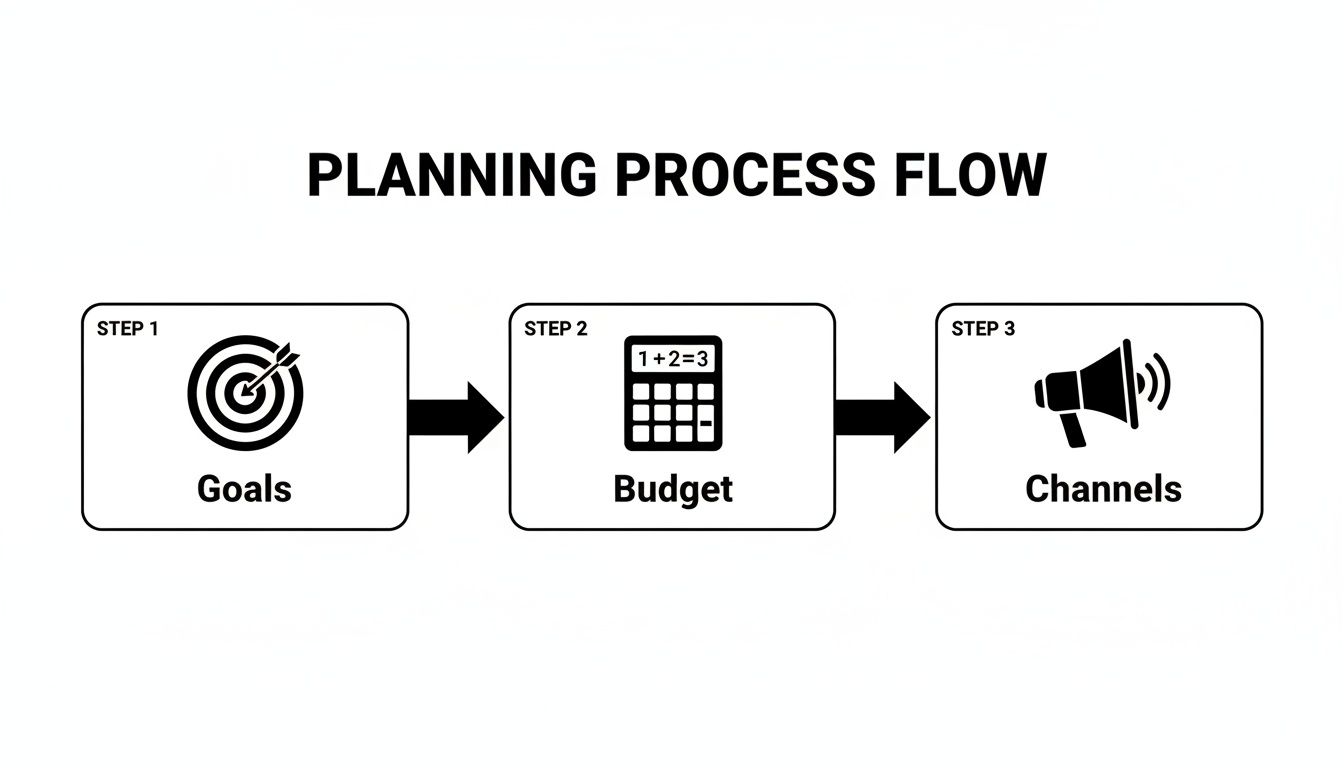
Nail Down Your Business Goals
Let’s define what a "win" actually looks like for you. "I want more business" is a wish, not a goal. You need to get specific and measurable.
Here are a few examples of solid goals:
- Lead Generation: "My sales team needs 20 qualified leads every month within six months."
- E-commerce Sales: "We need to boost our online store revenue by 30% this quarter."
- Brand Awareness: "Let's double our social media engagement and local website traffic by the end of the year."
When you give an agency a concrete target, they can build a real strategy to hit it. It takes the guesswork out of the process.
🔑 Key Takeaway: Turn vague wants into specific, measurable goals. An agency can't hit a target you haven't clearly defined.
Get Real About Your Budget
Your budget sets the scope of the project. There's no right or wrong number, but you have to be honest about what you can invest.
- A smaller budget might be perfect for a focused local SEO campaign.
- A larger one could fund a full strategy across Google Ads, Facebook, and more.
This is also when you should weigh your options. Does it make more sense to hire an agency, build an in-house team, or do a mix of both? Looking at breakdowns of in-house vs. agency vs. hybrid models for webinar production can offer valuable perspective on resource allocation.
Pinpoint Your Most Important Channels
You don’t need to be everywhere. Trying to be on every platform is a great way to burn through your budget with nothing to show for it. The real question is: where are your customers?
- If you're a plumber, your customers are on Google searching for help right now. That means local SEO and Google Ads are your best bet.
- Selling a visual product like custom furniture? Facebook and Instagram Ads are probably where you'll find your audience.
- In the B2B space? LinkedIn and solid content marketing are often the best ways to connect with professionals.
Focusing on a couple of high-impact channels is always smarter than spreading yourself too thin.
Step 2: Find and Screen Potential Agencies
Alright, you've figured out what you need. Now it’s time to find an agency that can deliver. Instead of just Googling "digital marketing agency," let's get more strategic.

First, we'll build a "longlist" of promising candidates. Then, we'll narrow it down to a shortlist of three to five agencies you’ll actually talk to.
Build Your Initial Longlist
The best leads often come from people you already trust. Start by asking other business owners in your network who they’ve worked with. A referral comes pre-vetted.
But don't stop there. Here are other places to look:
- Review Platforms: Sites like Clutch and G2 offer verified client reviews and project details.
- Industry Groups: Dive into LinkedIn groups or online forums in your niche to find true specialists.
- Google Premier Partner Directory: If paid ads are your main focus, this directory lists agencies that have met Google's highest standards.
Checking out resources dedicated to agencies can also give you a broader perspective on the different types of firms out there.
The First-Pass Screening Process
Got your longlist? Great. Now it's time for a quick screening. The goal is to spend no more than 10-15 minutes on each agency’s website to see if they’re a potential fit.
This quick check saves you from wasting hours on calls with agencies that were never going to work out.
What to Look For
- Specialization: Is it obvious what they do best? If you need Google Shopping help, an agency that only talks about B2B content marketing is an easy "no."
- Case Studies: Do they showcase results for businesses that look like yours? Vague promises are a red flag. Look for real numbers and measurable wins.
- Client Reviews: What are clients really saying? A quote like, "They boosted our lead conversions by 40% in six months," tells you a lot more than "they were great to work with."
- Team and Culture: Check their "About Us" page. Do they seem like real people whose values align with yours? You're starting a partnership, not just hiring a service.
Once you've run through this checklist, your longlist should be a much shorter, more manageable group. Now you're ready to start having some real conversations.
Step 3: Have Conversations That Matter
You’ve done the research and narrowed the list to a few solid contenders. Now it’s time to get them on the phone. This is where you separate the agencies with slick sales decks from the ones with real strategic minds.
The goal isn't to be sold to. It's to see how they think.
A great initial call should feel more like a consultation than a pitch. They should be asking you more questions than you're asking them, at least at first. If an agency dives straight into their solution without first digging into your business and goals, that’s a massive red flag.
Dig Deeper Than the Surface
To figure out if an agency is the real deal, you have to push past surface-level promises. You need to understand their process, how they communicate, and what happens when a campaign doesn't work.
Here are the questions that truly matter:
- Who will actually work on my account? You might be talking to a senior partner now, but will your account be handed off to a junior manager? Get clarity on the team structure.
- Can you show me a sample report? Good reporting connects their actions to your business goals, not just vanity metrics like clicks and impressions.
- What’s your process for an underperforming campaign? No one gets it perfect right away. You want a partner who is proactive and has a data-driven plan for fixing what isn’t working.
- Walk me through the first 90 days. A solid agency will have a documented onboarding process. They should be able to tell you exactly what to expect.
These kinds of questions force the conversation away from hypotheticals and into practical operations. For a complete list of questions, our digital marketing questionnaire is a great resource for vetting potential partners.
Vetting a True Partner, Not Just a Vendor
These interviews are your chance to get a feel for what it would be like to work with these people. The questions below can help structure your conversations.
Key Questions for Vetting a Digital Marketing Agency
Use these questions during your interviews to dig deeper.
| Question Category | Sample Question | What to Look for in the Answer |
|---|---|---|
| Team & Account Management | "Who will be my day-to-day contact, and what's their level of experience?" | Clarity on the team structure. You want an experienced point person, not just a salesperson. |
| Strategy & Process | "Can you walk me through how you’d develop a strategy for a business like mine?" | A customized, research-based approach, not a one-size-fits-all template. They should ask you clarifying questions. |
| Communication & Reporting | "What metrics do you focus on, and how often will we receive reports?" | A focus on business outcomes (leads, sales, ROI). A clear, regular communication cadence. |
| Handling Challenges | "Tell me about a time a campaign didn't go as planned. What did you do?" | Honesty, accountability, and a problem-solving mindset. They should be comfortable discussing what they learned. |
| Client Relationships | "What's your average client retention rate?" | High retention is a great sign. It shows they build long-term, successful partnerships. |
Remember, pay close attention to the vibe of the conversation. You’re looking for a partner who will challenge your assumptions and bring fresh ideas to the table, not just a vendor who nods along.
Step 4: Analyze Proposals and Make Your Decision
The proposals are in your inbox. I know the temptation—to immediately look at the price. Resist that urge. Choosing an agency based on price alone is a quick way to wind up disappointed.
A solid proposal isn't just a quote; it’s a preview of the partnership and a blueprint for how they plan to help you win.

Look Beyond the Price Tag
The cheapest option is almost never the best value. A low bid often means they're cutting corners somewhere, like using a junior team or a cookie-cutter strategy.
Instead, shift your focus from cost to value. An agency that costs more but presents a thoughtful, custom strategy with a clear path to ROI is a much smarter move. The goal isn't to spend the least; it's to get the most for your money.
If you're unsure what's fair, it helps to understand different pricing models. You can get a good feel for standard costs by reading up on how much PPC management fees are.
What a Great Proposal Includes
A winning proposal should feel like a direct answer to your goals. It needs to be specific, clear, and tailored to your business.
Here’s what to look for:
- It Restates Your Goals: This is a simple sign that they were paying attention.
- A Detailed Scope of Work (SOW): Vague promises like "SEO services" are a red flag. You want specifics like "conduct keyword research for 20 core service pages."
- The 'Why' Behind the 'What': A great partner explains why they're recommending a specific channel or strategy.
- A 30-60-90 Day Plan: They should lay out clear milestones for the first three months.
- How They'll Measure Success: The proposal must define the Key Performance Indicators (KPIs) they will track to show progress.
🚩 Red Flag Alert: If an agency "guarantees" a #1 ranking on Google, run. No one can ethically make that promise. It's a classic sign of a company that will under-deliver or use shady tactics.
Use a Simple Scoring System
To stay objective, create a simple scorecard. It’s a great way to compare agencies on the criteria that actually matter to you. List your top contenders and score them from 1 to 5.
Sample Agency Scoring Rubric
| Criteria | Agency A (Score 1-5) | Agency B (Score 1-5) | Agency C (Score 1-5) |
|---|---|---|---|
| Strategic Approach | |||
| Team Experience | |||
| Industry Expertise | |||
| Communication Plan | |||
| Cultural Fit | |||
| Value for Price | |||
| Total Score |
This exercise often makes the best choice surprisingly clear and gives you more confidence in your final pick.
Step 5: Set Your New Partnership Up for Success
You did it. You waded through proposals and made a decision. But signing the contract isn't the finish line—it's the starting line. The way you kick things off with your new agency can make or break the relationship.
This last phase is all about getting everyone on the same page and building a solid foundation from day one.
Don't Just Skim the Contract
I get it. You're excited to get started. But please, read the contract. This document is the rulebook for your partnership.
Here’s what to focus on:
- Scope of Work (SOW): This needs to be brutally specific. Vague terms are a recipe for disappointment.
- Payment Terms: The contract must clearly state the payment schedule, due dates, and any related policies.
- Termination Clause: This is your escape hatch. A fair contract will outline a clear process for ending the agreement, usually with a 30-day written notice. Be wary of long-term lock-ins.
In Short: A good contract protects everyone and makes sure you and the agency are aligned on deliverables, payment, and exit terms.
The Onboarding Kickoff Is Everything
Once the ink is dry, a great agency won't just say, "Okay, send us your logins." They'll have a structured onboarding process to get them up to speed on your business fast.
The kickoff meeting is the main event. This is where both teams sit down to lock in goals, map out a plan for the first 90 days, and figure out communication.
What a Great Onboarding Looks Like
A smooth onboarding process sets the tone for the entire relationship. Here’s what it should always include:
- A Formal Kickoff Meeting: A dedicated meeting to review business goals, dive deep into your target audience, and set immediate priorities.
- Secure Access Sharing: They'll need access to your website backend, Google Analytics, and ad accounts. A professional agency will use a secure method for sharing these.
- Setting Up Communication: How will you talk day-to-day? Many agencies use tools like Slack or Asana and set up a recurring meeting schedule.
- Initial Technical Audits: In the first week or two, they should already be conducting audits and installing any tracking pixels needed to measure success.
A seamless start means your new partner can start delivering value right away.
People Also Ask: Common Questions About Choosing an Agency

Even after doing all the homework, a few last-minute questions always seem to pop up. Let's walk through some of the most common things business owners ask when they’re figuring out how to choose a digital marketing agency.
How do I choose the right digital marketing agency?
Choosing the right agency involves a clear process:
- Define Your Goals: Know exactly what you want to achieve (e.g., more leads, higher sales).
- Set a Realistic Budget: Understand what you can afford to invest each month.
- Research and Shortlist: Find agencies with proven experience in your industry.
- Ask the Right Questions: Interview them to understand their process, team, and communication style.
- Review Proposals Carefully: Look for a custom strategy and clear deliverables, not just the lowest price.
What should I look for when hiring a marketing agency?
When hiring a marketing agency, look for these key things:
- Relevant Experience: They should have case studies and results from businesses similar to yours.
- A Clear Process: They need to explain how they will achieve your goals, not just what they will do.
- Transparent Reporting: You should get regular, easy-to-understand reports that focus on business metrics.
- Good Cultural Fit: You'll be working closely with their team, so a good relationship is crucial.
How much does it cost to hire a digital marketing agency?
The cost of a digital marketing agency varies widely. Monthly retainers can range from $1,000 to over $10,000, depending on the scope of work.
Here’s a quick look at common pricing models:
- Monthly Retainer: A fixed fee each month for ongoing services like SEO.
- Project-Based: A one-time fee for a defined project, like a website design.
- Percentage of Ad Spend: A fee based on how much you spend on ads (usually 10-20%).
- Hourly Rate: You pay for the exact number of hours worked.
The best model depends on your needs. The goal is to find a partner who connects their pricing directly to the value they bring.
What are some red flags when hiring an agency?
Knowing what to watch out for is half the battle. Here are a few warning signs:
- Guaranteed Results: No one can ethically guarantee a #1 ranking on Google.
- Vague Reporting: If they can’t show you exactly where your money is going, that’s a problem.
- Cookie-Cutter Strategies: A good partner is curious about your business; a bad one uses a pre-made template.
- High-Pressure Sales Tactics: Feeling rushed to sign a long-term contract is a sign to walk away.
A quality agency will be realistic, transparent, and focused on building a long-term partnership.
Ready to stop guessing and start growing? At Clicks Geek, we build data-driven marketing strategies that deliver real, measurable results for businesses just like yours. As a Google Premier Partner, we specialize in customer acquisition that drives revenue. Let's talk about what we can achieve together. https://clicksgeek.com