Most local business owners pour money into driving traffic but watch helplessly as visitors leave without buying, booking, or calling. The frustrating truth? Traffic without conversion is just expensive window shopping.
You’ve invested in Google Ads, Facebook campaigns, maybe even SEO. The visitors are coming. Your analytics dashboard shows the numbers climbing. But when you look at actual revenue? The math doesn’t add up.
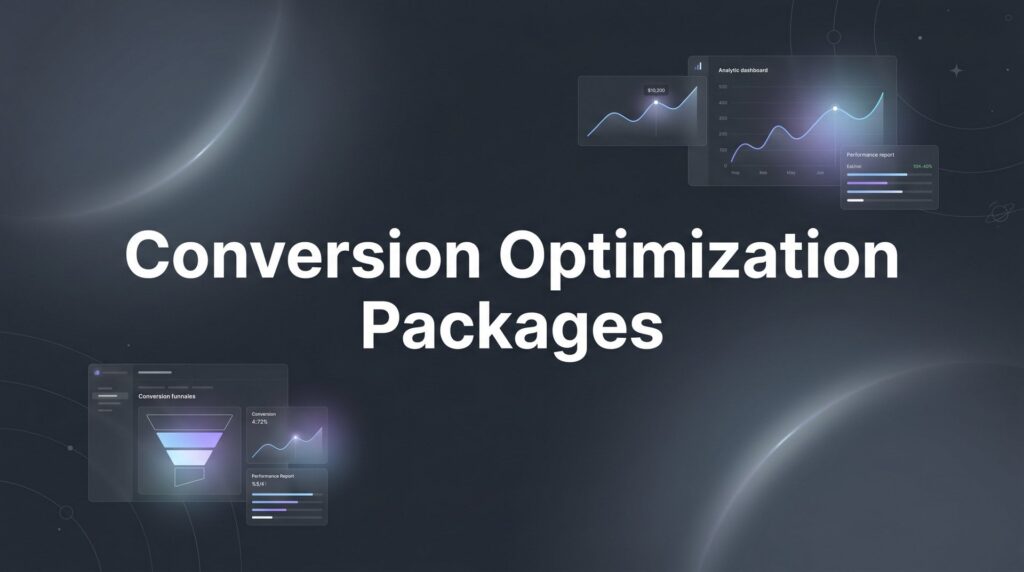
Conversion optimization packages solve this by systematically identifying and fixing the leaks in your sales funnel—turning more of your existing visitors into paying customers. But not all packages deliver equal results, and choosing the wrong approach can waste months and thousands of dollars.
This guide breaks down the seven most effective conversion optimization package strategies that consistently deliver measurable ROI for local businesses. Whether you’re struggling with landing pages that don’t convert, checkout abandonment, or leads that never turn into sales, you’ll discover which optimization approach matches your specific challenges and budget.
1. Landing Page Optimization Packages
The Challenge It Solves
You’re driving paid traffic to landing pages that should be printing money, but instead they’re hemorrhaging potential customers. Visitors arrive with purchase intent, scan your page for three seconds, and bounce. Your cost per click keeps rising while conversion rates stay stubbornly flat.
The problem isn’t your traffic source. It’s that your landing page fails the critical first impression test. Weak headlines, confusing value propositions, forms that ask for too much information, missing trust signals—any one of these conversion killers can tank your results. Understanding conversion rate optimization for landing pages is essential for fixing these issues.
The Strategy Explained
Landing page optimization packages focus exclusively on the pages where purchase intent is highest. These packages systematically improve the elements that influence conversion decisions: headlines that immediately communicate value, forms optimized for completion rates, trust signals positioned where skepticism peaks, and calls-to-action that remove friction.
Think of it like tuning a high-performance engine. You’re not rebuilding the entire car—you’re adjusting the components that directly impact speed. The best packages start with conversion research to understand why visitors leave, then prioritize changes based on potential impact.
This approach typically delivers the fastest ROI because it targets the exact moment when visitors are deciding whether to become customers. You’re not waiting for traffic to build or brand awareness to grow. You’re immediately improving the conversion rate of traffic you’re already paying for.
Implementation Steps
1. Identify your highest-traffic landing pages with the lowest conversion rates—these represent your biggest opportunities for immediate revenue gains.
2. Conduct qualitative research through session recordings and user feedback to understand specific friction points causing abandonment.
3. Implement priority improvements starting with above-the-fold elements: headline clarity, value proposition strength, and primary call-to-action visibility.
4. Optimize form fields by removing unnecessary questions and implementing progressive disclosure for complex conversions.
5. Add strategic trust signals at decision points: customer testimonials near pricing, security badges near payment forms, and social proof near signup buttons.
Pro Tips
Start with your paid search landing pages before touching organic pages. Paid traffic represents visitors actively searching for solutions, making them more conversion-ready and your testing more conclusive. Also, fix mobile experience first—most local business traffic comes from mobile devices, and mobile conversion rates typically lag desktop by significant margins.
2. Full-Funnel Conversion Audit Packages
The Challenge It Solves
Your analytics show visitors moving through your site, but somewhere between initial interest and final purchase, they’re vanishing. You can’t pinpoint where the breakdown happens because you’re only looking at individual pages instead of the complete journey.
Maybe your landing pages convert fine, but your checkout process loses people. Or perhaps visitors engage with product pages but never reach checkout at all. Without understanding the full funnel, you’re optimizing blindly—fixing problems that might not be your biggest revenue blockers. A comprehensive conversion funnel optimization guide can help you identify these hidden leaks.
The Strategy Explained
Full-funnel audit packages examine every stage of your customer journey, from first click to final conversion. These comprehensive analyses map the entire path visitors take, identifying conversion leaks at each transition point.
The power of this approach lies in discovering hidden problems. You might think your product pages need work, but the audit reveals that 60% of visitors abandon during account creation. Or you assume checkout is fine, but the data shows mobile users can’t complete payment on smaller screens.
These packages typically include technical audits, user behavior analysis, competitive benchmarking, and prioritized recommendations. You’re not getting surface-level observations—you’re getting a blueprint that shows exactly where to focus resources for maximum impact. For a deeper dive into this approach, explore sales funnel optimization services that specialize in this methodology.
Implementation Steps
1. Map your complete conversion funnel including all entry points, decision stages, and potential exit paths visitors might take.
2. Install comprehensive tracking to measure drop-off rates at each funnel stage, identifying where the biggest percentage losses occur.
3. Analyze user behavior through session recordings focusing specifically on visitors who abandon at critical conversion points.
4. Conduct technical audits examining page speed, mobile responsiveness, form functionality, and payment processing across all funnel stages.
5. Benchmark your funnel performance against industry standards to identify stages performing significantly below typical conversion rates.
6. Create a prioritized action plan ranking improvements by potential revenue impact and implementation complexity.
Pro Tips
Don’t skip the competitive analysis component. Your competitors might be solving friction points you haven’t considered, and understanding their user experience reveals opportunities you’re missing. Also, segment your funnel analysis by traffic source—paid search visitors often behave differently than social media traffic, requiring different optimization approaches.
3. A/B Testing and Experimentation Packages
The Challenge It Solves
You’ve got theories about what might improve conversions, but implementing changes based on gut feelings is expensive gambling. Change your headline and conversions might improve—or they might tank. Without systematic testing, you’re making decisions in the dark.
The stakes are high. A wrong change to a high-traffic page can cost thousands in lost revenue before you realize the mistake. Meanwhile, potential winning variations sit untested because you’re afraid to mess with “what’s working.”
The Strategy Explained
A/B testing packages replace guesswork with data-driven decisions. These packages systematically test hypotheses by showing different variations to different visitor segments, measuring which version produces better results. Understanding A/B testing for conversion optimization is crucial for implementing this strategy effectively.
The methodology is rigorous. You’re not just launching random tests—you’re developing hypotheses based on user research, designing statistically valid experiments, and letting actual visitor behavior determine winners. One business might test whether a video or image converts better. Another might test long-form versus short-form landing pages.
What makes this approach powerful is the learning compound effect. Each test reveals insights about your audience’s preferences, informing smarter hypotheses for future tests. Over time, you build a conversion optimization playbook specific to your customers.
Implementation Steps
1. Develop testing hypotheses based on user research, analytics data, and identified friction points rather than random ideas.
2. Prioritize tests using an impact-versus-effort framework, starting with high-traffic pages where small improvements create significant revenue gains.
3. Design test variations that isolate single variables to ensure you understand exactly what drives results changes.
4. Calculate required sample sizes before launching tests to ensure you’ll reach statistical significance within reasonable timeframes.
5. Monitor tests for validity issues like seasonal effects, traffic source changes, or technical problems that could skew results.
6. Document learnings from every test—including losers—to build institutional knowledge about what resonates with your audience.
Pro Tips
Resist the temptation to call tests early when you see promising results. Statistical significance matters because early trends often reverse as more data accumulates. Also, test bold variations alongside incremental ones. Sometimes a completely different approach outperforms minor tweaks, but you’ll never discover this if you only test safe changes.
4. User Experience (UX) Optimization Packages
The Challenge It Solves
Visitors arrive on your site ready to buy, but invisible friction points frustrate them into leaving. Your navigation confuses them. Your forms feel tedious. Your mobile experience requires zooming and pinching. Each small annoyance compounds until abandoning feels easier than completing the purchase.
The insidious part? You can’t see these problems from your perspective as the business owner. You know where everything is. You understand your product categories. You’ve never tried completing a purchase on a slow 4G connection while standing in line at the grocery store.
The Strategy Explained
UX optimization packages use tools like heatmaps, session recordings, and usability testing to see your site through your visitors’ eyes. These packages identify and eliminate friction at every interaction point. Reviewing best conversion optimization tools can help you select the right technology for this analysis.
Heatmaps reveal where visitors actually click versus where you want them to click. Session recordings show the exact moments of confusion—watching someone try three different buttons before finding your contact form tells you more than any analytics report. Usability testing puts real users in front of your site with specific tasks, exposing assumptions you didn’t know you were making.
The goal is creating a frictionless path to conversion. Every unnecessary click removed, every confusing element clarified, every mobile frustration eliminated—these improvements compound into significantly higher conversion rates.
Implementation Steps
1. Install heatmap and session recording tools on your highest-traffic pages to capture actual user behavior patterns.
2. Review recordings of visitors who abandoned at critical conversion points, noting specific interactions before exit.
3. Conduct usability testing with target customers, giving them realistic tasks and observing where they struggle or express confusion.
4. Audit mobile experience separately from desktop, testing on actual devices across different screen sizes and connection speeds.
5. Map user flows from entry to conversion, identifying unnecessary steps that could be eliminated or streamlined.
6. Prioritize friction removal based on frequency of occurrence and proximity to conversion points.
Pro Tips
Pay special attention to rage clicks and dead clicks in your session recordings—these indicate visitors trying to interact with elements that aren’t clickable or aren’t responding as expected. Also, test your site on the slowest devices and connections your target audience actually uses, not just your high-speed office internet and latest iPhone.
5. Conversion Copywriting Packages
The Challenge It Solves
Your site looks professional. Your design is clean. Your page speed is fast. But your messaging fails to communicate why visitors should choose you over competitors. Your value proposition sounds like everyone else’s. Your calls-to-action lack urgency. Your product descriptions focus on features while visitors care about outcomes.
The result? Visitors understand what you offer but don’t feel compelled to act. They browse, compare, and leave to think about it. Your conversion problem isn’t technical—it’s persuasive.
The Strategy Explained
Conversion copywriting packages focus exclusively on the words that drive decisions. These packages improve headlines, value propositions, calls-to-action, product descriptions, and persuasive elements across your highest-impact pages.
Great conversion copy does three things simultaneously: it clarifies what you offer, differentiates you from alternatives, and motivates immediate action. Instead of generic headlines like “Professional Services,” conversion-focused copy might say “Get Your Tax Return Filed in 24 Hours—Guaranteed.” Reviewing conversion rate optimization case studies reveals how powerful messaging changes can transform results.
The best packages start with customer research—understanding the exact language your target audience uses when describing their problems and desired solutions. Then they craft messaging that mirrors this language while addressing specific objections and concerns that prevent conversion.
Implementation Steps
1. Conduct customer interviews and review support conversations to identify exact language customers use when describing problems and solutions.
2. Audit existing copy for generic claims, feature-focused descriptions, and weak calls-to-action that lack specificity or urgency.
3. Rewrite headlines to lead with specific outcomes or transformations rather than generic service descriptions.
4. Strengthen value propositions by adding concrete specifics—numbers, timeframes, guarantees—that differentiate from competitor claims.
5. Revise calls-to-action to remove friction words and add clarity about what happens next when visitors click.
6. Implement strategic objection handling by addressing common concerns preemptively in copy near conversion points.
Pro Tips
Test emotional versus rational appeals for your specific audience. B2B buyers often respond better to risk-reduction messaging while consumer audiences might respond to aspiration. Also, don’t overlook microcopy—the small text around forms, buttons, and navigation significantly impacts conversion even though it’s easy to ignore during copywriting projects.
6. Personalization and Segmentation Packages
The Challenge It Solves
You’re showing the same generic experience to first-time visitors and returning customers, to people who found you through Google and those who clicked a Facebook ad, to mobile users and desktop browsers. This one-size-fits-all approach misses opportunities to speak directly to each visitor’s specific context and needs.
A visitor who arrived searching for “emergency plumber” has different needs than someone researching “bathroom renovation contractors.” Treating them identically means your messaging resonates with neither. Understanding conversion optimization for service businesses helps address these unique segmentation challenges.
The Strategy Explained
Personalization packages deliver tailored experiences based on visitor behavior, traffic source, location, and other characteristics. These advanced packages might show different headlines to paid search versus organic visitors, display location-specific offers, or adjust messaging based on previous browsing behavior.
The sophistication varies by package level. Basic personalization might segment by traffic source or new versus returning visitors. Advanced packages might implement dynamic content that changes based on dozens of variables, creating hundreds of unique experience variations.
What makes personalization powerful is relevance. When your headline speaks directly to a visitor’s specific situation, conversion rates typically improve significantly. When your offer matches their demonstrated intent, friction decreases.
Implementation Steps
1. Identify your highest-value visitor segments based on conversion rates, average order value, and traffic volume.
2. Map distinct characteristics and needs for each segment—what problems they’re solving, what objections they have, what language resonates.
3. Develop segment-specific messaging variations for key pages, starting with headlines and primary calls-to-action.
4. Implement technical personalization through your website platform or dedicated personalization tools.
5. Create rules for when and how each variation displays based on visitor attributes and behaviors.
6. Monitor segment performance separately to ensure personalization improves rather than harms conversion rates.
Pro Tips
Start with traffic source personalization before attempting behavioral personalization. It’s simpler to implement and often delivers strong results because different channels attract visitors with different intents. Also, avoid over-personalization that feels creepy—there’s a fine line between helpful relevance and invasive tracking that damages trust.
7. Ongoing Optimization Retainer Packages
The Challenge It Solves
You implement one round of optimizations, see improvements, then move on to other priorities. Six months later, conversion rates have drifted back down. Your market has changed. Competitors have improved their offers. New friction points have emerged. Without continuous optimization, initial gains erode.
One-time optimization projects deliver immediate lifts but miss the compounding returns of systematic, ongoing improvement. You’re leaving money on the table every month by not continuously testing and refining. Understanding the conversion rate optimization process helps you build sustainable improvement systems.
The Strategy Explained
Retainer packages provide continuous improvement through monthly testing cycles and strategic recommendations. Instead of a single project, you’re building a conversion optimization program that compounds gains over time.
These packages typically include monthly testing sprints, quarterly strategy reviews, ongoing performance monitoring, and priority adjustments based on business changes. You’re not just fixing current problems—you’re systematically exploring opportunities and staying ahead of market shifts.
The compounding effect is significant. Month one might improve landing page conversions. Month two optimizes checkout flow. Month three refines email follow-up sequences. Each improvement builds on previous gains, creating multiplicative rather than additive results.
Implementation Steps
1. Establish baseline metrics across your entire conversion funnel to measure cumulative improvement over time.
2. Develop a rolling test roadmap prioritizing experiments by potential impact and current business priorities.
3. Implement monthly testing cycles with defined hypotheses, success metrics, and learning documentation processes.
4. Schedule quarterly strategy reviews to reassess priorities based on business changes and accumulated learnings.
5. Create feedback loops between optimization insights and broader marketing strategy to inform campaign development.
6. Build institutional knowledge by documenting what works for your specific audience to guide future optimization decisions.
Pro Tips
Retainers work best for businesses with sufficient traffic to run meaningful tests monthly. If your traffic is too low, consider quarterly optimization sprints instead of monthly retainers. Also, align optimization priorities with your sales calendar—testing checkout improvements before your busy season delivers more immediate revenue impact than testing during slow periods.
Your Optimization Roadmap
Choosing the right conversion optimization package depends on where your biggest opportunities hide. If you’re unsure where to start, a full-funnel audit reveals your highest-impact priorities. If you already know landing pages are the problem, start there. For businesses ready to commit to long-term growth, retainer packages deliver compounding returns over time.
The key is matching the package to your specific situation—not chasing the shiniest option. A small business with limited traffic shouldn’t invest in advanced personalization when basic landing page fixes would deliver faster ROI. Conversely, a high-traffic site that’s already optimized the basics needs sophisticated testing to find incremental gains.
Consider your current conversion baseline, available traffic volume, and how quickly you need results. Landing page optimization typically delivers the fastest wins. Full-funnel audits provide the clearest roadmap. Testing packages offer the most learning. UX optimization removes invisible friction. Copywriting packages improve persuasion. Personalization increases relevance. Retainers compound everything over time.
Most successful optimization programs start with quick wins to build momentum, then expand into more sophisticated approaches as results justify investment. You don’t need to implement everything simultaneously—you need to start with the approach that addresses your most expensive conversion leak.
At Clicks Geek, we help local businesses identify exactly which optimization approach will deliver the fastest ROI for their unique challenges. We’ve seen businesses double conversion rates through landing page fixes alone. We’ve helped others discover that their real problem wasn’t their website at all—it was misaligned traffic sources bringing the wrong visitors.
Ready to stop losing customers to fixable conversion problems? Tired of spending money on marketing that doesn’t produce real revenue? We build lead systems that turn traffic into qualified leads and measurable sales growth. If you want to see what this would look like for your business, we’ll walk you through how it works and break down what’s realistic in your market.