Managing PPC campaigns profitably is harder than it looks. Cost-per-click rates continue to climb across nearly every industry, ad platforms grow more complex with every update, and a poorly optimized campaign can burn through budget fast without delivering meaningful returns. The difference between a campaign that generates real revenue and one that just generates clicks often comes down to two things: strategy and the right tools.
To put this list together, we evaluated each option based on ease of use, automation capabilities, reporting depth, bid management features, and overall impact on ROI. You’ll notice the list includes both software platforms and a fully managed service option, because some businesses thrive with hands-on tools while others get better results by handing the wheel to an experienced team. If you want to understand what separates winning campaigns from money pits, our guide to profitable PPC campaigns is a good place to start. And if you’re weighing whether to manage in-house or outsource, take a look at what to expect when you hire a PPC management agency.
Here are the top PPC management tools worth your attention in 2026.
1. Clicks Geek
Best for: Local businesses and growing companies that want expert-managed PPC without the guesswork.
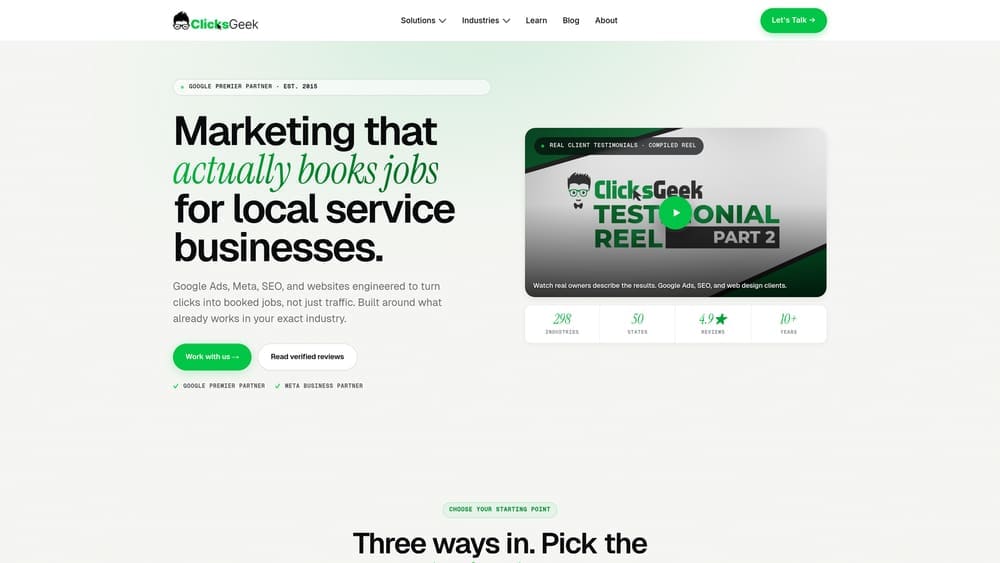
Clicks Geek is a Google Premier Partner agency that handles PPC end-to-end, combining campaign management with conversion rate optimization to drive leads and revenue, not just traffic.
Where This Tool Shines
Most PPC tools hand you a dashboard and wish you luck. Clicks Geek is different because it’s not a tool at all. It’s a team of specialists who build, manage, and optimize your campaigns with one goal in mind: measurable business results. That distinction matters when you’re running a local business or scaling a service company and don’t have time to become a Google Ads expert yourself.
What sets this apart from a typical agency is the emphasis on CRO alongside campaign management. Getting clicks is one thing; turning those clicks into paying customers is where most campaigns fall apart. Clicks Geek treats post-click conversion as part of the core service, not an afterthought.
Key Features
Fully Managed Google Ads and Facebook Ads: Strategy, setup, ongoing optimization, and reporting handled entirely by the Clicks Geek team.
CRO Expertise Built In: Every campaign is paired with conversion optimization thinking to maximize the value of each click you pay for.
White-Label PPC Services: Agencies can resell Clicks Geek’s services under their own brand, making it a strong option for digital marketing firms looking to scale.
Transparent Revenue-Focused Reporting: Reports focus on leads, calls, and revenue, not impressions and click-through rates that don’t tell you if the business is growing.
Google Premier Partner Status: This designation is reserved for agencies that meet Google’s highest performance and spend thresholds, providing access to beta features and direct support.
Best For
Local businesses and service companies that want a high-performance PPC operation without building an in-house team. Also an excellent fit for digital agencies seeking a reliable white-label PPC partner they can trust with client accounts.
Pricing
Custom pricing based on ad spend and campaign scope. Contact Clicks Geek directly for a free Google Ads audit to understand what’s possible for your specific situation.
2. Google Ads Editor
Best for: PPC managers who need to make bulk edits and manage large accounts efficiently.
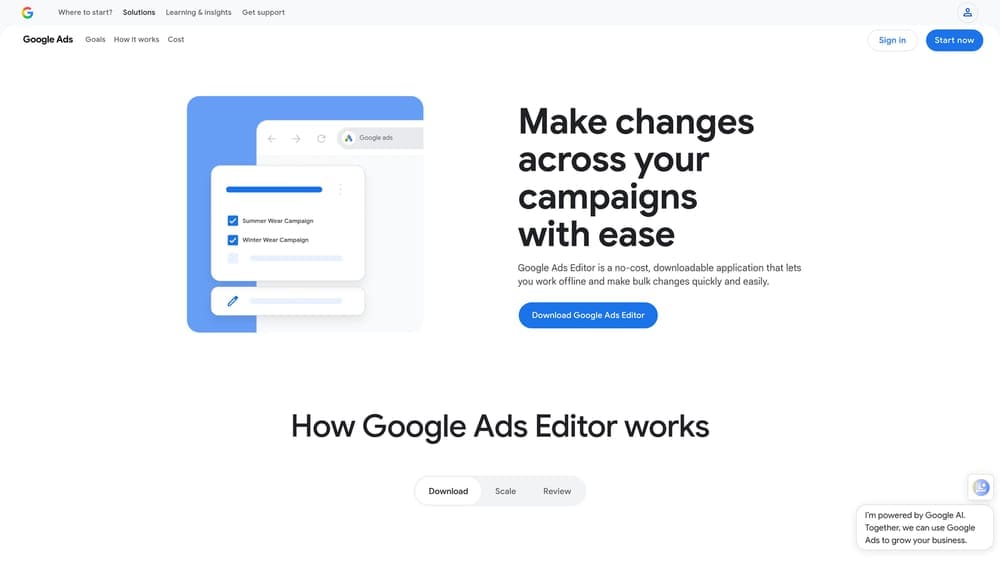
Google Ads Editor is a free desktop application from Google that lets advertisers manage campaigns offline and push changes in bulk, making it indispensable for anyone handling large or complex accounts.
Where This Tool Shines
If you’ve ever tried to update hundreds of keywords or swap out ad copy across dozens of ad groups inside the standard Google Ads interface, you know how painful that can be. Google Ads Editor solves that problem by letting you download your account, make changes locally, and upload everything at once. It’s fast, reliable, and free.
The find-and-replace functionality alone saves hours of work each week for active campaign managers. It’s not glamorous software, but it’s one of the most genuinely useful tools in a PPC professional’s stack.
Key Features
Bulk Editing: Make changes to campaigns, ad groups, keywords, and ads simultaneously without clicking through individual records.
Offline Editing: Work without an internet connection and upload all changes when you’re ready to go live.
Copy and Move Across Accounts: Duplicate campaigns or ad groups across accounts in seconds, a huge time-saver for agencies managing multiple clients.
Find and Replace: Update URLs, ad copy, or keyword match types across an entire account in one action.
Completely Free: No subscription, no tiers, no limitations based on spend.
Best For
In-house PPC managers and agency teams handling large Google Ads accounts with frequent changes. Less useful for beginners who are still learning the platform’s fundamentals.
Pricing
Free with no restrictions. Available for download directly from Google.
3. SEMrush PPC Toolkit
Best for: Advertisers who want deep competitive intelligence to inform their PPC strategy.
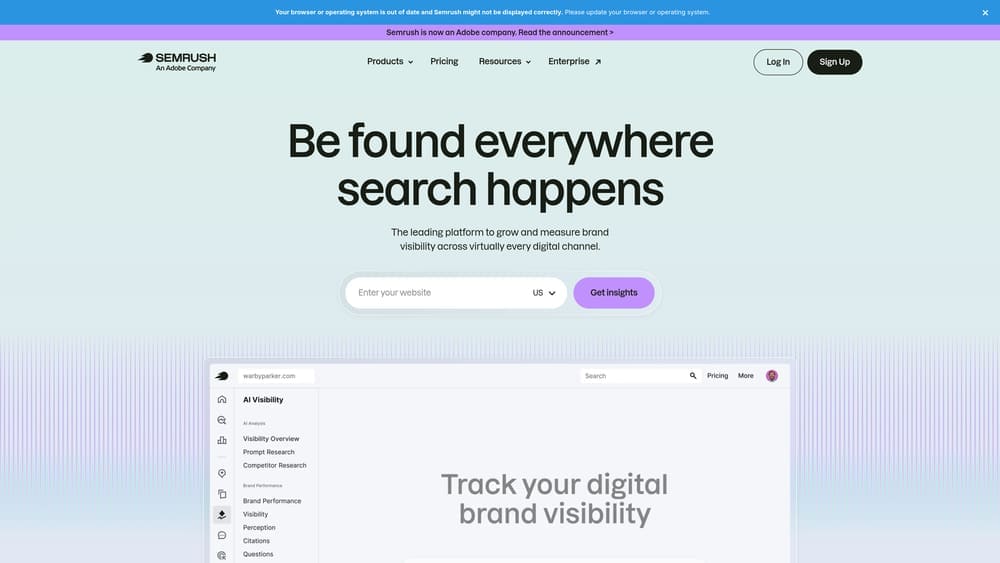
SEMrush is a comprehensive digital marketing platform with a dedicated PPC toolkit that helps advertisers research competitors, identify keyword opportunities, and plan campaigns with real market data.
Where This Tool Shines
One of the biggest advantages in PPC is knowing what your competitors are doing. SEMrush’s Advertising Research feature lets you see which keywords competitors are bidding on, what their ad copy looks like, and how their strategies have evolved over time. That kind of intelligence can dramatically shorten the time it takes to find profitable keywords and angles.
Beyond competitive research, the PPC Keyword Tool helps you organize keyword lists, identify negatives, and export campaign-ready data directly into Google Ads Editor or your platform of choice. It’s a planning and intelligence layer that works alongside your core campaign management workflow.
Key Features
Advertising Research: Analyze competitor ad strategies, estimated budgets, and keyword targets across any domain.
PPC Keyword Tool: Build, organize, and clean keyword lists with cross-group negative recommendations built in.
Ad History Analysis: Review how competitor ad copy has changed over time to spot seasonal patterns and messaging trends.
CPC Maps and Keyword Gap: Visualize cost-per-click data by geography and identify keyword opportunities your competitors are capturing that you’re missing.
Cross-Channel Suite: SEO, content, social, and PPC tools all in one platform for teams managing multiple marketing channels.
Best For
Marketing teams and agencies that prioritize data-driven planning and competitive analysis. Especially valuable when entering a new market or launching campaigns in a competitive vertical.
Pricing
Starts at $139.95/month for the Pro plan. PPC tools are included across all subscription tiers.
4. Optmyzr
Best for: PPC professionals who want powerful automation without giving up control of their accounts.
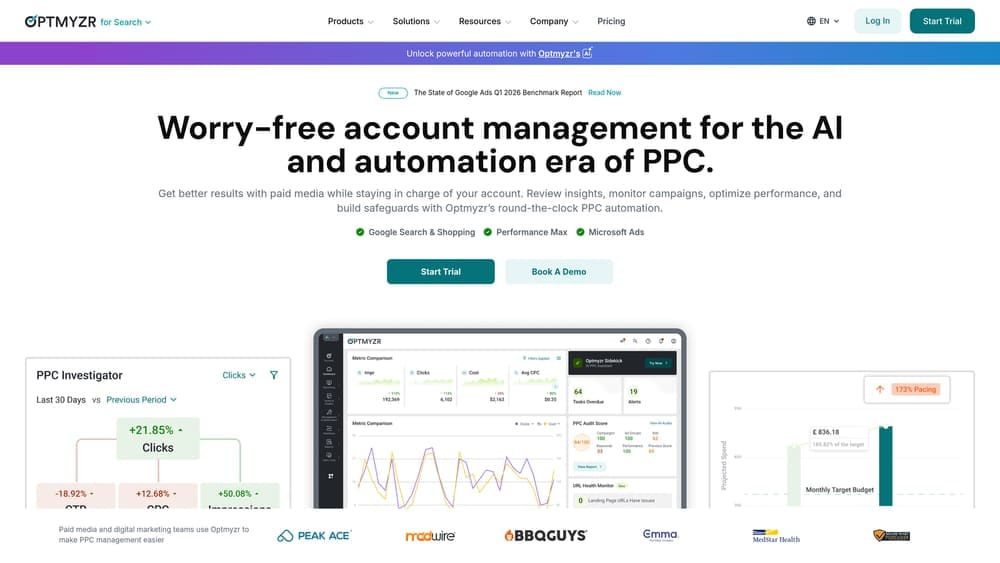
Optmyzr is a PPC management and automation platform built by former Google engineers, offering one-click optimizations, custom automation rules, and multi-platform support for serious campaign managers.
Where This Tool Shines
Optmyzr occupies a sweet spot between full automation and manual control. The one-click optimization features surface actionable recommendations, but you review and approve them before anything changes. That approach appeals to experienced PPC managers who want efficiency without handing over the keys entirely to an algorithm.
The custom rule engine is particularly powerful. You can build automated workflows that respond to performance triggers, like pausing keywords that exceed a certain CPA or adjusting bids based on weather or day-of-week data. It’s a level of sophistication that most SMB-focused tools simply don’t offer.
Key Features
One-Click Optimizations: Pre-built recommendations for bids, budgets, search terms, and ad copy that you review before applying.
Custom Rule Engine: Build automated campaign management workflows triggered by performance data, time, or external conditions.
PPC Audits and Account Scoring: Structured account health checks that identify issues and opportunities with clear priority rankings.
Shopping Campaign Management: Dedicated tools for bid optimization and product group management in Google and Microsoft Shopping.
Multi-Platform Support: Manage Google Ads, Microsoft Ads, Amazon Ads, and Facebook campaigns from a single interface.
Best For
Mid-size to large advertisers and PPC agencies managing significant ad spend across multiple platforms who need automation that still allows for human oversight and customization.
Pricing
Starts at $249/month for accounts managing up to $25,000 in monthly ad spend. Pricing scales with managed spend volume.
5. WordStream by LocaliQ
Best for: Small businesses that want guided PPC management without needing deep technical expertise.
WordStream, now part of the LocaliQ platform, is a simplified PPC management tool designed to help small business owners run Google and Facebook ads more effectively through guided recommendations and a streamlined dashboard.
Where This Tool Shines
Not every business has a dedicated PPC manager on staff. WordStream was built with that reality in mind. The platform’s signature feature, the 20-Minute Work Week, guides users through the most impactful optimizations they can make in a short time, removing the intimidation factor of managing ad accounts without deep expertise.
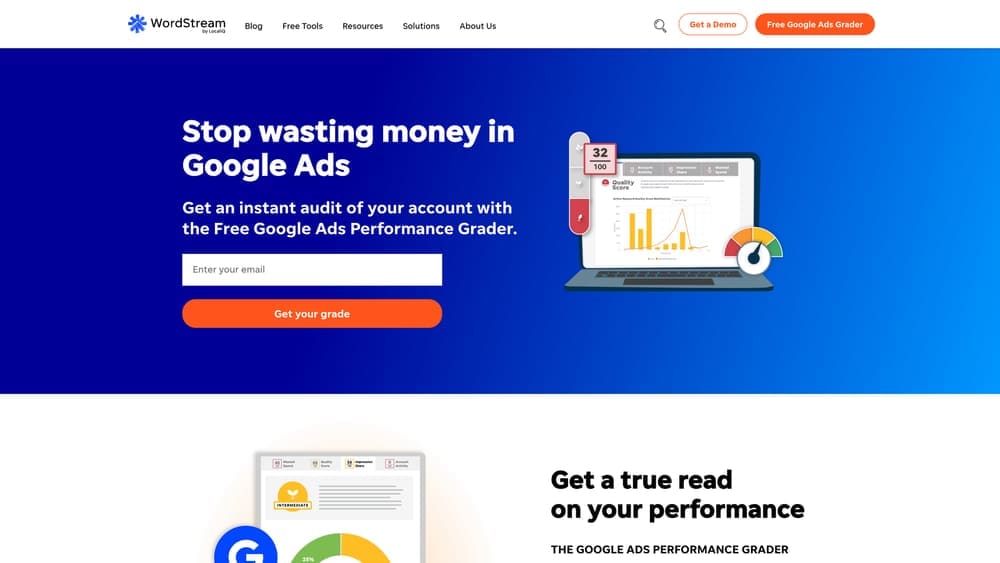
The free Google Ads Performance Grader is also worth mentioning. It’s one of the most widely used free diagnostic tools in the industry, giving advertisers a quick snapshot of how their account stacks up against benchmarks in their category.
Key Features
20-Minute Work Week: A guided optimization workflow that surfaces the highest-priority actions and walks users through implementing them step by step.
Cross-Platform Management: Manage both Google Ads and Facebook Ads campaigns from a single, unified dashboard.
Performance Grading and Benchmarking: Compare account performance against industry benchmarks to understand where you’re losing ground.
Smart Ad Creation: Recommendations for ad copy and creative based on account data and performance history.
Free Performance Grader: A no-cost tool that delivers an instant audit of your Google Ads account with actionable improvement suggestions.
Best For
Small business owners and marketing generalists who manage their own PPC accounts but want structure and guidance rather than a blank interface with endless options.
Pricing
Custom pricing through LocaliQ. Free tools, including the Google Ads Performance Grader, are available without a subscription.
6. SpyFu
Best for: Budget-conscious advertisers who want serious competitive PPC intelligence at an accessible price point.
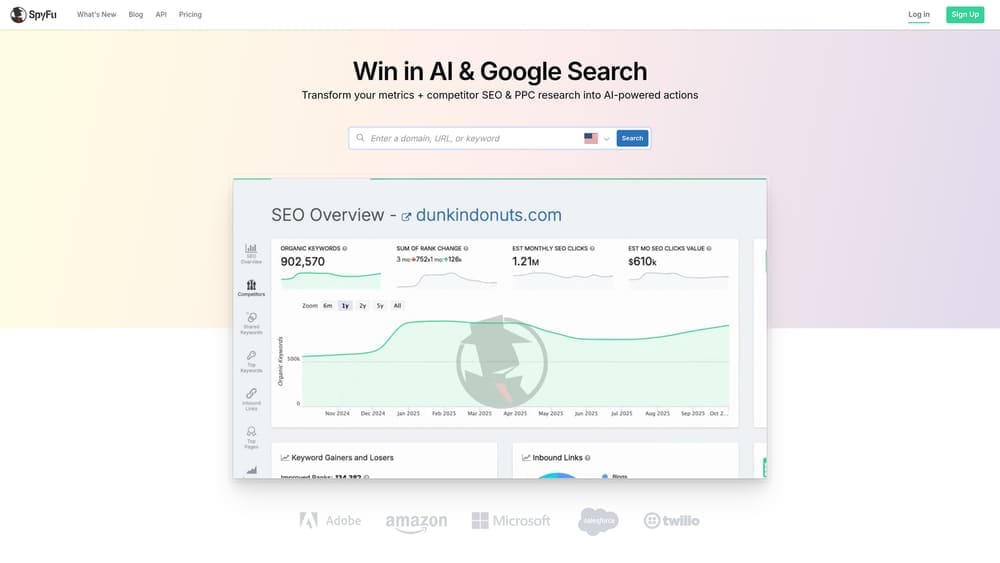
SpyFu is a competitive intelligence platform specializing in PPC keyword research and competitor ad history, giving advertisers a look at what’s working in their market without the enterprise price tag.
Where This Tool Shines
SpyFu’s depth of historical data is genuinely impressive for its price point. You can pull up any competitor domain and see which keywords they’ve been bidding on, what their ads have looked like over the past decade, and how their estimated ad spend has shifted over time. That kind of long-term view helps you distinguish between keywords that competitors test briefly and ones they keep investing in consistently, which is usually a strong signal of profitability.
For local businesses and smaller advertisers who can’t justify a SEMrush subscription, SpyFu delivers the most critical competitive intelligence features at a fraction of the cost.
Key Features
Competitor Ad and Keyword History: Access over a decade of historical data on any competitor’s PPC campaigns, including keywords bid on and ads run.
PPC Keyword Recommendations: Grouped keyword suggestions based on competitor data and market analysis.
Ad Spend and Click Estimates: Estimated monthly spend and traffic data for competitor domains to help you understand the competitive landscape.
Google Ads Advisor: Account-level recommendations for improving campaign performance based on your current keyword coverage.
Affordable Entry Point: Competitive intelligence features that rival more expensive platforms at a significantly lower monthly cost.
Best For
Small to mid-size advertisers, freelancers, and agencies looking for solid competitive research capabilities without committing to a high-end subscription. Particularly useful for initial campaign research and keyword discovery.
Pricing
Starts at $39/month for the Basic plan. Higher tiers unlock additional data exports and API access.
7. Adalysis
Best for: PPC managers focused on systematic ad testing and account quality monitoring.
Adalysis is a PPC optimization platform built around automated ad testing, Quality Score tracking, and proactive account health monitoring for Google and Microsoft Ads accounts.
Where This Tool Shines
Ad testing is one of those tasks that every PPC manager knows they should do rigorously but often doesn’t, because setting up statistically valid tests manually is tedious. Adalysis automates that process, detecting when tests have reached statistical significance and surfacing clear winners without requiring you to constantly monitor results yourself.
The Quality Score tracking is another standout capability. Quality Score affects how much you pay per click and where your ads appear, but the metric disappears from Google’s interface over time. Adalysis maintains a historical record so you can see how your scores trend and diagnose issues before they become expensive problems.
Key Features
Automated Ad Testing: Run structured A/B tests with automatic significance detection so you’re always acting on reliable data, not gut feel.
Quality Score Monitoring: Track Quality Score history at the keyword level to identify patterns and diagnose performance drops.
Automated Alerts: Get notified of account anomalies, budget issues, or performance drops before they cause significant damage.
Negative Keyword Management: Search query analysis and negative keyword recommendations to reduce wasted spend systematically.
Custom Audit Checklists: Structured account review workflows that help agencies deliver consistent, thorough account audits.
Best For
Experienced PPC managers and agencies that run multiple accounts and need systematic processes for ad testing, account health monitoring, and quality control. Less suited for beginners who haven’t yet built foundational campaign structure.
Pricing
Starts at $149/month, with pricing tiers based on monthly ad spend managed through the platform.
8. Unbounce
Best for: PPC advertisers who want to improve conversion rates without relying on a development team.
Unbounce is a landing page builder with AI-powered traffic routing, purpose-built to help paid advertisers turn more clicks into conversions through fast, optimized post-click experiences.
Where This Tool Shines
Here’s the thing most advertisers miss: the landing page is where PPC campaigns are won or lost. You can have a perfectly optimized campaign with great Quality Scores and competitive bids, but if visitors land on a slow, generic page, the budget is still wasted. Unbounce addresses that gap directly, letting you build dedicated landing pages for specific campaigns without waiting on a developer.
The Smart Traffic feature is particularly interesting. Rather than running a traditional A/B test where traffic splits evenly, it uses AI to route each visitor to the page variant most likely to convert based on their attributes. Many advertisers find this outperforms standard A/B testing, especially when traffic volumes are moderate.
Key Features
Drag-and-Drop Page Builder: Build professional, mobile-optimized landing pages using PPC-specific templates without writing code.
Smart Traffic AI: Automatically routes visitors to the highest-converting page variant based on individual visitor signals.
Built-In A/B Testing: Run traditional split tests alongside Smart Traffic for a complete conversion optimization workflow.
Dynamic Text Replacement: Automatically match landing page copy to the keyword that triggered the ad, improving relevance and Quality Score.
CRM and Marketing Integrations: Connect with HubSpot, Salesforce, Mailchimp, Zapier, and dozens of other platforms to route leads directly into your existing systems.
Best For
PPC advertisers, marketing teams, and agencies that recognize post-click optimization as a priority and want a dedicated tool for building and testing landing pages without developer dependency.
Pricing
Starts at $99/month for the Build plan. Higher tiers unlock additional domains, A/B testing features, and advanced AI capabilities.
9. Channable
Best for: E-commerce businesses running Shopping campaigns and dynamic ads across multiple channels.
Channable is a feed management and PPC automation platform designed specifically for e-commerce advertisers who need to manage product data and dynamic ads at scale across Google Shopping, Amazon, and other channels.
Where This Tool Shines
If you’re running a standard service business, Channable probably isn’t your tool. But if you’re managing an e-commerce catalog with hundreds or thousands of products, it’s a different story. Keeping product feeds accurate, up-to-date, and optimized across multiple ad channels manually is a full-time job. Channable automates that entire workflow, pulling data from your store and pushing clean, optimized feeds to each platform automatically.
The rule-based feed management system lets you filter, enrich, and categorize products dynamically. You can exclude out-of-stock items automatically, add custom labels based on margin or sales velocity, and create product-specific bidding rules without touching each item individually.
Key Features
Automated Feed Optimization: Continuously update and optimize product feeds for Google Shopping, Microsoft Shopping, and other channels based on live inventory data.
Dynamic Ad Creation: Generate ads automatically from your product catalog, ensuring every product has coverage without manual ad creation.
Rule-Based Feed Management: Apply conditional rules to filter products, add custom attributes, and manage which items appear in which campaigns.
Multi-Channel Support: Distribute optimized feeds to Google, Amazon, Meta, and a wide range of comparison shopping engines from a single platform.
Product-Level Analytics: Tie performance data back to individual products to understand which items drive the most revenue and where budget should shift.
Best For
E-commerce businesses and retail advertisers managing large product catalogs across multiple advertising channels. Particularly valuable for teams spending significant time on manual feed management and product-level campaign optimization.
Pricing
Starts at approximately €59/month, with pricing scaling based on the number of products in your feed and the channels you’re distributing to.
Which PPC Tool Actually Fits Your Business?
The right choice depends less on which tool has the longest feature list and more on where you actually are right now as a business. Here’s a quick way to think about it.
If you’re a DIY marketer or in-house PPC manager: Google Ads Editor is non-negotiable for account efficiency. Pair it with SEMrush or SpyFu for competitive intelligence, and consider Adalysis if systematic ad testing is a priority.
If you’re an agency managing multiple client accounts: Optmyzr’s automation and reporting capabilities make it a strong core platform. Adalysis adds a layer of quality control that scales well across accounts. Channable is essential if any clients run e-commerce campaigns.
If you’re a local business owner managing your own ads: WordStream’s guided workflow reduces the learning curve significantly. Unbounce is worth adding once campaigns are generating consistent traffic, because improving your landing page conversion rate is often the highest-leverage move available.
If you’re running an e-commerce store: Channable handles the feed management complexity that generic PPC tools ignore. Combine it with Unbounce for product-specific landing pages and you have a solid foundation.
One thing worth saying plainly: tools are only as effective as the strategy behind them. A sophisticated automation platform in the hands of someone without a clear campaign strategy will still produce mediocre results. The opposite is also true. A well-structured account managed with basic tools by an experienced team will often outperform a poorly managed account running every optimization tool available.
Tired of spending money on marketing that doesn’t produce real revenue? We build lead systems that turn traffic into qualified leads and measurable sales growth. If you want to see what this would look like for your business, we’ll walk you through how it works and break down what’s realistic in your market.