You’re running ads. You’ve got a website. Maybe you’re even posting on social media. But here’s the frustrating part—people click, they look around, and then they disappear. You know they need what you offer, but somewhere between that first click and actually hiring you, they vanish into thin air.
The problem isn’t your service. It’s that you don’t have a marketing funnel.
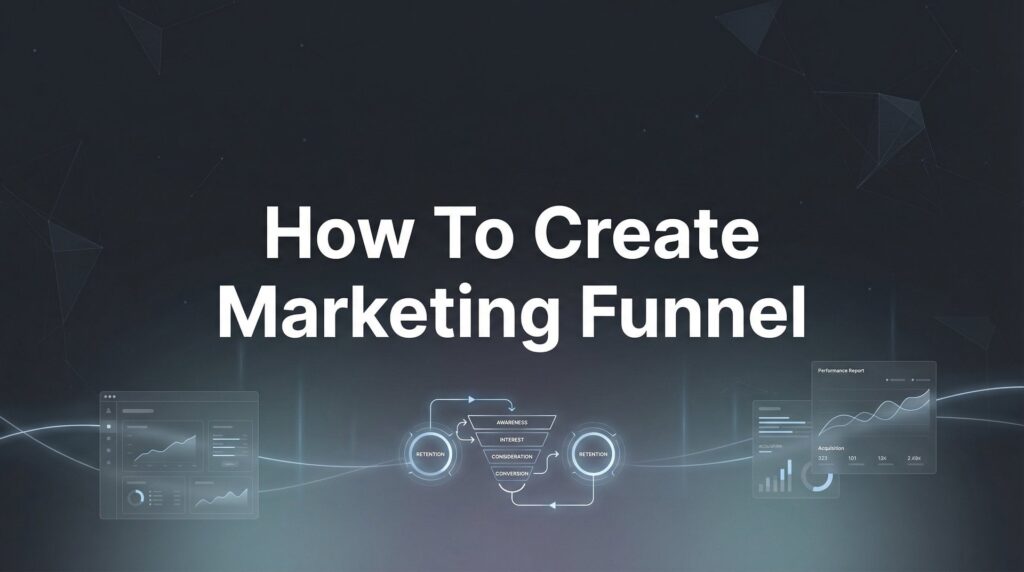
A marketing funnel is the systematic path you create to guide potential customers from “I’ve never heard of this business” to “Here’s my credit card.” Without one, you’re leaving money on the table every single day. You’re hoping people will magically decide to buy from you without any strategic guidance.
Think about it like this: Would you rather have strangers randomly wander into your store, or would you rather have a well-lit path that walks them through exactly why they should choose you? That’s what a proper funnel does.
The good news? Building a marketing funnel isn’t complicated once you understand the framework. It doesn’t require expensive software or a marketing degree. What it requires is a systematic approach to moving people through stages—from awareness to consideration to decision.
In this guide, you’ll learn exactly how to create a marketing funnel that captures attention, builds trust, and drives conversions. We’ll break down each stage with specific, actionable steps you can implement this week. Whether you’re a plumber, lawyer, contractor, or any local service business, this framework works.
By the end, you’ll have a complete funnel blueprint ready to deploy. No fluff, no theory—just practical steps that turn traffic into paying customers.
Step 1: Define Your Ideal Customer and Their Buying Journey
Before you build anything, you need crystal clarity on who you’re building it for. Most businesses skip this step and wonder why their marketing feels scattered and ineffective.
Start by identifying your most profitable customer type. Not just anyone who might buy from you—the specific person who pays well, doesn’t haggle, and actually values your expertise. Look at your past clients and ask: Who was easiest to work with? Who paid without complaint? Who referred others?
Get specific with demographics. Are they homeowners or business owners? What’s their age range? What’s their income level? Where do they live? These aren’t just academic questions—they determine where you’ll market and how you’ll speak to them.
Now dig into pain points. What problem keeps them up at night? What triggered them to start looking for your service? A leaking pipe? A legal dispute? A renovation project? Understanding the emotional driver behind their search is critical because that’s what your funnel needs to address.
Map out their buying journey in three stages. In the awareness stage, they’re realizing they have a problem but don’t know the solution yet. They’re asking questions like “Why is my water bill so high?” or “What are my legal options?” They’re not ready to buy—they’re trying to understand their situation.
In the consideration stage, they know what they need and they’re evaluating options. They’re comparing contractors, reading reviews, checking credentials. They’re asking “Who should I hire?” and “What’s this going to cost me?”
In the decision stage, they’re ready to pull the trigger. They just need that final push—a guarantee, a special offer, proof that you’re the right choice. They’re asking “Why should I choose you over the competition?”
Create a simple customer avatar document. Write one paragraph that describes your ideal customer with specific details. Include their situation, their pain point, what they’re searching for, and what objections they typically have. This becomes your reference point for every piece of content you create.
Here’s how you know this step worked: You should be able to describe your ideal customer in one paragraph without hesitation. If you’re still saying “anyone who needs my service,” you haven’t gone deep enough. Get specific. The more targeted your avatar, the more effective your funnel becomes.
Step 2: Create Your Awareness-Stage Content and Traffic Sources
Now that you know who you’re targeting, you need to get in front of them. This is where most local businesses make a critical mistake—they try to be everywhere at once and end up being effective nowhere.
Choose two to three traffic channels maximum. Pick channels where your ideal customer actually spends time. For most local service businesses, this means Google Ads for people actively searching, Facebook Ads for targeting specific demographics in your area, or local SEO for organic visibility. Don’t spread yourself thin trying to master every platform.
Google Ads works when people are actively searching for solutions. Someone typing “emergency plumber near me” or “divorce attorney in Dallas” has high intent. They need help now. This is your fastest path to qualified traffic, but it costs money per click. Learning how to create ads that actually convert is essential for making this channel profitable.
Facebook Ads work when you want to reach people based on demographics, interests, and location. You can target homeowners in specific zip codes, business owners in certain industries, or people who recently moved. The intent is lower, but you can build awareness before they’re actively searching.
Local SEO is your long-term play. Ranking in Google’s local pack and organic results takes time, but once you’re there, you get consistent free traffic. This means optimizing your Google Business Profile, building citations, earning reviews, and creating content that ranks.
Here’s the key: Your awareness-stage content shouldn’t sell. It should educate and help. At this stage, people are trying to understand their problem, not hire someone yet. If you jump straight to “Call us now,” you’ll scare them off.
Create blog posts that answer common questions. “5 Signs You Need a New HVAC System” or “What to Expect During a Personal Injury Case” gives value without asking for anything. Videos work even better—people can see you, hear you, and start building trust before they ever contact you.
Social content should showcase your expertise casually. Behind-the-scenes posts, quick tips, client results. You’re building familiarity so when they’re ready to buy, you’re the obvious choice.
Set up tracking immediately. Install Google Analytics and conversion tracking pixels on your website. You need to know which traffic sources bring qualified visitors who actually convert. Without tracking, you’re flying blind and wasting money on channels that don’t work. If you’re unsure how to set this up properly, our guide on fixing your marketing conversion tracking walks you through the entire process.
Success looks like this: You have at least one active traffic source consistently driving relevant visitors to your site. You can see in your analytics where people are coming from, what pages they visit, and which sources lead to conversions. If you can’t answer those questions, your tracking isn’t set up correctly.
Step 3: Build a Lead Capture System That Exchanges Value
Getting traffic is pointless if you can’t capture leads. Most visitors won’t buy on their first visit—they need time to think, compare options, and build trust. Your lead capture system keeps them in your ecosystem so you can nurture them toward a purchase.
Create a lead magnet that solves a specific problem. This is something valuable you give away in exchange for their contact information. For local service businesses, this could be a free estimate, a checklist, a planning guide, a calculator, or a free consultation call.
The key is specificity. “Free Guide” is weak. “The Complete Kitchen Renovation Cost Calculator” is strong. “Free Consultation” is generic. “Free 30-Minute Strategy Call to Review Your Marketing and Identify Your Biggest Growth Opportunity” is compelling.
Your lead magnet should be directly related to your service and immediately useful. A roofing company might offer “The Homeowner’s Roof Inspection Checklist.” A marketing agency might offer “The 15-Point Website Audit That Reveals Why Your Site Isn’t Converting.” Make it actionable and specific to your expertise.
Design a dedicated landing page for your lead magnet. This isn’t your homepage—it’s a single-purpose page focused entirely on getting someone to download your offer. Remove navigation, remove distractions, and focus everything on one action: filling out the form. Understanding how to create high converting landing pages can dramatically improve your lead capture rates.
Your headline should clearly state the benefit. Not “Download Our Guide” but “Get the Exact Checklist We Use to Evaluate Every Roof Before Recommending Repairs or Replacement.” Make it about them, not you.
List the specific benefits they’ll get. Use bullet points to show what’s inside the guide or what they’ll learn on the call. People need to understand the value before they’ll hand over their email address.
Keep your form simple. Name, email, and phone number is usually enough. Every additional field you add drops your conversion rate. Yes, you want to qualify leads, but you can do that in follow-up. Right now, your job is to capture the lead.
Set up your email capture to integrate with your CRM or email marketing platform. This should be automatic—when someone fills out the form, they immediately get added to your system and receive the lead magnet. No manual steps, no delays. Choosing the right marketing automation tools makes this process seamless.
Test your landing page before you send traffic to it. Fill out the form yourself. Make sure the confirmation email arrives. Check that the lead magnet downloads correctly. Broken processes lose leads instantly.
Success metric: Your landing page should convert at least 20% of visitors into leads. If you’re below that, something’s wrong—either your offer isn’t compelling enough, your headline doesn’t match your traffic source, or your form is too complicated. Track this number religiously and optimize until you hit that benchmark.
Step 4: Develop Your Nurture Sequence to Build Trust
You’ve captured the lead. Now what? Most businesses make the mistake of either overwhelming new leads with aggressive sales pitches or completely ignoring them until they’re ready to buy. Both approaches lose deals.
Your nurture sequence is a series of emails designed to educate, build trust, and address objections before you ever ask for the sale. Think of it as continuing the conversation you started with your lead magnet.
Write five to seven emails that deliver value while positioning you as the expert. This isn’t about bombarding them with sales messages—it’s about staying top of mind while proving you understand their situation and can solve their problem.
Email one should deliver on your promise. If they downloaded a checklist, the first email should include that checklist plus a brief introduction to who you are and what you do. Set expectations for what’s coming next.
Emails two through four should educate and address common questions. Share insights, tips, and perspectives that demonstrate your expertise. If you’re a contractor, explain the renovation process. If you’re a lawyer, break down what to expect during their type of case. Give them information they can use even if they don’t hire you.
Include proof throughout your sequence. Case studies work incredibly well—tell the story of a client who had the same problem and how you solved it. Testimonials add credibility. Before-and-after results show what’s possible. Don’t just claim you’re great—prove it with real examples.
Address objections directly. People have concerns about price, timing, whether they really need your service, and why they should choose you over competitors. Don’t avoid these topics—tackle them head-on in your emails. This builds trust and removes barriers to buying.
Space your emails strategically. For local service businesses, sending one email every two to three days works well. You want to stay present without becoming annoying. If someone just downloaded your guide, they’re not ready to buy today—but they might be ready in a week. Mastering email marketing for lead generation is one of the highest-ROI skills you can develop.
Your final emails should include a clear call to action. By email five or six, you’ve earned the right to ask for the meeting or the sale. Make it easy—include a booking link, a phone number, or a simple reply option. Remove friction from the next step.
Monitor your email metrics closely. Open rates above 25% indicate your subject lines are working and people are still engaged. Click rates show whether your content is compelling. Replies and questions are the best signal—they mean people are actually reading and considering your offer.
If open rates drop below 20%, your subject lines need work or you’re emailing too frequently. If nobody clicks your links, your content isn’t relevant or compelling enough. Use this feedback to refine your sequence.
Step 5: Craft Your Conversion Offer and Sales Page
You’ve built awareness, captured leads, and nurtured them with valuable content. Now it’s time to convert them into paying customers. This is where your core offer and sales page come into play.
Define your core offer with absolute clarity. What exactly are you selling? What’s included? What’s the price? What results can they expect? Vagueness kills conversions. People need to know exactly what they’re getting and what it costs.
For service businesses, your offer might be a project package, a monthly retainer, or a consultation that leads to a custom proposal. Whatever it is, make the deliverables crystal clear. “We’ll increase your leads” is weak. “We’ll build and manage Google Ads campaigns targeting your service area with a goal of 50+ qualified leads per month” is specific.
Include pricing if possible. Yes, some businesses resist this because they want to qualify leads first. But transparency builds trust. If you can’t list exact pricing, give ranges or starting prices. “Bathroom renovations starting at $15,000” or “PPC management starting at $2,000/month” sets expectations and filters out people who can’t afford you.
Add guarantees to reduce risk. “If we don’t generate at least 30 leads in the first 60 days, we’ll work for free until we do” is powerful. “100% satisfaction guarantee or your money back” removes the fear of making a bad decision. Guarantees shift risk from the buyer to you, which makes buying easier. This is exactly how conversion focused marketing services approach offer design.
Build a sales page or service page that handles objections without you being there. This page should answer every question a prospect might have. What’s the process? How long does it take? What happens after I sign up? What if I’m not satisfied?
Use benefit-driven headlines that speak to outcomes. “Get More Qualified Leads Without Wasting Money on Ads That Don’t Convert” is better than “Our PPC Services.” Focus on what they get, not what you do.
Include multiple calls-to-action throughout the page. Don’t make people scroll back to the top to find the “Book Now” button. After each section that addresses an objection or builds desire, give them a chance to take action. Some people are ready immediately, others need more convincing.
Make booking or buying completely frictionless. Use scheduling software like Calendly so they can book a call without back-and-forth emails. If you sell directly online, make checkout simple—minimal form fields, multiple payment options, clear next steps.
Test your sales page with real traffic. Send a small group of nurtured leads to it and track what happens. Do they read the whole page? Where do they drop off? Which call-to-action buttons get clicked? Use heatmaps and analytics to identify friction points.
Success looks like this: Leads who reach your sales page convert at a measurable, trackable rate. For service businesses, converting 10-20% of qualified leads who view your sales page is a solid benchmark. If you’re below that, your offer isn’t clear enough, your pricing is misaligned with your market, or your page doesn’t address objections effectively.
Step 6: Connect the Pieces and Test Your Complete Funnel
You’ve built all the components. Now it’s time to connect them into a seamless system and make sure everything actually works. This step separates businesses that have marketing from businesses that have marketing funnels.
Walk through the entire funnel yourself as if you’re a customer. Click on your ad or find your content. Land on your page. Fill out the form with a real email address you can access. Check if the lead magnet arrives. Read through your nurture emails as they come in. Click through to your sales page and test the booking process.
This sounds obvious, but you’d be shocked how many businesses skip this step and discover broken links, missing emails, or forms that don’t work only after they’ve spent thousands on ads. Test everything before you scale.
Check all your tracking pixels and conversion events. When someone fills out your lead form, does it fire a conversion in Google Ads? When they book a call, does it track in your CRM? You need to know which traffic sources and which ads are generating actual results, not just clicks. Implementing call tracking for marketing campaigns helps you measure phone leads that would otherwise go untracked.
Verify your email triggers are working correctly. When someone downloads your lead magnet, do they immediately receive email one? Does email two arrive two days later as scheduled? Are links in your emails working? One broken automation can cost you dozens of leads.
Test your forms on mobile devices. More than half your traffic will come from phones. If your form is difficult to fill out on mobile, you’re losing leads. Make sure buttons are big enough to tap, text is readable, and the experience is smooth.
Run a small paid traffic test before you commit a big budget. Spend $500-1000 driving traffic through your funnel and watch what happens. Where do people drop off? Which stage has the lowest conversion rate? That’s your bottleneck, and that’s where you need to optimize first. Understanding marketing campaign optimization helps you systematically improve each stage.
Document your funnel performance at each stage. How many people clicked your ad? How many landed on your page? How many filled out the form? How many opened your emails? How many clicked through to your sales page? How many booked a call or made a purchase?
These numbers tell you exactly where to focus your optimization efforts. If only 5% of landing page visitors are filling out your form, that’s your problem—not your email sequence or sales page. Fix the biggest leak first. Knowing how to track marketing ROI ensures you can measure what’s actually working.
Success looks like this: You can track a lead from first touch to conversion with no broken steps. You know exactly how much you’re spending to acquire a customer and whether that’s profitable. You have data on which traffic sources perform best and which parts of your funnel need improvement.
Your Marketing Funnel Launch Checklist
You now have the complete framework to build a marketing funnel that converts strangers into customers. Let’s recap the critical steps so you can take action immediately.
First, define your ideal customer and map their buying journey. Get specific about who you’re targeting and what questions they have at each stage. This clarity drives everything else.
Second, create awareness-stage content and choose your traffic sources. Pick two to three channels where your audience actually spends time, and build content that educates without selling.
Third, build your lead capture system with a compelling lead magnet and a high-converting landing page. Make the exchange of value clear and the form simple.
Fourth, develop your email nurture sequence to build trust over time. Five to seven emails that educate, prove your expertise, and address objections will keep you top of mind until they’re ready to buy.
Fifth, craft your conversion offer and sales page with clarity and guarantees. Make it easy for people to say yes by removing risk and friction.
Sixth, connect all the pieces and test everything before you scale. Walk through your funnel, check your tracking, and identify bottlenecks with a small traffic test.
Most local businesses never get this systematic about their marketing, which is exactly why a proper funnel gives you a competitive edge. While your competitors are hoping for referrals and praying people find them, you’re strategically guiding prospects through a journey that builds trust and drives decisions.
Start with Step 1 today. Work through one step per day this week. By next week, you’ll have a complete funnel ready to drive real revenue.
Tired of spending money on marketing that doesn’t produce real revenue? We build lead systems that turn traffic into qualified leads and measurable sales growth. If you want to see what this would look like for your business, we’ll walk you through how it works and break down what’s realistic in your market.