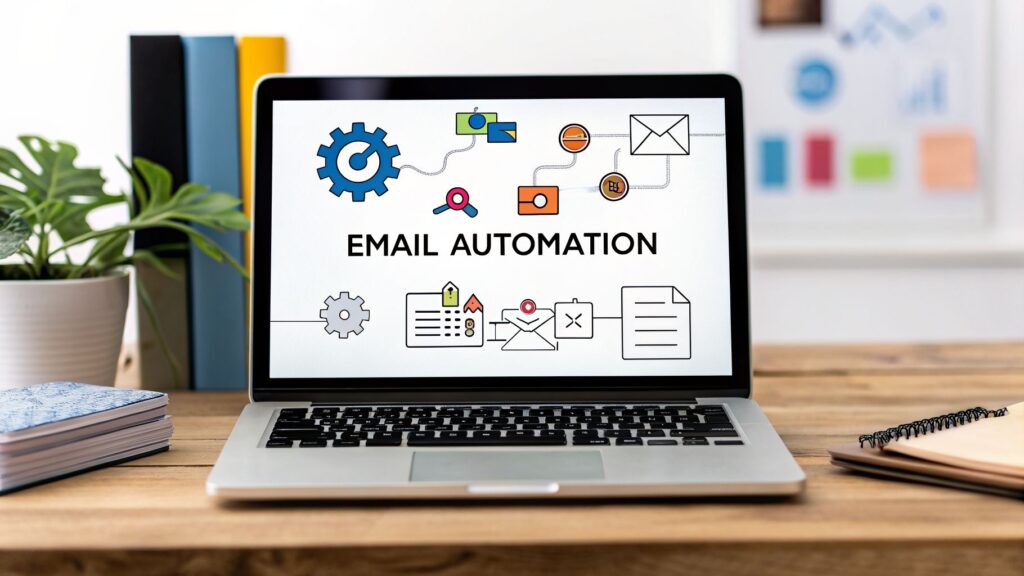
Are you tired of sending every email by hand? It's a huge time-suck and often doesn't get great results. The good news is you can get better engagement, nurture leads, and drive sales without being glued to your keyboard. The secret is using smart email marketing automation strategies that work for you 24/7. Think of it like having a marketing assistant who never sleeps.
This article is a practical playbook. We're giving you ten specific, actionable automation workflows you can set up right away. You won't find vague theories here. Each strategy includes a clear description, examples, and what to track.
Before we dive in, it helps to know the basics. If you're new to this, understanding What Is Email Marketing Automation is a great place to start. A clear grasp of the fundamentals will help you get the most out of these strategies.
People Also Ask
What are the best email marketing automation strategies?
The best strategies are personalized and timely. They include welcome series for new subscribers, lead nurturing sequences based on user behavior, and re-engagement campaigns to win back inactive contacts. The key is to send the right message to the right person at the right time.
How do I automate my email marketing?
To automate email marketing, you need email marketing software (like Mailchimp, ActiveCampaign, or ConvertKit). You create "workflows" or "sequences" that send emails automatically based on triggers. A trigger could be someone subscribing, clicking a link, or abandoning a shopping cart.
What is an example of marketing automation?
A classic example is an abandoned cart email. When a user adds a product to their cart online but leaves without buying, the system automatically sends them a reminder email an hour later. This simple automation recovers lost sales without any manual effort.
1. Lead Nurture Sequences Based on Customer Journey Stage
Stop thinking of your email list as one giant group. Instead, see it as a collection of people at different stages. Lead nurturing is one of the most effective email marketing automation strategies because it meets people where they are. It’s an automated series of emails that guides prospects from "just looking" to "ready to buy."
For a service business, this means you stop sending promotions to someone who just downloaded a guide. Instead, you send helpful content to build trust. This approach is all about relevance. It shifts your marketing from a megaphone to a one-on-one conversation.
In Short: Lead nurturing sends targeted content to guide prospects through the buying process automatically.
When to Use This Strategy
You should implement a lead nurture sequence as soon as you start getting leads. It’s perfect for businesses with a longer sales cycle, like a contractor or financial advisor. If your leads are going cold, this is the solution.
Example Lead Nurture Sequence for a Local Landscaping Company
-
Awareness Stage (Trigger: User downloads a "Seasonal Lawn Care Guide"):
- Email 1: Delivers the guide and says "thank you."
- Email 2: Sends a blog post: "5 Common Weeds in Our Area and How to Beat Them."
- Email 3: A quick video tip on proper mowing techniques.
-
Consideration Stage (Trigger: User clicks a link or visits the "Services" page):
- Email 4: A case study: "How We Transformed a Neglected Yard into a Backyard Oasis."
- Email 5: Shares customer testimonials and before-and-after photos. Improving your website's social proof can help with your website conversion rate.
- Email 6: An FAQ email addressing common questions about cost and timeline.
-
Decision Stage (Trigger: User visits the pricing or contact page):
- Email 7: A direct offer for a free, no-obligation consultation.
- Email 8: "Last chance" reminder on the consultation offer.
Key Metrics to Track
- Open Rate & Click-Through Rate (CTR): Are your subject lines and content engaging?
- Conversion Rate: How many subscribers book a call or complete the goal?
- Unsubscribe Rate: A high rate might mean your content isn't relevant.
- Sales Cycle Length: Is the sequence shortening the time from lead to customer?
2. Welcome Series for New Email Subscribers
Your first impression matters. A welcome series is an automated sequence of 3-5 emails sent right after someone subscribes. It’s one of the most critical email marketing automation strategies because new subscribers are highly engaged. It’s your chance to build trust and set expectations.

This isn’t just about saying "thanks." It’s a strategic introduction to your brand. For a local roofer, it’s a chance to share a video on spotting storm damage. For an e-commerce store, it's about showcasing best-selling products. These sequences work and often drive a lot of revenue.
In Short: A welcome series is an automatic sequence that greets new subscribers, builds trust, and provides immediate value.
When to Use This Strategy
Set up a welcome series the moment you add a subscription form to your website. It’s essential for any business collecting emails. It warms up subscribers for future marketing messages and turns them into loyal customers.
Example Welcome Series for an HVAC Company
- Trigger: User subscribes for a "DIY HVAC Maintenance Checklist."
- Email 1 (Immediate): Delivers the checklist. Subject: "Here's Your Checklist + A Quick Hello."
- Email 2 (Day 2): Sends a helpful blog post: "3 Signs Your AC Unit Needs a Tune-Up."
- Email 3 (Day 4): Showcases social proof like customer testimonials or Google reviews.
- Email 4 (Day 6): Presents a soft offer, like scheduling a system inspection.
Key Metrics to Track
- Open Rate: The first email often gets 50%+ open rates.
- Click-Through Rate (CTR): Are subscribers engaging with your content?
- Conversion Rate: How many subscribers take the final action, like booking a service?
- List Churn: A good series should reduce how many people unsubscribe right away.
3. Behavioral Trigger Emails (Event-Based Automation)
Some of the best emails aren't on a schedule. Behavioral triggers send messages based on what a user does on your site. This is one of the most direct email marketing automation strategies because it creates an immediate, relevant response to an action.
Think of it as your website having a conversation. Someone views your "Kitchen Remodeling" page but leaves. An hour later, an automated email arrives with your best kitchen before-and-afters. This is about responding to digital body language.
In Short: Behavioral emails are automatically sent in response to a user's specific actions, like visiting a page or abandoning a form.
When to Use This Strategy
Use behavioral triggers when you have clear, high-intent actions to track on your website. It's essential for any business where users show interest but don't convert. If you're losing potential customers who seem interested, this is how you re-engage them.
Example Behavioral Trigger Sequences for a Local Law Firm
-
Browse Abandonment (Trigger: User views "Business Law Services" page but doesn't contact):
- Email 1 (2 hours later): Subject: "Questions about our Business Law services?" Offers a free 15-minute call.
- Email 2 (1 day later): Sends a client success story.
-
Form Abandonment (Trigger: User starts filling out the consultation form but doesn't submit):
- Email 1 (30 minutes later): "Did you run into a problem?" Provides a direct calendar link or phone number.
- Email 2 (24 hours later): "Your consultation spot is waiting." Highlights the firm's expertise.
Key Metrics to Track
- Conversion Rate: What percentage of users complete the action after getting the email?
- Revenue Recovered: Track the value of the conversions you win back.
- Engagement on Triggered Emails: High open and click rates mean your timing and content are good.
- Time to Conversion: How quickly are you converting the lead after the trigger?
4. Segmentation and Conditional Logic Email Workflows
If lead nurturing is a conversation, then segmentation is what makes you sound like you’re listening. This strategy creates a dynamic, branching path for your subscribers based on who they are and what they do. You route people down different workflows based on their location, interests, or engagement.
This is one of the most powerful email marketing automation strategies because it makes personalization scalable. For a roofer, this means a lead in a storm-damaged area gets a different email than a lead from an area with older homes. It makes your marketing highly relevant.
In Short: Segmentation uses subscriber data to send different, more relevant emails to different groups of people automatically.
When to Use This Strategy
Use conditional logic once you know your different customer segments. It's ideal for businesses with diverse services or a wide service area. If you want to send more targeted offers, this is your next step.
Example Conditional Logic Workflow for a Multi-Service HVAC Company
-
Initial Trigger: User submits a general "Contact Us" form.
- Email 1: A generic "Thanks for reaching out!" email with links to "Heating," "Cooling," and "Air Quality" pages.
-
Conditional Split #1 (Based on user click):
- Path A (User clicks "Cooling"): The subscriber is tagged "Interest: Cooling" and enters a sequence about AC repair and maintenance.
- Path B (User clicks "Heating"): The subscriber is tagged "Interest: Heating" and enters a furnace-focused sequence.
-
Conditional Split #2 (Based on engagement):
- Condition: If a subscriber doesn't open the first two emails, they are moved to a re-engagement sequence.
Key Metrics to Track
- Segment Engagement Rates: Compare open and click rates across different paths.
- Goal Completions by Segment: Which path leads to the most sales?
- List Health: Are you successfully re-engaging inactive subscribers?
- Tag/Segment Growth: Are you effectively capturing data and growing your segments?
5. Re-engagement Campaigns for Inactive Subscribers
Not every subscriber stays engaged. That's okay. What's not okay is letting them sit on your list, hurting your open rates and sender reputation. Re-engagement campaigns are an important email marketing automation strategy for list hygiene. They are automated sequences designed to "wake up" inactive subscribers.
This strategy gives you a final shot at winning back a relationship. You can create a win-back sequence with a special offer or simply ask if they still want to hear from you. This turns a cleanup task into a recovery opportunity.
In Short: A re-engagement campaign automatically targets inactive subscribers to either win them back or remove them from your list.
When to Use This Strategy
Run a re-engagement campaign every 6 to 12 months. This is essential for any business with an email list over a year old. If your open rates are declining, it’s time to launch one. It cleans your list and can recapture lost revenue.
Example Re-engagement Sequence for a Home Cleaning Service
- Trigger: Subscriber has not opened an email in 90 days.
- Email 1 (The Gentle Nudge):
- Subject: "Is it something we said?"
- Content: A short, friendly email asking if they still want to receive tips.
- Email 2 (The Value Offer):
- Subject: "A special offer to welcome you back"
- Content: Send a compelling, one-time offer, like "20% Off Your Next Deep Clean." You can find more ideas in our email campaign optimization tips.
- Email 3 (The Goodbye):
- Subject: "We're cleaning up our list…"
- Content: State that you’ll remove them unless they click a button to stay subscribed. If they don't respond, they are automatically unsubscribed.
- Email 1 (The Gentle Nudge):
Key Metrics to Track
- Win-Back Rate: What percentage of inactive subscribers re-engaged?
- Post-Campaign Engagement: How many of those who re-engaged continue to open emails?
- List Cleanup Rate: How many subscribers were removed from your list?
- Deliverability Rate: Monitor your deliverability score before and after the campaign.
6. Educational Content Series and Thought Leadership Automation
Instead of always selling, what if you became the go-to expert your audience trusts? That’s the power of an educational content series. This is one of the most sustainable email marketing automation strategies because it focuses on building authority and long-term relationships. You're teaching, guiding, and establishing your business as a leader.
This strategy involves sending a regular, automated series of emails with tutorials, insights, or guides. Think of how brands like HubSpot built their empires by giving away valuable advice for free. They created a loyal audience that turns to them first.
In Short: An educational series automatically sends high-value content to build trust and position your brand as an expert.
When to Use This Strategy
This strategy is ideal for any business that wants to build a long-term brand. It’s effective for service businesses where expertise is the product, like consultants or skilled tradespeople. If you want to create a community around your brand, this is essential.
Example Educational Series for a Local CPA Firm
- Theme: "Small Business Tax-Saving Tuesdays"
- Email 1: "3 Common Deductions Most Small Businesses Miss."
- Email 2: A video explaining the difference between S-Corp and LLC.
- Email 3: A "Quarter-End Financial Health Checkup" checklist.
- Email 4: Shares a client success story on tax savings.
- Email 5: An "Ask the Accountant" Q&A with a soft call-to-action for a consultation.
- Email 6: Breaks down a recent change in tax law.
Key Metrics to Track
- Open Rate & Click-Through Rate (CTR): Are your topics resonating?
- Reply Rate: When people reply with questions, you're building a real relationship.
- List Growth: Is your valuable content attracting new subscribers?
- Soft Conversion Rate: Track clicks on "learn more" links to measure purchase intent.
7. Drip Campaigns with Delay-Based Automation
Sometimes the simplest path is the most effective. A drip campaign is a pre-set sequence of emails sent on a fixed schedule. It follows a simple "send this email, wait X days, send the next" logic. This makes it one of the most reliable email marketing automation strategies for building familiarity over time.
This timed approach is perfect for onboarding new customers or educating prospects with long sales cycles. It ensures every subscriber gets the same consistent experience, slowly building trust and keeping your brand top-of-mind.
In Short: A drip campaign is a simple, time-based email sequence that sends content on a fixed schedule.
When to Use This Strategy
Use a drip campaign when you want every new subscriber to receive a specific set of information in a specific order. It’s great for onboarding, delivering an educational course, or warming up leads for a high-ticket service.
Example Drip Campaign for a B2B Marketing Agency
-
Trigger: User has a free consultation but isn't ready to commit.
-
Day 1: A "Thank you" email recapping the call.
-
Day 4: A link to a detailed case study.
-
Day 8: An educational email: "3 Mistakes Businesses Make with Their Google Ads Budget."
-
Day 12: A video testimonial from a happy client.
-
Day 17: An invitation to a free webinar.
-
Day 22: An email addressing a common objection. The right email marketing software makes this easy to build.
-
Day 30: A final, soft-pitch email: "Ready to take the next step?"
Key Metrics to Track
- Open/Click Rates at Each Stage: Where are people losing interest?
- Engagement Over Time: Does engagement stay consistent?
- Goal Completion: How many subscribers eventually convert?
- Reply Rate: A direct reply is a strong buying signal.
8. Post-Purchase Onboarding and Customer Success Automation
The sale isn't the finish line. A customer's experience after buying is critical. Post-purchase automation is one of the most profitable email marketing automation strategies because it turns a one-time buyer into a loyal advocate. This automated series guides new customers and ensures they get value.
For a service business, your job begins when the contract is signed. You need to onboard the client and set expectations. This approach reduces buyer's remorse, improves satisfaction, and creates opportunities for repeat business.
In Short: A post-purchase sequence automates communication with new customers to ensure they have a great experience and become repeat clients.
When to Use This Strategy
Implement a post-purchase sequence the moment you have a paying customer. It’s essential for services with a setup process or products that require learning. If you get a lot of basic support questions right after a sale, this is your solution.
Example Onboarding Sequence for a Custom Website Design Agency
-
Immediately After Purchase:
- Email 1: "Welcome Aboard! Here’s What to Expect." Outlines next steps.
- Email 2: Introduces the project manager.
-
First Week:
- Email 3: A guide on "How to Provide Great Feedback."
- Email 4: Explains how to use the project portal. To be effective, it's crucial to understand what a drip email campaign is and how to use delays.
-
Key Milestones & Post-Launch:
- Email 5 (30 Days Post-Launch): A check-in email offering a support call.
- Email 6 (90 Days Post-Launch): Asks for a review and introduces ongoing maintenance packages.
Key Metrics to Track
- Engagement Rates: Are new customers opening your onboarding emails?
- Customer Satisfaction (CSAT) / Net Promoter Score (NPS): Are these sequences creating happier clients?
- Support Ticket Volume: A good flow should reduce repetitive questions.
- Repeat Purchase Rate & Lifetime Value (LTV): Is the automation leading to more work?
9. Dynamic Content and Personalization in Email Campaigns
Sending the same email to everyone is a missed opportunity. Dynamic content shows different content blocks to different subscribers within one email. This advanced email marketing automation strategy uses subscriber data like interests or location to swap out images, text, or calls-to-action.

Think of it as building an email with smart LEGO bricks. A roofer can send one email that shows hurricane-proof shingles to coastal residents and standard options to inland customers. This approach makes your marketing incredibly relevant.
In Short: Dynamic content uses subscriber data to show personalized content blocks within a single email, making it more relevant.
When to Use This Strategy
Dynamic content is perfect once you understand your audience segments. If your business serves different customer types (residential vs. commercial) or locations, this is a game-changer. It’s also great for e-commerce.
Example Dynamic Content for a B2B IT Services Firm
-
Email Goal: Announce a new cybersecurity service.
-
Base Email: Contains a general introduction.
-
Dynamic Block 1 (Based on Industry):
- Healthcare Client: Shows a block titled "HIPAA Compliance & Data Security."
- Finance Client: The block changes to "Protecting Financial Data & Preventing Fraud."
- Fallback Content: A generic block about "Industry-Leading Security Protocols."
-
Dynamic Block 2 (Based on Company Size):
- Small Business: The call-to-action is "Book a 15-Minute Security Audit."
- Enterprise: The call-to-action is "Request a Custom Enterprise Proposal."
Key Metrics to Track
- Click-Through Rate (CTR) on Dynamic Blocks: Which personalized content gets the most clicks?
- Conversion Rate by Segment: Do finance clients convert better with their targeted content?
- List Engagement: Compare engagement of a dynamic email to a static one.
- Return on Investment (ROI): Is the effort leading to more sales?
10. Automated Referral and Affiliate Campaign Sequences
Your happiest customers are your best marketers. Automated referral campaigns give them a clear path and incentive to spread the word. This is one of the most powerful email marketing automation strategies because it turns satisfaction into a predictable growth engine. It automates asking for referrals, tracking them, and rewarding everyone.
This strategy systematizes word-of-mouth marketing. You create a sequence that identifies your best customers, presents a compelling offer, and handles all the follow-up. Dropbox used this to achieve explosive growth.
In Short: An automated referral campaign encourages happy customers to refer others by making the process simple and rewarding.
When to Use This Strategy
Implement a referral sequence once you have satisfied customers. It’s perfect for any business where trust is a major factor. If you have customers who leave positive reviews, it's time to ask them for a referral.
Example Referral Sequence for a Financial Advisor
-
Trigger: Client has a high Net Promoter Score (NPS) or completes their third review meeting.
- Email 1: A personal thank you. No "ask" yet.
- Email 2: A few days later, introduce the referral program. Offer a reward for both the referrer and the new customer.
- Email 3 (If no action): A gentle reminder with the referral link.
-
Action-Based Emails (Triggers automatically):
- Referral Made: "Thank you for referring [Friend's Name]!"
- Referral Becomes Client: "Great news! [Friend's Name] has joined us. We've just sent your reward."
- Email to New Referral: "Hi [Friend's Name], your friend [Client's Name] thought you might benefit from our services."
Key Metrics to Track
- Referral Rate: What percentage of customers make a referral?
- Referral Conversion Rate: How many referred leads become customers?
- Cost Per Acquisition (CPA): Is this cheaper than your other marketing channels?
- Attribution: Are you tracking which customers are your best advocates?
Putting Your Automation Plan Into Action
We’ve covered ten powerful email marketing automation strategies. It's clear that automation is the engine that powers modern, personalized customer communication. Your task now is to decide which tools you need first.
Your First Steps: From Plan to Reality
Feeling overwhelmed? That’s normal. The key is to start small. Don't try to launch all ten strategies at once. Pick one or two that will have the biggest impact right now.
Here’s a simple path forward:
- Identify Your Biggest Bottleneck: Where are you losing leads? Right after they sign up? Start there.
- Pick Your "Quick Win": If new leads are dropping off, start with a Welcome Series. If past customers are quiet, try a Re-engagement Campaign.
- Map It Out Simply: Sketch out the emails in the sequence. What’s the trigger? What’s the goal?
- Write and Build: Write the copy for each email. Keep it authentic and valuable. Then build the workflow in your email platform.
- Measure and Adjust: Keep a close eye on your key metrics. Make small, continuous improvements.
In Short: Successful automation is about sending the right message to the right person at the right time. Start simple, prove it works, and then expand.
Mastering these concepts means you can stop manually chasing every lead. Instead, you build a system that works for you 24/7. It frees you up to focus on what you do best: delivering an amazing service. This is how you build lasting relationships and grow your brand.
Feeling ready to connect your marketing efforts but need the expert firepower to drive leads to your new automation funnels? The team at Clicks Geek specializes in running high-performance Google, Facebook, and local service ad campaigns that fill your pipeline with qualified customers. Let us handle the ads, so you can focus on nurturing those leads with the powerful automation strategies you've just learned.