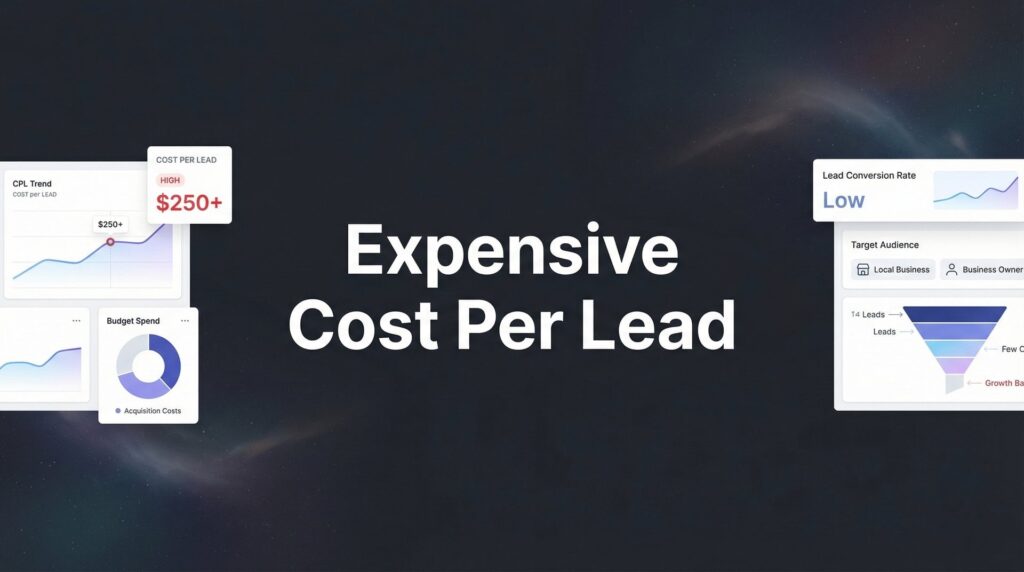
You’re spending thousands every month on Google Ads, Facebook campaigns, maybe even some SEO work. The invoices keep coming. The reports show impressions, clicks, and traffic numbers that look decent on paper. But when you check your bank account and count actual new customers, the math doesn’t add up. You’re bleeding money on marketing that isn’t converting, and you’re starting to wonder if digital marketing even works for businesses like yours.
Here’s the truth: your marketing isn’t broken because digital doesn’t work. It’s broken because most campaigns are built to generate activity, not revenue. The difference between those two things is massive, and it’s costing you real money every single day.
The good news? Low marketing ROI isn’t a permanent condition. It’s a symptom of specific, fixable problems. Once you understand what’s actually going wrong—and more importantly, how to measure and fix it—you can transform marketing from a necessary expense into your most profitable investment. This article will show you exactly how to diagnose where your marketing dollars are disappearing and what to do about it.
Why Your Marketing Budget Keeps Disappearing Without Results
The single biggest reason marketing campaigns fail isn’t lack of budget or bad timing. It’s targeting the wrong people with the wrong message at the wrong stage of their buying journey. When you cast too wide a net, you pay for thousands of clicks from people who were never going to buy from you in the first place.
Think about a local HVAC company running Google Ads with broad match keywords like “air conditioning” or “furnace repair.” They’re paying for clicks from homeowners just researching options six months before they need service, renters who can’t make purchasing decisions, DIY enthusiasts looking for YouTube tutorials, and competitors checking their ads. Maybe 10% of those clicks represent actual potential customers ready to buy. The other 90% is pure waste.
This gets worse when campaigns use demographic targeting that sounds good but doesn’t match actual buyer behavior. A high-end landscaping company might target “homeowners age 35-65 with household income over $100K” thinking that’s their ideal customer. But they’re paying to reach millions of people in that demographic who rent, live in condos without yards, or just moved and aren’t ready for landscaping work. Meanwhile, the 55-year-old homeowner who just listed their house and needs curb appeal work done immediately—that’s who they should be reaching.
The second critical failure point is the complete absence of proper conversion tracking. Most business owners can tell you how much they spent on ads last month. Almost none can tell you which specific campaigns, keywords, or ad groups produced actual paying customers. Without tracking, you’re flying blind. You might be spending 60% of your budget on campaigns that generate zero revenue while starving the 20% of campaigns that actually work. Understanding how to track marketing ROI is essential for making informed decisions about your ad spend.
When businesses do have tracking set up, it’s often measuring the wrong things. They’re counting form submissions as conversions without tracking which submissions became paying customers. They’re celebrating phone calls without knowing that half those calls are from existing customers or people asking for directions. They’re optimizing for cost-per-click when they should be optimizing for cost-per-customer-acquisition relative to customer lifetime value.
Then there’s the messaging mismatch that kills conversions even when you do reach the right people. Your ad promises “24/7 Emergency Service” but your landing page talks about scheduled maintenance plans. Your Facebook ad shows a specific promotion, but when people click through, they land on your generic homepage where they have to hunt for that offer. Your Google Ad emphasizes price, but your landing page focuses on quality and service. Every disconnect between ad message and landing page experience is a leak in your conversion funnel, and those leaks cost real money.
The businesses that fix these foundational issues see immediate improvements. When you tighten targeting to focus on high-intent audiences, track actual revenue instead of vanity metrics, and align your entire funnel around a consistent message, your cost per acquisition drops while conversion rates climb. It’s not magic. It’s just fixing the basics that most campaigns ignore.
Red Flags That Your Marketing ROI Is Bleeding Money
High website traffic with low conversion rates is the classic warning sign that something’s fundamentally broken. You’re getting visitors—maybe even lots of them—but they’re not turning into leads or customers. This usually means one of two things: you’re attracting the wrong traffic, or your conversion path is broken.
When you dig into the analytics, you often find that most traffic comes from informational searches, not buying searches. Someone searching “how to fix a leaky faucet” is in research mode. Someone searching “emergency plumber near me” is ready to buy right now. If your traffic is mostly researchers and tire-kickers, you’re paying to educate people who will never become customers. This is a classic symptom of the low quality leads problem that plagues many businesses.
Rising cost-per-acquisition is another major red flag, especially when it’s not accompanied by rising revenue. Your CPA might have been $150 six months ago and now it’s $300, but your average customer value hasn’t changed. That means you’re spending twice as much to acquire the same customer, which destroys profitability. This happens when competition increases in your market, when your targeting gets less precise over time, or when your ads and landing pages become stale and stop converting as well.
The inability to trace which marketing channels actually drive sales is perhaps the most dangerous warning sign because it prevents you from making smart decisions. You’re spending money on Google Ads, Facebook, maybe some local directory listings, but you can’t definitively say which channels produce profitable customers versus which ones just generate activity. Without this attribution data, you might be cutting budgets from your best-performing channels while continuing to fund complete losers.
Watch for campaigns where call volume or form submissions look healthy, but actual closed deals remain flat or declining. This suggests lead quality problems. You’re generating activity, but the people reaching out aren’t qualified buyers. Maybe they’re price shoppers with no intention of buying at market rates. Maybe they’re outside your service area. Maybe they need services you don’t offer. Each unqualified lead wastes time on sales calls that go nowhere while your team misses opportunities to follow up with real prospects.
Another warning sign is when you can’t clearly articulate what a good lead looks like for your business. If you’re treating all leads equally—counting a $500 job inquiry the same as a $5,000 project—you’re probably optimizing campaigns for volume instead of value. The businesses with the best marketing ROI know exactly what their ideal customer looks like, what they’re worth, and how to structure campaigns to attract more of them specifically.
The Budget Killers Nobody Talks About
Platform fees and agency markups eat more of your marketing budget than most business owners realize. When you’re paying an agency a percentage of ad spend, their incentive is to spend more, not to make your campaigns more efficient. A 20% management fee on $10,000 monthly spend is $2,000. If they can get similar results spending $6,000 with better targeting and optimization, they just cost themselves $800 in monthly revenue. The fee structure creates a fundamental misalignment of incentives. Watch out for hidden fees from marketing agencies that can silently drain your budget.
Ad waste from poor campaign structure is massive and often invisible. Campaigns with too many keywords dilute your budget across hundreds of search terms, most of which never convert. Single ad groups containing dozens of loosely related keywords prevent you from writing specific, high-converting ad copy. Broad match keywords trigger your ads for searches you’d never intentionally bid on. All of this adds up to spending money on clicks that were never going to produce customers.
The time cost of managing underperforming campaigns yourself is harder to quantify but equally destructive. You’re spending hours every week trying to figure out Google Ads or Facebook’s advertising platform when you should be running your business. You’re making decisions based on incomplete information because you don’t have the expertise to properly interpret the data. And because you’re learning as you go, you’re making expensive mistakes that an experienced marketer would avoid.
Opportunity cost might be the biggest hidden expense of all. Every dollar you spend on campaigns that don’t work is a dollar you’re not investing in channels that would actually produce returns. Every month you continue running ineffective Facebook ads is a month you’re not investing in the Google Ads campaigns that would drive qualified leads. Every quarter you spend on broad awareness campaigns is time you’re not spending on conversion-focused strategies that would grow revenue.
Platform complexity also drives up costs in ways that aren’t obvious. Google Ads has hundreds of settings, and getting them wrong can destroy campaign performance. Negative keywords, audience exclusions, geographic targeting, ad scheduling, bid adjustments—each setting can either save you money or waste it. Most business owners running their own campaigns don’t even know these settings exist, let alone how to optimize them.
Then there’s the cost of not testing and optimizing continuously. Your first version of any campaign is never your best version. The businesses that see exceptional marketing ROI are constantly testing new ad copy, new landing pages, new offers, new targeting approaches. They’re learning what works and doubling down on it. If you launch a campaign and let it run unchanged for months, you’re leaving massive amounts of money on the table.
The Diagnostic Framework That Fixes Broken Marketing ROI
Start by auditing your entire conversion funnel from first click to closed customer. Map out every step: ad impression, ad click, landing page view, form submission or phone call, sales conversation, proposal sent, deal closed. At each stage, calculate your conversion rate. Where are the biggest drop-offs happening? That’s where you focus first. A comprehensive digital marketing audit can reveal exactly where your funnel is leaking money.
For most businesses, the biggest leak is between landing page view and lead submission. You’re getting clicks, but visitors aren’t converting. This usually indicates one of three problems: your landing page doesn’t match your ad message, your offer isn’t compelling enough, or your conversion process is too complicated. A simple form asking for name, phone, and email will almost always outperform a long form asking for detailed project information.
Implement proper tracking infrastructure before you do anything else. Set up conversion tracking in Google Ads and Facebook so you can see which campaigns drive actual form submissions and phone calls. Install call tracking so you know which marketing channels generate phone leads. Connect your CRM to your advertising platforms so you can track which leads become paying customers. Without this tracking foundation, every other optimization effort is guesswork.
Google Analytics 4 provides the framework for understanding user behavior on your site, but you need to configure it correctly. Set up conversion events for form submissions, phone clicks, and any other important actions. Create audiences based on user behavior so you can retarget people who showed interest but didn’t convert. Use the funnel visualization reports to identify exactly where people drop off in your conversion process.
Call tracking for marketing campaigns is non-negotiable for any business where phone calls drive revenue. Dynamic number insertion shows you which specific campaigns, keywords, and even which ads generate phone leads. Call recording lets you identify why leads are calling and whether your team is converting those calls effectively. The businesses that implement call tracking typically discover that 30-40% of their conversions were invisible before because they were only tracking form submissions.
Once tracking is in place, restructure your campaigns around high-intent keywords and audiences. Replace broad match keywords with phrase match and exact match variations that target people actively searching for what you sell. Build separate campaigns for different service lines or product categories so you can write specific ad copy and send people to dedicated landing pages. Use negative keywords aggressively to prevent your ads from showing for irrelevant searches.
Audience targeting on platforms like Facebook and Google Display Network should focus on people who match your actual customer profile, not generic demographics. Use customer match to upload your existing customer list and find similar audiences. Retarget website visitors who viewed key pages but didn’t convert. Layer demographic targeting with interest and behavior targeting to narrow your reach to people most likely to buy.
Test your ad copy and landing pages systematically. Run A/B tests where you change one element at a time so you can isolate what actually improves performance. Test different headlines, different offers, different calls-to-action. The businesses that consistently improve their marketing ROI are running tests every single month, learning from the data, and implementing winners across their campaigns. Following a structured approach to marketing campaign optimization ensures you’re making data-driven improvements.
Review your campaign performance weekly, not monthly. Marketing platforms change constantly, and what worked last week might not work this week. Weekly reviews let you catch problems early before they waste significant budget. Look at your cost-per-conversion, conversion rate, and most importantly, the quality of leads you’re generating. If you notice declining performance, investigate immediately rather than letting it continue for weeks.
Why Your Industry’s Marketing Challenges Are Different (And What to Do About Them)
Service businesses face a unique challenge: balancing lead volume with lead quality for profitable growth. A plumber might generate 100 leads per month, but if 70 of them are for small repair jobs under $200 and only 10 are for profitable installations or major repairs, the economics don’t work. The cost to generate, qualify, and follow up with those 70 small jobs often exceeds the profit from completing them.
The solution is to structure campaigns specifically around your most profitable services. Create separate campaigns for emergency repairs, installations, maintenance contracts, and commercial work. Each campaign should use keywords and ad copy that attract the specific type of customer you want. Your emergency repair campaign might bid aggressively on “emergency plumber near me” while your installation campaign targets “water heater replacement cost” and “tankless water heater installation.” Businesses in the trades can benefit from a tailored digital marketing strategy for home services that focuses on high-value jobs.
Local businesses waste enormous amounts of money on geographic targeting mistakes. A restaurant might target a 25-mile radius thinking that casts a wide net for potential customers. But nobody’s driving 25 miles for dinner. The realistic draw area is probably 5-7 miles, and every click from someone 20 miles away is wasted money. The same applies to service businesses—a carpet cleaner targeting an entire metro area is paying for clicks from neighborhoods they don’t even service.
Tighten your geographic targeting to match your actual service area or customer draw. Use radius targeting around your location, or better yet, use ZIP code targeting to include only the specific areas where you want to do business. Layer in demographic data if certain neighborhoods are more likely to need your services or have higher average job values. A landscaping company might focus exclusively on ZIP codes with high homeownership rates and median home values above a certain threshold.
High-ticket services like legal services, home remodeling, or B2B consulting require different attribution models because sales cycles are longer. Someone might click your ad today, visit your website three more times over the next two weeks, call for a consultation, and then take another month to make a buying decision. If you’re only crediting the final click before conversion, you’re missing the entire customer journey and might cut campaigns that are actually working.
Use multi-touch attribution models that give credit to all the touchpoints in the customer journey, not just the last one. Implement remarketing campaigns that stay in front of prospects throughout their decision-making process. Extend your conversion windows in Google Ads and Facebook to 30 or 60 days instead of the default 7 days so you can see the full impact of your campaigns. Track offline conversions by passing closed deal data back to your advertising platforms so they can optimize for actual sales, not just leads.
Building Marketing That Delivers Measurable Returns
Start with clear KPIs tied to revenue, not vanity metrics. Impressions and clicks don’t pay your bills. Focus on cost-per-acquisition, conversion rate, and most importantly, customer lifetime value relative to acquisition cost. If you spend $500 to acquire a customer worth $2,000 in lifetime revenue, that’s a winning investment. If you spend $500 to acquire a customer worth $600, you’re losing money even though the campaign is generating customers. This is the core principle behind performance marketing—paying for results, not activity.
Calculate your target CPA based on your margins and customer value. If your average customer is worth $3,000 and your profit margin is 30%, you have $900 in gross profit per customer. You can afford to spend up to maybe $300-400 to acquire that customer and still maintain healthy profitability. This becomes your benchmark for evaluating campaign performance. Campaigns below this CPA are winners you should scale. Campaigns above it need optimization or should be cut.
Test, measure, and optimize continuously rather than running set-and-forget campaigns. Your market changes. Your competitors change their strategies. Platform algorithms evolve. What worked brilliantly six months ago might be mediocre today. The businesses that consistently maintain strong marketing ROI are constantly testing new approaches, measuring results, and implementing improvements.
Create a testing calendar where you’re always running controlled experiments. This month, test three different landing page headlines. Next month, test different ad copy angles. The month after, test different offers. Small improvements compound over time. A 10% improvement in conversion rate plus a 10% improvement in average order value plus a 10% reduction in cost-per-click adds up to dramatically better overall performance.
Consider partnering with specialists who focus on conversion and ROI, not just traffic. Agencies that position themselves as “getting you more visibility” or “building brand awareness” are optimizing for metrics that don’t directly drive revenue. You want partners who talk about cost-per-acquisition, conversion rates, and return on ad spend. A results driven marketing services approach ensures your agency is accountable for actual business outcomes.
The best marketing partners will audit your current performance, identify specific opportunities for improvement, and show you realistic projections for what’s achievable in your market. They’ll implement proper tracking, optimize your campaigns based on actual performance data, and provide transparent reporting that shows exactly where your money is going and what it’s producing. They should be able to tell you not just how many leads you’re getting, but how many of those leads are turning into customers and how much revenue those customers generate.
Turning Marketing Spend Into Profitable Investment
Low marketing ROI isn’t something you have to accept as the cost of doing business. It’s a symptom of fixable problems: poor targeting, inadequate tracking, misaligned messaging, and campaigns optimized for activity instead of revenue. The businesses that crack the code on marketing ROI share common characteristics. They know exactly who their ideal customer is. They track everything. They optimize relentlessly. And they treat marketing as an investment to maximize, not an expense to minimize.
The diagnostic steps we’ve covered—auditing your conversion funnel, implementing proper tracking, restructuring campaigns around high-intent audiences, and testing systematically—will transform your marketing performance when you actually implement them. Most businesses know what they should be doing. The difference between knowing and doing is where profits are made or lost.
Start with the fundamentals. Get your tracking infrastructure in place so you can measure what’s actually working. Tighten your targeting to focus on people most likely to buy. Align your ad messaging with your landing page experience. These aren’t sexy tactics, but they’re the foundation that makes everything else work.
The businesses seeing the best returns right now aren’t the ones spending the most on marketing. They’re the ones spending smart, measuring everything, and continuously optimizing based on real performance data. They’ve moved beyond hoping their marketing works to knowing exactly what’s producing returns and what’s wasting money.
Tired of spending money on marketing that doesn’t produce real revenue? We build lead systems that turn traffic into qualified leads and measurable sales growth. If you want to see what this would look like for your business, we’ll walk you through how it works and break down what’s realistic in your market.
Want More Leads for Your Business?
Most agencies chase clicks, impressions, and “traffic.” Clicks Geek builds lead systems. We uncover where prospects are dropping off, where your budget is being wasted, and which channels will actually produce ROI for your business, then we build and manage the strategy for you.