In a world full of digital ads, getting a real piece of mail can feel personal and make a big impact. But the old way of sending mail to everyone doesn't work anymore. Modern direct mail marketing strategies are smart, targeted, and work with digital ads to get results you can measure.
This guide breaks down 10 proven strategies that local businesses use to get high-value customers. You’ll learn how to turn a simple mailer into a powerful tool for your business. We'll skip the jargon and get straight to the tactics.
Whether you're a local service business or a B2B company, these strategies are ready to use. For a deeper look at how this works in one industry, this modern direct mail marketing playbook for real estate is a great resource. Let’s get started.
Frequently Asked Questions About Direct Mail
What are the main types of direct mail?
The most common types of direct mail are postcards, letters, self-mailers (like brochures), dimensional mailers (boxes or packages), and catalogs. Each format has its own strengths, depending on your goal and budget.
Is direct mail marketing still effective?
Yes, direct mail is still very effective, especially when combined with digital marketing. It has a high response rate because it's tangible and stands out from digital noise. Personalized and targeted campaigns deliver the best results.
How do you measure the success of a direct mail campaign?
You can measure success by using unique tracking tools. These include QR codes, special phone numbers, and dedicated landing page URLs (like yoursite.com/offer). These tools let you see exactly how many leads and sales came from your mailer.
1. Personalized Mail & Targeted Lists (VDP + Segmentation)
Forget the "Dear Resident" mail of the past. One of the best direct mail marketing strategies today is combining personal touches with a very specific mailing list. This uses Variable Data Printing (VDP), a tech that lets you change text and images on each mailer.
By using VDP with customer data, each mailer feels like a personal note. It's more than just using a name; it’s about tailoring the message to their needs, which boosts engagement.
In Short: Use customer data to print unique mailers for each person, making your marketing feel more personal and relevant.
How It Works in Practice
- A local HVAC company sends reminders that include the homeowner's name and their specific HVAC model and last service date.
- A financial advisor targets a zip code with high-income households, inviting them to a seminar that talks about local market trends.
- A roofer mails postcards only to homes with roofs over 20 years old, offering a free inspection and a neighborhood discount.
Actionable Tips
- Integrate Your CRM: Connect your customer list (CRM) to your printer to automatically pull correct data for personalization.
- Segment Your List: Divide your list into groups like new movers or existing customers. For hard-to-find contacts, tools like skip tracing for real estate can help build a precise list.
- Test Your Variables: Before a big mailing, do a small test print to make sure names, addresses, and offers look right.
- Track Everything: Use unique QR codes or phone numbers for each segment to see which message performs best.
2. Multi-Channel Marketing (Direct Mail + Digital Ads)
Direct mail works even better when paired with digital ads. This strategy creates a unified campaign where your message follows your audience from their mailbox to their social media. This boosts brand recall and conversions.

The idea is simple. When a potential customer gets your postcard and then sees a similar ad on Facebook or Google, the campaign feels more credible and powerful.
In Short: Combine your direct mail with digital ads (like on Facebook or Google) to reach the same audience in multiple places.
How It Works in Practice
- A home contractor mails postcards, then shows Facebook ads with project photos to the same homeowners.
- A local SEO agency sends a case study to a list of businesses, then runs targeted Google Ads that only people at those companies will see.
- A pest control company sends a seasonal offer, follows up with an email, and shows ads to anyone who visited their website from the mailer.
Actionable Tips
- Map the Journey: Plan when the mailer arrives, when digital ads start, and what any follow-up emails will say.
- Be Consistent: Use the same logo, colors, and message everywhere. A confusing experience hurts your campaign.
- Time Your Ads: Launch digital ads a few days after your mail is delivered to build on the first impression.
- Use Retargeting: Put a tracking pixel on your landing page. This lets you show ads to people who visited but didn't sign up. Understanding the benefits of using retargeting as part of your PPC strategy is key.
3. Door Hangers & Neighborhood Targeting
For local service businesses like plumbers or roofers, marketing needs to be hyper-local. Targeted door hangers and neighborhood mailers are perfect for this. This strategy focuses on a small, relevant area where your best customers live.
This tactic uses property data to find neighborhoods that likely need your services. By focusing your efforts, you build a strong local presence and become the go-to choice.
In Short: Focus your mailings, like door hangers, on specific neighborhoods that are most likely to need your services.
How It Works in Practice
- A plumbing company sends mailers to neighborhoods with homes over 30 years old, highlighting issues like old pipes.
- A roofer leaves door hangers in areas just hit by a storm, offering free inspections for damage.
- A lawn care service targets wealthy neighborhoods in the spring with offers for fertilization packages.
Actionable Tips
- Use Property Data: Build lists based on home age or value to make your message more precise.
- Pair with Digital Ads: Run Google Local Services Ads in the same zip codes where you are distributing door hangers.
- Track Neighborhoods: Use a unique phone number or QR code for each neighborhood to see which areas respond best.
- Include a Map: Add a small map on your mailer showing the recipient's neighborhood to reinforce that you are a local business.
4. Educational Content & Case Studies for B2B
When marketing to other businesses, a sales pitch can fall flat. A better approach is to provide value first. Mail high-quality case studies, reports, or white papers to key decision-makers.
This positions you as an expert and builds trust before you ask for a sale. It's a great way to get noticed by the right people in a company.
In Short: Instead of a sales pitch, mail valuable content like case studies to B2B prospects to prove your expertise.
How It Works in Practice
- A Google Ads agency mails a one-page case study to local dentists showing how they helped a similar practice.
- An SEO provider sends a local SEO audit to plumbing companies, showing how they helped a competitor rank #1 on Google Maps.
- A consultant mails a report on industry trends to a list of CEOs to establish credibility.
Actionable Tips
- Target by Job Title: Focus on specific people like CEOs or Marketing Managers who can make decisions.
- Show, Don't Tell: Use real numbers and ROI in your case studies. "Increased leads by 150%" is more powerful than vague claims.
- Add a Personal Touch: A short, handwritten note on the mailer can make a big difference.
- Follow Up: Plan a follow-up call or email 3-5 days after the mailer arrives to boost response rates.
5. Sequential Mailing Campaigns (3-Touch Mailers)
One mailer is good, but a series is often better. A sequential campaign involves sending a few mailers to the same list over a few weeks. This is based on the idea that it takes multiple "touches" to win a customer.
Each piece builds on the last. The first might introduce your brand, the second might share a benefit, and the third might present an urgent offer. This is one of the most reliable direct mail marketing strategies.
In Short: Send a series of 2-3 mailers to the same list over time to build familiarity and guide them toward a sale.
How It Works in Practice
- A home services company sends a postcard (Touch 1), then a letter with testimonials (Touch 2), then a final postcard with a limited-time offer (Touch 3).
- A B2B software company mails a white paper, then a brochure, and finally a small package with an invitation for a demo.
- An insurance agent sends an informational guide, then a personal letter, then an invitation for a financial review.
Actionable Tips
- Space Your Mailings: Leave 7 to 10 days between each mailer. This builds momentum without being annoying.
- Vary the Format: Use different types of mail, like a postcard, a letter, and a brochure, to keep it interesting.
- Connect Each Piece: Refer to the previous mailer to create a connected story. For example, "To follow up on our postcard…"
- Track Each Stage: Use unique offer codes for each mailer to see which one gets the most response.
6. Dimensional Mail & Creative Packages ("Lumpy Mail")
In a world of flat mail, go 3D. "Lumpy mail" involves sending small boxes or packages that contain an object. The goal is to create an experience that's impossible to ignore.
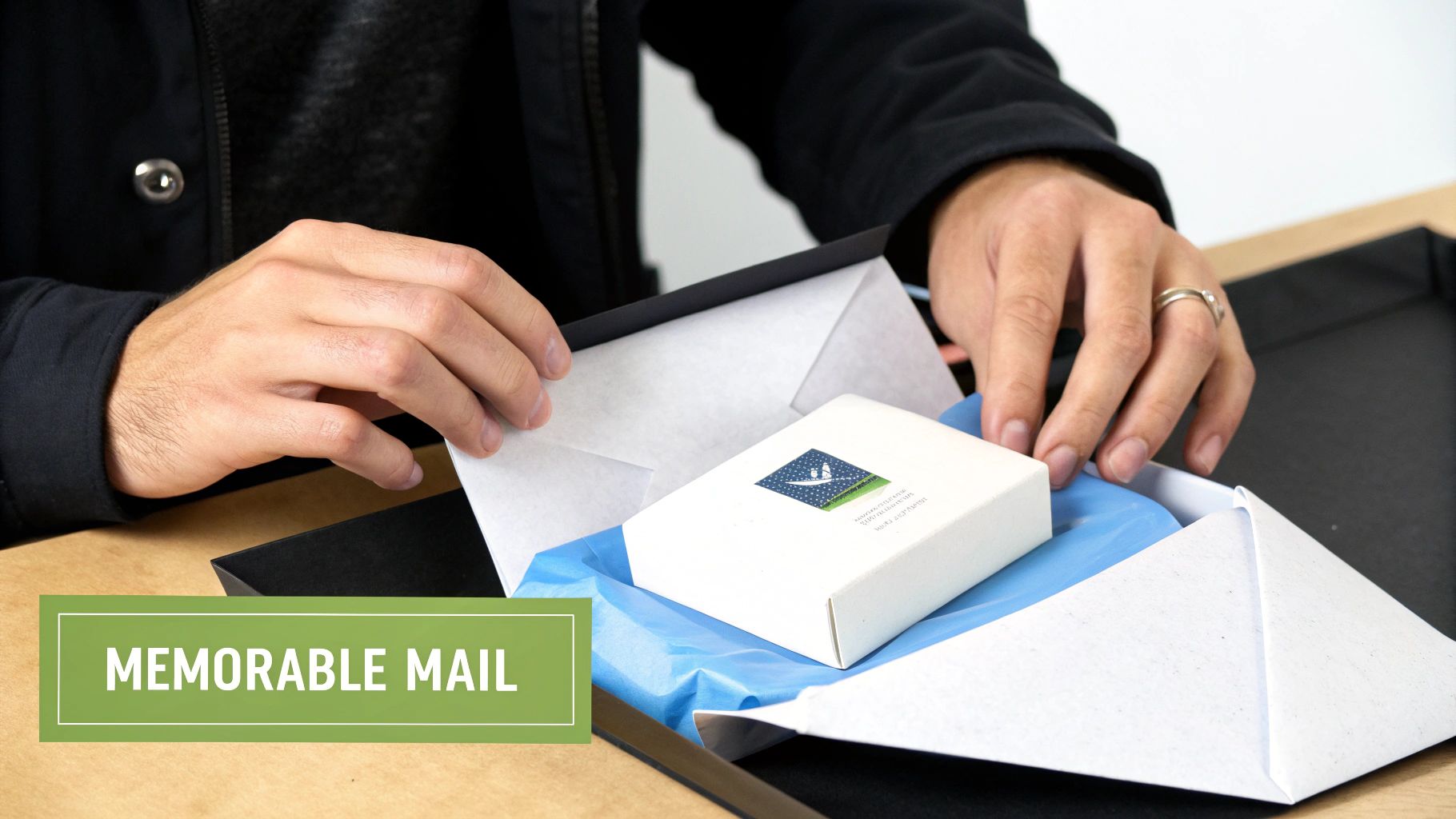
This approach leads to almost 100% open rates and makes your brand memorable. The object inside creates a positive feeling before they even read your offer.
In Short: Send a small box or package with an object inside to grab attention and get your mail opened.
How It Works in Practice
- A creative agency sends a branded USB drive in a small box with a personalized video message.
- A real estate agent mails house-shaped mailers to a target neighborhood.
- A B2B tech company sends a puzzle box to key decision-makers, where the final piece reveals a QR code for a demo.
Actionable Tips
- Keep It Relevant: The object inside should connect to your brand or offer. A random gadget can be confusing.
- Mind the Postage: Shipping costs are higher, so aim to keep packages light. This strategy is best for high-value targets.
- Focus on Key Prospects: Use dimensional mail for your most important potential customers where the ROI is worth the cost.
- Include a Clear CTA: Make sure your offer and next steps (like "Scan this code") are easy to find and follow.
7. Postcards with Strong Calls-to-Action (CTAs)
Sometimes, simple is best. Postcards are great because the message is instantly visible. They are cheap, fast, and perfect for a punchy message with a clear goal.
A successful postcard needs a great visual, a benefit-focused headline, and a clear call-to-action (CTA). When someone can glance at it and know what to do next, you've won.
In Short: Use postcards for a cost-effective way to deliver a simple, visual message with a very clear next step.
How It Works in Practice
- A restaurant sends a postcard with a photo of a new dish and a QR code for a "free appetizer."
- A pressure washing company mails postcards with a before-and-after photo and an offer: "Book by April 1st & Save 15%!"
- A dental clinic targets new movers with a postcard offering a free whitening kit with their first check-up.
Actionable Tips
- Lead with the Benefit: Instead of "We Offer Pest Control," say "Enjoy a Pest-Free Summer."
- Use High-Quality Photos: A professional photo is the first thing people see. Make it count.
- Keep Copy Short: Use 50 words or less. Let the picture and headline do the heavy lifting.
- Make Your CTA Obvious: Use action words like "Call Today" or "Scan to Book." Make the QR code or phone number large.
8. Seasonal & Event-Based Campaigns
Timing is everything. Aligning your mail with seasons, holidays, or local events makes your offer feel more relevant. This strategy connects your service to a specific, timely need.
Whether it's the changing weather or a holiday, this approach positions your business as the perfect solution at the perfect time.
In Short: Time your mailings to match seasons or holidays (like a spring cleanup offer for a landscaper) to increase relevance.
How It Works in Practice
- An HVAC company sends "Winter-Ready Furnace Tune-Up" offers in the fall as it gets colder.
- A landscaper targets neighborhoods in early spring with a "Spring Cleanup" package.
- A gym sends membership promotions in late December to catch New Year's resolution-setters.
Actionable Tips
- Plan Your Calendar: Map out key seasons and holidays at the start of the year. Plan your campaigns 6-8 weeks ahead.
- Use Themed Designs: Use images and words that match the season. "Get Your A/C Summer-Ready" is better than a generic offer.
- Create Urgency: Use time-sensitive offers like "Offer ends March 31st" to encourage people to act now.
- Integrate with Digital: Run social media or Google ads with the same theme at the same time to reinforce your message.
9. Advanced Tracking with Unique Numbers & Landing Pages
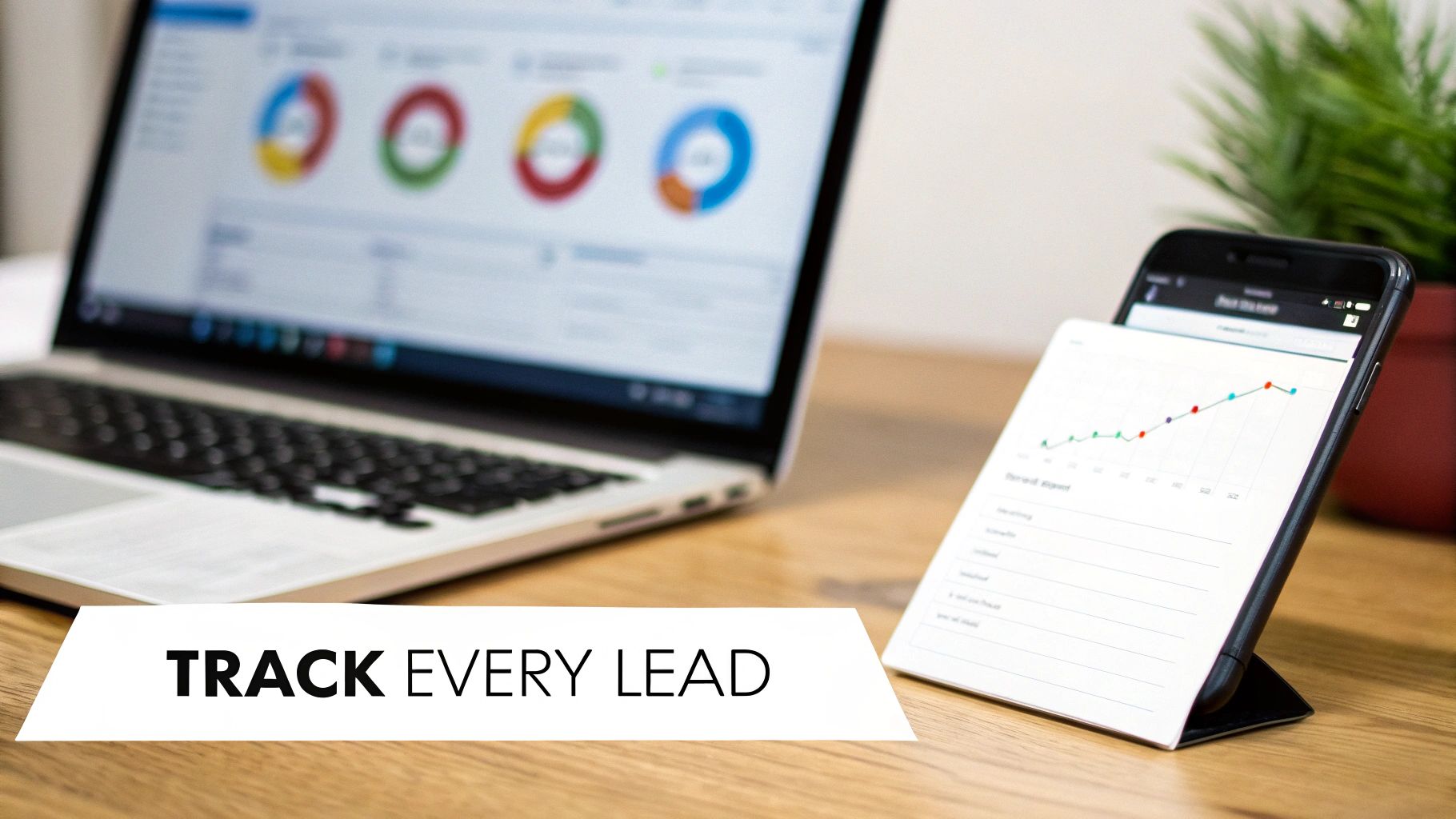
In the past, it was hard to track direct mail ROI. Not anymore. A key strategy is to assign unique tracking phone numbers and dedicated landing pages (PURLs) to each campaign. This makes your mailer a measurable marketing channel.
By giving each mailer its own tracking, you can see which specific piece, list, or offer generated calls and sales. This removes guesswork.
How It Works in Practice
- A dental practice uses a different phone number for mailers sent to each of its locations to see which one gets more calls.
- A marketing agency tests two postcards. Version A goes to
client.com/offerAand Version B goes toclient.com/offerBto see which one works better. - A solar company uses one phone number for mailers to "New Movers" and another for "Over 65 Homeowners" to see which group gives better leads.
Actionable Tips
- Use Call Tracking Software: Services like CallRail make it easy to manage multiple phone numbers and see detailed data on your calls.
- Create Unique Landing Pages: Build a simple landing page for each campaign that matches the mailer's design and offer.
- Train Your Team: Make sure your staff asks callers how they heard about you as a backup to your tracking.
- Integrate with Your CRM: Connect your tracking data to your CRM to see the full customer journey from mailer to sale.
10. Referral & Loyalty Programs for Existing Customers
Your happiest customers are your best marketers. Instead of always looking for new leads, focus on your existing customers. Loyalty and referral programs mailed to them can turn them into a powerful lead source.
This strengthens relationships and brings in warm referrals who already trust you. A thank-you card with a referral offer can have a much higher ROI than cold outreach.
In Short: Mail referral offers to your existing happy customers to thank them and encourage them to bring you new business.
How It Works in Practice
- A plumbing company mails a postcard to customers who left a 5-star review, offering a $50 credit for every new customer they refer.
- An insurance agency sends an "anniversary" card a year after a client signs on, with a small gift card and business cards to share.
- A home cleaning service sends a "Friends & Neighbors" discount card to their best clients, offering a free deep clean if three neighbors sign up.
Actionable Tips
- Make the Offer Simple: The referral process should be easy. "Give $50, Get $50" is clear and compelling.
- Reward Both People: The best programs reward both the person referring and the new customer.
- Use Tracking Codes: Print unique referral codes on each mailer to track which customers are sending you the best leads.
- Target Your Best Customers: Start by sending offers to your most loyal customers first. They are most likely to advocate for you.
Putting Your Direct Mail Plan Into Action
The mailbox is far from dead. It's a powerful channel for smart marketers. The best direct mail marketing strategies combine personalization, digital integration, and careful tracking.
Your Direct Mail Blueprint
- Data First: A great mailing list is the foundation of a great campaign. Use data to personalize everything.
- Connect Physical and Digital: Every mailer should lead to an online action. Use QR codes, landing pages, and tracking numbers.
- Track Everything: If you can't measure it, you can't improve it. Tracking proves your ROI.
- Be Creative: Your mailer needs to stand out. The format, design, and feel all matter.
Your Next Steps
- Choose ONE Strategy: Don't try everything at once. Pick one strategy from this list that fits your goals.
- Define Success: Decide what a "win" looks like. Is it 20 phone calls? 5 new customers? Set a clear goal.
- Launch, Measure, Improve: Send your test campaign and watch the data. Use what you learn to make your next mailing even better.
Direct mail gives you a unique chance to put your brand directly into your customers' hands. By mixing this classic channel with modern data and tracking, you can create a powerful system for growing your business.
Feeling overwhelmed trying to connect your direct mail efforts to a high-converting digital presence? The team at Clicks Geek specializes in creating the powerful landing pages and digital funnels that turn your mailer recipients into paying customers. Visit Clicks Geek to see how we build the digital infrastructure that makes your marketing investments pay off.