A digital marketing agency is an outsourced team of experts focused on growing your business online. They handle all the complex work of attracting customers through channels like Google and social media.
In short: They create and manage your online strategy to get you more leads, sales, and brand awareness.
So, What Does a Digital Marketing Agency Actually Do?
Think of a digital marketing agency as your company's dedicated marketing department. Instead of you needing to become an expert in SEO, Google Ads, and Facebook, they bring a full team of specialists to the table.
This frees you up to run your business. They build a digital growth plan for you.
An agency’s job is more than launching ads. It’s about creating a connected system where every marketing action supports your business goals. This could be anything from getting your website to show up first on Google to running social media ads that bring in new customers.
How does a digital marketing agency work?
The best way to understand what a digital marketing agency does is to think of them as a general contractor for building a house.
You wouldn't hire one person to do the plumbing, electrical, and design. You hire a contractor who manages a team of specialists. An agency does the same thing for your online presence, coordinating experts to build your brand and find customers.
The core function of a digital marketing agency is to use digital channels—like search engines, social media, and email—to connect your business with potential customers and convert that attention into revenue.
This requires a deep understanding of how online platforms work, what customers are searching for, and how to track every dollar spent. An agency provides the strategy, the tools, and the team to make it happen.
How can a digital marketing agency help a business?
Working with an agency gives you immediate access to a team of pros without the high cost of hiring them full-time. You also get the benefit of their experience working with dozens of other businesses.
Here's a quick rundown of what they handle:
- Strategy and Planning: They create a clear roadmap to help you hit your online goals.
- Execution and Management: This is the daily work, like writing content and managing ad budgets.
- Analysis and Reporting: They track what’s working, analyze the data, and adjust the strategy for better results.
Ultimately, an agency’s purpose is to deliver a real return on your investment. To learn more, check out our guide on what a full-service digital marketing agency offers.
The Core Services of a Digital Marketing Agency
A digital marketing agency uses different online channels to help your business grow. They create a custom strategy based on what you want to achieve.
Need more phone calls? Want more online sales? They combine different tactics into a single plan for growth.
This map shows how all the pieces fit together.
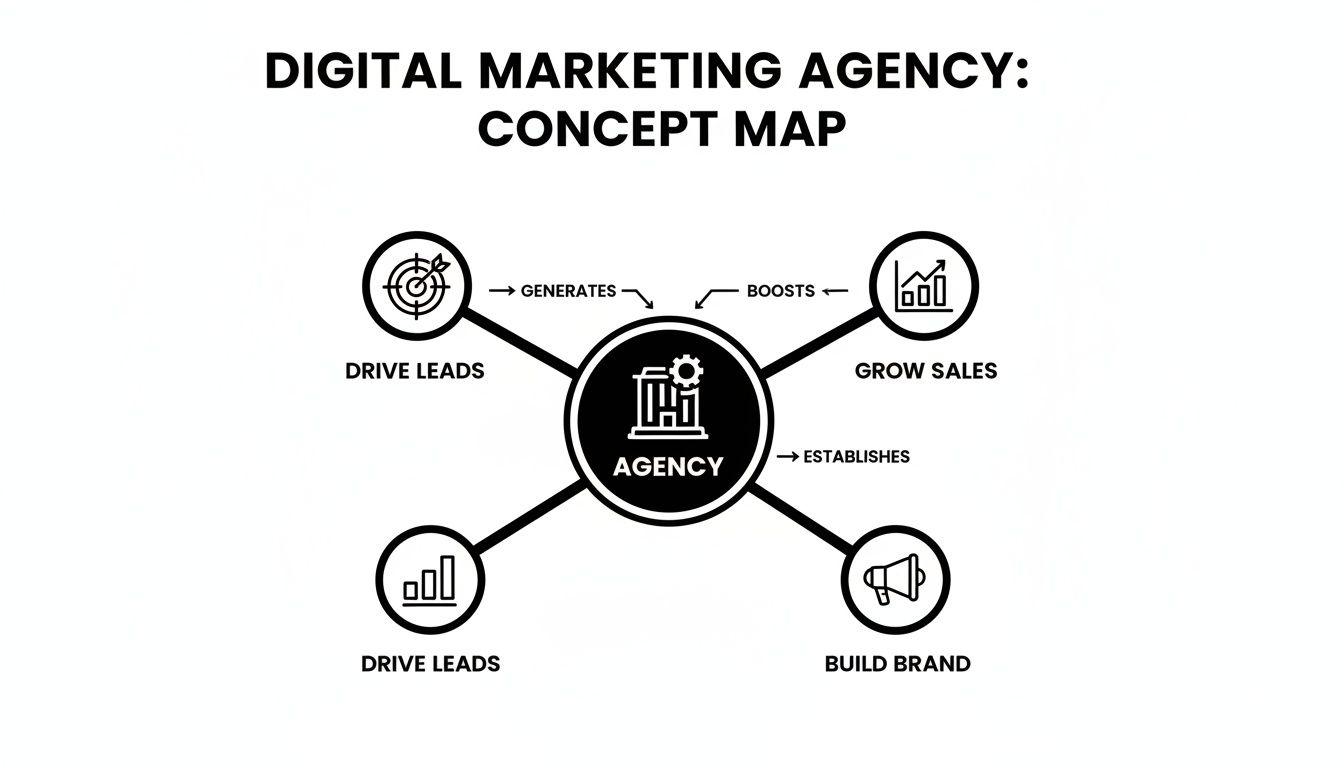
As you can see, everything an agency does leads to three things: driving leads, growing sales, and making your brand well-known.
Let's look at the most common services they use.
Search Engine Optimization (SEO)
Search Engine Optimization, or SEO, is the process of getting your website to show up at the top of Google’s search results for free. The goal is simple: when someone searches for what you offer, your business appears first.
Think of Google as a giant phone book. SEO makes sure your business is listed on the first page so customers can find you. It's about making your website the best answer to a searcher's question.
An agency handles SEO by:
- Fixing technical issues on your site to make it fast and easy for Google to understand.
- Finding the exact keywords your ideal customers are searching for.
- Creating useful content like blog posts and guides that people want to read.
SEO is a long-term strategy that builds a steady stream of organic traffic to your website.
Pay-Per-Click (PPC) Advertising
If SEO is a marathon, Pay-Per-Click (PPC) is a sprint. It lets you place ads at the top of search results instantly.
Platforms like Google Ads and Microsoft Ads allow you to show ads for specific keywords. The best part is you only pay when someone clicks your ad.
An agency's job with PPC is to manage your budget carefully. They make sure every dollar you spend brings back the best possible return by researching keywords, writing great ads, and constantly improving campaigns.
PPC is great for getting immediate results. A good campaign can start generating leads and sales from day one.
Social Media Marketing
Social media is a powerful tool for building a community and running targeted ad campaigns. An agency manages both sides.
Organic social media involves sharing content on platforms like Facebook, Instagram, and LinkedIn to build relationships with your audience.
Paid social advertising lets you show ads to people based on their age, location, interests, and online behavior. It’s an incredibly effective way to find new customers.
Conversion Rate Optimization (CRO)
Getting people to your website is only the first half of the job. Conversion Rate Optimization (CRO) is the process of turning more of those visitors into customers.
Imagine your website is a store. If 100 people walk in but only one person buys something, you have a problem. CRO is about figuring out why they aren't buying and fixing it.
An agency uses data to:
- See how users navigate your website.
- Find the spots where people are leaving.
- Test changes—like a new headline or button color—to see what improves results.
Small improvements in your conversion rate can make a huge difference in your revenue.
Website Design and Development
Your website is your digital storefront. If it’s slow, outdated, or doesn’t work on a phone, potential customers will leave. That’s why many agencies offer web design services. A bad website can ruin even the best marketing campaign.
A business-building website must be:
- Mobile-Friendly: It has to work perfectly on a smartphone.
- Fast-Loading: If your site takes more than a few seconds to load, visitors will leave.
- Conversion-Focused: It needs to be designed to guide visitors toward becoming a lead or customer.
An agency ensures your website is a 24/7 sales tool, not just an online brochure.
Meet Your Digital Marketing Team
When you hire an agency, you get a full team of specialists. Each person has a specific role, and they work together to get you results.
Think of it like a sports team. You don't have one player doing everything. You have a quarterback, receivers, and an offensive line. A marketing agency is built the same way.
The Account Manager: Your Strategic Quarterback
Your Account Manager is your main point of contact. They lead the strategy for your account, making sure everyone is working toward your business goals.
They translate your goals—like "we need more phone calls"—into an actionable marketing plan. They also keep you updated so you always know what’s happening.
- Primary Role: Your main liaison.
- Key Responsibilities: Shapes strategy, keeps projects on track, and focuses the team on your goals.
- What You Get: Regular reports, smart recommendations, and clear communication.
The PPC Specialist: The Ad Campaign Pro
The Pay-Per-Click (PPC) Specialist works on platforms like Google Ads and Facebook Ads. Their entire focus is on getting your ads in front of the right audience without wasting your budget.
This person is data-driven. They are always analyzing numbers to see what’s working, adjusting bids, and refining targeting to improve your return on investment.
The SEO Analyst: The Search Engine Detective
While the PPC specialist handles paid ads, the SEO Analyst works on getting your website to rank in the organic (free) search results. They research search trends, analyze competitors, and find the keywords your customers are using.
The SEO Analyst handles the technical and creative work to make search engines love your website.
It’s a mix of technical skill and creative strategy. They fix site issues, build quality links, and ensure your content answers people's questions.
The Content Creator: Your Brand’s Voice
The Content Creator is your brand's storyteller. They write persuasive ad copy, helpful blog posts, and engaging social media updates. They turn keyword insights and campaign goals into content that gets people to pay attention.
Their words are the fuel for your marketing engine, designed to get people to take action.
Finally, you have the Web Developer. This is the tech expert who ensures your website is fast, secure, and works correctly. Together, this team brings a level of expertise that one person can't match.
How Much Does a Digital Marketing Agency Cost?
Let's talk about the money. Understanding how agencies structure their pricing is key to finding the right partner.
There is no one-size-fits-all price because every business has different needs. You will usually see a few common pricing models.
The Monthly Retainer Model
The monthly retainer is the most common pricing model for ongoing services like SEO, PPC, and social media management. You pay a flat fee each month for an agreed-upon set of services.
Think of it as having an expert on your team without the cost of a full-time employee.
This model is popular for long-term strategies because:
- It gives the agency time to plan, execute, and improve campaigns.
- It provides a predictable marketing expense for easy budgeting.
- It builds a strong partnership as the agency learns more about your business over time.
A typical retainer covers the team's time, access to professional marketing tools, and regular reports.
The Project-Based Fee Model
Sometimes you just need one specific job done well. That’s where project-based pricing comes in. This model is perfect for tasks with a clear start and end.
Examples include:
- Building a new website.
- Conducting an in-depth SEO audit.
- Creating a one-time email campaign for a sale.
With a project-based fee, you get a single, all-in price for the job. You know the total cost upfront.
In Short: A project-based fee is best when you need a specific deliverable, like a new website or a campaign plan, rather than ongoing management.
The Performance-Based Model
In a performance-based pricing model, the agency’s pay is tied directly to the results they deliver. For example, they might earn a percentage of revenue generated or a fixed fee for each qualified lead.
The appeal is clear: the agency has skin in the game. If you don’t succeed, they don’t get paid as much. This model requires clear goals and accurate tracking to work.
What’s Included In The Price?
No matter the model, a transparent proposal should clearly state what you're paying for. If you want to learn more, we have an article that breaks down digital marketing agency pricing in more detail.
Generally, your fee should cover:
- Strategy and Planning: The initial research and roadmap.
- Execution: The day-to-day work of running your campaigns.
- Reporting: Regular performance reports with analysis.
- Meetings: Scheduled calls to review progress and strategy.
- Tools and Software: Access to the agency’s professional marketing software.
How to Choose the Right Agency for Your Business
Knowing what a digital marketing agency does is the first step. The next is figuring out how to find a team you can trust.
Maybe your growth has stalled, or you're spending too much time trying to figure out Google Ads when you should be running your business. These are signs it’s time to hire a professional.
When you start looking for an agency, it’s all about asking the right questions to find a partner who understands your goals.
Questions Every Business Owner Should Ask
Use this as your interview guide. The answers will tell you a lot about an agency's experience and whether they are a good fit.
- Do you have experience in my industry? An agency that has worked with businesses like yours already knows your customers and competitors. They won't be learning on your dime.
- How do you measure success? A great agency talks about key performance indicators (KPIs) that matter to your business—like cost per lead, conversion rate, or return on ad spend (ROAS). Avoid vague answers like "more traffic."
- What does your communication and reporting look like? Ask how often you'll hear from them and what kind of reports you'll get. Clear expectations prevent frustration later.
- Who will be my main point of contact? Having a dedicated Account Manager who knows your business provides peace of mind.
- What is your approach to strategy? Ask them to explain how they would tackle your business challenges. This shows you whether they build custom plans or use a one-size-fits-all template.
For a deeper dive, check out our guide on how to choose a digital marketing agency for a more detailed checklist.
Spotting Red Flags and Green Flags
While you ask questions, keep an eye out for warning signs. Not all agencies are created equal.
A great agency acts like a partner invested in your growth. A poor one feels like a vendor. The difference is transparency, clear goals, and a focus on real business results.
Here’s a quick comparison to help you spot a good partner.
Agency Red Flags vs Green Flags
| Red Flag (Warning Signs) | Green Flag (Positive Signs) |
|---|---|
| Guaranteed #1 Rankings on Google. Nobody can promise this. It's a classic red flag. | Focus on Measurable Business Goals. They want to talk about leads, sales, and ROI. |
| Lack of Transparency. They are secretive about their methods or won't give you access to your ad accounts. | Full Transparency and Shared Access. You should always own your accounts and have a clear view of your data. |
| A "Secret Sauce" Strategy. They won't explain their process. Good marketing isn't magic. | A Clear, Documented Strategy. They outline their plan and explain the why behind it. |
| High-Pressure Sales Tactics. They push you to sign a long-term contract before understanding your business. | A Consultative Approach. They take the time to learn about your needs to ensure it's a good fit. |
Hiring an agency is a major investment. By asking smart questions and looking for these green flags, you can find a team that will be a true partner in your growth.
Frequently Asked Questions (FAQs)
Here are direct answers to the most common questions business owners ask about digital marketing agencies.
How long does it take for a digital marketing agency to get results?
It depends on the service.
For paid advertising like Google Ads (PPC), you can see results almost immediately. A well-managed campaign often starts generating leads within the first week.
For long-term strategies like Search Engine Optimization (SEO), it takes more time. You will likely see real movement in search rankings and organic traffic within 4 to 6 months. The most significant results usually appear after 6 to 12 months of consistent work.
Is it better to hire a marketing agency or a person?
Hiring an in-house marketer means you have one person completely dedicated to your business. This is great for day-to-day tasks and company culture.
Hiring an agency gives you an entire team of specialists—an SEO expert, a PPC manager, a developer, and a writer—often for the same cost as one senior-level employee. You get instant access to a wide range of skills and expensive professional tools.
In Short: An in-house marketer offers deep focus on one company. An agency provides broad, specialized expertise and a full team.
How much does it cost to hire a digital marketing company?
Marketing budgets vary widely. It depends on your goals, industry, and the services you need.
A local business might invest $1,500 to $3,000 per month for a local SEO plan. A larger company needing a full suite of services (SEO, PPC, social media) could have a retainer from $5,000 to $20,000+ per month.
The key is to see it as an investment, not a cost. A good agency will focus on the return on investment (ROI) they can deliver for your business.
Ready to see how a team of dedicated experts can drive real growth for your business? At Clicks Geek, we build data-driven strategies that deliver measurable results, from customer acquisition to revenue growth. Get your free proposal today.