SaaS companies face unique PPC challenges that most businesses never encounter. You’re not just selling a product—you’re selling recurring revenue, which means your cost-per-acquisition math works completely differently. A $200 CAC that would sink an e-commerce store might be a steal when your average customer lifetime value exceeds $5,000.
But here’s the problem: most PPC tools and agencies don’t understand SaaS metrics like MRR, churn, and expansion revenue. They optimize for clicks and conversions without understanding that a free trial signup from a Fortune 500 company is worth 100x more than one from a solopreneur who’ll churn in month two.
This guide covers the best PPC tools and agencies specifically suited for SaaS businesses—from full-service agencies that understand your business model to specialized software that tracks the metrics that actually matter.
1. Clicks Geek
Best for: SaaS companies seeking revenue-focused PPC management with CRO expertise
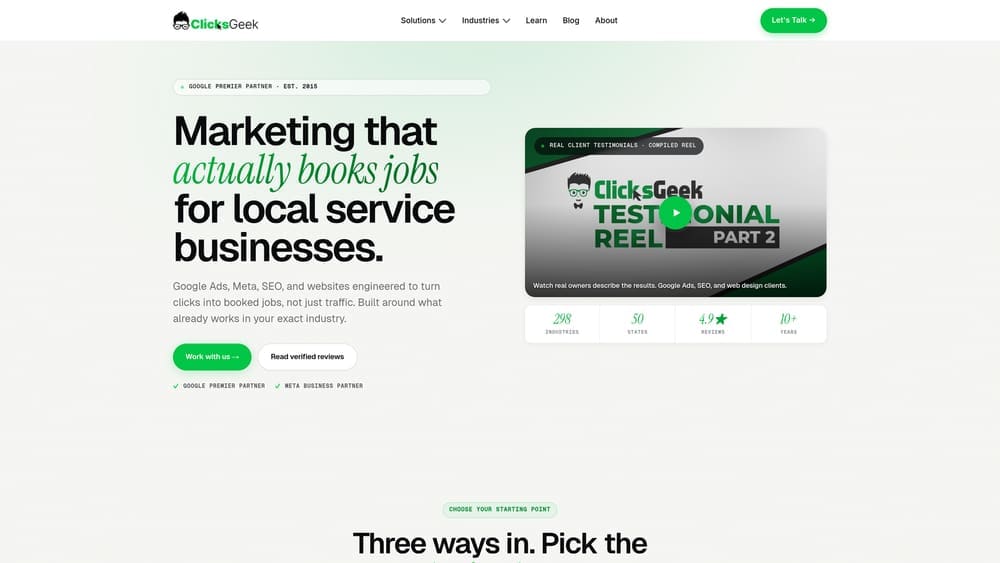
Clicks Geek is a Google Premier Partner agency that specializes in PPC management with deep conversion rate optimization capabilities, focusing on driving qualified leads rather than vanity metrics.
Where This Tool Shines
The agency’s Google Premier Partner status puts them in the top 3% of agencies nationwide, giving you access to advanced beta features and direct Google support. But what sets them apart is their obsession with conversion rate optimization—they don’t just drive traffic, they systematically test and improve every element of your funnel.
For SaaS companies, this matters enormously. A 20% improvement in your landing page conversion rate doesn’t just mean 20% more trials—it means you can afford to bid higher on competitive keywords, outbid competitors, and dominate your category. They understand that PPC success for SaaS isn’t about traffic volume, it’s about profitable customer acquisition.
Key Features
Google Premier Partner Status: Access to advanced features, beta programs, and dedicated Google support that smaller agencies can’t access.
CRO-Focused Campaign Optimization: Systematic testing of ad copy, landing pages, and conversion paths to maximize trial signups and paid conversions.
Revenue-Driven Approach: Campaign optimization based on actual customer acquisition cost and lifetime value, not clicks or impressions.
Full-Service PPC Management: Complete campaign setup, ongoing optimization, creative development, and performance reporting.
Best For
SaaS companies with proven product-market fit who need to scale customer acquisition profitably. Particularly valuable for businesses with CAC targets they need to hit consistently, or those struggling to make PPC profitable despite decent traffic volume.
Pricing
Custom pricing based on monthly ad spend and project scope. The agency model works best for companies spending at least $5,000-$10,000 monthly on paid advertising.
2. Directive Consulting
Best for: Enterprise B2B SaaS with complex sales cycles and account-based strategies
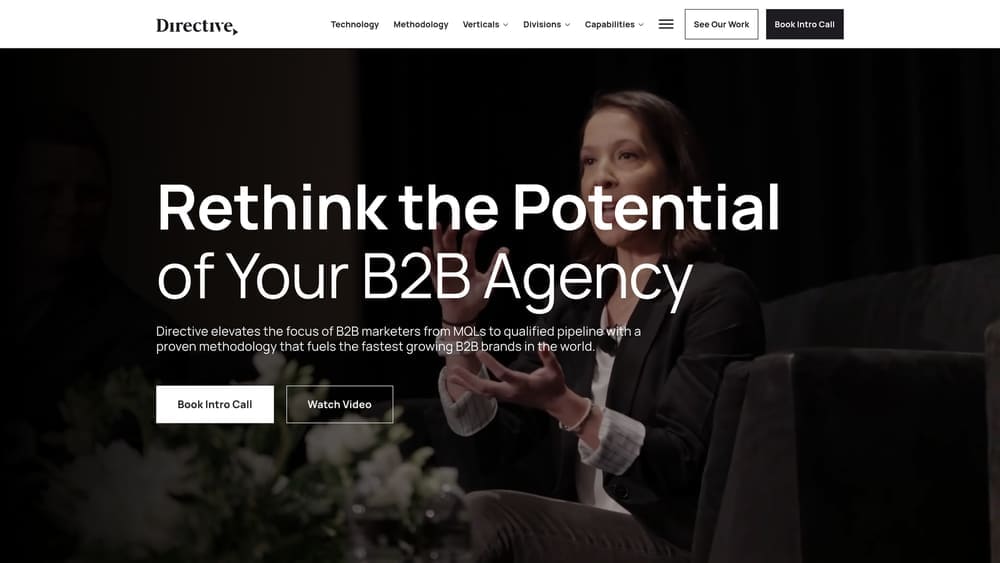
Directive Consulting is a performance marketing agency known for B2B and SaaS-focused campaigns, particularly for enterprise clients with sophisticated go-to-market strategies.
Where This Tool Shines
Directive built their reputation working with high-growth B2B SaaS companies that sell to other businesses. They understand that enterprise sales cycles can stretch 6-12 months, and they structure campaigns accordingly. Their customer generation methodology focuses on creating pipeline, not just leads.
If you’re selling a $50,000 annual contract to IT directors at Fortune 1000 companies, Directive knows how to build account-based campaigns that reach decision-makers across multiple touchpoints. They integrate paid search with LinkedIn targeting, retargeting, and content syndication to create coordinated campaigns.
Key Features
B2B SaaS Specialization: Deep expertise in complex B2B sales cycles and enterprise buying committees.
Account-Based Marketing Integration: Coordinated campaigns targeting specific high-value accounts across multiple channels.
Customer Generation Methodology: Focus on pipeline creation and revenue attribution, not just lead volume.
Enterprise-Focused Approach: Experience working with high-growth SaaS companies and venture-backed startups.
Best For
Enterprise B2B SaaS companies with contract values above $10,000 annually and sales cycles longer than 30 days. Best suited for companies with dedicated sales teams who can work qualified leads through complex buying processes.
Pricing
Custom enterprise pricing typically requiring minimum monthly retainers in the five-figure range. Designed for companies with substantial marketing budgets and aggressive growth targets.
3. Metadata.io
Best for: B2B SaaS teams automating multi-channel demand generation campaigns
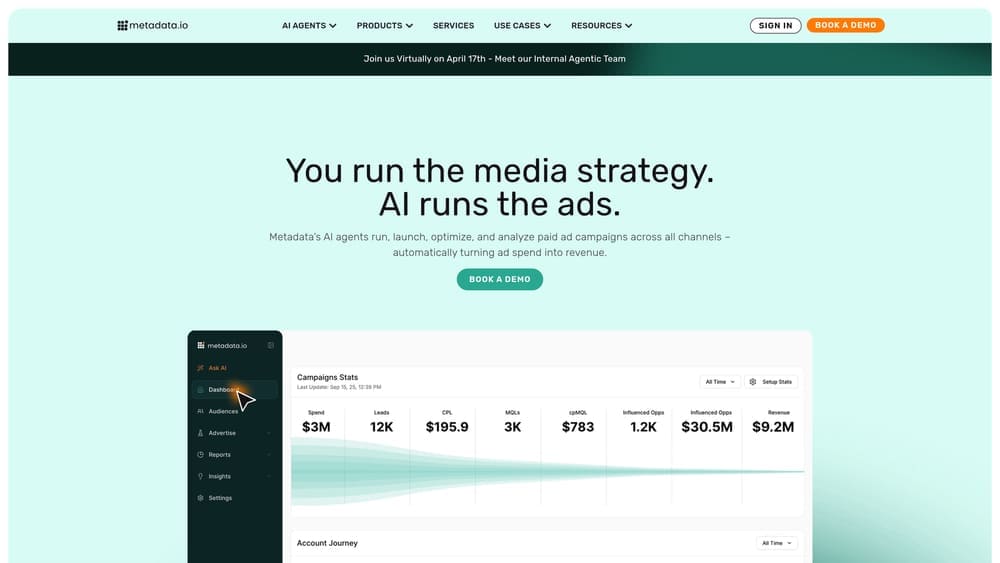
Metadata.io is an AI-powered demand generation platform that automates paid campaign execution across Google, LinkedIn, Facebook, and other B2B channels.
Where This Tool Shines
Think of Metadata as your campaign execution engine. You define your ideal customer profile and campaign goals, and the platform automatically creates, tests, and optimizes audiences across multiple ad platforms. It’s particularly powerful for B2B SaaS because it understands account-based targeting.
The platform shines when you’re running coordinated campaigns across LinkedIn, Google, and Facebook simultaneously. Instead of manually building audiences in each platform, you define them once in Metadata and it syncs everywhere. The AI continuously tests audience variations and budget allocation to find what drives the lowest cost per qualified lead.
Key Features
Automated Audience Testing: AI-driven creation and testing of audience segments across platforms to identify highest-performing targets.
Multi-Channel Campaign Orchestration: Unified campaign management across Google Ads, LinkedIn, Facebook, and other B2B channels.
Revenue Attribution: Integration with CRM systems to track which campaigns drive actual revenue, not just leads.
AI-Driven Optimization: Machine learning algorithms that automatically adjust bids, budgets, and targeting based on performance.
Best For
B2B SaaS marketing teams running multi-channel campaigns who want to automate execution while maintaining strategic control. Particularly valuable for companies with small marketing teams who can’t dedicate full-time resources to campaign management.
Pricing
Platform fees start around $3,000 monthly, with pricing scaling based on ad spend and features. Requires minimum ad spend commitments to justify the platform investment.
4. Unbounce
Best for: Creating high-converting landing pages optimized for PPC traffic
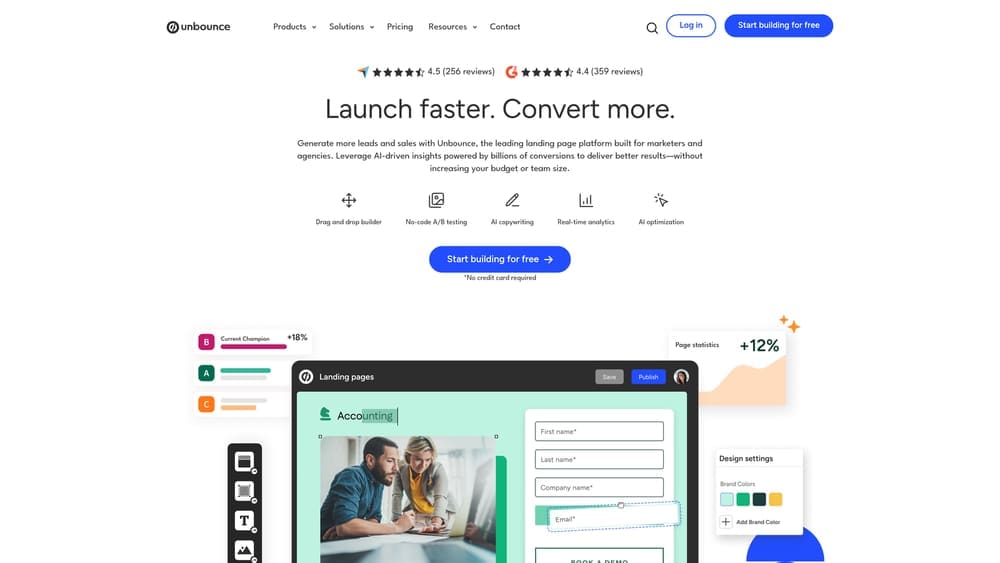
Unbounce is a landing page builder with AI-powered optimization capabilities designed specifically to maximize conversions from paid advertising campaigns.
Where This Tool Shines
Here’s what most SaaS companies get wrong: they drive expensive PPC traffic to their homepage or generic product page. Unbounce lets you create dedicated landing pages for each campaign, matching the message in your ad to the message on the page. This message match dramatically improves conversion rates.
The Smart Traffic feature uses AI to automatically route visitors to the landing page variation most likely to convert them based on their characteristics. Over time, it learns which page variants work best for different audience segments and optimizes accordingly without manual A/B testing.
Key Features
Smart Traffic AI Optimization: Automatically routes visitors to the highest-converting page variant based on their attributes and behavior.
Drag-and-Drop Page Builder: No-code editor that lets marketers create professional landing pages without developer resources.
A/B Testing Built-In: Native split testing capabilities to compare page variations and identify top performers.
SaaS-Specific Templates: Pre-built landing page templates optimized for trial signups, demo requests, and SaaS conversions.
Best For
SaaS marketing teams who need to create and test landing pages quickly without relying on developers. Especially valuable for companies running multiple campaigns that need dedicated landing pages for each audience segment or offer.
Pricing
Plans start at $99 monthly for basic features and 500 conversions. Higher tiers unlock Smart Traffic AI, increased conversion limits, and advanced integrations.
5. CallRail
Best for: SaaS companies with sales teams tracking phone conversions from PPC
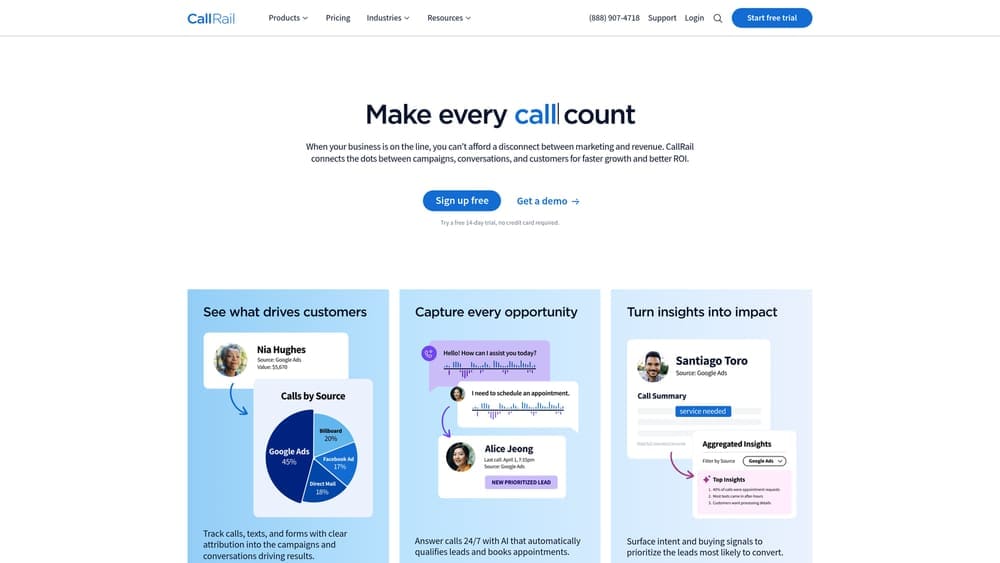
CallRail is a call tracking and analytics platform that attributes phone conversions back to specific PPC campaigns, keywords, and even individual ads.
Where This Tool Shines
If your SaaS business drives demo calls or sales conversations through PPC, you’re probably blind to half your conversions. CallRail solves this by dynamically inserting unique phone numbers on your website based on the traffic source. When someone clicks your Google Ad and calls, you know exactly which keyword drove that call.
The platform records and transcribes calls, letting you analyze which keywords drive qualified conversations versus tire-kickers. You can even score calls based on quality and feed that data back to Google Ads to optimize for high-quality phone leads, not just call volume.
Key Features
Dynamic Number Insertion: Automatically displays unique tracking numbers based on traffic source to attribute calls to specific campaigns.
Call Recording and Transcription: Records conversations and provides searchable transcripts for quality analysis and training.
Google Ads Integration: Sends call conversion data directly to Google Ads for automated bidding optimization.
Form Tracking Included: Also tracks form submissions alongside calls for complete conversion visibility.
Best For
SaaS companies with inside sales teams where phone demos or consultations are a primary conversion path. Particularly valuable for higher-ticket SaaS products where personal conversations are essential to the sales process.
Pricing
Plans start at $45 monthly for basic call tracking with 10 users. Pricing scales based on call volume, number of tracking lines, and advanced features needed.
6. Segment
Best for: Building sophisticated audiences and tracking user behavior across platforms
Segment is a customer data platform that unifies data collection from your website and product, enabling sophisticated audience building for PPC campaigns.
Where This Tool Shines
Segment acts as the central nervous system for your customer data. Instead of implementing tracking codes from Google, Facebook, LinkedIn, and every other platform separately, you implement Segment once. It then pipes data to all your marketing tools automatically.
For PPC, this means you can build incredibly precise audiences. Want to target people who signed up for a trial, used a specific feature, but haven’t upgraded? Segment can sync that audience to Google and Facebook for retargeting. The platform enables behavior-based targeting that goes far beyond basic demographics.
Key Features
Unified Data Collection: Single implementation that sends data to hundreds of marketing and analytics tools automatically.
Audience Sync to Ad Platforms: Build audiences based on product usage and sync them to Google, Facebook, LinkedIn for targeting.
Real-Time Data Streaming: Event data flows immediately to connected platforms for timely campaign optimization.
Identity Resolution: Connects user behavior across devices and sessions to build complete customer profiles.
Best For
SaaS companies with product-led growth models who want to target and retarget users based on in-app behavior. Most valuable for companies with engineering resources to implement tracking properly and marketing teams sophisticated enough to use behavioral data.
Pricing
Free tier available for up to 1,000 visitors monthly. Paid plans start around $120 monthly and scale based on tracked users and data volume.
7. Supermetrics
Best for: Consolidating PPC data from multiple platforms into unified reports
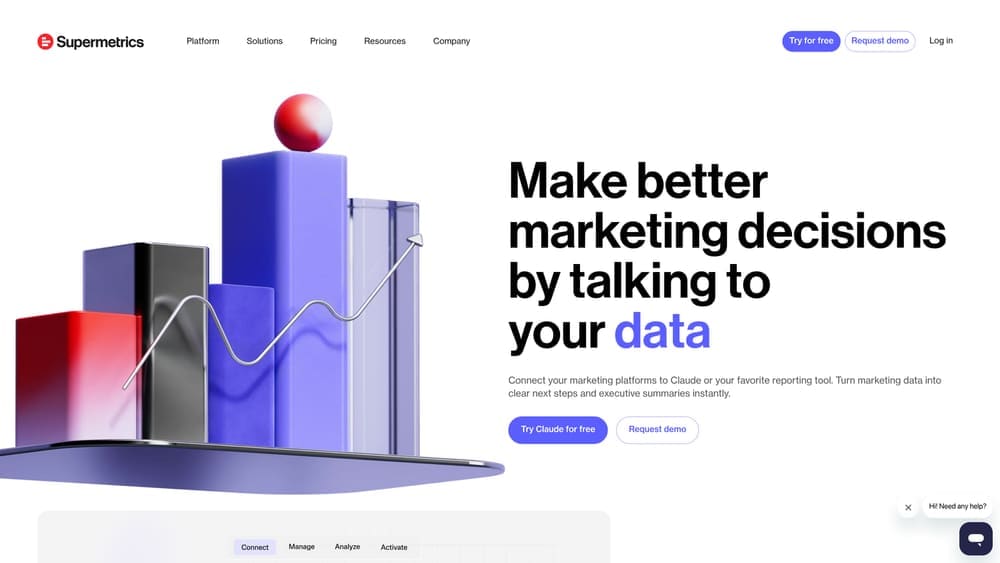
Supermetrics is a marketing data pipeline tool that pulls PPC performance data from multiple platforms into spreadsheets, dashboards, and data warehouses.
Where This Tool Shines
If you’re running PPC across Google, LinkedIn, Facebook, and Microsoft Ads, you’re probably spending hours each week copying data into spreadsheets. Supermetrics automates this completely. It connects to 70+ marketing platforms and pipes data wherever you need it—Google Sheets, Looker Studio, BigQuery, or your data warehouse.
For SaaS companies, this means you can build a single dashboard showing cost per trial signup across all platforms, compare channel efficiency, and identify where to shift budget. The automated reporting saves hours weekly and ensures stakeholders always have current performance data.
Key Features
70+ Data Source Connectors: Pulls data from Google Ads, Facebook, LinkedIn, Microsoft Ads, and dozens of other marketing platforms.
Google Sheets and Looker Studio Integration: Creates automated reports and dashboards that refresh on schedule without manual work.
Automated Reporting: Schedule data refreshes to keep reports current without manual exports and imports.
Custom Metric Calculations: Combine data from multiple sources to calculate blended metrics like total CAC across channels.
Best For
SaaS marketing teams running multi-channel PPC who need unified reporting and performance analysis. Particularly valuable for data-driven teams who make optimization decisions based on cross-channel performance comparisons.
Pricing
Pricing starts at $39 monthly per data source connector. Most SaaS companies need multiple connectors, so budget accordingly based on how many platforms you’re pulling data from.
8. SpyFu
Best for: Competitive intelligence and discovering competitor PPC strategies
SpyFu is a competitive intelligence tool that reveals competitor PPC keywords, ad copy, historical spending patterns, and bidding strategies.
Where This Tool Shines
SpyFu lets you reverse-engineer your competitors’ PPC strategies. Enter a competitor’s domain and see every keyword they’ve bid on, the ad copy they’ve tested, and how long they’ve been running each campaign. If a competitor has been bidding on the same keyword for three years, that’s a strong signal it’s profitable for them.
For SaaS companies entering new markets or launching new products, SpyFu dramatically shortens the learning curve. Instead of spending months testing keywords blindly, you can see exactly what established competitors are bidding on and start there. The historical data also shows seasonal trends and how competitor strategies evolve over time.
Key Features
Competitor Keyword Research: See every keyword competitors bid on, including estimated monthly spend and ad position.
Historical Ad Data Access: View years of competitor ad copy and landing pages to understand what messaging works.
PPC Keyword Grouping: Organize discovered keywords into logical campaign groups for faster implementation.
Ad Copy Analysis: Compare competitor ad variations to identify high-performing messaging angles.
Best For
SaaS companies launching new PPC campaigns who want to learn from established competitors rather than starting from scratch. Also valuable for ongoing competitive monitoring to identify when competitors launch new campaigns or shift strategies.
Pricing
Plans start at $39 monthly for basic competitor research with limited lookups. Higher tiers unlock unlimited searches, more historical data, and advanced features.
9. Optmyzr
Best for: Automating routine PPC management tasks and optimizations
Optmyzr is a PPC management platform offering automation, optimization scripts, and rule-based campaign management for Google and Microsoft Ads.
Where This Tool Shines
Optmyzr eliminates the tedious manual work that eats up PPC manager time. Things like adjusting bids based on performance, pausing underperforming keywords, and identifying new negative keywords can all be automated with rules. The platform provides one-click optimizations that would take hours to do manually.
For SaaS companies with in-house PPC teams, Optmyzr multiplies productivity. A single manager can effectively handle larger accounts because the platform automates routine optimizations. The enhanced scripts library provides pre-built automations for common scenarios like budget pacing, quality score monitoring, and performance alerts.
Key Features
One-Click Optimizations: Pre-built optimization recommendations you can implement with a single click instead of manual changes.
Custom Automation Rules: Set up rules to automatically adjust bids, pause keywords, or shift budgets based on performance triggers.
Budget Management: Tools to pace spending evenly throughout the month and prevent budget exhaustion.
Enhanced Scripts Library: Pre-written scripts for advanced automations without coding knowledge required.
Best For
SaaS companies with in-house PPC managers who want to automate routine optimizations and focus on strategy. Most valuable for teams managing multiple campaigns or large keyword portfolios where manual optimization becomes impractical.
Pricing
Plans start at $249 monthly for basic automation and optimization features. Pricing scales based on monthly ad spend managed through the platform.
Making the Right Choice
Choosing the right PPC tools depends on your SaaS company’s stage, budget, and internal capabilities. If you need full-service management with a focus on actual revenue rather than vanity metrics, Clicks Geek offers the CRO expertise and Google Premier Partner backing to drive qualified leads that convert to paying customers.
Enterprise SaaS companies with complex sales cycles and account-based strategies may benefit from Directive’s specialized approach to B2B demand generation. Their methodology aligns better with six-figure contracts and multi-month sales processes.
For teams building in-house capabilities, combining Optmyzr for automation, Unbounce for landing pages, and Supermetrics for reporting creates a powerful stack. Add CallRail if phone conversions matter, and Segment if you’re sophisticated enough to leverage behavioral targeting.
Start by auditing your current PPC performance. If you’re not tracking cost-per-qualified-lead and customer acquisition cost by campaign, you’re flying blind. Look at your trial-to-paid conversion rate by traffic source. Many SaaS companies discover they’re driving high volumes of low-quality trials that never convert.
The most common mistake is optimizing for the wrong metrics. Clicks don’t matter. Trial signups don’t even matter if they don’t convert to paying customers. The only metric that matters is cost to acquire a paying customer relative to their lifetime value. If you’re spending $500 to acquire customers worth $5,000, you have a money-printing machine—scale it aggressively. If you’re spending $500 to acquire customers worth $300, no amount of optimization will save you.
Tired of spending money on marketing that doesn’t produce real revenue? We build lead systems that turn traffic into qualified leads and measurable sales growth. If you want to see what this would look like for your business, we’ll walk you through how it works and break down what’s realistic in your market.