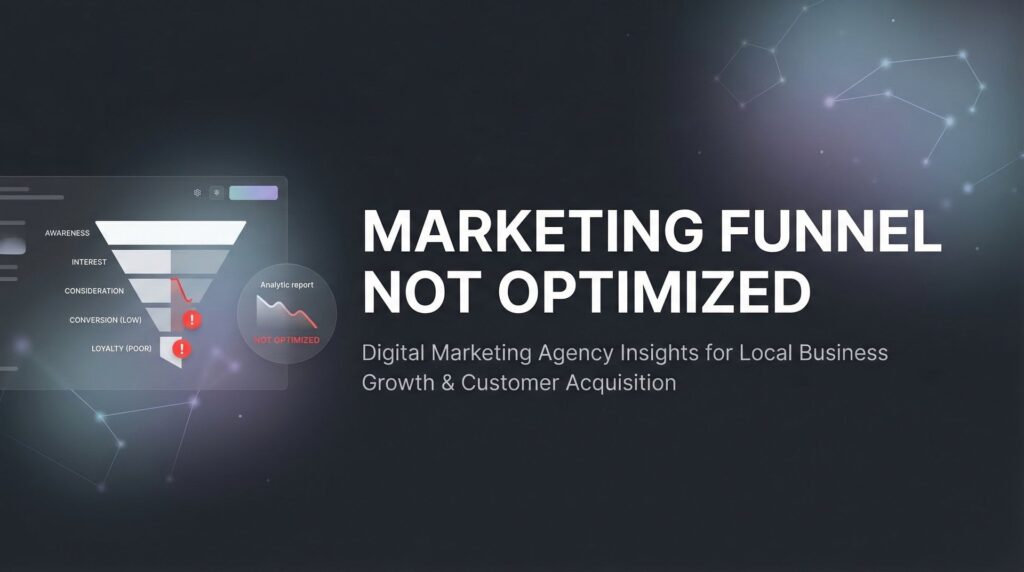
Most local businesses waste money on online advertising because they skip the strategy and jump straight to spending. They boost a Facebook post here, run a Google ad there, and wonder why their phone isn’t ringing. The ads get impressions. Maybe even some clicks. But the phone stays silent, the calendar stays empty, and the bank account keeps shrinking.
Here’s the truth: an online advertising strategy isn’t about which platform you choose—it’s about building a systematic approach that turns ad dollars into paying customers.
Think of it like building a house. You wouldn’t start nailing boards together without a blueprint, right? Yet that’s exactly what happens when businesses throw money at ads without a strategy. They’re building on sand, hoping something sticks.
In this guide, you’ll learn exactly how to create an online advertising strategy from scratch, even if you’ve never run a paid campaign before. We’ll cover everything from defining your ideal customer to tracking your results and scaling what works. By the end, you’ll have a clear roadmap that eliminates guesswork and maximizes every dollar you invest in advertising.
Whether you’re a plumber trying to book more service calls, a lawyer looking for qualified leads, or any local business owner ready to grow, these steps work across industries and budgets. The difference between businesses that profit from online advertising and those that bleed money comes down to following a systematic process.
Let’s build that blueprint.
Step 1: Define Your Ideal Customer and What Makes Them Buy
You can’t create effective ads if you don’t know who you’re talking to. Not “everyone who needs my service”—that’s too broad. You need a specific customer avatar that guides every decision you make in your online advertising strategy.
Start by documenting your best existing customers. Who are they? What do they have in common? Look at demographics first: age range, income level, location, family status. But don’t stop there. The real power comes from understanding their pain points and buying triggers.
What problem keeps them up at night? What finally pushed them to search for a solution? What language do they use when describing their problem? These details matter because they become the foundation of your ad copy.
Let’s say you’re an HVAC company. Your ideal customer isn’t just “homeowners.” It’s homeowners aged 35-65 in your service area who own homes built before 2000, experience unreliable heating or cooling, and worry about emergency breakdowns during extreme weather. They search for terms like “AC repair near me” when their unit stops working, and they value fast response times over the lowest price.
See the difference? That level of specificity tells you exactly what to say in your ads and where to show them.
Next, identify where your best customers spend time online. Are they searching Google when they have an immediate problem? Scrolling Facebook during evening downtime? Watching YouTube videos about home improvement? Different platforms serve different purposes in the customer journey, and understanding where your people are determines where you advertise.
Document the exact problem your service solves using the words your customers use. Not industry jargon. Not technical terms. The actual phrases they say when describing their frustration. If you’re a personal injury lawyer, your customers don’t say “I need legal representation for tort claims.” They say “I got hurt in a car accident and the insurance company won’t pay my medical bills.”
This research phase feels slow, but it’s the most important step in your entire online advertising strategy. Rush it, and everything else crumbles. A strong customer acquisition strategy always starts with knowing exactly who you’re trying to reach.
Success indicator: You can describe your ideal customer in one paragraph without using vague terms like “people who need help” or “anyone interested in quality service.” Your description should be so specific that you could pick this person out of a crowd.
Step 2: Set Clear Goals and Budget Parameters
Advertising without goals is just hoping. You need specific, measurable targets that tell you whether your online advertising strategy is working or failing.
Start by calculating your customer acquisition cost ceiling. This number determines how much you can afford to spend to acquire one customer while still making profit. Take your average customer lifetime value and work backward. If your average customer is worth $2,000 in profit over their relationship with your business, you might decide you can spend up to $400 to acquire them. That’s your ceiling.
This calculation changes everything. It tells you exactly when to scale a campaign and when to shut it down. If you’re acquiring customers for $300 each, you’re winning. If it’s costing $600 per customer, you’re losing money with every sale.
Now set specific campaign goals. Not “increase brand awareness” or “get more engagement.” Those are vanity metrics that don’t pay your bills. Your goals should sound like this: “Generate 20 qualified leads per month at $50 or less per lead” or “Book 10 consultation appointments per month at $100 or less per appointment.”
Notice the specificity. A number. A timeframe. A cost parameter. That’s a real goal you can measure and optimize against. If you’re struggling with low ROI from digital advertising, vague goals are often the root cause.
Determine your initial test budget based on your goals and acquisition cost ceiling. A common mistake is starting with too little budget to gather meaningful data. If your target cost per lead is $50 and you want to test three ad variations, you need enough budget to generate at least 30-50 leads to see clear patterns. That means a test budget of $1,500-$2,500 minimum.
Set a timeline for evaluation. Typically, you need 7-14 days of data before making major decisions, depending on your daily budget and conversion volume. Changing things too quickly leads to constant restarts and no learning.
Success indicator: You have a written goal with a specific number and deadline, plus a documented customer acquisition cost ceiling that determines your maximum cost per conversion. If someone asks what success looks like, you can answer with exact numbers.
Step 3: Choose Your Primary Advertising Platform
Here’s where most businesses make their first strategic error: choosing a platform based on what’s trendy instead of where their customers actually are.
The platform decision comes down to customer intent and behavior. Google Ads captures people actively searching for solutions right now. They have a problem, they’re looking for help, and they’re ready to take action. Meta platforms (Facebook and Instagram) reach people who aren’t actively searching but might be interested based on their demographics and interests.
Think about your customer’s journey. When your ideal customer decides they need your service, what do they do first? If they open Google and search, that’s your platform. If they’re not actively searching but would be interested if they saw your service, Meta might be better.
For most local service businesses—plumbers, electricians, lawyers, dentists, contractors—Google Ads is the starting point. Why? Because when someone’s pipe bursts or they get a traffic ticket or they need emergency dental work, they search Google immediately. They’re in active pain, looking for a solution, willing to pay for fast help. Our guide on paid search advertising for beginners walks through exactly how to set this up.
For businesses where the customer journey is less urgent—wedding photographers, interior designers, fitness trainers, some B2B services—Meta platforms can work well because you’re building awareness and interest over time.
Consider where your competitors successfully advertise. If you search for your service and see competitors running Google Ads consistently, that’s a signal the platform works for your industry. If your competitors have active Facebook pages with regular ads, they’ve found success there.
Here’s the critical rule: start with ONE platform to master before expanding. Splitting your budget across multiple platforms in the beginning prevents you from gathering enough data on any single platform to optimize effectively. You end up with mediocre results everywhere instead of strong results somewhere.
Master one platform first. Get it profitable. Then expand to a second platform with the profits from the first. That’s how you build a sustainable online advertising strategy instead of burning through budget with scattered efforts.
Success indicator: You’ve selected one platform with clear reasoning tied to customer behavior, not just personal preference or what you heard works for other businesses. You can explain why this platform matches how your ideal customer searches for or discovers services like yours.
Step 4: Build Your Campaign Structure and Targeting
Campaign structure is where organization meets strategy. A messy campaign structure makes optimization impossible. A clean structure lets you see exactly what’s working and what needs fixing.
Create tightly themed ad groups or ad sets around specific services or offers. Don’t lump everything together. If you’re a personal injury lawyer, you’d have separate ad groups for car accidents, slip and falls, and workers’ compensation. Each service gets its own focused group with relevant keywords and ads.
Why? Because the person searching for car accident lawyers has different concerns than someone dealing with a workplace injury. Your ads need to speak directly to their specific situation, and you can’t do that with generic messaging.
Set up geographic targeting that matches your service area precisely. If you serve a 25-mile radius around your location, set that exact radius. Don’t advertise to people 50 miles away who you can’t actually serve. Every click from outside your service area is wasted money. Many businesses struggle because their online advertising for local businesses isn’t properly geo-targeted.
For local businesses, geographic precision is critical. You’re not trying to reach everyone—you’re trying to reach people you can actually help. Tighter targeting means higher relevance, better conversion rates, and lower costs.
Layer audience targeting based on your customer avatar from Step 1. On Google, this means selecting relevant keywords that match search intent. On Meta, this means choosing demographics, interests, and behaviors that align with your ideal customer profile.
The key is balance. Target too broadly and you waste money on irrelevant clicks. Target too narrowly and you limit your reach so much that you can’t generate enough volume. Start with your core audience—the most obvious match for your ideal customer—then expand gradually if you need more volume.
Within each ad group, maintain focus. All keywords or audience parameters should relate to the same specific service or offer. This keeps your ads highly relevant to what triggered them, which improves your quality scores and lowers your costs.
Success indicator: Your campaign structure is organized and each ad group has a clear purpose. If someone else looked at your account, they could immediately understand what each campaign and ad group is designed to accomplish. No confusion, no overlap, no generic catch-all groups.
Step 5: Create Ads That Speak to Customer Pain Points
Your ads are where strategy becomes reality. This is where you connect with your ideal customer using the insights from Step 1.
Write headlines that address the problem, not just your service name. Nobody cares that you’re “Smith & Associates Law Firm.” They care that you help people who got hurt in car accidents get the compensation they deserve. Lead with the problem and the outcome, not your brand name.
Compare these headlines: “Quality Legal Services” versus “Injured in a Car Accident? Get the Settlement You Deserve.” The first is about you. The second is about them and their problem. Which one would you click?
Your ad copy should follow this pattern: acknowledge the problem, present your solution, differentiate yourself from competitors, and include a clear call-to-action. Don’t try to be clever. Be clear. Tell them exactly what you do and why they should choose you. Understanding what performance marketing is helps you focus on ads that drive measurable results, not just impressions.
Include a clear, specific call-to-action in every ad. “Call now for a free estimate.” “Book your consultation today.” “Schedule your free inspection.” Vague CTAs like “Learn more” or “Visit our website” don’t create urgency or direction. Tell people exactly what to do next.
Create multiple ad variations for testing—minimum three per ad group. Test different headlines, different value propositions, different CTAs. You don’t know what will resonate best until you test it. One ad might emphasize speed (“Same-day service available”), another might emphasize expertise (“25 years of experience”), and a third might emphasize value (“Free estimates, competitive pricing”).
Use the language from your customer research. If your customers say “my AC won’t turn on,” use that phrase in your ad. Don’t say “experiencing HVAC system malfunction.” Match their words, not your technical terminology.
Add elements that create urgency or highlight differentiation. Limited-time offers, seasonal relevance, unique guarantees, or specific credentials all give people a reason to choose you over the competitor’s ad right below yours.
Success indicator: Your ads mention customer problems and include urgency or differentiation. They’re not generic service descriptions that could work for any business in your industry. They’re specific to your ideal customer’s pain points and your unique approach to solving them.
Step 6: Set Up Conversion Tracking Before You Spend a Dollar
This is the step most businesses skip, and it’s the reason they can’t tell if their online advertising strategy is working.
Conversion tracking tells you what happens after someone clicks your ad. Did they fill out your contact form? Did they call your phone number? Did they book an appointment? Without this data, you’re flying blind, making decisions based on clicks and impressions instead of actual business results.
Install tracking pixels and conversion codes on your website. For Google Ads, this means installing the Google Ads conversion tracking tag and setting up conversion actions. For Meta, this means installing the Meta Pixel. These small pieces of code track user behavior and report it back to your ad platform.
Define what counts as a conversion for your business. This should align with your goals from Step 2. If you’re a service business, conversions might include form submissions, phone calls, and appointment bookings. If you’re e-commerce, it’s completed purchases. Be specific about what actions matter.
Set up call tracking for marketing campaigns if phone calls are important to your business. Many local businesses get most of their leads through phone calls, but without call tracking, you can’t attribute those calls back to specific ads or keywords. Use call tracking numbers that forward to your main line but allow you to track the source.
Test that tracking fires correctly before launching campaigns. Submit a test form. Make a test call. Complete a test action. Then check your ad platform dashboard to confirm the conversion was recorded. If tracking doesn’t work from day one, you’ll waste your entire test budget without learning anything.
This step requires some technical setup, but it’s not optional. You can’t optimize what you can’t measure. Businesses that succeed with online advertising obsess over conversion data. Businesses that fail never set it up properly.
Success indicator: You can see test conversions in your ad platform dashboard. You’ve confirmed that when someone takes your desired action, it’s tracked and attributed to the correct campaign, ad group, and keyword or audience. Your tracking is working before you spend real money.
Step 7: Launch, Monitor, and Optimize Based on Data
Your online advertising strategy doesn’t end at launch. That’s where the real work begins.
Start with a controlled budget and monitor daily for the first week. Don’t set your campaigns to max budget and walk away. Check in every day to catch any issues early—disapproved ads, technical problems, unexpected costs, or targeting errors. The first few days are critical for catching mistakes before they drain your budget.
Look at your key metrics: impressions, clicks, click-through rate, cost per click, conversions, and cost per conversion. These numbers tell you the story of what’s working. High impressions but low clicks means your ads aren’t compelling. High clicks but no conversions means your landing page or offer needs work. If you’re seeing traffic but no sales, learn how to increase online sales by fixing your conversion chain.
Identify winning ads and pause underperformers within 7-14 days. You need enough data to make informed decisions, but not so much time that you waste money on ads that clearly aren’t working. If one ad variation is getting conversions at $40 each and another is getting conversions at $120 each, pause the expensive one and put that budget toward the winner.
Make one change at a time and document what you adjust. If you change your targeting, your ad copy, and your budget all at once, you won’t know which change caused the result. Change one variable, wait for data, evaluate, then make the next change. Keep a simple log of what you changed and when.
Scale budget gradually on campaigns meeting your cost-per-acquisition target. If you set a goal of $50 per lead and a campaign is consistently delivering leads at $35, increase the budget by 20-30% and monitor the results. Scaling too aggressively can disrupt the algorithm and increase costs. Scaling gradually maintains performance while increasing volume.
Watch for performance changes when you scale. Sometimes a campaign that works at $500/month doesn’t maintain the same efficiency at $2,000/month. If your cost per conversion increases significantly after scaling, pull back slightly and find the sweet spot where volume and efficiency balance.
Refresh your ad creative regularly. Ad fatigue happens when people see the same ads repeatedly and stop responding. Test new headlines, new offers, new angles every 30-60 days to maintain performance.
Success indicator: You have a documented optimization routine—specific days and times when you review performance, clear criteria for pausing underperformers, and a scaling plan for winners. You’re making data-driven decisions, not emotional reactions.
Putting It All Together
Building an effective online advertising strategy comes down to preparation, precision, and patience. You’ve now mapped out your ideal customer, set measurable goals, chosen the right platform, structured your campaigns properly, created compelling ads, installed tracking, and established an optimization routine.
Here’s your quick-reference checklist to keep your online advertising strategy on track:
Customer avatar documented: You know exactly who you’re targeting and what problems they need solved.
Budget and CPA ceiling calculated: You know how much you can spend per customer while staying profitable.
Primary platform selected: You’ve chosen one platform based on customer behavior, not trends.
Campaign structure built: Your campaigns are organized with tightly themed ad groups.
Ads written with pain points and CTAs: Your messaging addresses customer problems and tells them exactly what to do next.
Conversion tracking verified: You can measure what matters and attribute results to specific campaigns.
Optimization schedule set: You have a routine for reviewing data and making informed adjustments.
The businesses that win with online advertising aren’t necessarily spending the most—they’re the ones following a systematic approach like this one. They test, they measure, they optimize, and they scale what works.
Your competitors are probably still boosting random Facebook posts and wondering why it doesn’t work. You now have a complete blueprint that eliminates guesswork and builds predictable growth.
Ready to stop guessing and start growing? Tired of spending money on marketing that doesn’t produce real revenue? We build lead systems that turn traffic into qualified leads and measurable sales growth. If you want to see what this would look like for your business, we’ll walk you through how it works and break down what’s realistic in your market.
Put this strategy into action today. Start with Step 1, work through each phase systematically, and build an online advertising strategy that actually converts.
Want More Leads for Your Business?
Most agencies chase clicks, impressions, and “traffic.” Clicks Geek builds lead systems. We uncover where prospects are dropping off, where your budget is being wasted, and which channels will actually produce ROI for your business, then we build and manage the strategy for you.