Your local business is bleeding money on marketing that doesn’t work. You’re running Facebook ads because everyone says you should. You boosted a few posts. Maybe you hired someone to “do SEO” who promised page-one rankings. You’re spending money every month, but you can’t point to actual customers who came through the door because of it.
Here’s the uncomfortable truth: most local businesses don’t have a marketing problem. They have a strategy problem.
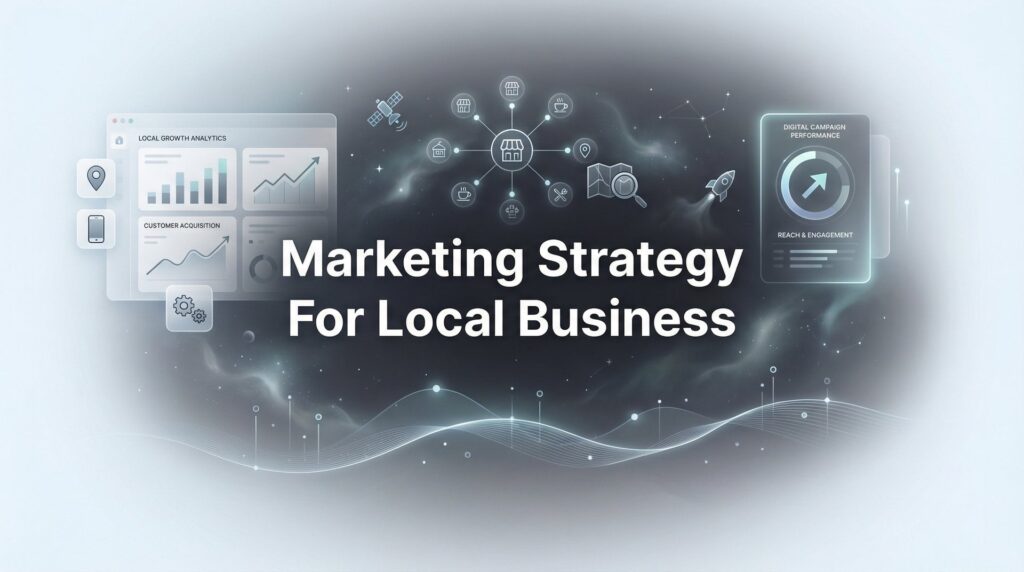
The difference between a marketing tactic and a marketing strategy is the difference between throwing money at the wall and building a system that predictably brings customers to your business. This guide will show you how to build that system—a marketing strategy for local business that focuses on measurable results, not marketing theater.
Why Most Local Businesses Fail at Marketing (And How to Be Different)
Walk into any local business owner meetup and you’ll hear the same frustrations. “We tried Facebook ads and they didn’t work.” “SEO is too expensive.” “We got a website built but nobody calls.” The problem isn’t that these tactics don’t work—it’s that tactics without strategy is just expensive noise.
The spray and pray approach kills local marketing budgets. A business owner hears about TikTok, so they start posting videos. Then they read an article about email marketing and sign up for Mailchimp. Someone at a networking event mentions Google Ads, so they throw $500 at it for a month. None of these tactics connect to each other. There’s no system, no measurement, no clear path from marketing dollar to customer acquisition.
This scattered approach drains budgets because you’re constantly starting from zero. Every tactic requires learning, setup time, and money before you see any return. When you jump from one thing to another, you never give anything enough time or focus to actually work. Understanding why marketing isn’t working for your business is the first step toward fixing it.
Here’s what changes everything: understanding that effective local marketing rests on three pillars that must work together.
Visibility: Can potential customers find you when they’re looking for what you offer? This includes your Google Business Profile, local SEO, paid advertising, and any channel where customers discover businesses like yours.
Credibility: Once they find you, do they trust you enough to choose you over competitors? This is your reviews, your website presentation, your social proof, and how you position your expertise.
Conversion Optimization: When someone is interested, do you have a system that turns that interest into a customer? This includes your response speed, your follow-up process, and how you handle leads from inquiry to sale.
Most local businesses focus exclusively on visibility—they want more traffic, more clicks, more eyeballs. But visibility without credibility means people find you and choose someone else. And visibility plus credibility without conversion optimization means you generate interest that dies because you don’t have a system to capture it.
The businesses dominating their local markets aren’t doing ten times more marketing. They’re doing the right marketing in the right order, and they’re building these three pillars simultaneously. That’s strategy.
Know Your Customer Before You Spend a Dime
You cannot build an effective marketing strategy for local business without knowing exactly who you’re trying to reach. Not in a vague “small business owners” or “homeowners in my area” way—in a specific, detailed way that informs every marketing decision you make.
Start by building real customer profiles based on your actual best customers, not who you wish your customers were. Look at your current customer base and identify the 20% who generate 80% of your revenue or who refer the most business. What do they have in common?
For local businesses, demographics matter differently than they do for national brands. You’re not just looking at age and income—you’re looking at neighborhood patterns, commute routes, local events they attend, and community connections they have. A local coffee shop needs to know that their morning customers are commuters who value speed, while their afternoon customers are remote workers who value atmosphere and WiFi.
Dig deeper into pain points specific to your local market. A plumbing company in an area with older homes faces different customer pain points than one in a new development. A restaurant near office buildings has different customer triggers than one in a residential neighborhood. Your marketing message needs to speak to the specific problems your local customers actually have.
Map out the local customer journey from the moment someone realizes they need what you offer to the moment they make a purchase decision. For service businesses, this might start with a problem (pipe burst, tax deadline approaching, health issue) that triggers an immediate search. For retail or restaurants, it might be a slower process of discovery, consideration, and decision.
Understanding this journey tells you where to show up in your marketing. If your customers make urgent, immediate decisions, you need visibility at the moment of need—which means Google Ads and a strong Google Business Profile. If they take time to research and compare, you need content that builds credibility over time. Building a solid customer acquisition system for local businesses starts with this foundational understanding.
Now look at your competition, but look at them strategically. You’re not trying to copy what they do—you’re looking for gaps you can own. Visit their websites. Read their reviews. Look at their Google Business Profile. What are customers complaining about? What questions go unanswered? What needs are they not meeting?
Many local businesses discover they can dominate a market not by being everything to everyone, but by being exceptional at one thing their competitors ignore. Maybe every competitor in your area has terrible response times—you can own speed. Maybe they all have outdated websites that don’t work on mobile—you can own the digital experience. Maybe they don’t explain their pricing clearly—you can own transparency.
This research phase isn’t glamorous, but it determines whether your marketing dollars work or get wasted. Every dollar you spend on marketing before you understand your customer and your market is a gamble. Every dollar you spend after this research is an investment.
Building Your Local Digital Foundation
Your digital foundation is the infrastructure that makes all other marketing work. Without it, you’re building on sand. With it, every marketing dollar you spend compounds in effectiveness.
Let’s start with the most underutilized free tool in local marketing: your Google Business Profile. This isn’t just a listing—it’s often the first impression potential customers have of your business, and for many local searches, it appears before your website does.
Most local businesses claim their profile and then ignore it. They’re missing massive opportunity. Complete every section: add your hours, services, photos, attributes. Update your business description with clear language about what you do and who you serve. The businesses that dominate local search results are the ones that treat their Google Business Profile like a living, breathing marketing asset.
Photos matter more than you think. Businesses with photos receive significantly more requests for directions and clicks to their website compared to those without. Take high-quality photos of your location, your products, your team, and your work. Update them regularly. Show potential customers what they’ll experience when they choose you.
Your website is your digital storefront, and for local businesses, it has one primary job: convert visitors into customers. This means mobile-first design isn’t optional—it’s critical. The majority of local searches happen on mobile devices, often while people are actively looking for a solution right now.
Your website needs clear calls-to-action on every page. Not buried in the footer, not hidden in a menu—front and center. “Call Now,” “Book Appointment,” “Get Quote,” “Order Online.” Make it brain-dead simple for someone to take the next step. Include your phone number in the header of every page, clickable on mobile so one tap initiates the call.
Trust signals separate businesses that convert from businesses that get ignored. Display your reviews prominently. Show credentials, certifications, or awards. Include photos of your team. Feature logos of recognizable clients or partners if you have them. Address common objections directly—if people worry about pricing, address it. If they worry about quality, show proof.
Local SEO fundamentals build long-term organic visibility that reduces your dependence on paid advertising. Start with citations—consistent mentions of your business name, address, and phone number across online directories. Inconsistent information confuses Google and dilutes your local search rankings. Learning search engine marketing for beginners can help you understand how these elements work together.
Reviews are the currency of local SEO and local credibility. Businesses with more positive reviews rank higher in local search results and convert at higher rates. Build a systematic process for requesting reviews from satisfied customers. Don’t leave it to chance—make it part of your customer experience.
Create location-based content that answers questions your local customers actually ask. A roofing company might create content about “preparing your roof for [local area] winter weather.” A restaurant might write about “where to park near [restaurant name]” or “best dishes to order for takeout.” This content builds organic visibility for searches that indicate buying intent.
Paid Advertising That Actually Pays Back
Paid advertising for local businesses isn’t about brand awareness or impressions—it’s about generating customers at a cost that makes sense for your business. This mindset shift changes everything about how you approach PPC.
The decision between investing in PPC versus SEO depends on your timeline and your market dynamics. PPC delivers immediate visibility—you can be at the top of search results tomorrow. SEO builds over time but creates compounding returns. For most local businesses, the right answer is both, weighted based on your specific situation.
If you need customers now—you just opened, you have slow season cash flow issues, you’re launching a new service—PPC gives you control over your lead flow. You can turn it on, generate inquiries, and turn it off. If you’re playing the long game and have consistent business, investing in SEO builds an asset that generates customers without ongoing ad spend. Understanding what performance marketing is helps you see how paid channels fit into a results-focused strategy.
Geographic targeting is where local businesses either maximize efficiency or waste massive amounts of money. You’re not trying to reach everyone in your city—you’re trying to reach people in your service area who are actually looking for what you offer.
Set up radius targeting around your location, but be strategic about it. A restaurant might target a tight radius because people won’t drive far for lunch. A specialized service business might target a wider area because customers will travel for expertise. Look at where your current customers come from and build your targeting around that reality, not assumptions.
Ad scheduling matters more for local businesses than national brands. A B2B service business might turn off ads outside business hours to avoid wasting budget on clicks that won’t convert. A 24-hour emergency service needs to run ads around the clock but might adjust bids based on when calls are most likely to close. A restaurant might increase bids during lunch and dinner hours when people are actively deciding where to eat.
Here’s where most local businesses fail with paid advertising: they don’t set up proper conversion tracking. They look at clicks and impressions instead of tracking which ads generated phone calls, form submissions, or actual customers. Without this data, you’re flying blind.
Set up call tracking for marketing campaigns so you know which campaigns drive phone calls. Use form tracking to see which ads generate quote requests. If possible, track closed customers back to their original marketing source. This data tells you what’s working and what’s wasting money—and it’s the difference between paid advertising that pays back and paid advertising that drains your budget.
Turning Leads Into Loyal Customers
You can have perfect visibility and credibility, but if you don’t have a system for converting leads into customers, you’re just generating expensive interest that goes nowhere. This is where many local businesses leak revenue without realizing it.
Speed-to-lead determines whether you win or lose in local markets. When someone fills out a contact form or calls your business, they’re hot—they need what you offer right now. If you respond in five minutes, you’re exponentially more likely to convert them than if you respond in an hour. If you wait until the next day, they’ve already chosen a competitor.
This reality demands systems, not good intentions. You can’t rely on remembering to check email or hoping you’ll hear your phone ring. Set up notifications that alert you immediately when a lead comes in. If you can’t respond personally within minutes, set up an automated response that acknowledges their inquiry and sets expectations for when you’ll follow up.
Many service businesses lose leads because they treat the first contact as the only opportunity. Someone calls, you miss it, they move on. Build a follow-up system that gives you multiple touchpoints. If someone requests a quote, follow up within an hour, then again the next day if you haven’t connected, then again three days later. Most of your competitors give up after one attempt—your persistence wins deals.
Automation doesn’t mean impersonal—it means consistent. Use marketing automation for small business to send helpful information to prospects who aren’t ready to buy yet. A home services company might send seasonal maintenance tips. A restaurant might send their weekly specials. The goal is to stay top-of-mind so when they’re ready to buy, you’re the obvious choice.
Measuring what matters separates businesses that grow from businesses that spin their wheels. Vanity metrics like website traffic, social media followers, or ad impressions feel good but don’t pay bills. Focus on metrics that directly connect to revenue.
Track cost per lead—how much you’re spending to generate each inquiry. Track lead-to-customer conversion rate—what percentage of inquiries become paying customers. Track customer acquisition cost—total marketing spend divided by new customers. Track customer lifetime value—how much revenue the average customer generates over their relationship with your business.
These metrics tell you whether your marketing is healthy or sick. If your cost per lead is increasing, either your ads are getting less efficient or your market is getting more competitive. If your conversion rate is dropping, either your lead quality is declining or your sales process needs work. If your customer acquisition cost exceeds your customer lifetime value, you’re losing money on every customer—a recipe for failure.
Putting Your Strategy Into Action: A 90-Day Launch Plan
Strategy without execution is just theory. Here’s how to implement a marketing strategy for local business over the next 90 days, building momentum while staying focused.
Month 1: Foundation and Quick Wins
Week 1-2: Optimize your Google Business Profile completely. Add all information, upload quality photos, and set up posts. Claim and update your business listings on major directories. Set up conversion tracking on your website—phone tracking, form tracking, and analytics.
Week 3-4: Launch a focused Google Ads campaign targeting your most profitable service or product. Start with a conservative budget, tight geographic targeting, and clear conversion goals. Simultaneously, implement a review generation system—email or text requesting reviews from recent satisfied customers.
The goal for Month 1 is to create immediate visibility and start generating data. You’re not trying to scale yet—you’re building the foundation and learning what works in your market.
Month 2-3: Scale What Works, Cut What Doesn’t
By Month 2, you have data. Look at which ad campaigns generated leads at acceptable costs. Look at which keywords drove conversions. Look at what messaging resonated with your market. Double down on what’s working and cut what’s not.
Expand your successful campaigns—increase budget on high-performing keywords, add similar keywords, extend your geographic targeting slightly. Start building content around the search terms that are driving business. If “emergency plumber [your city]” converts well, create content that ranks for that term organically.
Implement the follow-up systems and automation you didn’t have time for in Month 1. Build email sequences for different customer types. Set up automated review requests. Create systems that ensure no lead falls through the cracks. Developing a lead generation system for local business becomes much easier once you have this data foundation.
By Month 3, you should have a clear picture of your marketing ROI. You know what it costs to acquire a customer through different channels. You know which services or products are most profitable to market. You have systems that convert leads consistently.
When to DIY vs. When to Bring in Professional Help
Local business owners often ask whether they should handle marketing themselves or hire help. The answer depends on your skills, your time, and your opportunity cost. If you’re a skilled marketer with time to spare, DIY makes sense. If marketing isn’t your strength or your time is better spent running your business, professional help delivers better ROI.
The key is working with partners who understand that marketing for local businesses is about measurable results, not creative awards or vanity metrics. Look for agencies or consultants who talk about cost per lead, conversion rates, and customer acquisition cost—not impressions and engagement. Finding an affordable marketing agency for small business that focuses on these metrics can accelerate your growth significantly.
Stop Guessing, Start Growing
A marketing strategy for local business isn’t a one-time project you complete and forget. It’s a system that evolves as your market changes, as your business grows, and as you gather more data about what drives results.
The local businesses winning in their markets right now aren’t the ones with the biggest budgets—they’re the ones who treat marketing as an investment with measurable returns. They know their numbers. They test systematically. They scale what works and cut what doesn’t. They build systems that turn marketing dollars into predictable customer acquisition.
This approach requires discipline. It’s easier to chase shiny objects and jump from tactic to tactic. It’s more comfortable to spend money on marketing you can’t measure because then you never have to face whether it’s working. But easy and comfortable don’t build businesses that dominate their markets.
The framework in this guide works because it’s based on how customers actually find, evaluate, and choose local businesses. It focuses on the fundamentals that drive results: visibility where customers are looking, credibility that makes them choose you, and conversion systems that turn interest into revenue.
Start with the 90-day plan. Build your foundation, generate quick wins, and scale based on data. Six months from now, you’ll either have a marketing system that predictably brings customers to your business, or you’ll still be wondering why your marketing doesn’t work.
Tired of spending money on marketing that doesn’t produce real revenue? We build lead systems that turn traffic into qualified leads and measurable sales growth. If you want to see what this would look like for your business, we’ll walk you through how it works and break down what’s realistic in your market.
Want More Leads for Your Business?
Most agencies chase clicks, impressions, and “traffic.” Clicks Geek builds lead systems. We uncover where prospects are dropping off, where your budget is being wasted, and which channels will actually produce ROI for your business, then we build and manage the strategy for you.