Your marketing funnel is leaking money—and most business owners don’t even realize it. You’re driving traffic, generating leads, and yet conversions stall somewhere between ‘interested’ and ‘sold.’ The problem isn’t your product or your audience. It’s the invisible gaps in your funnel where prospects slip through unnoticed.
Marketing funnel optimization services exist to plug these leaks, but here’s the challenge: the market is flooded with agencies promising miraculous results while delivering generic advice. Some will show you pretty reports with improved click-through rates while your actual revenue stays flat. Others will run endless tests that consume your budget without moving the needle on sales.
This guide cuts through the noise. Whether you’re considering hiring an optimization partner or evaluating your current provider, you’ll walk away with a clear, actionable framework for transforming your funnel into a conversion machine. We’ll cover exactly how to audit your current performance, identify what’s actually broken, select the right service provider, and implement changes that move the revenue needle—not just vanity metrics.
The businesses that dominate their markets aren’t necessarily spending more on advertising. They’re converting more of the traffic they already have. By the end of this guide, you’ll know precisely what to look for, what questions to ask, and how to measure real ROI from your optimization investment.
Step 1: Map Your Current Funnel and Identify Drop-Off Points
You can’t fix what you can’t see. The first step in any serious optimization effort is documenting every single touchpoint a prospect encounters from their first interaction with your brand to becoming a paying customer.
Start by listing every stage in your customer journey. For most businesses, this looks something like: paid ad click → landing page visit → form submission → email nurture sequence → sales call → proposal sent → deal closed. Your funnel might have more or fewer stages depending on your business model, but the principle remains the same.
Now comes the critical part: calculating conversion rates between each stage. Pull your analytics data and determine exactly what percentage of people move from one stage to the next. If 1,000 people click your ad but only 150 fill out your contact form, that’s a 15% conversion rate at that stage. If 150 people submit forms but only 45 show up for sales calls, that’s a 30% conversion rate.
This exercise reveals uncomfortable truths. Most business owners discover they’re losing prospects at stages they never even considered problematic. Maybe your landing page converts beautifully, but your email follow-up sequence has a 70% drop-off rate. Or perhaps people love your initial consultation but balk when they see your proposal format.
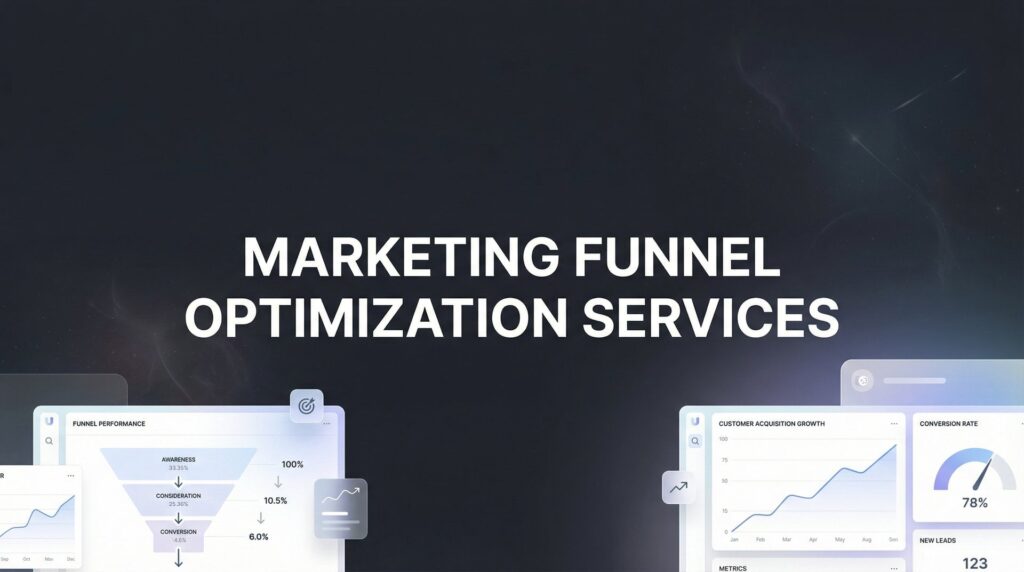
Use a simple spreadsheet or visualization tool to create a funnel diagram with actual numbers at each stage. This isn’t about creating something pretty for a presentation. It’s about identifying your biggest leak—the stage where you’re hemorrhaging the most potential revenue. Understanding how to optimize your conversion funnel starts with this honest assessment of where prospects are dropping off.
Here’s what makes this powerful: When you know that improving your sales call show-up rate from 30% to 40% would generate 15 additional qualified conversations per month, you can calculate the exact revenue impact of fixing that specific problem. That clarity transforms optimization from a vague concept into a concrete business priority.
Success indicator: You have a visual funnel map showing specific conversion percentages at each stage, and you can point to the single biggest drop-off point in your customer journey.
Step 2: Benchmark Your Performance Against Industry Standards
Now that you know your numbers, you need context. Is a 2% landing page conversion rate good or terrible? The answer depends entirely on your industry, business model, and traffic source.
Research typical conversion rates for businesses similar to yours. B2B service companies often see landing page conversion rates between 2-5%, while e-commerce sites might consider 1-3% normal. Lead generation in professional services might convert at 10-15%, while high-ticket B2B sales might be closer to 1-2%.
But here’s where most businesses make a critical mistake: they focus solely on conversion rates while ignoring the economics that actually matter. A 5% conversion rate means nothing if your cost-per-acquisition exceeds your customer lifetime value.
Calculate your current cost-per-acquisition across the entire funnel. If you’re spending $10,000 on ads and generating 50 customers, your CPA is $200. Now compare that to your average customer lifetime value. If your typical customer generates $1,500 in profit over their relationship with your company, you have a healthy 7.5x return. If they only generate $300, you’re in trouble.
This comparison reveals whether your primary problem is traffic quality, messaging alignment, or conversion mechanics. If you’re attracting the right people but losing them at specific stages, you have a conversion problem. If your conversion rates match industry standards but your CPA is too high, you have a traffic quality or targeting problem. Many businesses struggle with poor quality leads from marketing without realizing it’s a targeting issue rather than a funnel problem.
Document where you underperform relative to industry benchmarks and by how much. If typical companies in your space convert landing page visitors at 4% and you’re at 1.5%, that’s a 2.5 percentage point gap. If you could close that gap, what would it mean for your business? Calculate the actual revenue impact of reaching industry-standard performance.
Success indicator: You have clear documentation showing where you underperform industry standards, by how much, and the estimated revenue impact of closing those gaps.
Step 3: Define Your Optimization Goals and Budget Parameters
Vague goals produce vague results. “Improve conversions” isn’t a goal—it’s a wish. Your optimization objectives need to be specific, measurable, and tied directly to revenue outcomes.
Set concrete targets for each problematic stage in your funnel. Instead of “improve landing page performance,” aim for “increase landing page conversion rate from 2.1% to 3.5% within 90 days.” Instead of “get more sales calls,” target “improve form-to-call show-up rate from 35% to 50%.”
These specific targets let you calculate expected revenue impact before spending a dollar on optimization services. If improving your landing page conversion by 1.4 percentage points would generate 42 additional leads per month, and your typical close rate turns 30% of leads into customers worth $2,000 each, you’re looking at roughly $25,000 in additional monthly revenue.
That revenue projection directly informs your optimization budget. Many businesses approach this backwards, asking “What do optimization services cost?” when they should be asking “What can I afford to invest to capture this revenue opportunity?” Understanding conversion optimization service cost helps you set realistic expectations for your investment.
Calculate your maximum allowable cost-per-acquisition based on customer lifetime value. If your average customer is worth $1,500 in profit and you want to maintain at least a 3x return on acquisition costs, you can afford to spend up to $500 to acquire each customer. This number becomes your budget guardrail.
Establish a realistic investment range for optimization services based on the expected revenue lift. A common framework: invest 10-20% of the projected annual revenue increase. If fixing your funnel would generate an additional $300,000 annually, a $30,000-60,000 optimization investment over 6-12 months represents a reasonable commitment.
Put all of this into a written optimization brief. Include your current performance metrics, specific improvement targets, timeline expectations, and budget parameters. This document becomes your evaluation framework when assessing potential service providers.
Success indicator: You have a written optimization brief with clear KPIs, timeline expectations, and investment parameters tied to projected revenue outcomes.
Step 4: Evaluate and Select the Right Optimization Partner
The optimization services market is crowded with agencies that talk a good game but deliver mediocre results. Your job is to separate the performers from the pretenders before signing any contracts.
Start by looking for providers with proven results in your industry or business model. This matters more than most agencies want to admit. An agency that excels at optimizing e-commerce checkout flows might struggle with B2B lead generation funnels. The customer psychology, decision-making process, and optimization levers are completely different.
When reviewing case studies, dig deeper than the surface-level claims. If an agency says they “increased conversions by 150%,” ask for specifics. What was the starting conversion rate? What was the ending rate? Over what time period? What was the revenue impact? How much testing was required to achieve those results?
Assess their methodology rigorously. Data-driven optimization follows a clear process: hypothesis development based on user behavior data, structured testing with proper statistical significance, analysis of results, and iterative improvement. Agencies that rely on “best practices” or design opinions without systematic testing are guessing, not optimizing.
Ask potential providers to walk you through their testing process. How do they prioritize experiments? What tools do they use for heat mapping, session recording, and A/B testing? How do they determine when a test has reached statistical significance? How do they handle tests that fail? The best conversion rate optimization services will have clear answers to all of these questions.
Verify they offer full-funnel capabilities. Optimizing your landing page is pointless if your email follow-up sequence loses 80% of leads. The best providers can work across your entire customer journey—from ad creative and landing pages to email sequences, sales processes, and even post-purchase experiences.
Watch for red flags that indicate an agency you should avoid. Anyone who guarantees specific results is either lying or planning to manipulate metrics that don’t matter. Legitimate optimization is probabilistic, not guaranteed. If an agency won’t share their testing methodology or provide transparent reporting, walk away. If they push you toward a long-term contract before proving results, that’s a warning sign. Consider providers offering contract free marketing services that let you evaluate results before committing long-term.
During evaluation calls, pay attention to the questions they ask you. Strong optimization partners dig deep into your business model, customer economics, and current funnel performance before proposing solutions. If an agency pitches you generic optimization tactics without understanding your specific situation, they’re not the right fit.
Create a shortlist of 2-3 qualified providers. For each one, document their specific approach, relevant case studies, proposed testing methodology, and pricing structure. This comparison makes your final selection decision straightforward rather than overwhelming.
Success indicator: You have a shortlist of 2-3 qualified providers with documented differentiation in methodology, industry experience, and approach. You can clearly articulate why each made the shortlist and what unique value they bring.
Step 5: Implement a Structured Testing and Optimization Process
Once you’ve selected a partner, the real work begins. Effective optimization isn’t about making random changes and hoping for improvement. It’s about implementing a systematic testing process that compounds results over time.
Start with high-impact, low-effort optimizations. These are changes that can be implemented quickly but have the potential for significant conversion improvements. Think headline variations, call-to-action button copy and placement, form field reduction, and above-the-fold messaging clarity. These tests can often be launched within days and provide quick wins that build momentum.
Establish a systematic A/B testing calendar with one variable changed at a time. This discipline is crucial. When you change multiple elements simultaneously, you can’t determine which change drove the result. Maybe your new headline improved conversions by 40%, but your new form design decreased them by 30%, resulting in a net 10% improvement. Without isolated testing, you’d never know the headline was a winner and the form was a loser.
Create feedback loops between your sales team and optimization partner. Your salespeople hear objections, questions, and concerns that never show up in analytics data. If prospects consistently ask the same questions during sales calls, that information should inform landing page messaging tests. If certain lead sources consistently produce lower-quality prospects, that should influence traffic optimization strategies.
Schedule regular review cadences at multiple time horizons. Weekly performance checks keep everyone aligned on current test results and any immediate issues. Monthly strategy reviews assess overall progress toward your optimization goals and adjust priorities based on what you’re learning. Quarterly ROI assessments evaluate the financial return on your optimization investment and determine whether to scale up, maintain, or adjust your approach.
Document everything in a testing roadmap. This living document should include completed tests with results, currently running experiments, and a prioritized backlog of future tests. The prioritization should be based on potential impact, implementation effort, and strategic importance to your business goals. Professional landing page optimization services typically maintain detailed testing documentation that you can review at any time.
Build in time for analysis between tests. Rushing from one experiment to the next without understanding why something worked or failed is a waste of resources. When a test produces a significant result—positive or negative—dig into the user behavior data to understand the underlying psychology driving that result. Those insights inform better hypotheses for future tests.
Remember that failed tests aren’t failures—they’re learning opportunities. If a headline variation you expected to perform well actually decreases conversions, that tells you something important about your audience’s priorities and concerns. Use that information to refine your understanding of what motivates your prospects.
Success indicator: You have a documented testing roadmap with prioritized experiments, a regular review schedule in place, and feedback mechanisms connecting your sales team insights to optimization activities.
Step 6: Measure ROI and Scale What Works
Optimization activities should be evaluated on one metric above all others: revenue impact. Everything else is a supporting indicator.
Track how optimization efforts translate into actual dollars generated, not just conversion rate improvements. A 50% increase in landing page conversions sounds impressive, but if those additional leads don’t close into customers, you haven’t improved your business—you’ve just created more work for your sales team.
Calculate true ROI using this formula: Take your revenue increase from optimization activities, subtract your total optimization investment including agency fees and any implementation costs, then divide by your optimization investment. If you spent $40,000 on optimization services over six months and generated an additional $200,000 in revenue during that period, your ROI is 400%.
Be honest about attribution. Not every dollar of revenue increase during your optimization period came from optimization activities. Market conditions change, seasonal factors influence results, and other marketing efforts contribute to growth. Work with your optimization partner to establish reasonable attribution models that account for these variables. Proper marketing conversion tracking is essential for accurate ROI measurement.
Double down on winning strategies while cutting underperforming experiments quickly. When you identify a test variation that significantly outperforms the control, implement it permanently and look for ways to apply the underlying principle to other parts of your funnel. When a test shows no meaningful difference after reaching statistical significance, move on rather than continuing to invest resources in marginal improvements.
Scale successful optimizations across your entire marketing ecosystem. If a particular headline approach works on your primary landing page, test it on other landing pages. If reducing form fields improves conversions on your website, apply the same principle to your email signup forms and content downloads.
Build optimization into your ongoing operations rather than treating it as a one-time project. The most successful companies view funnel optimization as a permanent business function, not a temporary initiative. They allocate a consistent percentage of marketing budget to testing and improvement, knowing that customer preferences and market conditions continuously evolve. This approach aligns with results driven marketing services that focus on continuous improvement rather than one-time fixes.
Create a monthly ROI report that shows measurable revenue lift from optimization activities. This report should include current conversion rates at each funnel stage, comparison to baseline performance, revenue impact of implemented changes, and projected annual revenue increase if current performance sustains. This documentation justifies continued investment and helps identify when to scale up optimization efforts.
As you accumulate wins, reinvest a portion of the additional revenue into expanded optimization activities. If your initial optimization investment generated a 400% ROI, increasing your optimization budget makes financial sense. More resources allow for more simultaneous tests, faster iteration cycles, and optimization of additional funnel stages.
Success indicator: You have a monthly ROI reporting system in place that ties optimization activities to actual revenue generation, and you can clearly demonstrate the financial return on your optimization investment.
Putting It All Together
Marketing funnel optimization isn’t a one-and-done project—it’s an ongoing commitment to extracting maximum value from every prospect who enters your ecosystem. By following these six steps, you’ve built a framework for identifying leaks, selecting the right partner, and measuring real business impact.
Here’s your quick-reference checklist:
✓ Funnel mapped with stage-by-stage conversion rates
✓ Performance benchmarked against industry standards
✓ Clear optimization goals and budget defined
✓ Qualified service provider selected
✓ Structured testing process implemented
✓ ROI tracking system in place
The businesses that win aren’t necessarily spending more on traffic—they’re converting more of what they already have. Think about it: doubling your ad spend to get more leads is expensive and risky. Doubling your conversion rate by fixing what’s broken in your funnel? That’s just smart business.
The optimization process starts with that first honest audit of where your funnel is actually breaking down. Most business owners resist this step because seeing the real numbers can be uncomfortable. But you can’t fix problems you won’t acknowledge.
Ready to stop leaving money on the table? Tired of spending money on marketing that doesn’t produce real revenue? We build lead systems that turn traffic into qualified leads and measurable sales growth. If you want to see what this would look like for your business, we’ll walk you through how it works and break down what’s realistic in your market.
Want More Leads for Your Business?
Most agencies chase clicks, impressions, and “traffic.” Clicks Geek builds lead systems. We uncover where prospects are dropping off, where your budget is being wasted, and which channels will actually produce ROI for your business, then we build and manage the strategy for you.