Every local business owner hits this crossroads eventually. You’ve got a marketing budget, a growth target, and two very different paths in front of you: invest in local SEO and build organic visibility over time, or run paid ads and start generating leads this week. The pressure to pick one and commit can feel overwhelming.
Here’s the thing: framing it as local SEO vs paid ads is a false choice. It’s like asking whether you should use a hammer or a screwdriver. The right answer depends entirely on what you’re building, how fast you need it done, and what you can afford right now.
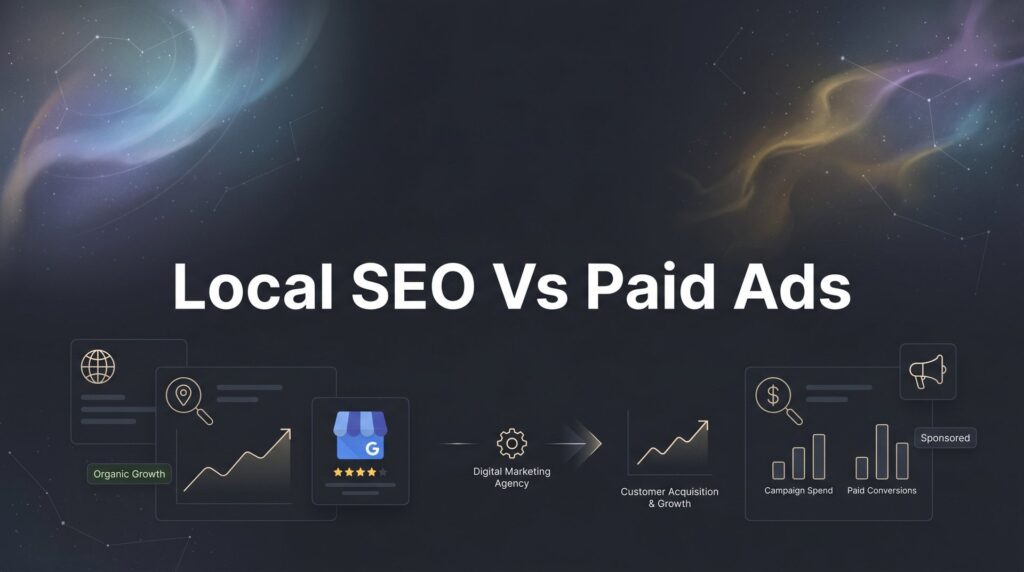
Each channel operates on a completely different logic. Paid ads run on an auction model, placing your business at the top of the search results immediately, but the moment you stop spending, the leads stop coming. Local SEO compounds over time, building authority that generates traffic for months or years after the initial work is done. Both have a place in a smart local marketing strategy.
The businesses that win aren’t the ones who pick a side. They’re the ones who understand when to lean into each channel, how to make them work together, and how to shift resources based on real data rather than gut instinct.
Whether you’re a plumber trying to dominate your service area, a med spa looking to fill appointment slots, or a law firm competing in a dense urban market, these seven strategies will give you a clear, practical framework for making confident decisions about your local marketing mix.
1. Map Your Revenue Timeline Before Choosing a Channel
The Challenge It Solves
Many local businesses start investing in marketing without first asking a simple but critical question: how quickly do I actually need this to work? Choosing the wrong channel for your timeline can mean burning through budget with no results, or waiting months for leads when your business needs revenue right now.
The Strategy Explained
Think of paid ads and local SEO as two different financial instruments. Paid ads are like a faucet: turn it on and water flows, turn it off and it stops. Local SEO is more like planting a tree: slow to grow, but eventually it provides shade for years without ongoing maintenance costs.
If you’re a new business, launching a new service line, or entering a slow season with thin cash reserves, paid ads give you the speed you need. If you have a stable revenue base and a 12-to-18-month horizon, SEO starts making a lot more sense as a compounding investment.
The mistake most local businesses make is choosing based on preference or what they’ve heard works, rather than mapping the channel to their actual financial situation and growth timeline.
Implementation Steps
1. Define your revenue urgency: Do you need leads within 30 days, 90 days, or are you building for the next 12-18 months? Write this down explicitly before allocating a single dollar.
2. Assess your current lead pipeline: If you have existing clients or referral business keeping you afloat, you have the runway to invest in SEO. If your pipeline is empty, start with paid ads while SEO builds in the background.
3. Set a channel review date: Commit to reassessing your channel mix every 90 days. As SEO starts generating organic leads, you can gradually reduce paid spend or redirect it to new markets.
Pro Tips
Don’t abandon paid ads the moment SEO starts working. Many businesses make this mistake and create a revenue gap while organic rankings fluctuate. Instead, treat paid ads as a floor that keeps leads flowing while SEO becomes your ceiling for long-term growth.
2. Analyze Your Local Competitive Density
The Challenge It Solves
Not all local markets are created equal. A plumber in a mid-sized city faces a completely different competitive environment than one operating in a major metro. Without understanding the competitive density in both paid and organic search, you risk investing heavily in a channel where you’re massively outgunned, while ignoring one where you have a real opening.
The Strategy Explained
Before committing budget to either channel, do a competitive reconnaissance. Search your primary keywords and study what you see. Are the top organic results dominated by national directories like Yelp and Angi, or are local businesses ranking? How many paid ads appear? Are there four ads, or just one or two? Are competitors running the same ads week after week, suggesting strong ROI?
A market with weak organic competition but aggressive paid advertisers might signal that SEO is your best opportunity. A market with thin paid competition might mean you can generate leads cheaply through Google Ads while your local search advertising management strategy takes shape. The goal is to find the channel where the opportunity-to-effort ratio is most favorable for your specific business in your specific geography.
Implementation Steps
1. Search your top five keywords in an incognito browser from your service area and screenshot the results. Note how many paid ads appear and how many local businesses (vs. directories) rank organically.
2. Use Google Keyword Planner to check estimated CPCs for your target keywords. High CPCs in a category typically indicate strong paid competition and high customer lifetime value, but also mean every click costs more.
3. Review competitor Google Business Profiles. How many reviews do the top-ranked businesses have? How recently have they been earning them? This tells you the effort required to compete organically in the Local Pack.
Pro Tips
Look for geographic micro-opportunities. A neighboring suburb or service area might have significantly less competition than your primary market. Targeting those areas first with either paid ads or SEO can build momentum and revenue while you work toward harder, more competitive terms.
3. Calculate True Cost-Per-Lead for Each Channel
The Challenge It Solves
Most local businesses compare paid ads and SEO based on surface-level costs: what they’re spending on ads versus what they’re paying an agency for SEO. This comparison is almost always misleading. Without a true cost-per-lead model that accounts for all inputs and lead quality, you can’t make an informed decision about where to put your next marketing dollar.
The Strategy Explained
Calculating real CPL means accounting for everything. For paid ads, that includes ad spend, agency or management fees, and landing page costs. For SEO, it includes agency fees, content production, link building, and the time investment before you see meaningful results. If you’re curious about what professional management actually runs, this breakdown of Google Ads management cost provides a realistic picture.
It’s also worth noting that organic leads are often perceived as more trustworthy by consumers because they weren’t “pushed” an ad. This can affect conversion rates depending on your industry and customer type. Build your model to reflect these nuances rather than comparing raw numbers.
Implementation Steps
1. Track every lead source in your CRM or a simple spreadsheet. Know exactly where each lead came from: paid search, organic, Google Business Profile, referral, etc.
2. Calculate CPL for paid ads: total monthly spend (including management fees) divided by the number of leads generated that month. Do this for at least 90 days to smooth out volatility.
3. For SEO, calculate a blended CPL by dividing your total SEO investment over 12 months by the number of organic leads generated in months 6-12, when the channel is typically producing consistently. This gives you a more realistic picture than comparing month one of SEO to month one of paid ads.
Pro Tips
Don’t just measure CPL. Measure cost-per-acquired-customer. If your paid leads close at a lower rate than organic leads, your actual customer acquisition cost from paid ads may be significantly higher than your CPL suggests. This one insight can completely change your conversion rate optimization vs SEO allocation strategy.
4. Use Paid Ads as a Keyword Testing Lab for SEO
The Challenge It Solves
One of the biggest risks in local SEO is spending months optimizing for keywords that look good on paper but don’t actually convert into paying customers. By the time you realize a keyword isn’t producing revenue, you’ve already invested significant time and resources chasing it.
The Strategy Explained
Paid ads give you something SEO can’t: fast, controlled feedback on keyword performance. You can run a Google Ads campaign targeting a set of keywords for a few weeks, track which ones generate actual leads and conversions, and then use that data to prioritize your SEO content and optimization efforts.
Think of it as market research with a budget. Instead of guessing which keywords your ideal customers use when they’re ready to buy, you let real search behavior tell you. The keywords that convert in paid search are almost always the ones worth pursuing in organic search, because the intent signals are identical.
This approach is especially valuable for local service businesses entering new service categories or geographic markets where they don’t yet have historical data to rely on.
Implementation Steps
1. Run a focused paid campaign targeting 10-20 keyword variations across your primary service categories. Keep budgets modest: the goal is data, not volume.
2. Track conversions at the keyword level, not just the campaign level. Use Google Ads conversion tracking and connect it to your CRM so you can see which keywords produce actual leads, not just clicks.
3. After 30-60 days, export your converting keywords and use them as the foundation for your SEO content calendar, Google Business Profile optimization, and on-page keyword targeting.
Pro Tips
Pay attention to search term reports in Google Ads, not just the keywords you bid on. The actual search queries that triggered your ads often reveal long-tail variations you hadn’t considered, and those long-tail terms frequently have lower organic competition while carrying strong commercial intent.
5. Dominate the SERP With a Dual-Visibility Strategy
The Challenge It Solves
Most local businesses think of paid and organic search as alternatives. But when you appear in both the paid results and the organic results for the same search, you’re not just doubling your chances of being clicked. You’re sending a powerful authority signal to potential customers: this business is everywhere, which means it must be the real deal.
The Strategy Explained
A dual-visibility strategy means deliberately targeting the same high-value keywords with both paid ads and SEO, so your business appears in multiple positions on the same search results page. This could mean showing up as a paid ad at the top, in the Google Local Pack in the middle, and in the organic blue links below.
The combined presence creates a perception of market dominance that neither channel achieves alone. It also provides a practical safety net: if your organic rankings fluctuate due to an algorithm update, paid ads keep the leads flowing. If your ad budget gets cut, organic rankings maintain your visibility.
For competitive local markets, this is often the difference between being a recognizable name in your area and being invisible to the customers who matter most. Businesses interested in building this kind of integrated approach often benefit from understanding the nuances of search ads vs display ads performance rather than treating all paid placements as interchangeable.
Implementation Steps
1. Identify your top five revenue-generating keywords. These are the terms that, when someone searches them, they are most likely to become a paying customer. Prioritize these for dual targeting.
2. Ensure your Google Business Profile is fully optimized and actively maintained with fresh reviews, accurate hours, photos, and service descriptions. This is your lever for the Local Pack placement.
3. Run paid ads on the same keywords you’re pursuing organically. Monitor total SERP coverage: are you appearing in paid, Local Pack, and organic positions? Track how your combined presence affects overall lead volume month over month.
Pro Tips
When you appear in both paid and organic results, you’re effectively occupying more real estate on the page and reducing the visible space for competitors. Even if a searcher doesn’t click your ad, seeing your business name twice in one search builds familiarity and increases the likelihood they’ll choose you when they’re ready to call.
6. Match Each Channel to the Right Stage of the Buyer Journey
The Challenge It Solves
Pouring paid ad budget into informational keywords is one of the most common and costly mistakes local businesses make. Conversely, relying on SEO alone to capture high-intent, ready-to-buy searchers means leaving immediate revenue on the table. Misaligning channels to buyer stages burns budget and misses opportunities simultaneously.
The Strategy Explained
Not all searches are created equal. Someone searching “how to unclog a drain” is in a completely different headspace than someone searching “emergency plumber near me.” The first is gathering information. The second has their wallet out.
Paid ads excel at capturing bottom-funnel, high-intent searches where someone is ready to act right now. These are typically shorter, more specific queries with clear commercial intent. The cost-per-click is usually higher, but the conversion rate justifies it. If your campaigns aren’t delivering at this stage, it’s worth diagnosing why you’re not getting customers from ads before scaling spend.
SEO, particularly content-driven SEO, is the right tool for top-funnel informational searches. Blog posts, FAQ pages, and how-to guides attract people early in their decision-making process. You’re not going to convert them today, but you’re building awareness and trust so that when they’re ready to buy, your business is the one they already know.
Implementation Steps
1. Categorize your target keywords by intent: informational (how-to, what is, tips), navigational (brand name searches), and transactional (near me, hire, cost, emergency). Assign paid budget primarily to transactional keywords.
2. Build an SEO content plan around informational keywords in your niche. A local HVAC company, for example, might create content around “when to replace your furnace” or “signs your AC needs repair” to capture homeowners early in their research phase.
3. Set up remarketing campaigns to reconnect with visitors who came through organic informational content but didn’t convert. This bridges the gap between top-funnel SEO and bottom-funnel paid conversion, creating a full-funnel system from both channels working together.
Pro Tips
Review your paid search query reports regularly for informational searches that are eating your budget. Negative keywords are your friend here. Adding informational terms as negatives in your paid campaigns ensures your ad spend is focused exclusively on high-intent, ready-to-convert searchers.
7. Build a Seasonal Allocation Framework
The Challenge It Solves
Most local businesses treat their marketing budget as a fixed monthly expense split between channels, regardless of what’s happening in the market. This static approach ignores one of the most predictable patterns in local business: seasonal demand. Failing to shift resources dynamically means overspending during slow periods and underinvesting during peak demand windows when every additional lead is worth the most.
The Strategy Explained
Every local service business has seasonal patterns, whether obvious or subtle. HVAC companies see spikes in summer and winter. Tax professionals get slammed in Q1. Landscapers peak in spring. Wedding photographers book up 12-18 months out from peak wedding season. These patterns are predictable, and your channel allocation should reflect them.
The framework works like this: use SEO as your always-on foundation, building content and authority year-round. Then use paid ads as a variable lever that you push harder during peak demand periods and pull back during slower months. If your ads feel like they’re spending too much with no results during off-peak periods, that’s a strong signal to reallocate toward SEO investment instead.
Google Trends is a free tool that makes this analysis straightforward. You can search any keyword and see how search volume fluctuates across the calendar year, giving you a data-backed basis for planning your seasonal budget shifts.
Implementation Steps
1. Use Google Trends to map the seasonal search volume for your top five keywords over the past 12 months. Identify your peak demand months and your slowest months clearly.
2. Build a 12-month budget calendar that allocates higher paid ad spend during peak months and redirects resources toward SEO content production and link building during slower periods when competition for clicks is lower and content creation has time to gain traction before the next peak.
3. Set calendar reminders 6-8 weeks before your peak season begins. This gives you enough lead time to ramp up paid campaigns, refresh landing pages, and ensure your Google Business Profile is fully optimized before the surge in demand arrives.
Pro Tips
Don’t wait until peak season to start your paid campaigns. Launching ads cold at the start of your busiest month means losing the first two to three weeks to campaign learning and optimization. Start campaigns four to six weeks early, let the algorithm optimize on lower budgets, then scale spend as peak demand arrives.
Putting It All Together: Your Local Marketing Action Plan
The local SEO vs paid ads debate has a clear answer: it’s not a debate. It’s a deployment question. The businesses that consistently win in local search aren’t the ones who bet everything on one channel. They’re the ones who understand how each channel works, what it’s built for, and how to make them reinforce each other.
Here’s your framework in brief. Start by mapping your revenue timeline so your channel choice matches your financial reality. Analyze your competitive landscape before committing budget so you’re investing where opportunity exists. Build a true cost-per-lead model so you’re comparing apples to apples. Use paid ads to validate keywords before betting months of SEO effort on them. Pursue dual SERP visibility to build market dominance and reduce risk. Align each channel to the right buyer stage so your budget converts efficiently. And adjust your allocation seasonally so you’re spending more when demand is highest.
None of these strategies require a massive budget. They require clear thinking, consistent tracking, and a willingness to follow the data rather than gut instinct.
Tired of spending money on marketing that doesn’t produce real revenue? We build lead systems that turn traffic into qualified leads and measurable sales growth. If you want to see what this would look like for your business, we’ll walk you through how it works and break down what’s realistic in your market.