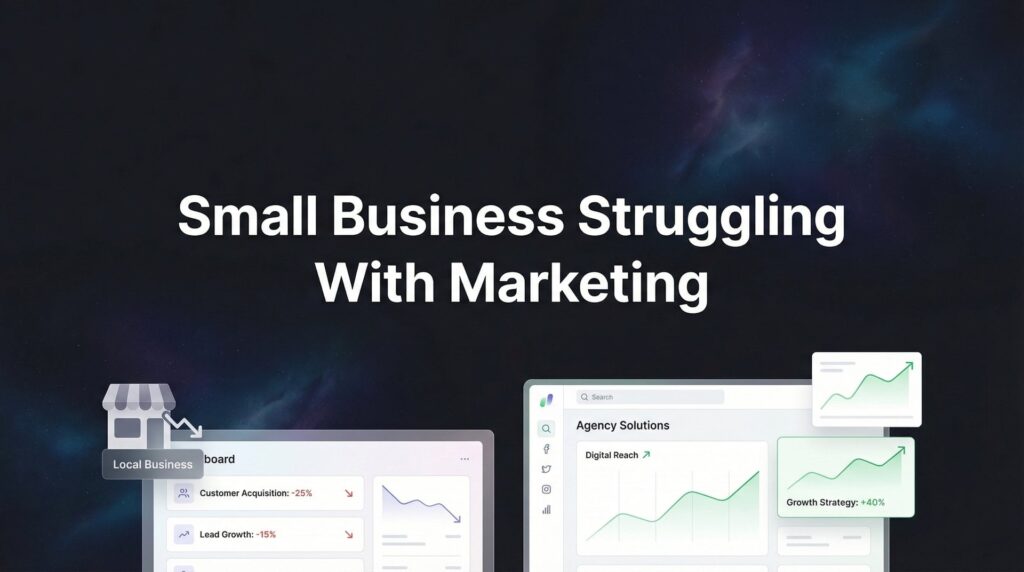
Small business owners face a frustrating reality: you need a steady stream of qualified leads to grow, but you’re competing against companies with much deeper pockets. The good news? Lead generation in 2026 isn’t about outspending your competition—it’s about outsmarting them.
The strategies that work today focus on precision targeting, authentic connection, and maximizing every dollar you invest. Whether you’re a local service provider, a B2B company, or a retail business, these nine strategies will help you build a predictable pipeline of customers who actually want what you’re selling.
No fluff, no theory—just actionable tactics that small businesses are using right now to generate real revenue.
1. Hyper-Local PPC Campaigns
The Challenge It Solves
Most small businesses waste advertising dollars reaching people who will never become customers. You might be paying for clicks from users 50 miles away when you only serve a 10-mile radius. Or you’re showing ads to everyone when only specific demographics actually buy from you.
Hyper-local PPC solves this by putting your message in front of ready-to-buy customers exactly when they’re searching for what you offer—and only in the geographic areas you actually serve.
The Strategy Explained
Hyper-local PPC campaigns use advanced geographic targeting combined with search intent signals to reach high-probability buyers. Instead of broad targeting, you’re creating campaigns that trigger only for specific zip codes, neighborhoods, or even radius targeting around your business location.
The key is matching your ad messaging to local context. Someone searching “emergency plumber near me” at 2 AM is in a completely different mindset than someone researching “best plumbers in [city]” on a Tuesday afternoon. Your campaigns should reflect these intent differences.
Think of it like fishing with a spear instead of a net. You’re not trying to reach everyone—you’re targeting the exact people most likely to convert, which dramatically improves your cost per lead.
Implementation Steps
1. Define your precise service area boundaries and create separate campaigns for different zones if your business serves multiple areas with different competitive dynamics.
2. Build keyword lists that combine your service terms with location modifiers, focusing on high-intent phrases that indicate immediate need or strong purchase consideration.
3. Create ad copy that references specific neighborhoods, landmarks, or local pain points to increase relevance and click-through rates from your target audience.
4. Set up location-based bid adjustments to increase bids in your highest-value areas and decrease them in lower-performing zones.
5. Implement call tracking and conversion tracking to measure which geographic areas and keywords actually produce revenue, not just leads.
Pro Tips
Schedule your ads to run during hours when you can actually answer the phone or respond to inquiries. A lead that goes to voicemail is worth significantly less than one you can engage immediately. Also, exclude locations where you don’t serve—sounds obvious, but many businesses waste budget on clicks from areas they can’t help.
2. High-Value Lead Magnets
The Challenge It Solves
People are protective of their contact information, and for good reason—everyone wants to add them to an email list. Generic offers like “Sign up for our newsletter” or “Download our brochure” don’t provide enough value to overcome that resistance.
You need something so useful that prospects willingly trade their email address because they genuinely want what you’re offering.
The Strategy Explained
High-value lead magnets provide immediate, tangible value that solves a specific problem your target customer faces right now. The best lead magnets don’t just educate—they deliver a quick win or solve a pressing pain point.
For a landscaping company, that might be a “Spring Lawn Recovery Checklist” or a “Landscape Budget Calculator.” For a B2B software company, it could be an ROI calculator or a customized audit tool. The key is making it interactive, specific, and immediately useful.
The difference between a mediocre lead magnet and a great one is specificity. “10 Marketing Tips” is generic. “The 5-Day Email Sequence That Generated 47 Qualified B2B Leads for a $2,500 Budget” is specific and compelling.
Implementation Steps
1. Identify the single biggest question or problem your ideal customers have before they’re ready to buy from you.
2. Create a resource that answers that question or solves that problem in a format that provides immediate value—calculators, templates, checklists, or short video trainings work particularly well.
3. Build a dedicated landing page that clearly communicates the value of your lead magnet without requiring visitors to scroll or guess what they’ll receive.
4. Set up an automated email sequence that delivers the lead magnet immediately and continues providing value over the next 5-7 days.
5. Promote your lead magnet through your website, social media, paid ads, and any other channels where your target customers spend time.
Pro Tips
Name your lead magnet like a product, not a document. “The Small Business Lead Generation Toolkit” sounds more valuable than “Lead Generation PDF.” Also, deliver it instantly—making people wait for email approval kills conversion rates. The moment they submit their information, they should have access.
3. Google Business Profile Optimization
The Challenge It Solves
When potential customers search for services in your area, they often make decisions based on what appears in Google’s local results before they ever visit a website. If your Google Business Profile isn’t optimized, you’re invisible during the exact moment when people are ready to choose a provider.
Many small businesses claim their profile and then never touch it again, missing opportunities to generate leads from one of the highest-intent traffic sources available.
The Strategy Explained
Google Business Profile optimization turns your free Google listing into an active lead generation channel. This goes far beyond just claiming your listing—it involves strategic use of posts, photos, reviews, Q&A, and business attributes to maximize visibility and conversion.
Your profile appears when people search for services like yours, when they’re browsing Google Maps, and even when they’re researching your business specifically. Each element of your profile either builds trust or creates friction, and the difference between an optimized profile and a neglected one can mean dozens of additional leads each month.
Think of your Google Business Profile as your digital storefront. Just like you wouldn’t leave your physical location looking shabby, your profile needs regular attention and strategic updates.
Implementation Steps
1. Complete every section of your profile with detailed, keyword-rich descriptions that clearly communicate what you do and who you serve.
2. Add high-quality photos of your work, team, and location—profiles with photos receive significantly more engagement than those without.
3. Create a system for consistently requesting and responding to reviews, aiming for a steady stream of fresh feedback rather than occasional bursts.
4. Use Google Posts weekly to share updates, offers, or helpful content that keeps your profile active and gives potential customers reasons to engage.
5. Monitor and respond to the Questions & Answers section, proactively adding common questions and detailed answers that address customer concerns.
Pro Tips
Add your primary keyword to your business description naturally—Google uses this information for ranking. Also, respond to every review, positive or negative, within 24 hours. This responsiveness signals to both Google and potential customers that you’re active and engaged with your audience.
4. Strategic Referral Programs
The Challenge It Solves
Most businesses get occasional referrals from happy customers, but these leads arrive randomly and unpredictably. You can’t build a growth strategy around hoping customers remember to refer you when their friends need help.
A strategic referral program transforms word-of-mouth from a lucky accident into a predictable lead source that consistently delivers your highest-quality prospects.
The Strategy Explained
Strategic referral programs create a systematic process for encouraging, capturing, and rewarding customer referrals. The key word is “systematic”—this isn’t about occasionally asking for referrals, it’s about building a structured approach that makes referring easy and rewarding.
The best referral programs identify the specific moment when customers are most satisfied and most likely to refer others. For a home services company, that might be immediately after project completion. For a B2B service, it might be after achieving a specific result or milestone.
Your referral program should remove all friction from the referral process. Customers shouldn’t have to remember your phone number or explain your services—they should be able to refer someone with minimal effort on their part.
Implementation Steps
1. Identify your most satisfied customers and analyze what they have in common—these are your ideal referral sources.
2. Create a simple referral mechanism, whether that’s a unique link, a referral card, or a dedicated landing page where customers can submit referrals directly.
3. Design an incentive structure that rewards both the referrer and the new customer, making the referral valuable for everyone involved.
4. Build automated follow-up sequences that thank customers for referrals, update them on the referral’s progress, and remind them that you’re always accepting new referrals.
5. Track referral sources meticulously so you can identify your best referrers and give them extra attention and appreciation.
Pro Tips
The best time to ask for a referral is immediately after delivering exceptional value, not months later. Strike while the satisfaction is fresh. Also, make your referral incentive valuable enough to motivate action—a 10% discount rarely moves the needle, but a significant reward or exclusive benefit does.
5. Landing Page Optimization
The Challenge It Solves
You’re driving traffic to your website through ads, social media, or search, but most visitors leave without taking action. You’re paying for clicks but not getting the leads you need to justify the investment.
The problem usually isn’t your traffic source—it’s that your landing pages aren’t designed to convert visitors into leads. Every element that creates confusion or friction costs you money.
The Strategy Explained
Landing page optimization focuses on removing every obstacle between a visitor arriving on your page and them taking the action you want. This means ruthlessly eliminating distractions, clarifying your value proposition, and building trust quickly.
High-converting landing pages follow a specific psychological sequence: they acknowledge the visitor’s problem, present your solution, prove it works, and make taking the next step incredibly easy. Each element serves a specific purpose in moving the visitor toward conversion.
Picture your landing page as a conversation with a potential customer. If you had 30 seconds to convince someone to give you their contact information, what would you say? That’s what your landing page needs to communicate, just in visual form.
Implementation Steps
1. Create dedicated landing pages for each traffic source and offer rather than sending all traffic to your homepage.
2. Write headlines that directly address the specific problem your visitor is trying to solve, using language they would use to describe their situation.
3. Include clear social proof elements—customer testimonials, review ratings, logos of companies you’ve worked with, or specific results you’ve achieved for clients.
4. Minimize form fields to only what you absolutely need to qualify and follow up with the lead—every additional field decreases conversion rates.
5. Test different versions of your landing pages systematically, changing one element at a time to identify what drives the biggest improvements in conversion rates.
Pro Tips
Remove your main navigation menu from landing pages—every link is an escape route from conversion. Also, place your call-to-action above the fold and repeat it at the bottom for longer pages. People should never have to hunt for how to take the next step.
6. Email Nurture Sequences
The Challenge It Solves
Most leads aren’t ready to buy the moment they first interact with your business. They need time to evaluate options, build trust, and determine if your solution fits their needs. If you only reach out once and then give up, you’re leaving money on the table.
Email nurture sequences keep you top-of-mind and continue providing value during the consideration period, dramatically increasing the percentage of leads that eventually convert.
The Strategy Explained
Email nurture sequences are automated email campaigns that deliver a strategic series of messages designed to educate prospects, build trust, and move them closer to a purchase decision. Unlike random email blasts, nurture sequences follow a logical progression that addresses common objections and questions.
The best sequences combine education with soft selling. You’re not pushing for a sale in every email—you’re providing genuine value while subtly demonstrating your expertise and the benefits of working with you.
Think of email nurturing like dating rather than proposing on the first date. You’re building a relationship over time, proving you understand their challenges, and showing you have solutions worth considering.
Implementation Steps
1. Map out the common questions and objections prospects have during their decision-making process, from initial awareness through final purchase consideration.
2. Create a 5-7 email sequence that addresses these questions in a logical order, starting with educational content and gradually introducing more direct calls-to-action.
3. Set up automation in your email platform to trigger these sequences when someone downloads a lead magnet, requests information, or takes another specific action.
4. Include clear, specific calls-to-action in each email that give recipients an obvious next step, whether that’s scheduling a call, requesting a quote, or accessing additional resources.
5. Monitor engagement metrics to identify where prospects drop off in your sequence and refine those specific emails to improve performance.
Pro Tips
Send your first nurture email within 5 minutes of someone joining your list—speed to lead matters enormously. Also, write from a real person’s email address rather than “info@” or “noreply@” addresses. People respond to people, not generic company addresses.
7. LinkedIn B2B Outreach
The Challenge It Solves
Traditional cold outreach has become increasingly difficult as inboxes fill up and decision-makers become more guarded about their time. You need a way to reach business prospects that feels professional and relevant rather than spammy and intrusive.
LinkedIn provides a platform where business outreach is expected and professional networking is the norm, making it ideal for B2B lead generation when done strategically.
The Strategy Explained
LinkedIn B2B outreach involves systematically identifying decision-makers in your target companies and initiating conversations that provide value rather than immediately pitching your services. The key is leading with genuine interest and relevant insights rather than generic sales messages.
Effective LinkedIn outreach follows a relationship-building approach: connect with relevant prospects, engage with their content, provide value through your own posts and comments, and then initiate conversations when you’ve established some credibility and context.
The businesses that succeed with LinkedIn outreach treat it like networking at a professional conference, not like cold calling from a purchased list. You’re building relationships that may take weeks or months to convert, but when they do, they tend to be higher-value and longer-lasting.
Implementation Steps
1. Define your ideal customer profile with specific criteria—job titles, company size, industry, and location—then use LinkedIn’s search filters to build targeted prospect lists.
2. Optimize your own LinkedIn profile to clearly communicate what you do, who you help, and the results you deliver, ensuring prospects can quickly understand your value.
3. Create a connection request message that references something specific about their business or recent activity rather than using generic templates.
4. After connecting, engage with their content and share relevant insights before making any direct pitch, building familiarity and credibility first.
5. When you do reach out with an offer, frame it around solving a specific problem they likely face rather than listing your services and features.
Pro Tips
Post valuable content consistently on LinkedIn to establish authority in your field—prospects are much more likely to respond to outreach from someone who regularly shares useful insights. Also, personalize every message with specific details about their business. Generic templates are immediately obvious and usually ignored.
8. Retargeting Campaigns
The Challenge It Solves
You’re investing in driving traffic to your website, but the vast majority of first-time visitors leave without converting. These people have already shown interest in what you offer—they just weren’t ready to commit during that first visit.
Retargeting campaigns give you a second chance to convert these warm prospects by staying visible as they continue researching and considering their options.
The Strategy Explained
Retargeting campaigns use tracking pixels to identify people who visited your website and then show them relevant ads as they browse other websites, social media platforms, or search engines. You’re not reaching cold audiences—you’re re-engaging people who already know who you are.
The most effective retargeting campaigns segment audiences based on their behavior. Someone who visited your pricing page is in a different stage of consideration than someone who only read a blog post. Your retargeting messages should reflect these different intent levels.
Think of retargeting as a gentle reminder system. You’re not aggressively chasing people—you’re staying top-of-mind with helpful messages while they make their decision.
Implementation Steps
1. Install tracking pixels from your advertising platforms (Google, Facebook, LinkedIn) on all pages of your website to build retargeting audiences.
2. Create audience segments based on specific behaviors—people who visited high-intent pages like pricing or services deserve different messaging than blog readers.
3. Design ad creative that acknowledges the visitor’s previous interaction and provides a compelling reason to return, whether that’s a special offer, new information, or social proof.
4. Set frequency caps to avoid showing your ads too often and annoying potential customers rather than persuading them.
5. Implement conversion tracking to measure which retargeting audiences and messages actually generate leads and revenue, not just clicks.
Pro Tips
Exclude people who already converted from your retargeting campaigns—continuing to show ads to existing customers wastes budget and can be annoying. Also, use dynamic retargeting when possible to show people specific products or services they viewed, making your ads more relevant and effective.
9. Community and Event Marketing
The Challenge It Solves
Digital marketing is essential, but it can feel impersonal and transactional. Many potential customers want to know the people behind the business before they commit, especially for high-value or ongoing services.
Community and event marketing builds the personal connections and local reputation that digital channels alone cannot replicate, creating a steady stream of referrals and warm leads.
The Strategy Explained
Community and event marketing involves systematically building presence and relationships in your local market through sponsorships, speaking engagements, networking events, and community involvement. This isn’t random participation—it’s strategic positioning in places where your ideal customers gather.
The businesses that succeed with this approach don’t just show up—they provide genuine value to the community. Whether that’s sponsoring a local sports team, hosting educational workshops, or participating in chamber of commerce events, the goal is building authentic relationships that naturally lead to business opportunities.
This strategy works particularly well for service-based businesses where trust and personal connection influence buying decisions. When people know you and have seen you contribute to the community, they’re far more likely to choose you over competitors.
Implementation Steps
1. Identify where your ideal customers already gather—industry associations, local business groups, community organizations, or specific networking events.
2. Choose 2-3 community involvement opportunities that align with your business and commit to consistent, long-term participation rather than one-off appearances.
3. Create a system for capturing contact information at events, whether through business card collection, sign-up sheets, or digital forms that make follow-up possible.
4. Develop a post-event follow-up process that reaches out to new contacts within 48 hours while the interaction is still fresh in their minds.
5. Track which community activities generate actual leads and revenue so you can double down on what works and eliminate what doesn’t.
Pro Tips
Focus on being helpful rather than salesy at community events. The person who answers questions and provides value without immediately pitching gets remembered and referred. Also, bring a team member with you when possible—you can cover more ground and make more connections than attending solo.
Putting It All Together: Your Implementation Roadmap
Nine strategies might feel overwhelming, but you don’t need to implement everything at once. The key is starting with the tactics that match your current resources and will generate results fastest.
If you have a marketing budget but limited time, start with hyper-local PPC campaigns and retargeting. These can generate leads quickly while you build out longer-term strategies. If you’re budget-constrained but have time to invest, focus on Google Business Profile optimization, strategic referral programs, and community marketing.
For most small businesses, the highest-impact combination is this: optimize your Google Business Profile first (it’s free and generates immediate visibility), then add hyper-local PPC to drive qualified traffic, and implement landing page optimization to convert that traffic efficiently. Once these three are working, layer in email nurture sequences to maximize the value of every lead you generate.
The biggest mistake is trying to do everything mediocrely rather than doing a few things exceptionally well. Choose 2-3 strategies that fit your business model and customer behavior, implement them properly, and measure results before adding more complexity.
Remember that lead generation isn’t just about volume—it’s about quality and conversion. Generating 100 unqualified leads that waste your time is far worse than generating 20 qualified prospects who actually become customers. Every strategy in this guide focuses on attracting people who genuinely need what you offer and are ready to buy.
Tired of spending money on marketing that doesn’t produce real revenue? We build lead systems that turn traffic into qualified leads and measurable sales growth. If you want to see what this would look like for your business, we’ll walk you through how it works and break down what’s realistic in your market.
The difference between small businesses that grow predictably and those that struggle often comes down to having a systematic approach to lead generation. These nine strategies give you that system—now it’s about choosing your starting point and taking action.
Want More Leads for Your Business?
Most agencies chase clicks, impressions, and “traffic.” Clicks Geek builds lead systems. We uncover where prospects are dropping off, where your budget is being wasted, and which channels will actually produce ROI for your business, then we build and manage the strategy for you.