Display advertising puts your brand in front of potential customers across millions of websites, apps, and platforms—but only if you choose the right service to manage your campaigns. With options ranging from self-serve platforms to full-service agencies, finding the right fit for your business goals and budget can feel overwhelming.
This guide cuts through the noise to highlight the top display advertising services that deliver real results. Whether you’re a local business looking for hands-off management or an enterprise needing sophisticated programmatic capabilities, we’ve evaluated each option based on targeting precision, reporting transparency, ease of use, and most importantly—actual performance that impacts your bottom line.
1. Clicks Geek
Best for: Local businesses wanting done-for-you display advertising with a focus on lead generation and measurable ROI.
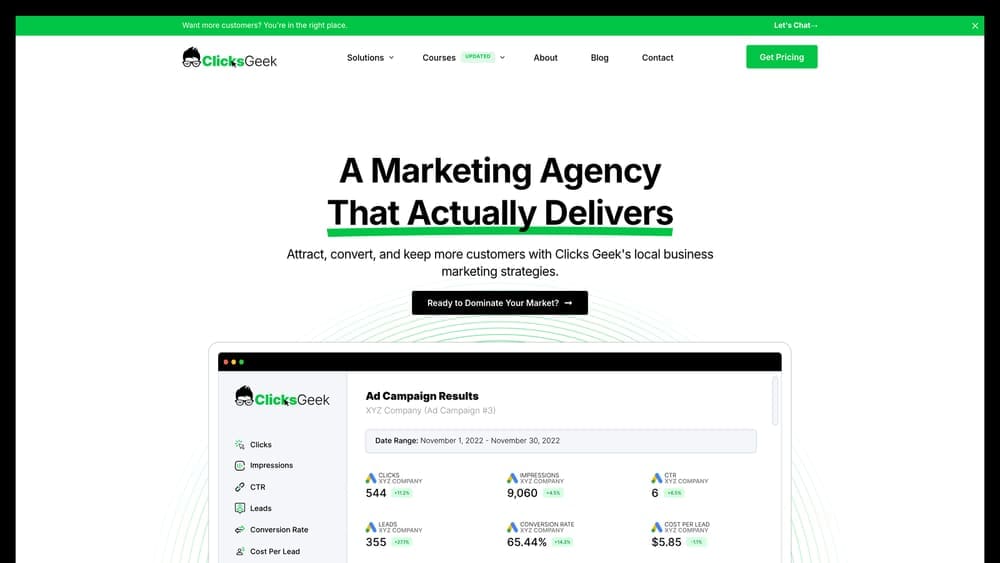
Clicks Geek is a Google Premier Partner agency that specializes in display advertising management for businesses that want results without the complexity of running campaigns themselves.
Where This Tool Shines
What sets Clicks Geek apart is their CRO-focused approach to display advertising. Rather than just driving traffic, they optimize campaigns specifically for conversions and qualified leads. This matters because many display campaigns generate clicks that never turn into actual business.
Their Google Premier Partner status means they’ve met Google’s highest performance standards—something fewer than 3% of agencies achieve. For local businesses, this translates to expertise in navigating the platform’s complexity while maintaining direct communication with someone who understands your market.
Key Features
Done-For-You Campaign Management: Complete hands-off service from strategy through execution and optimization.
Google Premier Partner Certified: Access to advanced tools, beta features, and direct Google support channels.
Conversion-Focused Optimization: Campaigns structured around lead quality and revenue impact, not just clicks or impressions.
Transparent Performance Reporting: Clear visibility into leads generated, cost per acquisition, and actual revenue attribution.
Local Business Specialization: Targeting strategies built specifically for businesses serving geographic markets.
Best For
Local businesses and service providers who want professional display advertising management without building an in-house team. Particularly valuable if you’ve tried self-serve platforms and struggled with the time investment or technical complexity. Ideal when you need campaigns that generate qualified leads, not just website traffic.
Pricing
Custom pricing based on your ad spend and campaign scope. This model ensures you’re paying for service that scales with your investment, not fixed fees that don’t match your needs.
2. Google Display Network
Best for: Businesses with in-house expertise wanting direct control and maximum reach across Google’s publisher network.
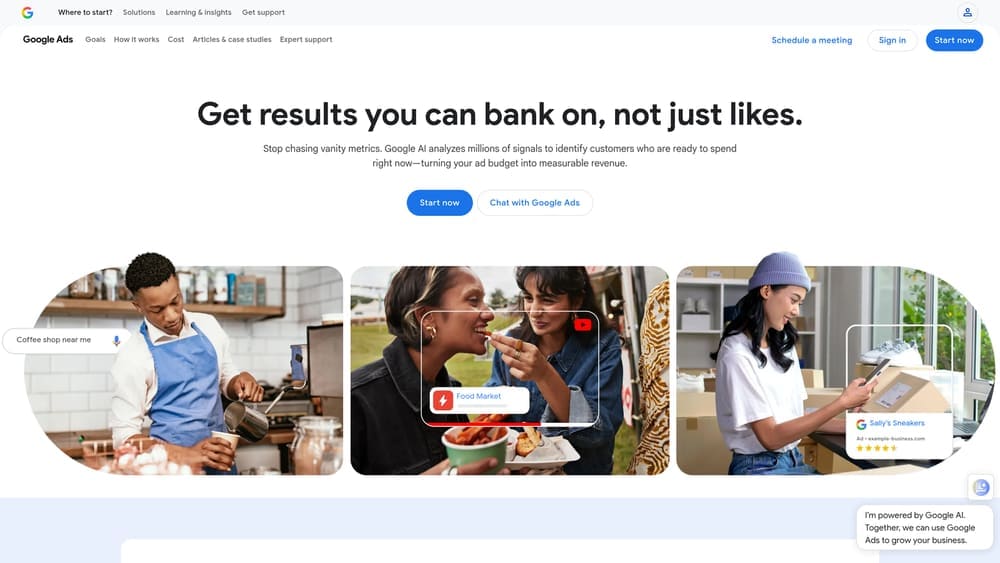
Google Display Network is Google’s native display advertising platform offering access to over 35 million websites and apps through the familiar Google Ads interface.
Where This Tool Shines
The reach is unmatched. Google Display Network touches over 90% of internet users worldwide, giving you access to virtually any audience you’re trying to reach. The integration with Google’s ecosystem means you can leverage data from your search campaigns, Analytics insights, and YouTube activity to refine targeting.
For businesses already running Google Ads search campaigns, adding display becomes a natural extension. You’re working in the same interface, using the same billing, and accessing the same audience insights you’ve already built.
Key Features
Massive Publisher Network: Reach across 35 million websites and apps, from major publishers to niche blogs.
Advanced Audience Targeting: Layer demographic, interest, and behavioral targeting with remarketing lists and custom intent audiences.
Google Analytics Integration: Use your website data to create audiences and measure campaign impact beyond the last click.
Responsive Display Ads: Automated ad creation that adjusts size, format, and appearance to fit available ad spaces.
Remarketing Capabilities: Re-engage website visitors with customized messaging based on their previous interactions.
Best For
Businesses with dedicated marketing staff or agencies managing campaigns in-house. Works best when you have the time and expertise to monitor performance, adjust bids, and optimize creative regularly. The self-serve model requires active management to prevent wasted spend.
Pricing
Self-serve with no minimum spend requirements. You pay per click or impression based on auction dynamics. Budget control is granular—set daily limits and adjust as needed.
3. The Trade Desk
Best for: Enterprise brands needing sophisticated programmatic buying across multiple channels with complete transparency.
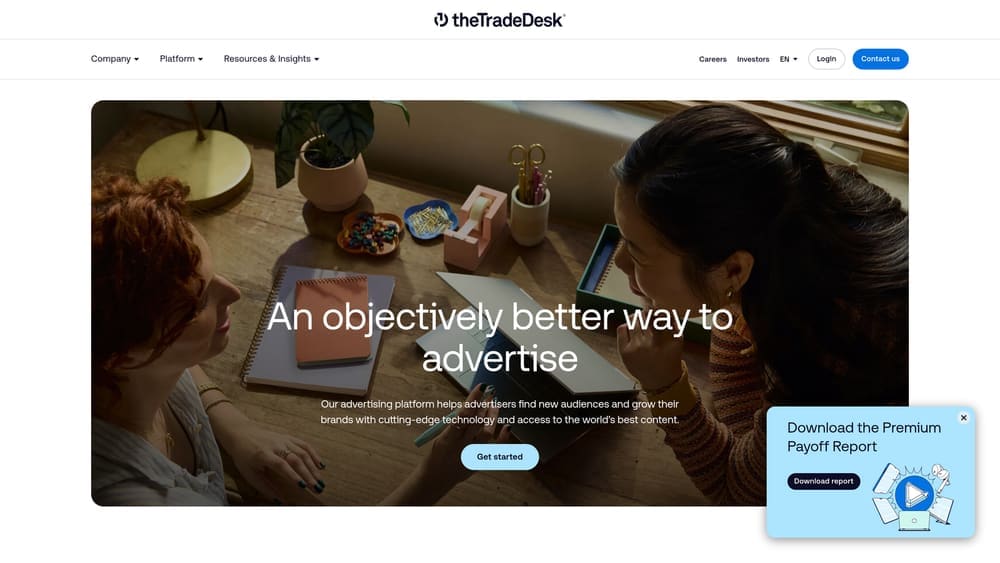
The Trade Desk is an enterprise-grade demand-side platform offering programmatic buying across display, video, audio, and connected TV channels with industry-leading transparency.
Where This Tool Shines
The Trade Desk built its reputation on transparency in an industry notorious for hidden fees and murky reporting. You see exactly what you’re paying for inventory, what the platform charges, and how your budget is allocated. This matters at enterprise scale where even small percentage differences represent significant dollars.
The unified platform approach means you’re managing display, video, CTV, and audio campaigns from one interface. Cross-channel attribution becomes possible when all your media buying flows through the same system.
Key Features
Unified Cross-Channel Management: Run display, video, audio, and connected TV campaigns from a single platform.
Premium Inventory Partnerships: Direct relationships with major publishers and access to exclusive inventory.
AI-Powered Optimization: Koa machine learning system continuously optimizes bidding and targeting based on performance patterns.
Comprehensive Identity Solutions: Unified ID 2.0 and other privacy-forward approaches to audience targeting without third-party cookies.
Real-Time Bidding Transparency: Complete visibility into auction dynamics, win rates, and cost breakdowns.
Best For
Enterprise brands with significant media budgets and dedicated programmatic teams. The platform’s power requires expertise to leverage effectively. Best suited for companies spending six figures monthly across digital channels who need sophisticated attribution and cross-channel orchestration.
Pricing
Enterprise pricing model typically requires significant minimum monthly spend. Exact costs vary based on campaign volume, but expect minimums in the tens of thousands monthly to justify platform access.
4. AdRoll
Best for: E-commerce and D2C brands focused on retargeting and customer acquisition across web and social.
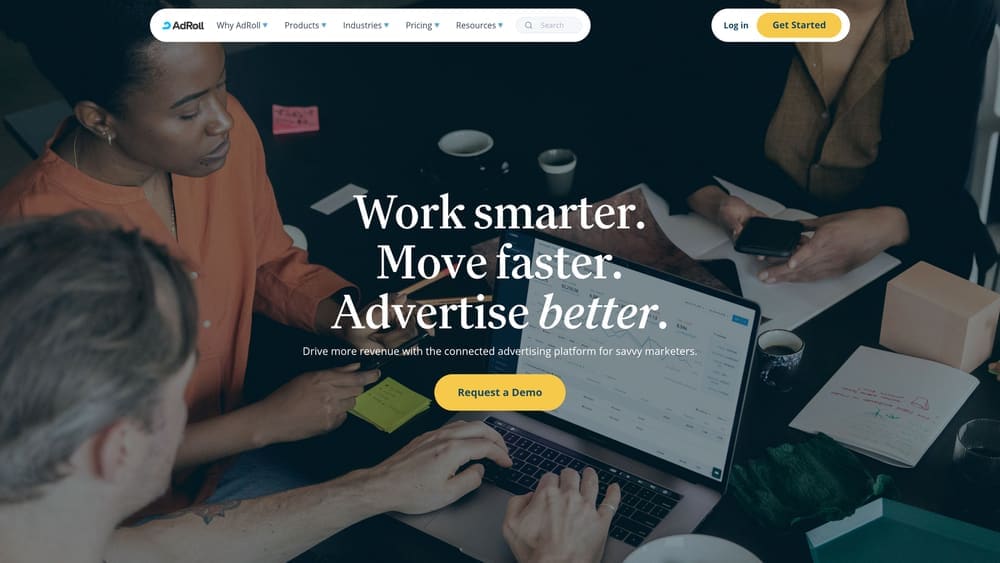
AdRoll is a marketing platform specializing in retargeting and prospecting for online retailers, with deep integrations into e-commerce platforms and simplified cross-channel management.
Where This Tool Shines
AdRoll makes retargeting accessible for businesses that don’t have enterprise budgets or technical teams. The platform was built specifically for e-commerce, which shows in features like dynamic product ads that automatically showcase items customers viewed, abandoned cart campaigns, and seamless Shopify integration.
The cross-channel approach means you’re running coordinated campaigns across display, social, and email from one platform. This unified view prevents over-messaging the same customers and creates a more cohesive brand experience.
Key Features
AI-Powered Audience Targeting: Machine learning identifies high-value prospects and optimizes bid strategies automatically.
Cross-Channel Retargeting: Reach customers across web display, Facebook, Instagram, and TikTok with coordinated messaging.
E-Commerce Platform Integrations: Native connections to Shopify, WooCommerce, Magento, and other major platforms for automatic product syncing.
Email Marketing Included: Built-in email capabilities let you coordinate display and email campaigns without separate tools.
Brand Awareness and Conversion Campaigns: Run both prospecting to new audiences and retargeting to previous visitors from the same interface.
Best For
E-commerce businesses and D2C brands that want retargeting without platform complexity. Particularly valuable if you’re running a Shopify or similar store and want campaigns that automatically showcase products customers viewed. Works well for businesses spending $1,000 to $50,000 monthly on digital advertising.
Pricing
Starts at $36 monthly for basic access, then scales based on ad spend. The pricing structure makes it accessible for smaller e-commerce businesses while remaining viable as you scale.
5. Criteo
Best for: Retailers and e-commerce businesses needing dynamic product retargeting with AI-driven personalization at scale.
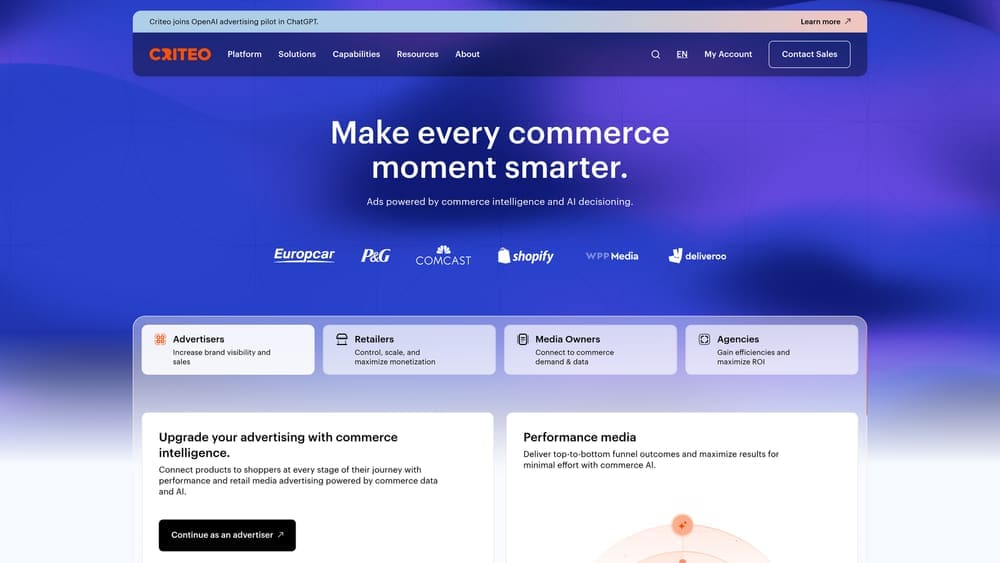
Criteo is a commerce media platform specializing in dynamic retargeting and personalized product recommendations, with particular strength in retail and e-commerce verticals.
Where This Tool Shines
Criteo’s AI engine analyzes browsing behavior to determine which products each individual is most likely to purchase, then dynamically generates ads featuring those specific items. This goes beyond basic “you viewed this product” retargeting to predictive recommendations based on patterns across millions of shoppers.
Their retail media network gives you access to on-site advertising placements on major retailer websites. If you sell through Amazon, Walmart, or similar marketplaces, this creates additional touchpoints within the shopping environment itself.
Key Features
Dynamic Product Ad Creation: Automatically generates ads featuring products most relevant to each individual based on browsing and purchase patterns.
AI-Driven Personalization Engine: Machine learning continuously optimizes which products to show, when to show them, and at what bid price.
Retail Media Network Access: Advertise directly on retailer websites where customers are actively shopping.
First-Party Data Onboarding: Import your customer data to create audiences and measure impact across the full customer journey.
Cross-Device Tracking: Follow customers from mobile to desktop to tablet, maintaining consistent messaging across devices.
Best For
E-commerce businesses with substantial product catalogs that benefit from dynamic retargeting. Most effective when you have sufficient traffic volume to generate meaningful retargeting audiences. Retailers selling both direct and through marketplace channels gain particular value from the retail media network access.
Pricing
Performance-based pricing that varies by campaign goals and industry vertical. Criteo typically works on a cost-per-click or cost-per-sale model, aligning their compensation with your results.
6. Amazon DSP
Best for: Brands selling on Amazon or targeting Amazon shoppers with exclusive access to Amazon’s first-party data.
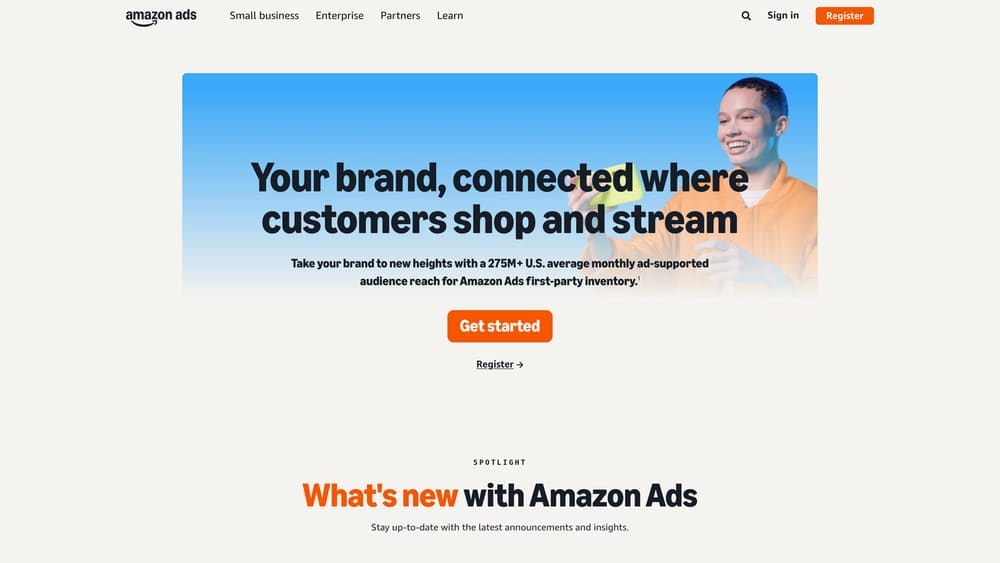
Amazon DSP is Amazon’s demand-side platform enabling advertisers to reach Amazon audiences both on Amazon properties and across the broader web using Amazon’s shopping data.
Where This Tool Shines
The data advantage is massive. Amazon knows what people actually buy, not just what they browse or search for. This purchase-based targeting lets you reach audiences based on demonstrated buying behavior, which tends to convert better than interest-based targeting alone.
You can run campaigns both on Amazon properties and across the web. This means retargeting someone who viewed your product on Amazon with ads on news sites, or prospecting to people who bought competing products anywhere online.
Key Features
Exclusive Amazon Shopper Data: Target based on actual purchase history, product views, and shopping behavior on Amazon.
On and Off-Amazon Inventory: Run ads on Amazon-owned properties and across third-party websites and apps.
Self-Serve and Managed Options: Choose between running campaigns yourself or having Amazon’s team manage them.
Streaming TV Ad Capabilities: Reach audiences on Fire TV, IMDb TV, and other Amazon streaming properties.
Purchase-Based Audience Targeting: Create audiences of people who bought specific products or product categories.
Best For
Brands selling products on Amazon who want to drive awareness and consideration beyond organic rankings. Also valuable for any business wanting to reach audiences based on Amazon shopping behavior, even if you don’t sell on the platform. The data access alone makes it worth considering for brands with products in competitive Amazon categories.
Pricing
Self-serve option available for smaller budgets. Managed service requires $50,000 minimum spend, with Amazon’s team handling campaign setup and optimization. The managed route makes sense for brands without programmatic expertise.
7. StackAdapt
Best for: B2B companies and mid-market brands needing multi-channel programmatic with native advertising strength.
StackAdapt is a multi-channel programmatic platform known for native advertising capabilities and B2B targeting options, with lower minimums than enterprise DSPs.
Where This Tool Shines
StackAdapt built its reputation in native advertising—ads that match the look and feel of the content around them. This format tends to perform better than traditional display for B2B audiences who’ve developed banner blindness. The platform’s strength in contextual targeting matters increasingly as third-party cookies disappear.
The B2B intent data integrations set it apart from consumer-focused platforms. You can target based on company firmographics, job titles, and demonstrated purchase intent signals from B2B data providers.
Key Features
Multi-Format Support: Run native, display, video, and connected TV campaigns from a unified platform.
B2B Intent Data Integrations: Target based on company research behavior and purchase intent signals from providers like Bombora.
Contextual Targeting Options: Place ads based on page content and context without relying on user tracking.
Transparent Platform Fees: Clear pricing on what the platform charges versus what goes to media buying.
Custom Audience Building: Layer first-party data with third-party audiences for precise targeting.
Best For
B2B companies running account-based marketing campaigns or targeting specific industries and job functions. Mid-market brands that need programmatic capabilities without enterprise-level minimums. The native advertising strength makes it particularly effective for content promotion and thought leadership campaigns.
Pricing
Flexible pricing with lower minimums than enterprise DSPs like The Trade Desk. Specific costs vary based on campaign scope, but the platform is accessible for businesses spending $10,000 to $100,000 monthly.
8. Basis Technologies
Best for: Agencies and brands managing multiple clients or campaigns needing workflow automation and unified reporting.
Basis Technologies is a comprehensive digital media platform combining DSP capabilities with workflow automation tools designed for agencies and in-house teams managing complex campaign portfolios.
Where This Tool Shines
Basis was built for operational efficiency. If you’re managing campaigns for multiple clients or brands, the workflow automation saves hours of manual work on trafficking, reporting, and optimization. The platform handles both programmatic and direct buys, which matters for agencies that need to manage guaranteed placements alongside real-time bidding.
The multi-client management tools let you see performance across your entire portfolio while maintaining separation between client accounts. This bird’s-eye view helps identify patterns and optimization opportunities you’d miss managing campaigns in isolation.
Key Features
Unified Media Buying: Manage programmatic, direct, search, and social campaigns from one platform.
Campaign Workflow Automation: Automate trafficking, approval processes, and routine optimization tasks.
Multi-Client Management: Handle multiple client accounts with proper separation and consolidated reporting.
Direct and Programmatic Buying: Execute both guaranteed buys and real-time bidding from the same interface.
Integrated Reporting Dashboard: Unified analytics across all channels and clients with customizable reporting templates.
Best For
Digital marketing agencies managing campaigns for multiple clients. In-house teams at larger companies running campaigns across multiple brands or business units. The workflow automation becomes increasingly valuable as campaign volume grows—the platform pays for itself in time savings.
Pricing
Enterprise pricing based on media spend and feature requirements. The cost structure makes most sense for agencies billing significant media spend across multiple clients, where the efficiency gains justify platform fees.
9. Taboola
Best for: Content marketers and publishers driving traffic and engagement through native content recommendation formats.
Taboola is a native advertising platform placing content-style ads across premium publisher websites through content recommendation widgets you’ve seen at the bottom of articles.
Where This Tool Shines
Taboola dominates the content recommendation space with partnerships across major publishers. When you see “Recommended for You” or “You May Like” sections on news sites, that’s often Taboola’s network. This placement context—appearing alongside editorial content—creates different engagement patterns than traditional display ads.
The platform works particularly well for content-driven campaigns. If your goal is driving traffic to blog posts, landing pages, or educational content rather than direct conversions, the native format generates higher engagement than banner ads that people have learned to ignore.
Key Features
Premium Publisher Network: Access to content recommendation placements on major news and media websites.
Content Recommendation Format: Native ads that appear as suggested articles alongside editorial content.
Attentive Audience Targeting: Reach users actively consuming content rather than passively browsing.
Video and Display Formats: Run both static image ads and video content through the same network.
Performance Optimization AI: Machine learning adjusts bids and targeting based on which placements and audiences drive results.
Best For
Brands running content marketing strategies who need traffic to blog posts, guides, or educational resources. Publishers looking to monetize their own content while promoting it on other sites. The format works particularly well for longer sales cycles where you’re building awareness and consideration rather than driving immediate conversions.
Pricing
Self-serve platform available with minimum spend varying by region. Typically works on a cost-per-click model. The platform is accessible for mid-market budgets but requires sufficient spend to gather meaningful performance data.
Making the Right Choice
Choosing the right display advertising service comes down to matching capabilities with your specific situation. Local businesses seeking hands-off management with a focus on actual leads should consider Clicks Geek’s done-for-you approach—the Google Premier Partner status and CRO expertise mean campaigns optimized for revenue, not just traffic.
If you have in-house expertise and want direct control, Google Display Network offers unmatched reach at any budget level. E-commerce brands will find AdRoll and Criteo’s retargeting capabilities particularly valuable, especially if you’re running Shopify or have substantial product catalogs. Amazon sellers should explore Amazon DSP for exclusive audience access based on actual purchase behavior.
Enterprises with larger budgets can leverage The Trade Desk’s programmatic power and cross-channel capabilities. B2B companies benefit from StackAdapt’s intent data integrations and native advertising strength. Agencies managing multiple clients need Basis Technologies’ workflow automation to maintain efficiency at scale.
The key is matching the service’s strengths to your goals. Don’t pay for enterprise features you won’t use, and don’t handicap your campaigns with tools that lack the targeting precision you need. Consider your team’s bandwidth—self-serve platforms require active management to prevent wasted spend, while managed services handle optimization but cost more.
Think about where you are in the buying journey you’re targeting. Content recommendation platforms like Taboola work well for awareness, while retargeting specialists like Criteo excel at conversion. If you’re unsure which approach fits your business, starting with a managed service lets you learn what works before investing in building in-house expertise.
Tired of spending money on marketing that doesn’t produce real revenue? We build lead systems that turn traffic into qualified leads and measurable sales growth. If you want to see what this would look like for your business, we’ll walk you through how it works and break down what’s realistic in your market.