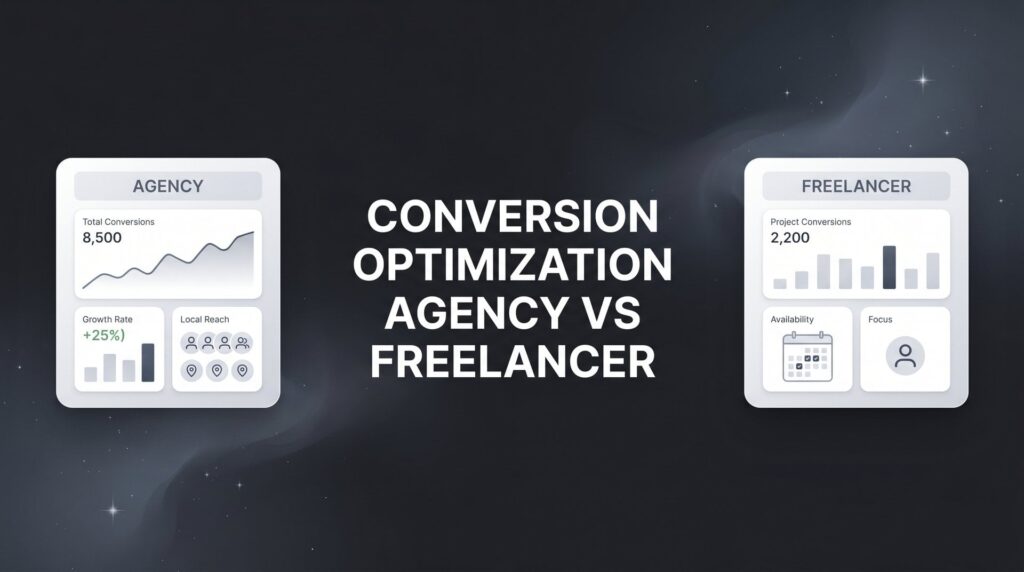
Making the wrong choice between a conversion optimization agency and a freelancer can cost you months of wasted budget and missed revenue opportunities. For local business owners watching every marketing dollar, this decision directly impacts your bottom line. The truth is, both options can deliver results—but only when matched correctly to your specific situation, budget, and growth goals.
This guide breaks down seven proven strategies to help you evaluate your options, ask the right questions, and ultimately partner with the CRO expert who will actually move the needle for your business. Whether you’re dealing with a landing page that bleeds visitors or an entire funnel that needs rebuilding, these strategies will help you make a confident, informed decision.
1. Audit Your Current Conversion Challenges First
The Challenge It Solves
Too many business owners jump straight to hiring decisions without clearly defining what needs fixing. You might know your website isn’t converting, but do you know whether it’s a messaging problem, a technical issue, a design flaw, or something else entirely? Without this clarity, you’re essentially asking someone to fix an undefined problem—which rarely ends well.
This lack of specificity leads to mismatched partnerships. You might hire a freelancer who specializes in landing page copywriting when your real issue is a broken checkout process requiring technical development work. Or you might pay agency rates for comprehensive services when you actually just need someone to rewrite your headlines.
The Strategy Explained
Before you contact a single agency or freelancer, spend time documenting your specific conversion challenges. Look at your analytics and identify exactly where visitors are dropping off. Is it on the homepage? The pricing page? During form submission? Are mobile users behaving differently than desktop visitors?
Create a simple document that outlines your current conversion rate, your goal conversion rate, and the specific pages or processes that need attention. Include screenshots of problem areas and note any technical constraints or platform limitations you’re working with. This preparation serves two purposes: it helps you communicate clearly with potential partners, and it reveals whether your needs are focused enough for a specialist freelancer or broad enough to require an agency’s full team.
Implementation Steps
1. Review your analytics for the past 90 days and identify your three biggest conversion bottlenecks based on actual traffic and drop-off data.
2. Create a brief document describing each problem, including current performance metrics, what success would look like, and any technical or brand constraints that apply.
3. Categorize each challenge as either focused (single-skill solution like copywriting or design) or complex (requiring multiple disciplines like development, design, and strategy).
Pro Tips
If you discover that most of your challenges fall into one category—say, all your problems relate to form optimization—that’s a strong signal that a specialized freelancer might be your best match. If your challenges span multiple categories and require coordinated solutions across design, copy, technical implementation, and ongoing testing, an agency’s integrated approach becomes more valuable.
2. Match Your Budget Reality to Service Models
The Challenge It Solves
Budget conversations often focus only on hourly rates or project quotes, missing the hidden costs that determine your actual investment. A freelancer charging half an agency’s hourly rate might seem like an obvious choice until you factor in project management time, revision cycles, and the cost of coordinating multiple specialists if your freelancer can’t handle everything you need.
Many local businesses get surprised by costs they didn’t anticipate. That affordable freelancer quote might not include implementation, testing tools, or the design work needed alongside the copywriting. Meanwhile, that comprehensive agency proposal might include services you don’t actually need, inflating costs without adding value to your specific situation.
The Strategy Explained
Build a complete budget picture that includes not just the direct fees but also your time investment, tool costs, and potential opportunity costs. Freelancers typically charge lower rates but may require more of your involvement in project management, coordination, and decision-making. Agencies charge premium rates but often handle more of the operational details themselves. Understanding conversion optimization agency pricing upfront helps you avoid budget surprises down the road.
Consider your total available budget and divide it into tiers. What can you afford to spend monthly? What one-time investment can you make? What ongoing retainer makes sense if you see results? Then map these numbers against typical pricing models. Freelancers often work on project basis or hourly, while agencies typically prefer monthly retainers that include ongoing optimization.
Implementation Steps
1. Calculate your realistic monthly marketing budget and determine what percentage you can allocate to conversion optimization without compromising other essential marketing activities.
2. Research typical pricing in your market by requesting quotes from both freelancers and agencies for a specific small project, noting what’s included and what costs extra.
3. Factor in your own time cost by estimating hours you’ll spend on project management, communication, and coordination, then multiply by what your time is worth to your business.
Pro Tips
The cheapest option rarely delivers the best ROI. Instead of choosing based on lowest cost, calculate the potential revenue impact of improved conversion rates. If better optimization could generate an additional ten qualified leads per month, what’s that worth to your business? This perspective often makes premium services look like bargains when they actually deliver results.
3. Evaluate Bandwidth and Turnaround Requirements
The Challenge It Solves
Your timeline expectations might not match your partner’s availability. Freelancers juggle multiple clients and may have limited capacity for rush projects or ongoing support. Agencies have team redundancy but might move slower due to internal processes and multiple stakeholders. Mismatched expectations around turnaround time create frustration and can derail your optimization efforts when you need quick iterations.
Local businesses often face seasonal pressures or market windows that demand fast execution. If you need landing pages optimized before your busy season starts in six weeks, a freelancer with a full client roster might not be able to prioritize your project. Conversely, if you’re planning a methodical six-month optimization program with monthly testing cycles, an agency’s structured approach might provide better long-term support.
The Strategy Explained
Map out your actual project timeline and identify critical milestones. Be honest about whether you need someone who can start immediately and deliver quickly, or whether you’re planning a longer-term partnership with more flexible timing. Consider both the initial project phase and ongoing optimization needs.
Ask potential partners directly about their current workload and availability. A good freelancer will tell you honestly if they can’t meet your timeline. A professional agency will explain their typical project timeline and what factors might accelerate or delay it. Red flags include vague promises about timing or reluctance to commit to specific delivery dates.
Implementation Steps
1. Create a timeline for your optimization project including must-have completion dates for critical elements like seasonal campaigns or product launches.
2. During initial conversations, ask specifically about current availability, typical turnaround times for revisions, and how they handle urgent requests or timeline changes.
3. Request examples of similar projects they’ve completed and ask how long each phase took from kickoff to implementation.
Pro Tips
Agencies typically offer better coverage for ongoing needs because team members can cover for each other during vacations or busy periods. Freelancers might disappear for a week when they’re sick or on vacation, with no backup available. If continuity matters for your business, this becomes a significant consideration beyond just project turnaround time.
4. Verify Relevant Industry Experience
The Challenge It Solves
Generic conversion optimization experience doesn’t always translate to local business success. The strategies that work for e-commerce stores or SaaS companies often fail for service-based local businesses dealing with phone calls, form submissions, and service area targeting. You need someone who understands your specific conversion funnel, not just general optimization principles.
Many agencies and freelancers showcase impressive portfolio pieces that have nothing to do with your business model. That beautiful case study about optimizing an online store’s checkout process won’t help you generate more qualified leads for your HVAC company or law practice. The metrics that matter, the user behaviors, and the optimization tactics all differ significantly.
The Strategy Explained
Look specifically for experience with local business conversion optimization. This means understanding lead quality over volume, phone call tracking, service area pages, local landing page best practices, and the longer sales cycles typical of service businesses. Ask to see examples of work they’ve done for businesses similar to yours in model if not in industry. Reviewing conversion rate optimization case studies can help you evaluate whether their past results align with your goals.
During conversations, pay attention to the questions they ask you. Someone with relevant experience will immediately inquire about your lead qualification process, average customer value, sales cycle length, and how you currently track conversions beyond just form submissions. Generic questions about traffic and bounce rates suggest they’re applying e-commerce thinking to your local business context.
Implementation Steps
1. Request case studies or examples specifically from local service businesses, noting whether they focus on lead quality metrics or just traffic and conversion rate numbers.
2. Ask how they approach conversion optimization differently for local businesses compared to e-commerce or other models, listening for specific tactical differences.
3. Inquire about their experience with local business tools and platforms like call tracking software, CRM integration, and location-based landing pages.
Pro Tips
The best indicator of relevant experience is whether they discuss your entire conversion funnel, not just your website. Someone who understands local business CRO will want to know about your sales process, how leads are handled after conversion, and what happens between form submission and closed sale. This systems-level thinking separates true local business specialists from generalists applying e-commerce tactics.
5. Assess the Full Skill Stack You Actually Need
The Challenge It Solves
Conversion optimization isn’t a single skill. It requires copywriting, design, analytics interpretation, technical implementation, user experience expertise, and strategic thinking. A freelancer might excel at one or two of these areas but lack capabilities in others. An agency brings multiple specialists but you pay for that comprehensive skill stack whether you need all of it or not.
The mismatch between your needs and your partner’s capabilities creates expensive problems. You hire a talented copywriter to optimize your landing pages, but they can’t implement their recommendations because they don’t code. Or you engage an agency with a full team when you really just need someone to improve your form conversion rate, paying for services you’ll never use.
The Strategy Explained
Review your documented conversion challenges from Strategy 1 and list every skill required to address them. Does fixing your conversion problems require new page designs, or just better copy on existing pages? Do you need custom development work, or can solutions be implemented through your existing website platform? Will you need ongoing A/B testing that requires analytics expertise and testing tool management?
Create two columns: must-have skills and nice-to-have skills. If your must-have list includes four or more distinct specialties, an agency’s integrated team becomes more practical than coordinating multiple freelancers. If your needs center on one or two specific skills, a specialized freelancer often delivers better results at lower cost than paying for an agency’s full team. Exploring the best conversion rate optimization tools can also help you understand what technical capabilities your partner should bring to the table.
Implementation Steps
1. Map each conversion challenge to the specific skills needed to solve it, being realistic about whether you can handle some aspects in-house or need external expertise for everything.
2. Determine whether your challenges require tight integration between skills (like design and development working together) or whether they’re independent enough that different specialists could work sequentially.
3. Consider your own team’s capabilities honestly and identify which skills you absolutely must outsource versus which you could potentially handle internally with guidance.
Pro Tips
Some freelancers build networks of trusted collaborators in complementary disciplines. A copywriter might partner with a designer and developer they work with regularly. This hybrid model can give you multi-skill capability at closer to freelancer pricing, though you’ll likely need to do more coordination work than you would with an agency’s internal team.
6. Test Communication and Reporting Styles
The Challenge It Solves
You can’t evaluate a working relationship from a sales conversation. The agency that impressed you in the pitch meeting might assign your account to a junior team member who doesn’t return emails. The freelancer with the perfect portfolio might be terrible at explaining their strategic thinking or providing updates. Communication breakdowns kill more optimization projects than lack of technical skill.
For local business owners who aren’t CRO experts themselves, clear communication becomes even more critical. You need a partner who can explain what they’re doing, why it matters, and what results to expect in language you actually understand. You also need reporting that shows business impact, not just vanity metrics that look good but don’t connect to revenue.
The Strategy Explained
Before committing to a major engagement, run a small paid project that lets you evaluate the actual working relationship. This might be a single landing page optimization, a conversion audit, or a focused A/B test. Pay attention to how they communicate throughout: response times, clarity of explanations, proactive updates, and how they present results.
Use this test project to assess whether their reporting style matches your needs. Do they explain the “why” behind recommendations or just tell you what to do? Do they connect optimization work to business outcomes or just report on conversion rate changes? Can they adjust their communication style based on your feedback, or are they rigid in their approach? Understanding how to optimize your conversion funnel yourself can also help you ask better questions and evaluate their expertise.
Implementation Steps
1. Propose a small, defined project with a clear scope and budget that gives you a genuine preview of the working relationship without major financial commitment.
2. During this test project, track communication quality including response times, clarity of explanations, proactive updates, and how well they handle questions or concerns.
3. Evaluate the final deliverable not just for quality but for how it’s presented, explained, and connected to your business goals, noting whether you feel informed and confident or confused and uncertain.
Pro Tips
Pay attention to how potential partners handle disagreement or pushback. If you question a recommendation during your test project, do they get defensive or do they explain their reasoning and consider your perspective? The best partnerships involve collaborative problem-solving, not just you accepting expert dictates. Someone who can’t handle questions during a small project will be worse during a larger engagement.
7. Plan for Scale and Long-Term Partnership
The Challenge It Solves
Your conversion optimization needs will change as your business grows. What works at your current scale might not work when you’re handling triple the traffic. A freelancer who’s perfect for your current situation might lack capacity to support you through rapid growth. An agency that seems expensive now might become cost-effective when you need comprehensive ongoing optimization across multiple service lines or locations.
Many businesses make the mistake of optimizing only for their current situation, then facing disruption when they need to change partners as they scale. Switching optimization partners means lost momentum, knowledge transfer challenges, and the risk of undoing what’s working while you bring someone new up to speed on your business.
The Strategy Explained
Think beyond your immediate needs to where your business will be in twelve to eighteen months. If you’re planning to expand to new service areas, launch new service lines, or significantly increase your marketing budget, you need a partner who can scale with you. Ask potential partners directly about their capacity to grow with your business and what that progression would look like.
Consider the difference between project-based and partnership-based relationships. If you view conversion optimization as a one-time fix, a freelancer on a project basis makes sense. If you understand that optimization is an ongoing process requiring continuous testing and refinement, you need a partner—freelancer or agency—who’s structured for long-term relationships and has the capacity to support ongoing work. Exploring conversion rate optimization services can help you understand what comprehensive, scalable support looks like.
Implementation Steps
1. Map out your business growth plans for the next eighteen months, identifying how your optimization needs might evolve as you scale traffic, expand services, or enter new markets.
2. Ask potential partners how they’ve supported other clients through growth phases, requesting specific examples of relationships that have scaled over time.
3. Discuss what ongoing optimization would look like after initial improvements are made, including how they structure long-term partnerships and what level of ongoing involvement makes sense.
Pro Tips
Agencies typically have clearer paths for scaling relationships because they’re built for ongoing retainers and have team capacity to increase support as your needs grow. Freelancers can scale with you too, but you need to discuss this explicitly upfront. A freelancer who’s already at capacity might not be able to increase their involvement with your business when you need it most, forcing you to find new partners at critical growth moments.
Putting It All Together: Your Decision Framework
The choice between a conversion optimization agency and a freelancer isn’t about which option is universally better. It’s about which option matches your specific situation across seven critical dimensions: the complexity of your conversion challenges, your budget reality, your timeline requirements, the need for industry-specific expertise, the breadth of skills required, communication preferences, and your growth trajectory.
Here’s a quick self-assessment to guide your decision. If most of these statements describe your situation, a specialized freelancer likely makes sense: You have focused conversion challenges in one or two specific areas. Your budget is limited but you have time to invest in project coordination. You need deep expertise in a specific skill like copywriting or analytics. You’re comfortable managing the relationship closely and coordinating any additional specialists needed. Your optimization needs are relatively stable and predictable.
Conversely, if these statements better match your situation, an agency partnership probably delivers better results: Your conversion challenges span multiple areas requiring coordinated solutions. You have budget for premium services and value having less on your plate. You need a complete skill stack including strategy, design, copy, development, and ongoing testing. You prefer a partner who handles details and provides proactive recommendations. You’re scaling quickly and need a partner who can grow with you.
Neither choice is permanent. Many successful businesses start with a freelancer for focused initial improvements, then transition to an agency as their needs become more complex. Others begin with an agency to establish systems and strategy, then shift to freelancers for ongoing optimization once the foundation is solid.
The worst decision is no decision—letting analysis paralysis keep you from improving conversions while your competitors optimize their way to better results. Use these seven strategies to evaluate your options, trust your assessment, and move forward with a partner who can actually improve your conversion rates and drive real revenue growth.
Tired of spending money on marketing that doesn’t produce real revenue? We build lead systems that turn traffic into qualified leads and measurable sales growth. If you want to see what this would look like for your business, we’ll walk you through how it works and break down what’s realistic in your market.