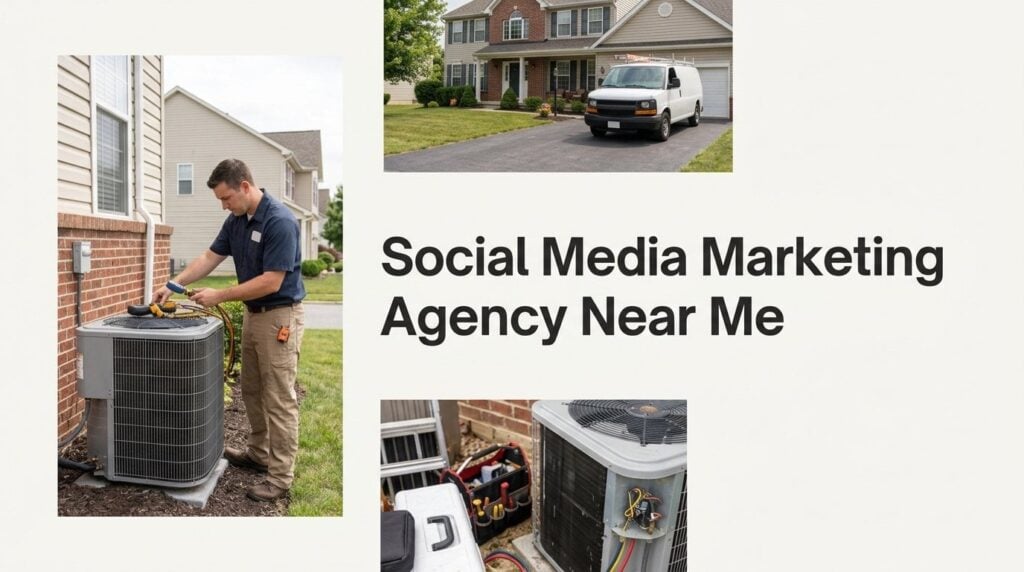
Most local service business owners searching for a social media marketing agency near them are not looking for followers or likes. They want booked jobs. The problem is that the agency market is full of firms that are very good at selling themselves and not particularly good at producing revenue for clients.
This article is a practical filter. Before you sign anything or hand over a budget, these seven strategies will help you evaluate whether a local agency is actually built to drive leads for a service business like yours, or whether they are built to look busy on your behalf.
We cover what to ask, what to measure, what good agency work actually looks like for a local service business, and where social media fits relative to other channels you are probably already running or considering.
1. Get Clear on What Social Media Can and Cannot Do for a Local Service Business
The Challenge It Solves
Most agency sales pitches blur a critical distinction: social media generates demand, it does not capture it. When someone’s pipe bursts at 11pm, they are not scrolling Instagram. They are searching Google. Confusing these two behaviors leads owners to judge social campaigns by the wrong standard and get burned when the phone does not ring the way a search campaign would.
The Strategy Explained
Think of your marketing channels in two categories. Demand capture channels, like Google Ads and Local SEO, reach people who are already looking for what you do right now. Demand generation channels, like Facebook and Instagram, reach people who are not currently in the market but can be primed to call you when the need arises.
For emergency services like plumbing and HVAC, demand capture almost always delivers faster, more predictable revenue. For planned services like remodeling, landscaping, or kitchen cabinet installation, social media can be genuinely effective because the buying cycle is longer and homeowners spend time researching before they call.
A good agency will tell you this honestly. A bad one will promise you leads without explaining the mechanism.
Implementation Steps
1. Before any agency call, write down your top three services and whether they are emergency-driven or planned purchases. This shapes how you evaluate what an agency is proposing.
2. Ask the agency directly: “Is your primary goal to capture existing demand or create new demand?” If they cannot answer clearly, that tells you something.
3. Ask how long it typically takes to see leads from a social campaign. A realistic answer is 30 to 90 days. Anyone promising results in week one is either misleading you or running a very different type of campaign than you think.
Pro Tips
Seasonal businesses like HVAC and landscaping need agencies who understand campaign timing. Running a summer AC tune-up campaign in March is not a mistake. It is strategy. Ask any agency you vet whether they build seasonal ramp schedules into their planning, or whether they just run campaigns reactively.
2. Ask the Agency Which Platforms They Actually Run Paid Campaigns On
The Challenge It Solves
Many agencies that call themselves social media marketing agencies are primarily managing organic posting calendars. Three posts a week, some stock photos, a few hashtags. That is not a lead generation operation. For a local service business, organic social rarely produces meaningful call volume on its own. Paid campaigns are where real lead flow comes from, and not every agency is actually running them.
The Strategy Explained
Facebook and Instagram, managed through Meta Ads Manager, remain the most mature paid social platforms for local service lead generation as of 2026. Meta’s targeting tools, including radius-based geographic targeting, are well-suited to the local market. An agency that knows what they are doing will be fluent in Meta Advantage+ campaigns, which have changed how audience targeting works over the past few years.
TikTok has grown significantly, but conversion tracking for local service businesses on that platform is less mature than Meta. An agency pushing TikTok as your primary lead channel for a plumbing or roofing business should be able to explain exactly how they track calls and form fills from that platform. If they cannot, be cautious.
Google Local Services Ads sometimes get confused with social media by both owners and agencies. LSA is a Google product, not social. If an agency is bundling it in their social proposal, make sure you understand what you are actually buying.
Implementation Steps
1. Ask: “Which platforms do you run paid campaigns on, and what does a typical monthly ad spend look like on each?” This separates paid operators from organic-only shops immediately.
2. Ask them to walk you through a recent campaign structure in Meta Ads Manager, not just show you a screenshot of results. Can they explain the audience logic, the creative strategy, and the bid approach?
3. Ask specifically about local radius targeting. National agencies often set broad geographic parameters that waste budget on users outside your service area. A local-focused agency should be setting tight radius targeting around your actual service zip codes.
Pro Tips
Instagram placements are typically bundled with Facebook campaigns inside Meta Ads Manager. If an agency is quoting you a separate fee to “manage your Instagram,” ask what that actually means in terms of paid distribution. Often it is just repurposing the same creative, which is fine, but you should know what you are paying for.
3. Demand Vertical-Specific Experience, Not Generic Portfolio Work
The Challenge It Solves
A polished portfolio of restaurant ads, lifestyle brands, and e-commerce campaigns tells you very little about whether an agency can generate calls for a roofing company. Local service marketing has its own creative language, its own offer structures, and its own targeting logic. An agency that has never run campaigns for a trade business will spend your first few months learning at your expense.
The Strategy Explained
Vertical experience matters in three specific ways. First, creative. Ads that work for HVAC use urgency, seasonal framing, and trust signals like licensing and years in business. That is different from what works for a restaurant or a clothing brand. Second, offer structure. Local service businesses often convert better with specific offers, financing mentions, or free estimate hooks rather than generic brand awareness messaging. Third, targeting logic. An experienced agency knows that a homeowner in a 15-year-old neighborhood is more likely to need a roof replacement than someone in a new development.
This is why agencies with industry-specific playbooks outperform generalists. At Clicks Geek, we work across 298 industry verticals, which means we have seen what works and what fails for trades like electrical, auto repair, plumbing, and HVAC before we ever touch your budget.
Implementation Steps
1. Ask the agency to name three service businesses they have run paid social campaigns for in the last 12 months. If they cannot name specific verticals, that is a red flag.
2. Ask to see actual ad creative from a local service campaign, not a general portfolio page. Look for specificity: does the ad speak to a homeowner’s real concern, or does it look like a stock photo with a logo slapped on it?
3. Ask: “What offer structure do you typically test first for a business like mine?” A strong answer involves specific hooks. A weak answer involves phrases like “we build brand awareness first.”
Pro Tips
Emergency service businesses and planned service businesses need different creative strategies. An HVAC company’s summer campaign should feel urgent. A remodeling company’s campaign can be aspirational. If an agency uses the same creative template for both, they are not thinking about your buyer’s actual mindset.
4. Understand How They Track and Report Results
The Challenge It Solves
Agencies that cannot produce revenue are very good at producing reports. Impressions, reach, engagement rate, follower growth. These numbers are real, but they are not the same as booked jobs. If your reporting dashboard does not show you calls, form fills, and cost per lead, you have no way to evaluate whether the campaign is actually working.
The Strategy Explained
Between 40% and 70% of local service leads arrive by phone. That is not a minor detail. It means that an agency without phone call tracking built into their reporting is hiding a significant portion of your actual results, whether they know it or not.
Call tracking means using a unique tracking number tied to your campaign so that when someone sees your Facebook ad and calls you, that call is logged, attributed to the campaign, and counted as a conversion. Without it, you are flying partially blind. You might be getting leads and not know it, or you might be getting none and the agency is pointing to engagement metrics to distract from that fact.
Ask to see a sample report before you sign anything. A good report shows cost per lead broken out by channel, call volume with call duration (short calls are often misdials or spam), form fill volume, and ideally some connection to booked jobs if the agency has access to your CRM or booking system.
Implementation Steps
1. Ask: “How do you track phone calls from social campaigns?” If the answer involves anything other than a dedicated tracking number, push for more detail.
2. Ask to see a real reporting sample, redacted if needed. Look for CPL as a line item, not just reach and impressions.
3. Ask how they handle attribution when a lead sees a social ad but calls three days later. This is a real scenario and a good agency will have a thoughtful answer about attribution windows.
Pro Tips
Call duration matters. A 45-second call is probably not a booked job. Ask the agency whether they filter out short calls from their lead counts. Agencies that count every call, including 20-second hang-ups, are inflating your CPL data in ways that make their results look better than they are.
5. Evaluate Whether Social Fits Your Channel Mix Right Now
The Challenge It Solves
Social media is not always the right first investment for a local service business. For many owners, adding a social media agency before establishing Google Ads and Local SEO is like building a second floor before finishing the foundation. The channel question matters as much as the agency question, and most agency pitches will not raise it because it might cost them the sale.
The Strategy Explained
Here is a practical channel priority framework for most local service businesses. Google Ads should typically come first because it captures people actively searching for your service right now. The CPL for home services on Google Ads runs roughly $18 to $35. Local SEO, specifically Map Pack visibility, should be built in parallel because the Map Pack captures around 42% of local clicks and produces leads at $7 to $15 per lead once it matures, usually at the 12-month mark. Facebook and Instagram paid campaigns make the most sense as a third layer, particularly for planned services, seasonal promotions, or retargeting people who have already visited your website.
Facebook and Instagram CPL for home services typically runs $10 to $25, which is competitive, but the leads are often earlier in the buying cycle than search leads. That means your sales process needs to be strong enough to convert someone who was not actively looking when they saw your ad.
A recommended marketing spend of 8% to 12% of revenue gives you a realistic ceiling to work within. If your total budget is modest, spreading it across three channels before any of them reaches critical mass is usually less effective than going deeper on one or two.
Implementation Steps
1. Before talking to any social agency, write down your current channel mix and monthly spend on each. If you have no search presence at all, that is where to start.
2. Ask any social agency: “Do you think social media is the right first channel for a business at my stage?” An honest agency will give you a real answer. A sales-focused one will tell you social is perfect regardless of your situation.
3. If you do have Google Ads running, ask the social agency how their campaigns will complement rather than compete with your search campaigns. Retargeting website visitors from Google traffic with social ads is a legitimate and effective strategy.
Pro Tips
If you are running Google Ads already and want to add social, retargeting is often the highest-ROI entry point. People who visited your site but did not call are warm. Showing them a Facebook ad with a specific offer or testimonial can bring them back. This is a much more efficient use of social budget than cold prospecting for most local service businesses.
6. Check Their Contract Terms Before You Like Their Work
The Challenge It Solves
Owners who have been burned by agencies almost always mention the same two things: they could not leave without a penalty, and when they did leave, the agency kept the ad accounts or creative assets. Contract terms are not a formality. They are a signal of how an agency thinks about the relationship and what happens when things go wrong.
The Strategy Explained
Three contract elements deserve close attention before you sign anything. First, contract length. Long-term contracts are not inherently bad, but mandatory 12-month commitments with no performance clauses should make you ask why. A confident agency with a track record does not need to lock you in for a year to protect themselves. At Clicks Geek, we operate without lock-in contracts because we think the work should speak for itself.
Second, asset ownership. Who owns the ad accounts, the creative, and the campaign data when you leave? You should own your ad accounts. If an agency insists on running campaigns from their own ad account rather than one you control, you will lose all campaign history, audience data, and conversion data if you ever switch. That is a significant cost that rarely gets discussed upfront.
Third, exit terms. What is the notice period? What happens to campaigns in progress? Are there kill fees? Read these sections carefully and ask a direct question: “If I decide this is not working after three months, what does that process look like?”
Implementation Steps
1. Before signing, ask: “Who owns the ad accounts and creative assets?” The correct answer is that you do.
2. Ask for the exit clause in plain language. If the contract is written in a way that makes it hard to leave, that is a deliberate choice by the agency.
3. Ask whether there are performance benchmarks written into the contract. An agency willing to commit to specific CPL targets or lead volume minimums is showing you real confidence in their work.
Pro Tips
Month-to-month arrangements or short initial terms with renewal options are the cleanest structure for both sides. They keep the agency accountable and give you room to course-correct without a legal conversation. If an agency pushes back hard on this, ask them why. The answer will tell you a lot.
7. Run a Parallel Evaluation Against Other Lead Channels
The Challenge It Solves
Social media agency pitches are usually evaluated in isolation. The agency presents their capabilities, shows some results, and you decide yes or no based on that presentation alone. The smarter approach is to evaluate social against the other channels competing for the same budget, using real CPL benchmarks rather than agency promises.
The Strategy Explained
You have a finite marketing budget. Every dollar you put into social is a dollar not going into Google Ads, Local SEO, Google LSA, or direct mail. The question is not whether social media works in the abstract. The question is whether social media is the best use of your next marketing dollar given where your business is right now.
Use the benchmarks to run a simple comparison. Google Ads for home services typically produces leads at $18 to $35 each, with results starting within the first 30 to 90 days of a properly built campaign. Local SEO produces leads at $7 to $15 each at the 12-month mark, with the Map Pack capturing roughly 42% of local clicks. Facebook and Instagram campaigns for home services can produce leads at $10 to $25 each, but those leads are often earlier in the buying cycle and may require more follow-up to convert.
A social agency that cannot tell you their expected CPL for your specific vertical and compare it honestly to search is either not tracking their results carefully or not being straight with you about what to expect.
Implementation Steps
1. Before any agency meeting, write down your current cost per lead from every channel you are running. If you do not know this number, finding it is the first priority regardless of which agency you hire.
2. Ask the social agency: “What CPL should I realistically expect in the first 90 days for a business like mine?” Compare their answer to the benchmarks above. If they are promising $5 leads for a roofing company, ask how they arrived at that number.
3. Ask whether they have experience running multi-channel strategies, and whether they can help you think about how social fits alongside search rather than replacing it. An agency that only sells social and dismisses search is not giving you complete advice.
Pro Tips
If you are evaluating a social agency and you do not yet have Google Ads running, get a Google Ads proposal at the same time. Put the two side by side. Look at projected CPL, ramp time, contract terms, and reporting quality. Making a channel decision with two real proposals in front of you is far better than making it based on one agency’s pitch alone.
<strong>Putting It All Together</strong>
Picking a social media marketing agency near you comes down to one question: can they show you a path to booked jobs, not just activity? Run every agency you talk to through these seven filters before committing budget.
Start with channel fit. Make sure social is actually the right investment for where your business is right now. Then demand proof of vertical experience, because an agency that has never run campaigns for a trade business will spend your first few months figuring out what works. Make sure their reporting connects to revenue, not just reach, and that phone call tracking is built in from day one. Check the contract terms before you fall in love with their portfolio. And compare their promises against real CPL benchmarks from other channels so you are making a budget decision based on evidence, not a sales pitch.
If you are still weighing whether a full-service social media agency is the right model, our breakdown of what an SMMA marketing agency actually does explains how the model works and where it fits for local service businesses.
If an agency cannot answer these questions clearly, keep looking. The right partner will not be defensive about any of them.
When you are ready to talk specifics, Clicks Geek has worked with local service businesses across 298 industry verticals and has managed over $100 million in ad spend since 2015. No lock-in contracts. Just a straight conversation about what will actually move the needle for your business. If you want to see what this would look like, we will walk you through how it works and break down what is realistic in your market.