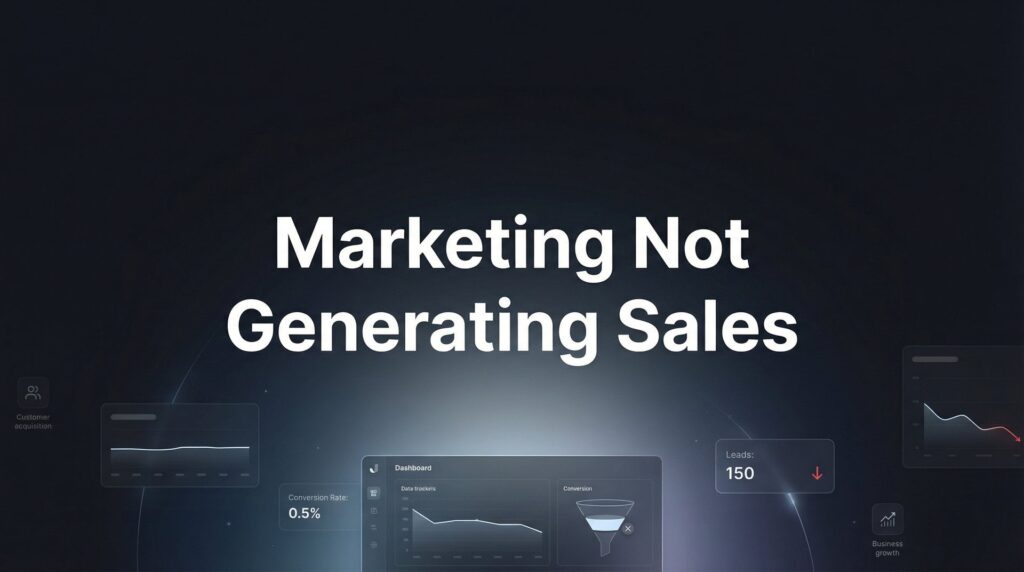
You’ve poured everything into your business. The quality is there. The service is excellent. Your customers love what you do. But here’s the brutal truth: none of that matters if people don’t know you exist.
Every day, your competitors are landing new clients while your phone stays quiet. You watch their social media posts celebrating growth, their Google reviews piling up, their team expanding—and you’re left wondering what they’re doing that you’re not.
The frustrating part? You’re not failing because you’re bad at your craft. You’re struggling because being great at what you do and being great at attracting customers are two completely different skill sets. This guide addresses the real reasons small businesses struggle to find customers and provides the proven frameworks that actually work to fix it. No fluff. No generic advice. Just actionable strategies that generate real results.
The Harsh Reality: Excellence Doesn’t Market Itself
Here’s the uncomfortable truth most small business owners eventually face: your expertise means absolutely nothing if potential customers can’t find you when they’re ready to buy.
Think about it. Right now, someone in your area is searching for exactly what you offer. They have a problem you can solve. They have money to spend. They’re typing into Google, asking friends for recommendations, scrolling through social media looking for solutions. And they’re finding your competitors instead of you.
This is what we call the visibility gap, and it’s killing businesses that deserve to thrive. You might be the best in your field, but if you’re invisible at the moment someone needs your service, you might as well not exist. The sale goes to whoever shows up in that critical moment, not necessarily to whoever does the best work.
Most small business owners fall into predictable blind spots. You rely heavily on word-of-mouth because it’s comfortable and organic. You tell yourself that if you just do great work, customers will naturally find you. You avoid “pushy” marketing because it feels inauthentic. Meanwhile, your competitors are actively putting themselves in front of potential customers every single day.
Another common trap: trying to serve everyone. When your marketing message is “we help all types of customers with all types of problems,” you end up connecting with no one. Generic appeals to broad audiences get ignored because they don’t speak to anyone’s specific pain point.
The competitive reality is stark. While you’re waiting for customers to magically discover you, your competitors are investing in Google Ads, optimizing their websites, building email lists, creating content, and systematically capturing market share. They’re not necessarily better at the actual work—they’re just better at being found when it matters.
This isn’t about fairness. It’s about understanding that in the modern marketplace, visibility is a competitive advantage that compounds over time. Every day you’re invisible is a day your competitors are building momentum you’ll have to work twice as hard to overcome.
The Foundation: Know Exactly Who You’re Trying to Reach
Before you spend a single dollar on marketing, you need to answer one critical question with brutal specificity: who is your ideal customer?
Most small businesses answer this question far too broadly. “Small business owners” isn’t specific enough. “Homeowners” isn’t specific enough. “Anyone who needs our service” definitely isn’t specific enough. This vagueness guarantees that your marketing will be ineffective and expensive.
Your ideal customer profile needs real detail. What age range? What income level? What specific problem keeps them up at night? What have they already tried that didn’t work? What words do they use when describing their problem? Where do they spend their time online? What triggers them to finally decide they need help?
Let’s say you run an HVAC company. Your ideal customer isn’t just “homeowners.” It’s homeowners aged 35-55 in suburban areas who own homes built before 1990, are experiencing rising energy bills, value reliability over rock-bottom prices, and are triggered to call when their current system breaks down or they face an uncomfortable temperature extreme. That level of specificity changes everything about how you market.
Once you know who you’re targeting, you need to understand where they actually look for solutions. This varies dramatically by industry and demographic. Younger customers might start on social media. Older customers might search Google directly. Some industries rely heavily on referrals and reviews. Others respond well to direct mail or local advertising.
Here’s where many small businesses make a costly mistake: they market where they prefer to market rather than where their customers actually are. You might love posting on Instagram, but if your ideal customers are 55-year-old business owners who primarily use LinkedIn and Google search, your Instagram efforts are wasted energy.
The final piece of the foundation is understanding customer lifetime value. What is a customer worth to your business over time? If you run a recurring service business and the average customer stays for three years at $200 per month, that customer is worth $7,200. Knowing this number tells you what you can afford to spend to acquire them.
Many small businesses underinvest in customer acquisition because they only think about the immediate transaction value. If you can only see the first $200 instead of the $7,200, you’ll dramatically underspend on marketing and lose customers to competitors who understand the math better. When you know a customer is worth $7,200, spending $500 to acquire them becomes an obvious investment rather than a scary expense.
Digital Strategies That Put You in Front of Ready-to-Buy Customers
Let’s talk about the digital strategies that actually generate leads for local businesses. Not theory. Not what sounds good in a marketing blog. What actually works when you need your phone to ring this week.
Local SEO: Your Foundation for Long-Term Visibility
When someone in your area searches for what you offer, you need to appear in those results. Period. Local SEO makes this happen, and it starts with your Google Business Profile.
Your Google Business Profile is often the first thing potential customers see when they search for your type of business. If it’s incomplete, outdated, or poorly optimized, you’re losing customers before they ever visit your website. Complete every section. Add high-quality photos of your work. Respond to every review, positive or negative. Post regular updates. These actions signal to Google that you’re an active, legitimate business worth showing to searchers.
Beyond your Google Business Profile, local SEO requires your website to clearly indicate what you do and where you do it. Your homepage should include your primary service and your location in natural, readable language. Your service pages should target specific local search terms. If you’re a plumber in Austin, you need pages specifically about “Austin emergency plumbing” and “drain cleaning in Austin”—not just generic service descriptions.
Local citations matter too. These are mentions of your business name, address, and phone number across the web—on directories, review sites, and local business listings. Consistency is critical. If your address is listed as “123 Main St” on one site and “123 Main Street” on another, it creates confusion that can hurt your rankings.
Pay-Per-Click Advertising: Immediate Visibility for Immediate Results
SEO builds long-term visibility, but it takes time. When you need customers now, pay-per-click advertising puts you at the top of search results immediately.
PPC works because it captures people at the exact moment they’re searching for what you offer. Someone typing “emergency plumber near me” at 11 PM has high intent and immediate need. If your ad appears at that moment, you have a strong chance of winning that customer. Understanding the benefits of PPC advertising for small business owners can help you decide if this channel is right for your situation.
The key to profitable PPC is targeting and conversion optimization. You can’t just throw money at Google Ads and hope for results. You need to target the right keywords—terms that indicate buying intent rather than just curiosity. You need to write ad copy that speaks directly to your ideal customer’s pain point. You need to send clicks to landing pages specifically designed to convert visitors into leads.
Many small businesses waste money on PPC because they send traffic to their homepage, which is designed to serve multiple purposes rather than convert one specific type of visitor. A dedicated landing page with a clear headline, relevant information, and a single call-to-action will dramatically outperform a generic homepage.
Why Your Website Isn’t Converting (And How to Fix It)
Getting traffic to your website is only half the battle. If visitors arrive and leave without contacting you, you’re paying for traffic that generates zero revenue.
Most small business websites fail to convert for predictable reasons. The value proposition isn’t immediately clear—visitors can’t quickly understand what you do and why they should choose you. The call-to-action is weak or hidden—there’s no clear next step for interested visitors. The trust signals are missing—no reviews, no credentials, no proof that you’re legitimate and competent.
Your website needs to answer three questions within seconds: What do you do? Why should I choose you? What should I do next? If a visitor has to hunt for these answers, they’ll leave and find a competitor whose website makes it easier.
Simple fixes can dramatically improve conversion rates. Add your phone number prominently in the header. Include a clear call-to-action button above the fold. Display recent reviews and ratings. Show credentials and certifications. Add before-and-after photos of your work. Make contact forms short and simple—every field you add reduces completion rates.
Turn Happy Customers Into Your Most Powerful Marketing Channel
Word-of-mouth referrals are incredibly valuable. They come with built-in trust, they convert at higher rates, and they cost nothing to acquire. The problem? Most businesses treat referrals as something that just happens rather than something you systematically generate.
Let’s fix that.
Create a Referral System, Not a Referral Hope
Happy customers will refer you—if you make it easy and give them a reason. Most businesses do neither. They finish a job, collect payment, and hope the customer remembers them when a friend needs similar work. That’s not a system. That’s luck.
A real referral system starts with timing. Ask for referrals when satisfaction is highest—right after you’ve delivered exceptional results. Don’t wait weeks. Strike while the positive emotion is fresh. The conversation is simple: “I’m so glad you’re happy with the results. I grow my business primarily through referrals from satisfied customers like you. If you know anyone who might benefit from similar help, I’d be grateful for the introduction.”
Make the referral process frictionless. Give customers referral cards they can hand out. Create a simple way for them to forward your information digitally. Some businesses offer referral incentives—a discount on future service or a small gift when a referral converts. The incentive doesn’t have to be large; it just needs to acknowledge and appreciate the effort.
Follow up with referred customers quickly and mention who referred them. This closes the loop, makes the referring customer feel good about their recommendation, and increases the likelihood they’ll refer again.
Strategic Partnerships: Tap Into Someone Else’s Customer Base
Some businesses serve the same customers you do but offer complementary rather than competing services. These are partnership opportunities waiting to happen.
If you’re a wedding photographer, you share customers with wedding planners, florists, venues, and caterers. If you’re a financial advisor, you share customers with attorneys, accountants, and real estate agents. If you’re a landscaper, you share customers with pool companies, fence installers, and outdoor lighting specialists.
The key to successful partnerships is mutual benefit. You’re not asking someone to refer you out of kindness—you’re creating a system where both businesses benefit. You refer to them, they refer to you. You promote their services to your customers, they promote yours to theirs.
Start by identifying businesses that serve your ideal customer but don’t compete with you. Reach out with a specific proposal: “I work with many clients who need [their service]. I’d love to create a referral partnership where we recommend each other’s services to our respective customers.” Then actually follow through. Send them business first, and they’ll reciprocate.
Stay Top-of-Mind Without Being Annoying
Most customer relationships end after the transaction. The work is done, payment is collected, and both parties move on. This is a massive missed opportunity.
Staying in touch with past customers keeps you top-of-mind for future needs and increases referral likelihood. The key is providing value rather than just asking for business. Send helpful tips related to your service. Share relevant industry updates. Acknowledge holidays or special occasions. Offer existing customer discounts or early access to new services.
Email is the most effective channel for this type of ongoing communication. Build an email list of past customers and send a monthly newsletter that’s genuinely useful. Not sales pitches. Not constant promotions. Actual helpful content with occasional mentions of your services.
The goal is simple: when someone needs your service again or knows someone who does, you’re the first business they think of because you’ve maintained the relationship rather than disappearing after the sale.
Track the Numbers That Actually Matter
You can’t improve what you don’t measure. Yet most small businesses operate on gut feeling rather than data when it comes to customer acquisition. This guarantees wasted money and missed opportunities.
Let’s talk about the metrics that actually matter for small businesses trying to grow their customer base.
Cost Per Lead: What You’re Paying to Get Potential Customers
Every marketing channel has a cost per lead—the amount you spend to generate one potential customer inquiry. If you spend $1,000 on Google Ads and get 20 leads, your cost per lead is $50. If you spend $500 on Facebook Ads and get 5 leads, your cost per lead is $100.
Knowing this number for each channel tells you where to invest more and where to cut back. The channel with the lowest cost per lead isn’t always the best—lead quality matters too—but it’s a critical starting point for optimization.
Track cost per lead by source. How much does a lead from Google Ads cost compared to a lead from your website’s contact form? How much does a referral cost (considering any referral incentives)? This data shows you which channels are efficient and which are burning money.
Conversion Rate: How Many Leads Become Customers
Generating leads is only valuable if those leads convert into paying customers. Your conversion rate is the percentage of leads that become customers, and it’s often more important than your cost per lead.
If Channel A generates leads at $50 each but only 10% convert to customers, your customer acquisition cost is $500. If Channel B generates leads at $100 each but 30% convert, your customer acquisition cost is $333. Channel B is actually more efficient despite the higher cost per lead.
Track conversion rates by source because different channels attract different quality leads. Referrals typically convert at much higher rates than cold advertising leads. Google search ads usually convert better than social media ads because search intent is higher. Understanding these differences helps you allocate budget intelligently.
If your conversion rate is low across all channels, the problem isn’t your marketing—it’s your sales process, your pricing, or your service offering. No amount of marketing optimization will fix a fundamental business problem.
Customer Lifetime Value: The Total Worth of Each Customer
We touched on this earlier, but it deserves emphasis. Customer lifetime value is the total revenue a customer generates over their entire relationship with your business. This number determines how much you can afford to spend on acquisition.
Calculate this by looking at your average customer’s total spending over time. For one-time service businesses, this might be relatively straightforward. For recurring service businesses or businesses with repeat customers, you need to account for multiple transactions.
Once you know customer lifetime value, you can make informed decisions about acquisition costs. If a customer is worth $5,000 over time, spending $500 to acquire them is a 10x return. Spending $1,000 is still a 5x return. This perspective transforms marketing from an expense into an investment.
Simple Tracking Systems You Can Actually Implement
You don’t need complex software or a marketing degree to track these metrics. Start simple. Create a spreadsheet with these columns: Date, Lead Source, Lead Name, Contact Info, Converted (Yes/No), Revenue Generated.
Every time you get a lead, log it. Every time a lead converts, update it. Every time you spend money on marketing, record it. At the end of each month, calculate your cost per lead, conversion rate, and customer acquisition cost for each channel.
This basic tracking reveals patterns quickly. You’ll see which channels consistently deliver profitable customers and which are wasting money. You’ll identify bottlenecks in your conversion process. You’ll make decisions based on reality rather than assumptions.
Your Action Plan: From Struggling to Thriving in 30 Days
Theory is useless without execution. Here’s your 30-day roadmap to start generating consistent customer flow.
Week 1: Audit Your Current Situation
Start by honestly assessing where you stand. Google your business and your main service keywords. Where do you appear? Are you visible at all? Check your Google Business Profile. Is it complete and optimized? Read your reviews. What are customers saying?
Audit your website. Can visitors immediately understand what you do and how to contact you? Is your phone number visible? Do you have clear calls-to-action? Test your site on mobile—most local searches happen on phones.
Identify your three biggest visibility gaps. Maybe you have no Google Business Profile. Maybe your website doesn’t mention your location. Maybe you’re not running any paid advertising. Pick the three issues that are costing you the most potential customers.
Week 2: Implement Quick Wins
Claim and optimize your Google Business Profile if you haven’t already. Add photos, complete all sections, and start collecting reviews from recent customers. This alone can dramatically increase your local visibility within days.
Fix your website’s conversion elements. Add your phone number to the header. Create a prominent call-to-action button. Add a simple contact form. Display any credentials or reviews you have. These changes require minimal technical skill but significantly improve conversion rates.
Reach out to your five most recent happy customers and ask for reviews. Most will say yes if you make it easy. Send them a direct link to your Google Business Profile review page. Reviews build trust and improve your local search rankings.
Week 3: Launch Your First Paid Campaign
If you’re not currently running any paid advertising, start small with Google Ads focused on high-intent local keywords. Set a modest daily budget—even $20-30 per day can generate leads if targeted properly.
Create a simple landing page specifically for this campaign. Don’t send traffic to your homepage. Build a page focused on one service, one customer type, and one call-to-action. Use a tool like Unbounce or even a simple WordPress page.
Track every lead that comes from this campaign. Note the cost, the conversion rate, and the revenue generated. This data becomes the foundation for scaling what works.
Week 4: Build Your Referral System
Create a simple process for asking for referrals. Write a script you’re comfortable using. Design referral cards or create a digital referral link. Decide on any referral incentive you’ll offer.
Identify three potential strategic partners and reach out. Propose a mutual referral arrangement. Offer to send them business first to demonstrate good faith.
Set up a basic email system to stay in touch with past customers. Even a simple monthly email with helpful tips keeps you top-of-mind for future needs and referrals.
Beyond 30 Days: Review, Refine, and Scale
At the end of 30 days, review your tracking data. Which channels generated leads? What was the cost per lead? Which leads converted? What was the customer acquisition cost?
Double down on what’s working. If Google Ads generated profitable customers, increase your budget. If referrals are converting well, systematize them further. If a particular service or customer type is most profitable, focus your marketing there.
Cut what’s not working. If a channel generated expensive leads that didn’t convert, stop spending there. If a partnership isn’t producing mutual referrals, move on. Be ruthless about eliminating waste.
This ongoing process of testing, measuring, and optimizing is what separates businesses that grow consistently from those that struggle perpetually. It’s not complicated, but it does require discipline and follow-through. Implementing proven digital marketing strategies for small businesses gives you a framework to build upon as you scale.
Stop Struggling and Start Growing
Here’s what you need to understand: struggling to find customers isn’t a reflection of your skills or the quality of your work. It’s a solvable marketing problem that thousands of businesses have overcome before you.
The businesses thriving in your market aren’t necessarily better at their craft. They’re not working harder than you. They’re not luckier. They’re simply better at being found when potential customers are ready to buy. They’ve invested in visibility. They’ve optimized their conversion process. They’ve built systems that consistently generate leads rather than hoping customers will magically appear.
You now have a roadmap. You understand why your phone isn’t ringing. You know the fundamentals of customer acquisition. You have specific strategies for digital visibility, referral generation, and performance tracking. You have a 30-day action plan to implement immediately.
The question is whether you’ll actually implement it.
Some business owners will read this, feel motivated for a day or two, then fall back into old patterns. They’ll keep hoping things will get better without changing their approach. They’ll watch competitors continue to grow while they struggle. Don’t be that business owner.
Others will recognize that customer acquisition is a skill they can develop or a service they can outsource. They’ll take action. They’ll test strategies, measure results, and refine their approach. They’ll build momentum that compounds over time. Be that business owner.
If implementing these strategies feels overwhelming or you want to accelerate your results, professional help exists. Working with experts who’ve solved this problem hundreds of times before can save you months of trial and error and thousands of dollars in wasted marketing spend. Schedule your free strategy consultation and discover how proven CRO and lead generation systems can scale your local business faster. The difference between struggling and thriving is often just a matter of having the right strategy and the discipline to execute it consistently.
Want More Leads for Your Business?
Most agencies chase clicks, impressions, and “traffic.” Clicks Geek builds lead systems. We uncover where prospects are dropping off, where your budget is being wasted, and which channels will actually produce ROI for your business, then we build and manage the strategy for you.